8 Clematis Trellis Ideas That Can Transform Your Georgia Garden
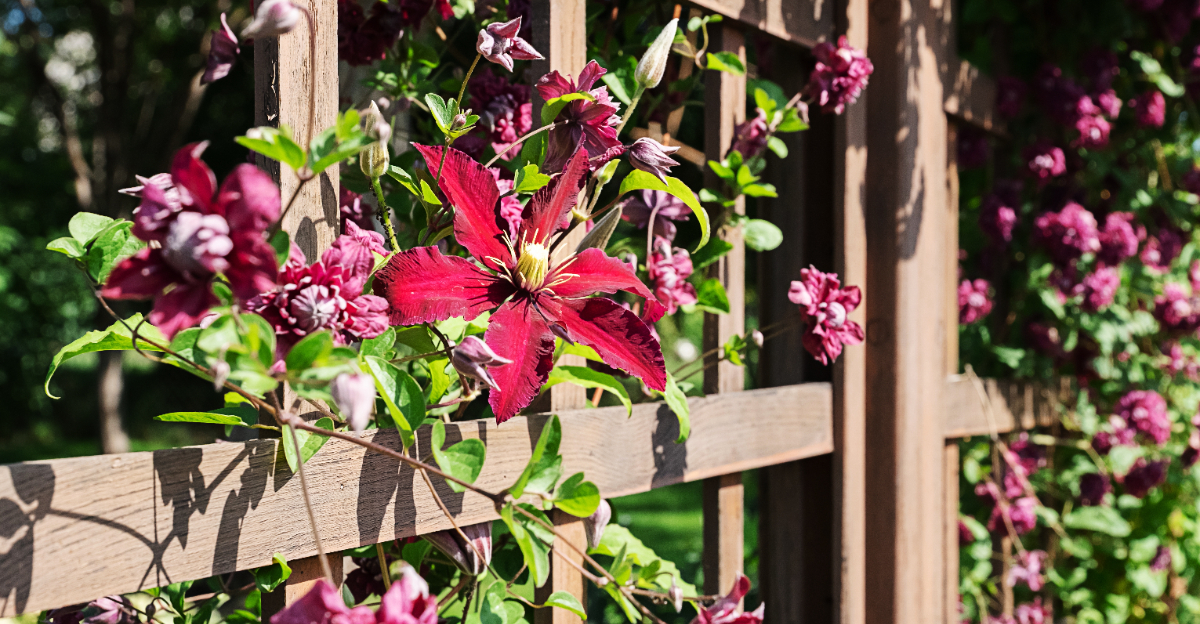
Clematis is one of those plants that can completely change how a garden looks once it starts climbing. In many Georgia gardens, it only takes one well-placed trellis for these vines to turn a plain corner into something people stop and notice.
The flowers come in bold purples, soft pinks, deep reds, and creamy whites, and when they start covering a structure, the effect is hard to ignore.
But the secret isn’t just the plant itself. The support you choose makes a huge difference in how clematis grows and how the whole garden feels.
A simple trellis can turn a fence into a blooming wall, frame an entry path, or give height to a flower bed that feels a little flat. With the right idea, clematis becomes more than just a vine climbing upward.
These clematis trellis ideas show simple ways Georgia gardeners can turn climbing flowers into a real focal point in the garden.
1. Classic Wooden Lattice Creates A Timeless Climbing Display
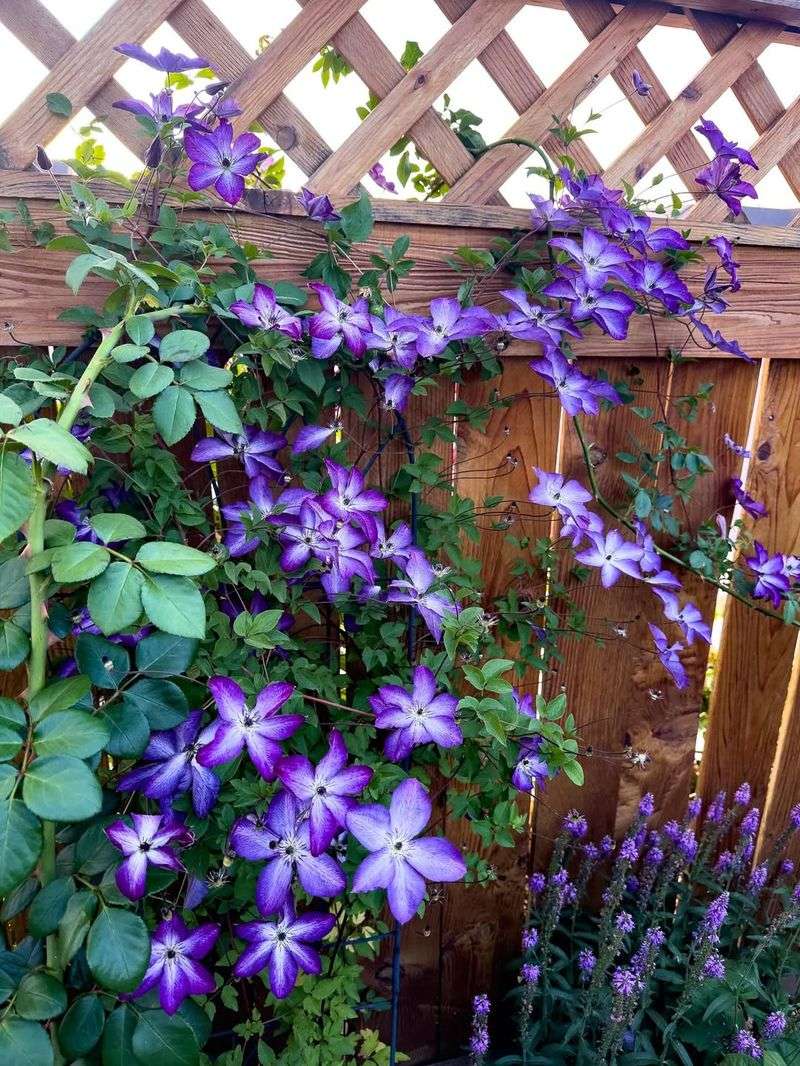
Wood has a way of making a garden feel grounded and real. A wooden lattice trellis is one of the most reliable ways to support clematis vines, and it blends into almost any Georgia yard without looking forced or out of place.
Cedar and pressure-treated pine are both solid choices for Georgia’s humid summers. Cedar holds up especially well against moisture and resists warping better than most woods.
Cut the lattice panels to fit your available wall or fence space, then secure them with sturdy brackets at least two inches away from the surface so vines have room to wrap and breathe.
Clematis varieties like ‘Jackmanii’ or ‘Nelly Moser’ spread beautifully across a wide lattice frame. The open grid gives stems plenty of anchor points without you having to do much guiding.
Paint or stain the wood before planting to protect it from Georgia’s rain and heat. A soft gray or white finish looks especially clean against deep purple blooms.
Spacing your lattice sections a few inches apart creates visual rhythm along a fence line. Gardeners in the Athens and Augusta areas use this trick to frame garden beds without blocking airflow.
Wooden lattice is forgiving, affordable, and genuinely easy to customize to your own yard.
As the clematis grows in, the lattice gradually fills with foliage and flowers, turning a simple wooden frame into a living wall of color.
2. Metal Obelisk Adds Height And Structure To Flower Beds
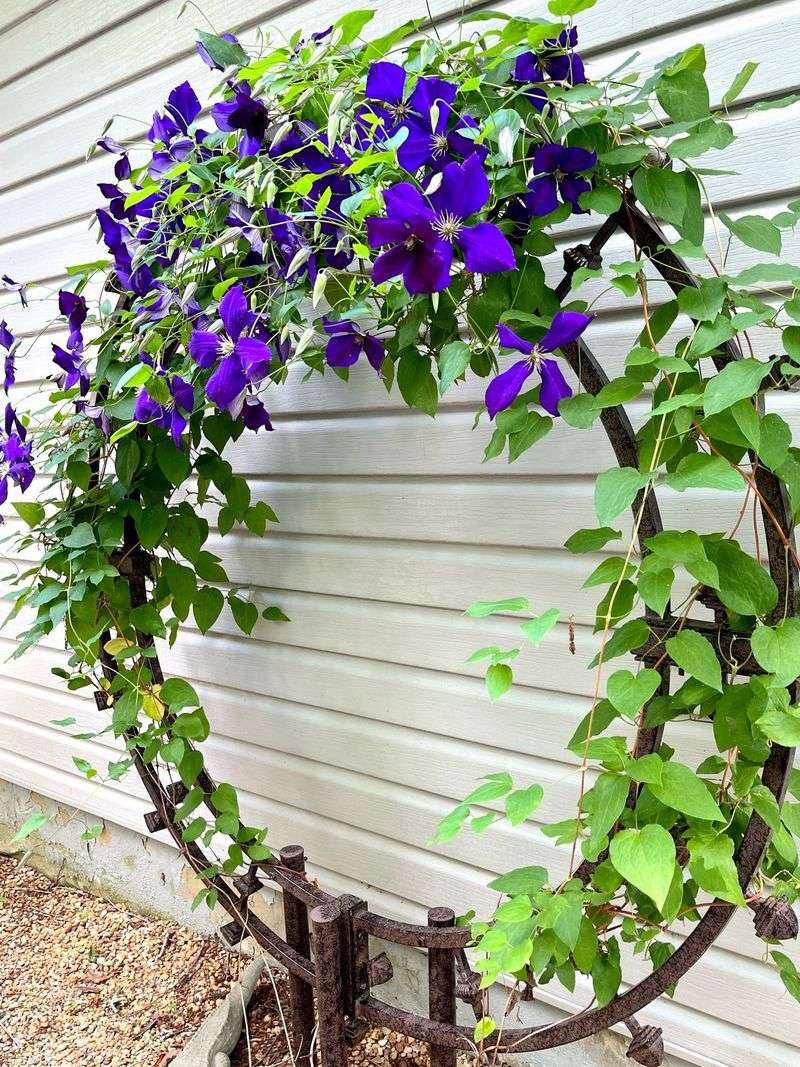
Few things in a garden catch the eye like a tall metal obelisk rising out of a flower bed. It draws your gaze upward and gives the whole space a sense of purpose and design without requiring major renovation.
Obelisks work especially well in Georgia gardens where space is limited but you still want vertical impact. Stick one in the center of a round bed or at the back corner of a rectangular planting area, and you instantly have a focal point.
Wrought iron and powder-coated steel hold up well through Georgia’s wet spring seasons and hot summer stretches.
Clematis vines wrap naturally around the obelisk’s legs as they grow, and by midsummer you can have a column of color standing four to six feet tall.
‘The President’ and ‘Henryi’ are both varieties that perform reliably in Georgia’s climate and look stunning on a vertical structure like this.
Keep the base of the obelisk mulched well to hold moisture around the roots during dry July and August stretches. Light-colored blooms pop beautifully against dark iron, while deep purple varieties create a bold, dramatic contrast.
Obelisks also move easily if you want to rearrange your bed layout between seasons, which is a practical bonus most gardeners appreciate.
As the clematis fills in, the structure gradually disappears behind layers of foliage and blooms, turning the obelisk into a living column of flowers.
3. Garden Arch Covered In Clematis Creates A Flowered Entrance
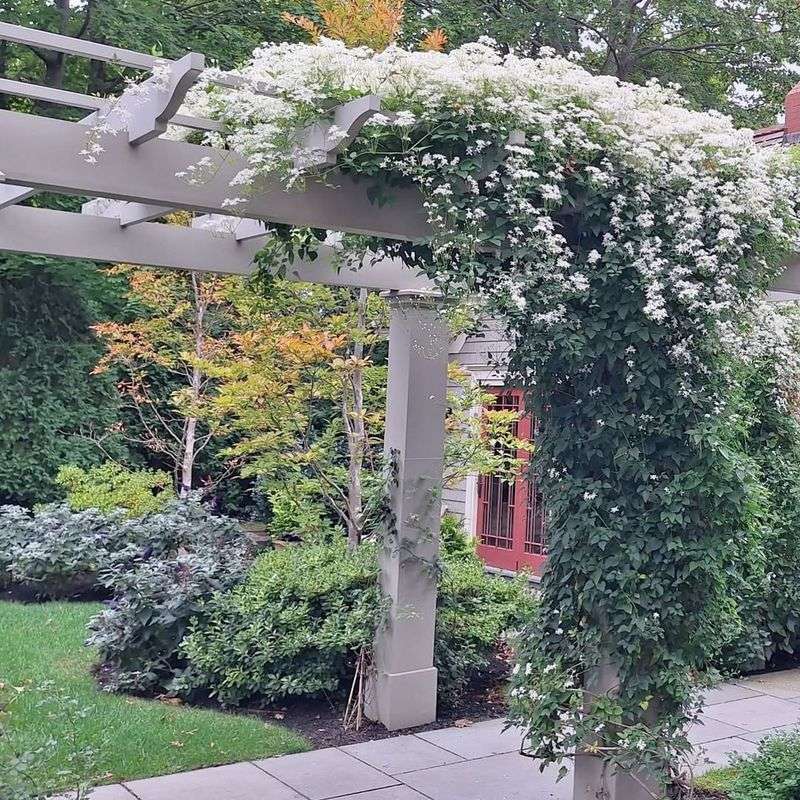
Walking under an arch covered in blooming clematis is one of those garden experiences that stays with you. It feels like stepping into something special, and the good news is that creating it in a Georgia yard is more straightforward than most people expect.
Metal arches are the most durable option for Georgia’s climate. Aluminum and galvanized steel resist rust and hold their shape through heavy rain and wind.
Position the arch at the entrance to a side yard, vegetable garden, or patio area where it becomes a natural transition point between spaces.
Plant one clematis on each side of the arch for balanced coverage. Varieties like ‘Ville de Lyon’ or ‘Ernest Markham’ produce rich red and rosy blooms that look incredible cascading over curved metal.
Train the new stems gently toward the arch in the first season using soft garden ties, and they will take over from there.
Arches in Georgia gardens often peak in late spring and again in early fall when temperatures cool slightly. That double bloom season makes an arch worth every bit of effort.
Surround the base with low-growing plants like creeping phlox or ajuga to keep the soil shaded and moist.
Gardeners near Macon and Columbus have used this setup to completely transform ordinary garden entrances into something genuinely memorable.
4. Decorative Iron Trellis Brings Elegant Vertical Interest
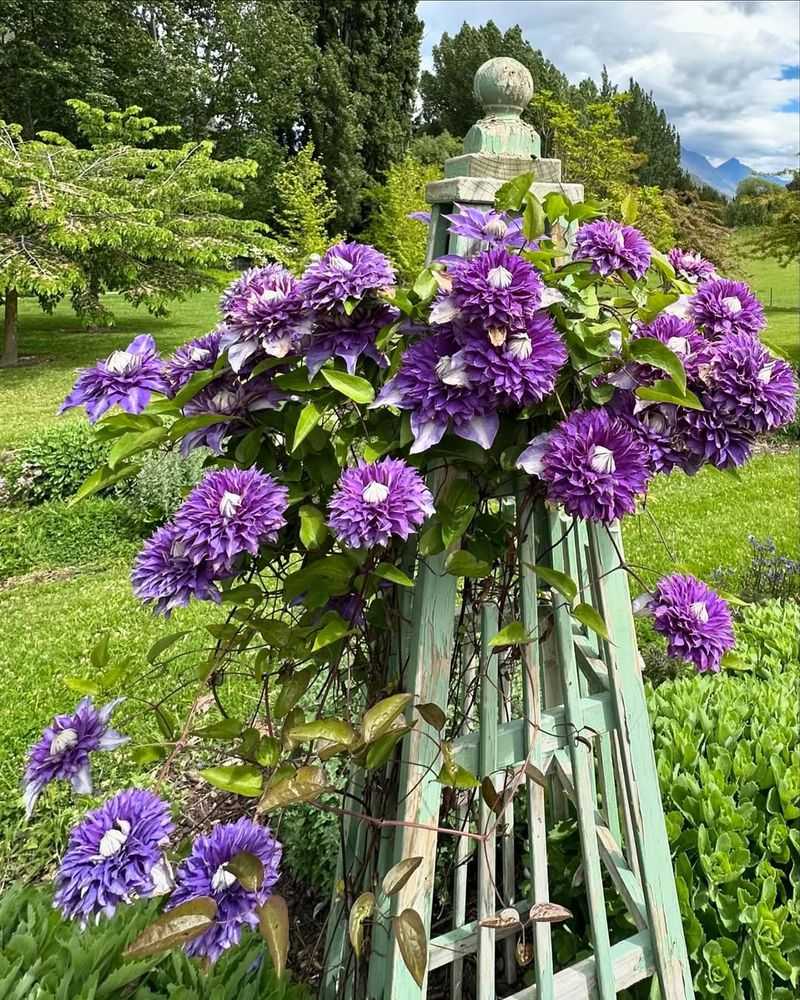
Decorative iron trellises carry a sense of craftsmanship that plastic and basic wire just cannot replicate. Mounted against a brick wall or a painted fence, they look like they belong in a well-loved Southern garden that has been tended for decades.
Scrollwork and geometric iron designs give clematis vines a beautiful framework to fill in over time. As the plant grows, it softens the hard lines of the ironwork while still letting the design show through.
In Georgia, where colonial and cottage-style homes are common, this combination of iron structure and flowering vine feels completely at home.
Anchor the trellis securely into masonry or wood using heavy-duty wall anchors rated for outdoor use. Georgia’s thunderstorm season can bring serious wind gusts, and a loosely mounted trellis will not survive a summer without problems.
Galvanized or powder-coated iron resists rust far better than raw metal in humid conditions.
Clematis ‘Niobe’ with its deep ruby blooms looks striking against black ironwork. Pale lavender varieties like ‘General Sikorski’ create a softer, more romantic effect.
Either way, a decorative iron trellis adds something to a Georgia garden that goes beyond just plant support. It becomes a permanent feature that looks good even in winter when the vines are bare and the ironwork stands on its own.
Over time, the clematis and ironwork grow into each other visually, creating a garden feature that feels both structured and natural.
5. Fence Panels Can Support A Colorful Clematis Wall
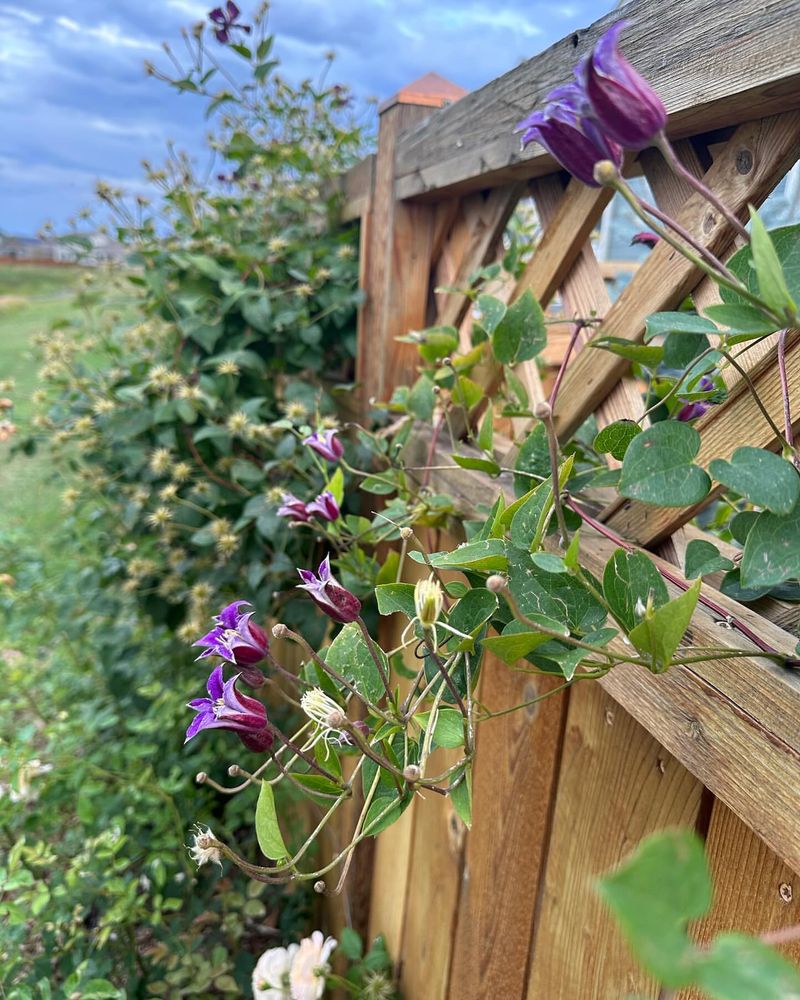
Most Georgia yards already have a fence, and that fence is one of the most underused surfaces in the entire garden. Running clematis along fence panels turns a plain boundary into a living wall of color that blooms for months.
Attach a horizontal wire system or small wooden strips directly to the fence to give vines something to grip. Space the wires about twelve inches apart vertically so stems have multiple attachment points as they grow upward and outward.
Cedar and vinyl fences both work well as a base, and neither requires major modification to support a trellis system.
Planting clematis every four to five feet along the fence line creates continuous coverage by the second growing season.
Mix varieties with different bloom times so something is always flowering.
‘Comtesse de Bouchaud’ blooms in early summer, while ‘Sweet Autumn’ clematis fills in during August and September with masses of small white flowers that carry a light fragrance.
Georgia summers push fence temperatures high, especially on south-facing panels. Mulch heavily around the base of each plant and consider planting a low shrub nearby to shade the root zone during peak afternoon heat.
Neighborhoods around Alpharetta and Roswell often have long fence runs that become neighborhood landmarks once clematis gets established and starts putting on a real show.
6. Pergola Posts Allow Clematis To Climb And Cascade
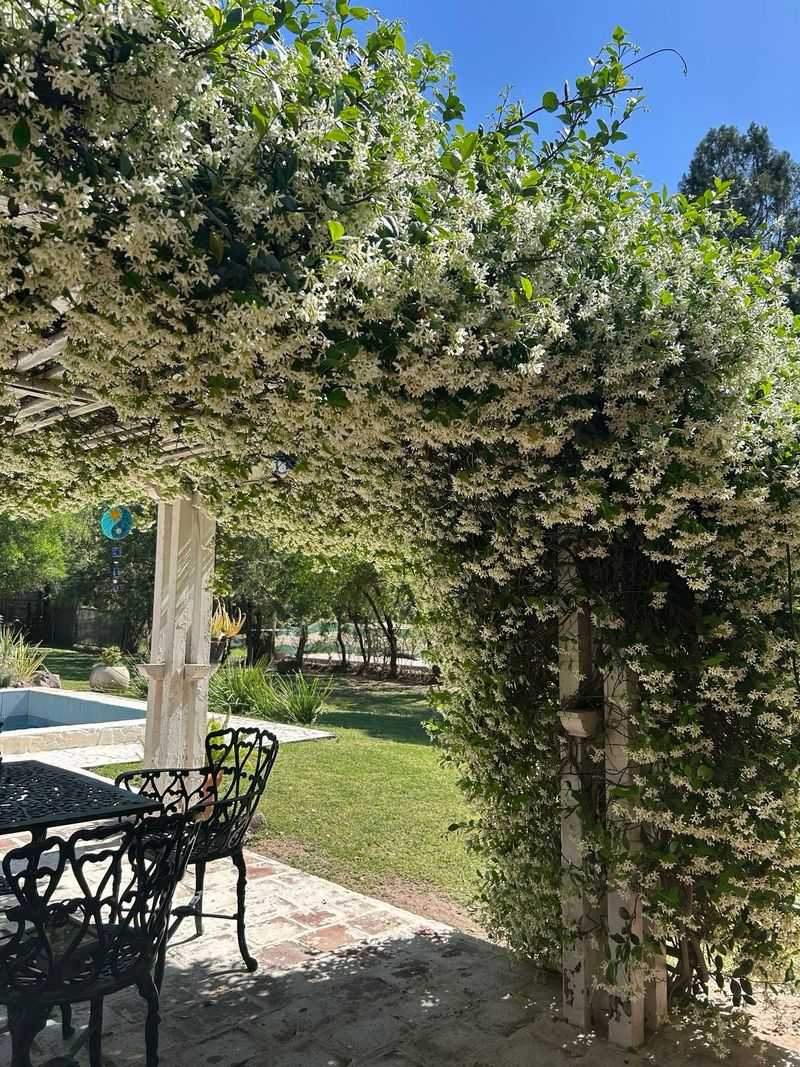
A pergola already changes how a yard feels, but add clematis to the posts and overhead beams and you get something that looks like it belongs in a botanical garden.
Vines climbing upward and then spilling across the top create shade, privacy, and serious visual drama all at once.
Start by training two or three clematis plants at the base of each post you want covered. Use soft plant ties to guide stems upward in the first season.
Once they reach the top, the vines branch naturally across the horizontal beams and begin hanging down on the outer edges, creating that cascade effect that makes pergola gardens so appealing.
Vigorous varieties work best for large pergola coverage.
‘Montana Rubens’ produces clouds of small pink blooms in spring and spreads quickly across a wide structure.
‘Armandii’ is an evergreen clematis that keeps the pergola looking full even through Georgia’s mild winters, which is a big advantage over bare-stemmed deciduous types.
Pergolas in Georgia are most useful when they provide afternoon shade, so position clematis plantings on the west-facing posts where coverage will do the most work.
Gardeners in the Buckhead and Dunwoody areas of metro Atlanta often use this approach to create outdoor living spaces that feel private and lush without requiring a full fence or wall structure.
7. Tall Bamboo Teepee Gives Vines A Natural Support
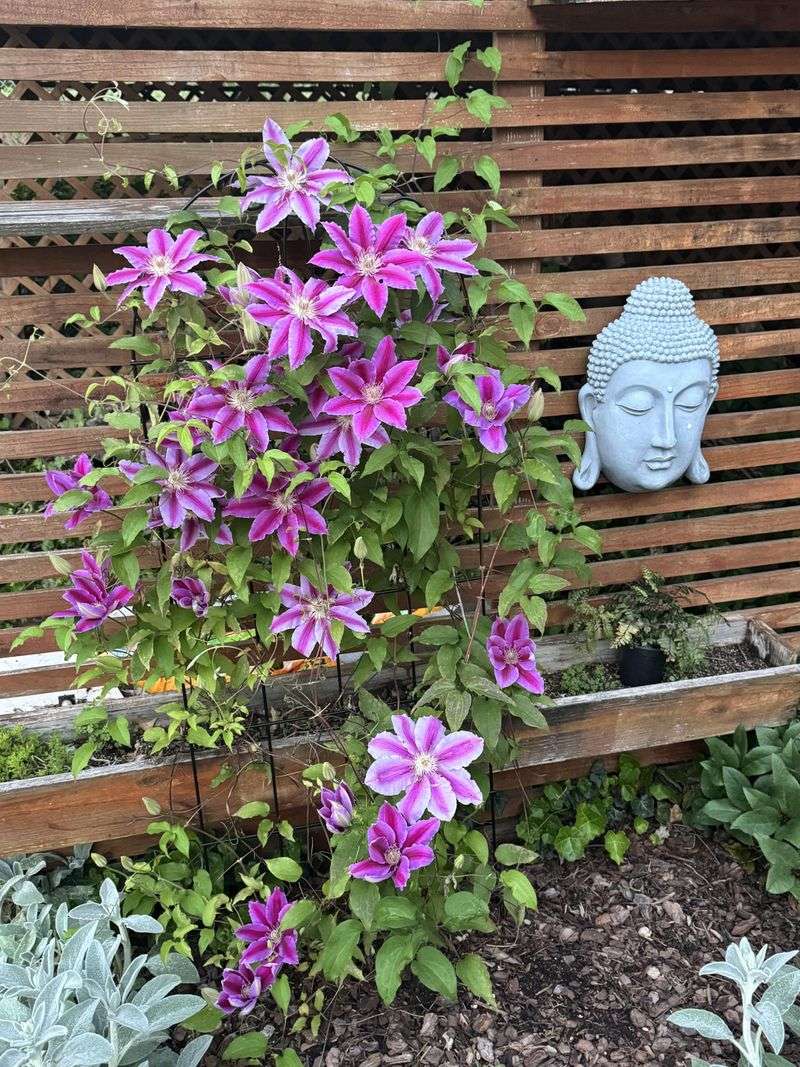
Bamboo teepees have a relaxed, natural quality that fits perfectly into cottage gardens and informal planting spaces.
Lash five or six tall bamboo poles together at the top, spread the base into a circle about two feet wide, and you have an instant trellis that costs almost nothing and looks genuinely charming.
Georgia gardeners can cut their own bamboo from invasive stands that pop up along creek banks and property edges. Using locally cut bamboo to support garden plants is a satisfying kind of recycling that also keeps fast-spreading bamboo from going to waste.
Dried bamboo poles last several seasons before needing replacement, especially if you pull them under cover during the wettest months.
Compact clematis varieties suit teepee structures best since the support area is smaller than a wall or fence.
‘Arabella’ is a non-clinging type that weaves through the poles loosely and blooms in soft blue-purple from June through September.
Tie stems to the bamboo every few weeks in spring to keep growth directed upward rather than flopping outward.
Place the teepee in a spot where it gets full morning sun and some afternoon shade, which is a sweet spot for clematis in Georgia’s hot inland regions.
A pair of teepees flanking a garden path or vegetable bed entrance adds structure and personality without any major construction or expense involved.
8. Wall Mounted Trellis Turns Blank Walls Into Flower Displays
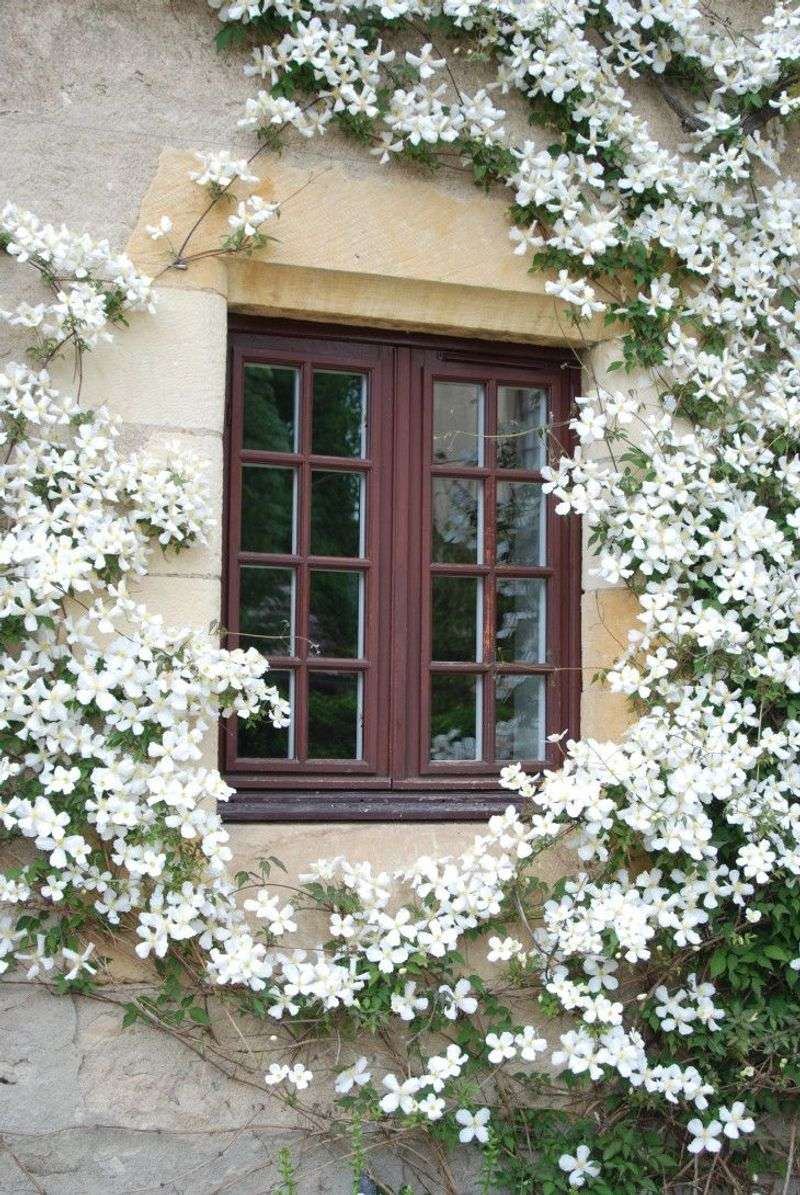
Blank exterior walls are one of the most wasted surfaces in a Georgia garden.
A wall-mounted trellis changes that completely, turning a flat expanse of brick, stucco, or siding into a vertical flower display that blooms from spring through fall.
Fan-shaped and grid-style wall trellises both work well for clematis. Mount the trellis at least two inches away from the wall surface using standoff brackets so air can circulate behind the vines.
Without that gap, moisture builds up against the wall and causes problems over time, especially in Georgia’s humid climate.
Choose a wall that gets at least six hours of direct sunlight daily.
South and east-facing walls in Georgia tend to offer the best light exposure while avoiding the brutal late-afternoon heat that west-facing surfaces collect in July and August.
Clematis roots prefer to stay cool, so mulch the planting area generously and consider placing a flat stone or low plant at the base to shade the soil.
‘Duchess of Edinburgh’ produces full double white flowers that stand out beautifully against a red brick wall.
For a bolder color statement, ‘Warszawska Nike’ delivers deep velvet purple blooms from early summer onward.
Homeowners in Marietta and Decatur have used wall-mounted trellises to add curb appeal and garden character to otherwise plain house exteriors, and the results speak clearly for themselves.