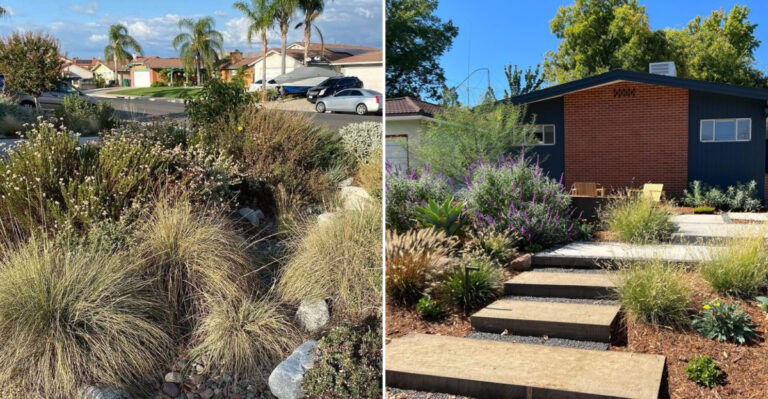
11 Clever Garden Ideas For Small Urban Homes In California
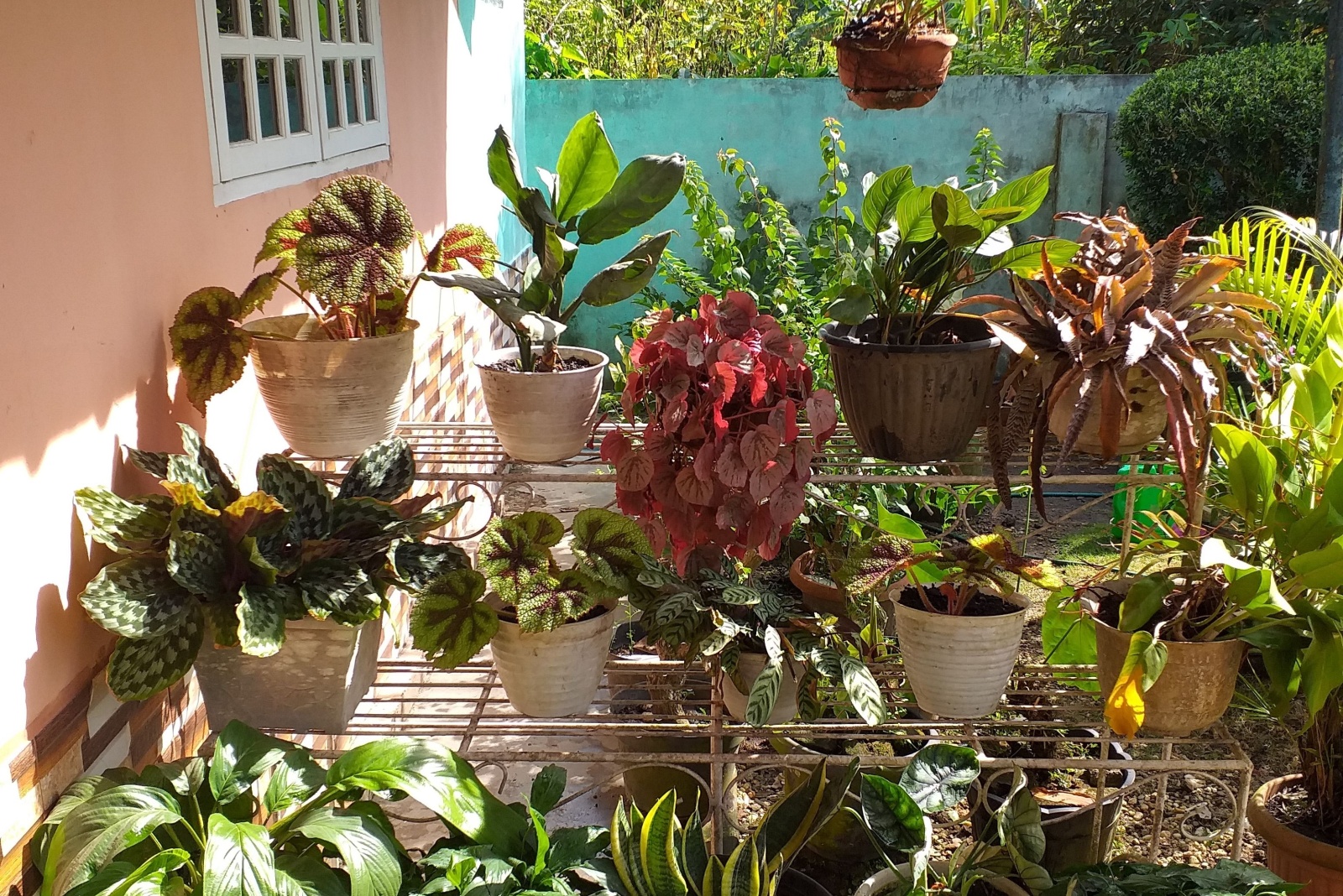
In California’s crowded cities, every square foot of outdoor space counts.
Small urban homes often come with tight patios, slim side yards, or balconies barely big enough for a chair, yet smart gardening can still thrive.
Creative layouts, space-saving plants, and multi-purpose features are changing how city dwellers grow greenery.
Vertical walls become lush focal points, containers pull double duty, and edible plants blend seamlessly with design.
These clever approaches don’t just add beauty; they improve daily life, boost property appeal, and make outdoor areas feel larger than they are.
With the right ideas, limited space stops feeling like a limitation and starts feeling like an opportunity.
These garden solutions show how California homeowners are transforming compact spaces into functional, stylish, and surprisingly productive outdoor retreats.
1. Vertical Wall Gardens Transform Bare Surfaces
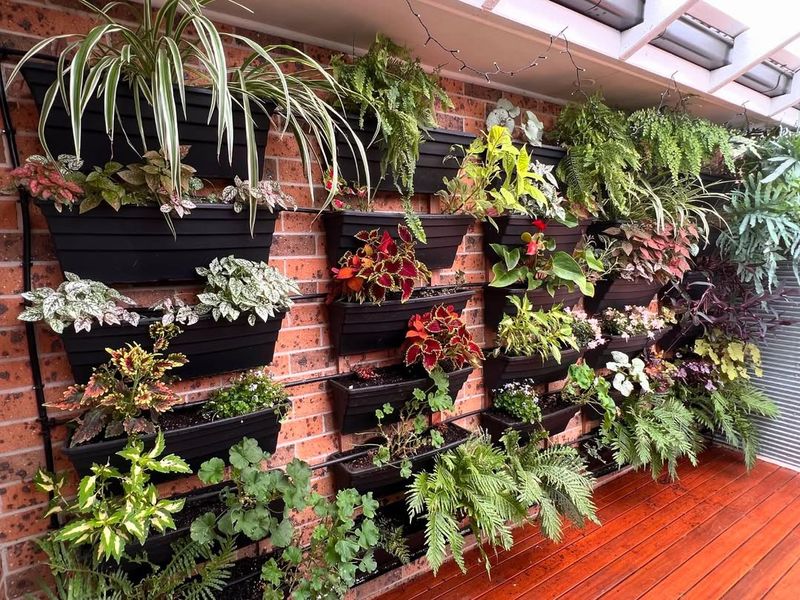
Walls often go unused in small yards, yet they offer tremendous potential for growing plants when you install vertical garden systems that maximize space.
Pocket planters, hanging frames, and modular panels attach easily to fences or exterior walls, creating living artwork that produces fresh herbs and vegetables.
California gardeners love succulents, trailing ivy, and edible greens that thrive in vertical arrangements without demanding much water or maintenance throughout the season.
These systems keep plants off the ground, freeing up valuable floor space for furniture, walkways, or additional containers that enhance your outdoor living.
Vertical gardens also improve air quality and provide natural insulation, keeping your home cooler during California’s hot summer months when temperatures soar high.
Installation requires basic tools and minimal effort, making this option perfect for renters or homeowners who want flexible, removable garden solutions always.
Choose drought-tolerant plants native to California to reduce water usage while enjoying a stunning green wall that impresses visitors and neighbors alike consistently.
2. Container Gardening Offers Maximum Flexibility
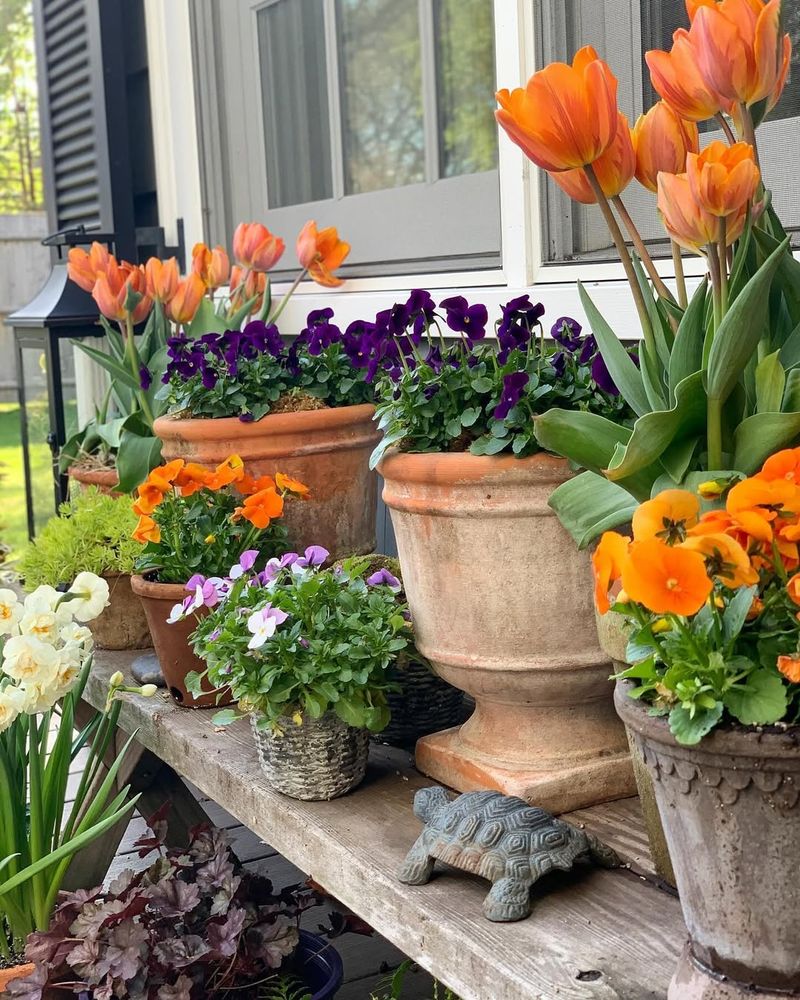
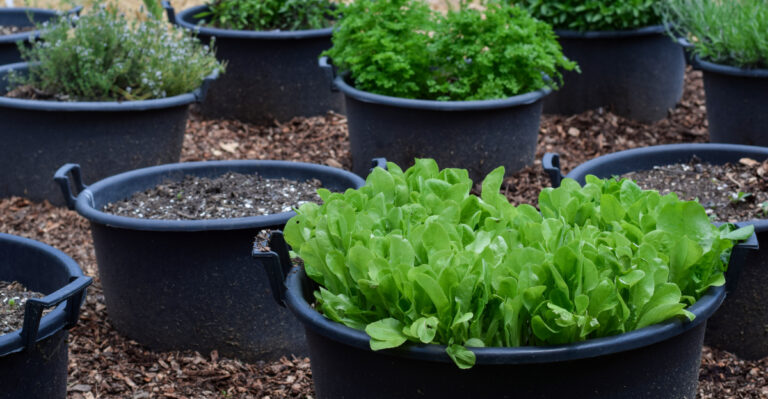
Pots and containers provide unmatched versatility for small spaces, allowing you to move plants around as seasons change and sunlight shifts across yards.
Terracotta, ceramic, plastic, and fabric grow bags all work beautifully for California gardens, supporting everything from tomatoes to lavender with proper drainage.
Grouping containers at different heights creates visual interest and maximizes growing area without overwhelming limited space in your compact urban setting today.
Container gardening lets you control soil quality perfectly, which proves especially helpful in California neighborhoods where ground soil contains clay or poor nutrients.
You can experiment with various plant combinations, swapping out seasonal flowers and vegetables to keep your garden fresh and productive throughout the entire year.
Mobility becomes a huge advantage when weather turns extreme, letting you protect delicate plants by moving them to shaded or sheltered spots quickly.
Select containers that complement your home’s aesthetic while ensuring adequate drainage holes prevent root rot in California’s Mediterranean climate with occasional heavy rains.
3. Raised Beds Maximize Growing Space Efficiently
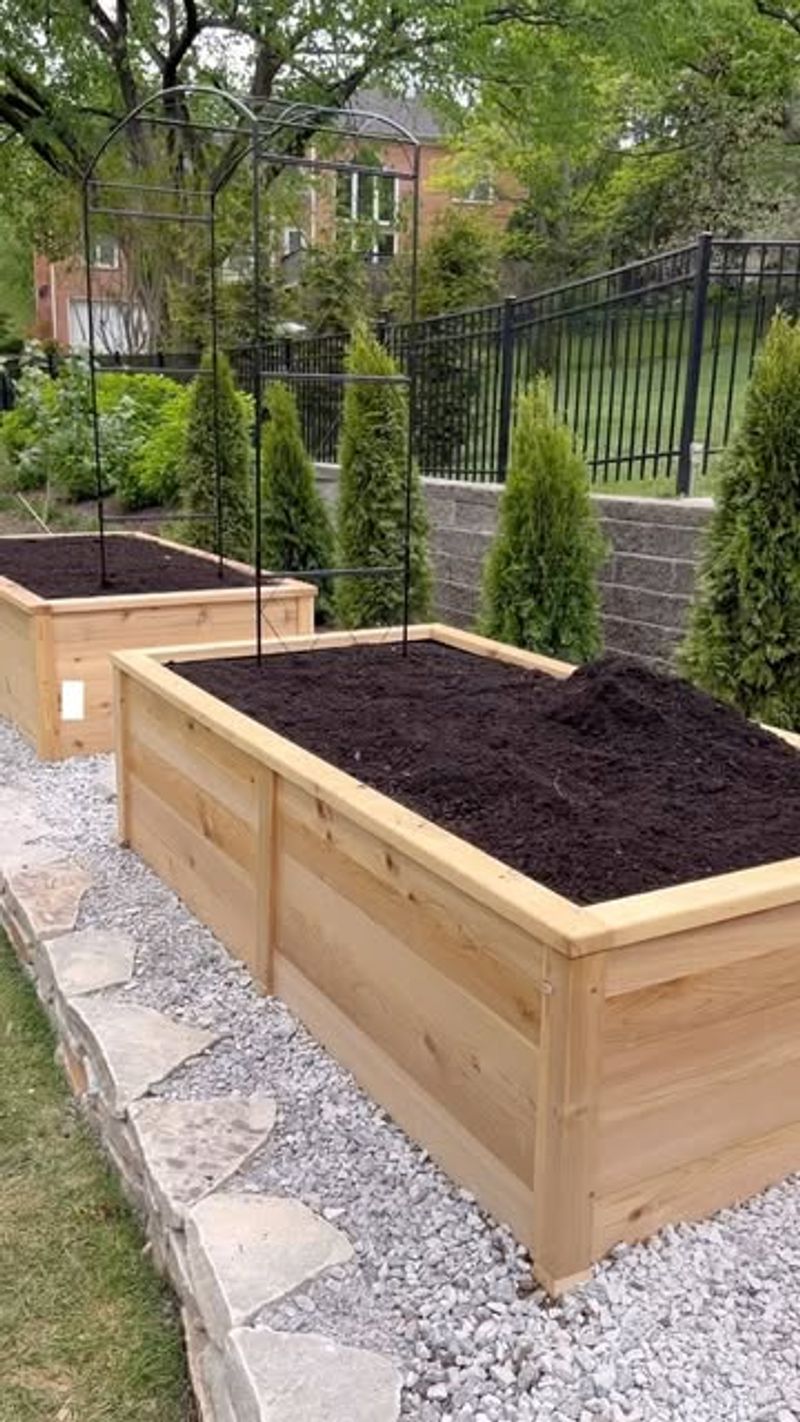
Building raised beds elevates your garden literally and figuratively, creating defined growing areas that organize plants efficiently while improving soil drainage and warmth.
California gardeners benefit from raised beds because they warm up faster in spring, extending growing seasons for heat-loving crops like peppers and eggplants.
These structures can fit into narrow side yards, corner spaces, or even along driveways, transforming previously unused areas into productive vegetable patches.
Raised beds reduce bending and kneeling, making gardening more comfortable for people with mobility challenges or back problems who love growing food.
You control the soil composition completely, filling beds with nutrient-rich mixes tailored to specific plants rather than working with existing ground conditions.
Building materials range from untreated wood to galvanized metal, offering aesthetic options that match your home’s style while lasting many years with minimal upkeep.
Incorporate drip irrigation systems directly into raised beds to conserve water, which remains crucial in California where drought conditions frequently impact communities statewide.
4. Hanging Baskets Add Color Overhead
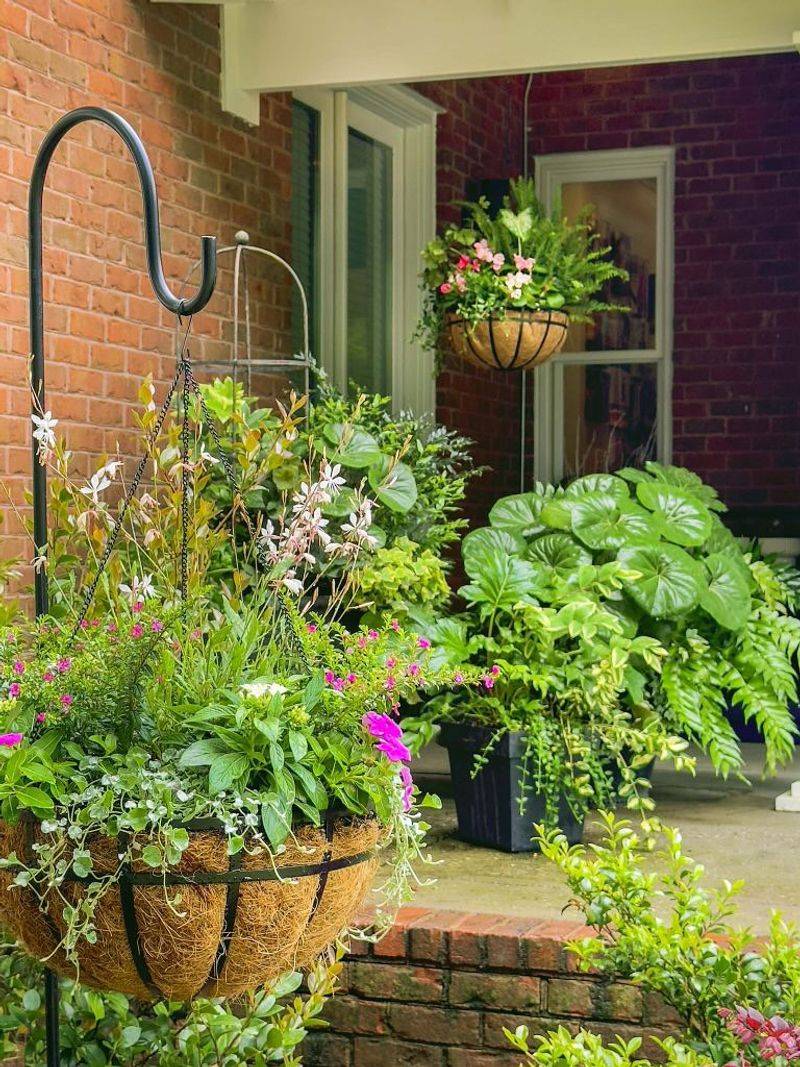
Overhead space frequently gets overlooked, but hanging baskets utilize this area brilliantly, adding layers of greenery and blooms without consuming precious ground space.
Strawberries, trailing petunias, fuchsias, and cascading succulents all flourish in hanging containers throughout California’s mild climate with minimal fuss or maintenance.
Positioning baskets at varying heights creates depth and visual appeal, transforming a flat, boring patio into a lush, three-dimensional garden sanctuary.
These suspended gardens work perfectly for balconies, porches, or covered patios where floor space is extremely limited but overhead structures provide sturdy support.
Choose lightweight containers and self-watering designs to reduce the frequency of watering, which becomes especially important during California’s dry, rainless summer months.
Hanging baskets also keep plants away from ground-dwelling pests like snails and slugs, protecting delicate leaves and fruits from common garden nuisances.
Rotate baskets seasonally to showcase different plants, keeping your garden looking fresh and exciting while adapting to California’s changing weather patterns year-round.
5. Trellises Support Climbing Plants Upward
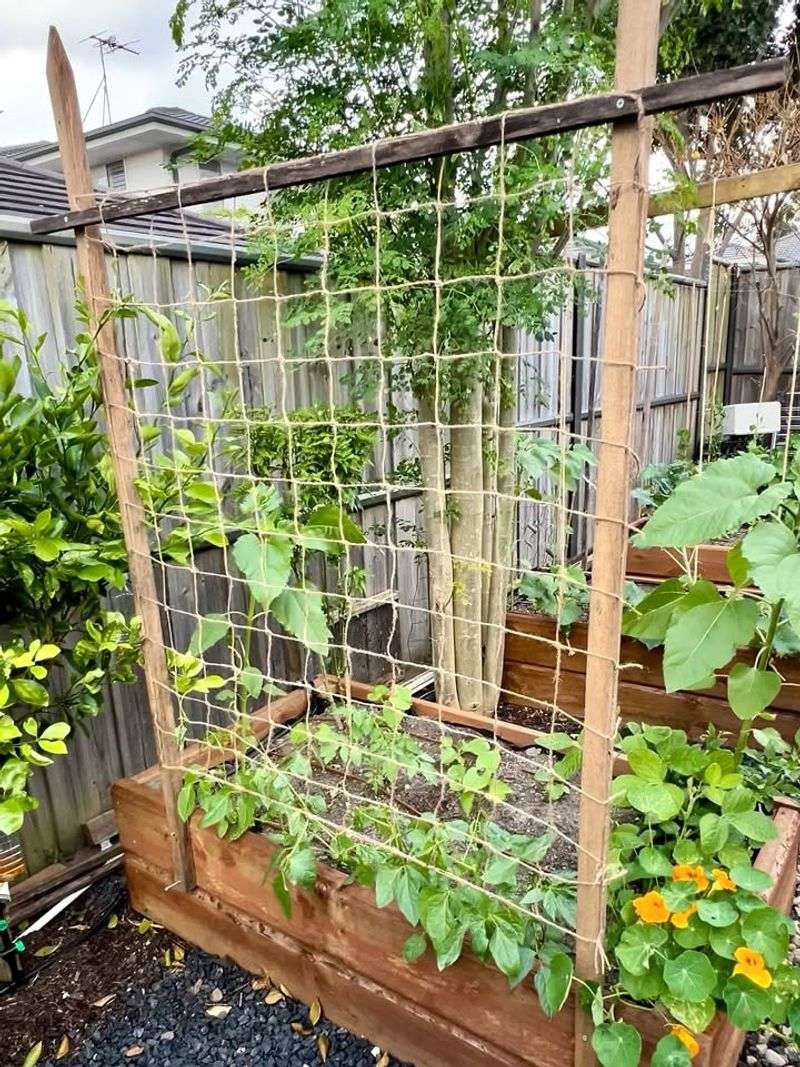
Training plants to grow vertically on trellises saves enormous amounts of ground space while increasing yields for vining crops like cucumbers and beans.
California’s long growing season allows climbing plants to produce abundantly when given proper support, turning vertical surfaces into productive growing zones quickly.
Trellises can be freestanding, wall-mounted, or integrated into raised beds, offering flexibility for different garden layouts and architectural styles in urban settings.
Pole beans, peas, squash, and even small melons climb happily when encouraged, producing cleaner fruits that avoid soil contact and related diseases.
Flowering vines like jasmine, clematis, and passion fruit add beauty and fragrance while attracting beneficial pollinators to your California garden throughout seasons.
Constructing trellises from bamboo, wire mesh, or reclaimed wood keeps costs low while adding rustic charm to your outdoor space creatively.
Proper placement ensures plants receive adequate sunlight while providing shade for heat-sensitive crops growing beneath, creating microclimates that benefit multiple plant varieties simultaneously.
6. Herb Spirals Create Microclimates Cleverly
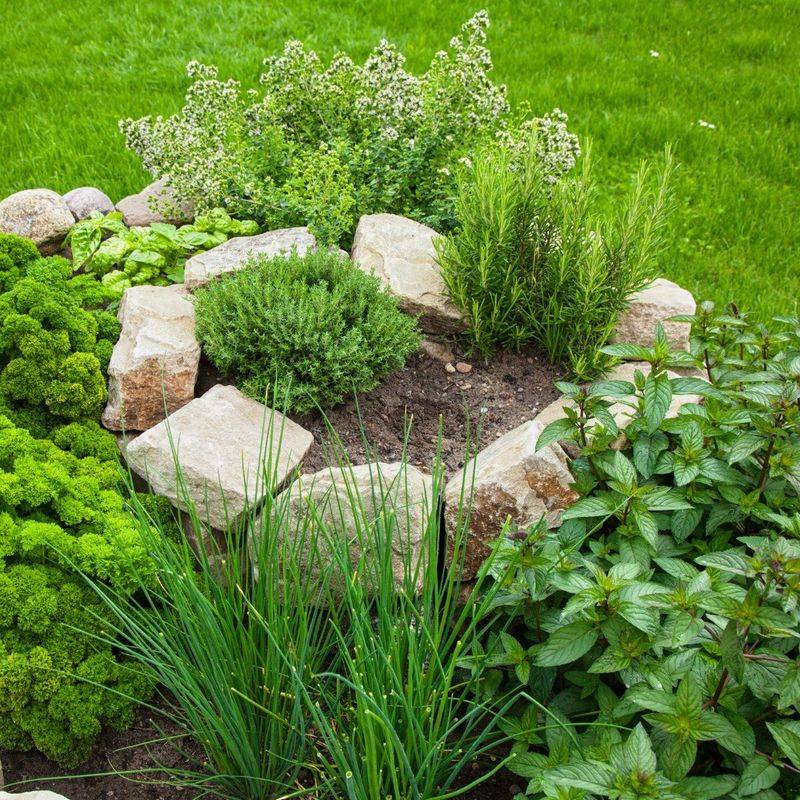
Herb spirals represent ingenious permaculture designs that pack numerous herbs into compact footprints while creating varied growing conditions from top to bottom naturally.
Building upward in a spiral pattern provides sunny, well-drained spots at the peak for Mediterranean herbs like rosemary and thyme that California weather suits.
Lower levels retain more moisture and offer partial shade, perfect for herbs like parsley, cilantro, and mint that prefer cooler, damper conditions consistently.
This three-dimensional structure maximizes planting area within a small diameter, typically just three to four feet wide, fitting easily into tiny California yards.
Constructing an herb spiral requires only stones, bricks, or urbanite (broken concrete), making it an affordable and eco-friendly project for creative gardeners.
The design also creates attractive focal points that add visual interest and conversation-starting appeal to otherwise plain or underutilized garden spaces everywhere.
Harvesting becomes convenient since all herbs remain within easy reach, encouraging frequent use in cooking and reducing trips to grocery stores for fresh ingredients.
7. Window Boxes Brighten Small Spaces Beautifully
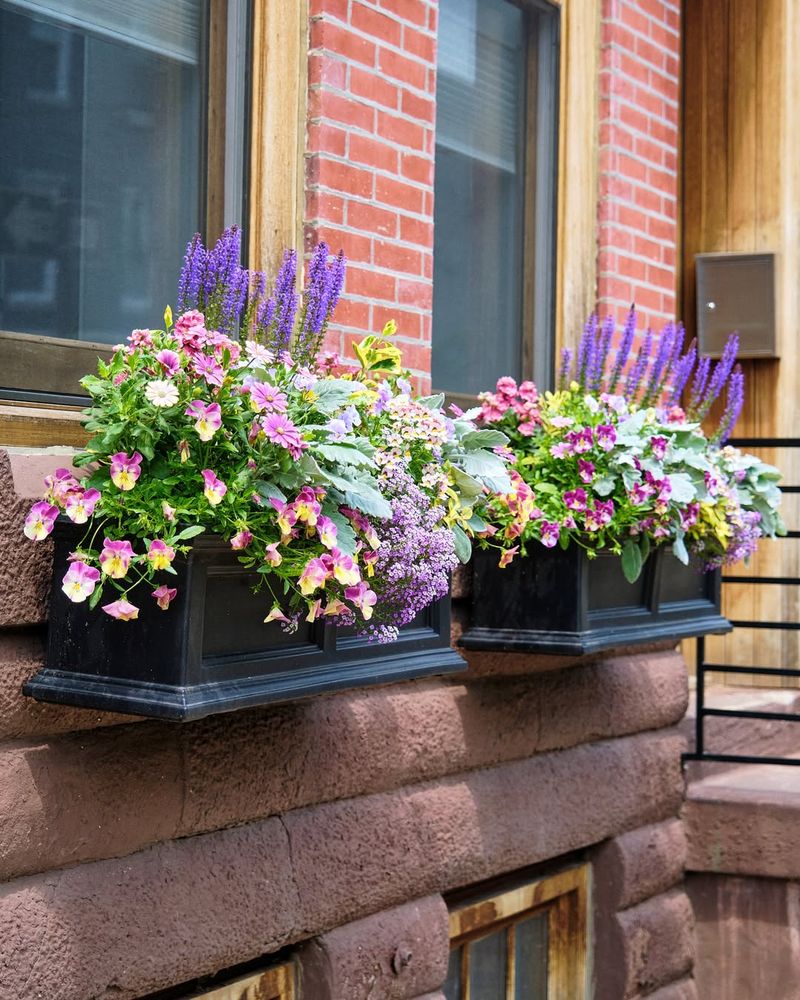
Window boxes bring gardens directly to your home’s facade, creating charming displays that enhance curb appeal without requiring any yard space whatsoever.
California homeowners can grow herbs, flowers, and even compact vegetables like lettuce and radishes in window boxes that receive adequate sunlight daily.
These containers work perfectly for apartments or townhomes where ground-level gardening isn’t possible but window access provides excellent growing opportunities always.
Installing window boxes requires secure mounting brackets that support the weight of soil and plants when fully watered to prevent accidents or damage.
Choose drought-tolerant plants and incorporate water-retaining crystals into soil mixes to reduce watering frequency during California’s long, dry summer stretches ahead.
Window boxes also frame views from inside your home, bringing nature closer and improving your living environment with greenery and colorful blooms.
Regular deadheading and fertilizing keep plants looking vibrant and productive, ensuring your window boxes remain attractive focal points throughout every growing season.
8. Espaliered Fruit Trees Save Space Dramatically
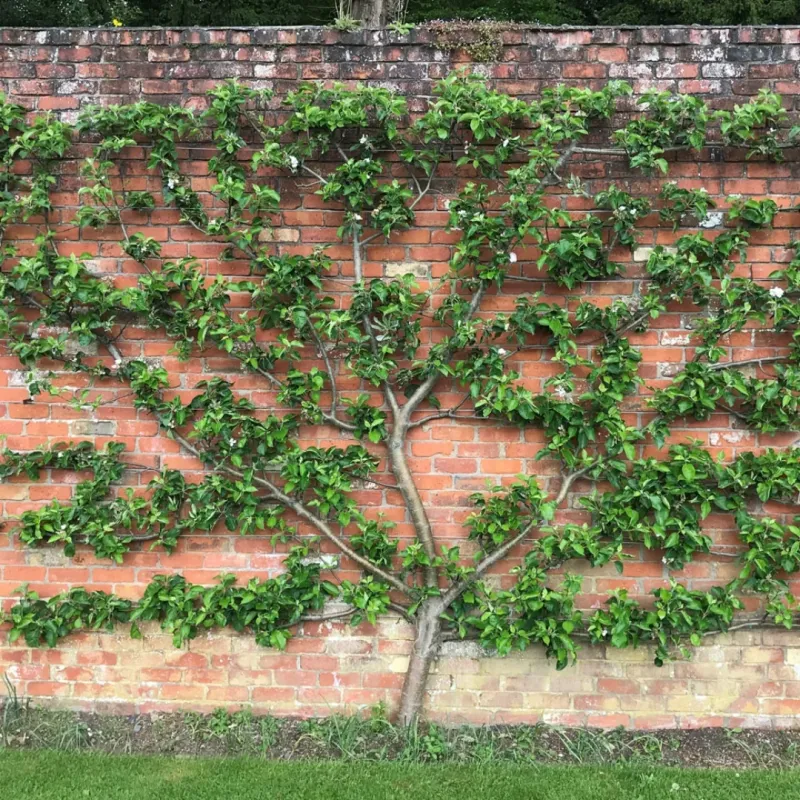
Espalier techniques train fruit trees to grow flat against walls or fences, transforming vertical surfaces into productive orchards within incredibly tight spaces.
California’s climate suits many fruit trees including apples, pears, figs, and citrus that adapt beautifully to espalier methods with patient, consistent pruning.
This ancient technique creates living sculptures that combine ornamental beauty with practical food production, making every square inch of your garden work harder.
Espaliered trees require less space than traditional orchard trees while producing comparable yields, perfect for urban gardeners with limited square footage available.
Training branches horizontally improves sun exposure and air circulation, reducing disease pressure while making harvesting easier and more convenient for homeowners everywhere.
Starting with young trees or purchasing pre-trained specimens simplifies the process, though dedicated gardeners can train existing trees with time and effort.
Regular pruning maintains the desired shape and encourages fruiting, creating stunning displays that impress neighbors while providing fresh, homegrown produce annually.
9. Tiered Plant Stands Multiply Growing Area
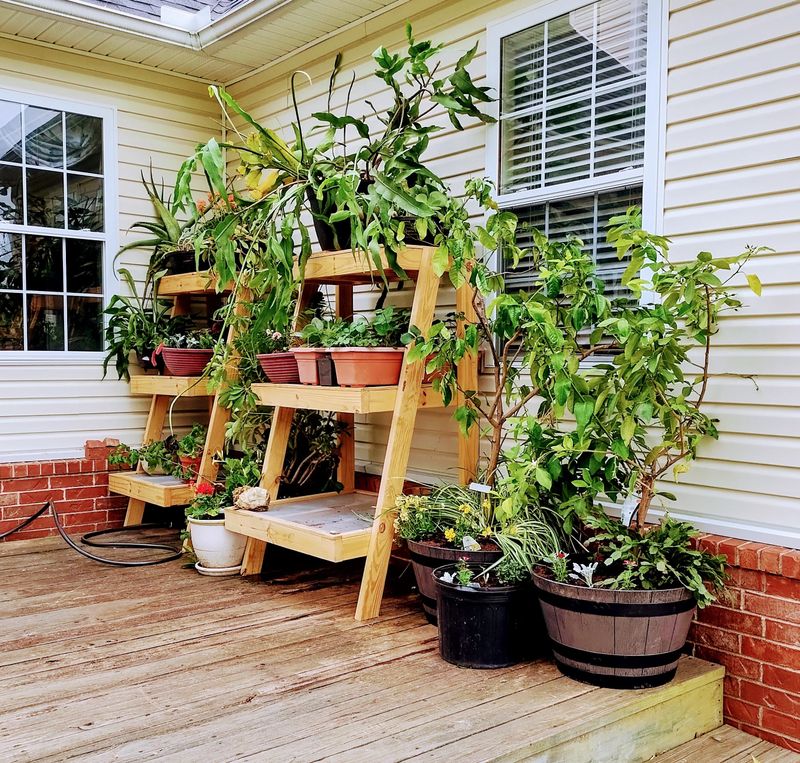
Plant stands with multiple levels stack containers vertically, multiplying growing space without expanding your garden’s footprint horizontally across limited yard areas.
These structures work wonderfully on patios, balconies, or against walls, organizing plants attractively while keeping everything accessible and easy to maintain daily.
California gardeners can display succulents, herbs, small vegetables, and flowering plants together, creating diverse, visually appealing arrangements that change with seasons naturally.
Tiered stands improve air circulation around plants, reducing fungal problems common in crowded gardens where humidity builds up between closely packed containers.
They also elevate plants to different light levels, allowing you to accommodate species with varying sun requirements within one compact structure efficiently.
Many plant stands come in attractive designs that enhance outdoor decor while serving practical purposes, blending function with aesthetic appeal seamlessly.
Movable stands offer flexibility, letting you rearrange your garden layout easily or relocate plants to follow sunlight as it shifts throughout California days.
10. Keyhole Gardens Maximize Efficiency Brilliantly
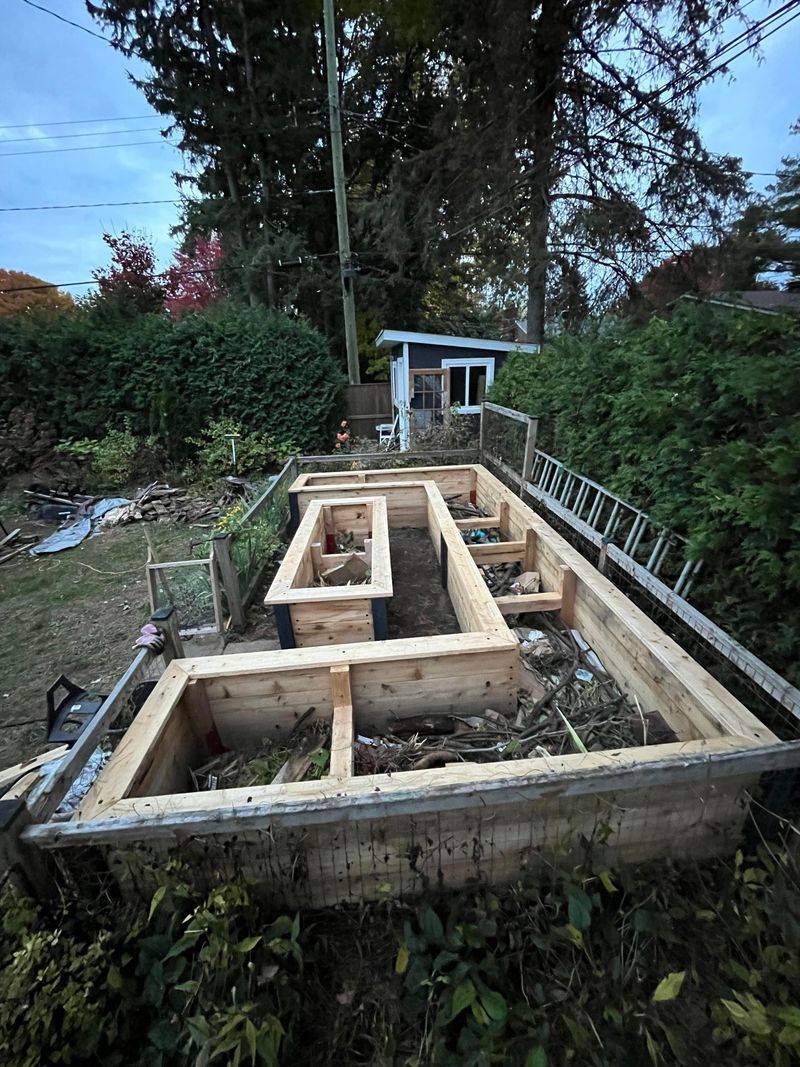
Keyhole gardens originated in Africa but work fantastically in California’s urban spaces, combining composting and growing areas into one efficient, self-sustaining system.
The circular design with a central composting basket allows you to feed plants directly while accessing the entire bed from the keyhole-shaped path.
This innovative layout maximizes growing area within a compact footprint, typically six feet in diameter, perfect for small yards with limited available space.
Adding kitchen scraps to the central basket provides continuous nutrients to surrounding plants, reducing fertilizer needs and creating a closed-loop system beautifully.
Raised walls retain moisture better than flat beds, conserving water while creating ideal growing conditions for vegetables throughout California’s dry summer months.
Building a keyhole garden requires basic materials like stones, bricks, or wood, making it an affordable weekend project for motivated gardeners everywhere.
The unique shape creates an attractive focal point that sparks curiosity and conversation while producing impressive harvests of fresh, organic vegetables consistently.
11. Living Walls With Edible Plants Thrive
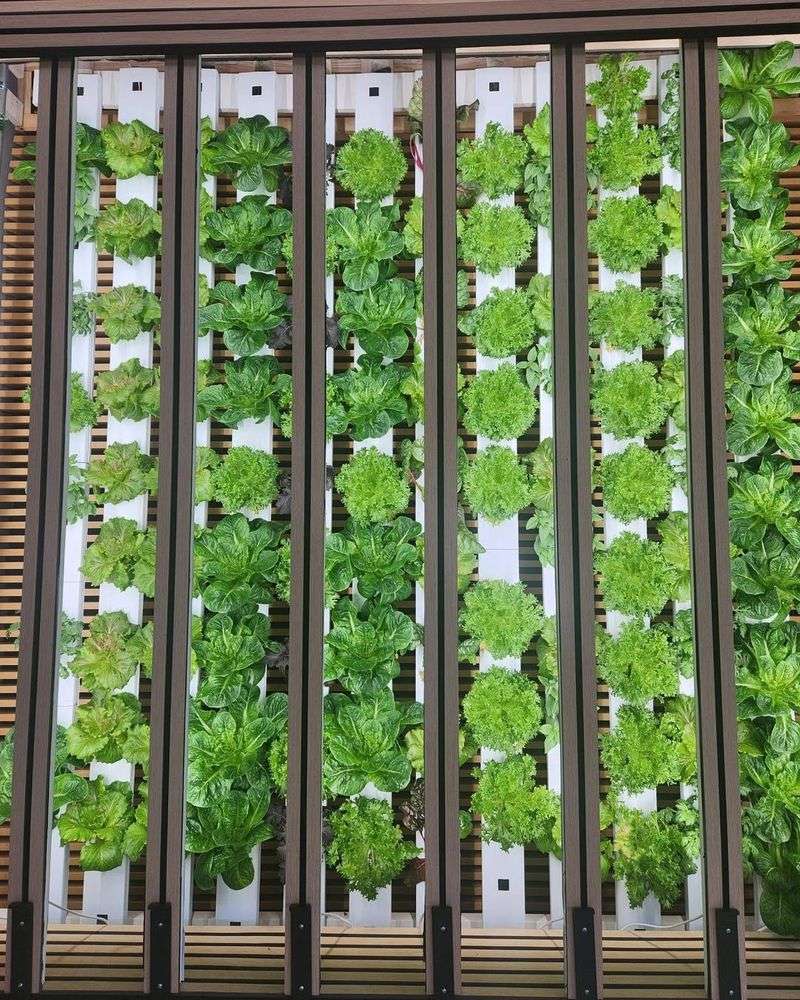
Living walls dedicated to edible plants combine food production with stunning vertical design, creating functional art that feeds your family throughout the year.
California’s climate supports year-round growing of lettuces, kale, herbs, and strawberries in living wall systems that use minimal water and space efficiently.
Hydroponic or soil-based systems both work well, offering options for different budgets, skill levels, and aesthetic preferences among urban gardeners today.
These installations transform blank walls into productive gardens that provide fresh ingredients steps from your kitchen, encouraging healthier eating habits and reducing costs.
Automated irrigation systems can be integrated easily, making maintenance simple even for busy homeowners with limited time for daily garden chores.
Living walls also improve outdoor air quality, reduce urban heat island effects, and provide natural insulation that lowers energy costs noticeably year-round.
Customizable designs let you create patterns, logos, or artistic arrangements while growing food, merging creativity with practicality in innovative, inspiring ways daily.