7 Climber Plants That Cover Impossible Walls In Pennsylvania
Some walls are just hard to love. They are too plain, too tall, or stuck in a spot that makes them stand out for all the wrong reasons.
In a Pennsylvania yard, that kind of bare surface can feel even more noticeable once the rest of the garden starts filling in. That is why climbing plants can be such a smart fix.
They add softness, color, and texture in a way that makes a difficult wall feel like part of the landscape instead of an eyesore.
The key is finding climbers that can actually handle Pennsylvania conditions and cover the space well. The best ones do more than grow upward.
They help hide problem areas, bring charm to blank surfaces, and make the yard feel more finished. Some offer flowers, some stay green and lush, and some give a wall that cozy, established look people love.
With the right plant, even an awkward wall can become one of the most attractive parts of the yard.
1. Virginia Creeper

Few plants can match the sheer speed and boldness of Virginia Creeper when it comes to covering a wall fast. Native to Pennsylvania and much of eastern North America, this vine is built for tough conditions.
It grabs onto surfaces using tiny adhesive pads at the tips of its tendrils, which means it does not need a trellis or wire to climb. Brick, stone, wood fences, and even concrete are all fair game.
What really makes gardeners fall in love with this plant is the fall show it puts on. Come October, those five-leaflet clusters turn a blazing red that stops people in their tracks.
During the rest of the growing season, the foliage stays a rich, healthy green that creates a dense, cooling layer over any wall. Birds love the small dark berries it produces in late summer, so planting it also supports local wildlife.
Virginia Creeper grows vigorously, sometimes adding six to ten feet in a single season. That speed is a huge advantage when you have a large wall to cover.
Regular trimming once or twice a year keeps it from spreading where you do not want it. Plant it in full sun or part shade, and it will adapt without complaint.
It handles Pennsylvania winters without any protection and bounces back strong every spring. For gardeners who want fast, native, and low-maintenance coverage, Virginia Creeper is hard to beat anywhere in the state.
2. Climbing Hydrangea
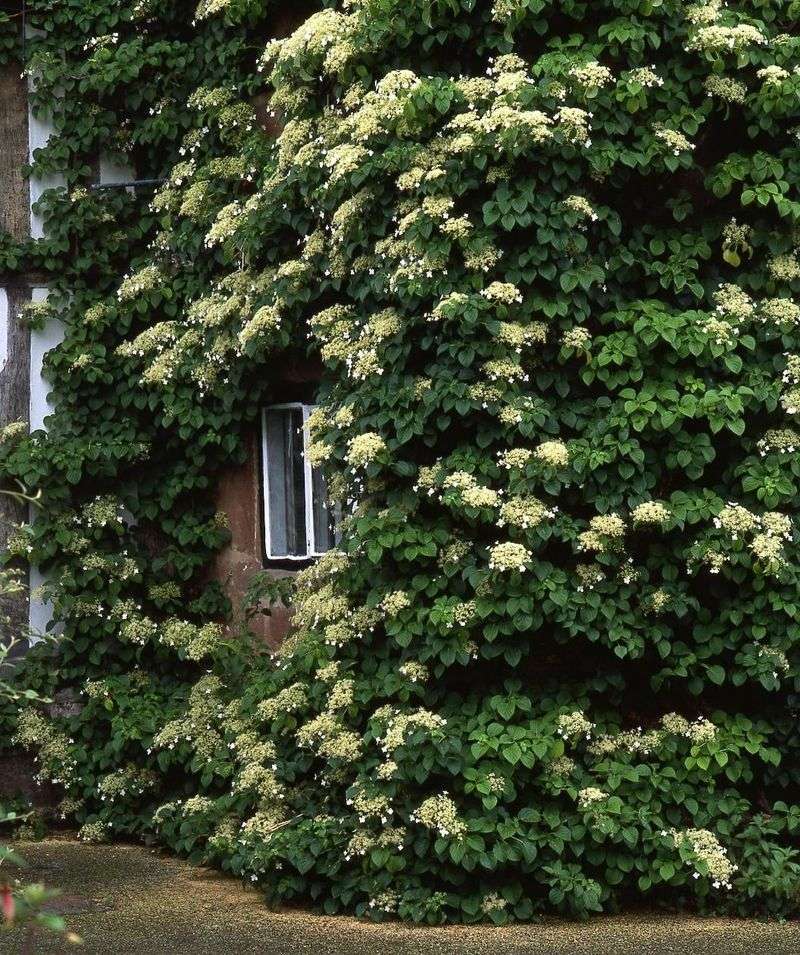
Shady walls are often the hardest to plant around, but Climbing Hydrangea was practically made for those tricky spots. This slow-starting but ultimately spectacular vine produces large, flat clusters of white flowers in early summer that look elegant against almost any wall surface.
Once it gets going, it attaches itself using aerial rootlets that grip right into brick, stone, or wood without needing extra support.
Patience is the one thing you need with this plant. The first couple of years, it focuses on building a strong root system rather than reaching upward.
Many Pennsylvania gardeners joke that it sleeps the first year, creeps the second, and leaps the third.
Once it hits its stride, though, it can eventually reach thirty to forty feet, creating a thick, woody, self-supporting structure right against your wall. The peeling, cinnamon-colored bark adds winter interest after the leaves drop.
Climbing Hydrangea works beautifully on north-facing walls and spots under large trees where most other climbers would struggle. It tolerates full shade better than almost any other climbing vine available to Pennsylvania gardeners.
Plant it in moist, well-drained soil with some compost worked in, water it regularly during its first two seasons, and then step back and let it grow. Pruning is rarely needed except to keep it away from windows or gutters.
For a shady wall that has stumped you for years, this plant is the answer you have been looking for.
3. Trumpet Vine
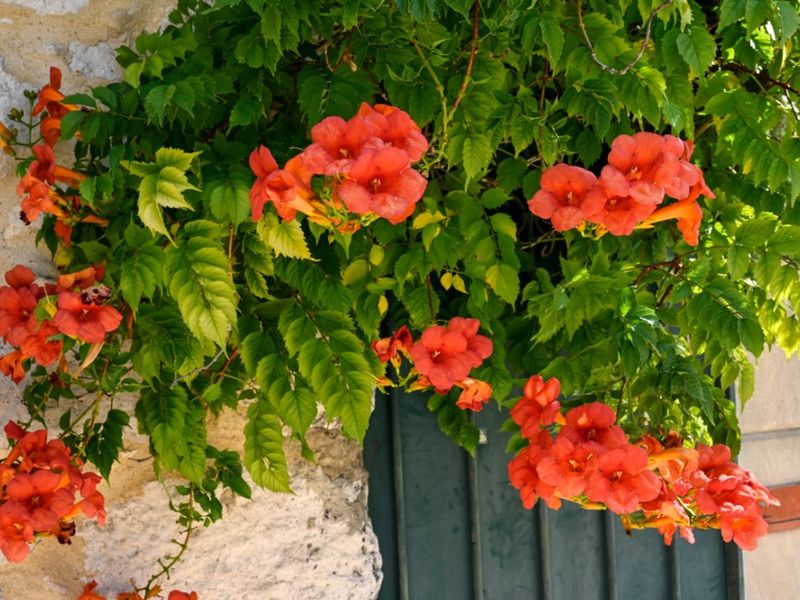
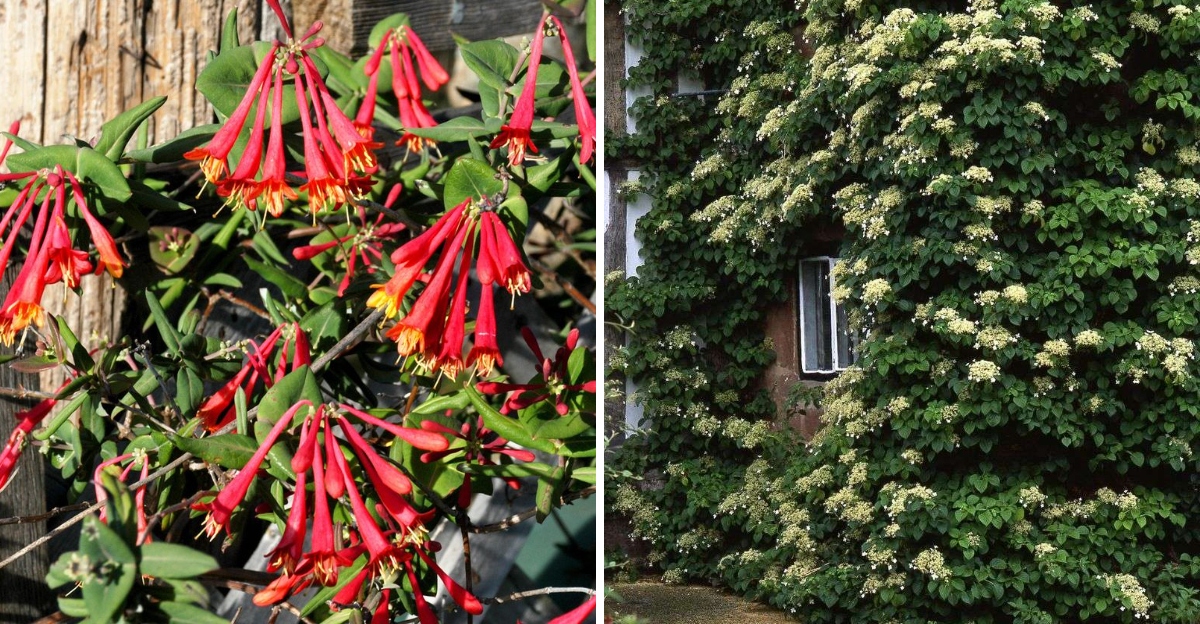
If you want a climber with real personality, Trumpet Vine brings the drama. The flowers are bold, bright, and shaped like little trumpets in shades of orange, red, and yellow.
Hummingbirds absolutely cannot resist them, so planting this vine near a window or patio turns your wall into a front-row seat for one of nature’s best shows. Native to the eastern United States, it is completely at home in Pennsylvania conditions.
Trumpet Vine, known scientifically as Campsis radicans, is one of the most vigorous climbers you can plant. It grows fast and heavy, so the wall or structure it climbs needs to be sturdy.
Old stone walls, solid wooden fences, and brick structures are ideal. It attaches using aerial rootlets, similar to Climbing Hydrangea, which means it grips surfaces on its own. Make sure whatever it is climbing can handle the weight of a mature plant.
One honest note: Trumpet Vine is enthusiastic to the point of being pushy. It can spread by runners underground and pop up in unexpected places nearby.
Pulling unwanted shoots early keeps it under control without much trouble. Some Pennsylvania gardeners grow it in a contained area or against a wall where spreading is less of a concern.
Prune it back hard in late winter to keep the shape tidy and encourage the best flower display each summer. With a little management, it rewards you with years of spectacular blooms and non-stop hummingbird visitors.
4. American Wisteria
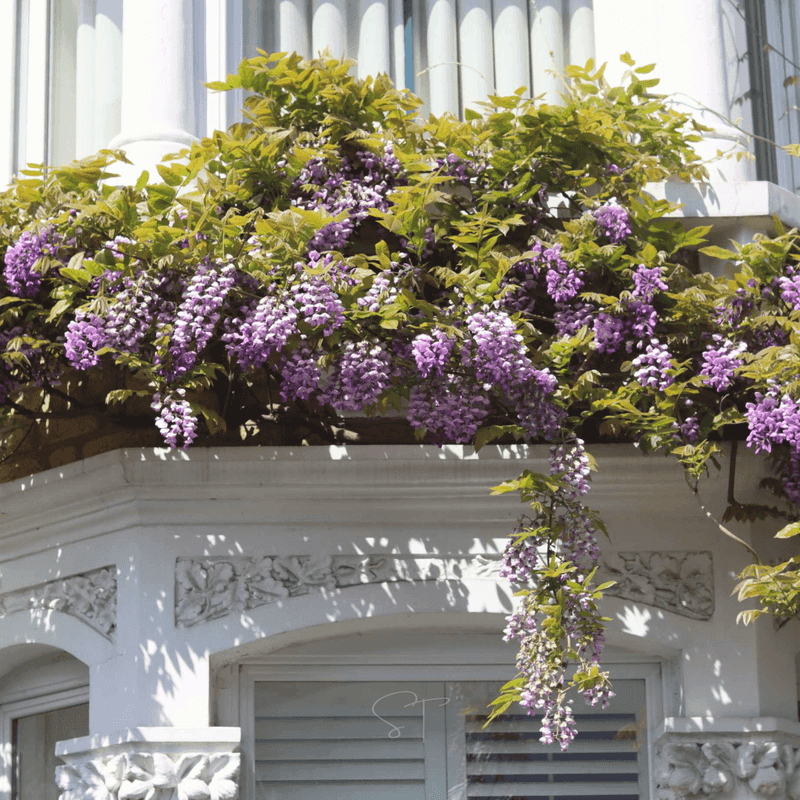
Wisteria has a reputation for being a little wild, but American Wisteria is the well-behaved version of the family.
Unlike its Asian cousins, which can swallow whole trees and structures if left unchecked, American Wisteria (Wisteria frutescens) is a native species that grows with much more restraint.
It still produces those gorgeous, cascading clusters of lavender or purple blooms that make wisteria so beloved, but it does so without turning into a garden takeover story.
Pennsylvania gardeners who have tried the Asian varieties and struggled with aggressive growth will appreciate how much easier this native species is to manage. It blooms reliably in late spring, filling the air with a light, sweet fragrance.
The flower clusters are slightly shorter than those of Asian wisteria, but they are just as beautiful and appear more frequently throughout the growing season on some cultivars. Bees and butterflies flock to the blooms, making it a fantastic choice for pollinator-friendly gardens.
American Wisteria climbs by twining its stems around supports, so it needs a sturdy trellis, pergola, or fence to grab onto. Give it full sun for the best flowering results, as shady spots tend to produce fewer blooms.
Plant it in well-drained soil and water it regularly during the first season to help it establish. Once rooted in, it is fairly drought-tolerant.
Annual pruning after flowering keeps it shaped and encourages more blooms the following year. For a Pennsylvania wall or pergola that needs a showstopper, this native wisteria delivers beautifully.
5. Coral Honeysuckle

Not all honeysuckles are created equal, and Coral Honeysuckle proves that point beautifully.
While the invasive Japanese Honeysuckle has given the whole family a bad name in many parts of Pennsylvania, Coral Honeysuckle (Lonicera sempervirens) is a native vine that plays nicely in the garden.
It climbs by twining, produces stunning tubular flowers in shades of coral red with yellow centers, and supports hummingbirds, butterflies, and native bees without spreading aggressively.
The flowers appear in late spring and often keep blooming in waves through summer and into early fall, giving you months of color on your wall or trellis. After flowering, the plant produces small red berries that birds enjoy in late summer.
The foliage is semi-evergreen in milder parts of Pennsylvania, meaning it may hold onto its leaves through mild winters, giving the wall some coverage even in the colder months.
Coral Honeysuckle grows best in full sun to partial shade and prefers well-drained soil. It is not as fast-growing as some of the other climbers on this list, but its manageable pace makes it a great choice for smaller walls, mailbox posts, split-rail fences, or garden trellises where you want coverage without constant pruning battles.
Water it regularly during its first year, and after that it becomes quite drought-tolerant. For Pennsylvania gardeners who want a pollinator-friendly, non-invasive, and genuinely pretty climber, Coral Honeysuckle is one of the most rewarding choices available in the region.
6. Clematis (Hardy Varieties)

Called the queen of climbers by many gardening enthusiasts, Clematis earns that title with its jaw-dropping flower display.
Hardy varieties suited to Pennsylvania, such as Jackmanii, Nelly Moser, and Sweet Autumn Clematis, can handle the cold winters and humid summers of the region without skipping a beat.
The flowers range from deep purple and violet to pale pink, white, and bicolor combinations, so there is a Clematis to match almost any garden style or color scheme.
Unlike the self-clinging climbers on this list, Clematis climbs by wrapping its leaf stalks around thin supports. A trellis, wire mesh, lattice panel, or chain-link fence works perfectly.
It does not grip directly onto flat wall surfaces on its own, so pairing it with some kind of support structure is key. Once it has something to grab, though, it climbs quickly and fills in beautifully. The foliage is attractive even when the plant is not in bloom.
One classic tip for growing Clematis successfully is to remember the saying: keep its head in the sun and its feet in the shade. Planting a low groundcover or placing a flat stone over the root zone keeps the roots cool while the vines reach upward toward the light.
Prune based on the specific variety you choose, as different groups have different pruning needs. Pennsylvania gardeners who follow these simple guidelines are rewarded with one of the most colorful and elegant climbing plants the region has to offer every single season.
7. Boston Ivy
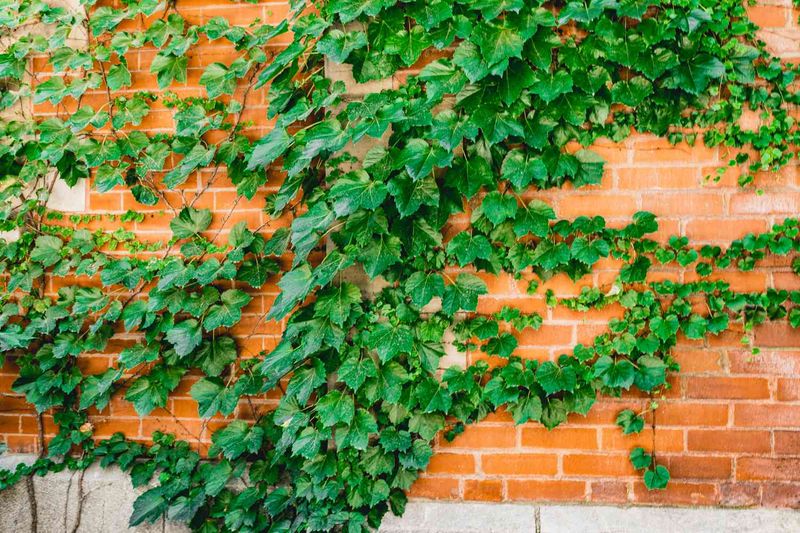
Walk through any older Pennsylvania city neighborhood, and you will almost certainly spot Boston Ivy clinging to brick buildings and stone walls. There is a reason this plant has been covering walls for well over a century.
Boston Ivy (Parthenocissus tricuspidata) is related to Virginia Creeper but has a slightly different leaf shape and an even tighter grip on surfaces.
Its adhesive pads are remarkably strong, allowing it to climb smooth brick, stone, and even glass without any help from a trellis or wire.
The coverage it creates is dense and uniform, giving walls a classic, ivy-covered look that feels timeless. Through spring and summer, the glossy green leaves overlap like shingles on a roof, creating a solid green surface.
Then, as fall arrives in Pennsylvania, the foliage shifts to brilliant shades of crimson and scarlet that rival any fall tree display. Even after the leaves drop, the woody stems create an interesting texture against the wall through winter.
Boston Ivy grows vigorously and can cover a large wall in just a few seasons. It tolerates full sun, partial shade, and even the pollution levels found in urban Pennsylvania environments, making it a reliable choice for city gardens and suburban properties alike.
Trim it back from windows, gutters, and roof edges once or twice a year to keep it tidy. Plant it in reasonably fertile soil, water it during dry spells in its first year, and watch it transform a plain, uninspiring wall into something genuinely stunning season after season.