10 Climbing Plants For North Carolina That Cover Fences In A Flash
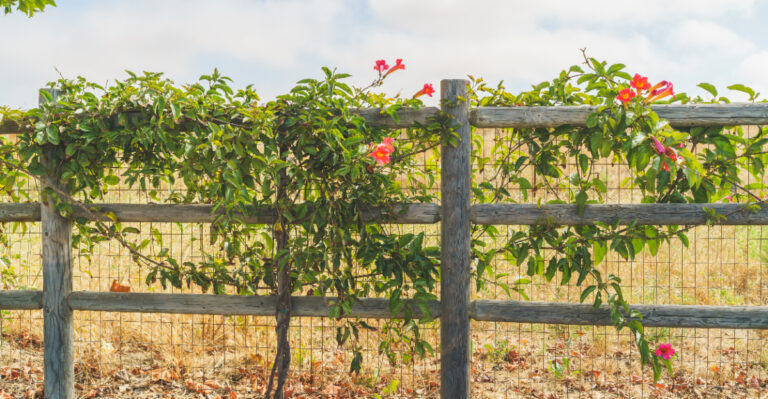
A bare fence can stand out in a North Carolina yard, but the right climbing plants can change that faster than you might expect. In the right conditions, vines can spread quickly and turn plain wood or metal into a wall of greenery that adds both beauty and privacy.
Across the Coastal Plain, Piedmont, and warmer parts of the Mountain region, North Carolina’s climate gives climbing plants a real advantage.
Warm summers and a long growing season allow many vines to grow vigorously and fill in spaces that would otherwise look empty.
For homeowners looking to soften hard edges or create a more secluded outdoor space, fast growing climbers are one of the easiest solutions.
With the right choices, a simple fence can become one of the most attractive features in your yard, covered in lush growth and seasonal color.
1. Carolina Jessamine
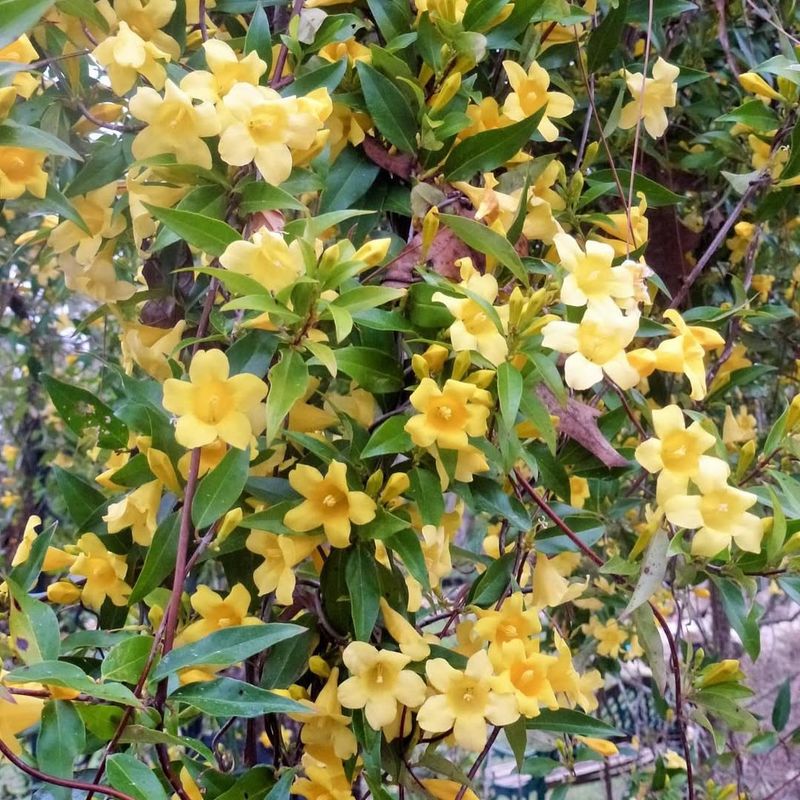
If you want a vine that feels truly at home in North Carolina, Carolina Jessamine is about as local as it gets. This evergreen native grows wild across the Southeast, and in garden settings it absolutely thrives.
From late winter into early spring, it bursts into a show of bright canary-yellow, trumpet-shaped flowers that smell wonderful and catch everyone’s attention.
One of the best things about this plant is how fast it moves. It can reach 10 to 12 feet in a single growing season under the right conditions.
Full sun gives it the strongest growth, but it handles partial shade well too, making it flexible for different fence locations around your yard.
Hummingbirds and butterflies are absolutely drawn to the blooms, so you get wildlife action as a bonus. Plant it near a wooden fence or trellis and watch it weave its way upward with almost no help.
It stays green year-round in most parts of North Carolina, which means your fence stays covered even in winter months.
Give it well-drained soil and a little water during dry spells, and it will reward you generously. Gardeners across the Piedmont and coastal regions love this vine for its reliability and beauty.
It is one of those plants that rarely disappoints and always delivers a gorgeous early-season display.
2. Trumpet Vine
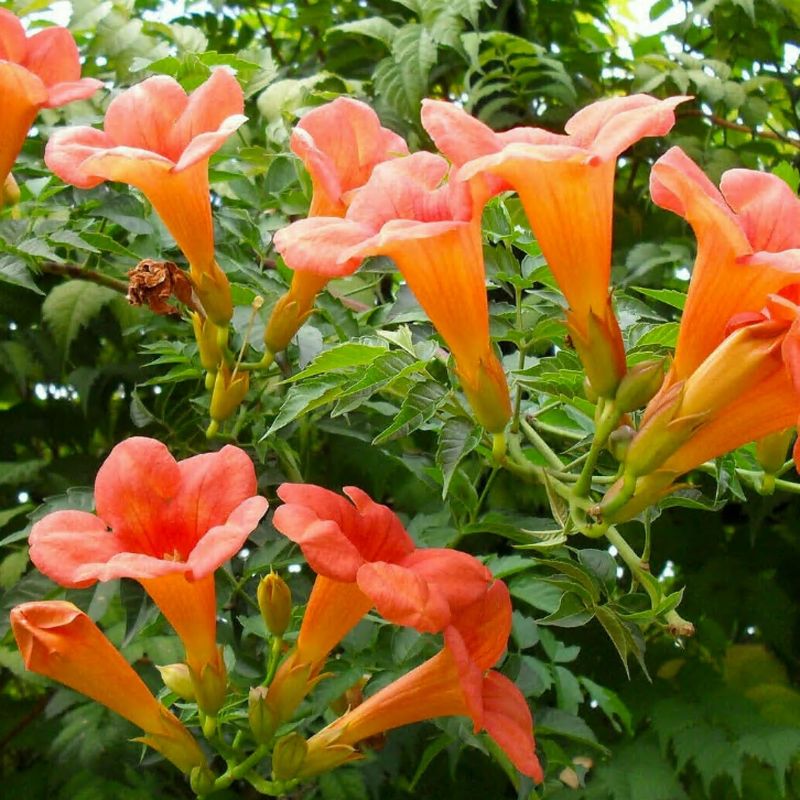
Trumpet Vine is the kind of plant that means business. Once it gets established in a North Carolina yard, it grows with serious speed and determination.
The thick, woody stems climb fences, walls, and trellises with ease, and by midsummer the whole structure can be draped in stunning orange-red blooms that are hard to miss from across the yard.
Those tubular flowers are not just pretty. Hummingbirds absolutely love them, and you will find yourself watching the tiny birds dart in and out of the blooms all season long.
The flowers appear from June through August, giving you weeks of color during the hottest part of the year when many other plants slow down.
This vine is a native to the eastern United States, which means it is perfectly adapted to North Carolina conditions. It handles heat, humidity, and poor soil without complaint.
However, it is worth noting that Trumpet Vine spreads aggressively, so planting it where it has room to grow is a smart move.
Trim it back each spring to keep it in check and encourage fresh new growth. It bounces back quickly after pruning and comes back stronger every year.
For gardeners in the Piedmont or mountain foothills of North Carolina looking for maximum coverage with minimal fuss, this vine is a top-tier choice that delivers year after year.
3. Crossvine
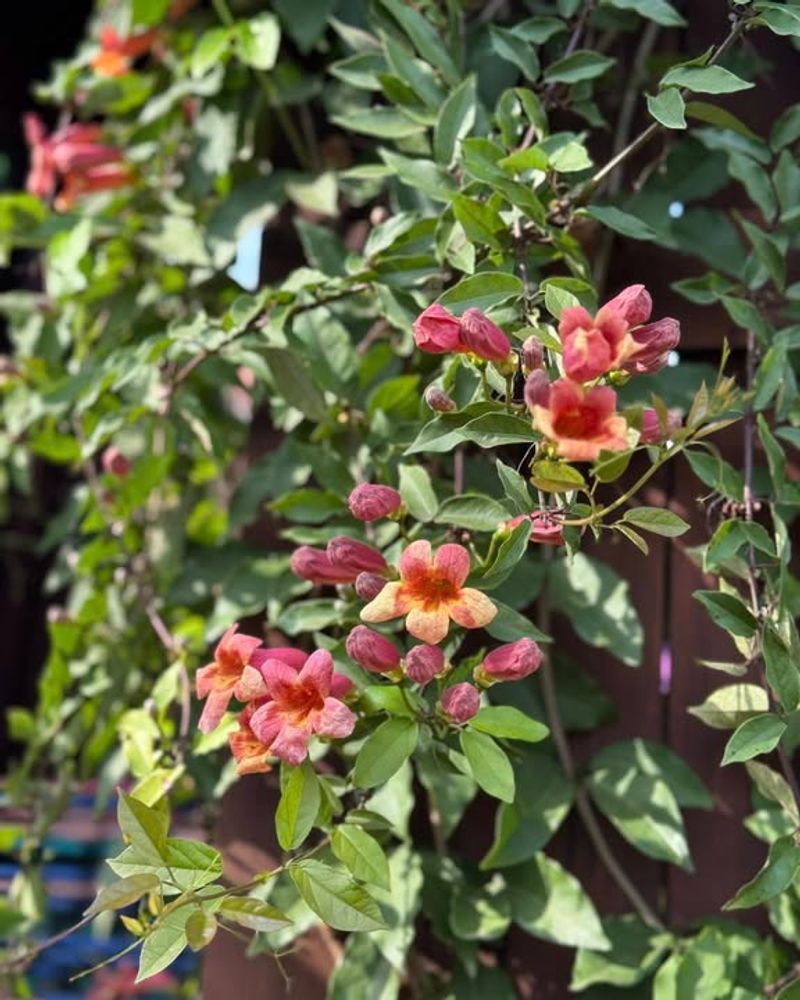
Crossvine earns its spot on this list by being one of the most reliable fence-covering vines in the entire Southeast.
Native to North Carolina and surrounding states, it is a semi-evergreen climber that holds its leaves through most winters, keeping your fence looking full even when temperatures drop. That is a major win for gardeners who want year-round coverage.
In spring, Crossvine puts on a spectacular show. The flowers are trumpet-shaped and come in a gorgeous mix of orange and yellow, sometimes with reddish tones depending on the variety.
They appear in late winter to early spring, often making them one of the first vines to bloom in the garden. Hummingbirds return from their winter travels just in time to enjoy them.
The plant climbs using tendrils and can reach 15 to 20 feet, which is more than enough to cover even a tall fence in a single season. It attaches well to wood, brick, and wire fencing without needing much help.
Give it full sun for the best flowering, though it manages fine in partial shade too. Crossvine is low-maintenance once established, needing only occasional pruning to keep its shape.
Gardeners across the Piedmont and coastal plain of North Carolina have used it for years because it simply works. It is tough, beautiful, and perfectly suited to the local climate.
4. Coral Honeysuckle
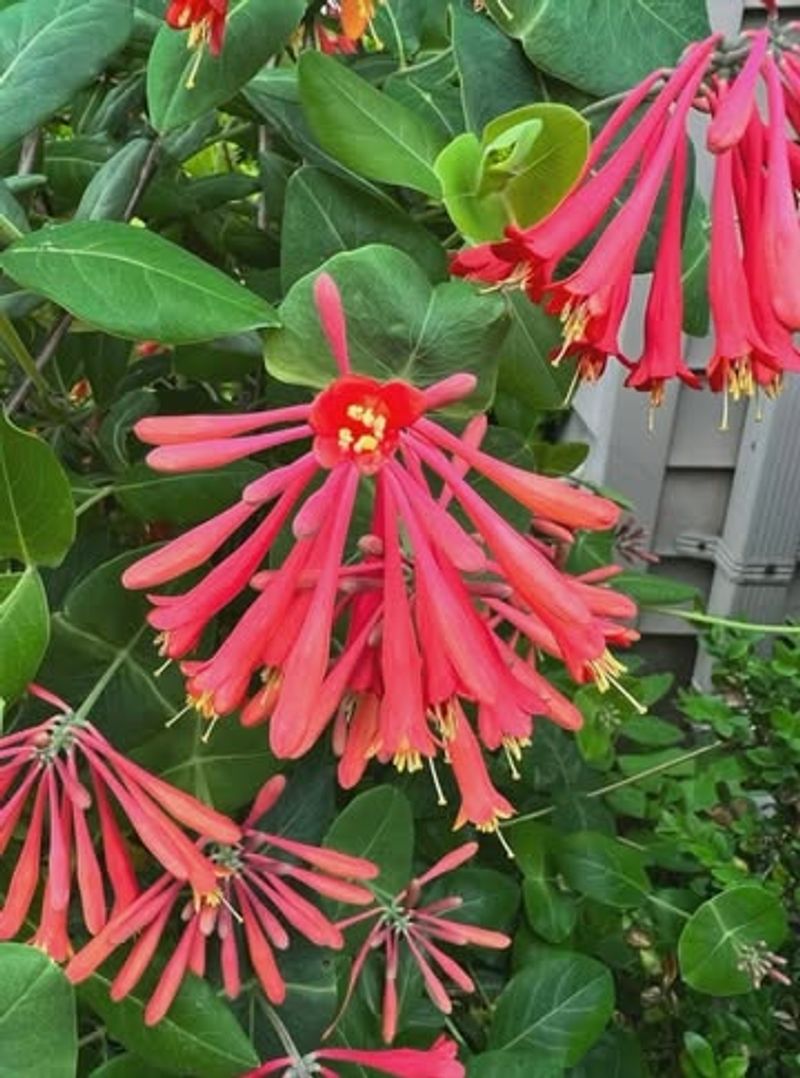
Not all honeysuckles are created equal. While Japanese Honeysuckle can take over a yard and crowd out native plants, Coral Honeysuckle is the well-behaved native cousin that every North Carolina gardener should know about.
It grows quickly, covers fences beautifully, and never turns into a problem you regret planting.
The flowers are long, slender tubes in shades of red, orange, and sometimes yellow, and they appear from March all the way through July. That is an impressive bloom season that keeps pollinators happy for months.
Ruby-throated hummingbirds are especially fond of these flowers, and butterflies visit regularly as well.
Coral Honeysuckle is semi-evergreen in warmer parts of North Carolina, meaning the leaves stay on through mild winters. It grows 15 to 20 feet tall when given proper support, making it well-suited for covering a standard garden fence from top to bottom.
It twines naturally around wire, wood, and trellis structures without needing to be tied. Plant it in full sun to partial shade and give it regular water during the first growing season while it gets established. After that, it is surprisingly drought-tolerant.
Gardeners in the coastal plain and Piedmont regions find it especially easy to grow. It is one of those rare plants that looks elegant, supports wildlife, and stays manageable all at the same time.
5. Clematis
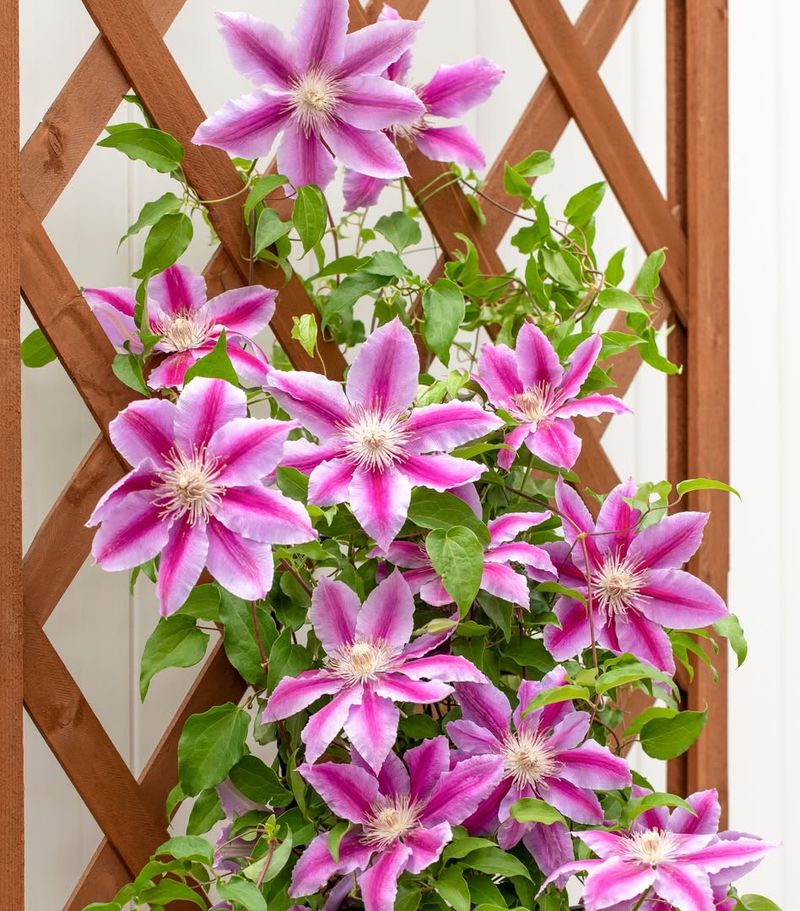
Few vines match the visual drama of a Clematis in full bloom. The flowers can be absolutely enormous, sometimes reaching six inches across, and they come in shades of purple, pink, white, red, and blue.
For North Carolina gardeners who want a fence that stops people in their tracks, Clematis is a fantastic choice that delivers serious impact.
There are hundreds of Clematis varieties, and many of them perform beautifully in North Carolina’s climate. Some bloom in spring, others in summer, and a few in fall, so choosing the right variety means you can have flowers for much of the growing season.
They climb quickly using leaf stems that wrap around supports, so a wire fence or trellis works perfectly.
One quirky but important tip: Clematis loves having its roots kept cool while its top reaches for the sun. Planting low-growing perennials or placing a stone at the base to shade the roots makes a big difference in how well the plant performs.
Full sun on the upper part of the vine is ideal. Pruning rules vary by variety, so checking the specific type you plant is worth the extra step. Most Clematis vines in North Carolina grow 6 to 12 feet per season, which is plenty to cover a fence panel or two.
With the right care, this vine becomes a showpiece that neighbors will notice and admire every single year.
6. Confederate Jasmine
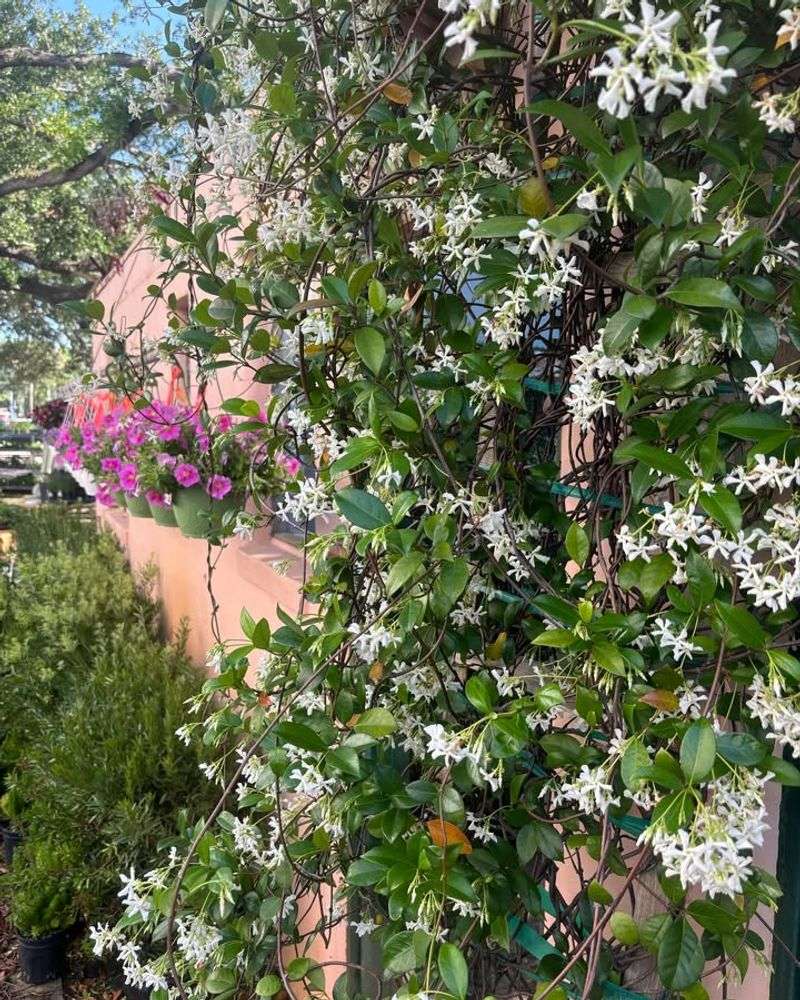
Walking past a fence covered in Confederate Jasmine in full bloom is an experience you do not forget quickly. The tiny white flowers release a sweet, intense fragrance that drifts across the yard and even into the house if a window is open.
For gardeners in coastal North Carolina and the warmer Piedmont areas, this vine is one of the most rewarding choices around.
Confederate Jasmine, also known by its botanical name Trachelospermum jasminoides, is an evergreen twining vine that holds its glossy dark green leaves all year long. That means full fence coverage in every season, not just when the plant is blooming.
The flowers appear in late spring and early summer, turning an ordinary fence into something truly special.
It grows best in USDA zones 7b through 10, which covers much of the coastal plain and lower Piedmont of North Carolina perfectly. Full sun encourages the most blooms, but it handles partial shade without too much of a drop in performance.
The vine can reach 20 feet or more when given room to spread. Water it regularly during its first year to help it settle in, and then it becomes quite tough and self-sufficient. Light pruning after the bloom season keeps it tidy.
If you want a fence that smells as good as it looks, Confederate Jasmine belongs at the very top of your planting list.
7. Passionflower
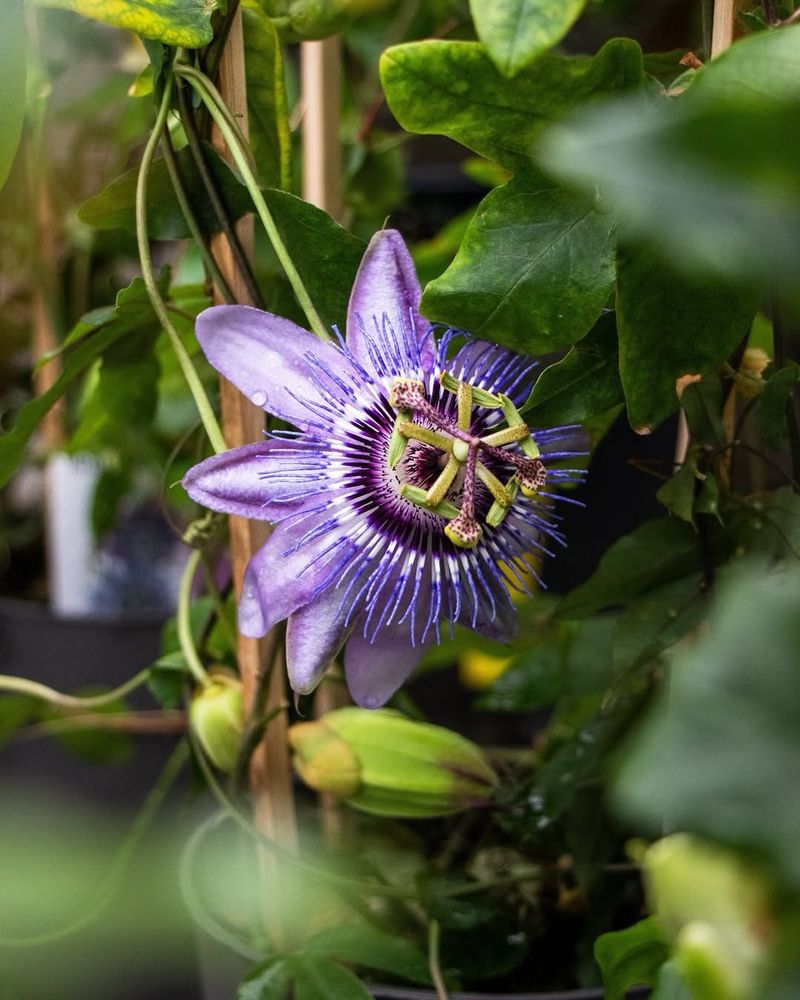
Passionflower might be the most exotic-looking plant you can grow in a North Carolina garden without any tropical fuss.
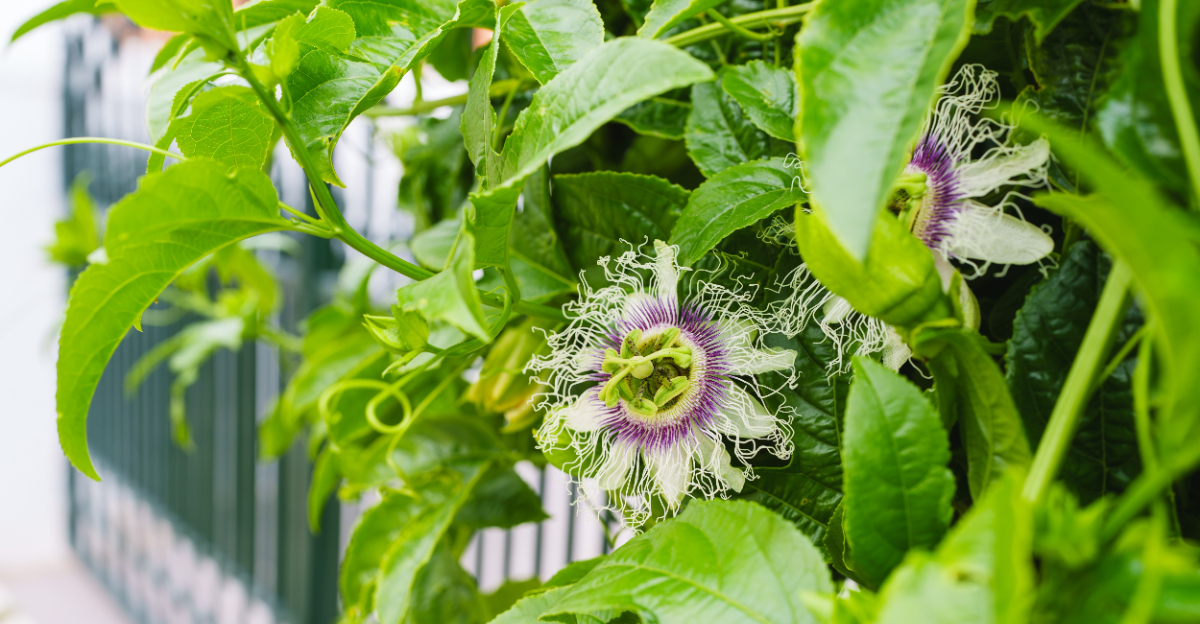
The flowers look like something out of a science fiction movie, with layers of purple and white fringe surrounding a complex center that almost seems engineered rather than natural. Visitors to your yard will stop and stare every single time.
Despite its dramatic appearance, this is actually a native vine that grows wild across North Carolina. It is perfectly adapted to the local climate and thrives in the summer heat without any special treatment.
Once it finds a fence or trellis to climb, it spreads quickly using curling tendrils that grip onto almost any surface.
Passionflower is also a host plant for Gulf Fritillary and Zebra Longwing butterflies, making it a favorite among gardeners who want to support local wildlife. The blooms appear from June through September, giving you months of those spectacular flowers.
After blooming, the vine produces small egg-shaped fruits that wildlife enjoy eating in the fall.
Plant it in full sun to partial shade and give it well-drained soil. It spreads through underground roots and can pop up in new spots around the garden, which some gardeners love and others prefer to manage with occasional trimming.
Either way, the visual payoff is absolutely worth it, and it adds a wild, natural energy to any North Carolina fence line.
8. Climbing Roses
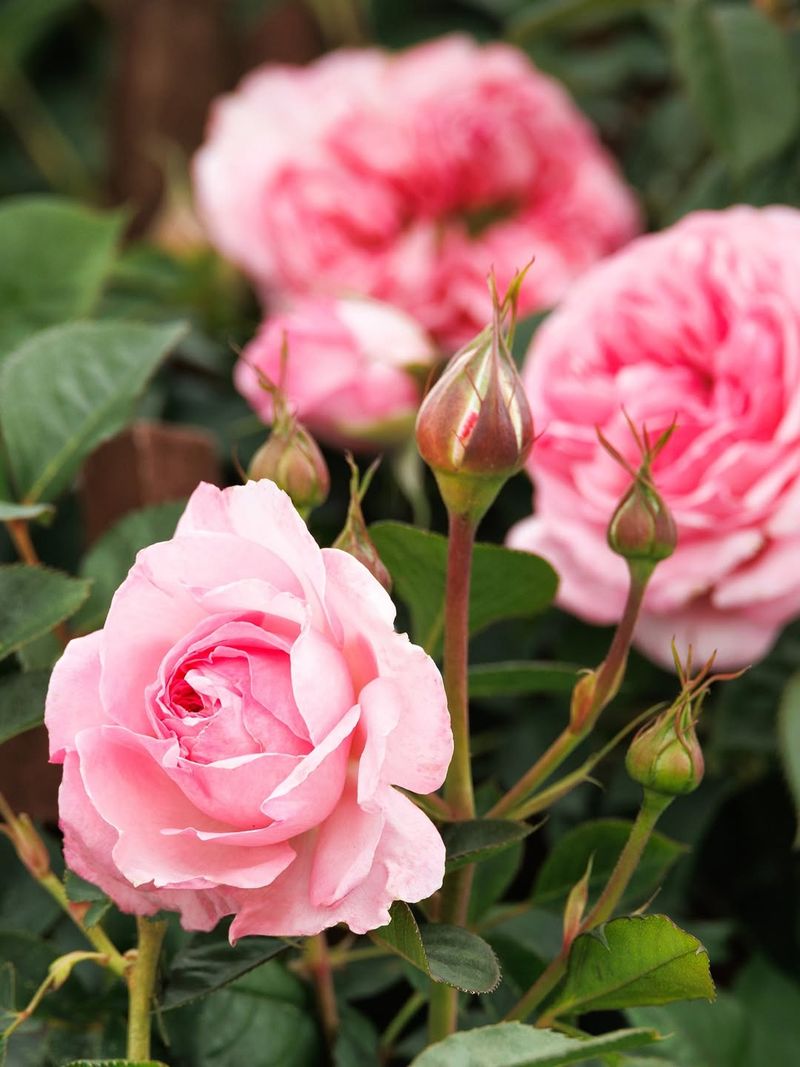
There is a reason climbing roses have been a garden favorite for centuries. When a long cane arches over a fence covered in clusters of pink, red, or white blooms, the whole yard takes on a romantic, almost storybook quality.
North Carolina gardeners have wonderful options when it comes to choosing climbing rose varieties that handle the local heat and humidity without too much trouble.
Climbing roses are not true vines, which means they do not naturally attach to surfaces on their own. Instead, they produce long flexible canes that need to be tied or woven through fence rails and trellis panels.
This sounds like extra work, but the process is actually enjoyable and gives you full control over how the plant grows and spreads along the fence.
Varieties like New Dawn, Blaze, and the disease-resistant Knock Out climbing types perform especially well in North Carolina conditions. They bloom heavily in spring and often rebloom through fall.
Full sun is essential, so pick a south-facing or east-facing fence for the best results. Good air circulation helps prevent fungal issues, which can be a concern in humid coastal and Piedmont regions.
Spacing canes apart when training them along the fence reduces moisture buildup. Regular feeding with a rose fertilizer in spring and early summer keeps the plants producing blooms generously.
With a little attention, climbing roses turn an ordinary fence into a jaw-dropping garden feature.
9. Hyacinth Bean Vine
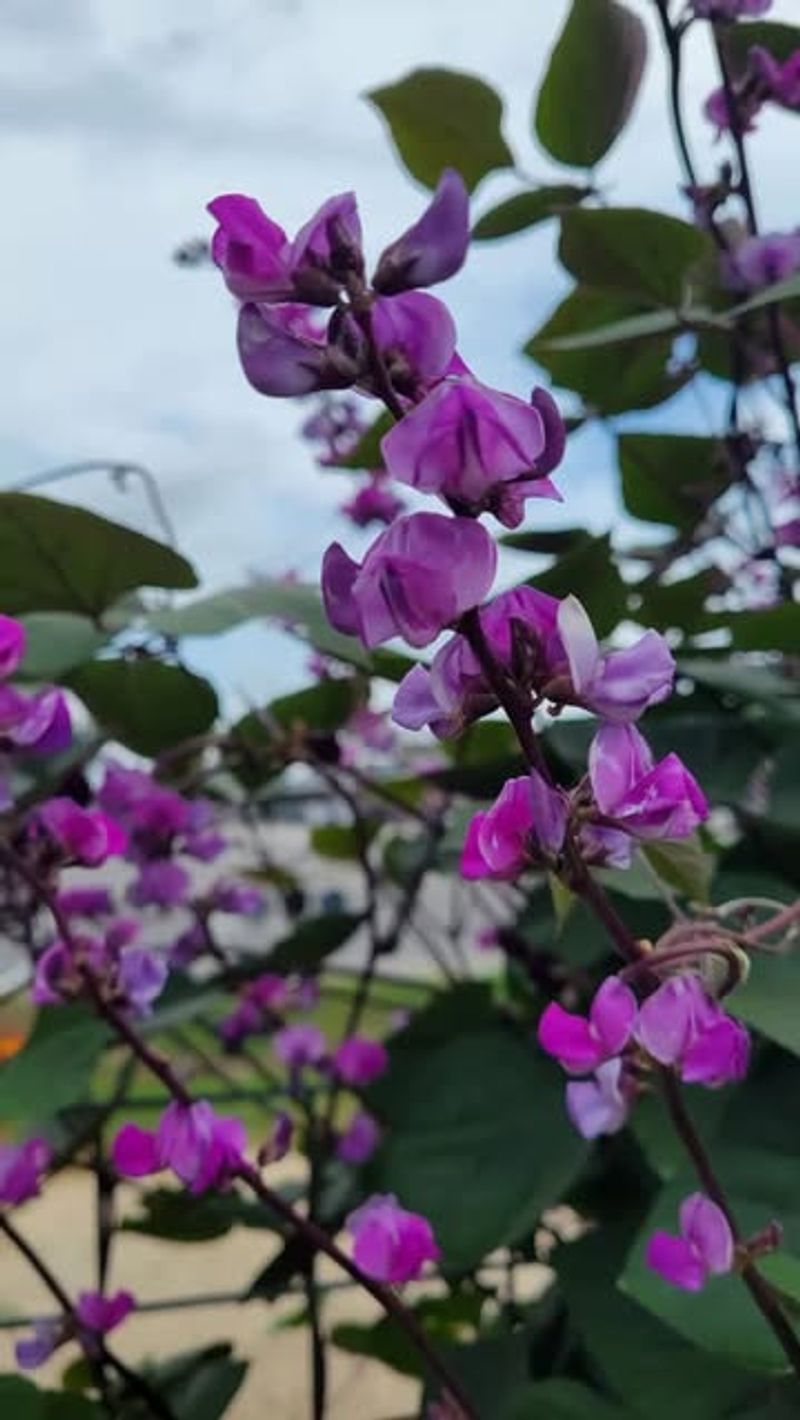
If patience is not your strongest quality when it comes to gardening, Hyacinth Bean Vine is about to become your new best friend. This annual vine grows from seed to full fence coverage in a single summer, and it does it with style.
The combination of purple flowers, dark green leaves with purple veins, and shiny deep-purple seed pods creates a color show that is genuinely hard to beat.
Hyacinth Bean thrives in the heat, which makes it perfectly suited for North Carolina summers. While other plants slow down in July and August, this vine just keeps climbing and flowering.
It can grow 10 to 15 feet or more in one season, covering a fence panel completely by midsummer if you get it started early enough in spring.
Direct sow seeds after the last frost date in your area, which varies from March in the coastal plain to mid-April in the mountains and foothills. Soaking seeds overnight before planting speeds up germination noticeably.
Full sun and regular watering during dry spells keep the vine growing at full speed. Because it is an annual, you will need to replant each year, but many gardeners find that seeds drop and sprout naturally the following spring.
The ornamental seed pods also dry beautifully and can be saved for replanting. For a fast, colorful, and conversation-starting fence cover anywhere in North Carolina, Hyacinth Bean delivers every time.
10. Morning Glory
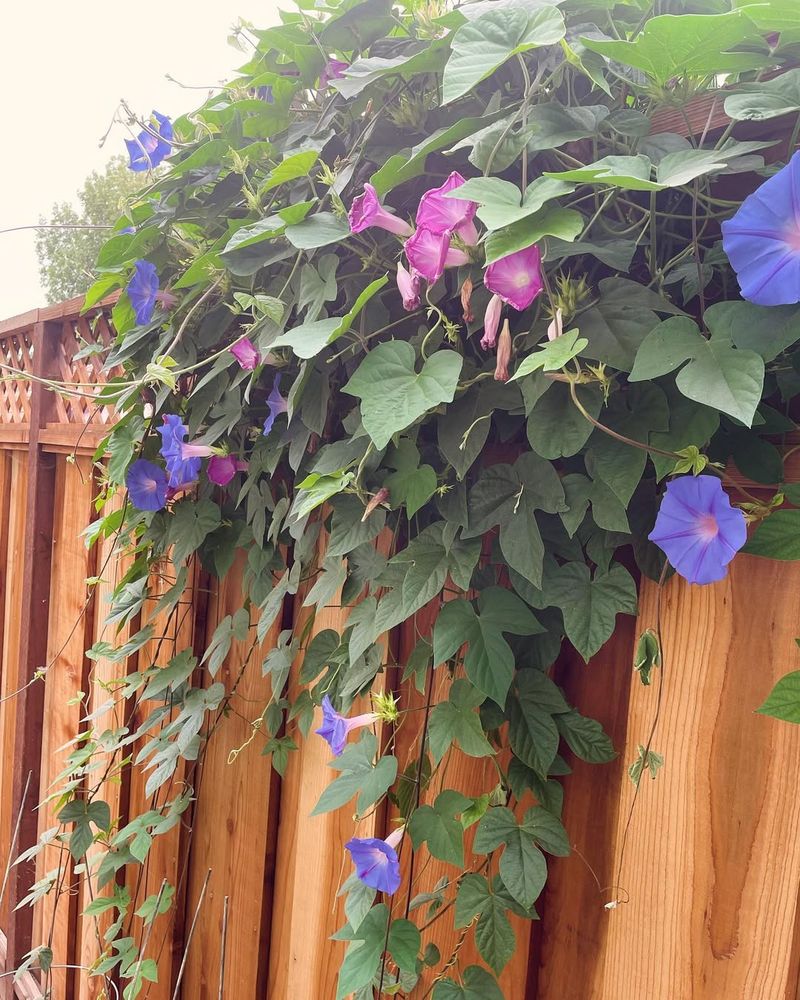
Morning Glory is one of those plants that makes gardening feel magical. Each morning, fresh trumpet-shaped flowers open up in vivid shades of blue, purple, pink, and white, creating a fence display that looks brand new every single day.
By afternoon the blooms close, and the next morning a fresh round opens again, keeping the show going all summer long.
This fast-growing annual is incredibly easy to start from seed directly in the ground. Scratch the seed coat lightly with sandpaper or soak seeds in water overnight, then press them into the soil after the last frost.
In North Carolina, where the growing season is long and warm, Morning Glory takes off quickly and can cover a fence in just a few weeks once it gets going.
Full sun is where this vine truly shines. It grows best along south-facing or west-facing fences where it gets six or more hours of direct light daily.
The vines twine naturally around wire fencing, wooden rails, and trellis panels, needing almost no help to climb upward. They can easily reach 10 to 15 feet in a single season.
Morning Glory reseeds itself generously, so once you plant it, you may find it returns on its own the following year without any extra effort on your part.
Coastal and Piedmont gardeners in North Carolina especially love this vine for its reliability and cheerful, nonstop color through the heat of summer.