7 Common Mistakes Georgia Gardeners Make When Growing Blueberries
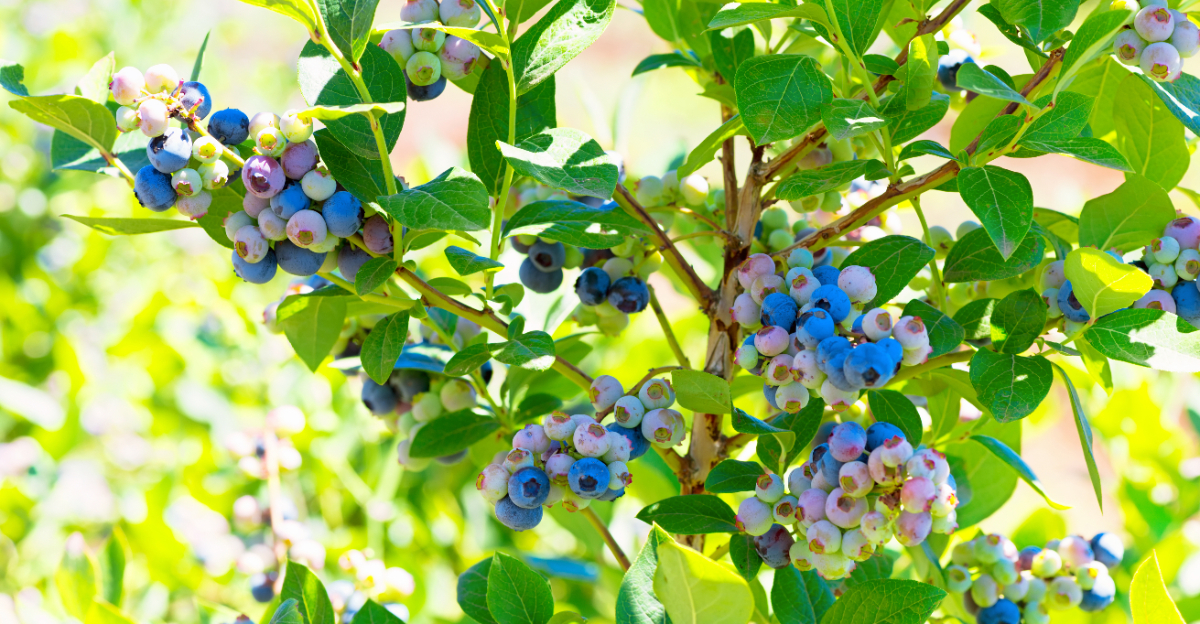
Blueberries can be incredibly rewarding to grow in Georgia, but they are not quite as carefree as many gardeners expect.
These shrubs have a few very specific needs, and when those needs are overlooked, plants often struggle to grow well or produce the berries people are hoping for.
Many of the problems Georgia gardeners run into with blueberries come down to a handful of common mistakes.
Soil that is not acidic enough, planting only one variety, or placing shrubs in the wrong spot can quietly hold plants back long before harvest season arrives.
The good news is that blueberries respond quickly when the right conditions are in place. With proper soil, enough sunlight, and a little planning, these shrubs can become some of the most productive plants in the garden.
Avoiding a few common missteps can make the difference between a disappointing crop and baskets of sweet berries each season.
1. Planting Blueberries In Soil That Is Not Acidic Enough
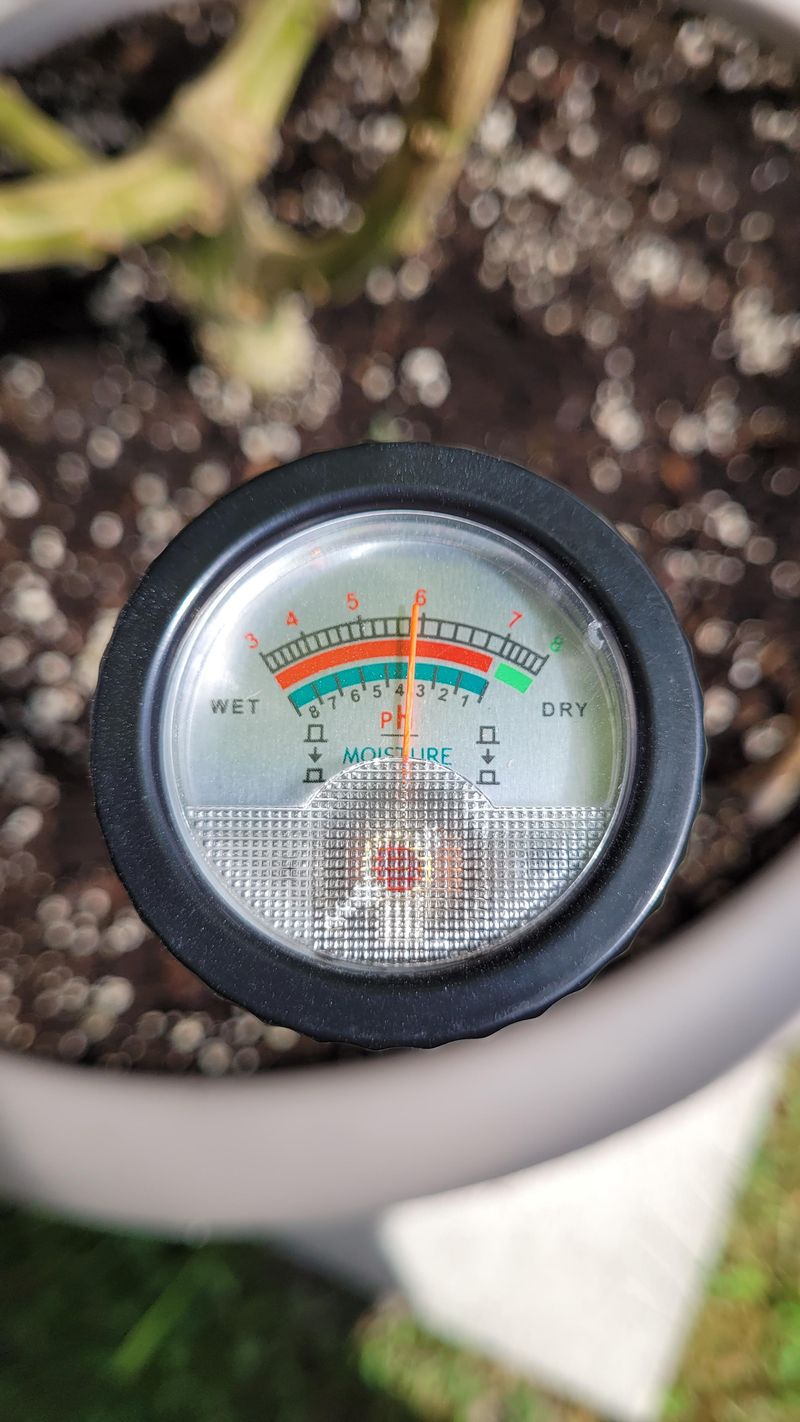
Soil pH is probably the single biggest reason blueberry bushes struggle in Georgia, and most gardeners do not even think to check it before planting. Blueberries need soil with a pH between 4.5 and 5.5.
Go outside that range, and the plants cannot absorb nutrients properly, no matter how much fertilizer you add.
Georgia soil varies a lot depending on where you live. Red clay in the Piedmont region tends to run closer to neutral pH, while sandy soils in South Georgia can be more acidic naturally.
Either way, testing your soil before planting is not optional. Your local UGA Extension office can run a soil test for a small fee, and the results will tell you exactly where you stand.
If your pH is too high, powdered sulfur is the most reliable way to bring it down. Work it into the soil several months before planting so it has time to react.
Do not try to fix the pH with vinegar or other shortcuts. Sulfur works slowly and consistently, which is what you want.
Even after planting, check your soil pH every year or two. Over time, irrigation water and fertilizer can raise the pH back up.
Catching that drift early saves you from wondering why your healthy-looking bushes suddenly stopped producing well. Staying on top of soil chemistry is the kind of habit that separates gardeners who get big harvests from those who just get frustrated.
2. Growing Blueberries In Heavy Poorly Drained Soil
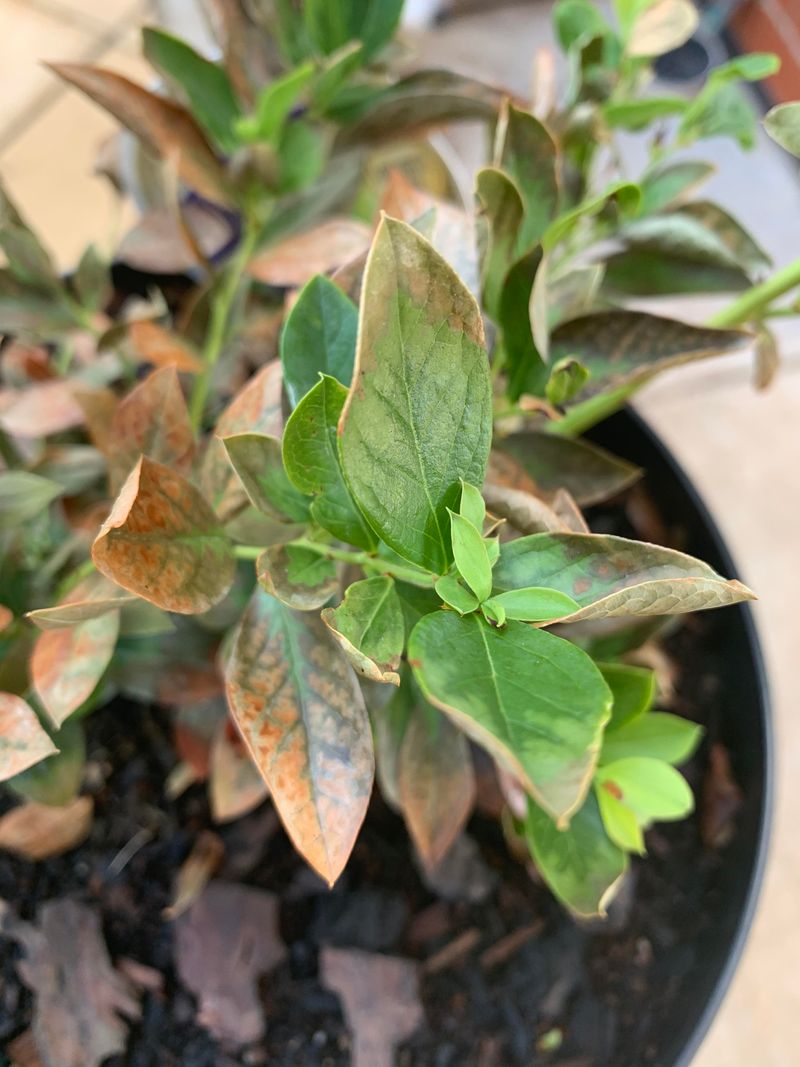
Standing water around a blueberry bush is a fast track to root problems. Blueberries have fine, shallow roots that need oxygen in the soil to function.
When water sits around those roots for too long, the roots suffocate and rot sets in before you even notice something is wrong.
Heavy clay soil is extremely common across central and north Georgia, and it holds water like a sponge. If you squeeze a handful of your soil and it forms a tight ball that barely crumbles, you have got drainage issues to deal with.
Planting straight into that kind of soil without any amendments is asking for trouble.
Raised beds are one of the smartest solutions for Georgia gardeners dealing with clay. Build your bed up at least 12 to 18 inches, fill it with a mix of pine bark, coarse sand, and native soil, and your drainage problems largely disappear.
In-ground planting can work too, but you need to break up the clay and mix in plenty of organic matter before you start.
Avoid planting in low spots in your yard where rainwater naturally collects. Even if the soil is decent, those low areas pool water after heavy Georgia rainstorms, which happen often.
Choose a slightly elevated spot with good natural runoff, and your blueberry roots will stay much happier. Healthy drainage means healthy roots, and healthy roots mean actual fruit on your bushes come harvest time.
3. Planting Only One Blueberry Bush Instead Of Multiple Varieties
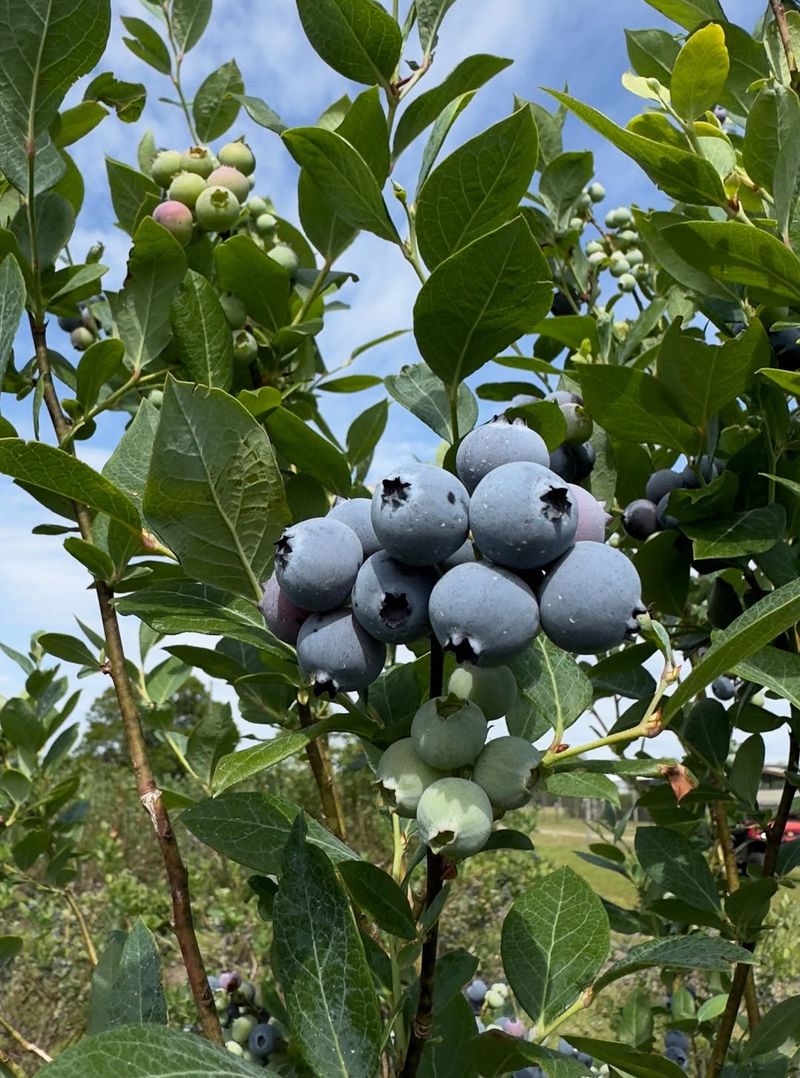
Putting in just one blueberry bush and expecting a big harvest is one of the most common letdowns for Georgia home gardeners.
Blueberries rely heavily on cross-pollination to set fruit well, and a single bush just cannot do that job on its own, even if the variety is technically self-fertile.
Planting two or more different varieties that bloom at the same time makes a huge difference in how much fruit you actually get. Rabbiteye varieties are the most popular choice across Georgia because they handle the heat and humidity well.
Pairing something like Tifblue with Climax or Premier gives you overlapping bloom times and much better pollination results.
Bees do most of the pollination work, so having multiple bushes close together gives them more reason to move from plant to plant.
Space your bushes roughly six feet apart so they have room to grow without crowding each other, but close enough that pollinators naturally visit both.
A small cluster of three or four bushes is genuinely more productive than one large, well-cared-for plant.
Another bonus of planting different varieties is that they often ripen at slightly different times. That means instead of getting all your berries at once and scrambling to use them up, you get a longer harvest window spread across several weeks.
Across Georgia, that can stretch your blueberry season from late spring well into summer, giving you fresh berries over a much longer stretch of time.
4. Placing Blueberries In Too Much Shade
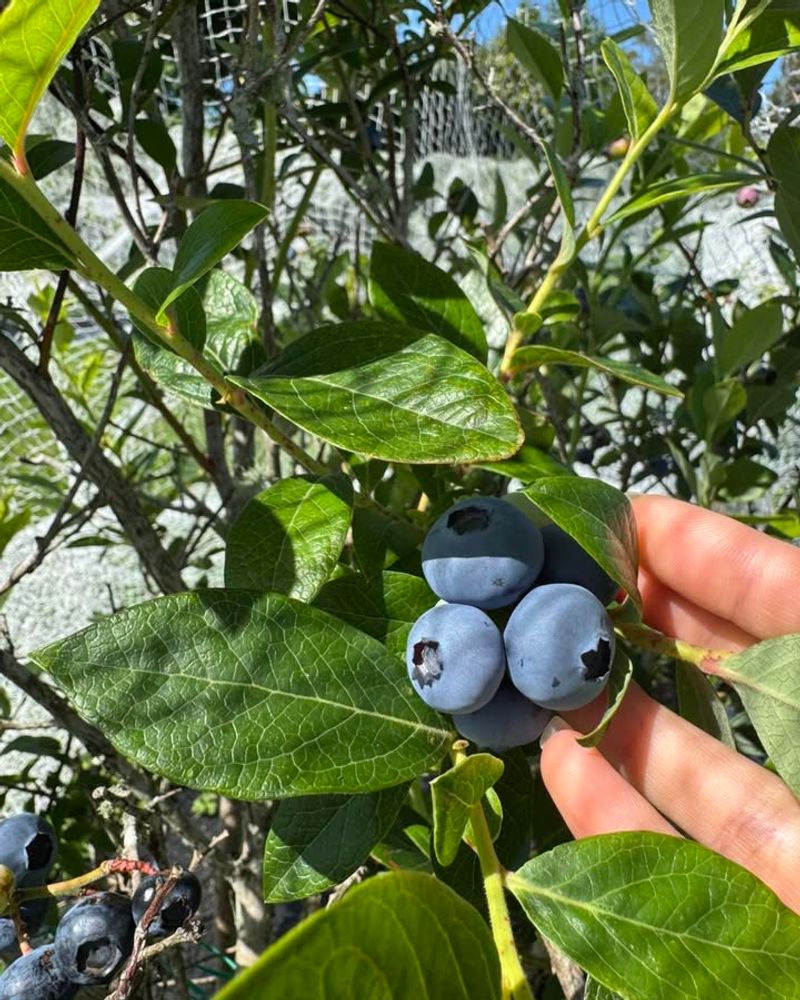
Blueberries need sun, and they need a lot of it. A spot that gets less than six hours of direct sunlight per day will produce weak, leggy plants with thin fruit sets.
Georgia summers are intense, but blueberries are built for it, and shading them out does far more harm than the sun ever would.
A lot of gardeners make the mistake of planting near large trees thinking the partial shade will protect the bushes from the afternoon heat.
What actually happens is the trees compete for water and nutrients, their roots crowd out the blueberry roots, and the canopy blocks the light the bushes desperately need.
Full sun with good soil prep is always the better call.
South-facing spots in your Georgia yard tend to get the most consistent sunlight throughout the day. If you have a fence or structure on one side, make sure it is not blocking morning sun, which is especially valuable for fruit development.
Take a few days to actually observe how sunlight moves across your yard before you commit to a planting location.
If your existing bushes are not producing well and you suspect shade is the issue, look up. Nearby trees may have grown significantly since you first planted.
Trimming back overhanging branches can sometimes recover a struggling plant without having to move it entirely. Getting more light to your bushes is one of the simplest fixes available, and the results usually show up clearly by the next growing season.
5. Watering Inconsistently During Hot Georgia Summers
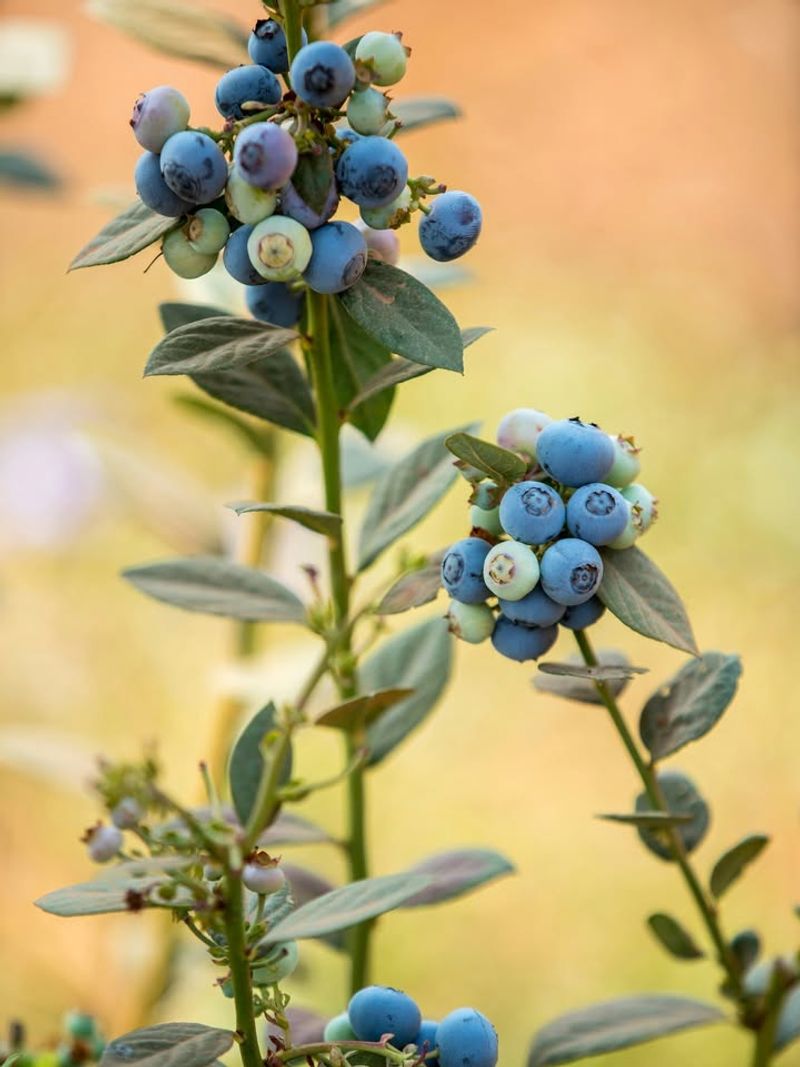
Georgia summers are no joke. Weeks of high temperatures, intense sun, and stretches without rain put serious stress on blueberry plants, and watering inconsistently during that period is one of the quickest ways to ruin a crop.
Blueberries have shallow roots that dry out fast, and letting the soil swing from bone dry to soaking wet is rough on them.
Aim for about one to two inches of water per week during the growing season.
Drip irrigation works really well for blueberries because it delivers water directly to the root zone without wetting the foliage, which helps reduce fungal issues that are already a concern in Georgia’s humid conditions.
A simple timer setup can take the guesswork out of the whole process.
During heat waves, which Georgia gardeners deal with regularly from June through August, you may need to water more frequently. Check the soil a few inches down.
If it feels dry at that depth, it is time to water regardless of what your schedule says. Wilting leaves in the morning, not just in afternoon heat, are a sign the plant is genuinely stressed.
Mulching heavily around your bushes helps the soil hold moisture between watering sessions, which takes some pressure off your irrigation routine. Even with consistent watering, unprotected soil in a Georgia summer can lose moisture surprisingly fast.
Pairing a solid watering schedule with good mulch coverage is one of the most practical combinations you can put in place for summer success.
6. Skipping Mulch Around Blueberry Plants
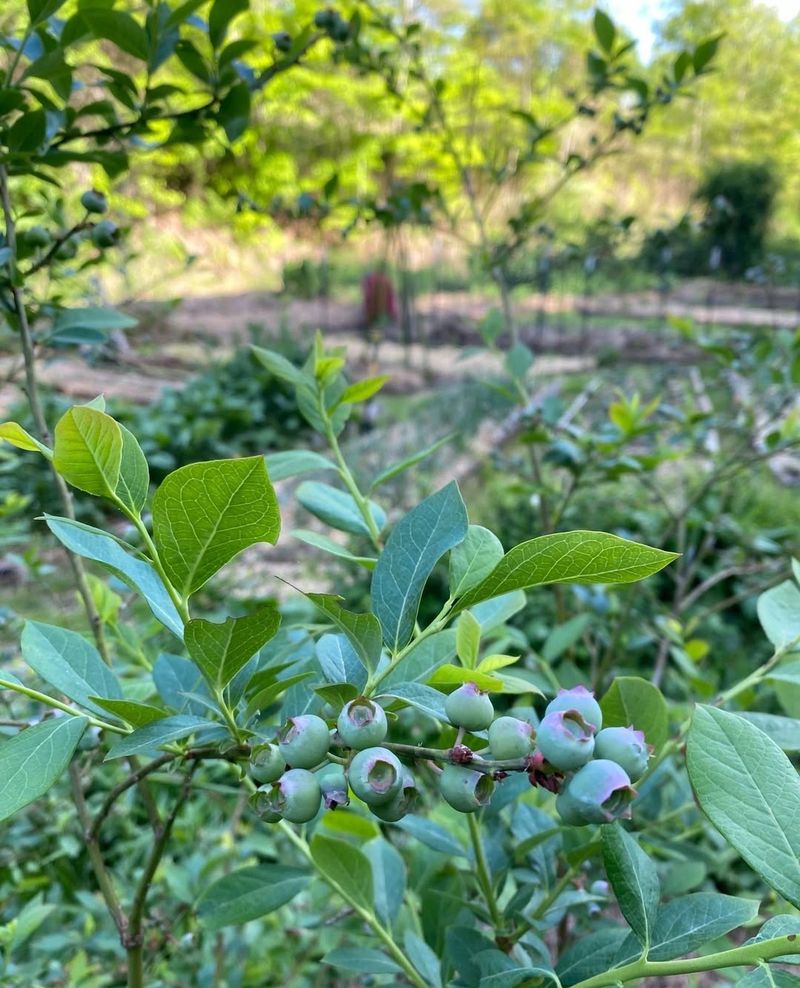
Skipping mulch is one of those shortcuts that costs you far more than the few minutes it saves. Mulch does several things at once for blueberry plants, and in Georgia’s climate, all of those things matter.
It holds moisture in the soil, moderates soil temperature, suppresses weeds, and as it breaks down, it gradually acidifies the soil, which is exactly what blueberries want.
Pine bark mulch and pine straw are both excellent choices for Georgia gardeners. Both are widely available, relatively inexpensive, and naturally acidic.
Apply a layer three to four inches deep around each bush, keeping the mulch pulled back slightly from the main stem so it does not trap moisture against the bark.
Bare soil around blueberry plants is a problem in multiple ways. Weeds compete directly with the shallow root system for water and nutrients.
Soil temperatures in Georgia can get extremely high in summer, and exposed soil heats up fast, stressing those surface roots. Mulch acts as insulation against both heat and cold, which also helps during the occasional Georgia freeze in late winter.
Refreshing your mulch layer once a year keeps it effective. Organic mulch breaks down over time, which is actually beneficial for soil health, but it also thins out and loses its protective qualities.
Adding a fresh layer each spring before temperatures climb is a simple habit that pays off consistently. Gardeners who mulch well almost always have healthier, more productive plants than those who skip this step entirely.
7. Pruning Blueberries At The Wrong Time
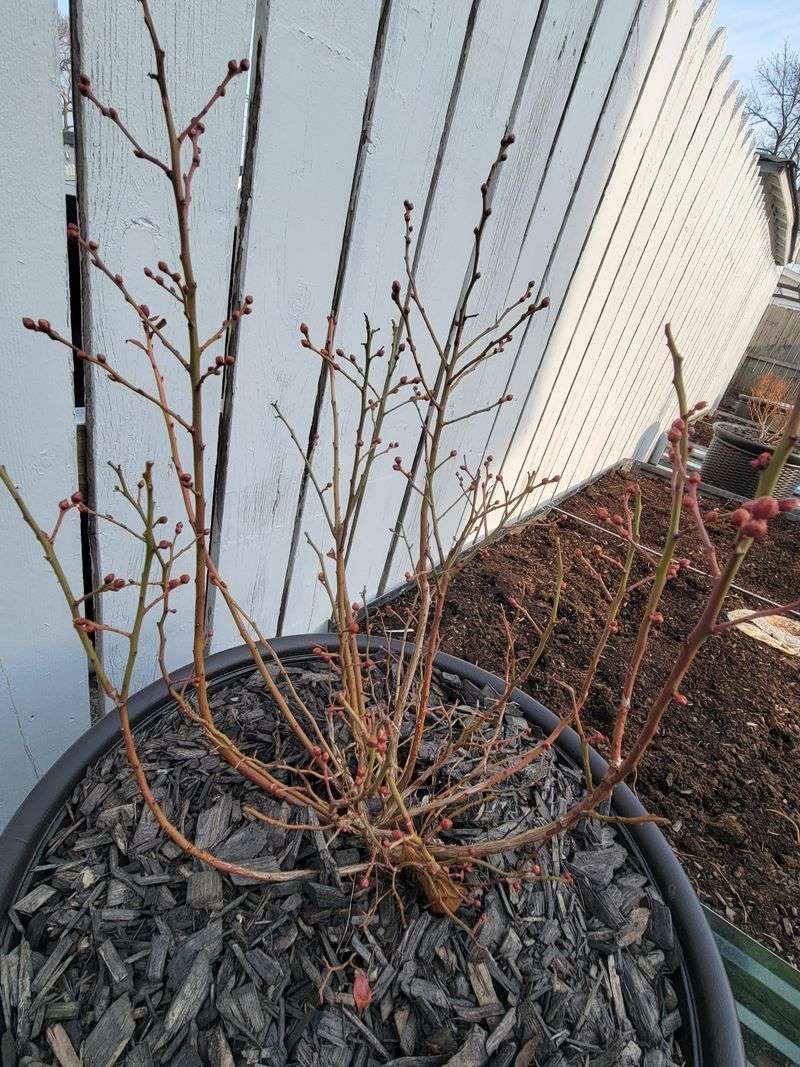
Grab your pruning shears at the wrong time of year, and you can cut off most of your next harvest without realizing it. Blueberries set their fruit buds in late summer and fall, and those buds stay on the plant through winter, ready to bloom come spring.
Prune in fall or early winter and you are removing exactly what you were hoping to eat.
Late winter is the right window for pruning blueberries in Georgia, generally from January through early February before new growth starts.
At that point the plant is fully dormant, the fruit buds are visible and easy to work around, and the bush has not yet put energy into spring growth.
You get a clear picture of the plant structure and can make smarter cuts.
Focus your pruning on removing old, thick canes that are no longer highly productive. Canes older than six or seven years tend to produce less fruit and take up space that younger wood could use.
Cutting a few of the oldest canes back to the ground each year keeps the bush renewing itself gradually without shocking the plant all at once.
Young bushes, especially those in their first two or three years, should be pruned very lightly.
Removing flower buds in the early years actually helps the plant put energy into root and branch development rather than fruit, which leads to a much stronger, longer-lived bush.
It is a hard thing to do when you are eager for berries, but Georgia gardeners who are patient in those early years almost always end up with better plants long-term.