14 Common Plants That Might Become Illegal In California Home Gardens
California’s climate supports lush growth—but it also fuels concern over invasive species, water consumption, and fire danger.
As a result, some plants long favored by home gardeners are now under increasing scrutiny.
Certain species spread aggressively, displace native plants, or pose environmental risks that outweigh their ornamental appeal.
Others demand excessive water or contribute to wildfire intensity, making them targets for future regulation.
California gardeners who stay informed can make smarter planting choices now.
Because what’s popular today may not be permitted tomorrow—and removing mature plants later is far more painful than choosing wisely from the start.
1. Scotch Broom (Cytisus Scoparius)
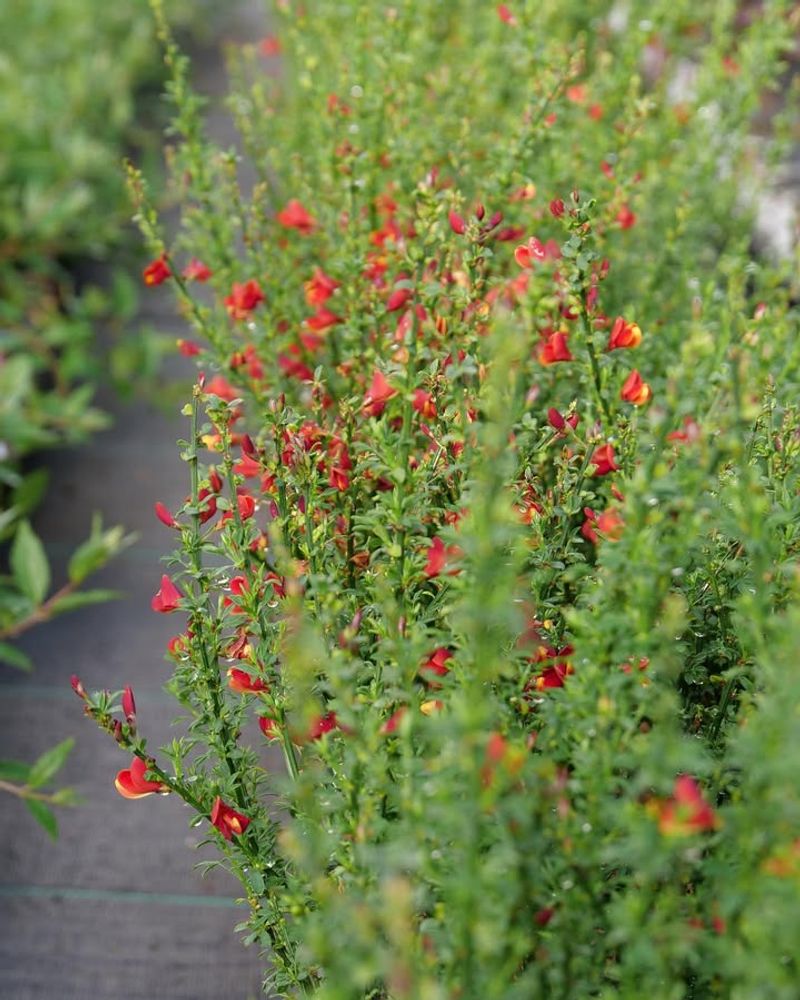
California already classifies Scotch broom as an invasive species, and for good reason.
This woody shrub produces thousands of seeds that remain viable in soil for decades, allowing it to establish massive colonies that crowd out native vegetation.
Once it takes hold in an area, Scotch broom creates a thick, continuous fuel source that dramatically increases wildfire intensity and spread.
Firefighters have documented how these dense stands act like fuses, carrying flames rapidly across landscapes and making containment extremely difficult.
The plant thrives in disturbed soils along roadsides, trails, and hillsides throughout much of California.
Its ability to fix nitrogen gives it a competitive advantage over many native plants, fundamentally altering soil chemistry in invaded areas.
State agencies continue expanding control programs targeting Scotch broom, and several counties have enacted mandatory removal ordinances for property owners.
The California Department of Food and Agriculture maintains active eradication efforts in multiple regions.
Nursery sales have been prohibited for years, and regulations now increasingly target existing plants on private property.
As climate conditions create more favorable environments for this species, expect stricter enforcement and broader planting bans.
Homeowners who currently have Scotch broom should prepare for possible mandatory removal requirements in the coming years, especially in fire-prone regions.
2. Pampas Grass (Cortaderia Selloana)
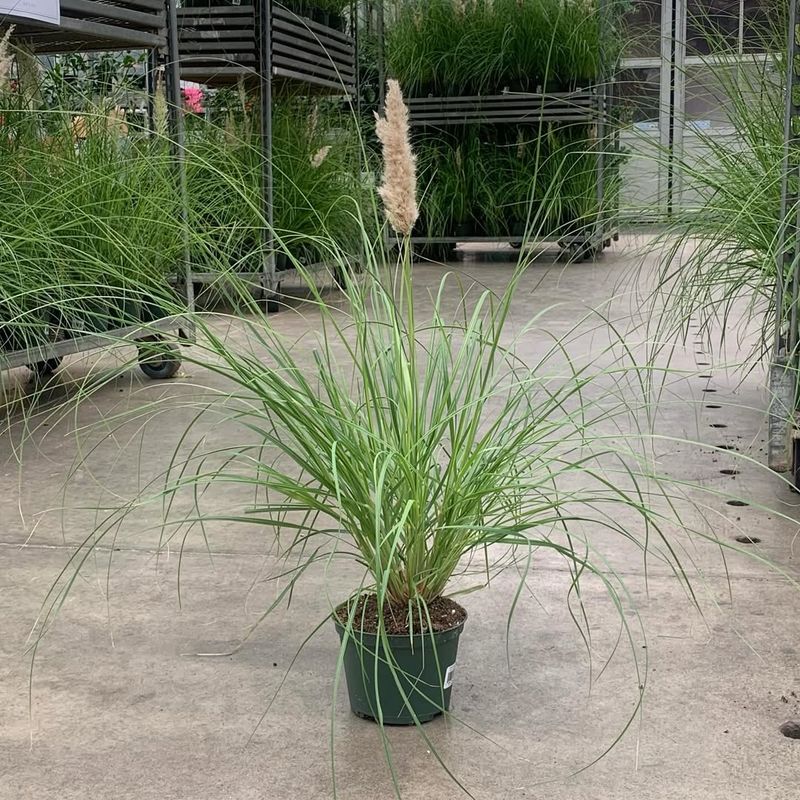
Those dramatic feathery plumes that once symbolized California coastal landscaping now represent a significant ecological threat.
Pampas grass produces millions of wind-dispersed seeds from a single clump, allowing rapid colonization of wildlands, dunes, and riparian areas.
Each plant can reach heights of twelve feet or more, creating dense stands that exclude native vegetation and reduce biodiversity.
The real danger comes during fire season when the plant’s dead leaves and stems become extremely flammable.
These towering grass clumps act as vertical fuel ladders, allowing ground fires to reach tree canopies and structures.
Several California counties, including Santa Barbara and San Mateo, already restrict or prohibit pampas grass planting.
The California Invasive Plant Council rates it as a serious threat requiring management action.
Coastal communities particularly struggle with this species as it displaces native dune vegetation that stabilizes shorelines.
Removal proves challenging because the plant’s root system can extend several feet deep and wide.
Property owners often discover that complete eradication requires professional equipment and multiple treatment cycles.
As awareness grows about pampas grass’s ecological damage and fire risk, more municipalities are considering outright bans.
Homeowners with established plants may soon face requirements to remove them entirely, especially in high fire hazard zones.
3. Fountain Grass (Pennisetum Setaceum)
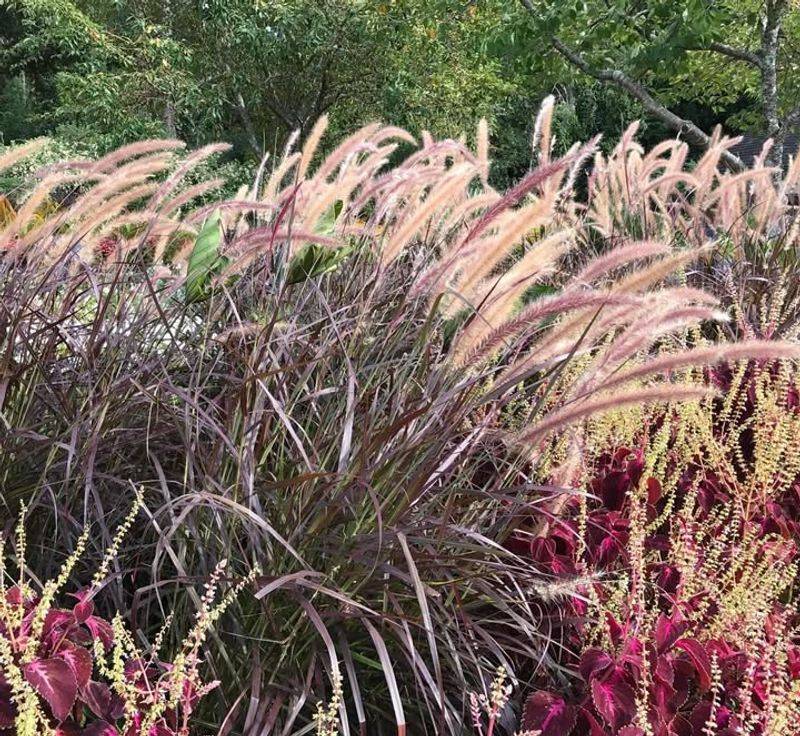
Fountain grass earned its popularity through attractive arching foliage and bottlebrush-like flower spikes, but that beauty comes with serious consequences.
This African native has proven exceptionally aggressive in California’s Mediterranean climate, spreading rapidly through wind-dispersed seeds.
A single mature plant can produce over 10,000 seeds annually, and germination rates remain high even in poor soil conditions.
The species thrives in disturbed areas, roadsides, and open spaces, quickly forming monocultures that eliminate native plant diversity.
Fire ecologists have identified fountain grass as a particularly dangerous invasive because it dramatically increases fire frequency and intensity.
Unlike many native California plants adapted to periodic fires, fountain grass recovers quickly after burning and actually benefits from fire disturbance.
This creates a destructive cycle where the grass invades an area, burns more frequently, then dominates the recovering landscape.
Several California jurisdictions have already banned fountain grass sales and planting, including parts of San Diego County and various desert communities.
The California Department of Food and Agriculture lists it as a noxious weed in multiple counties.
Landscape professionals now actively discourage its use and recommend native alternatives that provide similar ornamental value without ecological harm.
Property owners with existing fountain grass should expect increasing pressure to remove it, particularly in wildfire-prone regions where its presence significantly elevates neighborhood risk.
4. English Ivy (Hedera Helix)
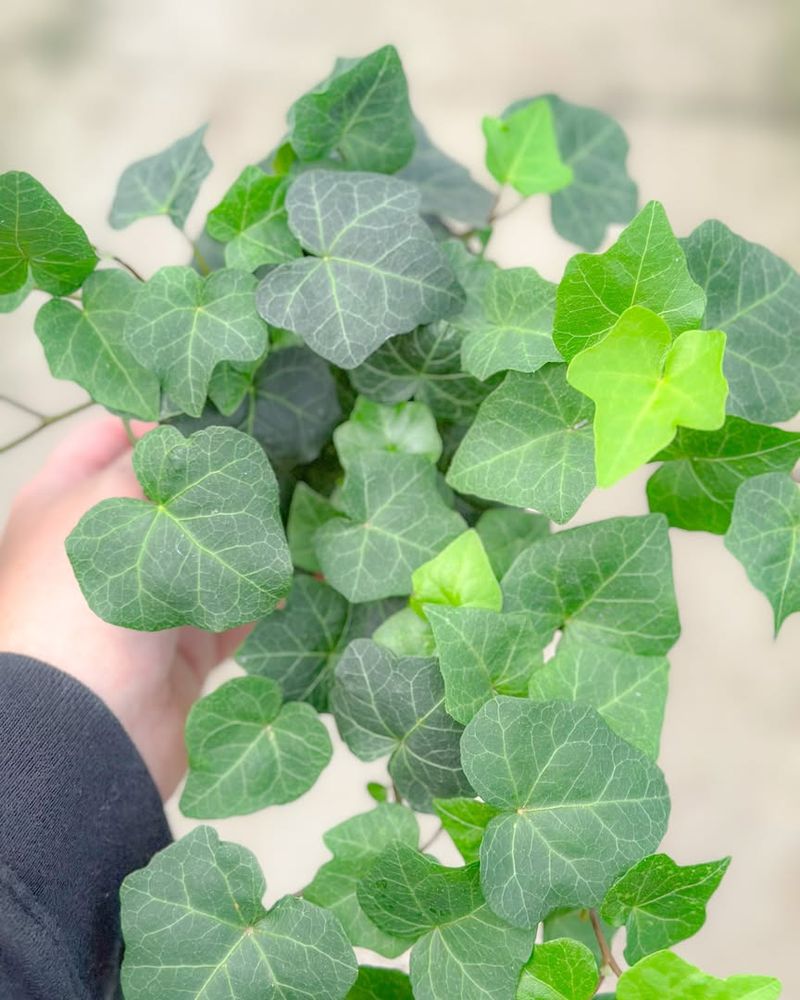
English ivy transforms from charming groundcover to ecological nightmare when it escapes cultivation.
This European native climbs trees, covers forest floors, and smothers native vegetation with remarkable efficiency.
The weight of mature ivy vines can topple trees during storms, creating hazards for homes and power lines.
More insidiously, ivy creates dense mats on tree bark that trap moisture and harbor pests, weakening host trees over time.
Once established in natural areas, English ivy forms impenetrable carpets that prevent native seedlings from germinating.
Birds spread the plant’s seeds after consuming its berries, allowing it to colonize parks, greenbelt areas, and riparian corridors throughout California.
Many California municipalities now discourage English ivy in landscaping and some have begun restricting new plantings.
Homeowner associations increasingly prohibit ivy on shared structures due to the damage it causes to mortar, siding, and paint.
Removal requires persistent effort because the plant readily regenerates from root fragments left in soil.
Environmental groups regularly organize volunteer removal events in public spaces where ivy has invaded.
As California emphasizes native plant landscaping and watershed protection, expect stricter regulations on English ivy.
Properties adjacent to natural areas may face mandatory removal requirements to prevent continued spread into protected habitats.
Gardeners should consider native alternatives like California wild grape that provide similar aesthetics without invasive tendencies.
5. Periwinkle / Vinca (Vinca Major)
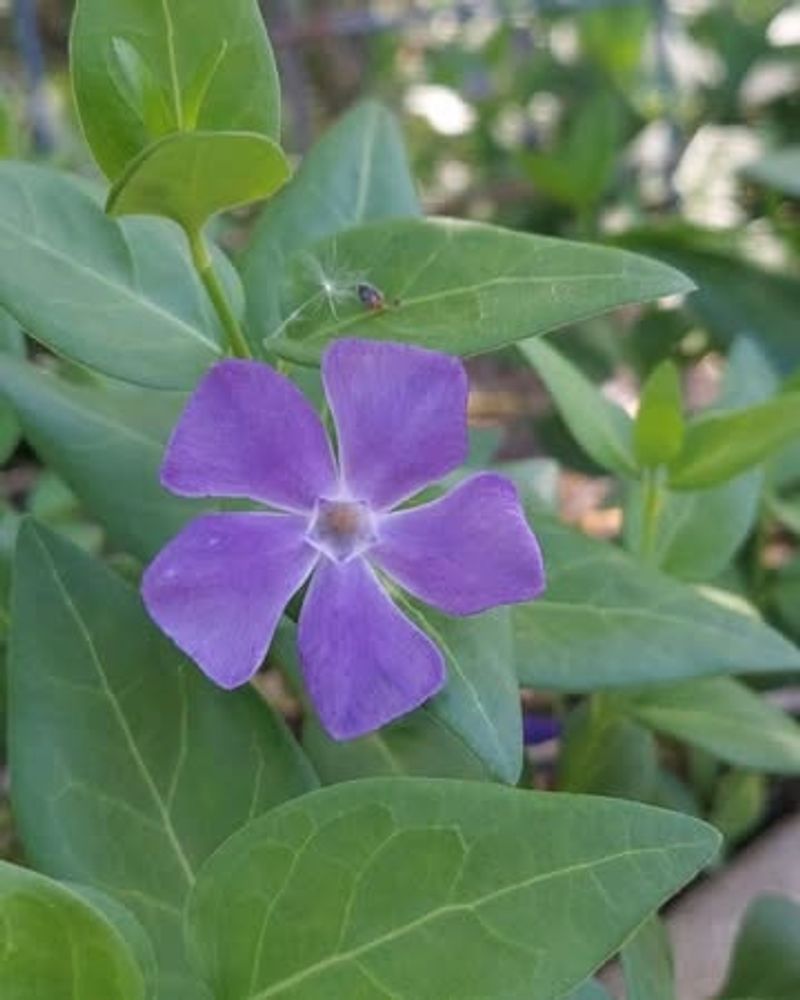
Periwinkle’s cheerful purple flowers and evergreen foliage made it a landscaping favorite for generations, but its aggressive spreading habit tells a different story.
This Mediterranean native excels at colonizing shaded areas, creek banks, and woodland edges where native plants naturally struggle to compete.
The plant spreads through creeping stems that root at every node, creating dense mats that exclude all other vegetation.
California’s Invasive Plant Council officially lists periwinkle as an invasive species requiring management in natural areas.
Watersheds throughout the state report significant periwinkle infestations that alter streambank stability and aquatic habitat quality.
The plant’s ability to thrive in shade gives it particular advantage in riparian corridors where it displaces native ferns, wildflowers, and understory species.
Once established, periwinkle proves extremely difficult to control because stem fragments readily regenerate into new plants.
Several California counties have added periwinkle to their noxious weed lists, and landscape professionals now actively discourage its use.
Native plant nurseries promote alternatives like California fuchsia and Douglas iris that provide similar color without invasive behavior.
Property owners near creeks or natural areas may soon face restrictions on maintaining existing periwinkle plantings.
As statewide emphasis grows on protecting native biodiversity and water quality, expect regulations targeting this seemingly innocent groundcover.
Homeowners should consider proactive removal before mandatory requirements arrive, especially if their properties drain toward natural waterways or parks.
6. Arundo / Giant Reed (Arundo Donax)
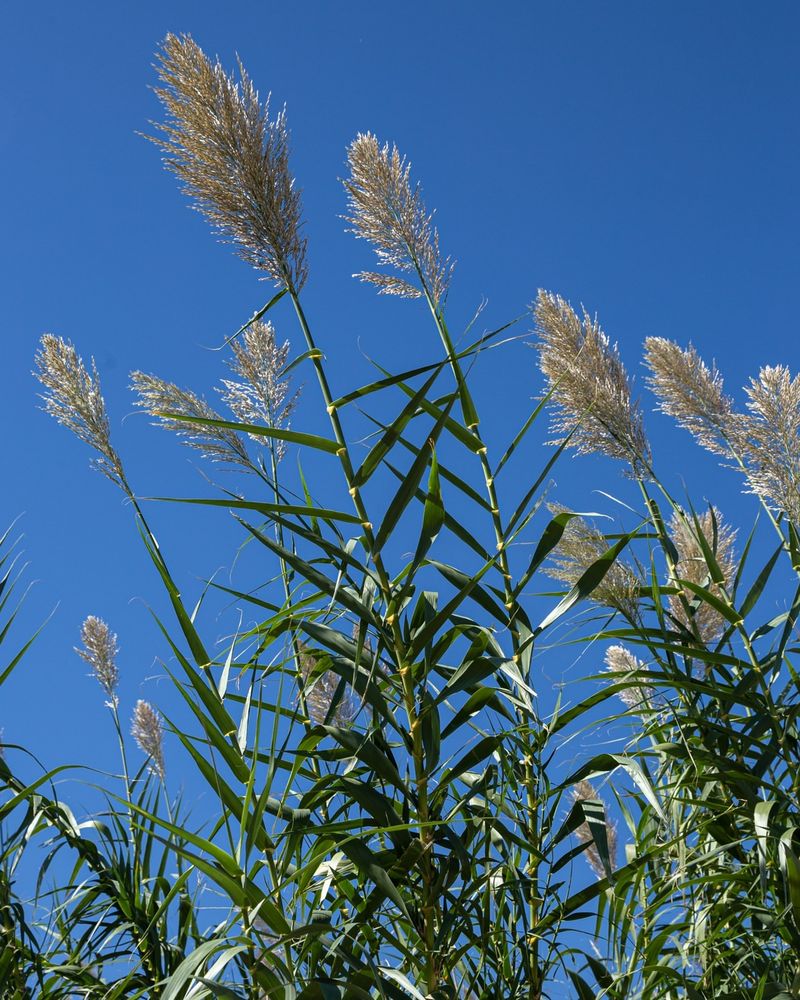
Giant reed ranks among California’s most destructive invasive plants, forming towering bamboo-like stands that fundamentally alter riparian ecosystems.
This Mediterranean grass can grow twenty feet tall and spread through underground rhizomes at alarming rates.
A single plant fragment containing just one node can establish a new colony, making control exceptionally challenging.
Giant reed consumes massive amounts of water compared to native riparian vegetation, significantly reducing stream flow during drought periods.
Its dense stands provide poor wildlife habitat while blocking access to waterways for both people and animals.
Fire danger escalates dramatically where giant reed dominates because the plant’s dry canes burn intensely and carry flames rapidly along watercourses.
California law already prohibits planting giant reed in many jurisdictions, and possession is illegal in several counties.
State agencies spend millions annually attempting to control existing infestations through cutting, herbicide treatment, and biological control programs.
The California Department of Food and Agriculture maintains giant reed on its noxious weed list with the highest priority rating.
Property owners with giant reed face increasing legal liability, especially if plants spread to neighboring lands or public waterways.
Some counties now require mandatory removal and impose significant fines for non-compliance.
Anyone discovering giant reed on their property should contact local agricultural commissioners immediately to understand removal obligations and available assistance programs before regulations tighten further.
7. Yellow Star-Thistle (Centaurea Solstitialis)

Yellow star-thistle has conquered millions of California acres, transforming diverse grasslands into monocultures of spiny, unpalatable vegetation.
This Mediterranean annual produces formidable spines that deter grazing animals and make infested areas essentially unusable for recreation or agriculture.
Each plant can generate up to 100,000 seeds that remain viable in soil for a decade, ensuring persistent infestations even after control efforts.
The species depletes soil moisture so efficiently that it outcompetes nearly all native plants during California’s dry summers.
Livestock and wildlife avoid star-thistle due to its spines, and horses that consume it in desperation can develop fatal neurological damage.
California counties spend enormous resources on star-thistle control programs, yet the plant continues expanding its range.
State law already requires property owners to control star-thistle in many agricultural areas, and those requirements are expanding into residential zones.
The California Department of Food and Agriculture classifies it as a noxious weed requiring action.
Homeowners in rural areas increasingly face mandatory control notices, especially if their properties border public lands or agricultural operations.
Effective management requires persistent multi-year efforts combining mowing, targeted herbicide application, and revegetation with competitive species.
As California emphasizes rangeland restoration and native habitat protection, expect stricter enforcement of star-thistle control requirements.
Properties harboring significant infestations may face substantial fines and mandatory professional treatment costs if owners fail to implement control measures promptly.
8. Tree Of Heaven (Ailanthus Altissima)
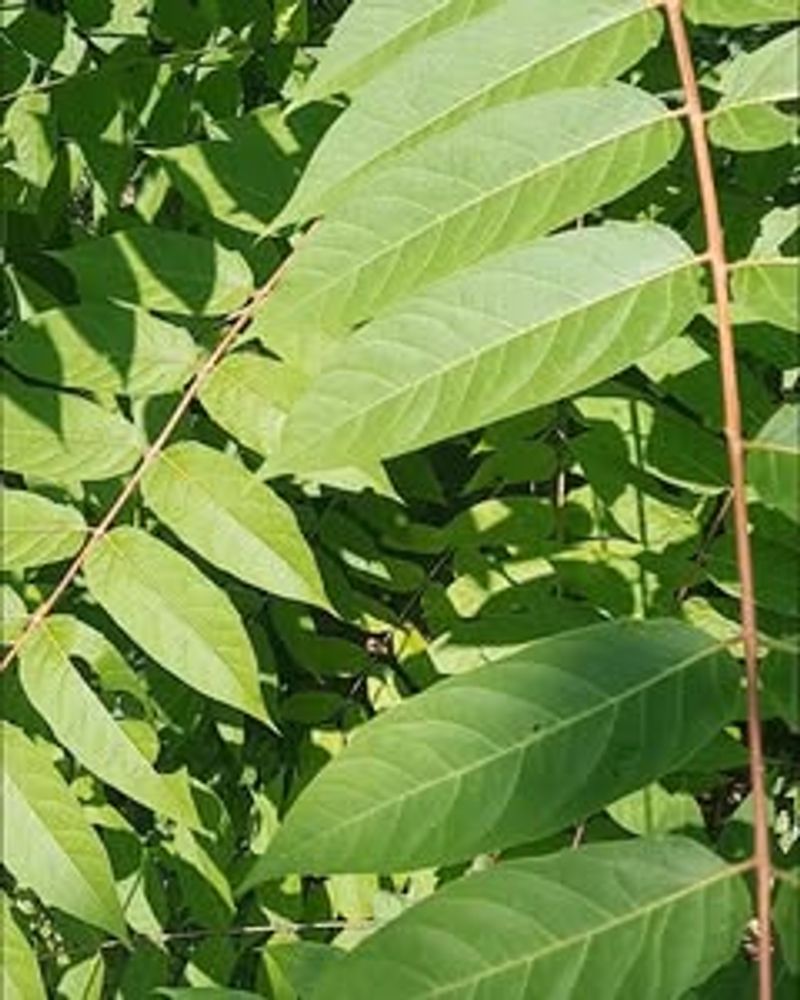
Tree of heaven spreads with remarkable aggression, earning its reputation as one of North America’s most problematic invasive trees.
This Chinese native produces chemicals that inhibit growth of surrounding plants, creating barren zones beneath its canopy.
The species spreads through prolific root sprouts and wind-dispersed seeds, allowing rapid colonization of disturbed areas, roadsides, and urban spaces.
Roots aggressively invade sewer lines, crack foundations, and lift pavement, causing expensive infrastructure damage.
California’s concern about tree of heaven intensified dramatically with the arrival of spotted lanternfly, an invasive insect that preferentially feeds on this tree.
The lanternfly uses tree of heaven as its primary host, and the tree’s presence facilitates the insect’s spread and population growth.
This connection has prompted urgent calls for tree of heaven removal throughout California to prevent lanternfly establishment.
Several California counties have added tree of heaven to their noxious weed lists, and more are considering similar action.
Property owners face increasing pressure to remove these trees before they produce seeds or root sprouts that invade neighboring properties.
Removal proves challenging because cutting stimulates vigorous root sprouting, often resulting in dozens of new stems.
Effective control requires professional treatment combining cutting with immediate herbicide application to root systems.
As spotted lanternfly continues spreading westward, expect emergency regulations requiring tree of heaven removal, particularly near agricultural areas vulnerable to this devastating pest.
9. Running Bamboo (Invasive Phyllostachys Species)
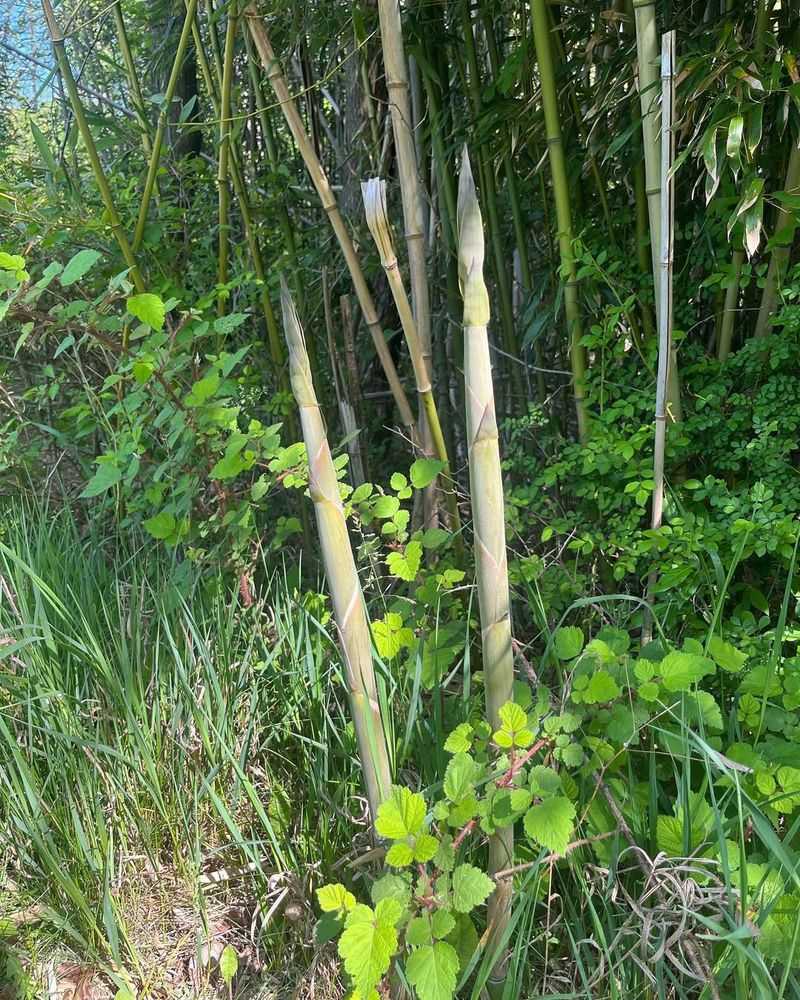
Running bamboo’s underground rhizomes can travel fifteen feet or more annually, turning a contained planting into a neighborhood nightmare.
Unlike clumping bamboo varieties, running species send aggressive underground stems that emerge unpredictably throughout surrounding properties.
Bamboo shoots can penetrate asphalt, crack foundations, and invade sewer systems with surprising force.
Many California homeowners discover too late that bamboo removal requires excavation of extensive rhizome networks at considerable expense.
Neighbor disputes over bamboo invasion have spawned numerous lawsuits, with property owners held liable for damage caused by their spreading plants.
Several California cities, including San Jose and parts of Los Angeles County, have enacted strict bamboo ordinances requiring root barriers or prohibiting running species entirely.
These regulations typically mandate barriers extending at least three feet deep and require regular maintenance to prevent rhizome escape.
Property owners who allow bamboo to spread beyond their boundaries face fines and mandatory removal costs.
The California Civil Code allows neighbors to cut bamboo shoots emerging on their property, but underground rhizomes remain the original owner’s responsibility.
As urban areas densify and property lines shrink, municipalities increasingly view running bamboo as a public nuisance requiring regulation.
Homeowner associations commonly prohibit running bamboo in their governing documents due to its invasive nature.
Expect broader municipal bans on running bamboo species, particularly in residential zones where properties adjoin one another closely.
10. Purple Loosestrife (Lythrum Salicaria)
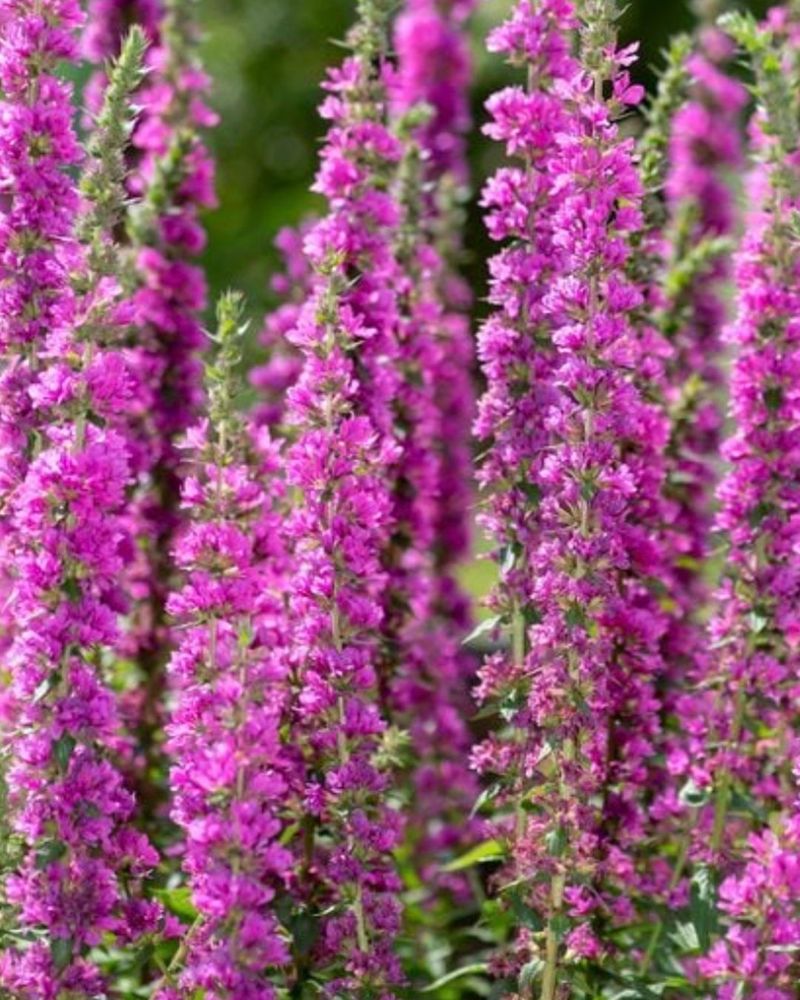
Purple loosestrife’s spectacular flower spikes belie its devastating impact on California’s precious wetland ecosystems.
This European perennial produces millions of tiny seeds that spread through water, wildlife, and human activity.
A single mature plant can generate over two million seeds annually, and germination rates exceed ninety percent in suitable wetland conditions.
Once established, purple loosestrife forms dense monocultures that exclude native wetland plants essential for wildlife habitat and water quality.
The plant provides poor food value for native insects and birds compared to the diverse native vegetation it replaces.
Wetlands invaded by purple loosestrife experience dramatic declines in waterfowl use and native species diversity.
California law already prohibits purple loosestrife sale and transport, and the plant appears on the state’s noxious weed list.
Despite these restrictions, ornamental cultivars marketed as sterile have proven capable of producing viable seeds through cross-pollination.
Property owners with water features or wetlands on their land face increasing scrutiny regarding purple loosestrife presence.
Several counties require mandatory reporting and removal of purple loosestrife infestations on private property.
Control programs employ biological agents including specialized beetles that feed exclusively on this plant species.
As California invests heavily in wetland restoration and protection, expect stricter enforcement of purple loosestrife regulations.
Homeowners with backyard ponds or properties near wetlands should inspect carefully for this species and remove any plants immediately before regulatory requirements become more stringent.
11. Mexican Feather Grass (Nassella Tenuissima)

Mexican feather grass gained popularity among California landscapers for its delicate texture and graceful movement, but that beauty masks serious ecological problems.
This South American native self-seeds prolifically, escaping cultivation to colonize natural areas, roadsides, and wildlands throughout the state.
California banned Mexican feather grass from commercial sale in 2014 after it demonstrated aggressive invasive behavior in multiple regions.
The plant thrives in California’s Mediterranean climate, producing abundant seeds that germinate readily without supplemental water or care.
Once established in natural areas, Mexican feather grass outcompetes native bunchgrasses that provide essential habitat and forage for wildlife.
Its presence alters fire regimes because the fine-textured foliage cures earlier than native grasses, extending fire season and increasing ignition risk.
Despite the sales ban, many California gardens still contain Mexican feather grass planted before regulations took effect.
These existing plants continue producing seeds that spread into neighboring properties and natural areas.
Property owners who maintain Mexican feather grass face increasing pressure to remove it, particularly in regions adjacent to protected wildlands.
Several counties have added Mexican feather grass to their noxious weed lists, requiring control on private property.
Native alternatives like California fescue and purple needlegrass provide similar ornamental qualities without invasive tendencies.
As enforcement of the existing sales ban strengthens, expect regulations to target established plants on residential properties.
Homeowners should consider voluntary removal now to avoid potential mandatory requirements and associated costs in coming years.
12. Water Hyacinth (Eichhornia Crassipes)
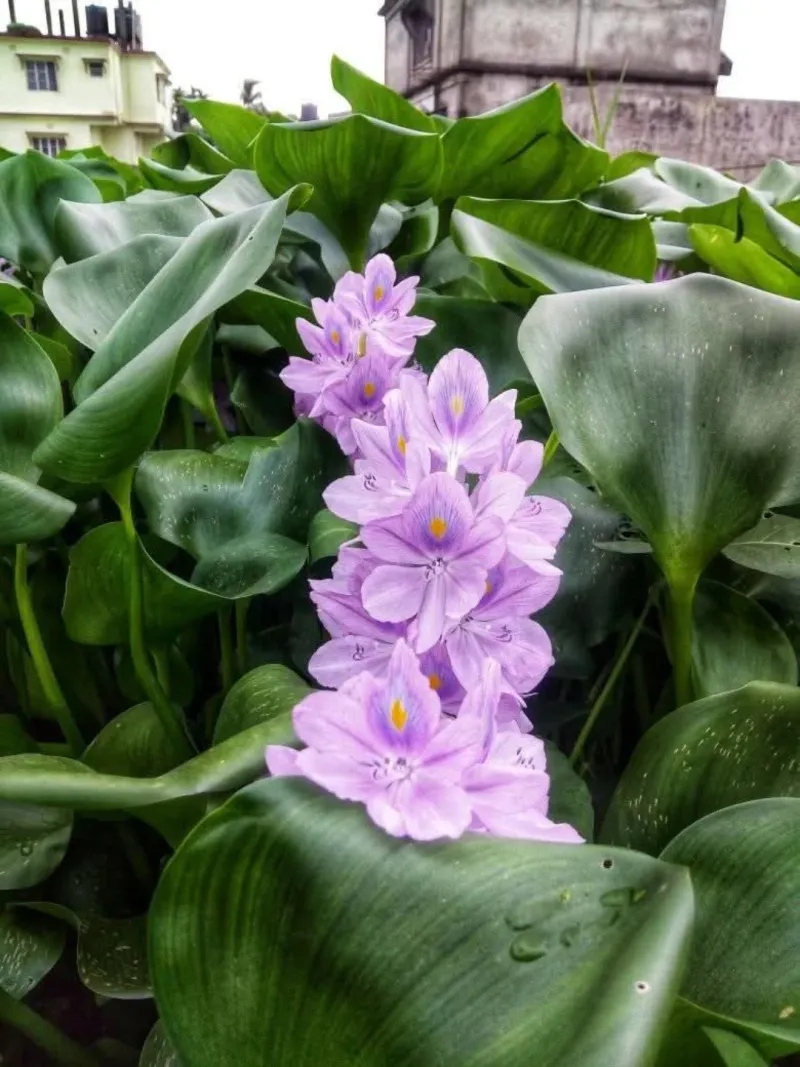
Water hyacinth ranks among the world’s most invasive aquatic plants, capable of doubling its population in just two weeks under favorable conditions.
This South American native forms dense floating mats that completely cover water surfaces, blocking sunlight and depleting oxygen.
Fish and other aquatic life suffocate beneath these impenetrable carpets, and water quality deteriorates rapidly.
California law already prohibits water hyacinth sale, transport, and possession due to its extreme invasiveness and ecological damage.
Despite these restrictions, the plant persists in some backyard ponds where owners either planted it before regulations or acquired it illegally.
A single plant fragment can regenerate into a new colony, making complete eradication essential but challenging.
Water hyacinth clogs irrigation systems, blocks boat access, and creates mosquito breeding habitat in stagnant water beneath its mats.
The California Department of Food and Agriculture maintains active control programs in multiple waterways where infestations threaten agriculture and ecosystems.
Property owners discovered harboring water hyacinth face substantial fines and mandatory removal requirements.
Enforcement has intensified as authorities recognize that backyard water features serve as source populations for downstream infestations.
Anyone with a pond or water feature should inspect carefully for water hyacinth and report any findings to local agricultural authorities immediately.
Native aquatic plants like water lilies and rushes provide similar aesthetic value without legal or ecological risks.
Expect increasingly aggressive enforcement and substantial penalties for maintaining water hyacinth on private property.
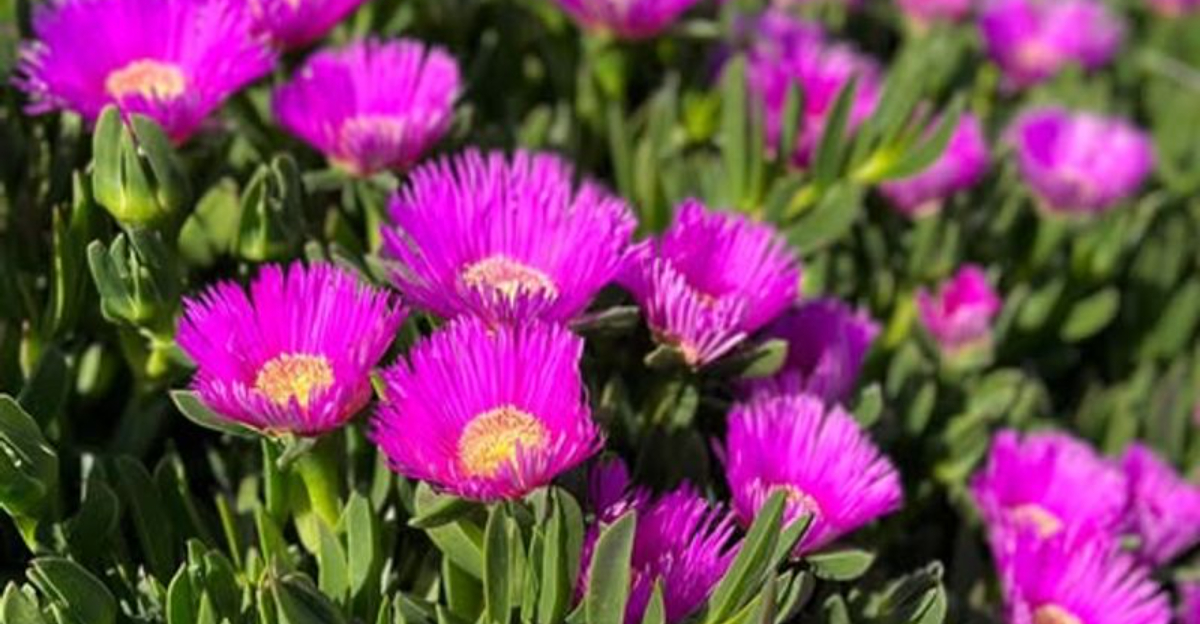
13. Ice Plant (Carpobrotus Species)
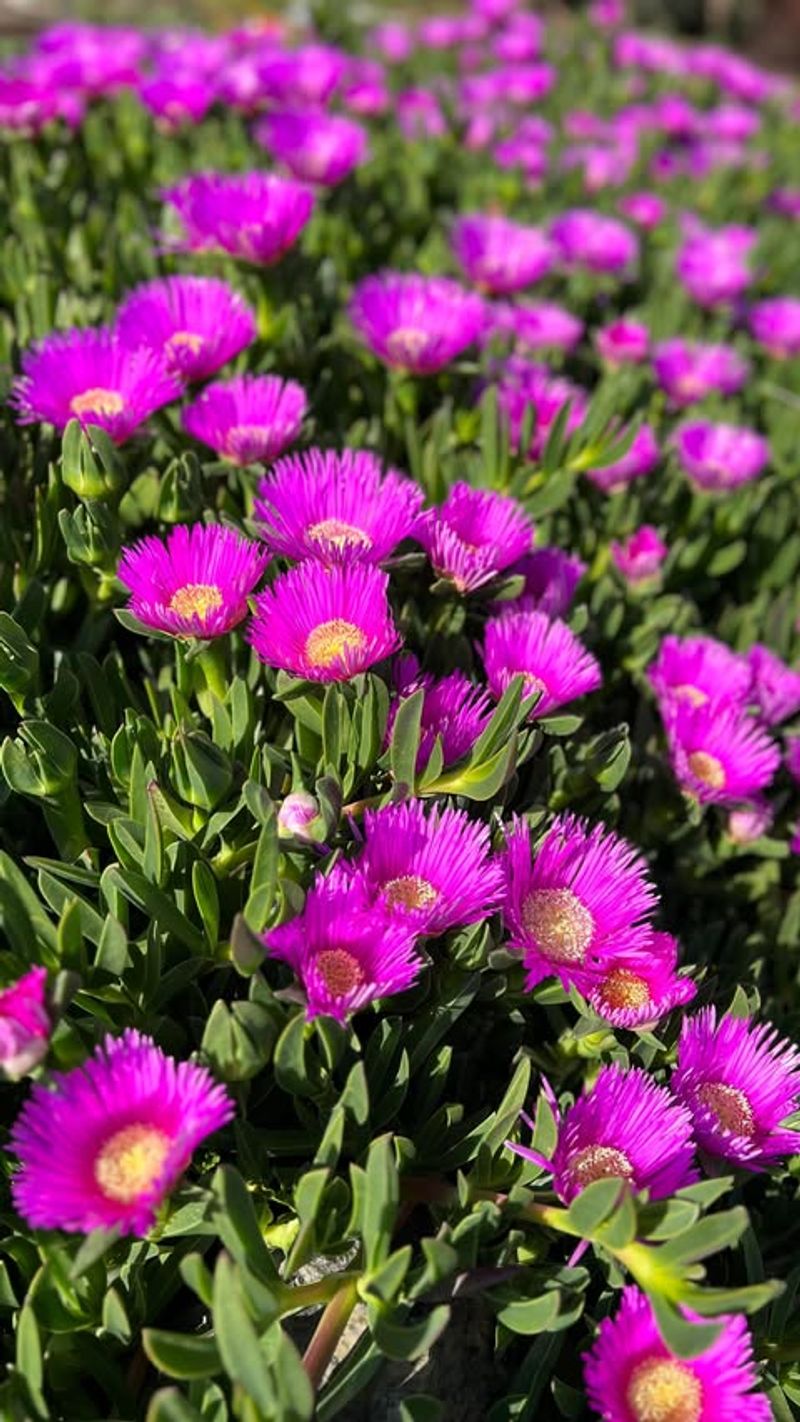
Ice plant once represented California’s go-to solution for erosion control and low-maintenance landscaping, particularly in coastal areas.
Highway departments planted it extensively along roadsides, and homeowners embraced its drought tolerance and colorful flowers.
Decades later, California recognizes ice plant as a serious threat to native coastal ecosystems and dune stability.
The plant forms dense mats that exclude native vegetation, reducing biodiversity and eliminating habitat for specialized coastal species.
Contrary to its intended purpose, ice plant actually destabilizes dunes because its shallow root system provides less soil anchoring than native plants.
The succulent leaves accumulate salt, which leaches into soil and further inhibits native plant recovery.
Several California coastal communities have launched major ice plant removal projects to restore native dune ecosystems.
These efforts cost millions of dollars and require years of persistent work to achieve lasting results.
State parks and protected areas actively remove ice plant and replant with native species like beach strawberry and dune buckwheat.
Some municipalities now prohibit new ice plant installations in coastal zones and require removal when properties undergo development.
Property owners in coastal areas should expect expanding regulations targeting existing ice plant, particularly on oceanfront properties.
Native alternatives provide superior erosion control, require no irrigation once established, and support local wildlife and pollinators.
Voluntary removal of ice plant demonstrates environmental stewardship and may avoid future mandatory removal requirements as regulations continue tightening throughout California’s coastal regions.
14. Non-Native Eucalyptus Species In Fire Zones

Eucalyptus trees symbolize California landscapes for many people, but several non-native species pose significant fire hazards and ecological concerns.
These Australian natives contain volatile oils that make them extraordinarily flammable, essentially turning them into fuel bombs during fire conditions.
Eucalyptus bark sheds in long strips that accumulate beneath trees, creating deep fuel beds that ignite readily and burn intensely.
During extreme fire conditions, eucalyptus trees can actually explode, sending burning embers hundreds of feet to ignite new spot fires.
Falling limbs represent another serious hazard because eucalyptus species routinely drop large branches without warning, damaging structures and threatening safety.
Many California municipalities now restrict eucalyptus planting in high fire hazard zones and require removal of trees threatening structures.
The species provides poor wildlife habitat compared to native trees and often creates biological deserts beneath their dense canopies.
Eucalyptus roots aggressively seek water, frequently invading sewer lines and causing expensive infrastructure damage.
Several California communities have undertaken large-scale eucalyptus removal projects in fire-prone areas, replacing them with native species.
Property owners with eucalyptus trees near homes face increasing insurance scrutiny, with some carriers requiring removal or imposing higher premiums.
Local fire departments increasingly recommend eucalyptus removal as part of defensible space requirements.
As California’s wildfire crisis intensifies, expect stricter regulations targeting eucalyptus in residential fire hazard zones.
Homeowners should consult certified arborists about removal options and consider native alternatives like coast live oak that provide fire-resistant landscaping.