8 Companion Plants That Thrive With Wandering Jew In Arizona
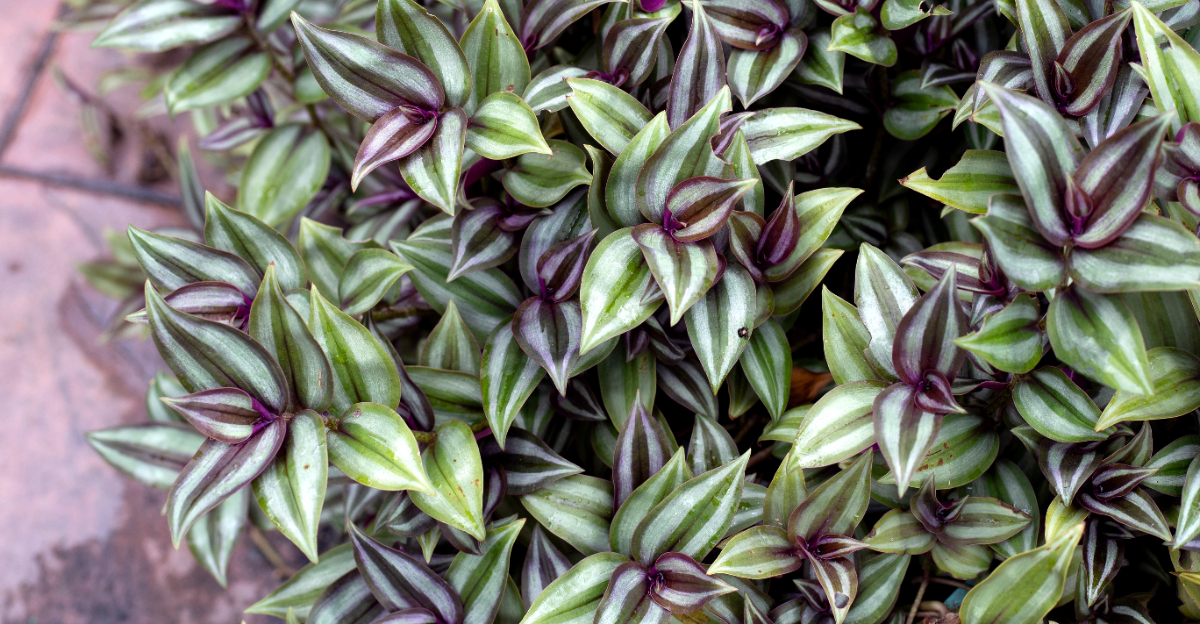
That splash of purple from Wandering Jew already grabs attention in your Arizona garden, but the real impact shows up when it has the right company around it.
On its own, it can spill beautifully over a container, yet next to the wrong plant it can look heavy or out of place. Pair it wisely and the entire space sharpens instantly.
In Arizona’s bright light, contrast becomes powerful. Silvery foliage, structured forms, or upright shapes can frame those trailing stems and make the color feel deeper instead of overwhelming.
Choosing plants that handle the same heat and dry soil keeps the arrangement steady through long summers.
The right pairing turns a fast growing plant into a balanced, intentional feature that feels designed instead of accidental.
1. Matching Water Needs Keep Purple Heart Looking Its Best
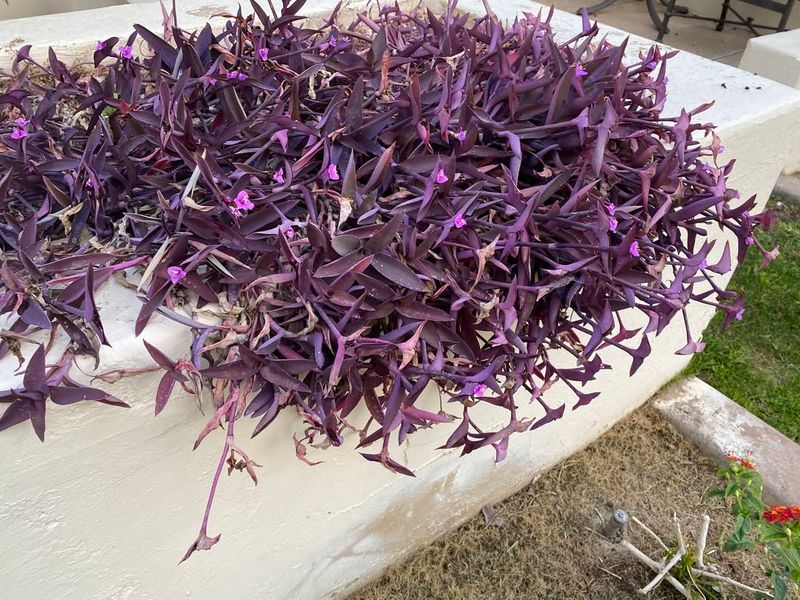
Purple heart brings bold color that makes wandering jew’s green and silver variegation pop in Arizona container gardens. Both plants appreciate consistent moisture without sitting in soggy soil, which makes them natural partners for the desert climate.
The deep purple leaves create dramatic contrast while requiring the same watering schedule you already provide for your wandering jew.
Arizona’s intense sunlight actually deepens the purple coloring in this companion plant. Morning sun with afternoon shade suits both plants perfectly, protecting them from the harshest rays while providing enough light for vibrant growth.
Container plantings work especially well since you can move them to shadier spots during extreme heat waves.
These two trailing plants fill containers quickly and cascade over edges beautifully together. Purple heart grows slightly faster, so pinch it back occasionally to keep the display balanced.
Both plants root easily from cuttings, letting you expand your collection or share with neighbors throughout the growing season.
Water deeply when the top inch of soil feels dry in Arizona’s climate. During summer months, this might mean watering every other day for container plantings.
The matching water requirements mean you never have to choose between overwatering one plant or underwatering the other, simplifying your desert gardening routine considerably.
2. Low-Growing Texture Pairs Naturally With Sedum
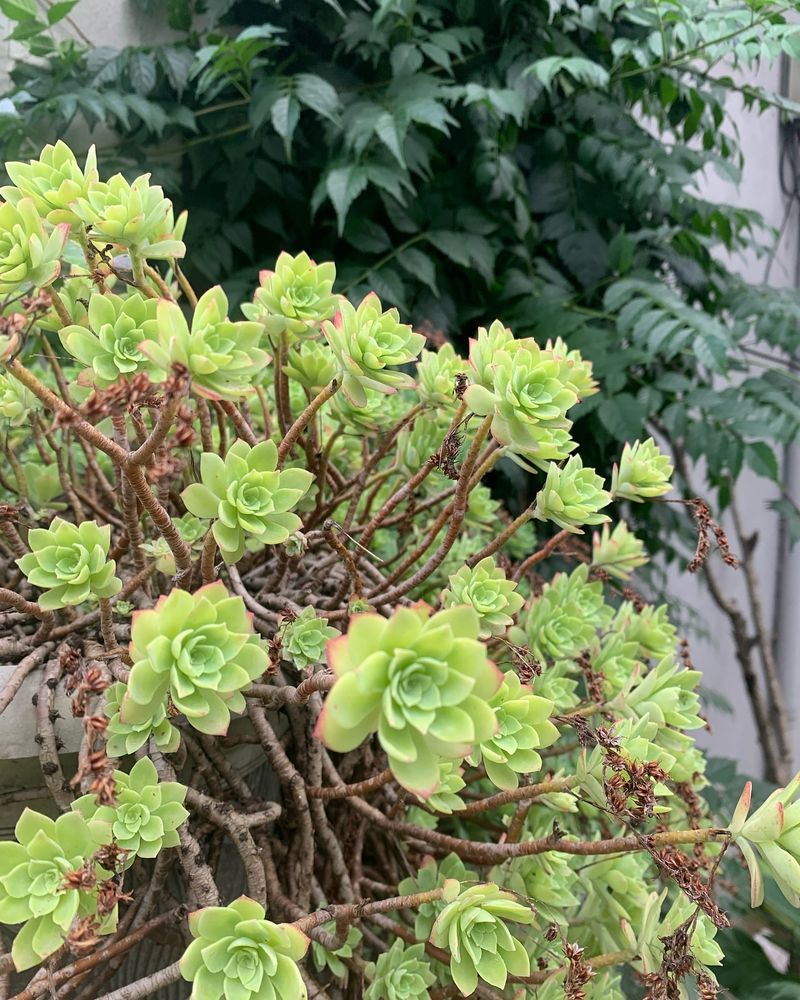
Sedum varieties offer contrasting texture that highlights wandering jew’s delicate trailing stems in Arizona landscapes. The thick, fleshy leaves of sedum create visual interest against the softer foliage while both plants tolerate heat remarkably well.
Low-growing sedum types stay compact, letting wandering jew cascade over them without overwhelming the display.
These succulents need less frequent watering than wandering jew, but they share enough tolerance for moderate moisture to coexist successfully.
Plant sedum in slightly raised areas or on mounds where water drains quickly, positioning wandering jew in lower spots that retain moisture longer.
This arrangement lets you water the entire bed while each plant gets conditions it prefers.
Arizona gardeners appreciate how sedum handles full sun exposure that would stress wandering jew. Position sedum on the sunny side of containers or beds, creating a natural buffer that provides filtered light for the more shade-loving wandering jew.
This strategic placement works with the desert sun rather than fighting against it.
Many sedum varieties bloom in late summer and fall, adding seasonal color when wandering jew focuses on foliage growth. The combination provides year-round interest in Arizona gardens.
Both plants propagate easily, making it simple to fill in gaps or create new plantings as your landscape evolves over time.
3. Filtered Sun Works Well When Planted Near Lantana
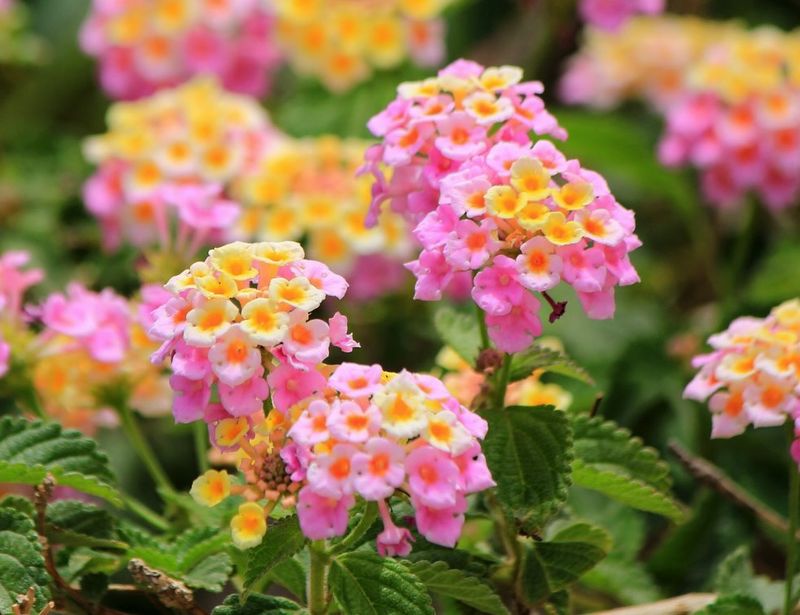
Lantana grows tall enough to cast dappled shade that protects wandering jew from Arizona’s scorching afternoon sun. The flowering shrub thrives in heat that would overwhelm many other companions, making it perfectly suited for desert gardens.
Bright orange, yellow, or pink lantana blooms create a cheerful backdrop for wandering jew’s trailing foliage below.
Both plants attract beneficial insects and butterflies to Arizona gardens throughout the growing season. Lantana flowers continuously from spring through fall, providing constant color while wandering jew adds cooling green tones beneath.
The vertical growth of lantana combined with wandering jew’s horizontal spread creates balanced compositions in beds and borders.
Water requirements align well enough for successful pairing in Arizona landscapes. Lantana tolerates drought once established, but performs better with moderate watering that also suits wandering jew.
During extreme heat, both plants appreciate deep watering twice weekly rather than daily shallow drinks.
Position wandering jew on the east or north side of lantana plants in Arizona gardens. This placement provides morning sun exposure with afternoon shade protection.
The lantana’s woody stems and upright form contrast beautifully with wandering jew’s soft, trailing habit.
Prune lantana lightly in early spring to maintain an open structure that allows air circulation around both plants, reducing humidity-related issues in desert conditions.
4. Trailing Growth Blends Easily Alongside Sweet Potato Vine
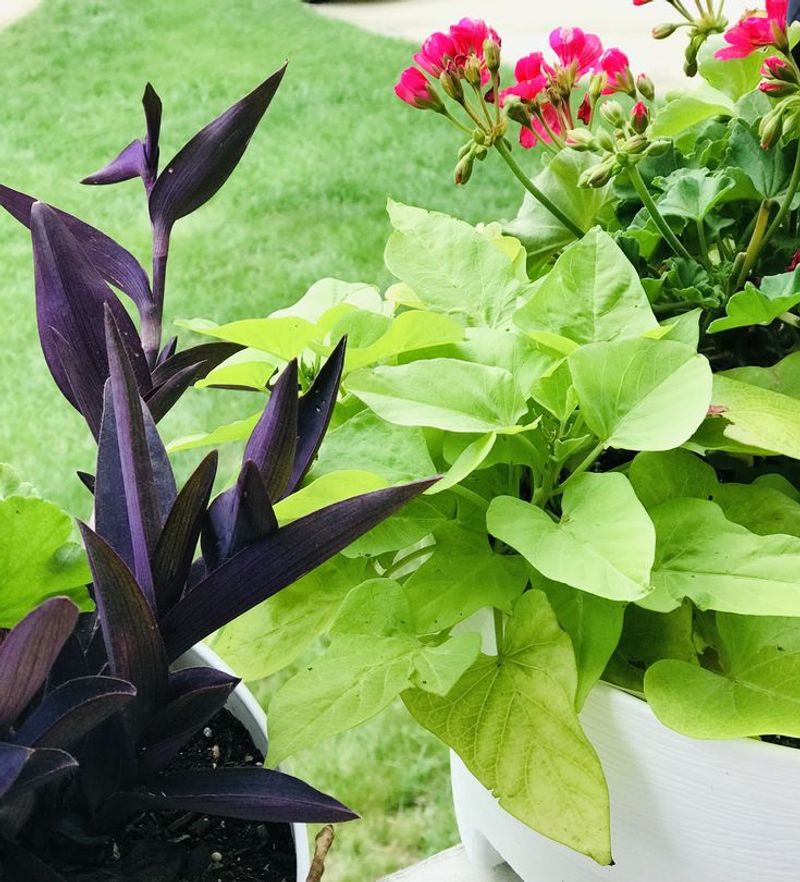
Sweet potato vine matches wandering jew’s enthusiastic trailing habit while offering different leaf shapes and colors for Arizona containers. Both plants grow vigorously during warm months, creating lush displays that seem impossible in the desert.
Chartreuse sweet potato vine brightens shaded areas where wandering jew thrives, while purple varieties echo deeper tones in variegated wandering jew leaves.
These fast-growing companions need similar amounts of water to maintain their rapid growth in Arizona’s dry air. Container plantings require daily watering during peak summer, but both plants reward this attention with impressive coverage.
Hanging baskets showcase their trailing nature beautifully, creating living curtains on covered patios where they escape the harshest sun.
Arizona gardeners should pinch back both plants regularly to encourage bushier growth rather than long, sparse stems. This simple maintenance keeps displays full and attractive throughout the season.
Both plants tolerate aggressive pruning, so don’t hesitate to cut them back if they outgrow their space.
Sweet potato vine offers the advantage of different leaf shapes alongside wandering jew’s oval foliage. Some varieties have deeply lobed leaves while others stay rounded, all adding textural variety.
Both plants root wherever stems touch soil, making them easy to propagate for next season. Take cuttings in late summer to overwinter indoors in Arizona, ensuring fresh plants when warm weather returns.
Positioning them in larger containers also helps regulate soil temperature during extreme heat, giving roots more stability through Arizona’s hottest weeks.
5. Upright Structure From Pencil Cactus Balances Wandering Jew’s Trailing Growth
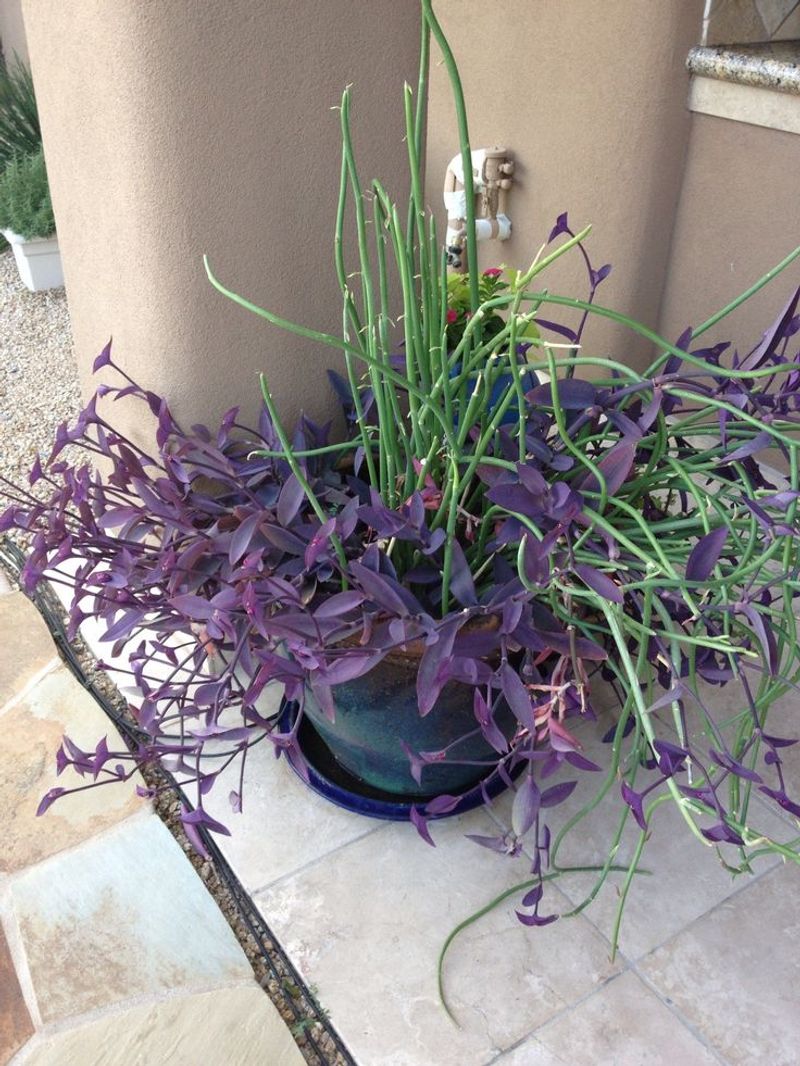
Pencil cactus brings a completely different energy to a container, and that difference is exactly why it works so well next to wandering jew in Arizona.
While wandering jew spills outward and down, pencil cactus grows straight up in thin, architectural stems that feel almost sculptural.
That vertical lift keeps the arrangement from looking flat or overly heavy at the base.
In bright desert light, the clean green lines of pencil cactus stand out without competing for attention. The plant does not rely on bold leaves or flowers.
Instead, it creates structure. That structure gives wandering jew something to lean against visually, making the trailing stems look intentional rather than wild.
This pairing works best in containers placed in filtered sun or bright morning light. Wandering jew appreciates protection from harsh afternoon exposure, and pencil cactus tolerates that same setting easily.
Both handle Arizona heat well once established, though their watering needs differ slightly. Let the soil dry between waterings, and avoid keeping the pot constantly damp.
The contrast in form is what makes this combination strong. One plant reaches upward with narrow stems, the other drapes and softens the edges.
Together they create balance. Instead of two plants competing for space, you get height, movement, and flow all in one container.
In a desert setting where hard lines and stucco walls dominate, that mix of upright structure and trailing color feels deliberate and grounded.
6. Airy Spider Plant Softens The Edges Around Wandering Jew
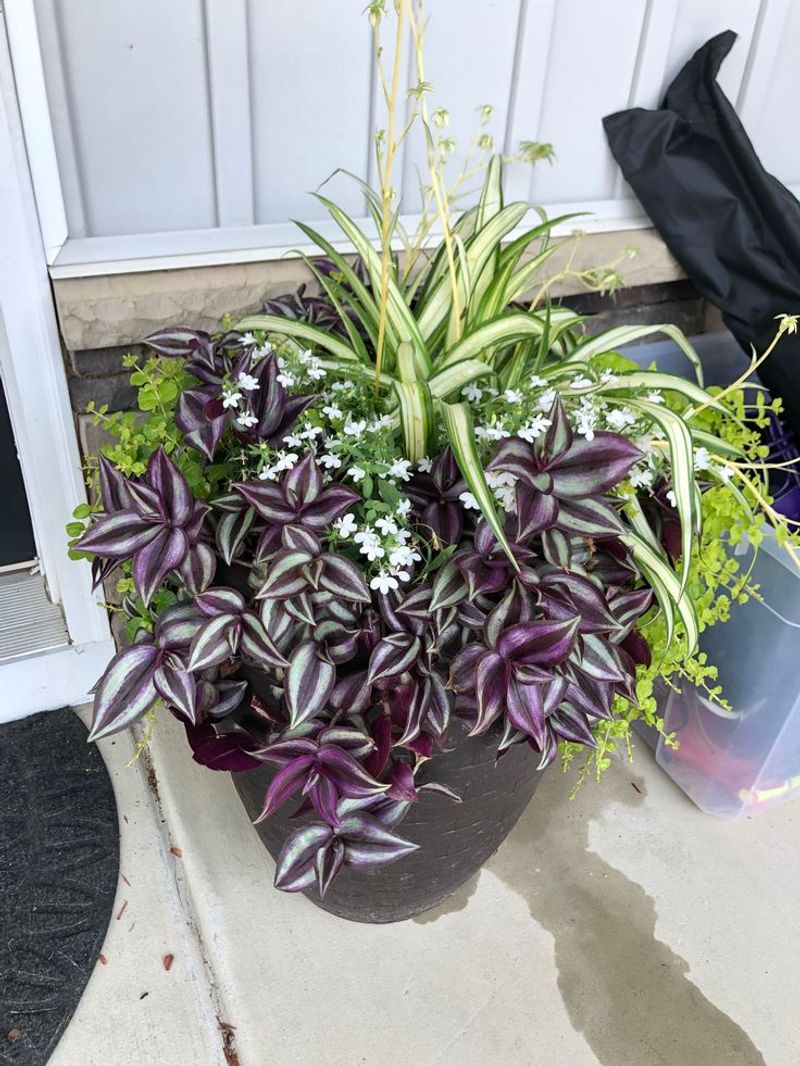
Spider plant introduces a different kind of energy next to wandering jew, and that difference is what makes the pairing effective in Arizona containers.
Wandering jew spreads quickly and cascades over edges with dense foliage, which can sometimes feel visually heavy on its own.
Spider plant offsets that effect with long, arching leaves that extend outward and upward, creating space within the arrangement.
The fine, strap-like foliage allows light to pass through instead of blocking it, which keeps the planting from looking compact or overly thick.
The contrast in texture is subtle but important. Wandering jew leaves are broad and layered along trailing stems, while spider plant foliage grows in fountain-like clumps from the center.
That upright base gives structure to the container without introducing harsh lines. Instead of two plants competing for attention, they occupy different visual levels.
One spills downward, the other fans outward, resulting in a composition that feels balanced from every angle.
This combination performs best in bright shade or areas that receive gentle morning sun. Arizona’s intense afternoon heat can stress both plants, so positioning them near a patio wall, under a pergola, or along an east-facing exposure helps maintain healthy foliage.
Soil should drain freely, as neither plant tolerates standing water. Deep watering followed by a slight drying period encourages steady growth without root issues.
As the season progresses, spider plant produces offsets that add fullness, while wandering jew continues to trail. The result is a container that feels layered, dynamic, and thoughtfully arranged rather than overgrown.
7. Bold Foliage Contrast Shows Up Next To Agave
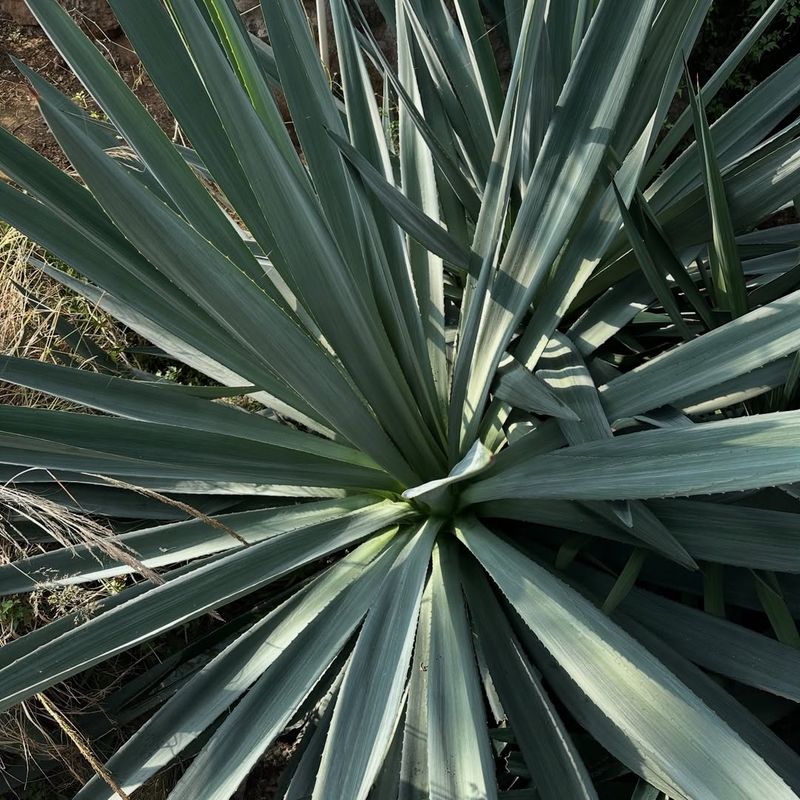
Agave’s architectural form creates stunning contrast with wandering jew’s delicate trailing habit in Arizona landscapes. The bold, sculptural agave leaves draw the eye upward while wandering jew softens the base with lush groundcover.
This combination works especially well in contemporary desert gardens where clean lines meet organic growth patterns.
Both can handle Arizona heat, but they do not want the same watering, so this works best in containers or in a spot where wandering jew gets extra moisture.
Established agave survives on rainfall alone in many areas, while wandering jew requires supplemental irrigation.
Plant wandering jew in its own irrigation zone near the agave, or position it where runoff from watering other plants provides the moisture it needs.
The blue-grey or grey-green tones of most agave varieties complement wandering jew’s purple, green, and silver variegation beautifully. This color harmony creates cohesive designs despite dramatically different plant forms.
Wandering jew’s spreading habit covers the ground around agave’s base, reducing weed growth and creating finished-looking plantings quickly.
Arizona gardeners should maintain adequate spacing between these companions since agave’s sharp leaf tips and edges pose hazards. Position wandering jew at least two feet from mature agave plants, allowing safe access for maintenance.
The wandering jew’s soft texture provides visual relief from agave’s spiky appearance without requiring close proximity.
Both plants need minimal fertilizer in desert soils, and neither attracts significant pest problems in Arizona landscapes, making this pairing remarkably low-maintenance once established.
8. Strong Vertical Lines From Snake Plant Frame Wandering Jew Naturally
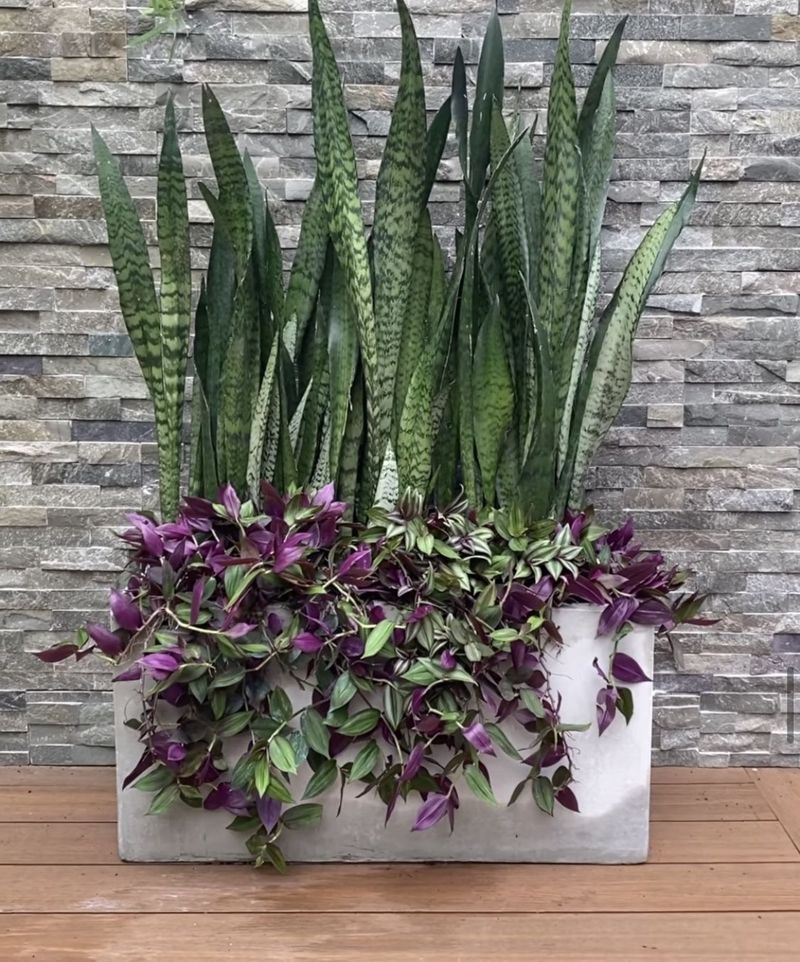
Snake plant brings a completely different presence to a container because it introduces height that feels architectural rather than decorative. Its upright, blade-like leaves grow in firm vertical lines that hold steady through Arizona heat and dry air.
That strong vertical habit gives the arrangement definition from the start. Without it, wandering jew can visually spread in every direction, especially during warm months when growth accelerates.
The snake plant acts as a steady center point that keeps the overall shape controlled.
Unlike softer foliage, snake plant leaves remain rigid and structured, which creates a clear contrast in form. The eye naturally moves upward first, then follows the trailing stems around the base.
That shift in movement gives the container depth instead of a single flat layer of growth. Height at the back or center allows the cascading stems to fall naturally without overwhelming the design.
This plant handles filtered light, patio shade, and bright indoor spaces with ease, making it practical for Arizona homes where intense afternoon exposure can stress foliage.
Snake plant also tolerates dry soil better than many ornamentals, which makes watering easier to manage.
In fast-draining soil, occasional deep watering followed by a drying period supports steady growth without root problems.
Maintenance remains simple because snake plant rarely needs trimming and keeps its form through the season. Its consistent structure ensures the container maintains balance even as wandering jew expands and shifts around it.