9 Coral Bells Varieties Illinois Gardeners Rely On For Year Round Color
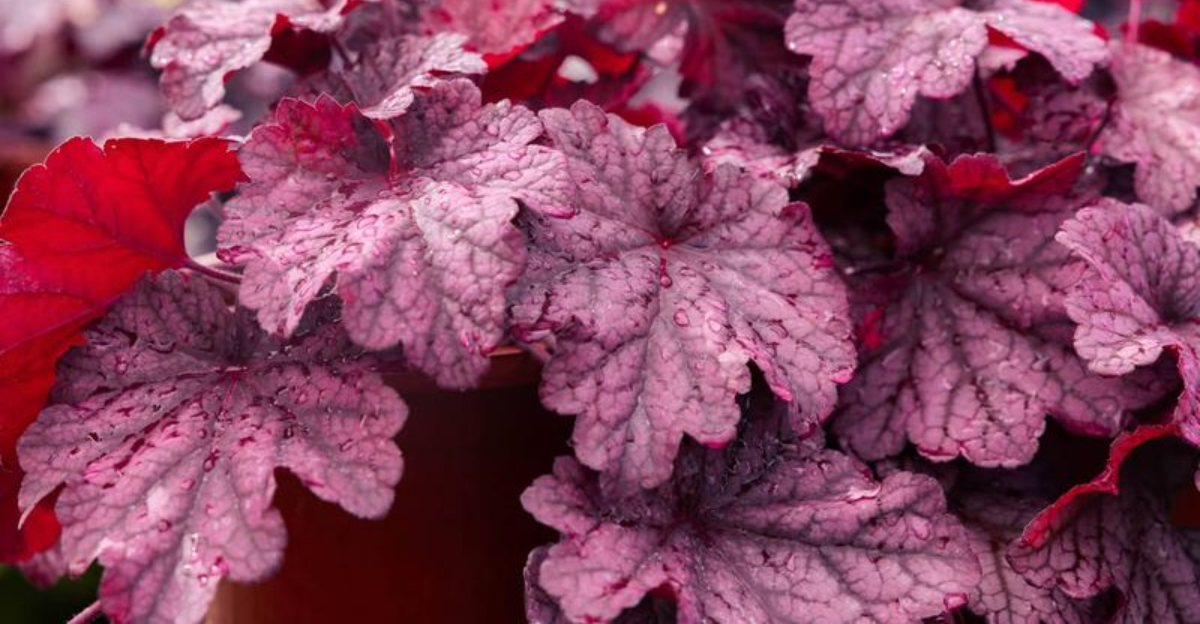
Coral bells have become a quiet favorite in Illinois gardens, and I love how much color they manage to hold onto through changing seasons.
I’ve seen gardeners rely on certain varieties because they stay dependable, handle local weather well, and never feel boring in the landscape.
When the right coral bells are planted, year round color stops feeling like a challenge and starts feeling like a smart, low stress choice.
1. Palace Purple

Palace Purple earned its reputation as a garden classic because its deep burgundy leaves create drama in shaded Illinois landscapes throughout every season.
This variety was actually the first coral bells to win the Perennial Plant of Year award back in 1991 for good reason.
Gardeners in Rockford and Springfield love how the metallic purple foliage contrasts beautifully against lime green hostas or bright golden groundcovers nearby.
Small white flowers appear on tall stems during June, but most folks grow this plant exclusively for those gorgeous dark leaves instead.
The foliage holds its rich color from spring through fall without fading, even during hot Illinois summers when other plants look stressed.
This tough perennial handles clay soil common across the state and tolerates both morning sun and afternoon shade equally well in gardens.
Mature plants reach about eighteen inches tall and wide, making them perfect for edging pathways or filling gaps between larger shrubs and perennials.
Palace Purple requires minimal care once established, needing only occasional watering during extended dry spells that sometimes hit the Midwest region.
2. Caramel

Caramel brings warm peachy-orange tones to Illinois gardens, offering a refreshing alternative to the usual purple and green foliage combinations people typically plant.
Leaves emerge with apricot hues in spring, then deepen to rich caramel shades as summer progresses across gardens from Peoria to Champaign.
The undersides of the ruffled foliage reveal gorgeous rosy-pink colors that add another layer of visual interest when breezes blow through plantings.
This variety handles both sun and shade better than many coral bells, making it incredibly versatile for different garden spots around Illinois properties.
Creamy white flowers bloom on airy stems during early summer, attracting hummingbirds that zip through Midwest gardens searching for nectar sources throughout June.
Caramel looks stunning when planted alongside blue or purple flowering companions like salvia, creating color combinations that really make each plant pop visually.
The foliage maintains its warm tones even as autumn arrives, providing continuous color when annuals start looking tired and ready for frost.
This low-maintenance perennial grows about ten inches tall, forming neat mounds that work perfectly in container gardens or front border positions everywhere.
3. Obsidian
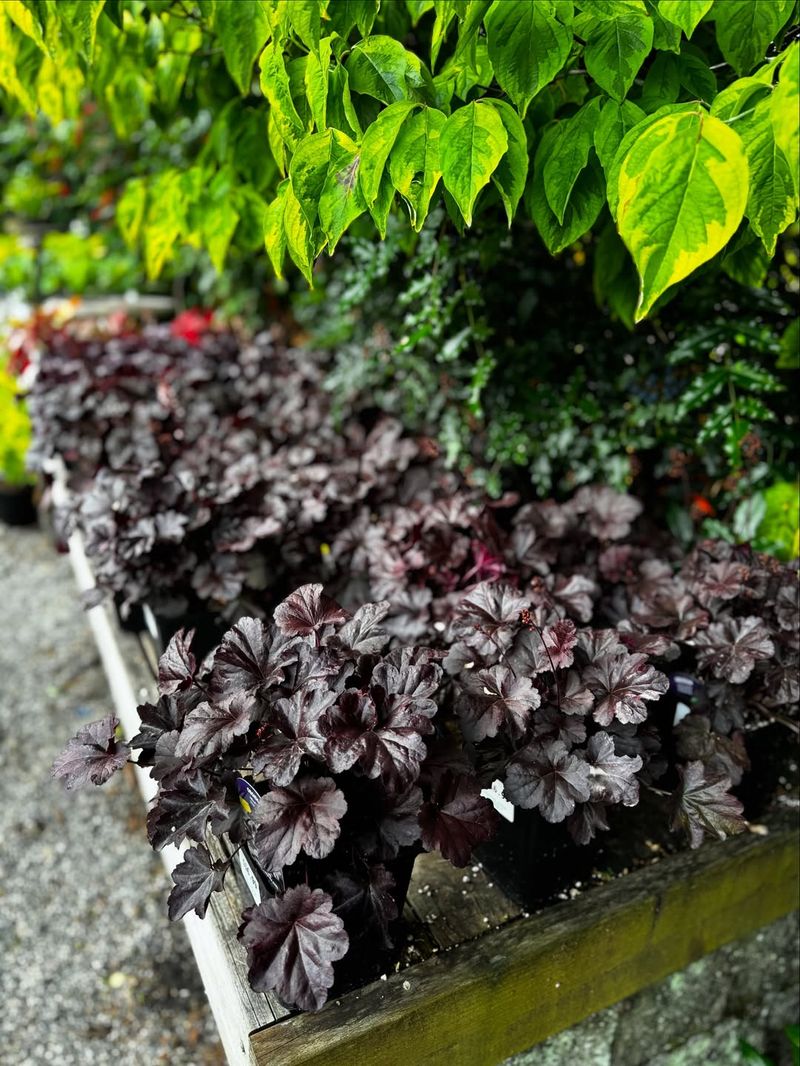
Obsidian produces some of the darkest foliage available among coral bells varieties, with leaves so deep purple they appear almost black in gardens.
Illinois gardeners use this dramatic plant as a bold accent that makes neighboring flowers and lighter foliage absolutely glow by comparison in beds.
The glossy, nearly black leaves reflect light in interesting ways, creating depth and mystery in shaded areas from Naperville down to Carbondale landscapes.
Unlike some dark-leaved plants that look gloomy, Obsidian adds sophisticated elegance rather than heaviness to garden designs throughout the growing season here.
Tiny cream-colored flowers emerge on dark stems during summer, though they remain subtle and let the spectacular foliage steal the spotlight completely.
This variety tolerates more sun than many coral bells, though afternoon shade in Illinois helps prevent leaf scorch during particularly brutal July heatwaves.
Obsidian grows compact and tidy, reaching only about eight to ten inches tall, which makes it ideal for edging or tucking into tight spaces.
The dark foliage provides year-round interest, looking especially striking when frost coats the leaves or snow creates dramatic contrast against those inky tones.
4. Lime Rickey
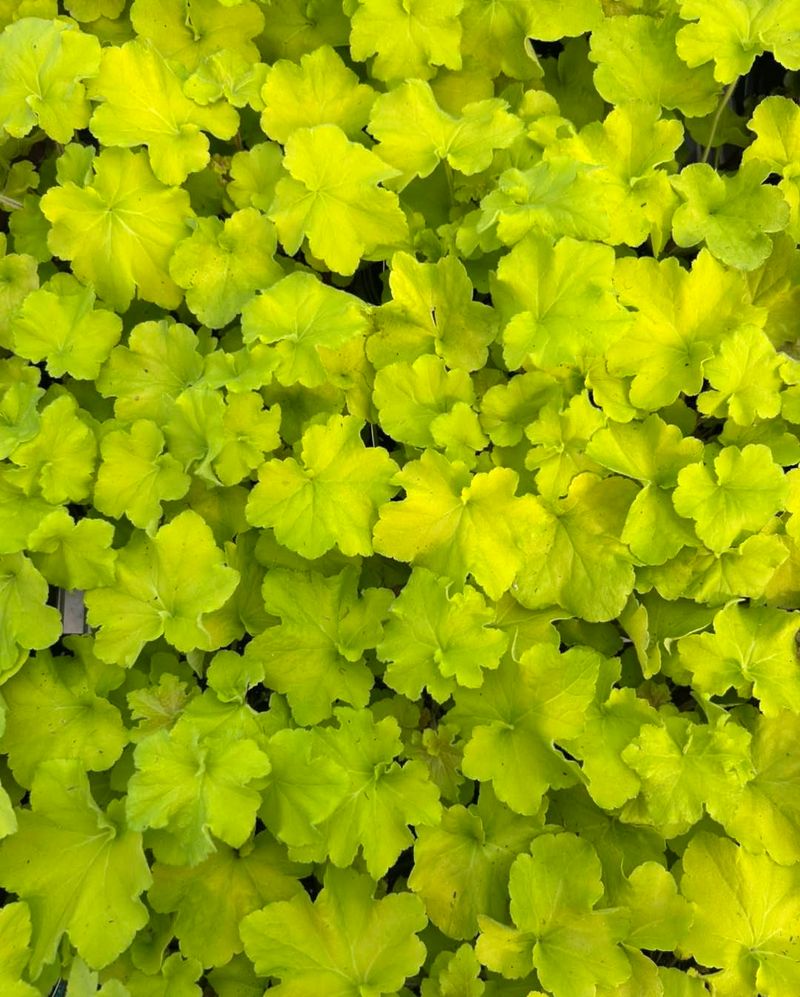
Lime Rickey lights up shady Illinois gardens with electrifying chartreuse foliage that practically glows, especially when planted in areas with dappled morning sunlight.
Gardeners throughout the state rely on this bright variety to illuminate dark corners where most colorful plants simply refuse to perform well.
The ruffled lime-green leaves maintain their vibrant color from spring through fall, never looking washed out even during intense Midwest summer heat.
This coral bells variety pairs beautifully with purple or burgundy companions, creating high-contrast combinations that grab attention from across yards and gardens.
White flowers appear on tall stems in early summer, but the real show comes from that brilliant foliage that energizes every planting scheme.
Lime Rickey handles typical Illinois clay soil without complaint, though adding compost at planting time helps young plants establish roots more quickly initially.
The bright foliage works wonderfully in containers mixed with trailing annuals, bringing vertical interest and lasting color to patio displays around Springfield homes.
This variety grows about ten to twelve inches tall, forming rounded clumps that spread slowly and never become invasive or problematic in beds.
5. Marmalade
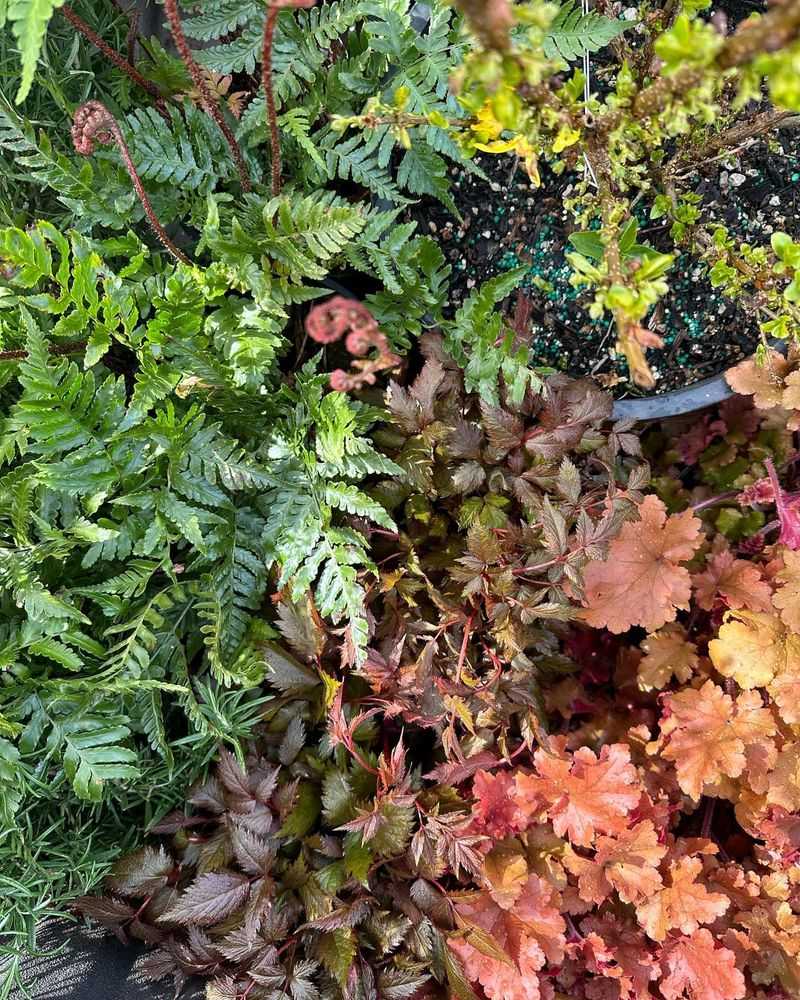
Marmalade serves up delicious orange and amber tones that shift through the seasons, offering Illinois gardeners constantly changing color without replanting anything new.
Spring foliage emerges in peachy-coral shades, then transitions to deeper orange-amber tones as temperatures warm across gardens from Bloomington to Decatur.
By autumn, the leaves take on coppery-red hues that complement falling tree leaves and late-blooming mums planted throughout Midwest landscapes beautifully.
Red veining traces through the foliage, adding intricate detail that becomes more pronounced as the growing season progresses through summer into early fall.
This variety tolerates more sun than many coral bells, making it perfect for those tricky spots that receive morning light but shade later.
Creamy flowers bloom on graceful stems during June, though most Illinois gardeners grow Marmalade specifically for that ever-changing foliage display instead of blooms.
The ruffled leaves form dense mounds about twelve inches tall, creating substantial presence in borders without overwhelming smaller neighboring plants or taking excessive space.
Marmalade requires minimal attention once established, handling typical Midwest weather swings without developing problems or needing constant intervention from busy gardeners everywhere.
6. Berry Smoothie
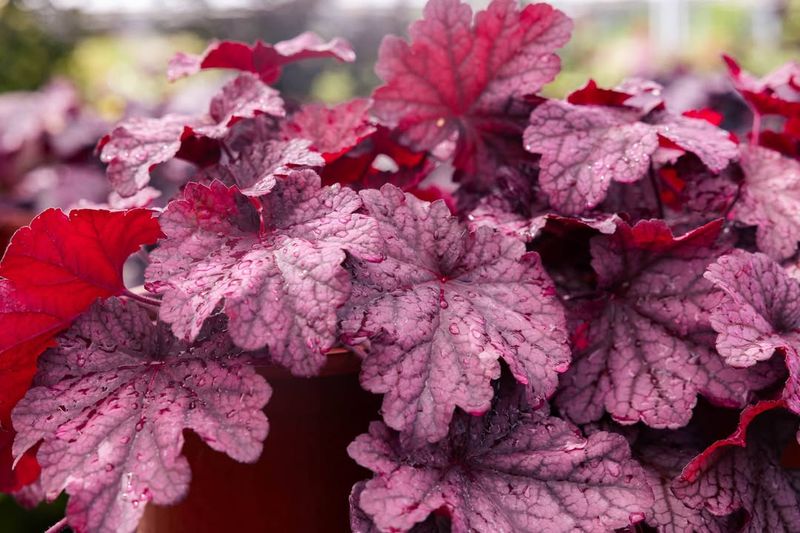
Berry Smoothie blends rose, pink, and purple shades into ruffled foliage that looks good enough to eat, living up to its delicious-sounding name.
Illinois gardeners appreciate how this variety maintains its berry-toned colors throughout the season without fading to boring green like some coral bells do.
The large, rounded leaves create substantial visual impact in shaded areas from Aurora to Joliet, where bright flowering plants often struggle to bloom properly.
Silver veining highlights each leaf, adding sparkle and dimension that catches light filtering through tree canopies overhead in established woodland garden settings.
Rose-pink flowers bloom on tall stems during early summer, echoing the foliage colors and creating a cohesive color story throughout the plant.
This variety handles cold Illinois winters without protection, reliably returning each spring even after particularly brutal stretches of subzero temperatures hit the region.
Berry Smoothie grows about nine to twelve inches tall, forming neat clumps that work perfectly in front borders or container combinations on shaded patios.
The colorful foliage looks fantastic paired with silver-leaved companions like lamium or dusty miller, creating sophisticated combinations that feel professionally designed throughout seasons.
7. Plum Pudding
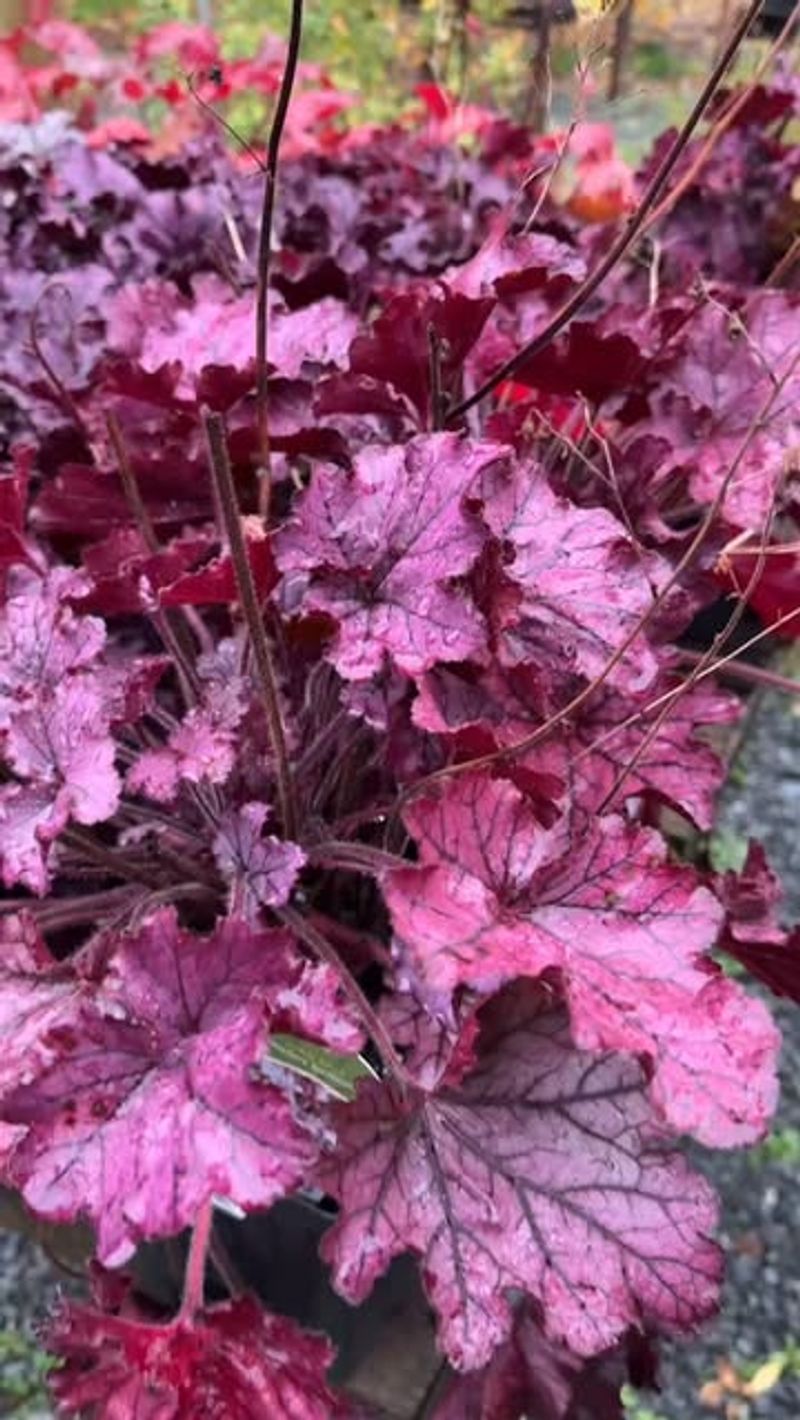
Plum Pudding combines deep plum-purple foliage with silvery overlay that creates a frosted appearance, making it stand out among standard coral bells varieties.
Gardeners across Illinois value this reliable performer because it handles shade beautifully while providing consistent color that never looks tired or faded anywhere.
The silvery sheen catches available light in dark garden corners, brightening spaces that might otherwise appear gloomy or uninviting around homes statewide.
Dark veining creates intricate patterns across each leaf, rewarding close inspection while still making bold statements when viewed from pathways or windows farther away.
Small white flowers appear on wiry stems during summer, dancing above the foliage and attracting beneficial pollinators that help other garden plants thrive.
This variety tolerates typical Illinois clay soil and occasional drought once established, making it perfect for low-maintenance landscapes around busy homeowners’ properties everywhere.
Plum Pudding reaches about ten inches tall, creating compact mounds that fill spaces without requiring constant division or management throughout multiple growing seasons.
The frosted purple foliage pairs wonderfully with chartreuse companions like golden creeping Jenny, creating dynamic contrast that energizes shaded areas from spring through frost.
8. Green Spice
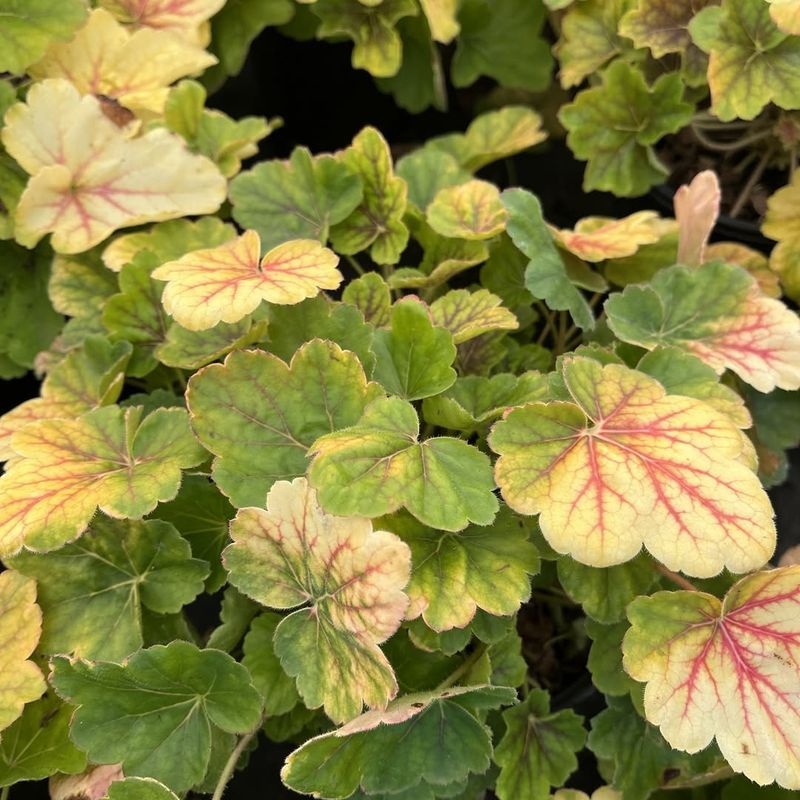
Green Spice offers something different with mint-green foliage heavily splashed and veined in deep burgundy-purple, creating a speckled appearance that fascinates visitors.
Illinois gardeners who want coral bells with more green in the foliage turn to this variety, which still provides plenty of color interest.
The burgundy markings intensify during cooler weather in spring and fall, giving this plant seasonal variation that keeps gardens looking fresh and interesting.
This variety handles a wider range of conditions than many coral bells, tolerating more sun and drier soil once roots establish properly here.
White flowers bloom on tall stems during early summer, providing vertical interest above the mounded foliage throughout gardens from Moline to Mount Vernon.
Green Spice looks particularly attractive planted near solid-colored companions, where its speckled pattern adds texture and complexity to otherwise simple color schemes everywhere.
The foliage remains attractive even after frost, often holding up well into early winter before finally collapsing when serious cold arrives across Illinois.
This hardy perennial grows about twelve to fifteen inches tall, creating slightly larger mounds than some compact varieties while still maintaining tidy, manageable proportions.
9. Fire Alarm
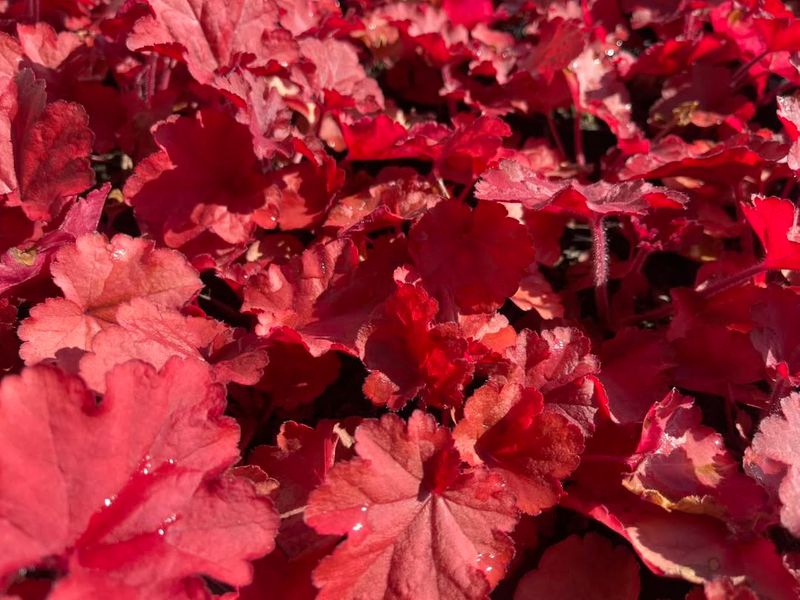
Fire Alarm blazes with intense red-orange foliage that commands attention, making it the boldest choice for Illinois gardeners wanting maximum visual impact everywhere.
Spring foliage emerges in brilliant coral-red shades that practically glow, especially when backlit by morning sun filtering through trees in woodland settings.
As summer progresses across the state, leaves deepen to rich orange-red tones that maintain their intensity without fading despite heat and humidity.
This variety handles more sun than many coral bells, though some afternoon shade helps protect that vibrant coloring during particularly scorching July afternoons.
Cream-colored flowers appear on tall stems during early summer, though they seem almost unnecessary given the spectacular foliage display happening below them.
Fire Alarm works beautifully in containers mixed with trailing plants, bringing vertical interest and fiery color to patio displays around homes from Elgin to Edwardsville.
The vibrant foliage creates stunning combinations when planted near chartreuse or purple companions, making each color appear more intense through contrast in beds.
This coral bells variety grows about ten inches tall, forming neat mounds that provide bold color without requiring excessive space or complicated maintenance.