9 Coral Bells Varieties That Thrive In Shaded Michigan Gardens
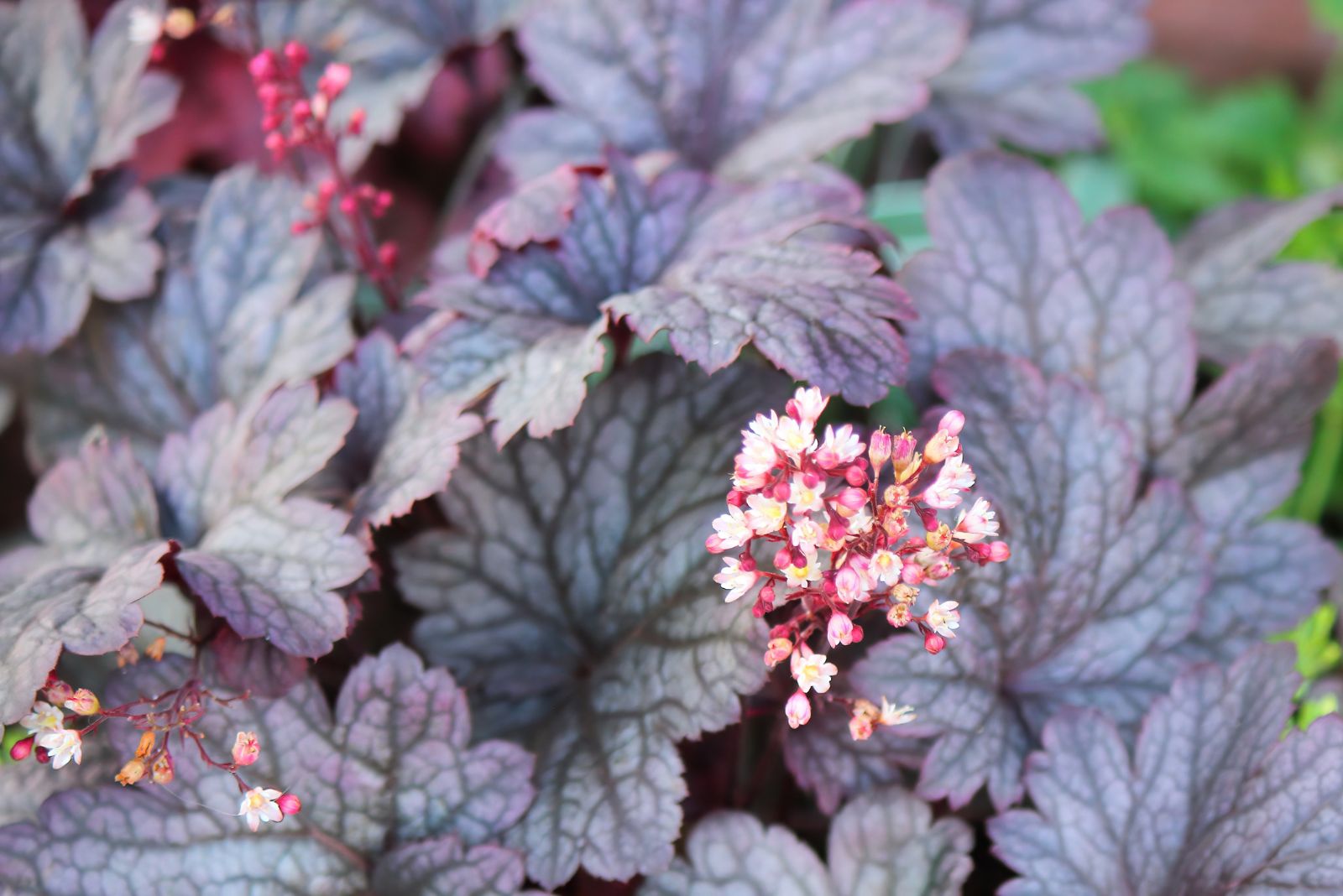
Michigan gardens often come with plenty of shade, thanks to tall trees, changing seasons, and older neighborhoods full of character.
While shade can feel like a roadblock, coral bells prove it can be a blessing in disguise.
These hardy perennials bring bold color and texture to places where many plants struggle to shine.
From deep purples to silvery greens and warm amber tones, coral bells add eye-catching style without demanding the spotlight.
Coral bells pull double duty in shaded gardens.
Their ruffled leaves hold color from spring through fall, while delicate flower spikes rise above the foliage like a soft encore.
They handle Michigan’s cool springs and shifting temperatures with ease, showing grit and grace at the same time.
Once settled in, they stay put and keep performing year after year.
For gardeners tired of bare patches and dull corners, coral bells change the tune.
They brighten shaded beds, edge walkways, and fill gaps under trees with steady color and charm.
In Michigan’s shaded spaces, these plants do more than survive.
They thrive, turning overlooked areas into garden highlights that feel full, balanced, and alive.
1. Palace Purple
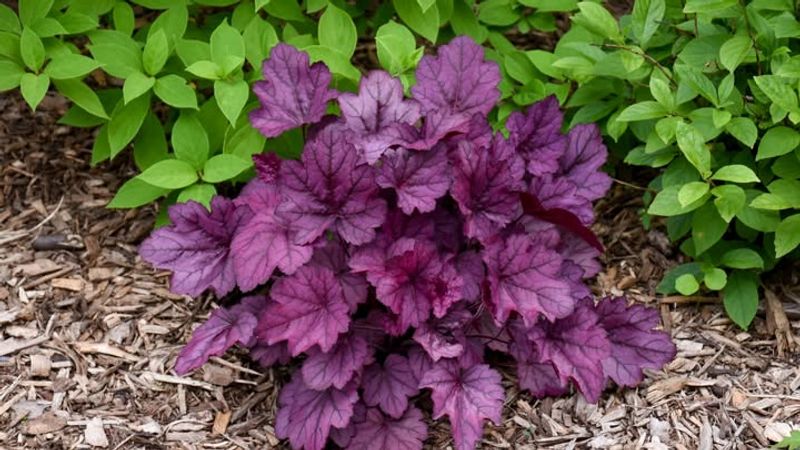
Palace Purple stands as one of the most recognizable coral bells varieties across Michigan landscapes.
Its deep burgundy leaves create dramatic contrast against lighter plants, making shaded areas pop with rich color.
Garden centers throughout Michigan stock this variety because it performs so reliably in our climate.
The foliage maintains its stunning purple-bronze color from spring through fall, even in deep shade.
Small white flowers appear on tall stalks during summer, attracting hummingbirds and butterflies to your Michigan garden.
This variety earned the prestigious Perennial Plant of the Year award back in 1991, proving its lasting appeal.
Cold hardiness makes Palace Purple particularly suitable for Michigan winters, surviving temperatures well below zero without protection.
It grows 12 to 18 inches tall and spreads about the same width, fitting perfectly into small shaded spots.
The leaves develop even richer tones when temperatures cool in autumn, adding seasonal interest.
Gardeners in Detroit, Grand Rapids, and rural areas alike report excellent results with this variety.
It tolerates clay soil common in Michigan as long as drainage stays adequate.
Pair it with hostas or ferns for a classic shade garden combination that thrives throughout the growing season.
2. Caramel

Warm peachy-orange tones make Caramel a standout choice for brightening Michigan’s shadiest garden corners.
Unlike many coral bells that lean toward purple or green, this variety offers something completely different with its apricot-colored leaves.
The unique coloring seems to glow even in low light conditions, making dark spaces feel more inviting.
Leaves emerge peachy-gold in spring, then deepen to amber and caramel shades as summer progresses in Michigan gardens.
Undersides reveal hints of rose-pink, adding extra dimension when breezes flip the foliage.
Creamy white flowers bloom on airy stems in early summer, though most gardeners grow this variety primarily for its exceptional leaf color.
This cultivar handles Michigan’s temperature swings remarkably well, staying vibrant through hot July afternoons and cool September evenings.
It reaches about 10 inches tall with foliage and up to 20 inches when flowering.
The compact size works beautifully along shaded pathways or tucked between larger perennials.
Michigan gardeners appreciate how Caramel contrasts beautifully with blue-leaved hostas or dark-leafed heucheras.
It prefers consistent moisture but tolerates brief dry periods once established.
Plant it where morning light filters through trees for the most intense color development throughout the season.
3. Obsidian
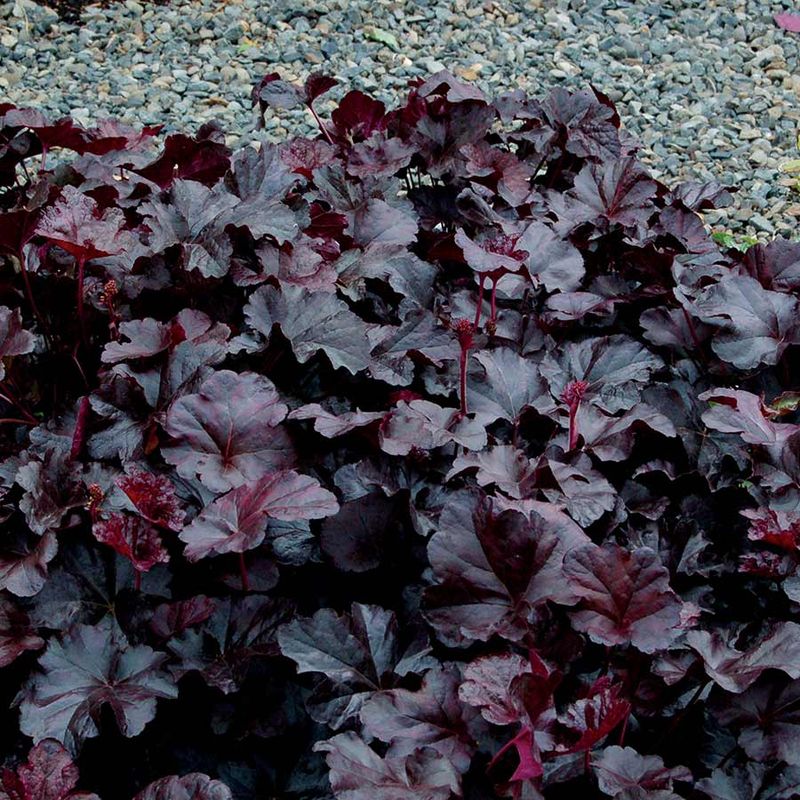
Nearly black foliage sets Obsidian apart from every other plant in Michigan shade gardens.
The leaves emerge dark purple in spring, then darken to an almost black shade that looks absolutely striking against lighter companions.
This dramatic coloring creates focal points that draw the eye even in the dimmest garden corners.
Glossy leaf surfaces catch whatever light filters into shaded Michigan spaces, preventing the dark foliage from disappearing into shadows.
The rounded, slightly ruffled leaves form neat mounds about 8 to 10 inches tall.
Pale pink flowers appear on dark stems in late spring, offering subtle contrast against the inky foliage.
Gardeners throughout Michigan find Obsidian incredibly easy to grow and remarkably cold-hardy for our zone 5 and 6 climates.
It tolerates more shade than many coral bells varieties, making it perfect for spots under dense tree canopies.
The dark color intensifies in cooler weather, looking especially gorgeous during Michigan’s extended spring and fall seasons.
This variety pairs spectacularly with silver-leafed plants like lamium or white-flowered perennials for maximum contrast.
It also combines beautifully with other heucheras in lighter shades, creating layered color schemes.
Plant several together for bold impact, or use single specimens as accent plants throughout your Michigan shade garden.
4. Lime Rickey
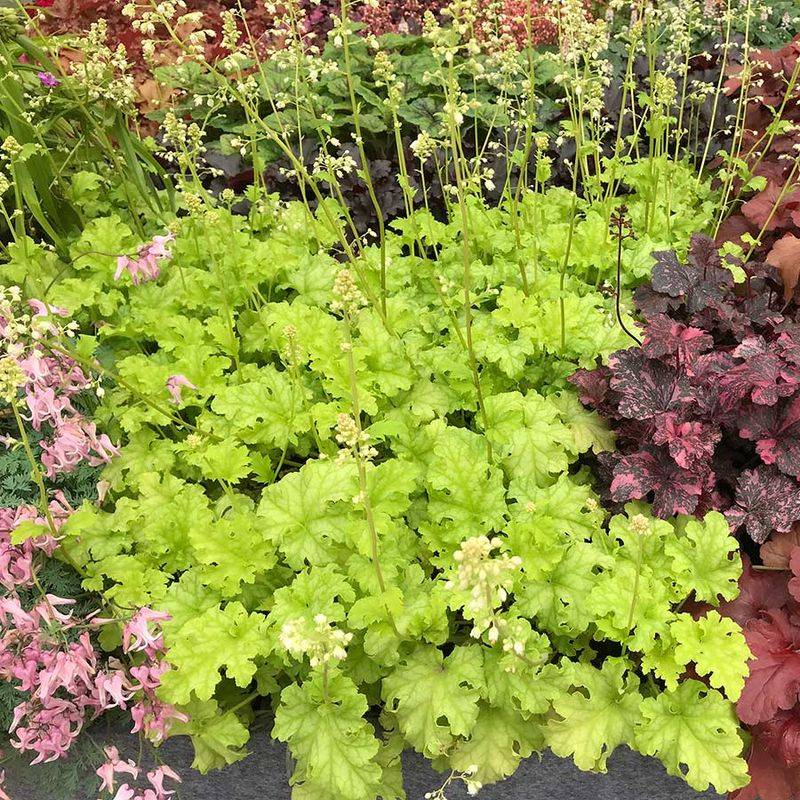
Chartreuse leaves practically glow in Michigan’s shaded gardens, making Lime Rickey one of the brightest coral bells varieties available.
The electric lime-green color brings energy and light to spots where most plants would look dull and washed out.
Garden designers throughout Michigan use this variety specifically to brighten problematic dark areas.
Foliage emerges brilliant yellow-green in spring, maintaining its vibrant color throughout Michigan’s growing season.
The leaves have a slightly ruffled edge that adds textural interest beyond just color.
White flowers bloom on tall stems in summer, but the foliage remains the main attraction from April through October.
This variety handles full shade better than many lighter-colored heucheras, making it ideal for north-facing beds or areas under evergreens.
It grows 8 to 10 inches tall with leaves and up to 18 inches when flowering.
The mounding habit stays neat without requiring frequent division or maintenance.
Michigan gardeners love combining Lime Rickey with purple or burgundy heucheras for eye-catching color combinations.
It also looks fantastic with blue hostas or dark-leafed astilbes.
The bright foliage reflects available light, making entire garden areas feel more open and spacious.
Plant it in groups of three or five for maximum visual impact in your Michigan landscape.
5. Plum Pudding
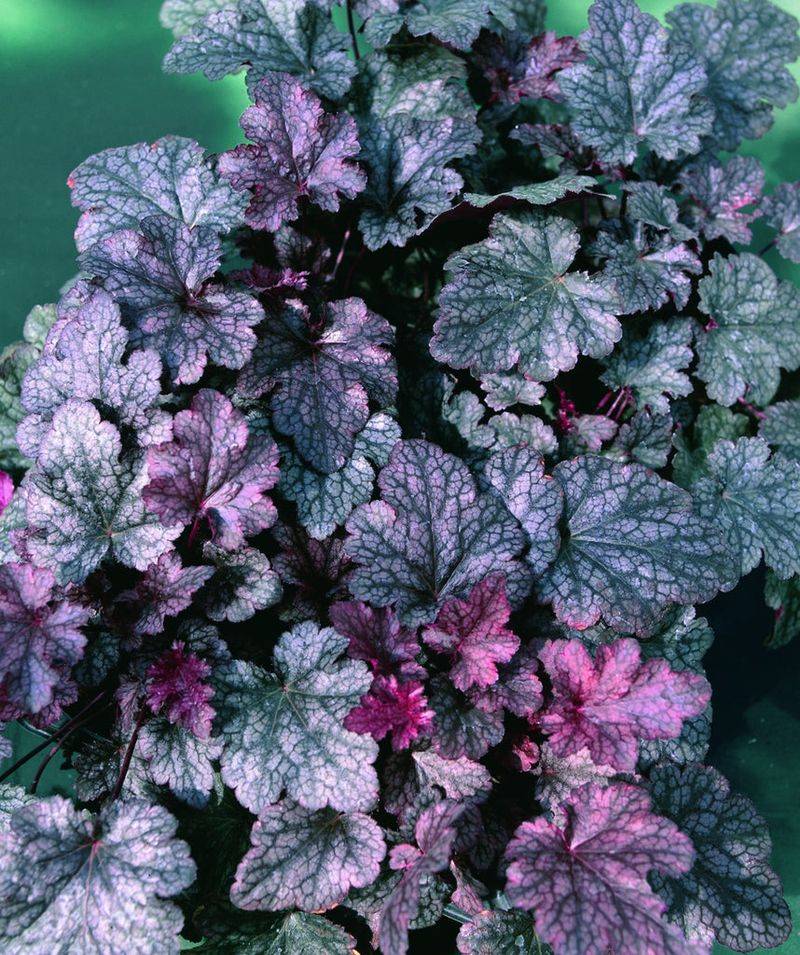
Rich plum-purple leaves with silvery overlay make Plum Pudding a sophisticated choice for Michigan shade gardens.
The metallic sheen catches light beautifully, creating shimmer even in dim conditions.
This variety offers more complexity than solid-colored heucheras, with the silver veining creating intricate patterns across each leaf.
Foliage color deepens as Michigan’s season progresses, starting lighter in spring and intensifying through summer and fall.
Dark purple undersides add extra dimension when leaves curl or catch breezes.
Pink flowers appear on burgundy stems in late spring, complementing rather than competing with the spectacular foliage.
Cold tolerance makes this variety perfect for Michigan’s harsh winters, reliably returning year after year without protection.
It reaches 8 to 12 inches tall, forming dense clumps that fill space effectively.
The silvery overlay becomes more pronounced in cooler weather, making spring and fall particularly beautiful times for this plant.
Gardeners across Michigan appreciate how Plum Pudding bridges the gap between dark and light heucheras in mixed plantings.
It pairs wonderfully with lime-green or gold foliage plants, creating balanced contrast.
The variety tolerates both dry shade and moisture, adapting to various Michigan garden conditions.
Plant it along shaded borders or in containers for porches and patios that lack direct sunlight.
6. Berry Smoothie
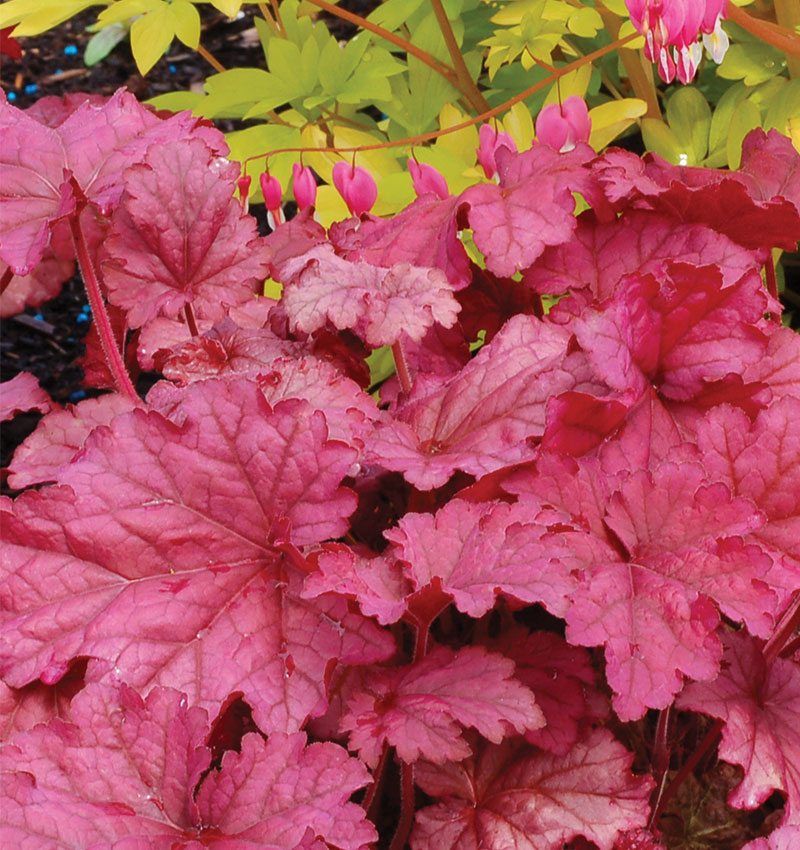
Rose-pink foliage with darker veining gives Berry Smoothie a uniquely feminine appearance in Michigan gardens.
The color resembles strawberry ice cream, bringing soft warmth to shaded areas without the intensity of bright orange or harsh purple varieties.
This gentler palette works beautifully in cottage-style Michigan landscapes.
Leaves emerge peachy-pink in spring, then develop deeper rose tones as summer arrives in Michigan.
The prominent dark veins create a lacy pattern across each leaf, adding visual interest beyond solid color.
Small white flowers bloom in early summer, rising above the colorful foliage on slender stems.
This variety shows excellent vigor in Michigan’s climate, filling in quickly and maintaining good density throughout the season.
It grows 9 to 12 inches tall, with flowering stems reaching 20 inches.
The compact size makes it perfect for front-of-border positions in shaded beds.
Michigan gardeners find Berry Smoothie particularly useful for creating soft color transitions between bolder plants.
It combines beautifully with purple heucheras, blue hostas, or white-flowering perennials like astilbe.
The rose-pink tones look especially lovely in morning light filtering through trees.
Plant it where you can appreciate the detailed veining up close, perhaps along pathways or near seating areas in your Michigan shade garden.
7. Midnight Rose
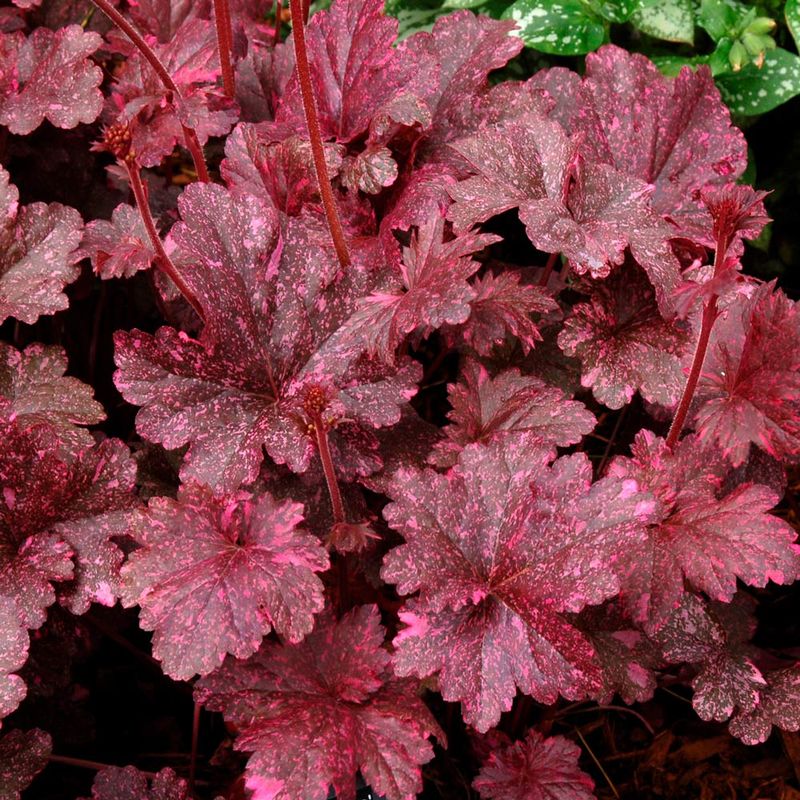
Hot pink spots splashed across deep purple leaves make Midnight Rose unlike any other coral bells variety in Michigan gardens.
The dramatic variegation looks almost hand-painted, with each leaf displaying a unique pattern of bright pink speckles.
This showstopper creates instant conversation pieces in shaded Michigan landscapes.
New leaves emerge solid purple in spring, then develop their characteristic pink spotting as they mature throughout Michigan’s growing season.
The amount of pink varies by leaf and growing conditions, making each plant slightly different.
White flowers appear in summer, though they pale in comparison to the spectacular foliage display.
Cold hardiness ensures Midnight Rose returns reliably in Michigan gardens year after year, handling our winters without special protection.
It grows 8 to 10 inches tall with foliage, forming neat clumps that stay compact.
The variegation remains vibrant even in full shade, unlike some variegated plants that need more light.
Gardeners throughout Michigan use Midnight Rose as a focal point plant, positioning it where the unusual coloring gets noticed.
It pairs well with solid-colored companions that let the variegation shine without competition.
The pink spotting picks up tones from nearby flowering plants, creating cohesive color schemes.
Plant it in containers or garden beds where you want maximum visual impact in your Michigan shade garden.
8. Citronelle
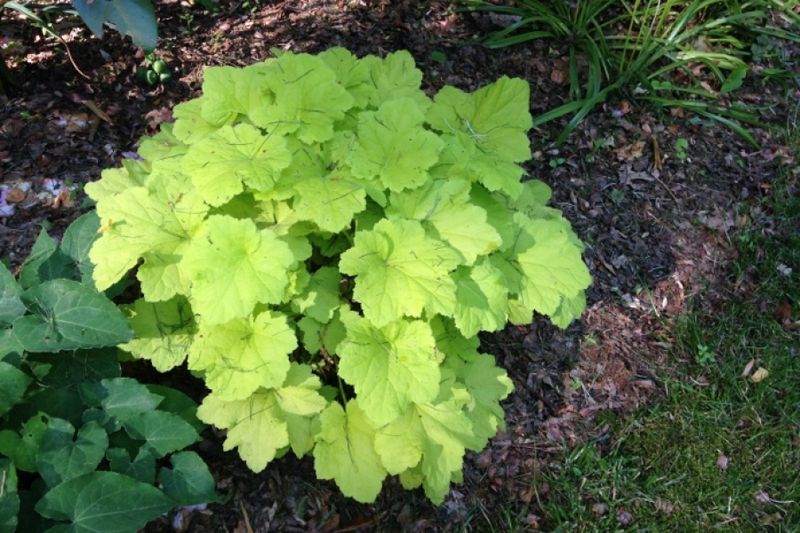
Bright yellow-green foliage makes Citronelle one of the most luminous coral bells for Michigan’s shadiest spots.
The color resembles fresh lime juice, bringing incredible brightness to areas where most plants would look dull.
This variety practically glows in low light, transforming problematic shady corners into garden highlights.
Leaves emerge brilliant chartreuse in spring, maintaining their electric color throughout Michigan’s entire growing season.
The foliage develops slightly deeper gold tones in fall, adding seasonal interest.
White flowers bloom on tall stems in summer, rising well above the colorful leaf mounds.
This variety demonstrates excellent shade tolerance, actually preferring protection from afternoon sun in Michigan gardens.
It reaches 8 to 10 inches tall with foliage and up to 24 inches when flowering.
The bright color makes spaces feel larger and more open, an optical trick that works wonderfully in small shaded yards.
Michigan gardeners appreciate how Citronelle combines with virtually any other shade plant color, from purple to blue to burgundy.
It looks particularly stunning with dark-leafed heucheras or blue-green hostas.
The bright foliage reflects whatever light reaches shaded areas, maximizing brightness.
Plant it in groups for bold impact, or use single plants as accent lights throughout your Michigan shade garden to guide the eye and create visual rhythm.
9. Black Taffeta

Deeply cut leaves in glossy black-purple make Black Taffeta one of the most elegant coral bells for Michigan shade gardens.
The foliage resembles fine fabric, with ruffled edges that catch light and create movement.
This refined appearance elevates ordinary shade plantings into sophisticated garden displays.
Leaves emerge dark purple in spring, then deepen to near-black as Michigan’s season progresses.
The glossy surface reflects available light, preventing the dark color from disappearing into shadows.
Small white flowers bloom on dark stems in late spring, offering delicate contrast against the dramatic foliage.
This variety shows exceptional cold hardiness for Michigan’s zone 5 and 6 climates, returning reliably each spring without winter damage.
It grows 8 to 12 inches tall, forming dense clumps that spread slowly.
The deeply cut leaves provide more textural interest than smooth-edged varieties, adding another design element beyond color.
Gardeners across Michigan find Black Taffeta particularly useful in formal shade gardens or contemporary landscapes.
It pairs beautifully with silver-leafed plants, white flowers, or bright chartreuse foliage for maximum contrast.
The elegant appearance suits container plantings as well as garden beds.
Plant it where its refined texture and dark color can be appreciated up close in your Michigan shade garden.