Cottage Garden Flowers That Bloom For Months In Michigan Yards
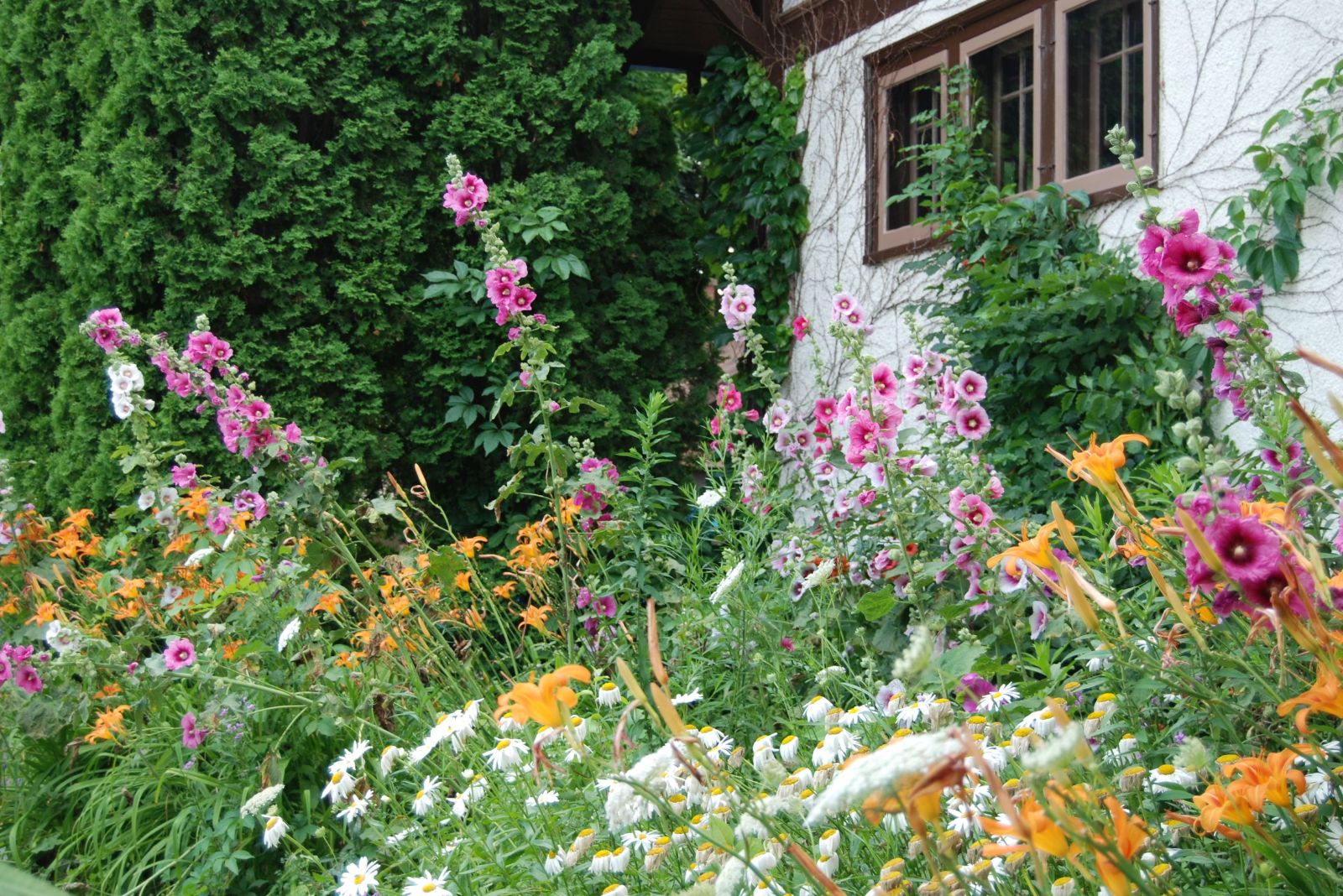
If you love the soft, romantic look of a storybook garden, a cottage-style flower bed is a perfect fit for Michigan yards. The charm comes from relaxed planting, layers of color, and flowers that bloom again and again through the season.
Even with Michigan’s cool springs, warm summers, and chilly fall nights, many classic cottage garden favorites thrive and keep the show going for months. Imagine overflowing blooms, buzzing pollinators, and fresh bouquets picked right from your own backyard.
The secret is choosing long-blooming flowers that handle temperature swings and still look beautiful without constant fuss.
Whether you are filling a small border or creating a full cottage-style garden, the right mix of plants can keep your yard lively from late spring into fall.
Let’s explore beautiful cottage garden flowers that bloom for months and bring timeless charm to Michigan landscapes.
1. Black-Eyed Susan (Rudbeckia hirta)
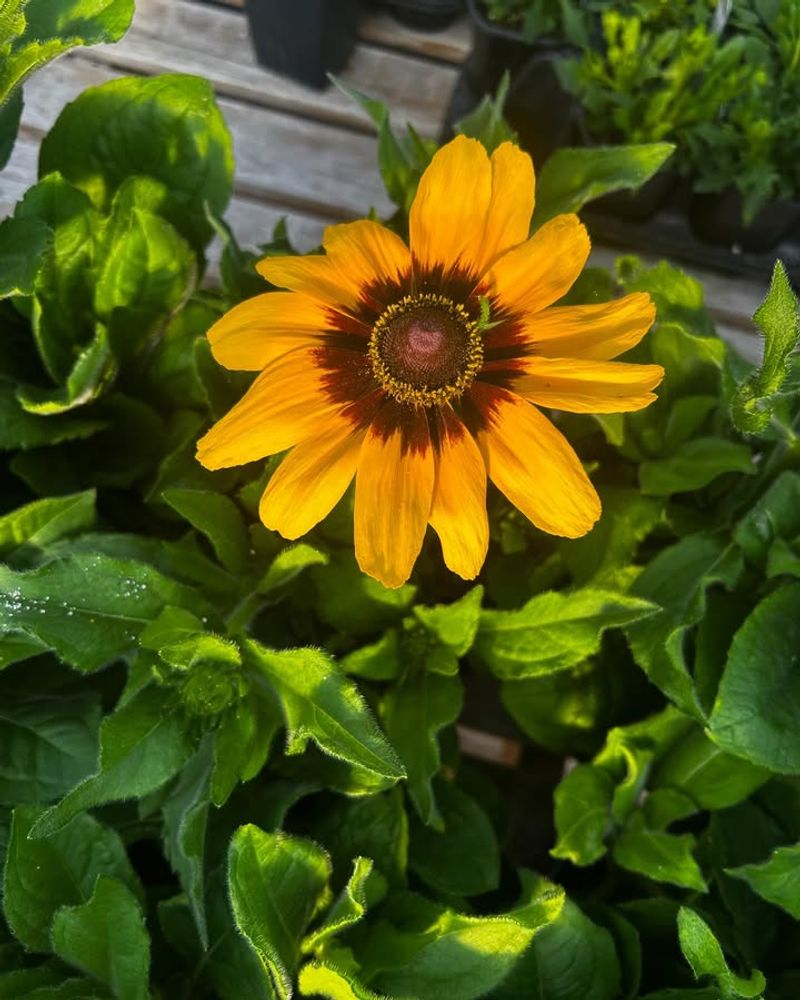
Golden petals surrounding chocolate-brown centers make these native wildflowers instantly recognizable across Michigan landscapes. Black-Eyed Susans start their show in mid-summer and keep blooming straight through September.
Your garden gets cheerful color when many spring bloomers have already finished their performance.
These tough plants handle Michigan’s temperature swings without complaint. They grow well in average soil and don’t mind if you forget to water them occasionally.
Full sun brings out their best blooming potential, though they tolerate some afternoon shade.
Butterflies and bees visit these flowers constantly throughout the day. The blooms make excellent cut flowers that last over a week in vases.
Deadheading spent flowers encourages more buds to form, extending the display even longer.
Plants spread gradually to fill empty spots in your borders. They reseed themselves moderately, creating natural drifts without becoming invasive.
Black-Eyed Susans pair beautifully with purple coneflowers and ornamental grasses for a prairie-inspired look that suits Michigan cottage gardens perfectly.
2. Daylilies (Hemerocallis spp.)
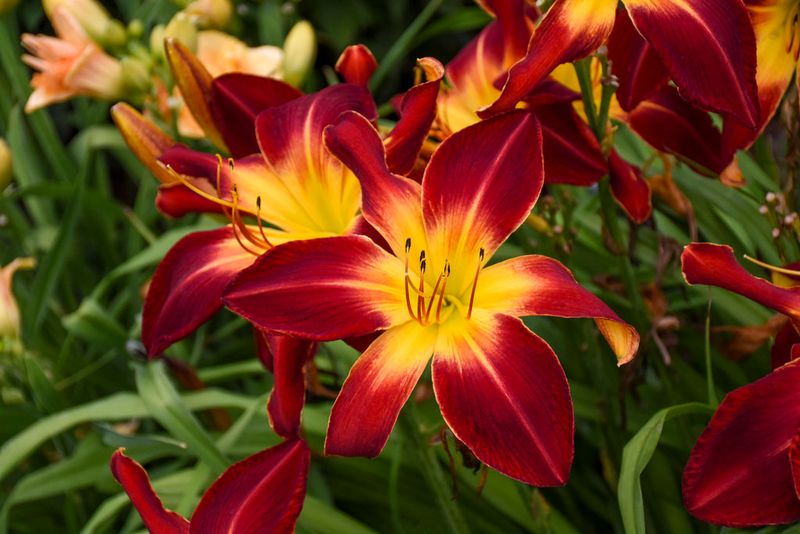
Trumpet-shaped blossoms open fresh each morning in shades ranging from pale yellow to deep burgundy. Individual flowers last just one day, but each stem produces dozens of buds that keep the show going for weeks.
Different varieties bloom at staggered times, letting you enjoy daylilies from late spring through summer’s end.
Few perennials match daylilies for toughness in Michigan conditions. They grow in almost any soil type and survive both drought and occasional flooding.
Deer usually leave them alone, which makes them valuable in areas where wildlife browsing causes problems.
Their arching foliage looks attractive even when flowers aren’t open. Plants form dense clumps that suppress weeds naturally around their base.
You can divide crowded clumps every few years to rejuvenate blooming or create new plantings elsewhere in your landscape.
Daylilies need minimal deadheading since spent flowers drop cleanly on their own. They thrive in full sun but also bloom reasonably well in partial shade.
Mixing early, mid-season, and late varieties ensures your garden displays daylily blooms continuously throughout Michigan’s growing season.
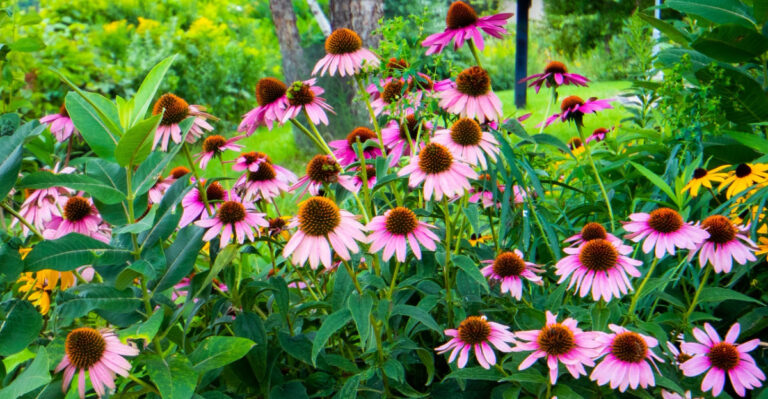
3. Purple Coneflower (Echinacea purpurea)
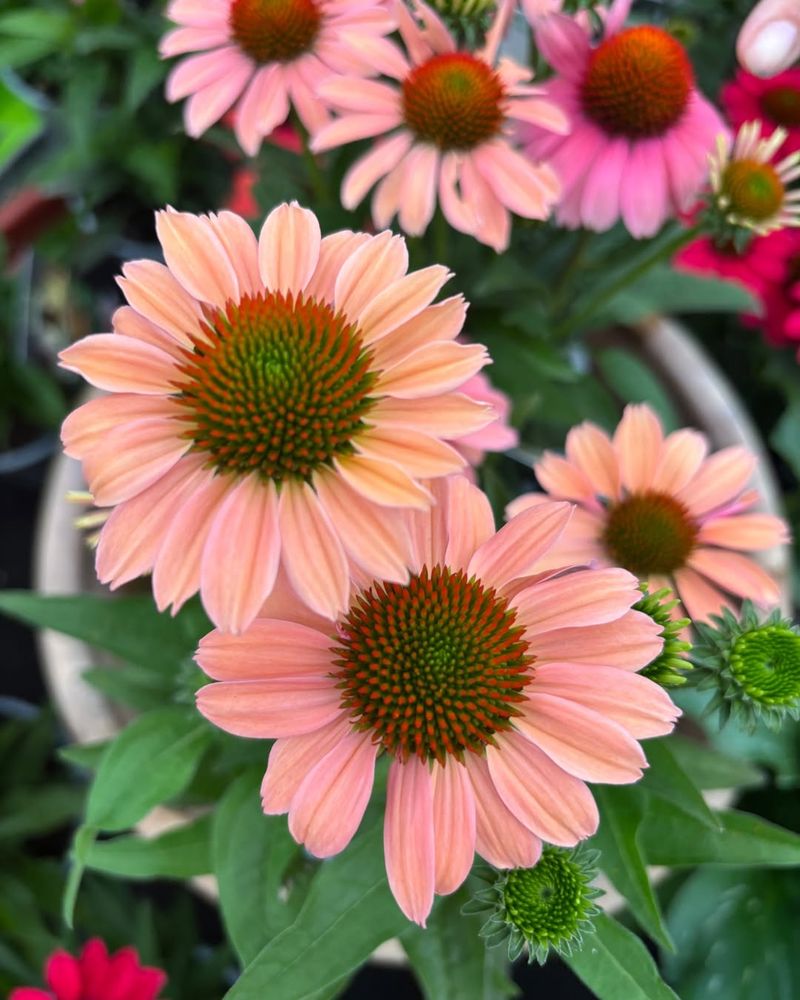
Pink-purple petals droop gracefully around spiky orange centers that butterflies adore. Purple coneflowers begin blooming in early summer and continue producing fresh flowers until fall frosts arrive.
Their long bloom period makes them essential for any Michigan cottage garden seeking continuous color.
These perennials grow stronger each year, forming robust clumps that require minimal fussing. They handle drought remarkably well once established in your garden.
Even clay soil doesn’t bother them much, though they appreciate decent drainage during wet springs.
Goldfinches arrive in late summer to feast on the seedheads. You can leave the spent flowers standing through winter for wildlife benefits and architectural interest.
The dried cones add textural beauty to snow-covered gardens while providing food for hungry birds.
Purple coneflowers resist most pests and diseases naturally. They bloom best in full sun but tolerate partial shade reasonably well.
Dividing clumps every few years keeps plants vigorous and gives you extras to share with gardening friends or expand your display throughout the yard.
4. Shasta Daisy (Leucanthemum × superbum)
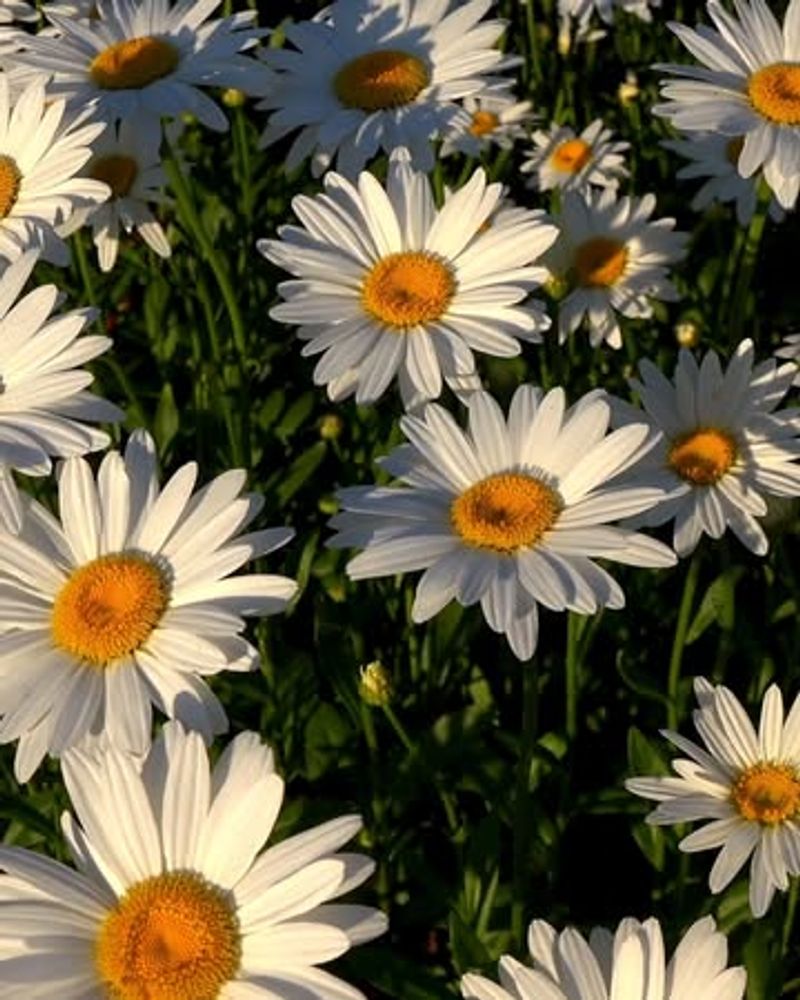
Crisp white petals radiating around sunny yellow centers bring classic cottage charm to Michigan yards. Shasta daisies bloom generously from mid-summer onward when you remove faded flowers regularly.
Their cheerful appearance brightens borders and looks perfect in casual bouquets that last well indoors.
These perennials prefer full sun and well-drained soil for best performance. They tolerate Michigan’s winter cold easily but appreciate mulch around their crowns during the first winter after planting.
Once established, they return reliably each spring with increasing vigor. Regular deadheading makes a significant difference in bloom duration. Snipping off spent flowers before they set seed encourages plants to produce fresh buds continuously.
This simple maintenance task extends their flowering period well into early fall, giving you months of white blooms.
Shasta daisies combine beautifully with nearly any other cottage garden plant. Their neutral white color complements bold colors without clashing.
They grow about two feet tall, making them perfect for middle border positions where their flowers stand out without blocking shorter plants behind them.
5. Coral Bells (Heuchera spp.)
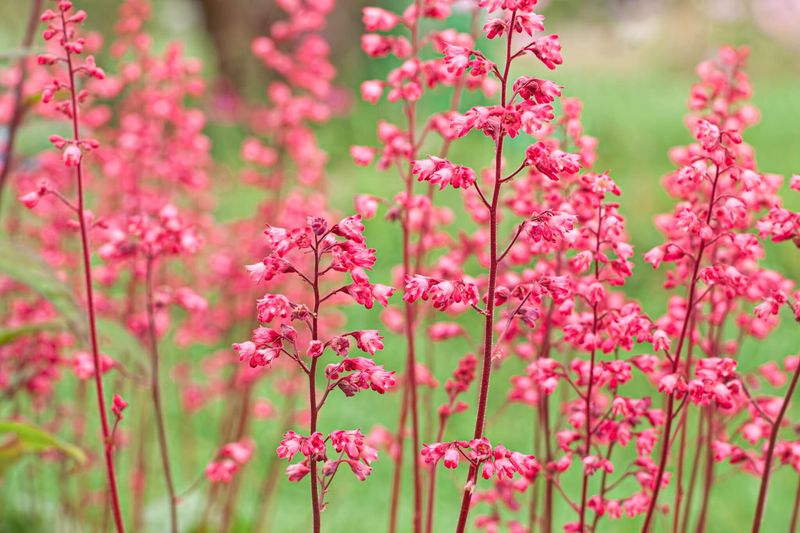
Ruffled leaves in shades of purple, lime, coral, and silver create stunning foliage displays that last all season. Delicate flower spikes rise above the leaves in late spring and continue appearing sporadically through summer.
While the blooms attract hummingbirds, the colorful foliage provides the main attraction in Michigan cottage gardens.
Coral bells thrive in partial shade, making them perfect for spots under trees or on the north side of buildings. They tolerate full sun in Michigan if given consistent moisture.
Their compact size suits small gardens, containers, or edging along pathways beautifully.
These evergreen perennials keep their leaves through mild Michigan winters, providing year-round interest. Spring cleanup involves simply removing any damaged foliage before new growth emerges.
They rarely suffer from serious pest or disease problems when planted in appropriate conditions.
Hundreds of varieties offer incredible color choices for creative combinations. You can mix different leaf colors together for striking contrasts.
Coral bells pair wonderfully with hostas, ferns, and astilbes in shaded areas, creating layered textures that make shady spots feel intentional rather than neglected.
6. Bee Balm (Monarda didyma)
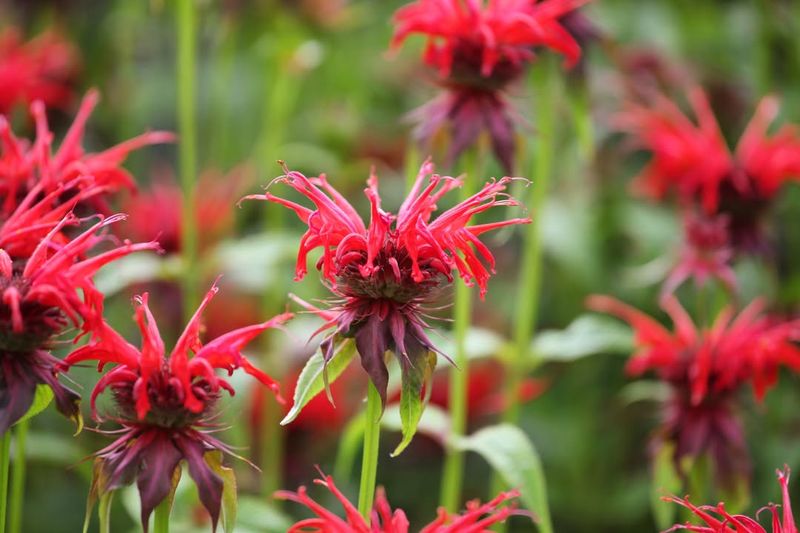
Shaggy flower heads in brilliant red, pink, or purple rise on sturdy stems that sway gently in summer breezes. Bee balm lives up to its name by attracting countless bees, butterflies, and hummingbirds throughout its long blooming period.
The aromatic foliage releases a pleasant minty fragrance when you brush against it while working in your garden.
This native Michigan wildflower thrives in average garden soil with regular moisture. It blooms from mid-summer through early fall, filling the season when many spring bloomers have faded.
Plants spread gradually through underground runners, creating larger clumps each year without becoming aggressively invasive.
Good air circulation helps prevent powdery mildew on the leaves during humid Michigan summers. Planting bee balm where it receives morning sun and afternoon shade often reduces this common issue.
Newer varieties offer improved disease resistance while maintaining the vibrant colors and pollinator appeal.
Deadheading encourages additional flower production throughout the season. You can also cut plants back by half after the first bloom flush to promote bushier growth and a second flowering.
Bee balm works beautifully in informal cottage borders alongside other pollinator favorites.
7. Coreopsis (Coreopsis spp.)
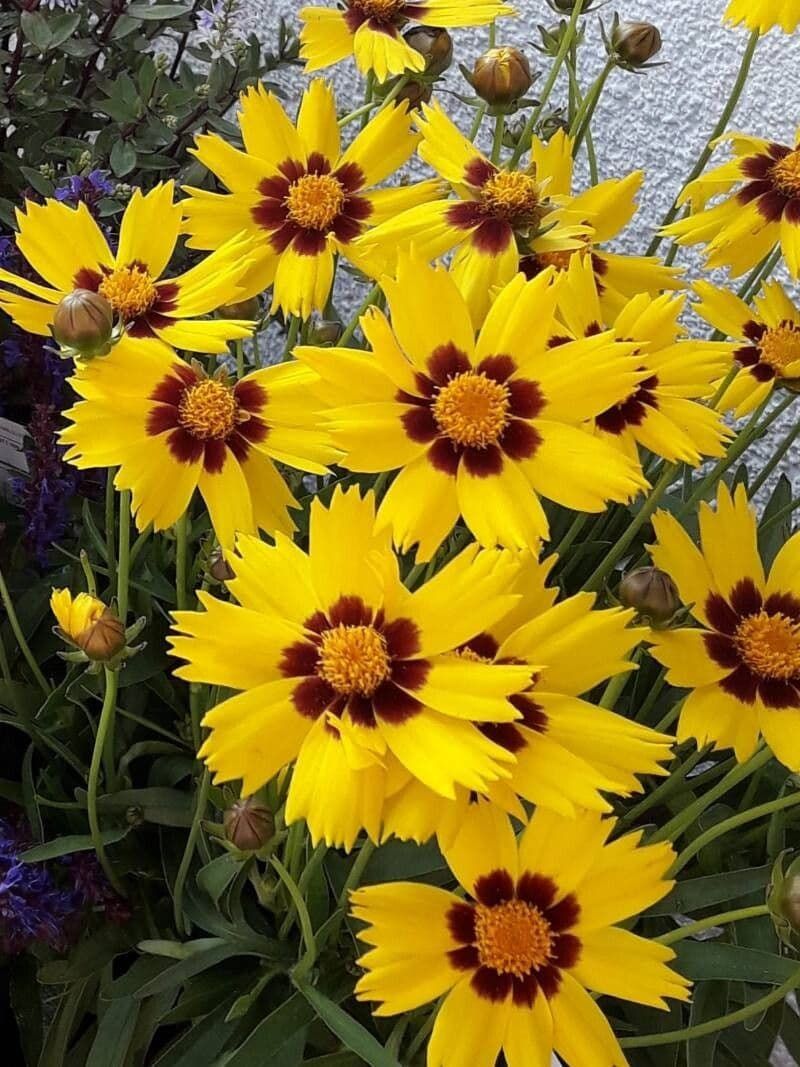
Cheerful yellow blooms dance on wiry stems from late spring through summer’s heat. Some varieties feature pink or bicolor flowers that add extra interest to the display.
Coreopsis produces flowers so abundantly that plants often appear covered in golden sunshine, earning their common name of tickseed.
These carefree perennials ask for almost nothing beyond decent drainage and sunshine. They tolerate poor soil, drought, and neglect better than most flowering plants.
Michigan’s winter cold doesn’t faze them at all, and they return enthusiastically each spring without any special protection.
Regular deadheading keeps flowers coming steadily all season long. Many gardeners simply shear plants back by one-third when blooming slows in mid-summer.
This quick trim stimulates fresh growth and another generous flush of flowers that continues until fall frosts arrive.
Coreopsis seeds itself lightly in favorable conditions, filling gaps naturally without becoming weedy. The airy texture of their foliage and flowers creates a relaxed cottage garden feel.
They combine beautifully with sturdier perennials like daylilies and coneflowers, adding delicate charm to bolder companions in mixed borders.
8. Phlox (Phlox paniculata)
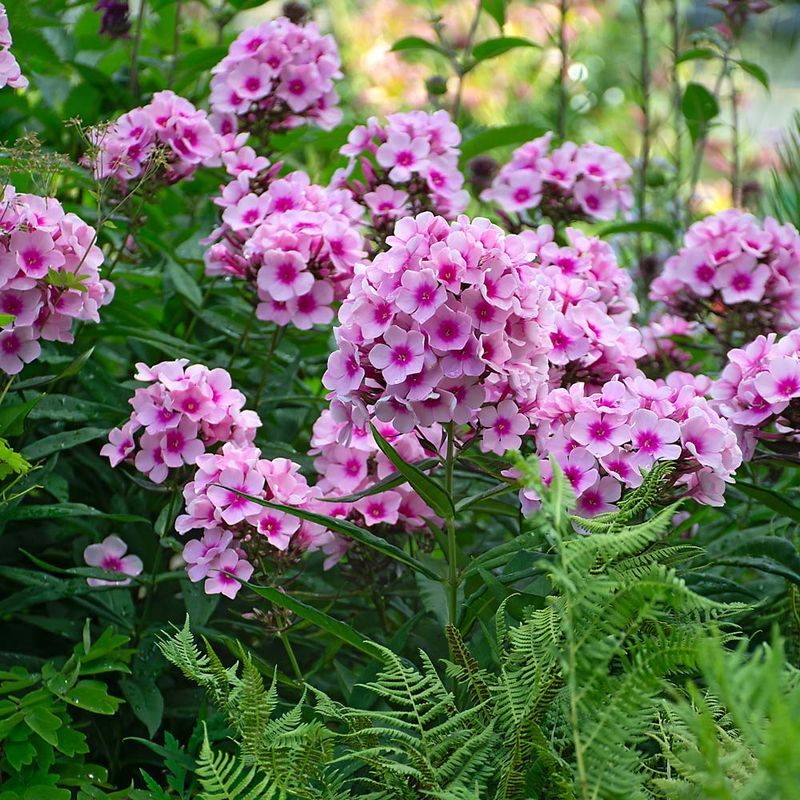
Fragrant flower clusters in pink, purple, white, or coral create stunning displays from mid-summer onward. Garden phlox reaches three to four feet tall, making a bold statement in cottage borders.
Their sweet perfume fills evening gardens, attracting moths and butterflies while you enjoy outdoor spaces after dinner.
These traditional cottage garden favorites prefer rich, moist soil and full sun for optimal blooming. They benefit from consistent watering during Michigan’s dry summer spells.
Mulching around plants helps retain soil moisture while keeping roots cool during hot weather.
Powdery mildew can affect older phlox varieties, but many newer cultivars resist this fungal problem effectively. Providing good air circulation by spacing plants properly and removing lower leaves helps prevent issues.
Choosing resistant varieties saves you frustration while ensuring beautiful blooms throughout the season.
Deadheading spent flower clusters encourages side shoots to bloom and extends the overall flowering period significantly. You can cut stems back after blooming finishes to promote tidier appearance.
Dividing clumps every few years keeps plants vigorous and blooming abundantly, giving you extras to expand your display or share with neighbors.
9. Sedum (Sedum ‘Autumn Joy’)
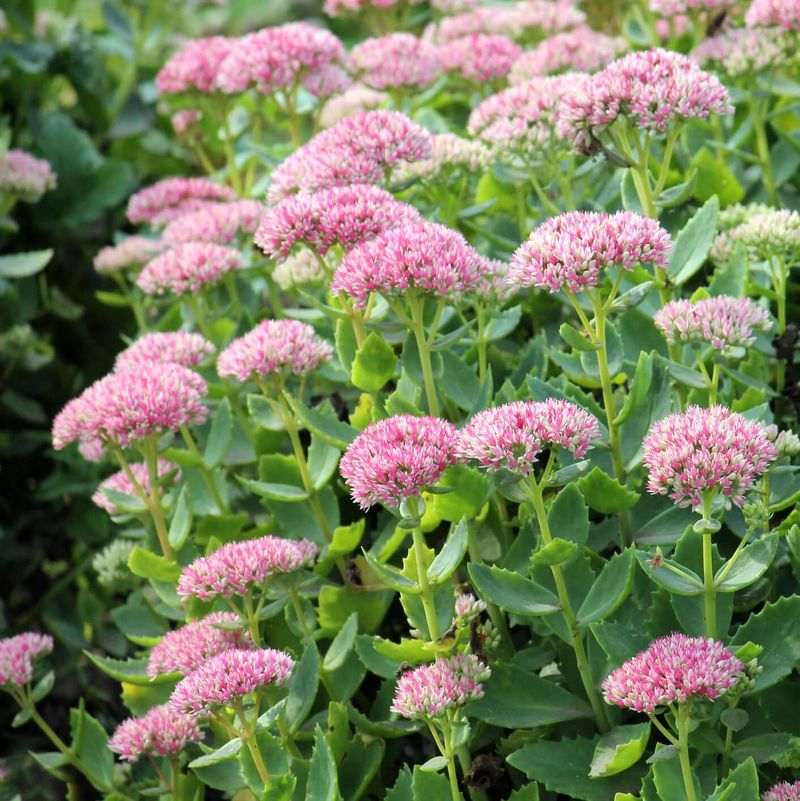
Thick, succulent leaves form attractive mounds that look good all season before flowers even appear. Flat-topped flower clusters emerge pale green in mid-summer, gradually deepening to rich pink by fall.
The blooms eventually turn rusty red and hold their shape through winter, providing architectural interest when most perennials have collapsed.
Sedum thrives in Michigan’s toughest conditions, including poor soil, drought, and blazing sun. It asks for nothing beyond decent drainage to prevent root rot during wet periods.
Once established, you can practically ignore these plants while they perform beautifully year after year.
Butterflies and bees crowd the flowers during late summer and fall when nectar sources become scarcer. The blooms continue looking attractive for months, transitioning through color changes that keep them interesting.
Many gardeners leave the dried flower heads standing all winter for visual appeal and wildlife value.
Sedum works wonderfully along borders, in rock gardens, or massed as groundcover on slopes. It combines naturally with ornamental grasses and late-blooming perennials like asters.
The sturdy stems rarely need staking, and plants maintain neat, rounded shapes without any pruning or special care throughout Michigan’s growing season.
10. Catmint (Nepeta spp.)
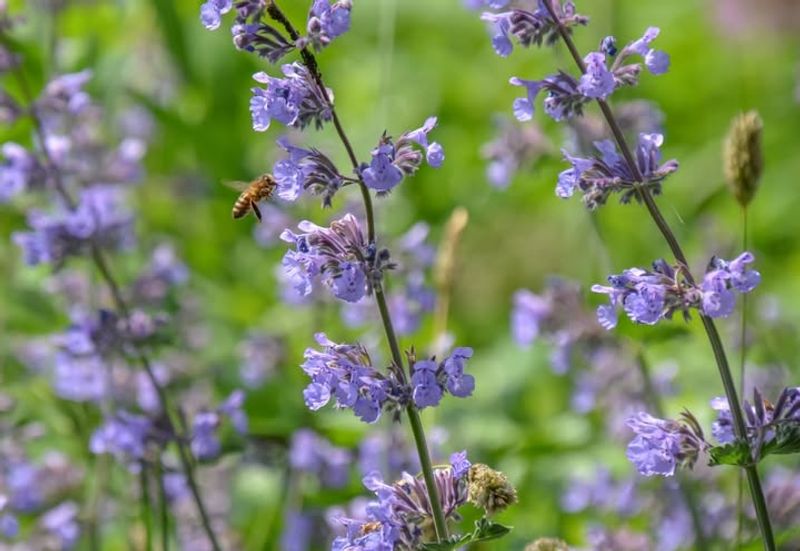
Clouds of lavender-blue flowers billow over aromatic gray-green foliage from early summer through fall. Catmint creates a soft, romantic effect in cottage borders while requiring minimal care.
The flowers appear in waves throughout the season, with plants looking freshest after each blooming flush.
This drought-tolerant perennial thrives in full sun and average soil without special amendments. It handles Michigan’s temperature extremes gracefully and resists deer browsing effectively.
Once established, catmint needs watering only during extended dry periods, making it perfect for low-maintenance landscapes.
Shearing plants back by half after the first bloom cycle encourages bushier growth and fresh flowers. This simple trim takes just minutes but extends blooming significantly.
The aromatic foliage releases a pleasant scent when you work around plants, though it’s milder than true catnip.
Catmint edges pathways beautifully, spilling slightly onto walkways with informal charm. It combines wonderfully with roses, providing a soft underplanting that complements their more formal structure.
Bees visit the flowers constantly, making catmint an excellent choice for pollinator-friendly Michigan gardens that offer beauty and ecological benefits simultaneously throughout the growing season.