9 Creative Things To Do With A Tree Stump In Your Georgia Backyard
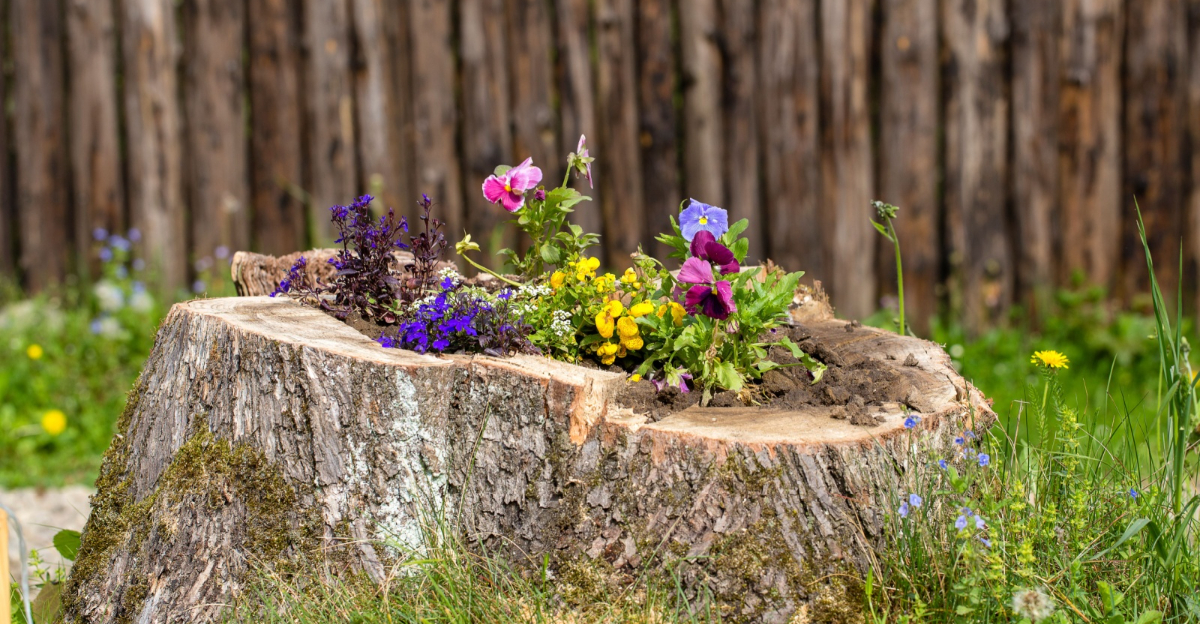
Staring at that stubborn stump in your Georgia backyard and wondering what a grinder rental is going to cost?
Hold up for a second.
That rough leftover from the last big storm can become a surprisingly good garden feature with a little intention.
Around the Peach State, stumps show up after removals, storm damage, or old trees that finally came down.
Before you bring in heavy equipment, consider how useful that solid chunk of wood can be. It can act like a natural pedestal for pots, a base for a birdbath, or the starting point for a shady little woodland corner that fits Georgia’s long growing season.
A stump that feels like unfinished business can turn into the kind of yard detail people notice right away.
Ready to see yours differently? Let’s turn it into something that looks like it belongs.
1. Turn It Into A Planter Pocket
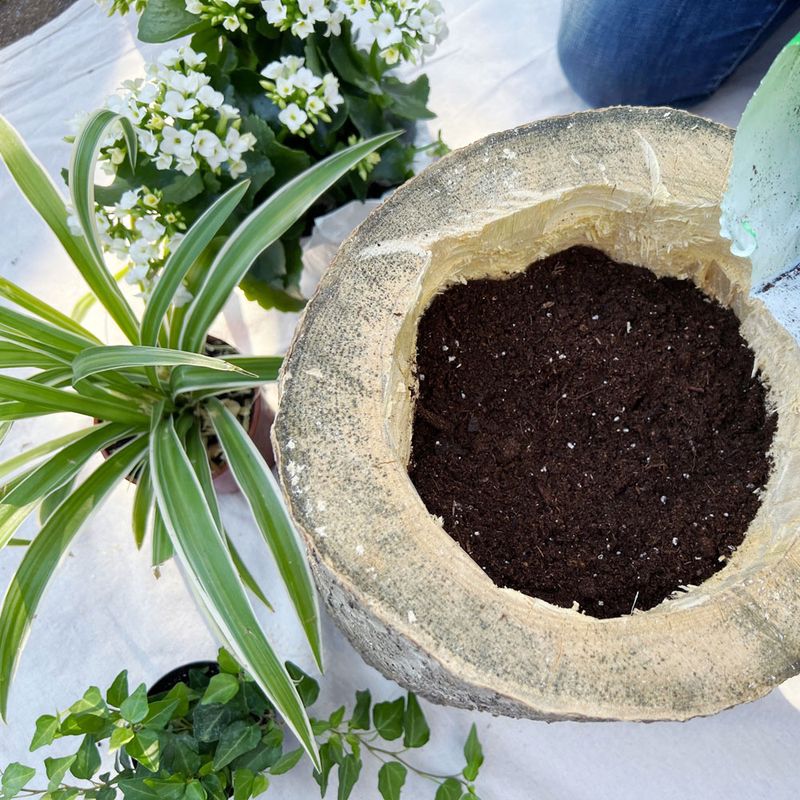
Old stumps with soft, decaying centers can make excellent natural planters in many Georgia backyards.
When a stump starts to break down from the inside out, that softer core is often easier to hollow further with a chisel or hand drill, and the wood can hold moisture between rain events.
That moisture buffer can help during hot stretches when temperatures climb and container soil dries faster than expected.
Start by clearing out loose debris and any unstable, crumbly wood. Add a thin layer of gravel or coarse bark at the bottom for drainage, since water can linger in pockets, especially after heavy rain.
Fill the rest with a quality potting mix, then mix in a small amount of finished compost for extra structure.
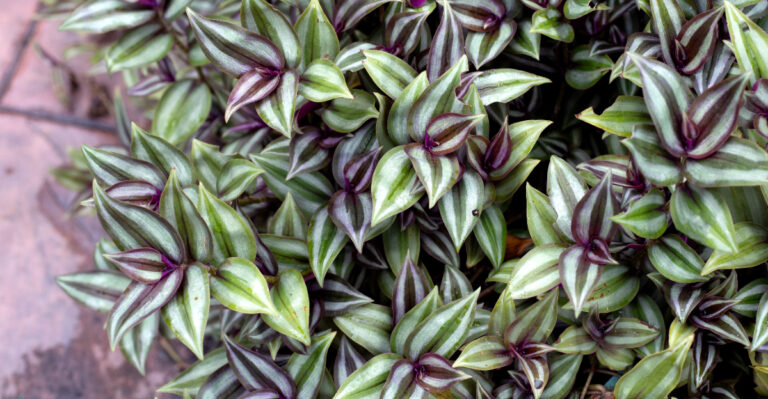
For plant choices, trailing sweet potato vine adds bold color and tends to handle heat well. Caladiums often do well in partial shade and bring dramatic leaf patterns that look great against weathered wood.
Begonias are another reliable option for bright shade. For impatiens, New Guinea types or downy-mildew resistant options usually hold up better than standard bedding impatiens in humid, rainy periods.
Creeping Jenny can work in a contained planter look, but it can spread beyond beds in some settings, so keeping it confined to the stump pocket is the safer approach.
If your stump sits in a sunnier spot, a mix of herbs like basil, thyme, and oregano can turn it into a functional edible planter.
Check the stump’s stability before planting, especially if it sits near a walkway or patio. A heavily decayed stump may shift over time as roots break down.
Refresh the soil each spring and pull weeds early before they compete with your plantings.
2. Build A Stump Fairy Garden
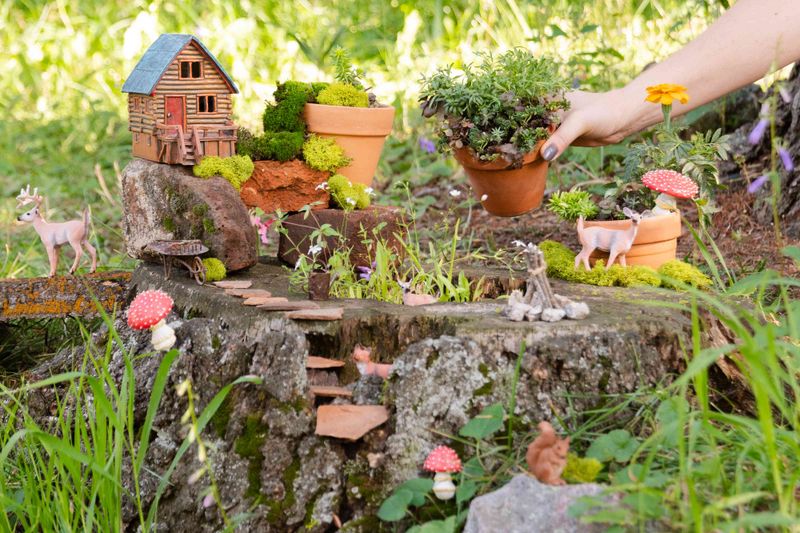
Few backyard projects capture the imagination quite like a fairy garden, and a wide, flat-topped stump gives you a ready-made stage for one.
Georgia’s woodland vibe makes fairy gardens feel right at home, especially when the stump sits beneath oaks or dogwoods where the light stays soft and filtered.
Start by brushing off the stump surface and filling large cracks with potting soil mixed with a bit of sand for stability. Moss can work well here, especially in shaded, consistently moist spots.
Sheet moss and cushion moss can take hold in humid conditions, but they usually do best when pressed into crevices where moisture lingers and the surface stays cool.
Use moss from your own yard or a responsible supplier rather than pulling it from natural areas.
Miniature accessories like tiny doors, lanterns, stepping stones, and small resin animals are easy to find online and at garden centers. Keep the scale consistent so the scene looks intentional.
Tiny ferns, baby tears, and dwarf mondo grass can work as ground cover around the figurines without swallowing the whole setup.
Maintenance is light but consistent. Remove fallen leaves so they do not smother moss or small plants.
Mist during dry stretches, since moss can brown when the surface dries out. Avoid full afternoon sun, because summer heat can stress moss and mini plants fast.
Shaded or east-facing spots usually keep this feature looking better through the season.
3. Make A Pollinator Pot Stand
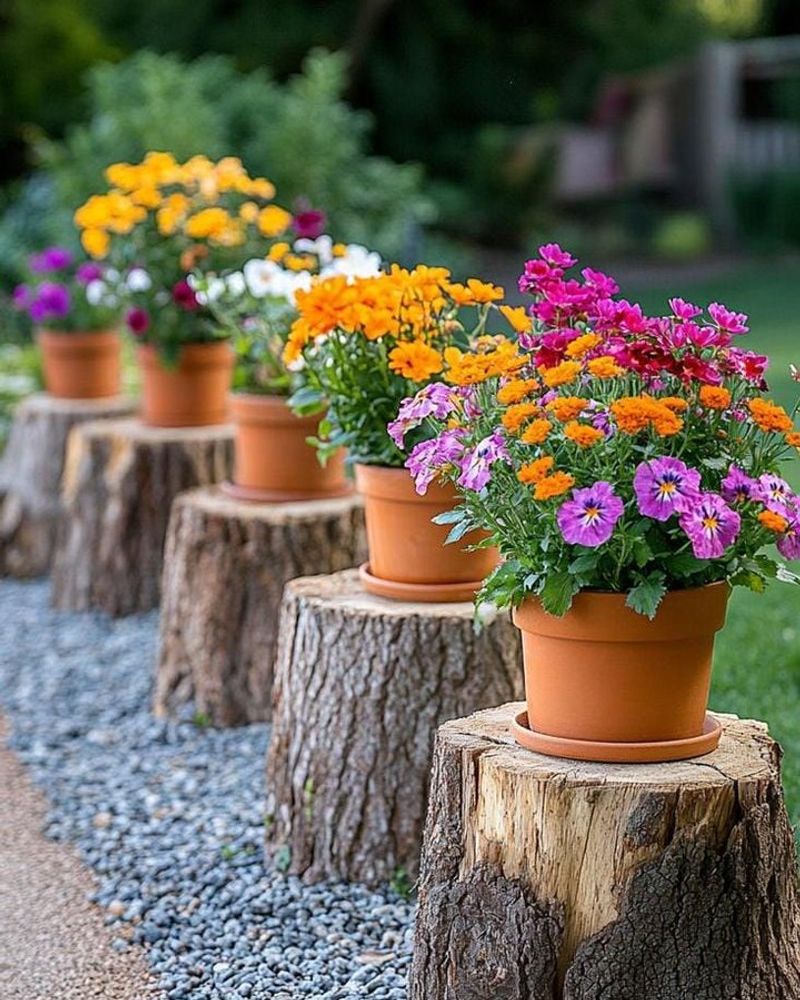
A stump positioned in a sunny corner can become a simple hub for pollinator-friendly container plants.
Bees and butterflies often notice grouped blooms faster than a single pot, and lifting a few containers onto a natural wood base adds height and structure to a bed edge.
Stumps with flat, stable tops work best for this idea. If your stump has an uneven surface, light leveling can help pots sit safely without wobbling.
Place your largest pot in the center, then arrange smaller pots around the base on the ground for a layered look that draws the eye upward.
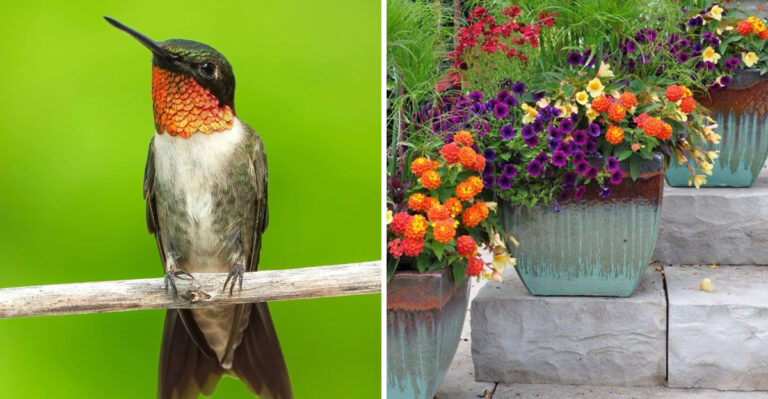
For pollinator-friendly container picks that fit Georgia conditions, coneflowers and black-eyed Susans are solid starts. Salvias are also popular for long bloom periods, and many gardeners use them in pots near patios for easy watering.
Coreopsis, bee balm, and milkweed can also work well in sunny containers, depending on the variety and how consistently you water. Swapping pots seasonally keeps flowers coming from spring into fall without reworking the whole spot.
Check that the stump is solid before loading it with heavy ceramic or concrete containers. A stump showing advanced decay near the base may not support much weight safely.
Lightweight resin pots can be a practical alternative if stability is a concern. Water container plants more often during hot spells, since pots dry out faster than in-ground plantings, especially in full sun.
Refresh potting mix periodically so containers keep draining well.
4. Create A Fern And Hostas Shade Corner
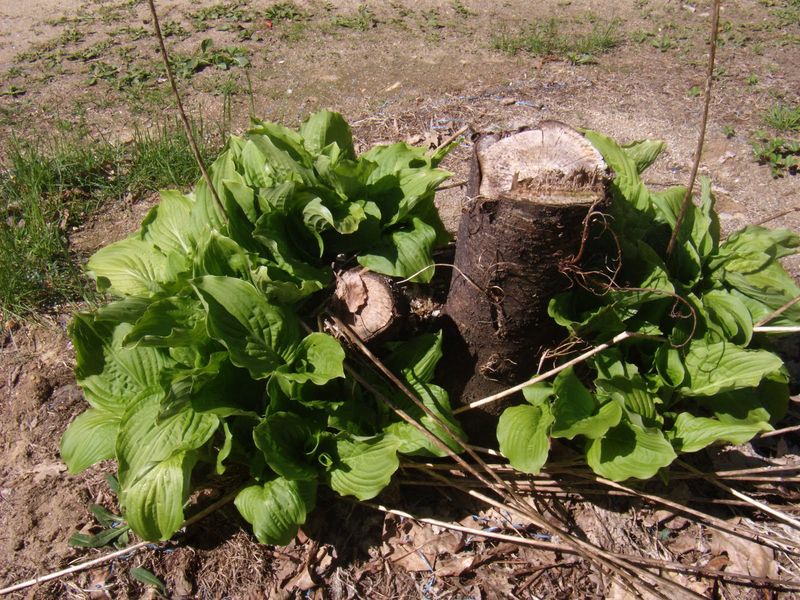
Stumps left behind by large trees often sit in the kind of dappled shade that makes certain plants shine. Rather than fighting that light, a layered planting around the stump can turn it into a natural focal point.
Hostas are a natural starting point in many Georgia shade beds. They come in a wide range of sizes and leaf patterns, from compact blue-green mounds to larger gold-edged varieties.
Plant them in a loose ring around the stump base, leaving some clearance between the plant crowns and the wood so air can move through.
For ferns, southern wood fern is a strong choice for humidity. Christmas fern and cinnamon fern are also common shade-garden options that bring a more woodland feel.
Add pine bark mulch to help hold moisture and suppress weeds, keeping mulch pulled back from plant crowns.
Compost mixed into the surrounding bed can help with soil structure over time, especially in compacted clay, but a moderate approach usually works better than heavy amendments in one spot.
Bleeding heart, foamflower, and coral bells can add seasonal color beyond green foliage, depending on your site and moisture. Keep an eye on the stump over the years.
Decaying wood can attract wood-feeding insects, and stumps close to structures deserve extra attention in Georgia’s warm, damp seasons.
A quick check by a licensed pest professional can bring peace of mind if the stump sits near the house or a wooden fence.
5. Add A Birdbath Or Feeder Base
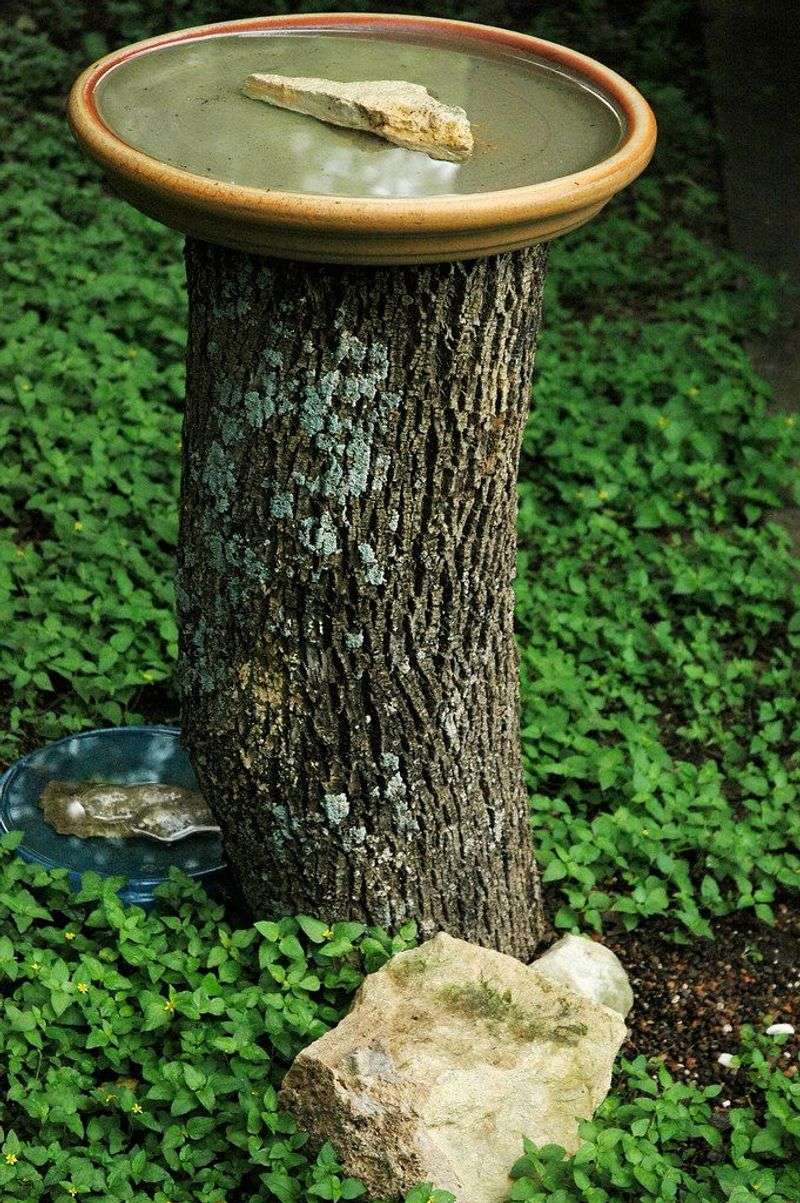
Georgia is one of the most bird-rich states in the Southeast, with more than 400 recorded species. A stump positioned away from dense shrubs can serve as a natural pedestal for a birdbath or feeder that looks far more grounded than a metal stand.
For a birdbath, choose a shallow basin with a textured bottom so birds can grip. Secure it to the stump top using a method rated for outdoor use, and check stability before filling.
Keep water depth shallow, then refresh it often during warm months to reduce mosquito problems. A quick scrub helps too, especially during pollen season.
Feeders also work well on stump bases. A platform feeder mounted on a short post attached to the stump can attract cardinals, Carolina wrens, tufted titmice, and other regulars depending on season.
Black-oil sunflower seeds are a go-to for variety, and nyjer seed can bring in finches when they are present.
Place the stump where you can see it easily from a window or porch, and keep it away from dense cover where cats could hide.
Clean feeders regularly, and consider occasional disinfecting during damp stretches when mold and residue build faster.
6. Use It As A Natural Garden Seat Or Side Table
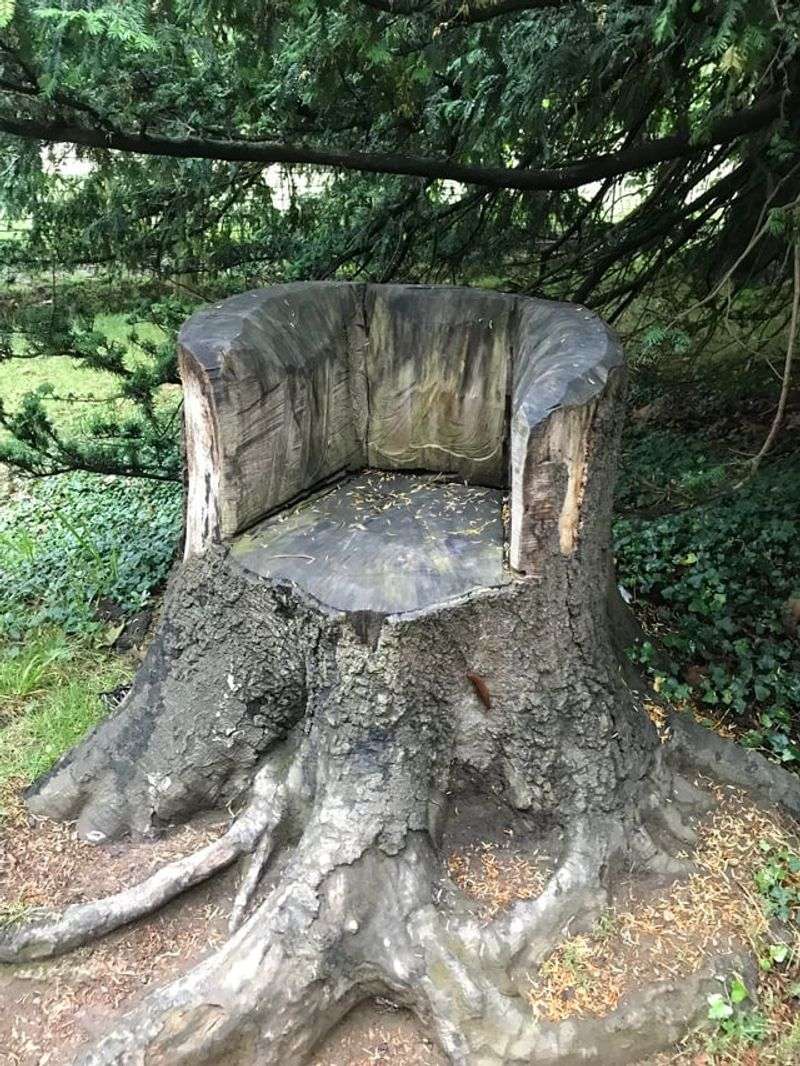
Wide, low stumps from hardwood trees like oak or hickory can stay surprisingly solid for years, especially while the main root mass remains intact. That stability makes them useful as casual seating or a rustic side table.
For a cleaner look, sand the top surface, then wipe away dust. An exterior-grade sealer can help reduce roughness, slow weathering, and make the surface easier to wipe off after rain.
Reapplying every year or two is a common routine in humid climates, but the timing depends on sun exposure and how quickly the finish dulls.
A stump side table works well next to a bench or hammock for a drink, a lantern, or a small pot. A round glass top can create a flatter surface while still showing the wood underneath, especially when the stump top has cracks or uneven grain.
Check stump height before choosing this use. Shorter stumps often suit side-table height, while taller cuts can work as perches or display stands.
Skip stumps with soft, punky wood or obvious tunneling, since internal strength can be unreliable.
7. Stack A Stump Topper Rock Garden
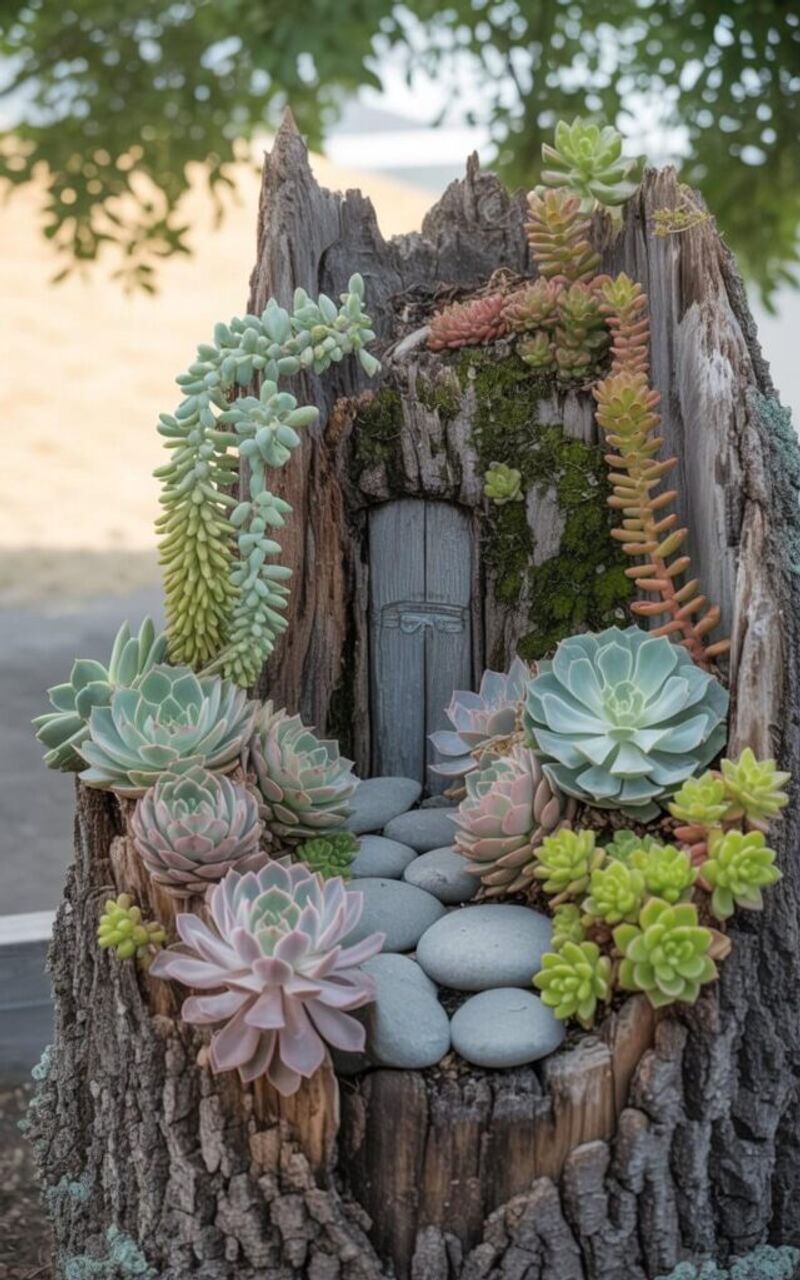
A stump-top rock garden can look like a designer feature with surprisingly little effort. The stump gives elevation, helps the arrangement stand out from surrounding lawn, and creates a natural base that feels intentional.
Start with a thin layer of coarse gravel to help water move through. Georgia rain can be heavy, and water trapped between rocks and wood can speed up decay.
Stack flat stones from larger pieces to smaller accents, then tuck small plants into crevices instead of planting one big clump.
Sedum and other stonecrops are strong picks for this style because they handle heat and can manage with less water once established. Creeping thyme can work in very sunny, fast-draining spots, though it may thin in heavy humidity or shade.
Hens and chicks can also work in rock crevices when drainage is sharp and the rosettes dry out between rains, since excess moisture can cause rot.
One practical note: avoid piling rocks against the stump at ground level, because trapped moisture can invite insects and fungal problems. Keep the rock arrangement on the top surface and upper edges.
Pull weeds as they appear and refresh gravel as needed to keep the look clean.
8. Grow Mushrooms On It
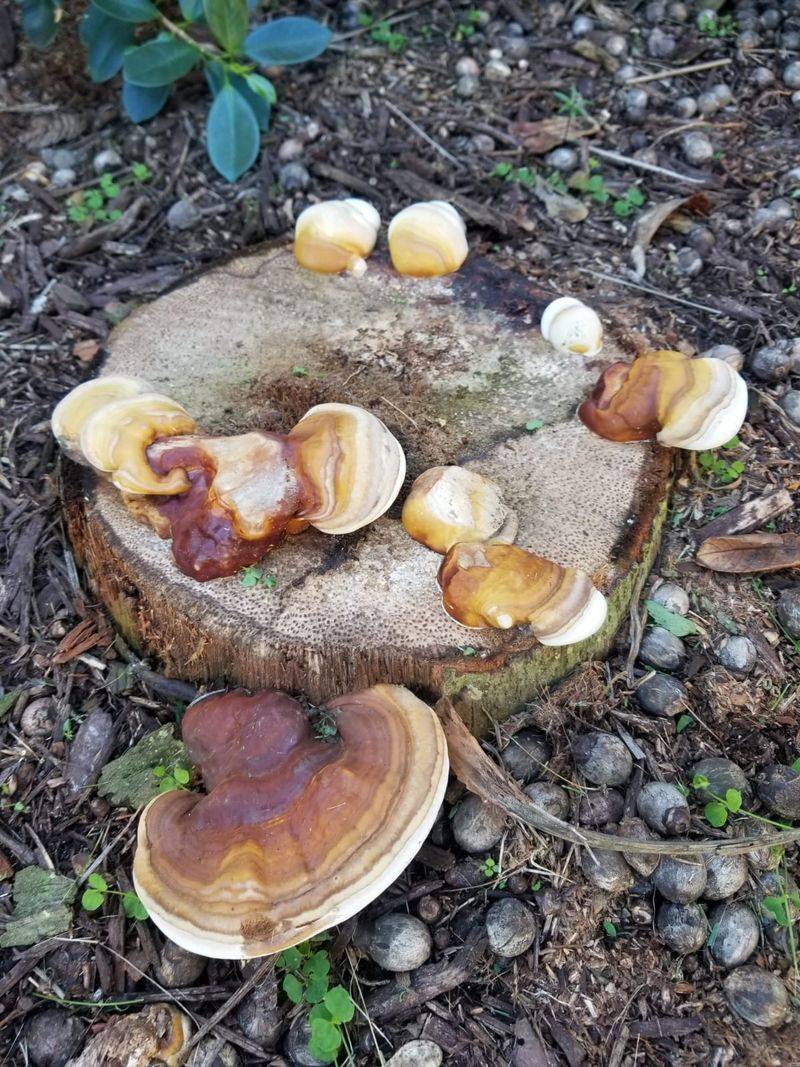
Hardwood stumps can be used for mushroom growing, and Georgia’s warm, humid weather can support several cultivated types when the stump stays shaded and evenly moist.
This idea tends to work best on stumps that were cut relatively recently and have not been treated with preservatives or herbicides.
Oyster mushrooms and shiitake are common choices in backyard cultivation, and plug spawn is widely available for both. Drill holes, tap in plugs, and seal them with wax to help protect the spawn while it establishes.
Results vary by stump species, stump age, shade level, and moisture, so patience helps.
Shade matters. Direct afternoon sun can dry the wood surface quickly, which makes it harder for mycelium to spread.
During dry spells, occasional soaking can help maintain moisture, but soggy, constantly wet conditions can cause other fungi to move in.
Only eat mushrooms you intentionally cultivated using known spawn, and avoid eating any wild mushrooms that appear on their own.
Harvest timing depends on the species and local conditions, so aim for firm, fresh-looking mushrooms and pick before they start to break down.
A healthy stump can produce multiple flushes over time when conditions stay steady.
9. Turn It Into A Climbing Plant Post
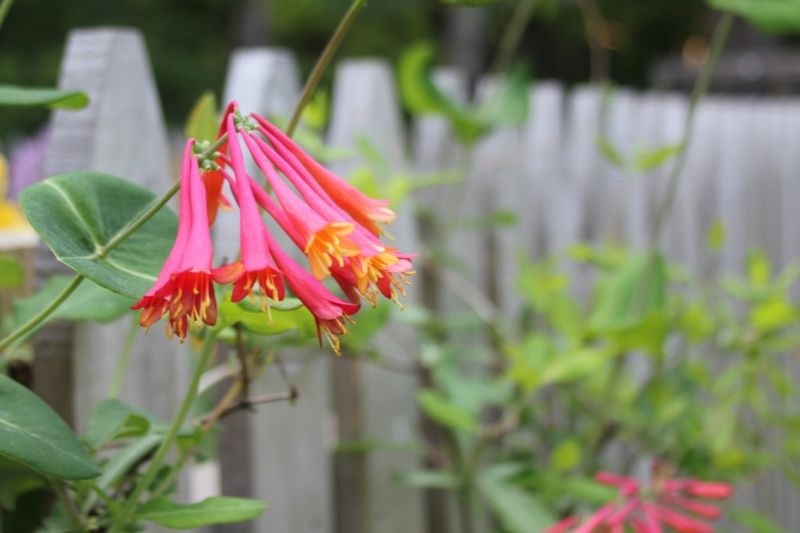
Tall, narrow stumps near a fence line or border can become a natural support for a vine. A leftover stump can add height and texture to a flat corner, especially once foliage fills in.
Native vines are often the simplest option for long-term balance. Coral honeysuckle brings tubular flowers that hummingbirds visit, and it typically behaves more politely than invasive look-alikes.
Carolina jessamine adds bright yellow blooms in late winter and early spring, but it is not a plant for nibbling, so it fits best where kids and pets are not likely to sample it.
To get vines started, attach jute twine or small eye hooks in a loose spiral so young stems have something to grab. Once established, many vines anchor more securely on their own.
Virginia creeper is another native option that adds strong fall color and berries that birds use, though it can spread, so pruning helps keep it in bounds.
Avoid aggressive non-native vines like English ivy or invasive wisterias near structures, since they can spread beyond the stump and become hard to manage.
Check the stump base each season for softness or insect activity so you can adjust plans if the wood starts breaking down faster than expected.