7 Crepe Myrtle Mistakes Georgia Gardeners Still Make
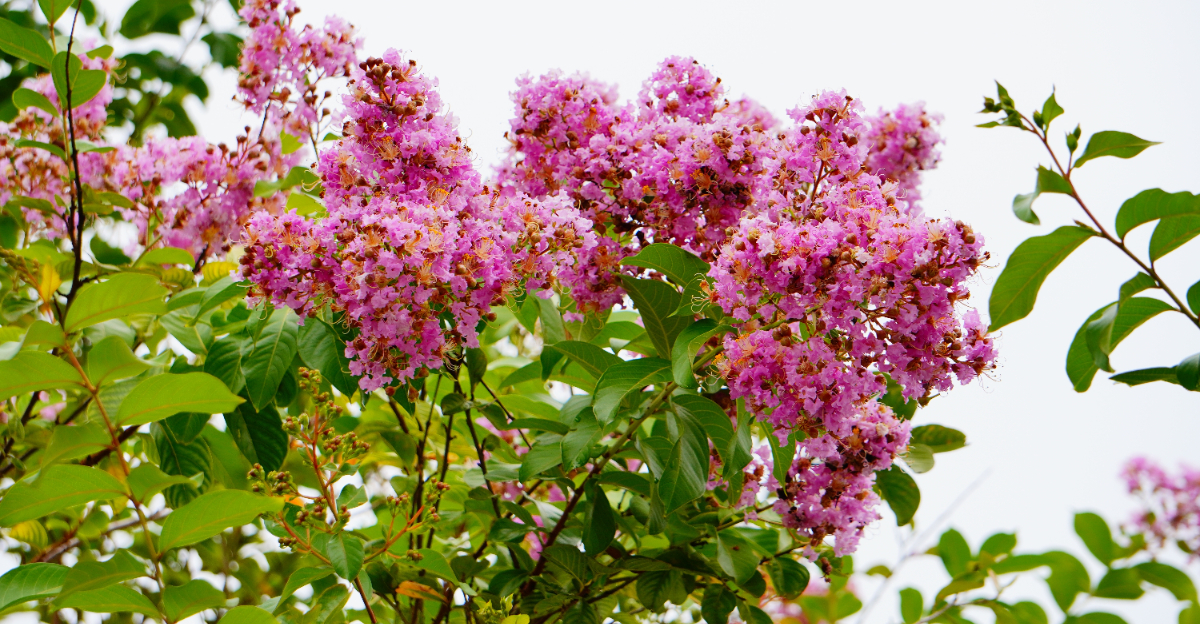
Crepe myrtles are everywhere in Georgia, and for good reason. They handle heat, bloom through the toughest part of summer, and bring color when many other plants slow down.
Still, even with a plant this reliable, small missteps can quietly hold it back.
Some trees bloom less than expected, others grow unevenly, and a few never reach that full, healthy look people hope for. It often comes down to a few common habits that seem harmless at first but build up over time.
Once those patterns are spotted, the difference shows quickly in stronger growth, cleaner shape, and more consistent flowering. Knowing what to avoid can make a noticeable shift in how crepe myrtles perform season after season.
1. Topping Trees Leads To Weak And Excessive Growth
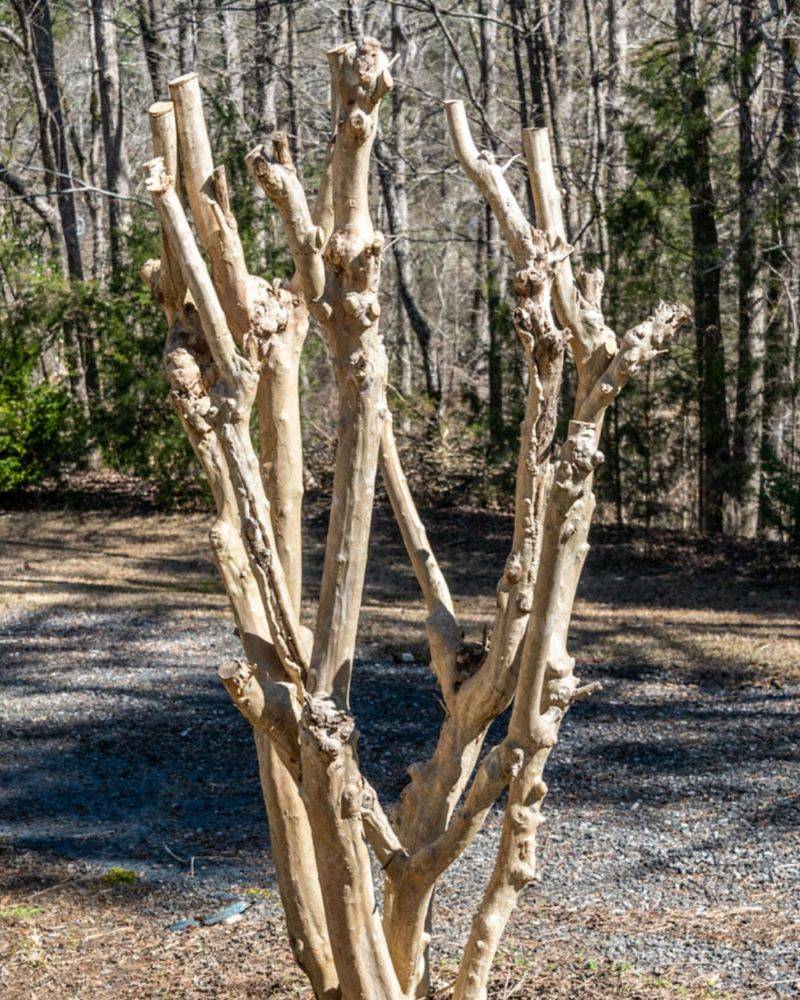
Chopping a crepe myrtle down to thick stubs every winter is probably the single most common mistake you will see across Georgia yards.
Locals have been doing it for decades, often because a neighbor did it, or because it just seemed like the thing to do in late February.
The problem is that severe topping does not help the tree at all.
When you cut back to those large, blunt stubs, the tree responds by pushing out a huge burst of weak, fast-growing shoots from every cut point. Those shoots are spindly, poorly attached, and often too numerous to support themselves.
Instead of one healthy branch, you end up with a cluster of thin stems that flop over under the weight of blooms or snap during summer storms.
Over several years of repeated topping, the tree develops ugly swollen knobs at each cut site. The natural branching structure gets completely lost, and the bark, which is one of the best features of a mature crepe myrtle, never gets a chance to develop properly.
Pruning should focus on removing crossing branches, damaged wood, and any growth rubbing against other limbs.
If a crepe myrtle has outgrown its space, the honest answer is that a smaller variety should have been planted. Topping is not a size correction; it just creates more problems than it solves and makes Georgia yards look rough every spring.
2. Overpruning Reduces Natural Shape And Flowering
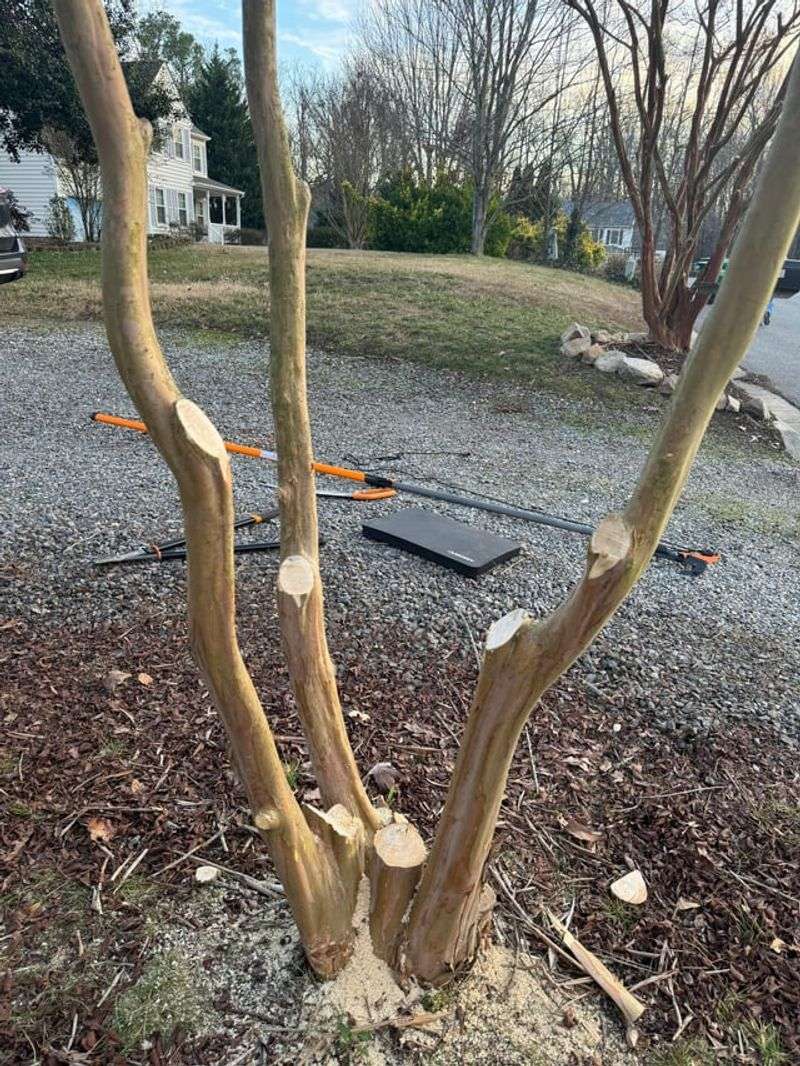
Pruning a crepe myrtle too aggressively, even without full topping, can quietly wreck the tree’s natural form over time. A lot of Georgia gardeners assume that more pruning means more blooms, but that is not really how it works.
Crepe myrtles bloom on new growth, yes, but they need a solid framework of established branches to support that growth properly.
Cutting too many interior branches strips away the graceful, multi-stemmed vase shape that crepe myrtles naturally develop. What you are left with is a sparse, awkward-looking structure that takes years to recover.
Flowering can drop noticeably when healthy budding wood gets removed along with the branches you were trying to clean up.
Timing matters just as much as how much you cut. Pruning too late in the season, say in late summer or early fall in Georgia, can remove flower buds that were already forming for the next cycle.
Late winter, just before new growth breaks, is generally the right window for any corrective pruning here.
Stick to a light hand. Remove suckers at the base, clear out any branches that are crossing or growing inward, and clean up the lowest limbs if you want a cleaner look underneath.
Beyond that, stepping back and letting the tree grow on its own terms usually produces better results than constant cutting. Georgia’s long warm season gives crepe myrtles plenty of time to fill out naturally without much interference.
3. Planting In Shade Limits Bloom Production
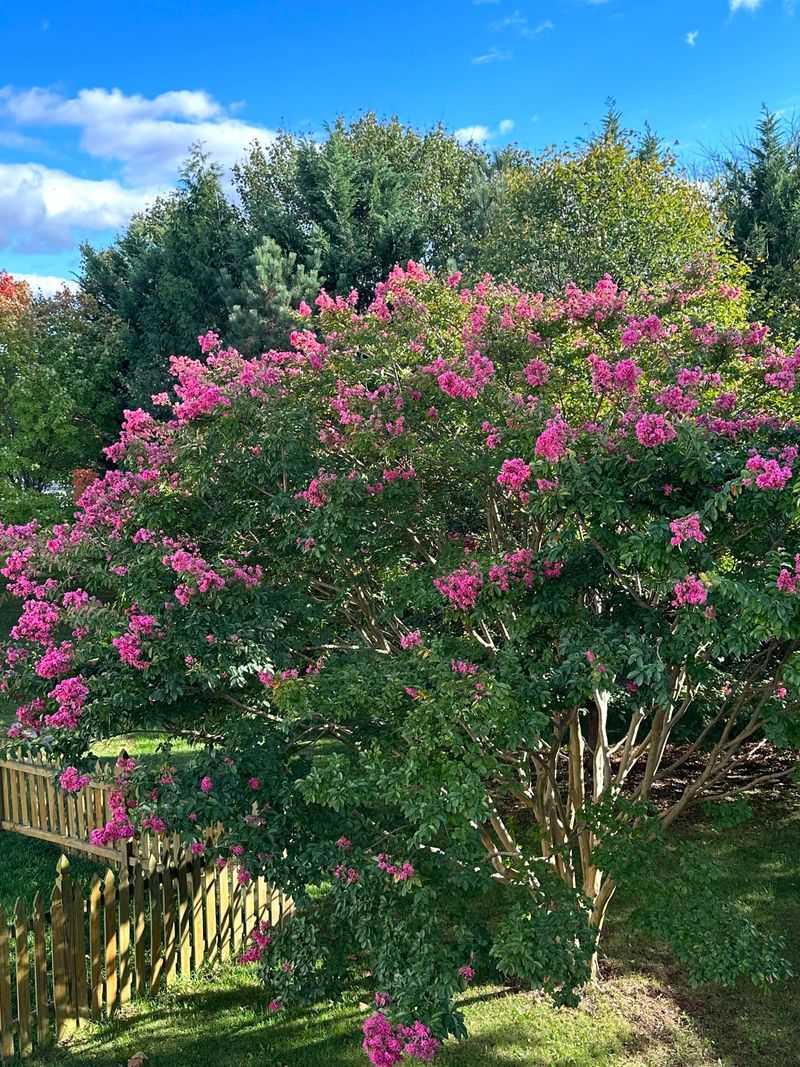
Shade is a crepe myrtle’s worst enemy when it comes to flowering. Georgia has no shortage of large established oaks, pines, and maples that cast heavy shade, and planting a crepe myrtle anywhere near that canopy is a setup for disappointment.
Full sun, meaning at least six solid hours of direct light per day, is what pushes these trees to bloom heavily.
A crepe myrtle sitting in partial shade will still grow, but the bloom clusters will be noticeably smaller and fewer. The tree tends to stretch upward toward whatever light it can find, which produces a leggy, unbalanced shape.
Powdery mildew also becomes a bigger issue in shaded spots because air circulation is poor and foliage stays damp longer, especially during Georgia’s humid summers.
Before planting, watch how sunlight moves across the spot throughout the day. A location that looks sunny in the morning might be heavily shaded by afternoon, which is actually the more critical window for heat-loving plants like crepe myrtles.
South-facing and west-facing spots in Georgia yards tend to work well for these trees. Open lawn areas away from large canopy trees are ideal.
Planting near a fence or wall that reflects heat can also help in slightly marginal spots. If an existing crepe myrtle in your yard is blooming poorly, reduced sunlight is often the first thing worth evaluating before blaming soil, water, or fertilizer.
Location really does carry a lot of weight with these trees.
4. Overwatering Can Cause Poor Root Development
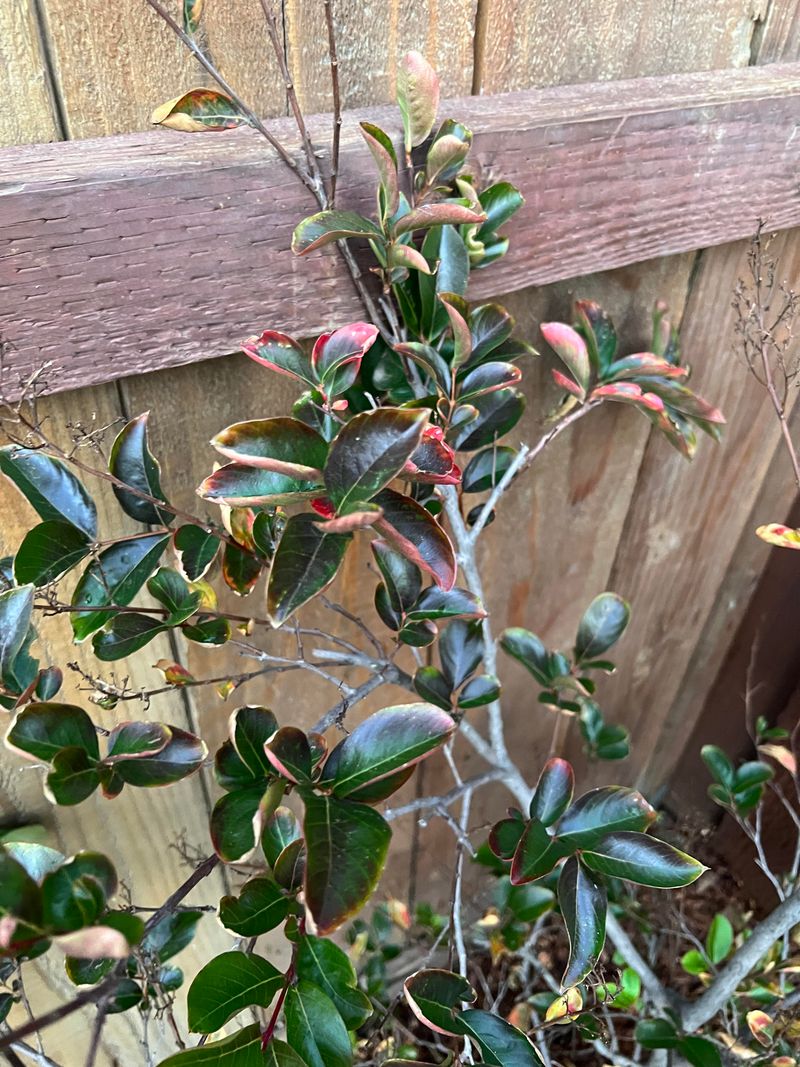
Watering a crepe myrtle like it is a vegetable garden is one of those mistakes that feels responsible but actually works against the tree. Georgia summers are hot and dry at times, so the instinct to water frequently makes sense.
But crepe myrtles are built to handle dry stretches, and constant moisture around the root zone creates more problems than drought stress ever would.
Roots need oxygen as much as they need water. Soil that stays consistently wet suffocates roots and creates conditions where root rot can develop.
A tree dealing with root problems will often show symptoms that look like drought stress, yellowing leaves, wilting, poor growth, which leads gardeners to water even more and deepen the problem.
Deep, infrequent watering is a much better approach. Watering slowly and thoroughly once every week or two during dry stretches encourages roots to grow downward in search of moisture.
That deeper root system makes the tree more stable and better able to handle Georgia’s unpredictable summer rain patterns.
Newly planted trees do need more consistent moisture during their first season while they establish. But even then, letting the soil dry out somewhat between waterings is smarter than keeping it constantly damp.
Checking the soil a few inches down before reaching for the hose is a simple habit that prevents a lot of overwatering. Mulching around the base helps retain moisture between waterings without keeping the root zone constantly saturated.
5. Ignoring Proper Spacing Leads To Crowded Growth
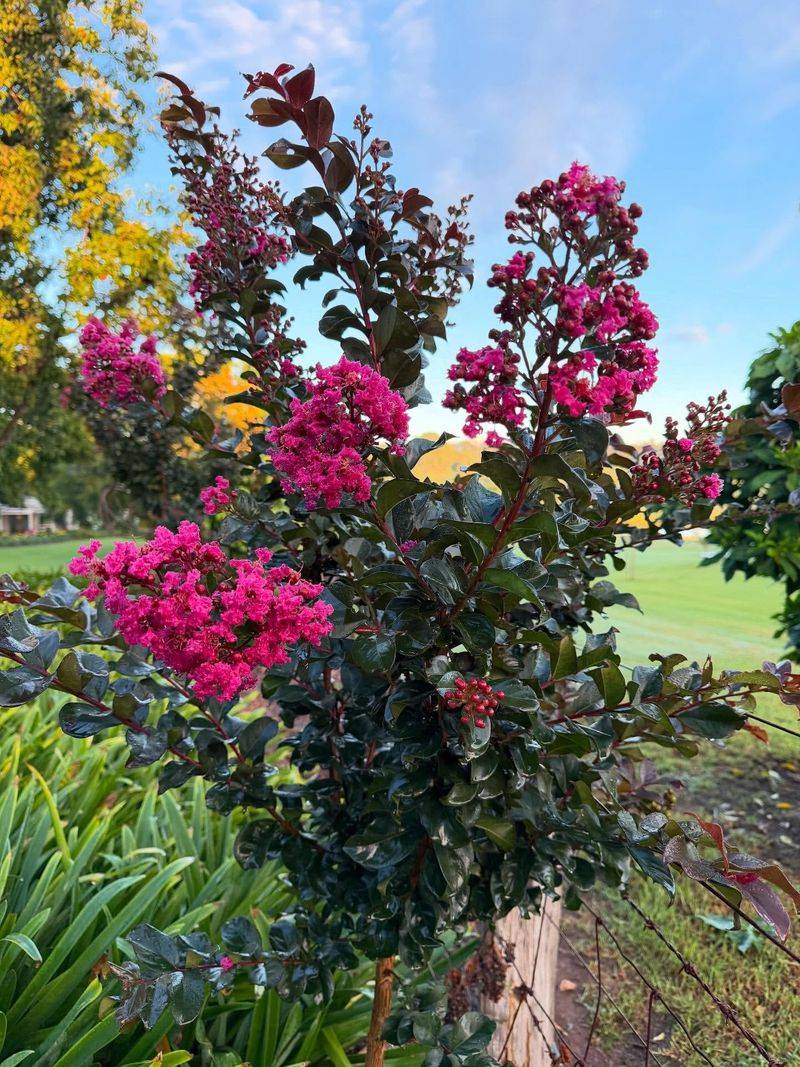
Underestimating how large a crepe myrtle will get is something Georgia gardeners run into constantly. A young tree in a five-gallon pot looks manageable, and it is easy to plant it three feet from the driveway or right under a power line without thinking too far ahead.
A few years later, the problem becomes obvious.
Crowded crepe myrtles compete for light, water, and nutrients. When branches from neighboring trees or shrubs start pressing against each other, air circulation drops and disease pressure goes up.
Powdery mildew spreads more easily in tight spaces, and the trees never develop the open, airy canopy structure that makes them look their best in a Georgia yard.
Spacing depends entirely on the variety. Dwarf types that stay under five feet can be planted closer together for a hedge effect.
Mid-size varieties reaching fifteen feet need at least ten to twelve feet of clearance on all sides. Large tree forms that push past twenty feet need even more room to develop properly without crowding structures or other plants.
Reading the mature size on the plant tag before purchasing is worth the thirty seconds it takes. Georgia garden centers stock dozens of varieties ranging from compact shrubs to full-size trees, so there is no real reason to plant the wrong size for a given spot.
If spacing is already a problem with an existing planting, selective removal is usually a better fix than constant pruning to keep overcrowded trees in check.
6. Fertilizing Too Much Promotes Leaves Over Blooms
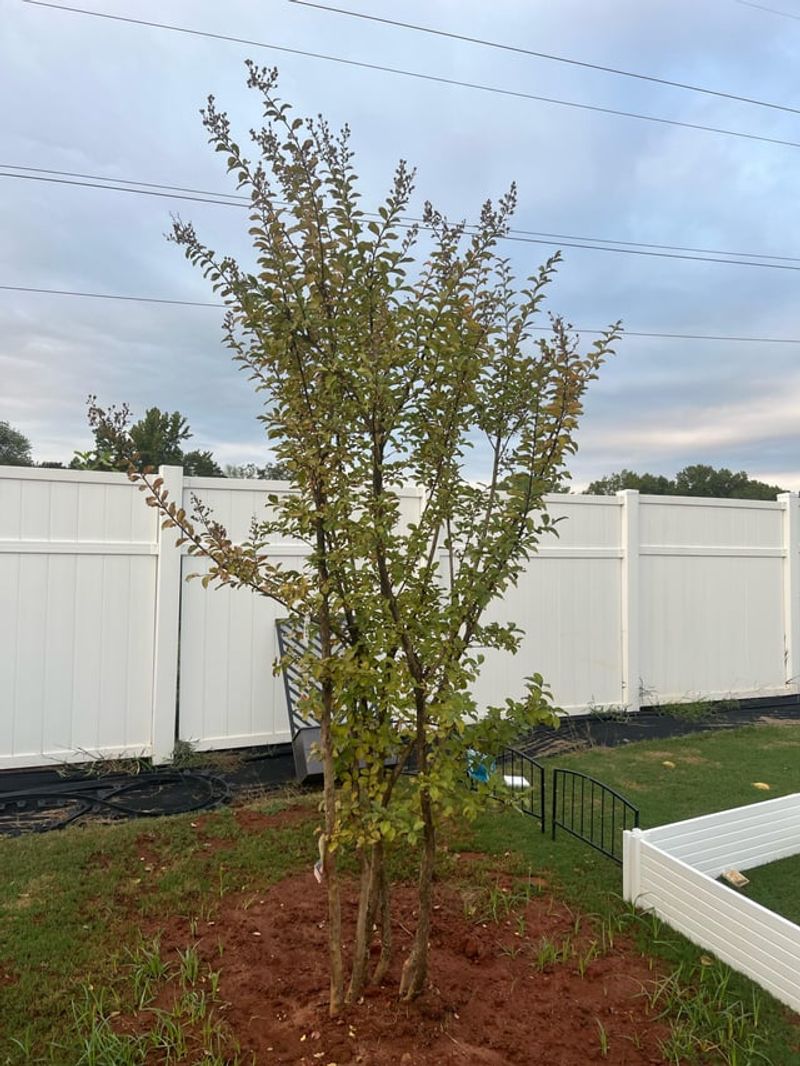
Pouring on the fertilizer might seem like a surefire way to get more blooms, but crepe myrtles do not respond to heavy feeding the way some plants do.
Too much nitrogen, in particular, pushes the tree to put its energy into producing leaves and stems rather than flowers.
You end up with a very green, very leafy tree that blooms far less than it should.
Georgia’s clay soils actually hold nutrients reasonably well, which means many crepe myrtles in established yards are already getting more nutrition than they need just from organic matter breaking down naturally.
Adding a high-nitrogen lawn fertilizer on top of that, especially if it drifts over from nearby grass treatments, can push the tree into excessive vegetative growth without any intentional effort.
If you want to fertilize, a soil test first is a smarter move than guessing. Georgia’s county extension offices offer affordable testing that tells you exactly what the soil is missing.
A balanced, slow-release fertilizer applied once in early spring is usually plenty for most established trees. Younger trees in their first couple of seasons may benefit from a light feeding to help them get established, but even then, less is often more.
Watch the tree’s growth and color before reaching for fertilizer. Pale leaves or noticeably slow growth can signal a real nutrient need.
Vigorous growth with deep green foliage and few blooms is often a sign that the tree is already getting too much, and pulling back on feeding will usually shift more energy back toward flowering over the following season.
7. Choosing The Wrong Variety For The Space Causes Issues
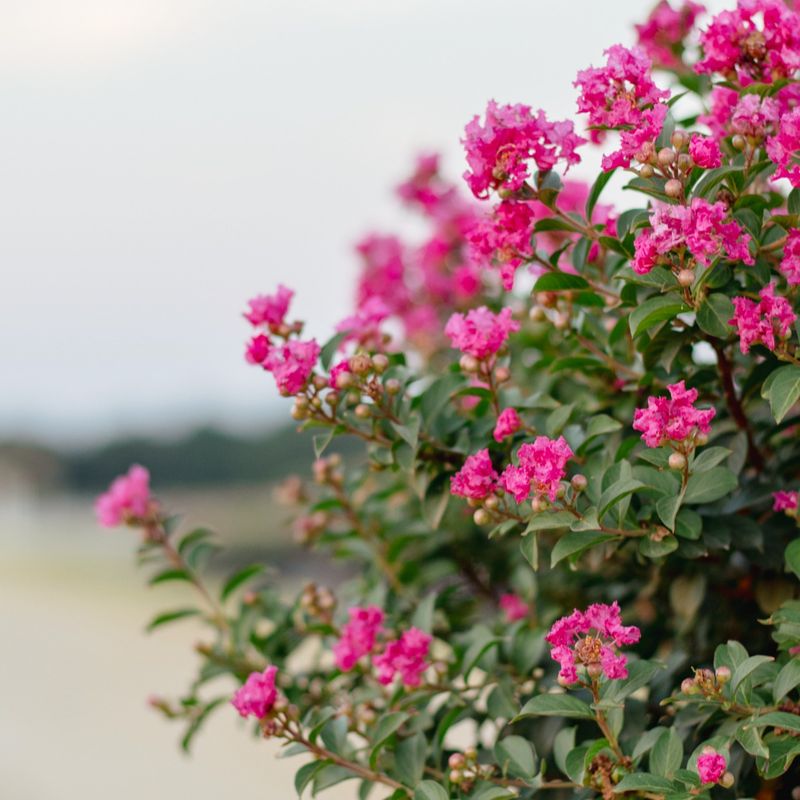
Walking into a Georgia garden center and grabbing the prettiest crepe myrtle without checking the mature size is a mistake that plays out slowly but consistently.
Variety selection matters more with crepe myrtles than almost any other common landscape tree because the size range across available cultivars is enormous, from knee-high shrubs to trees pushing thirty feet tall.
Planting a large-growing variety like Natchez or Tuscarora in a tight spot next to a house or under a utility line sets up a cycle of constant pruning just to keep the tree manageable. That pruning usually turns into topping, which creates all the problems already covered.
The tree never looks right, and the gardener never stops fighting it.
Smaller Georgia yards and foundation plantings usually do better with compact cultivars like Pocomoke, Chickasaw, or the newer Infinitini series, which stay under six feet.
Mid-size options like Acoma or Hopi work well along driveways or as specimen plants in average-sized yards.
Larger properties with open space are where the big tree forms really shine without causing headaches.
Bloom color is important too, but it should be a secondary consideration after size. Georgia nurseries carry a wide enough selection that finding a variety with the right mature dimensions and a color you like is very realistic.
Spending five extra minutes reading the tag before purchasing can prevent years of frustration. A crepe myrtle planted in the right spot for its natural size rarely needs much intervention at all.