7 Deep-Rooted Native Flowers That Thrive In Ohio Clay
Ohio clay can humble even confident gardeners fast. One season of soggy roots, stunted growth, and struggling blooms is usually enough to show that not every flower can handle heavy soil.
That is why deep-rooted native plants stand out so much. They come built for tougher conditions, with the strength to push down, settle in, and handle the kind of dense ground that leaves other plants fighting to survive.
The payoff goes far beyond toughness. These flowers can bring color, movement, and a more natural look to beds that often feel limiting at first.
Some rise tall and graceful. Some deliver bold color that lights up thick soil with almost no drama.
Once established, many ask for far less help than fussy non-native picks. For Ohio gardeners tired of battling clay year after year, the right native flowers can turn a stubborn patch of ground into one of the most reliable and beautiful parts of the landscape.
1. Blue False Indigo Is The Clay Busting Beauty To Plant First
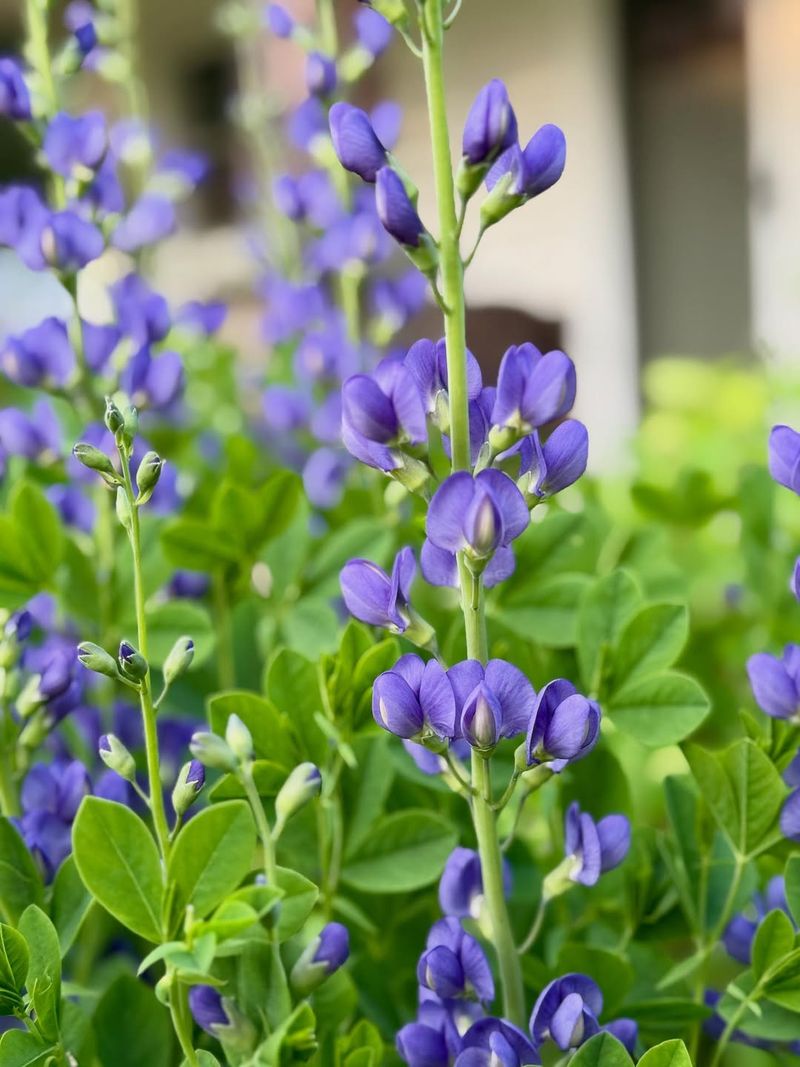
Planted once and left alone for decades, Blue False Indigo earns its reputation as one of the toughest and most rewarding native perennials an Ohio gardener can choose. Baptisia australis develops a root system so deep and woody that it can reach several feet into the soil, breaking through clay layers that would stop most plants cold.
That same root system is why established plants laugh at drought and bounce back year after year without much help from you.
Visually, this plant punches well above its weight. It grows into a rounded, shrub-like mound that can reach three to four feet tall and equally as wide, with blue-green foliage that looks attractive even when the flowers are gone.
The blooms arrive in late spring to early summer, producing tall spikes of deep violet-blue flowers that resemble lupines and last for several weeks. After flowering, it forms inflated seed pods that rattle in the breeze and add fall interest.
In Ohio, Blue False Indigo performs best in full sun with clay soil that drains reasonably well between rain events. It is not the right pick for sites that stay soggy for extended periods after heavy rains, since prolonged standing water can stress the roots.
Well-drained to slightly moist clay is the sweet spot. Plant it in a location with plenty of room, because mature plants resent being moved and can live for twenty years or longer once established.
Bumblebees absolutely love the flowers, and the plant supports several specialist native bee species. First-year plants may look modest, but by year three the payoff becomes clear.
Avoid fertilizing heavily, as rich soil tends to produce floppy growth. Blue False Indigo rewards patience with a stunning, long-lived presence that few other perennials can match.
2. Grey Headed Coneflower Thrives Where Heavy Soil Wins
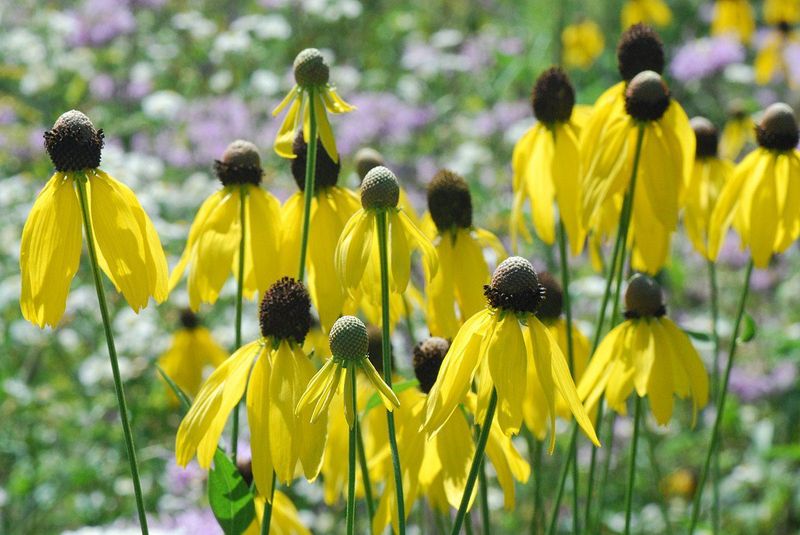
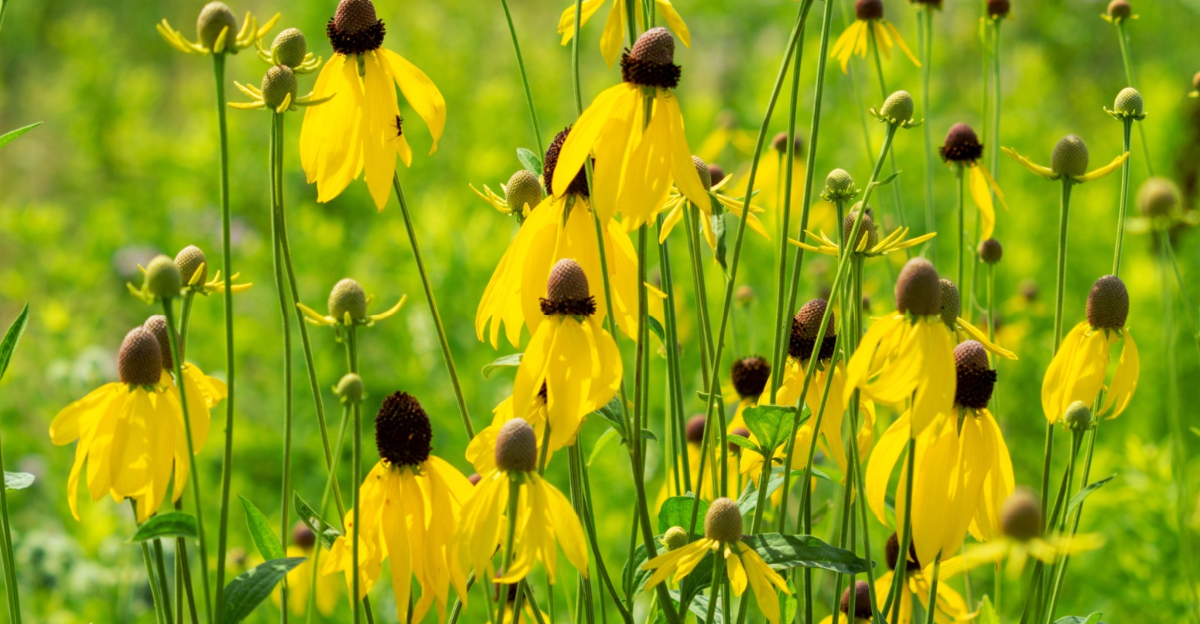
Standing tall in the middle of summer when the heat is pressing down and the clay has baked into something resembling concrete, Grey Headed Coneflower does not flinch. Ratibida pinnata is a true prairie native with a fibrous, deep-reaching root system that is built for exactly the kind of compacted, heavy ground Ohio gardeners know so well.
Its roots anchor it firmly while pulling moisture from lower soil layers, which is why it holds up so well through the driest stretches of an Ohio summer.
The flowers are unmistakable. Long, drooping yellow petals hang back from a tall, elongated grey-brown center cone, giving the plant an almost whimsical appearance compared to more upright coneflowers.
Plants typically reach four to five feet in height, sometimes taller in moist sites, which makes them a strong vertical element in a sunny border or naturalized meadow. Bloom time runs from June through August, providing a long window of summer color.
Grey Headed Coneflower performs best in full sun and handles heavier clay soils with real confidence, particularly in sites that see average to slightly moist conditions. It is a natural fit for Ohio pollinator gardens, meadow restorations, and roadside plantings where low maintenance matters.
Goldfinches visit the seed heads in late summer and fall, extending its wildlife value well past bloom season.
One thing to keep in mind is that this plant can reseed with some enthusiasm in open, sunny areas. In a naturalistic planting that is actually a feature, but in a more structured garden bed it may require occasional editing.
Spacing plants two feet apart gives them room to develop without crowding. For gardeners who want genuine prairie toughness without a lot of fussing, Grey Headed Coneflower delivers season after season.
3. New England Aster Brings Late-Season Color To Tough Ohio Clay
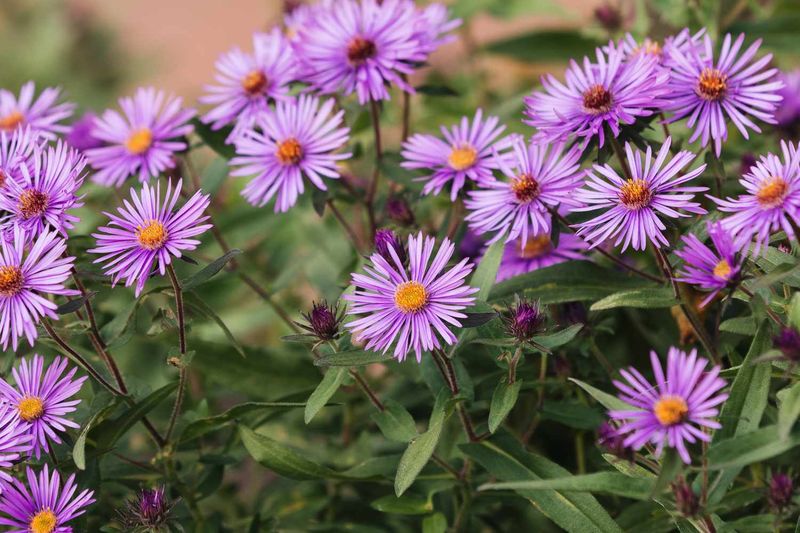
Just when many gardens start looking tired, New England Aster steps in and completely changes the picture. This Ohio native rises up in late summer and early fall with clusters of vivid purple to rosy-violet flowers surrounding bright yellow centers, creating the kind of color that instantly wakes up a heavy-soil planting bed.
In clay gardens that can feel dull or stubborn through much of the season, that burst of bloom makes a serious impact.
New England Aster is especially useful because it handles the kind of dense Ohio soil that frustrates so many other flowering plants. Its strong root system helps it settle into heavier ground, especially in sites with full sun and average to slightly moist conditions.
It performs best where the soil does not stay waterlogged for long stretches, but once established it is far more adaptable than many gardeners expect from such a showy late-season bloomer.
The flowers are a magnet for late pollinators. Bees and butterflies flock to the blooms at exactly the time when many other nectar sources are fading, which gives the plant real ecological value in addition to its color.
Mature plants usually reach three to six feet tall, so they work beautifully toward the back of a border, in a pollinator planting, or in a naturalized bed where their height feels intentional rather than overwhelming.
One thing to keep in mind is that rich soil can push plants to grow tall enough to lean, especially after summer rain. Cutting stems back lightly in late spring helps encourage bushier growth and a sturdier shape by bloom time.
For Ohio gardeners looking to replace fussier flowers with something native, colorful, and much more comfortable in clay, New England Aster is one of the strongest finishers you can plant.
4. Joe Pye Weed Brings Big Height To Sticky Soil
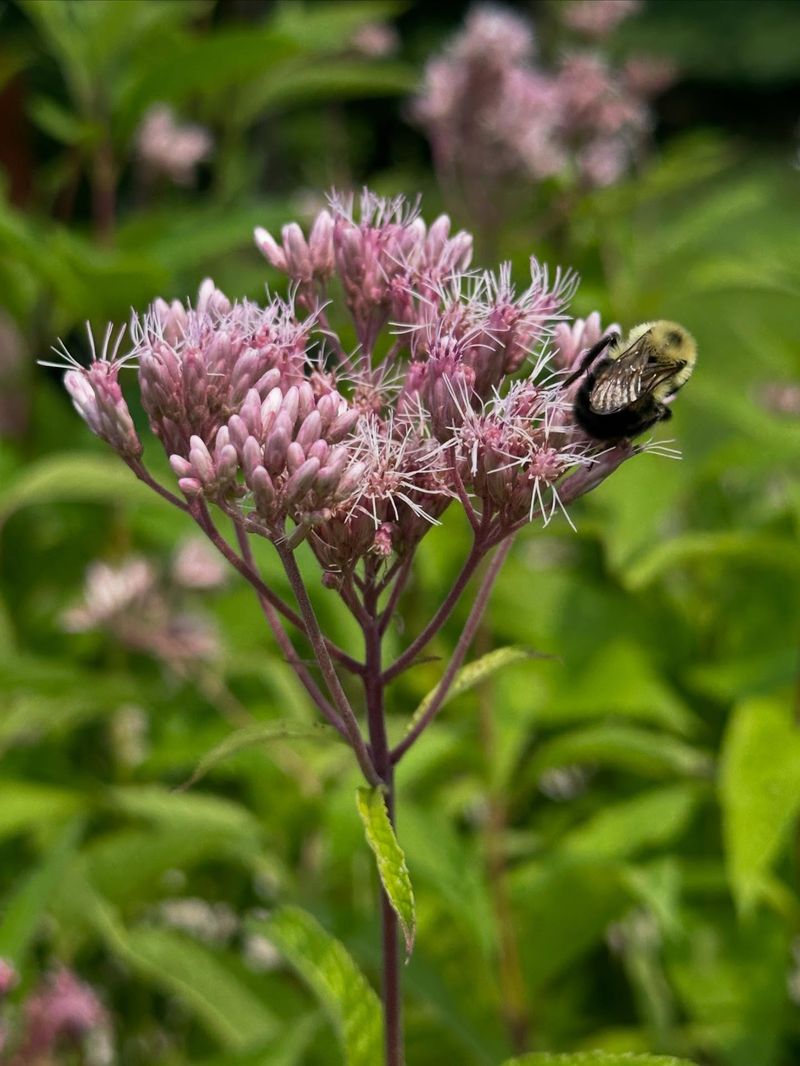
Late summer in Ohio can feel like the garden has run out of ideas, but Joe Pye Weed has other plans. Eutrochium purpureum rises to an impressive five to seven feet by August, topped with large, domed clusters of dusty pink flowers that seem to attract every swallowtail butterfly in the neighborhood.
The sheer scale of this plant creates a dramatic backdrop that few other native perennials can replicate, and it does all of this in clay soil that holds moisture between rain events.
The roots of Joe Pye Weed are fibrous and spreading, allowing the plant to anchor itself in heavier soils while pulling up the consistent moisture it prefers. This is a key detail for Ohio gardeners to understand before planting: Joe Pye Weed performs best in medium to moist clay soils and genuinely thrives near rain gardens, low spots, pond edges, or areas where water lingers a bit longer after storms.
It is not the best choice for well-drained or dry sites, where it may struggle to reach its potential.
Pollinators treat Joe Pye Weed like a late-season buffet. Monarchs, tiger swallowtails, fritillaries, and numerous native bees all visit the blooms heavily from late July through September.
The plant also provides structural interest into fall as the flower heads fade to buff-colored seed clusters that birds pick through during colder months.
Because of its height and spreading root system, Joe Pye Weed can feel overwhelming in small planting beds. It is best used in larger borders, naturalized areas, or as a background plant where its scale becomes an asset rather than a problem.
Cutting stems back by one-third in late spring helps control final height without sacrificing flowers. Given the right moist Ohio site, it is genuinely spectacular.
5. Common Boneset Makes Heavy Ground Feel Like A Wildflower Meadow
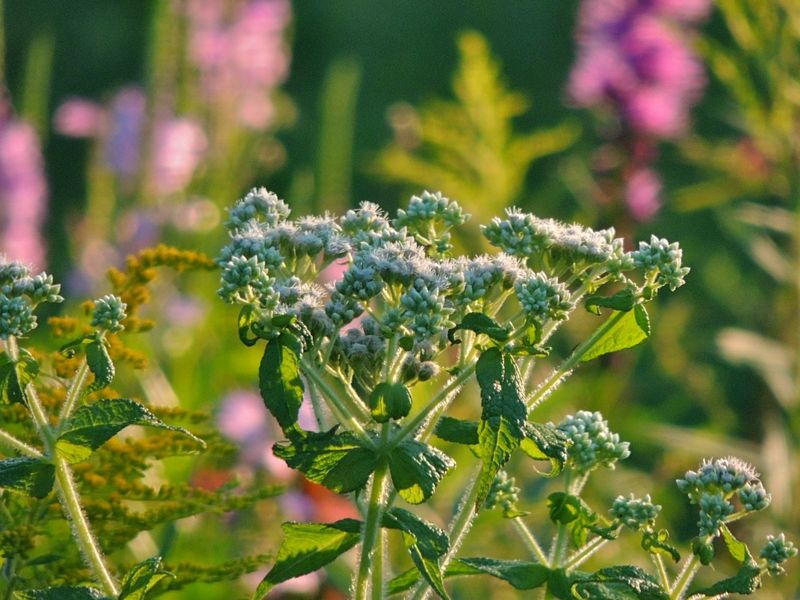
There is something quietly magical about a patch of Common Boneset in full bloom. Eupatorium perfoliatum produces flat-topped clusters of tiny white flowers that float above the foliage in a soft, airy way that feels more like a wildflower meadow than a managed garden bed.
Blooming from July through September, it fills the awkward late-summer gap when many spring and early-summer plants have finished and the fall asters have not yet opened.
Common Boneset is genuinely at home in Ohio clay that stays on the moist side. Its fibrous root system anchors well in heavier soils and helps the plant access the consistent moisture it prefers.
Low spots, rain garden edges, areas near drainage swales, and moist borders along streams or ponds are all excellent placements. In drier clay sites it will survive but may not perform as vigorously, so matching it to a reliably moist location gets the best results.
The wildlife value of this plant is seriously underappreciated. Common Boneset supports a remarkable range of specialist native bees, wasps, beetles, and butterflies, including skippers and hairstreaks that depend on late-season nectar sources.
Ohio native plant researchers have noted it as one of the more ecologically generous plants available for pollinator-focused gardens and meadow restorations.
From a design standpoint, Common Boneset has a naturalistic, loose quality that suits informal plantings better than formal borders. Plants grow three to four feet tall and can spread gradually by both seed and rhizomes, so gardeners who prefer tighter control may want to monitor spread annually.
The wrinkled, lance-shaped leaves clasp the stem in a distinctive way that makes the plant recognizable even before it blooms. For Ohio gardeners building a moist-soil wildlife garden, Common Boneset earns a well-deserved spot in the planting plan.
6. Spike Blazing Star Adds Vertical Wow Without Fuss
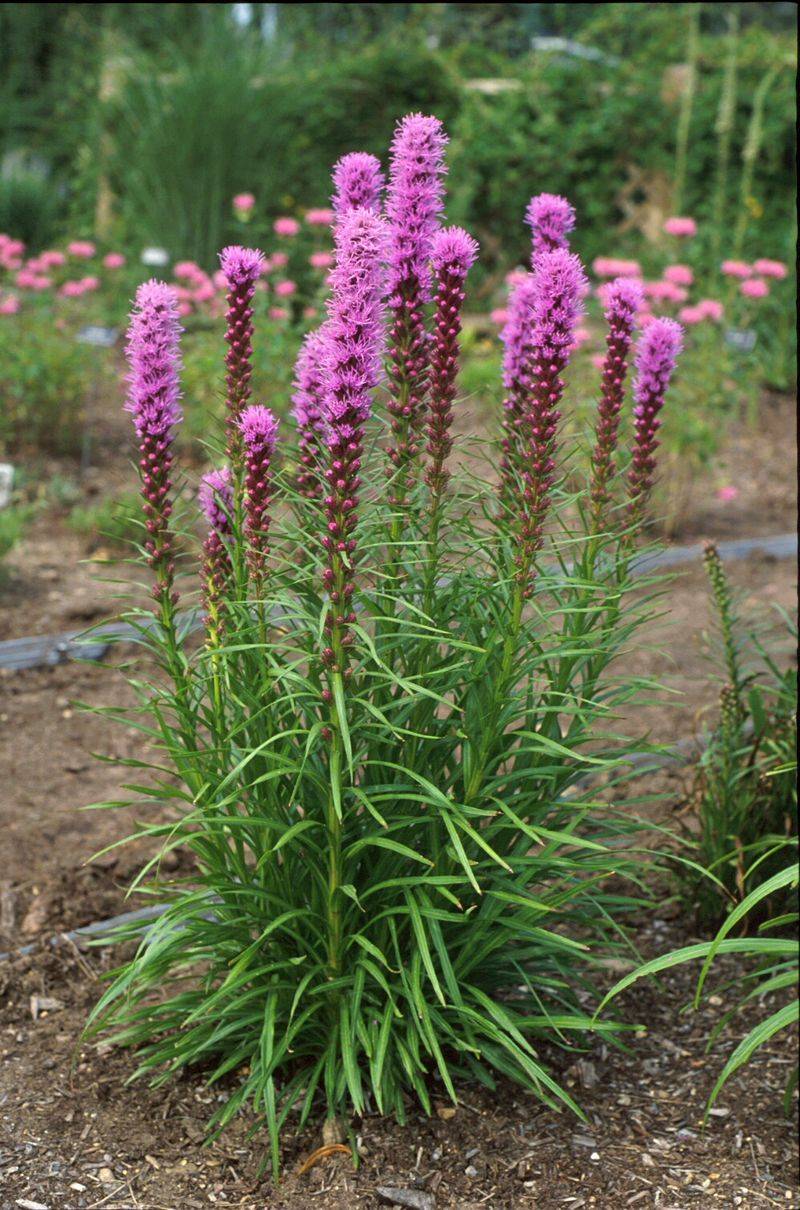
Few plants in the Ohio native palette create as much visual impact per square foot as Spike Blazing Star. Liatris spicata sends up bold, upright spikes of rosy-purple flowers that bloom from the top down, which is the opposite of most flowering plants and makes each spike look like it is lit from above.
That distinctive top-down bloom pattern extends the flowering display over several weeks in mid to late summer, giving the garden a long stretch of vivid vertical color.
The corm-based root system of Spike Blazing Star stores energy efficiently and allows the plant to push through heavier soils with real determination. In Ohio, it performs best in full sun with clay soil that drains adequately between rains.
It tolerates moderate moisture but does not do well in sites that stay wet for prolonged periods, where the corms can rot. Well-drained to average clay is the ideal situation, and once established the plant handles dry spells with surprising resilience.
Monarch butterflies, bumblebees, and a wide array of native bees treat Spike Blazing Star as a high-priority stop during their late-summer foraging. Goldfinches and other small birds move in once the seeds mature in fall, pulling the fluffy seed heads apart with impressive efficiency.
Leaving the stalks standing through winter provides both food and subtle structural interest in the garden.
Plants typically reach two to four feet tall depending on soil moisture and fertility. Spike Blazing Star works beautifully as a vertical accent in mixed borders, pollinator gardens, or planted in drifts for a more naturalistic effect.
It pairs well with Black-Eyed Susans, Purple Coneflower, and ornamental grasses. Dividing clumps every few years keeps plants healthy and flowering at their best across many Ohio landscapes.
7. False Sunflower Powers Through Clay With Weeks Of Color
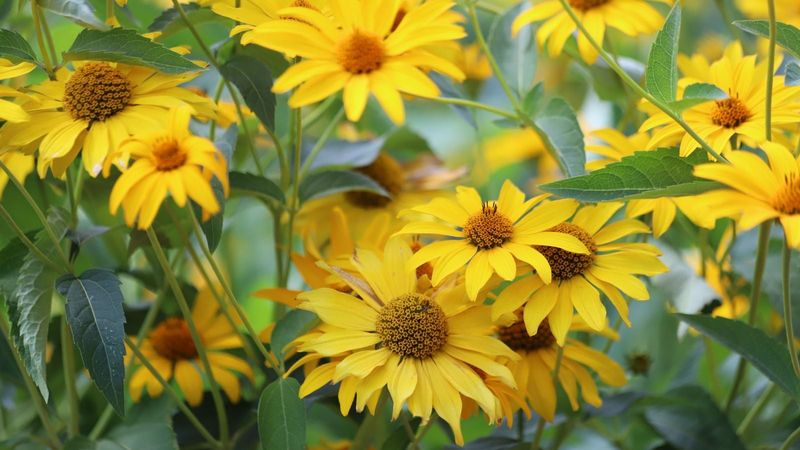
Bright, cheerful, and almost relentlessly productive, False Sunflower earns its place at the front of the line for Ohio clay gardens. Heliopsis helianthoides produces golden-yellow, sunflower-like blooms on sturdy stems that keep coming from late June through September, giving gardeners one of the longest continuous bloom seasons of any native perennial in the region.
The flowers are fully double or semi-double on some cultivars, but the straight species form is equally appealing and often more valuable to native pollinators.
The root system is fibrous and robust, spreading outward and downward in a way that helps break up compacted clay over time while holding the plant firmly upright even in wind. False Sunflower handles a wide range of Ohio clay conditions, from average moisture to slightly moist sites, and it tolerates brief dry periods once established.
Full sun brings out the heaviest flowering, though plants manage reasonably well with four to six hours of direct sun if needed.
Bees of many species visit the flowers constantly during the long bloom season, and the seed heads that follow attract goldfinches and sparrows in late summer and fall. The plant grows three to five feet tall and forms spreading clumps over time, which is worth knowing before choosing a planting location.
False Sunflower can reseed generously and expand its footprint with some enthusiasm, so in smaller garden beds it may require periodic thinning to keep it from crowding neighboring plants.
In larger borders, naturalized areas, or pollinator-focused plantings, that spreading tendency actually works in the gardener’s favor by filling space efficiently without much intervention. Cutting plants back by one-third in late spring reduces final height and encourages branching.
For Ohio gardeners who want maximum color with minimum effort in clay soil, this native sunflower relative is a genuinely satisfying choice.