8 Desert Trees That Bring Shade To Your Phoenix, Arizona Backyard
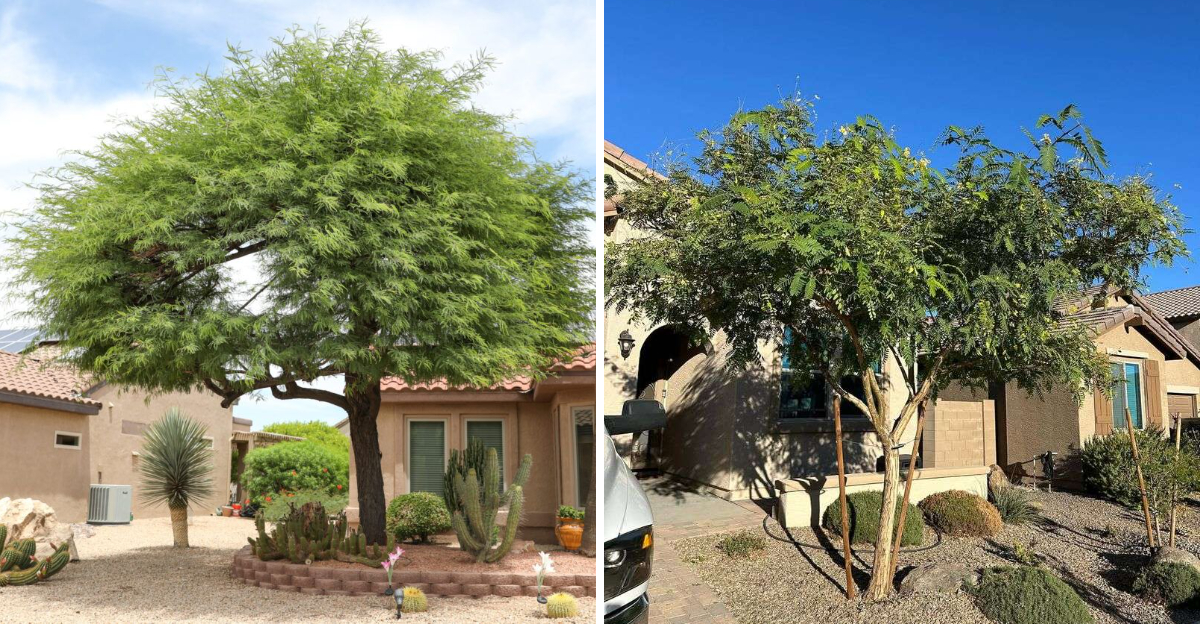
In Arizona, it does not take much for a backyard to start feeling too hot, too bright, and too exposed to enjoy for long.
That is especially true in Phoenix, where the sun can take over the space fast and leave even a well kept yard feeling harsh instead of comfortable.
A lot of outdoor areas look good on paper, but without enough shade, they never quite feel like places where people actually want to spend time.
That is why trees matter so much in Arizona landscapes. They do more than break up a view or fill an empty corner.
The right one can soften the heat, create relief where it is needed most, and make the whole backyard feel more livable through the hottest parts of the year.
Once that kind of shade starts settling in, the space feels different in a way that is hard to ignore. It starts to feel calmer, more useful, and much more inviting.
1. Blue Palo Verde Builds Light Shade And Thrives In Extreme Heat
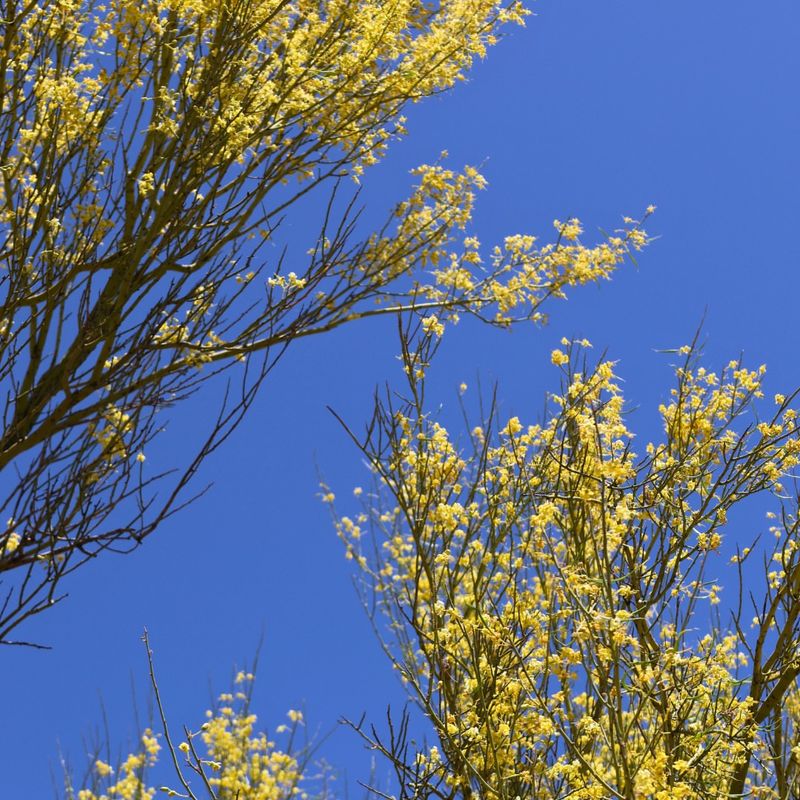
Arizona named this tree its state tree for a reason. Blue Palo Verde is one of the most recognizable trees across the Sonoran Desert, and it earns its place in Phoenix backyards by handling brutal heat without missing a beat.
Its green bark is genuinely unique because it keeps photosynthesizing even when the tree has dropped its tiny leaves during dry spells.
Spring is when this tree really shows off. Clusters of bright yellow flowers cover every branch, and the whole yard lights up.
Hummingbirds and bees show up almost immediately, which is a nice bonus if you enjoy a little wildlife in your outdoor space.
Shade from a Blue Palo Verde is light and dappled rather than dense and heavy. That works well in Phoenix because it still lets some airflow through while blocking direct sun.
Pair it with a sitting area or a patio, and you get comfortable filtered shade without blocking the breeze. Water it deeply a few times after planting, and it will take care of itself through the dry season.
Growth is moderate, reaching around 25 to 30 feet tall, which is a solid height for backyard coverage without overwhelming a smaller yard.
It also handles poor desert soil with ease, which makes it one of the most reliable low-maintenance shade trees for Phoenix landscapes.
2. Desert Willow Creates Airy Cover With Seasonal Color
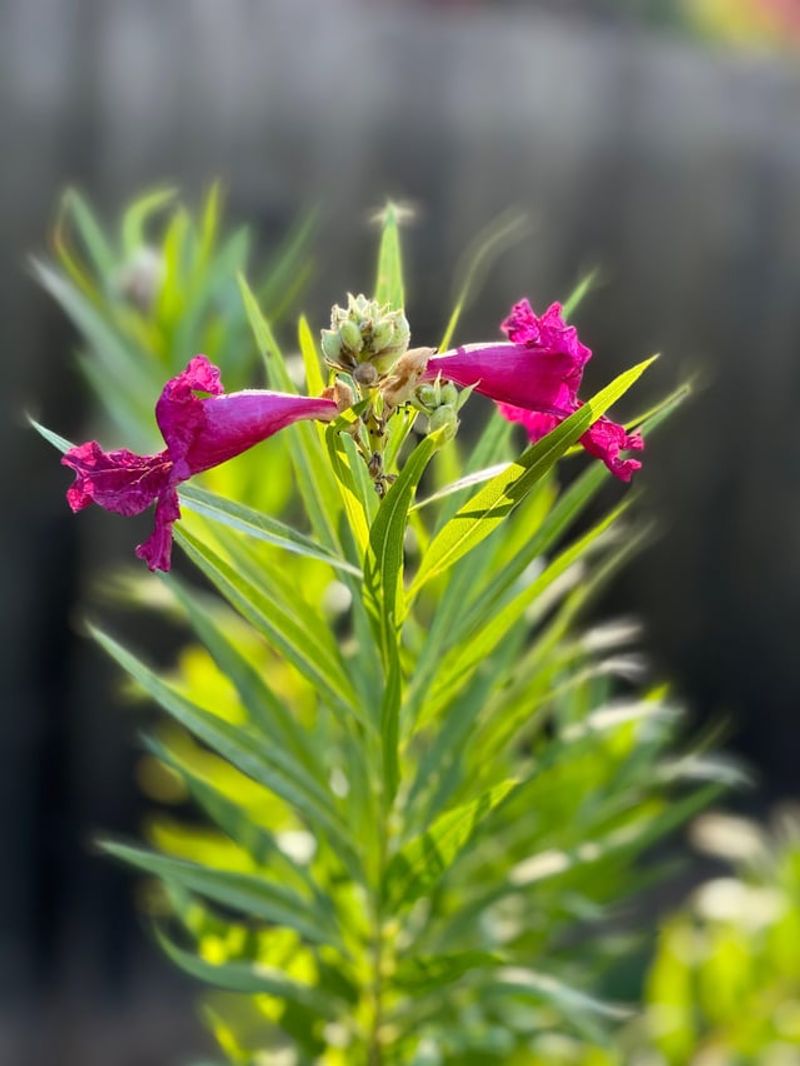
Calling it a willow is a little misleading because it is not related to the willows you find near rivers. Desert Willow is its own thing entirely, and once you see it in bloom, you will not forget it.
Trumpet-shaped flowers in shades of pink, lavender, and deep purple appear from late spring through early fall, which is a long season for any flowering tree in Phoenix.
Hummingbirds absolutely swarm this tree during bloom season. If attracting pollinators matters to you, planting a Desert Willow near a window or seating area makes it worth every bit of effort.
Shade is light and airy rather than dense, but the canopy still breaks up direct sun nicely over a patio or garden bed.
Height usually tops out around 15 to 25 feet, making it a great fit for smaller Phoenix backyards where a massive canopy would feel overwhelming. Narrow, willow-like leaves give it a graceful look that does not feel out of place next to a pool or along a back wall.
Water needs are low once the tree is settled in, and it handles alkaline desert soil without any fuss. Prune lightly after the bloom season to keep the shape tidy and encourage fresh growth the following spring.
It fits naturally into Arizona yards because it brings color, movement, and a softer look without needing heavy watering or constant upkeep.
3. Chilean Mesquite Spreads Wide For Strong Afternoon Shade
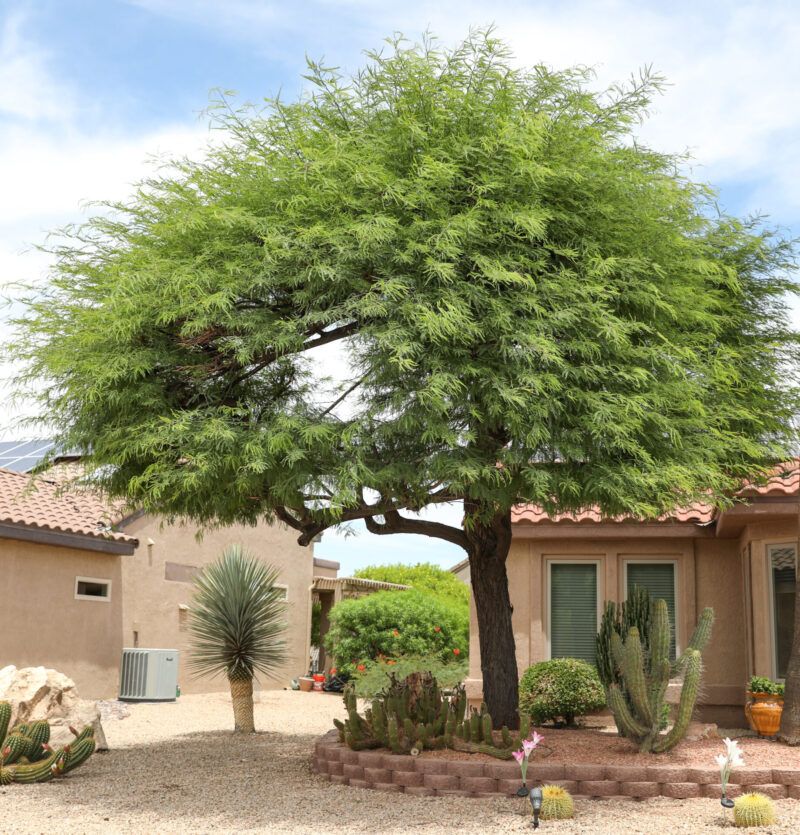
Few trees in Phoenix can match the canopy spread of a Chilean Mesquite. Given enough space, this tree fans out dramatically, sometimes reaching 40 feet wide, which turns a bare, sun-baked backyard into a genuinely shaded retreat.
Afternoon shade is where it really earns its reputation because those brutal west-facing sun angles are no match for its broad coverage.
Growth is fast compared to most desert trees. You can expect noticeable size increases within the first two or three years, which matters a lot when Phoenix summers are already pushing 115 degrees and you want relief sooner rather than later.
Feathery, fine-textured leaves filter light without completely blocking it, keeping the area underneath bright but cool.
Roots can be aggressive, so placement matters. Keep it away from underground irrigation lines, sidewalks, and foundations.
Plant it at least 15 to 20 feet from any structure to give the canopy and root system room to expand without causing damage later. Thornless varieties are available at most Phoenix nurseries, which is worth asking about if kids or pets use the yard regularly.
Water deeply once or twice a month during summer, and skip extra irrigation in winter. With the right spot, this tree becomes the anchor of your entire backyard landscape.
4. Tipu Tree Grows Fast And Forms A Dense Canopy
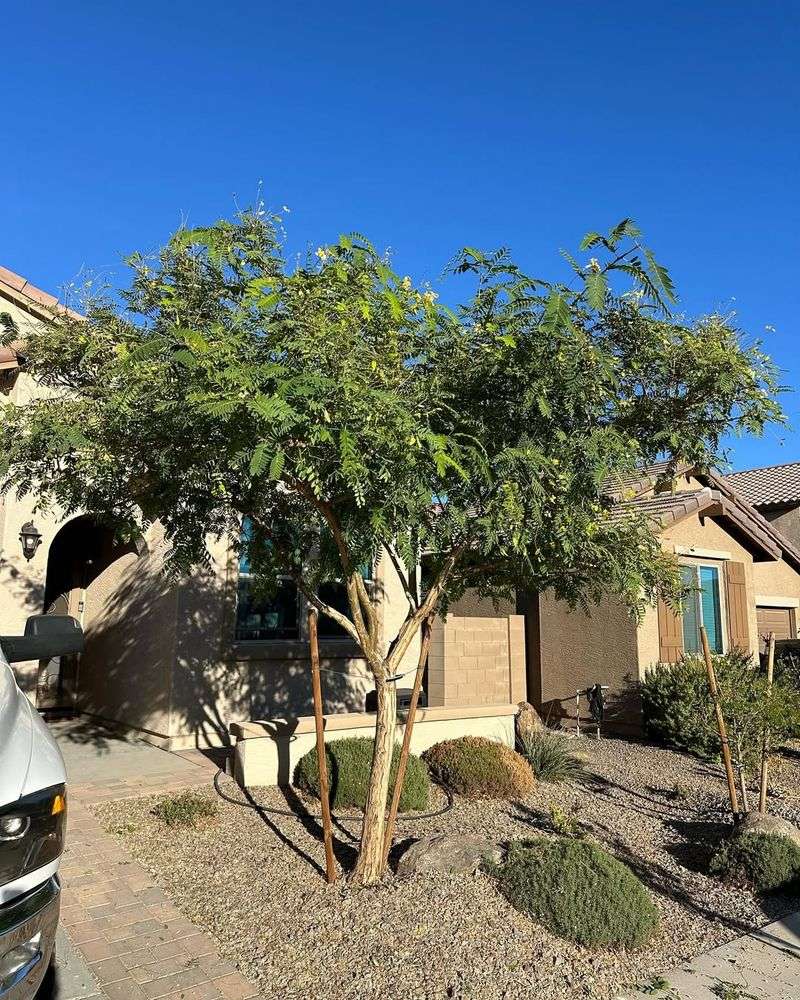
Golden yellow flowers covering a broad, umbrella-shaped canopy every summer is a pretty hard thing to ignore. Tipu Tree is one of the fastest-growing shade trees you can put in a Phoenix backyard, and the canopy it builds over time is genuinely dense enough to drop temperatures noticeably underneath it.
That matters when your patio surface is absorbing 110-degree heat all afternoon.
Within five to seven years, a Tipu can reach 25 to 35 feet tall with a canopy spread that rivals much older trees. Compound leaves create a layered, full look that holds up well even in dry stretches.
Unlike some fast-growing trees that look scraggly or uneven, Tipu develops a clean, rounded shape that looks intentional rather than accidental.
Alkaline soil is not a problem for this tree, which is excellent news for Phoenix gardeners who deal with caliche and high-pH soil constantly. It handles reflected heat from walls and pavement better than most non-native trees, making it a solid pick for south or west-facing yard exposures.
Water regularly during the first two summers to help it establish a strong root system, then back off significantly. Fallen flowers can be slippery on hard surfaces, so planting it over a gravel bed or lawn area rather than directly over tile or concrete is a smart move.
5. African Sumac Fills Out With Reliable Evergreen Shade
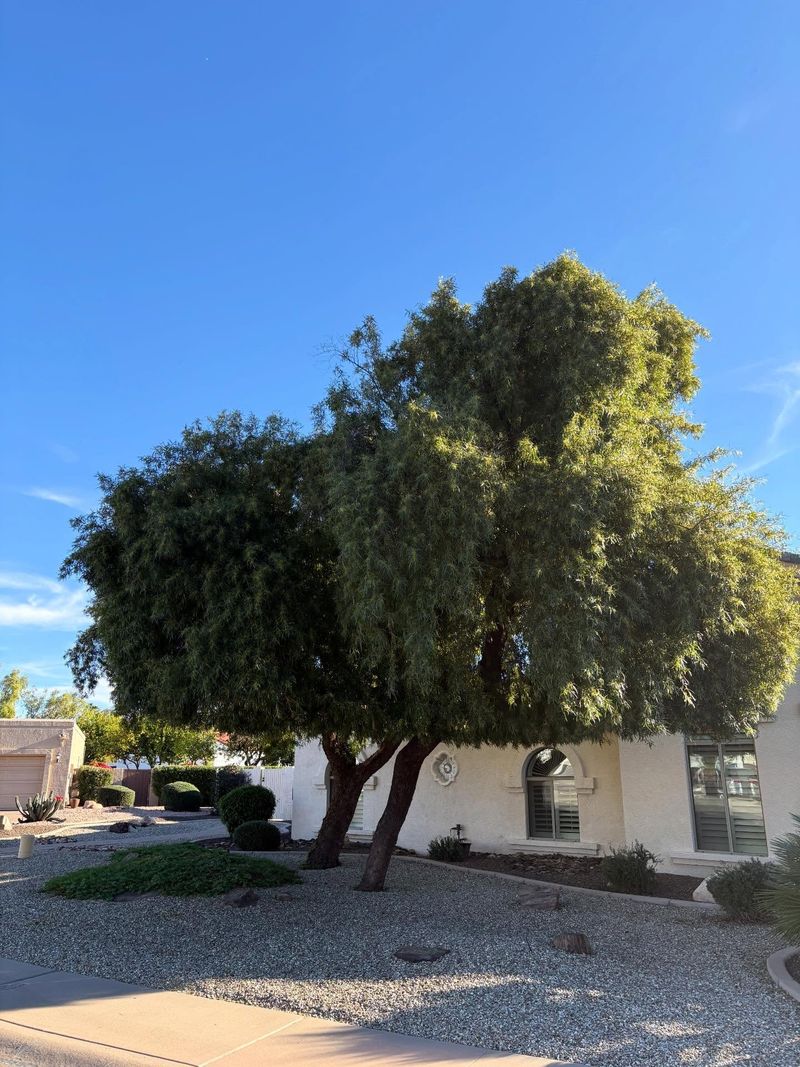
Year-round shade is not something every Phoenix tree can offer, but African Sumac delivers it consistently.
Staying green through winter while most other trees go bare gives this tree a real advantage for homeowners who want their backyard to feel usable in every season, not just summer.
Canopy density builds steadily, and a mature African Sumac becomes a serious shade structure all on its own.
Leathery, dark green leaves hold up well against dry winds and intense sun. Red berry clusters appear in late winter, which adds some visual interest during the months when most of the yard looks dormant.
Birds tend to visit frequently when the berries are ripe, which is a pleasant side effect if you enjoy backyard wildlife.
One thing to know upfront is that some people are sensitive to the pollen this tree produces, particularly in late winter. If allergies are a concern in your household, it is worth planting it on the far end of the yard rather than directly next to windows or doors.
Mature height ranges from 20 to 30 feet with a spread that fills out nicely over time. Water needs are low once the tree is established in Phoenix soil.
Prune every couple of years to manage shape and prevent the canopy from getting too heavy in one direction, especially after strong monsoon winds.
6. Texas Ebony Provides Thick Shade With Very Low Water Needs
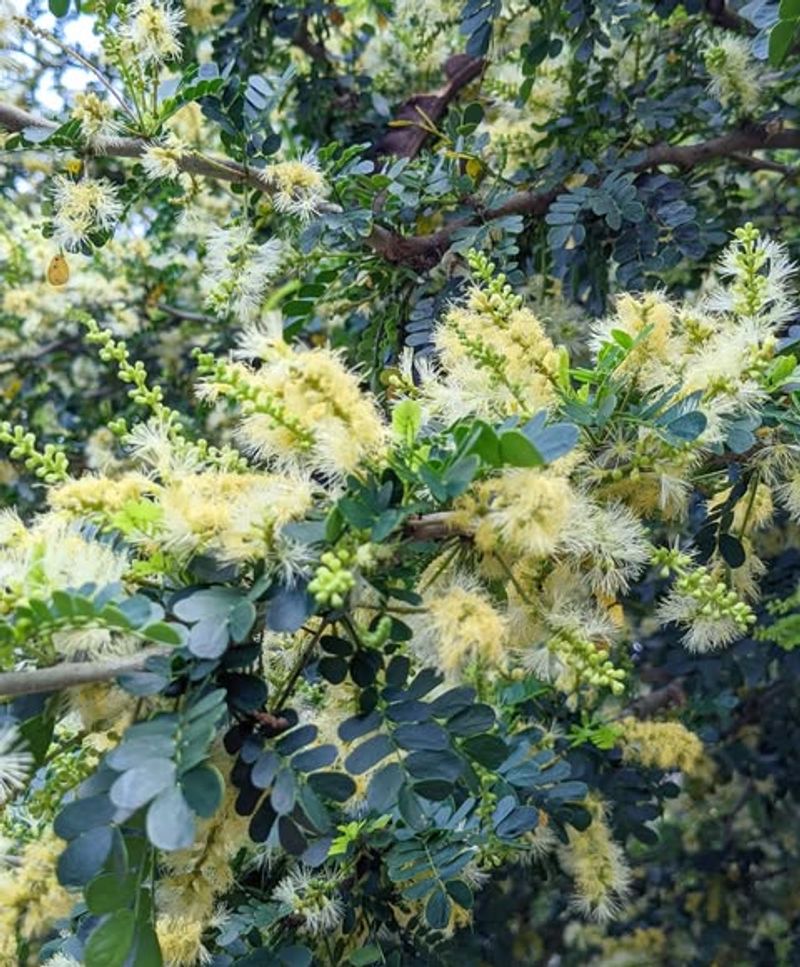
Tough does not begin to cover what Texas Ebony brings to a Phoenix backyard. This tree thrives on neglect in a way that most plants simply cannot pull off.
Once it is settled into your yard, extremely infrequent watering keeps it healthy and growing without any drama. For Phoenix homeowners on water restrictions or those who travel frequently, that kind of reliability is genuinely valuable.
Canopy density is one of the best features. Dark green, fine-leafed foliage packs tightly together, creating deep shade underneath that feels noticeably cooler than the surrounding yard.
Fragrant cream-colored flowers appear in late spring and carry a pleasant scent that is strongest in the early morning hours.
Growth is slower than trees like Tipu or Chilean Mesquite, so patience is required. Expect meaningful canopy coverage to develop over five to eight years rather than two or three.
Height maxes out around 20 to 25 feet, which fits well in mid-sized Phoenix backyards without overwhelming the space. Thorny branches are part of the package, so planting it away from foot-traffic areas or play spaces is a good idea.
Soil drainage matters more than soil type with this tree, so avoid low spots where water pools after monsoon rains. It handles reflected heat from block walls and concrete beautifully, which is nearly unavoidable in most Phoenix backyard setups.
7. Desert Ironwood Handles Harsh Conditions With Filtered Shade
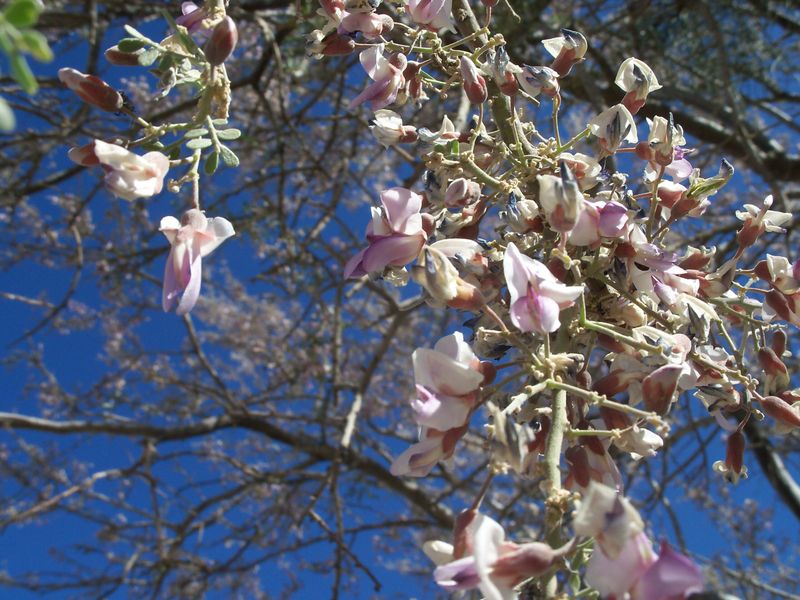
Nothing in the Sonoran Desert outlasts an Ironwood. Some of these trees live for over 800 years, which puts your Phoenix backyard in some seriously long-term company.
Bluish-green foliage gives it a cool, muted color that contrasts nicely against the warm tones of desert rock, gravel, and adobe walls common in Phoenix yards.
Shade is filtered rather than dense, meaning sunlight comes through in soft patches rather than being blocked completely.
Under a mature Ironwood, you get enough sun reduction to make a significant temperature difference while still keeping the area bright enough for shade-tolerant plants to grow underneath.
Purple flower clusters in late spring add a burst of color that catches most people off guard the first time they see it.
Slow growth is the main trade-off. Ironwood puts on maybe one to two feet per year, so if you need shade quickly, this is not your first choice.
Where it shines is as a long-term investment in your property. Once established in Phoenix soil, it requires almost no supplemental irrigation and handles both the punishing summer heat and the occasional cold snaps that hit the Valley in January.
Wildlife habitat value is high since birds nest in its dense branches and small animals shelter under its canopy. Planting it near a natural desert area or rock garden maximizes its visual impact.
8. Acacia Trees Grow Quickly And Offer Consistent Cover
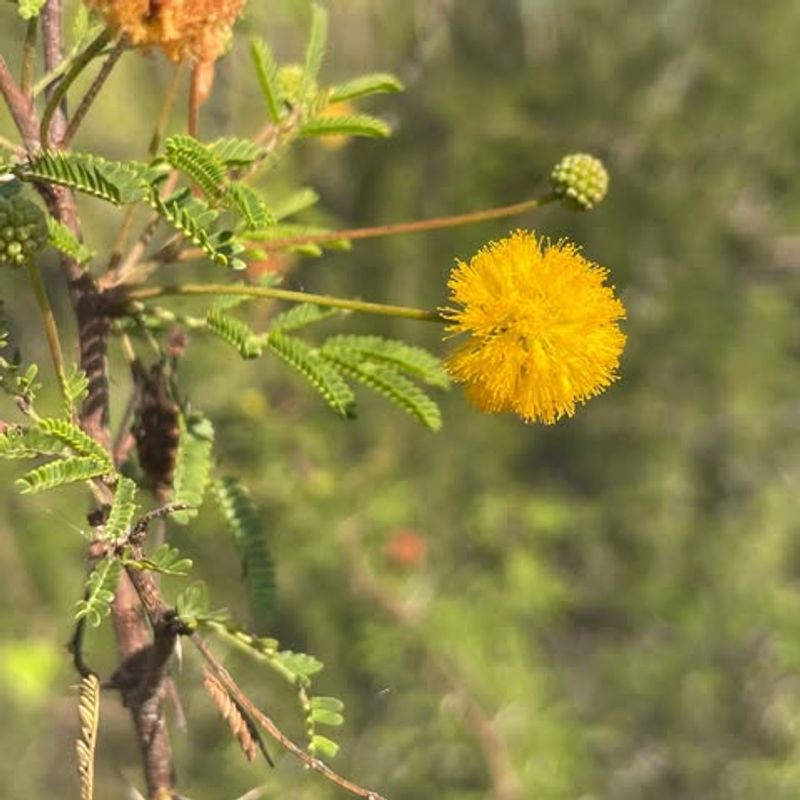
Walk through almost any established Phoenix neighborhood and you will spot an Acacia somewhere in a front or backyard. Sweet Acacia is one of the most popular varieties locally, and for good reason.
Intensely fragrant yellow flowers bloom in late winter and early spring, filling the yard with a honey-like scent before most other plants have even woken up from the cooler months.
Growth rate is solid, especially compared to slower desert natives.
Canopy cover builds consistently year over year, and the feathery, fine-textured foliage creates a soft, layered look that works well with both modern and traditional Phoenix landscaping styles.
Filtered shade is the norm rather than dense blocking, which keeps patios and seating areas cool without making them feel closed off.
Alkaline soil and extreme heat are not problems for Acacia. Phoenix conditions suit it naturally, and it rarely shows the stress signs that plague non-adapted trees trying to survive Valley summers.
Thorns are present on most varieties, so keep that in mind when choosing a planting spot near pathways or play areas. Mature size varies by species, with most reaching 15 to 25 feet tall and wide.
Water deeply every two to three weeks during the hot season and pull back during cooler months. Cleanup of fallen seed pods is the main ongoing task, but the consistent shade and seasonal fragrance make it an easy trade-off for most Phoenix homeowners.