10 Desert Trees To Elevate Your Arizona Yard
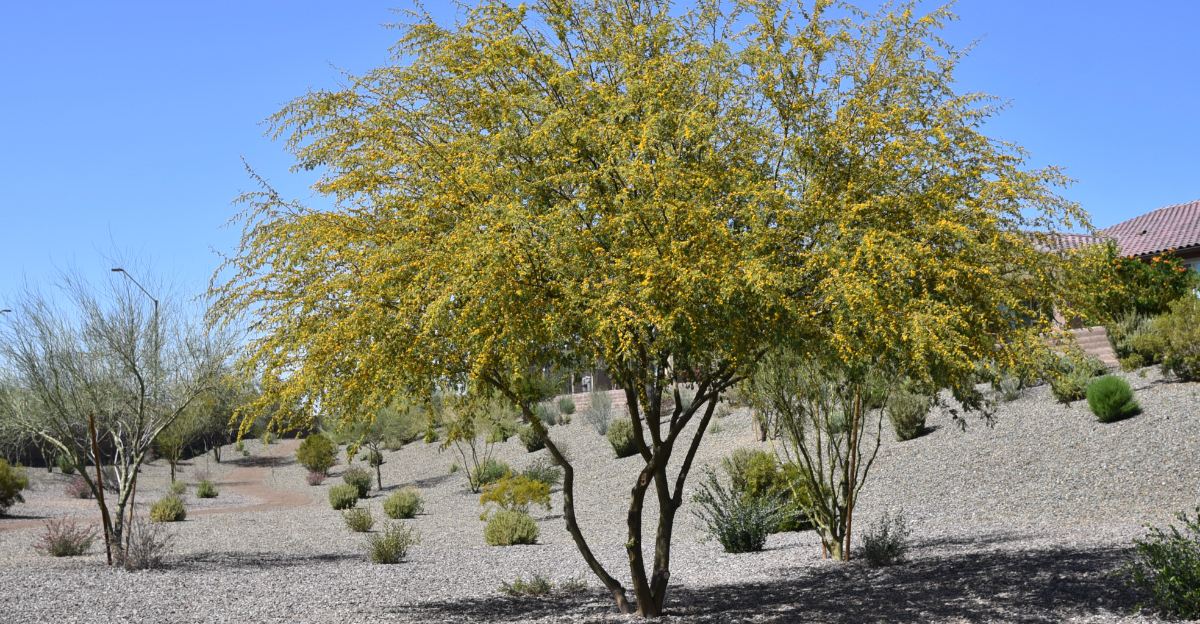
If you’ve lived in Arizona long enough, you know the sun doesn’t play around. You’ve probably planted something that looked promising in spring, only to watch it struggle by July.
After a few seasons like that, you start looking for plants that can truly handle the heat and still make your yard feel welcoming.
That’s where the right desert trees make all the difference. The right choice adds shade for those early morning coffees on the patio and structure that makes the whole yard feel established, not sparse.
In a place where water matters and temperatures climb fast, picking trees that are built for Arizona conditions is one of the smartest upgrades you can make.
Some varieties offer filtered shade without overwhelming a small yard. Others bring seasonal color or interesting bark that stands out even in winter.
And a few might surprise you with how quickly they change the feel of your outdoor space.
1. Velvet Mesquite
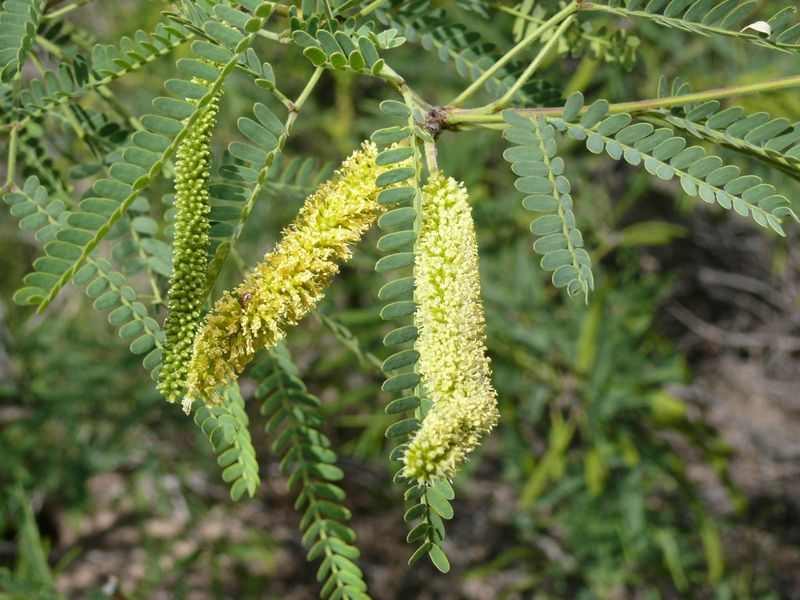
Few trees carry as much history in the Arizona desert as the Velvet Mesquite. Native to the Sonoran Desert, this tree has supported Indigenous communities for generations.
Its seed pods were traditionally ground into flour, its wood was used for fuel and tools, and its shade provided relief long before modern landscaping practices.
The Velvet Mesquite gets its name from the soft, velvety texture of its young leaves and seed pods. It grows into a wide, spreading tree that can reach 30 feet or more in height, creating generous dappled shade ideal for outdoor seating areas.
In natural desert settings, Velvet Mesquite can develop deep roots, but in irrigated residential landscapes, it often develops a broad lateral root system within the upper soil layers.
For Arizona homeowners, this tree performs well once established and can be relatively low maintenance under appropriate conditions.
It produces yellow flower spikes in spring that attract pollinators, and its seed pods provide food for birds and other wildlife.
Planting a Velvet Mesquite adds a tree with strong ecological ties to Arizona’s desert environment.
2. Blue Palo Verde
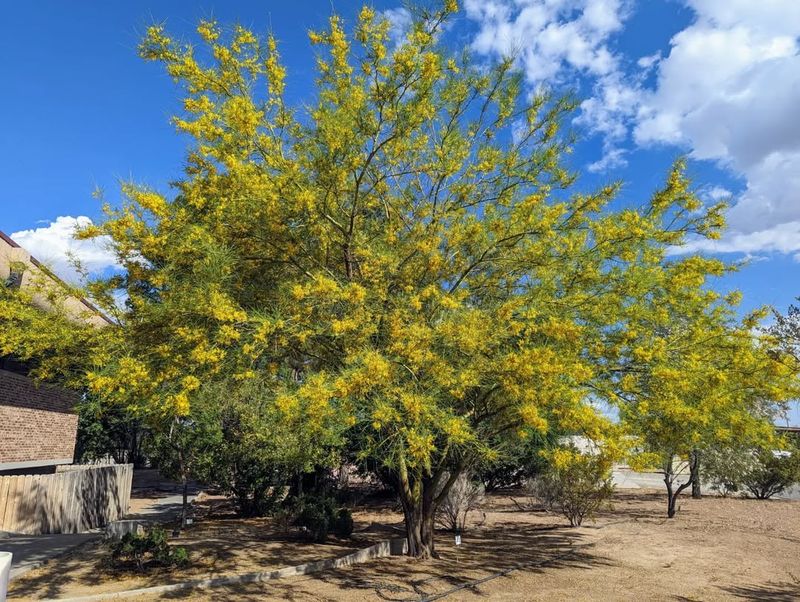
Arizona’s state tree designation reflects its long-standing presence and importance in the Sonoran Desert. The Blue Palo Verde earned that honor by being considered a hardy and widely used tree in Sonoran Desert landscapes.
Its name comes from its striking blue-green bark, which stands out beautifully against the tan and rust tones of Arizona’s desert soil.
What makes this tree especially fascinating is its survival strategy. During long dry periods, it drops its tiny leaves to reduce water loss, but the green bark keeps on doing the work of photosynthesis.
That adaptation allows the tree to continue photosynthesis through its green bark, which can help maintain visual interest during dry periods.
Come spring, usually between March and May, the Blue Palo Verde puts on one of the most dazzling wildflower shows you will ever see in a residential yard. Cascading yellow blossoms cover the tree from top to bottom, drawing in native bees, hummingbirds, and butterflies.
The tree typically grows 15 to 30 feet tall with a wide, open canopy that provides gentle dappled shade. It is drought-tolerant, grows well in rocky or sandy soil, and is perfectly suited for the natural desert landscaping style that so many Arizona homeowners love.
3. Desert Museum Palo Verde
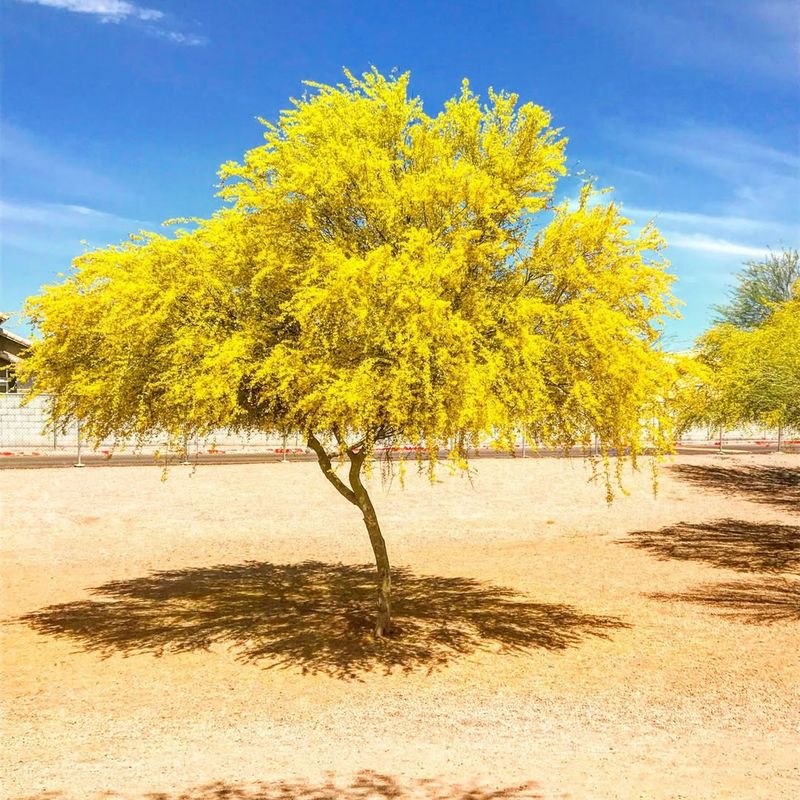
If there is one tree that practically defines the look of a well-landscaped Arizona yard, it is the Desert Museum Palo Verde. This hybrid tree was developed at the Arizona-Sonora Desert Museum in Tucson, which is exactly how it got its name.
It brings together the best traits of several native Palo Verde species into one outstanding package.
One of the biggest selling points of this tree is that it is nearly thornless, making it a much safer choice for homes with children or pets. It grows quickly, reaching heights of 20 to 30 feet, and its bright green trunk and branches stay photosynthesizing even when the leaves drop during dry spells.
That means it keeps contributing to your yard’s beauty all year long.
Every spring, the Desert Museum Palo Verde bursts into a breathtaking display of golden-yellow flowers that can stop traffic. Pollinators such as bees and butterflies are often attracted to its blooms, which can help support local wildlife.
It is well adapted to Arizona’s intense summer heat and typically requires relatively low supplemental water once established. For anyone looking to create a low-maintenance yet visually impressive yard in the Sonoran Desert region, this tree is a strong choice that performs well in many Arizona landscapes when planted in suitable conditions.
4. Chilean Mesquite
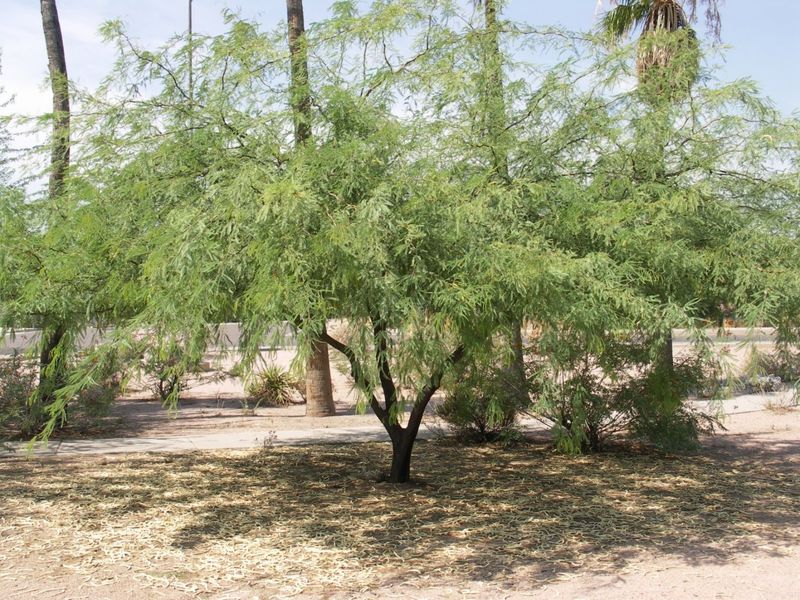
Walk through many neighborhoods in the Phoenix metro area and you are likely to notice Chilean Mesquite growing as a shade tree. This South American native has become a common landscape choice in Arizona due to its adaptability.
It grows relatively quickly, stays green for much of the year, and develops a graceful, weeping canopy that fits well in residential yards.
Unlike the native Velvet Mesquite, the Chilean variety is semi-evergreen, often retaining a portion of its foliage through winter in milder areas.
It can grow 30 to 40 feet tall, and its canopy spreads wide, providing substantial shade during Arizona’s hot summers.
Chilean Mesquite produces seed pods that may require cleanup, and its root system can extend outward if planted too close to sidewalks or foundations.
Providing adequate space and proper irrigation during establishment helps support healthier long-term growth.
Because of its fast growth and shade potential, it remains a frequently selected option in parts of Tucson and Phoenix.
5. Desert Ironwood
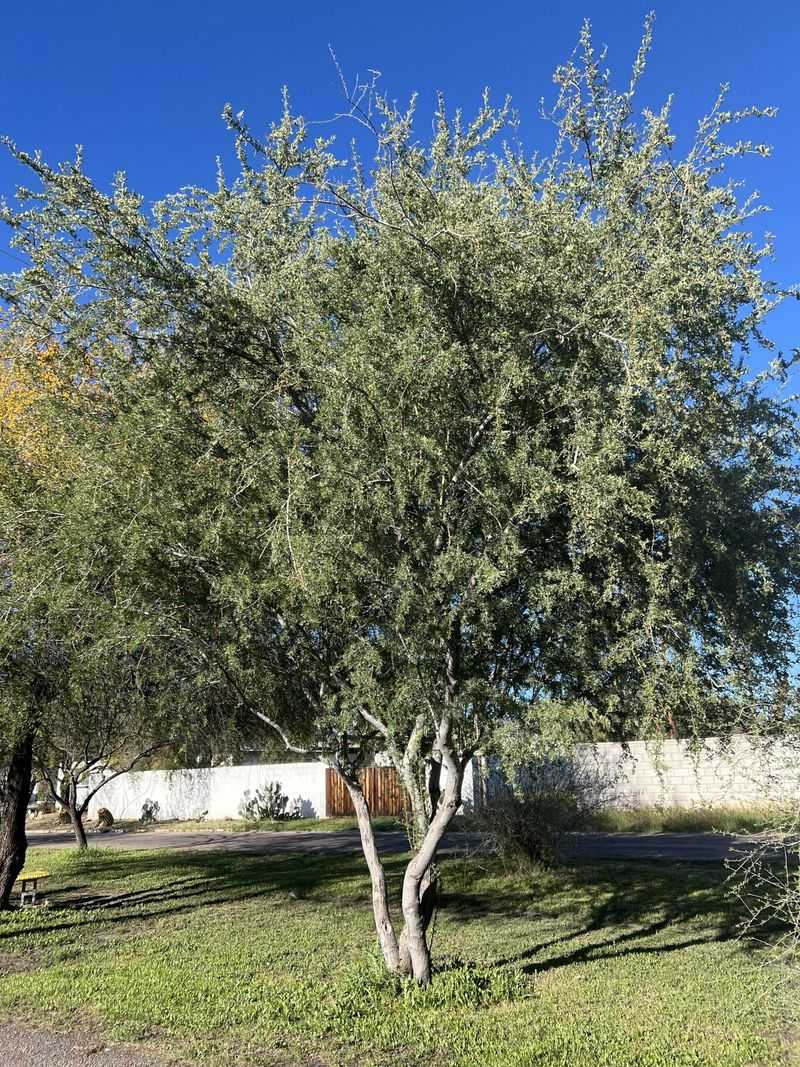
The Desert Ironwood is the kind of tree that commands respect the moment you see it. It is one of the longest-lived plants in the Sonoran Desert, with some specimens estimated to be over 800 years old.
That alone makes it one of the most extraordinary trees you could ever add to an Arizona yard.
Its common name comes from its incredibly dense wood, which is so hard that it actually sinks in water. Indigenous peoples have long used Ironwood for carving, and today it is still prized by artisans throughout the Southwest.
In your yard, though, what you will love most is its seasonal transformation. For a few weeks each spring, usually in May or June, the tree explodes with delicate lavender-pink blossoms that are absolutely stunning against its silvery-gray foliage.
Beyond its beauty, the Desert Ironwood serves as a nurse plant for many other desert species, sheltering young saguaros, palo verdes, and wildflowers beneath its canopy. It grows slowly, typically reaching 15 to 30 feet, and is extremely drought-tolerant once established.
Because it is frost-sensitive, it does best in the warmer low-elevation areas of Arizona like Tucson and the Phoenix Valley. If you want a tree with deep roots in the desert ecosystem, this one has no equal.
6. Sweet Acacia
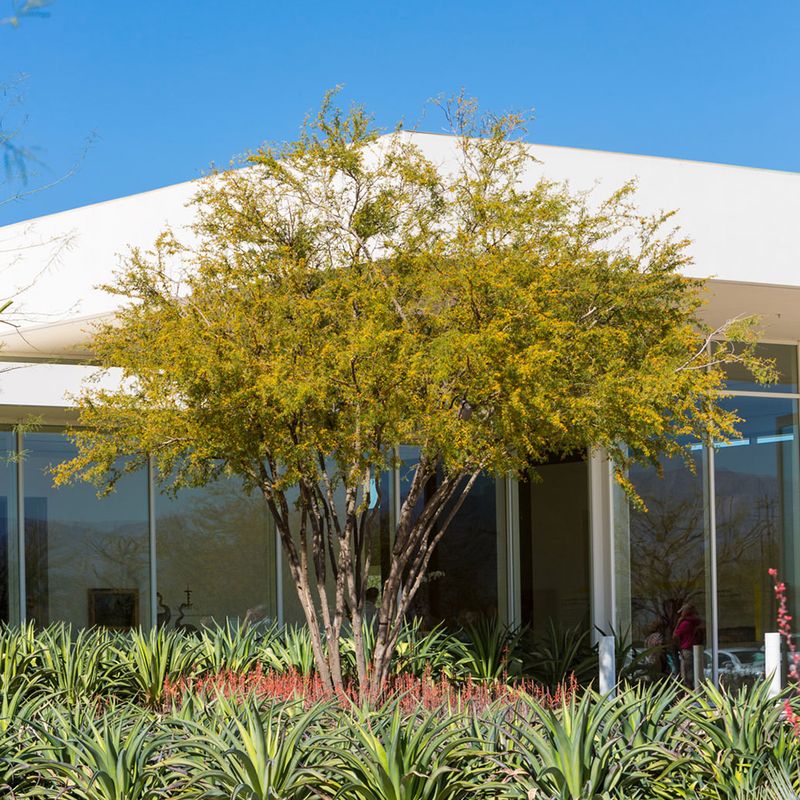
There is something almost magical about walking past a Sweet Acacia in full bloom. Those tiny, perfectly round, golden-yellow puffball flowers release a fragrance that can drift across much of the yard.
Although not native to Arizona, Sweet Acacia has become a well-established and widely used tree across the lower desert regions of the state. It adapts well to hot, dry conditions and performs reliably in residential landscapes.
Sweet Acacia typically grows 15 to 25 feet tall, making it a manageable size for most residential yards. It has a naturally attractive, multi-stemmed form with feathery, fine-textured leaves that give it a soft, airy appearance.
The flowers appear in late winter and early spring, often as early as February in warmer parts of Arizona, making it one of the earlier blooming landscape trees of the season.
Pollinators are frequently drawn to Sweet Acacia blossoms, including bees and butterflies. The tree may also serve as a host for certain butterfly species.
It does have thorns, so thoughtful placement is important.
Sweet Acacia is drought-tolerant once established and well suited to lower-elevation desert conditions found in areas such as Tucson and Phoenix.
7. Desert Willow
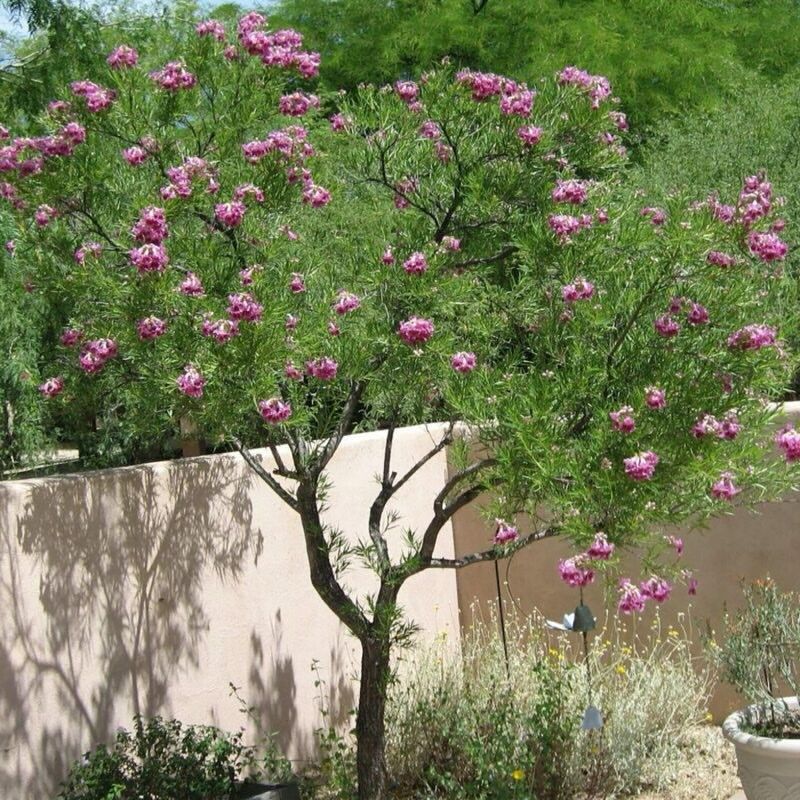
Do not let the name fool you. The Desert Willow is not actually related to the weeping willows you might see near rivers and ponds.
It belongs to a completely different plant family, and it is built for dry, rugged terrain rather than wet soil. What it shares with its namesake is those long, slender, graceful leaves that sway beautifully in the breeze.
What truly sets the Desert Willow apart is its showstopping flowers. From late spring all the way through fall, it produces clusters of trumpet-shaped blooms in shades of pink, lavender, white, and deep burgundy.
These flowers look almost tropical, which makes them a surprising and delightful addition to any Arizona yard. Hummingbirds are particularly drawn to the blossoms and will visit regularly throughout the blooming season.
The Desert Willow is a fantastic choice for homeowners who want seasonal color without a lot of fuss. It is a fast grower, typically reaching 15 to 25 feet, and it thrives in full sun and well-drained soil.
In the colder months it drops its leaves, but it comes back with vigor each spring. It performs well across a wide range of Arizona elevations, from the hot desert floors of Phoenix to the slightly cooler communities around Flagstaff’s lower foothills.
Minimal water and maximum beauty sum it up perfectly.
8. Netleaf Hackberry
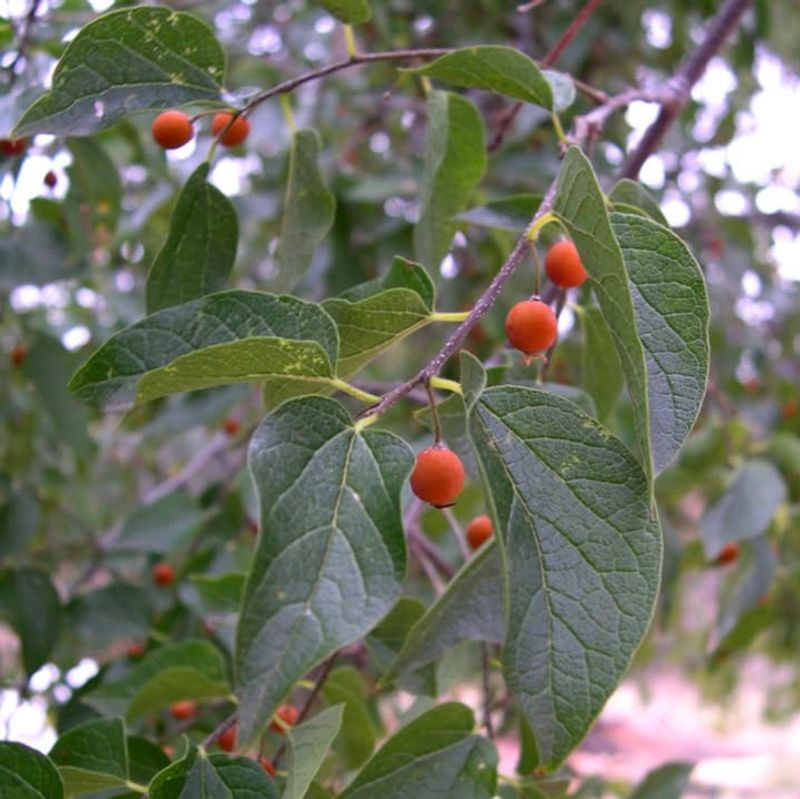
If you have never heard of the Netleaf Hackberry, you are about to discover one of Arizona’s best-kept landscaping secrets. This rugged native tree grows naturally along canyon walls, dry washes, and rocky hillsides across the state, which tells you a lot about just how tough it really is.
It is well suited to heat, drought, rocky soil, and wind, particularly when planted in appropriate desert conditions.
The Netleaf Hackberry grows 20 to 30 feet tall and develops a rounded, spreading canopy that provides solid shade. Its leaves have a distinctive rough, net-like texture, which is exactly where the name comes from.
In fall, it produces small orange to dark purple berries that are an absolute feast for birds. Robins, mockingbirds, cedar waxwings, and many other species travel specifically to feed on Hackberry fruit, making this tree a living bird feeder for your yard.
From a practical standpoint, this tree typically requires minimal maintenance once established under suitable growing conditions. It does not need rich soil or frequent irrigation, and it adapts well to both urban and natural desert settings.
Homeowners in Tucson, Prescott, and the greater Phoenix area have used it successfully in everything from formal landscaped yards to naturalistic desert gardens. If supporting wildlife while keeping your water bill low sounds appealing, the Netleaf Hackberry should absolutely be on your planting list.
9. Arizona Cypress
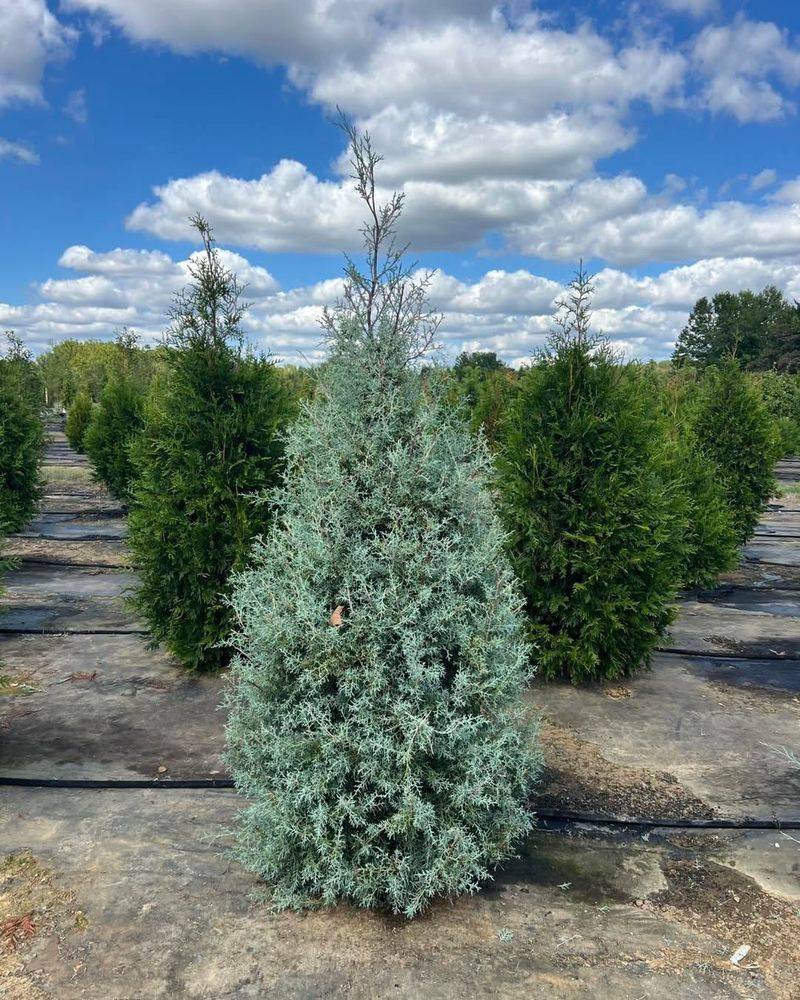
Picture a tree that stays green throughout the year, grows tall and upright, and performs well in Arizona’s drier regions. That is the Arizona Cypress.
This native evergreen conifer grows naturally in foothill and higher-elevation desert regions, including areas around Prescott, Sedona, and parts of northern Arizona.It can also perform well in select higher-elevation neighborhoods around the greater Phoenix area where winter temperatures are cooler.
The tree typically reaches 40 to 70 feet tall, developing a dense, conical form suitable for windbreaks or privacy screens when space allows.
Its blue-gray to silver-green foliage adds year-round structure and contrast in desert landscapes.
Arizona Cypress is considered drought-tolerant once established, though young trees require supplemental irrigation during establishment.
It also provides nesting habitat for birds and shelter for small wildlife.
For homeowners seeking evergreen structure in appropriate Arizona elevations, this species is a well-supported regional option.
10. Chinese Pistache
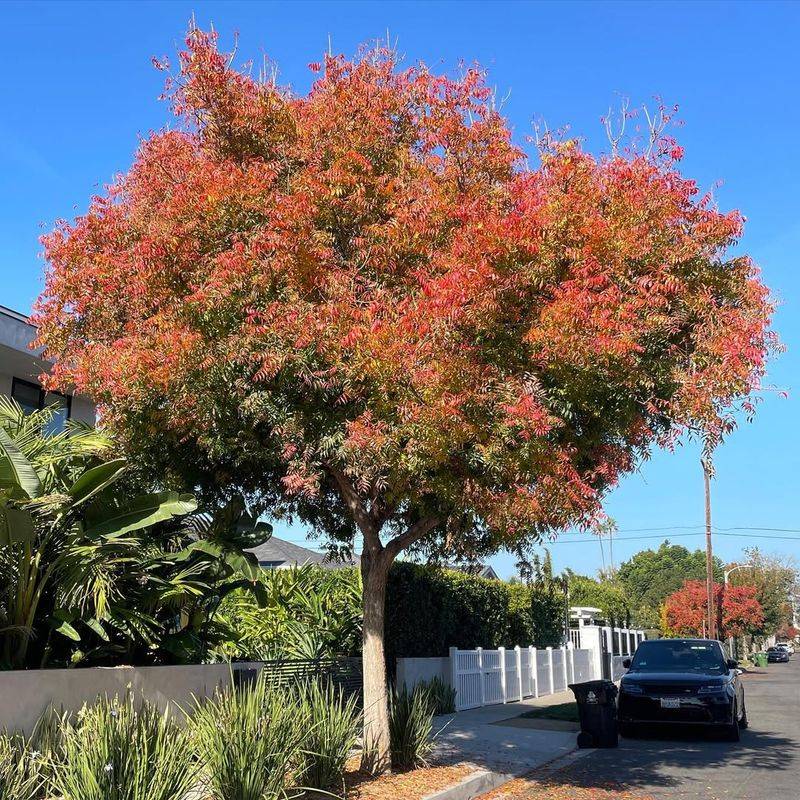
Arizona is not exactly famous for fall color, but the Chinese Pistache has been quietly changing that reputation one yard at a time. In autumn, it often develops vibrant red, orange, and yellow foliage under favorable growing conditions.
Originally from China and Taiwan, the Chinese Pistache has shown strong adaptability in many Arizona landscape settings. It tolerates the summer heat of cities like Phoenix and Tucson when planted in appropriate soil and given proper irrigation during establishment, and it is generally considered more cold-tolerant than several other commonly planted ornamental trees in the region.
It grows 25 to 35 feet tall with a broad, rounded canopy that provides generous shade throughout the warmer months.
Female trees produce clusters of small berries that ripen from red to blue-black in the fall, which birds find irresistible. The tree is relatively pest-resistant and does not require a lot of pruning or special care once it settles in.
Deep, infrequent watering during establishment can support long-term health and steady growth over time. For Arizona homeowners who feel like their yards are missing that seasonal drama that other parts of the country get to enjoy, the Chinese Pistache is the answer they have been looking for all along.