8 Different Plants Known As “Jasmine” And How To Grow Them In Arizona
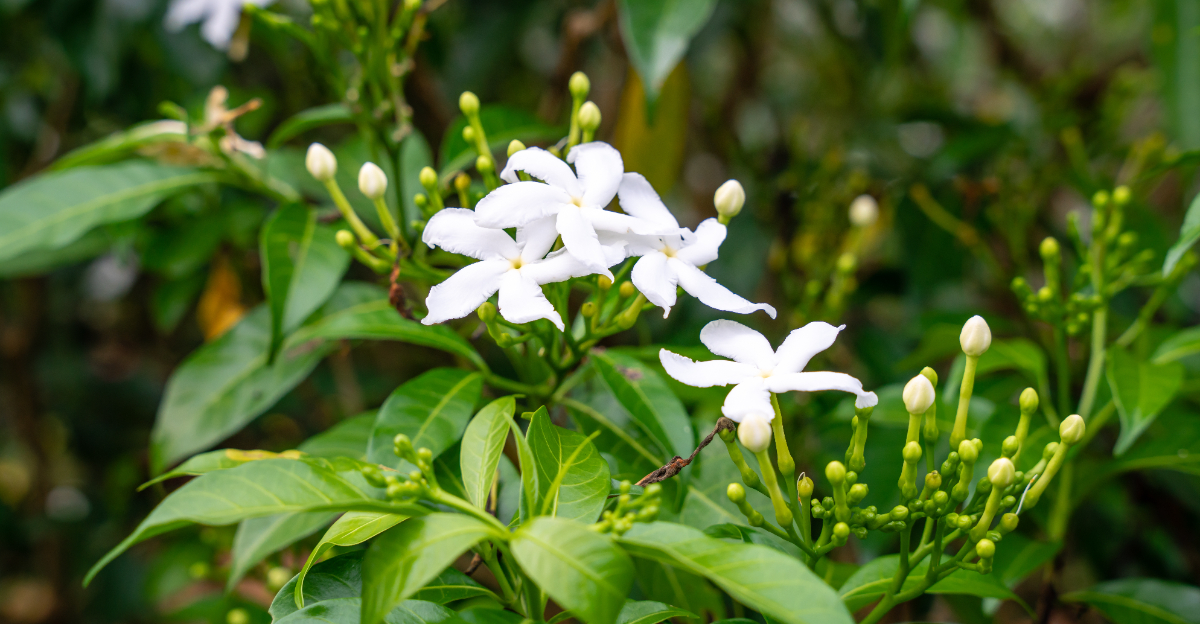
The word “jasmine” sounds simple, but in Arizona it can mean several completely different plants that grow in very different ways. Some climb quickly and cover walls, some stay compact and shrub-like, and others are only called jasmine because of their scent.
That mix up leads to frustration when a plant behaves nothing like you expected after planting it.
In desert conditions, details matter. Sun exposure, reflected heat, and dry air affect each type differently, and one variety may thrive in full sun while another burns without afternoon protection.
The name on the tag does not guarantee success in Arizona.
If you choose the right jasmine for the right location, growth becomes far easier to manage. When you understand what you are actually planting, your Arizona garden responds with healthier growth and more reliable blooms.
1. Star Jasmine Covers Arizona Walls With Glossy Leaves And Strong Fragrance
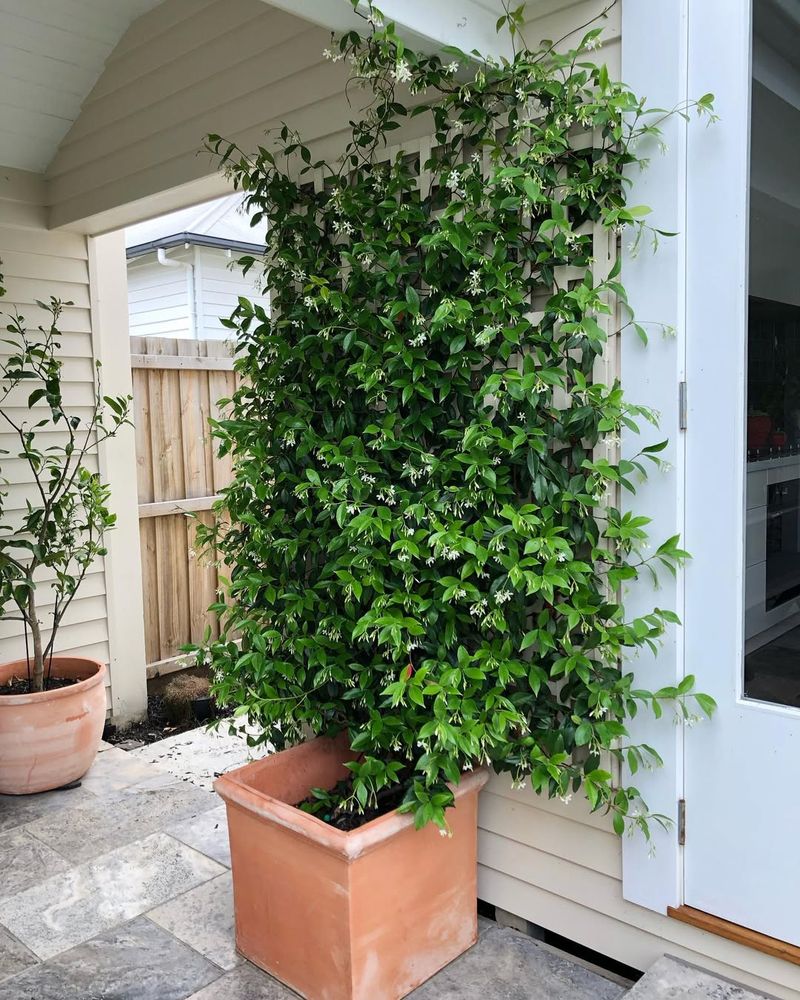
Star jasmine isn’t actually a true jasmine but a member of the dogbane family that earned its common name through incredibly fragrant white blooms.
This evergreen vine thrives in Arizona’s milder climate zones, particularly in areas that don’t experience harsh freezes below 20 degrees.
The twisting stems create dense coverage perfect for hiding block walls or softening hard desert landscapes.
Plant star jasmine in partial shade during Arizona summers since full afternoon sun can scorch the glossy leaves. Morning sun with afternoon protection works beautifully in Phoenix and Tucson gardens.
The soil needs excellent drainage mixed with organic compost, and regular deep watering establishes strong roots during the first growing season.
Once established, star jasmine tolerates some drought but blooms best with consistent moisture through spring and summer. The fragrant white flowers appear in waves from April through June, attracting hummingbirds and filling patios with sweetness.
Prune after the main bloom period to control size and encourage bushier growth.
Arizona gardeners should mulch around the base to keep roots cool during triple-digit heat. Star jasmine grows slower in desert conditions compared to coastal climates but eventually reaches 15 to 20 feet when given support.
This reliable vine handles Arizona’s alkaline soil better than many flowering climbers, making it a smart choice for long-term landscape beauty.
2. Pink Jasmine Climbs Fast And Bursts With Soft Blush Flowers
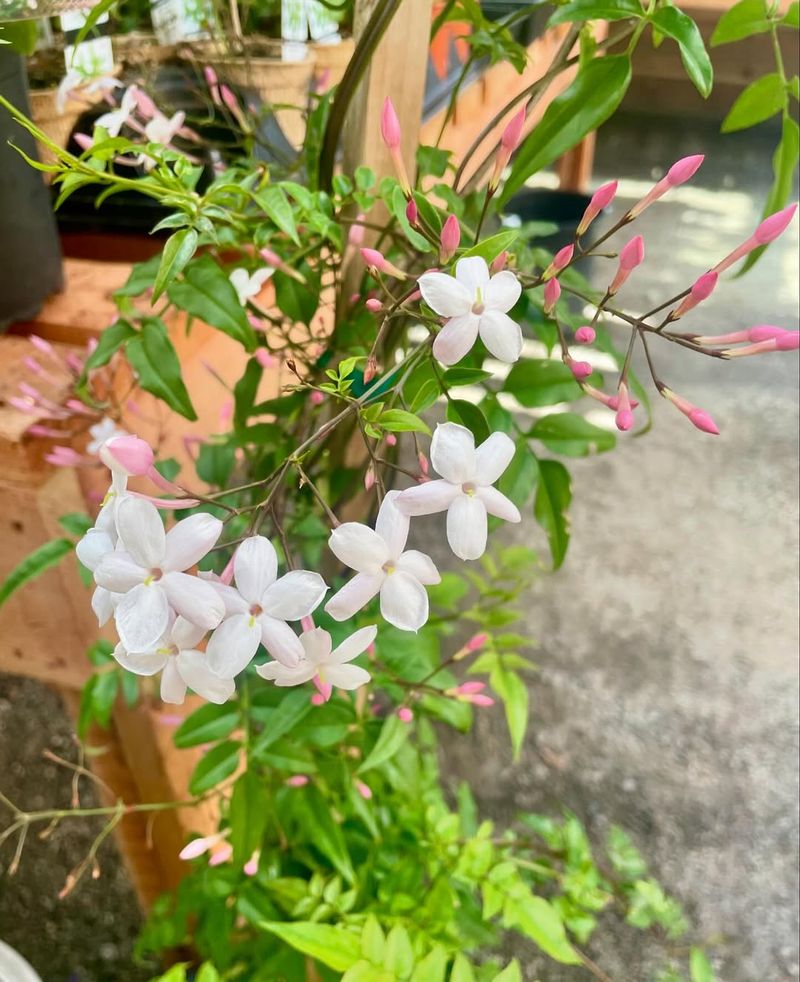
Fast growth defines pink jasmine, a vigorous climber that can cover a bare fence or pergola in just two growing seasons. The clusters of pale pink tubular flowers appear in spring, creating waterfalls of color that contrast beautifully with Arizona’s earth-tone landscapes.
Unlike star jasmine, this variety comes from the true jasmine family and carries a lighter, more delicate fragrance.
Arizona’s warmth suits pink jasmine perfectly in zones 9 and 10, though gardeners in cooler areas should plant it in protected south-facing locations.
The vine appreciates regular water during establishment and continues needing consistent moisture to support its rapid growth and heavy flowering.
Afternoon shade helps prevent leaf burn during June through August when temperatures soar.
Training pink jasmine onto sturdy support structures matters because the vine gets heavy when mature. The stems intertwine naturally but benefit from occasional guidance to fill in bare spots.
Fertilize monthly during the growing season with a balanced formula to fuel the energetic growth habit.
Prune pink jasmine after flowering finishes to maintain shape and prevent it from overtaking nearby plants. Arizona gardeners love how quickly this vine provides privacy screening and softens harsh architectural lines.
The semi-evergreen foliage may thin slightly during cold snaps but rebounds vigorously when spring warmth returns, making it forgiving for desert conditions.
3. Arabian Jasmine Fills Warm Evenings With Rich, Sweet Scent
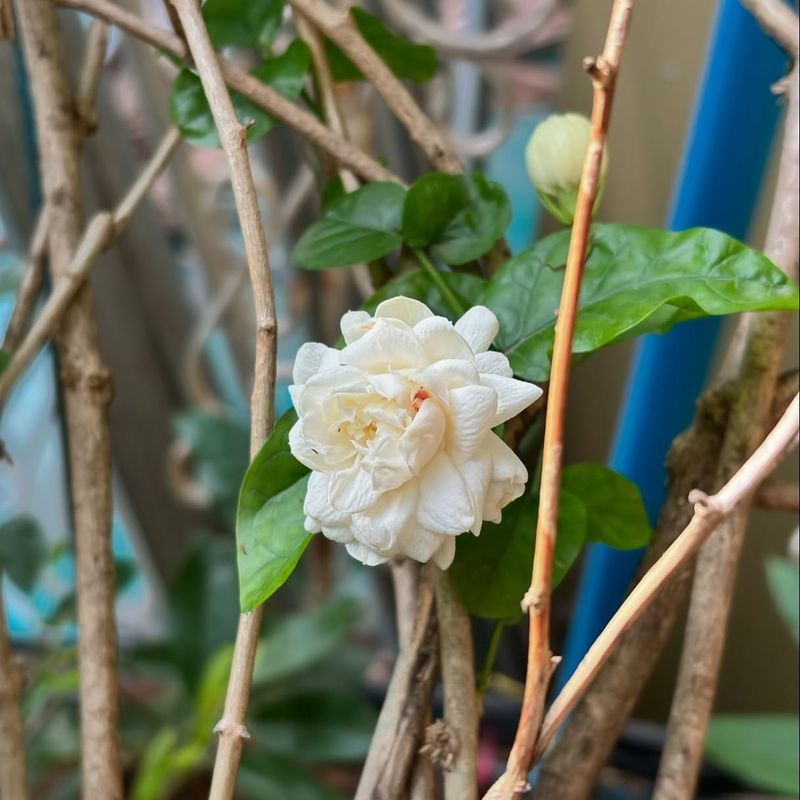
Arabian jasmine produces the most intensely fragrant flowers of any jasmine variety, with a perfume so rich it’s used commercially in teas and perfumes.
The small white blooms open in the evening and release their strongest scent after sunset, making Arizona patios magical during warm months.
This tropical shrub grows as a compact bush rather than a climbing vine, reaching about four feet tall and wide.
Growing Arabian jasmine in containers works perfectly for Arizona gardeners because it allows moving the plant to protected areas during occasional freezes.
Temperatures below 28 degrees damage the tender foliage, so patio placement near walls or under eaves provides crucial cold protection.
The plant blooms year-round in frost-free areas, with peak flowering during summer heat.
Well-draining potting mix amended with compost keeps Arabian jasmine healthy, and consistent watering matters tremendously since the shallow roots dry quickly in Arizona’s low humidity.
Place containers where they receive morning sun but escape the harshest afternoon rays.
Fertilize every two weeks during active growth with a formula designed for flowering plants.
Prune Arabian jasmine lightly throughout the year to maintain rounded shape and encourage more flower buds. The glossy leaves stay attractive even between bloom cycles.
Arizona gardeners who want indoor fragrance can bring potted Arabian jasmine inside during winter, placing it near sunny windows where the flowers perfume entire rooms with their legendary sweetness.
4. Primrose Jasmine Brings Bright Yellow Blooms In Early Spring
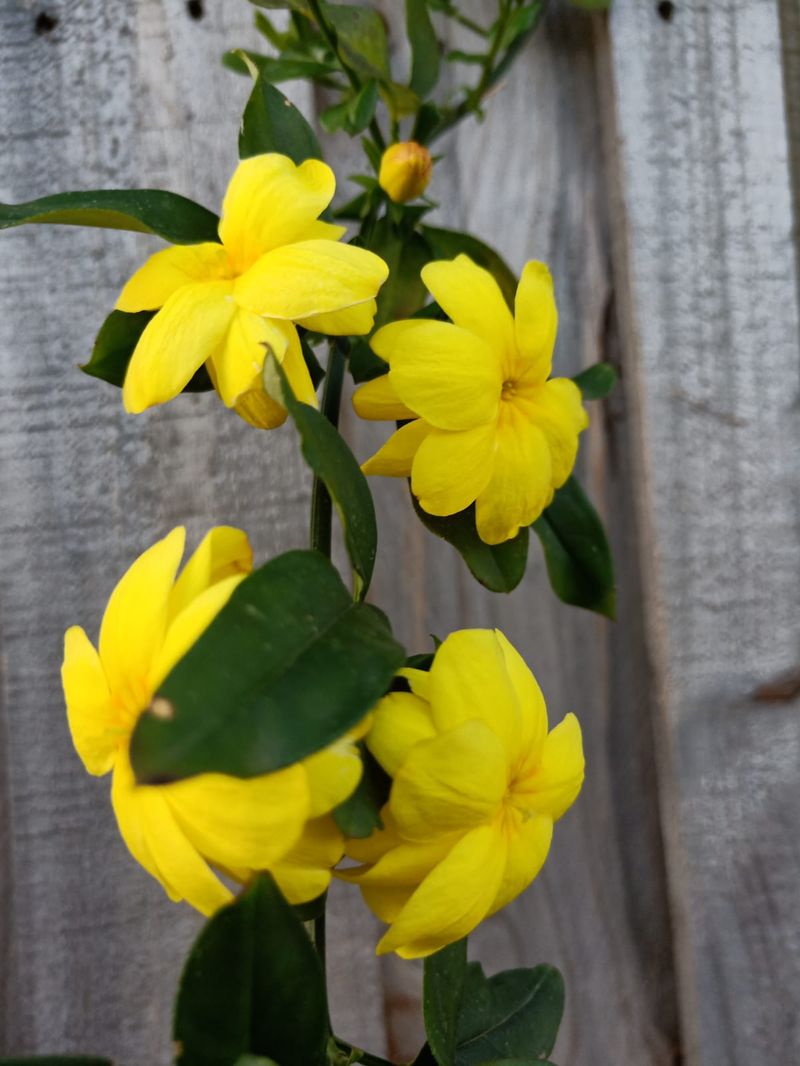
Bright yellow flowers covering arching stems announce spring’s arrival when primrose jasmine bursts into bloom across Arizona landscapes.
This shrubby plant spreads wider than it grows tall, creating mounds of color that work beautifully cascading over walls or filling rock garden spaces.
The flowers lack fragrance, but their cheerful color compensates by bringing sunshine to gardens emerging from winter dormancy.
Primrose jasmine handles Arizona’s temperature swings better than many flowering plants, tolerating both summer heat and winter cold down to about 10 degrees. The semi-evergreen foliage may drop leaves during the coldest weeks but rebounds quickly.
Plant in full sun to partial shade, though more sun produces heavier flowering in February and March.
Moderate water needs make primrose jasmine practical for Arizona’s water-conscious landscapes once the root system establishes. The plant tolerates some drought but looks fuller and blooms more profusely with regular irrigation during dry stretches.
Sandy or rocky soil with good drainage suits this adaptable jasmine perfectly, and it doesn’t fuss about Arizona’s alkaline conditions.
Prune primrose jasmine after flowering finishes to control the spreading habit and remove any frost-damaged stems. The long arching branches can be trained along fences or allowed to spill naturally over retaining walls.
Arizona gardeners appreciate how this jasmine provides early season color when most desert plants haven’t started their growth cycle, creating visual interest during the landscape’s quietest months.
5. Winter Jasmine Adds Cheerful Color Before Most Plants Wake Up
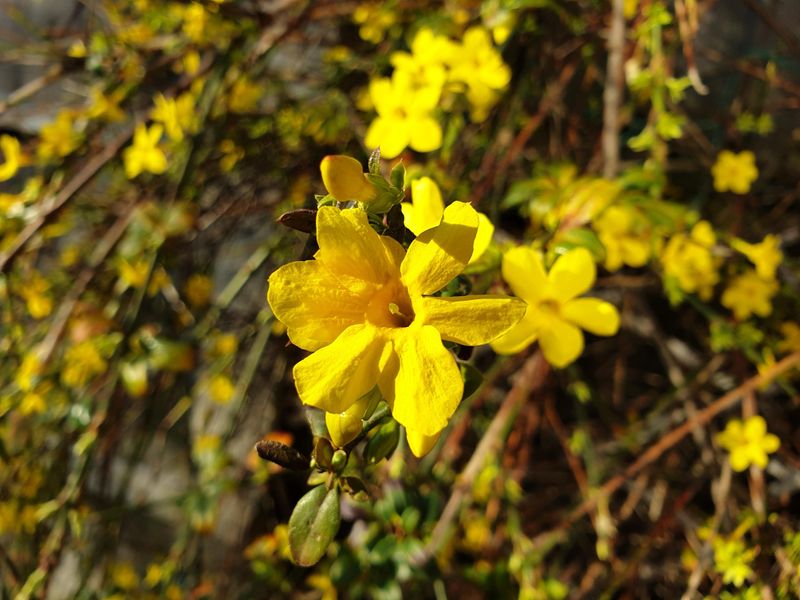
Bare green stems covered in bright yellow flowers make winter jasmine instantly recognizable during Arizona’s coolest months when most plants look dormant.
This deciduous jasmine loses its leaves in fall, then surprises gardeners by producing cheerful blooms on naked branches from December through February.
The unexpected timing brings life to winter landscapes when color feels especially precious.
Cold tolerance makes winter jasmine suitable for all Arizona growing zones, including higher elevations where other jasmines struggle. The plant actually needs some winter chill to bloom properly, making it ideal for Flagstaff and Prescott gardens.
Full sun to light shade works well, and the flexible stems can trail along the ground or be trained upward on supports.
Water winter jasmine regularly during its active growing season after flowers fade and leaves emerge. The plant tolerates dry conditions once established but stays healthier with consistent moisture through summer heat.
Fertilize in early spring after blooming finishes to support new growth and next year’s flower bud formation.
Prune winter jasmine immediately after flowering ends since buds form on old wood throughout the growing season. Arizona gardeners can cut stems freely for indoor arrangements, and the plant responds by producing more branches.
The sprawling habit works beautifully on slopes where erosion control matters, and the long stems root where they touch soil, creating expanding patches of winter color over time.
6. Carolina Jasmine Trails And Twines With Bold Golden Flowers
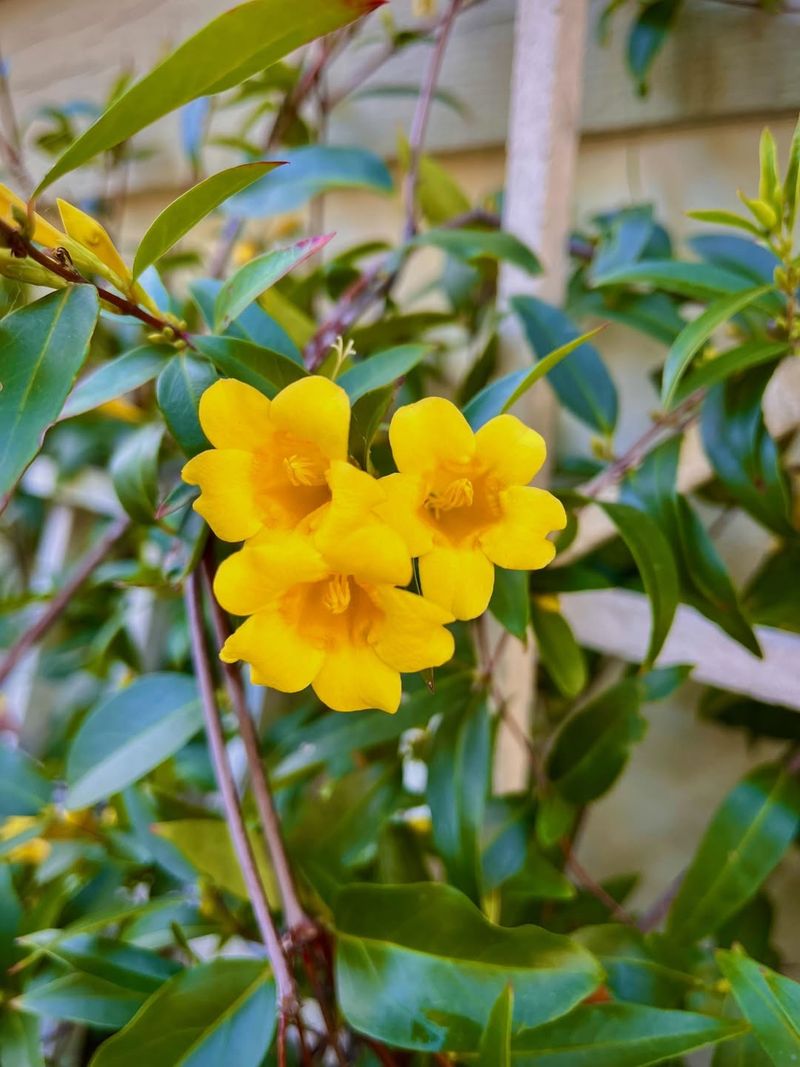
Golden trumpet-shaped flowers cover Carolina jasmine so thickly in spring that the evergreen foliage nearly disappears beneath the blooms.
This vigorous vine twines naturally around supports, creating living screens that block unsightly views while providing Arizona gardens with spectacular seasonal color.
Despite its common name, Carolina jasmine isn’t a true jasmine but a member of the Gelsemium family native to the southeastern United States.
Arizona’s warmer zones suit Carolina jasmine perfectly, though gardeners should note that all parts of this plant contain toxic compounds and shouldn’t be planted where children or pets might chew the foliage.
The vine grows quickly in full sun to partial shade, with morning sun and afternoon shade producing the healthiest plants in desert regions.
Well-draining soil amended with organic matter helps establish strong roots.
Regular watering during the first two years creates a drought-tolerant vine that needs less irrigation once mature. Carolina jasmine blooms heaviest from February through April, with scattered flowers appearing throughout warmer months.
The shiny evergreen leaves stay attractive year-round, providing visual interest even when flowers take a break.
Prune Carolina jasmine after the main bloom period to control size and remove any wayward stems. The vine can reach 20 feet or more when given vertical support, or it can be maintained as a dense groundcover on slopes.
Arizona gardeners value how this jasmine handles alkaline soil and provides reliable color during the landscape’s most beautiful season.
7. Night-Blooming Jasmine Releases Powerful Fragrance After Dark
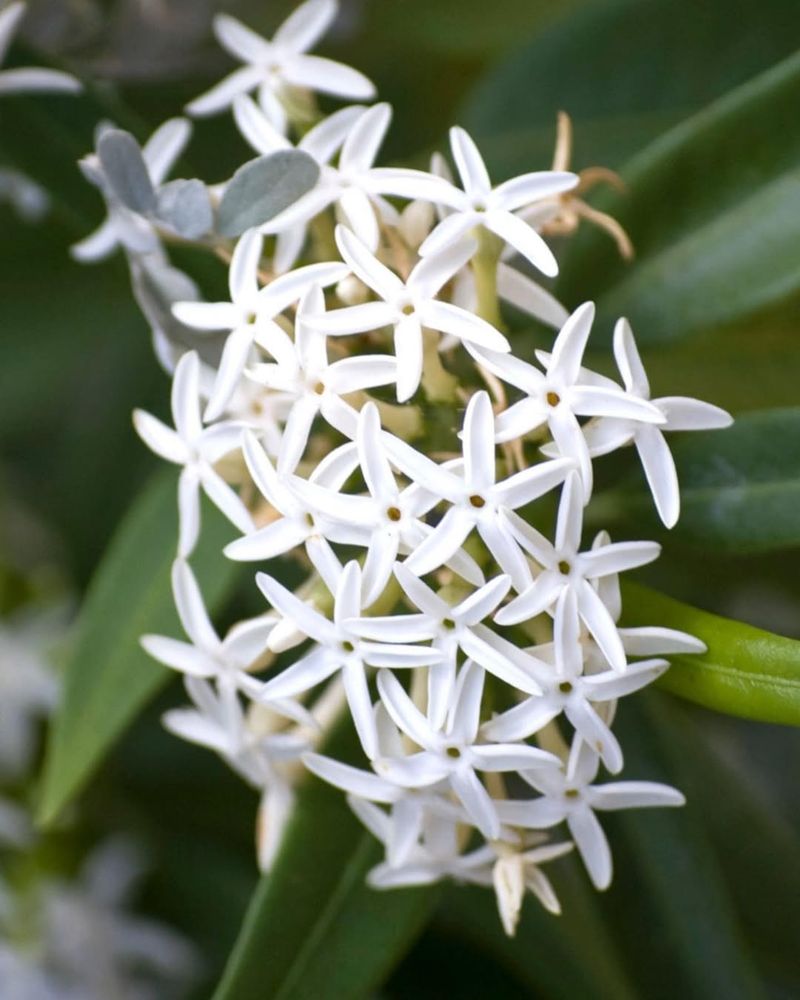
Powerful fragrance that fills entire yards after sunset makes night-blooming jasmine unforgettable, though the tiny greenish-white flowers look unremarkable during daylight hours.
This tropical shrub from the West Indies thrives in Arizona’s warmest areas, growing as a rangy evergreen that benefits from regular pruning to maintain compact shape.
The scent carries remarkable distances on warm evenings, perfuming patios and drifting through open windows.
Plant night-blooming jasmine where you’ll enjoy the fragrance most, near outdoor seating areas or bedroom windows that stay open during pleasant weather. The shrub tolerates full sun but appreciates afternoon shade in Phoenix and Tucson’s hottest neighborhoods.
Frost damages the tender growth, so Arizona gardeners in cooler zones should grow it in containers that move to protected locations when temperatures drop.
Consistent moisture and regular feeding keep night-blooming jasmine flowering continuously through warm months. The plant can become sparse and leggy without occasional pruning to encourage bushier growth.
Fertilize monthly during the growing season with a balanced formula, and water deeply when the top few inches of soil dry out.
Some Arizona gardeners find the nighttime fragrance too intense and overwhelming, while others can’t get enough of the sweet perfume. The flowers bloom in waves throughout summer and fall, with the strongest scent on warm, humid evenings.
Consider planting night-blooming jasmine at least 10 feet from main seating areas if you’re sensitive to strong fragrances.
8. Cape Jasmine Produces Creamy White Gardenia Blooms With Intense Perfume
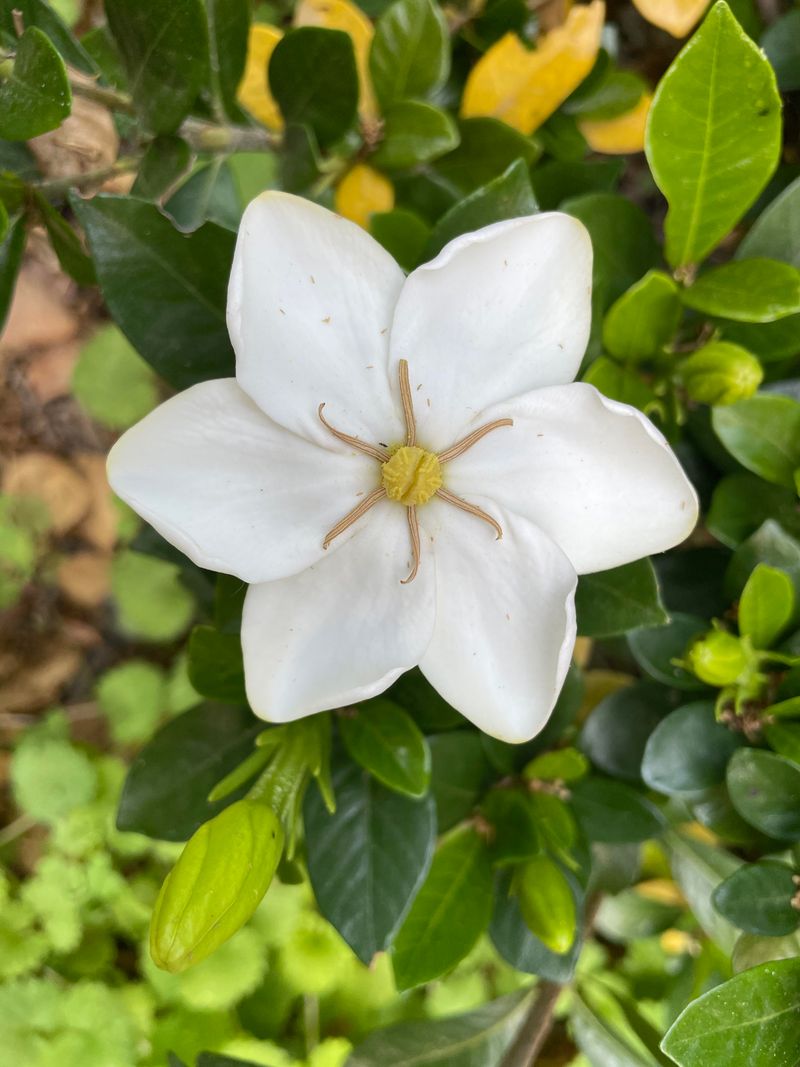
Cape jasmine is actually gardenia, a beloved Southern shrub that Arizona gardeners can grow successfully with proper care and attention.
The creamy white double flowers release an intoxicating perfume that rivals any true jasmine, and the glossy evergreen foliage stays attractive year-round.
Growing gardenias in Arizona requires understanding their specific soil and water needs, but the spectacular blooms reward the extra effort.
Acidic soil poses the biggest challenge since Arizona’s naturally alkaline conditions stress gardenias and cause yellowing leaves.
Amend planting areas heavily with sulfur and peat moss, and plan on regular applications of acidifying fertilizers formulated for gardenias and azaleas.
Container growing with purchased acidic potting mix works better for many Arizona gardeners than fighting native soil chemistry.
Partial shade protects gardenias from Arizona’s intense afternoon sun, which can scorch leaves and reduce flowering. Morning sun with dappled afternoon shade creates ideal conditions.
Consistent moisture matters tremendously since gardenias won’t tolerate drying out, but soggy soil causes root problems. Mulch around plants to keep roots cool and retain moisture during summer heat.
Prune cape jasmine lightly after flowering to shape plants and remove spent blooms. The shrubs bloom most heavily in late spring and early summer, with scattered flowers appearing through fall in Arizona’s warmest areas.
Watch for pests like whiteflies and spider mites that love gardenias, and treat problems quickly to keep foliage healthy and attractive between bloom cycles.