Discover 13 Types Of Owls In Arizona From Rarest To Most Common

There’s something quietly thrilling about spotting an owl in the wild, perched in a tree at dusk or gliding silently across an open field.
Arizona offers a surprising variety of these mysterious, nocturnal birds that intrigue both casual observers and seasoned birdwatchers.
From elusive species like the cactus ferruginous pygmy owl to the familiar great horned owl, each type brings its own story to the desert, woodland, and grassland landscapes.
Learning to identify these birds adds a new dimension to your hikes, backyard observations, and evening walks.
Whether you’re hoping to glimpse a tiny elf owl or hear the distant hoot of a barn owl, understanding which species are present and where they tend to appear can make every outing feel like a private wildlife adventure. Some of these owls might even surprise you in spots you least expect.
1. Cactus Ferruginous Pygmy Owl With Desert Charm
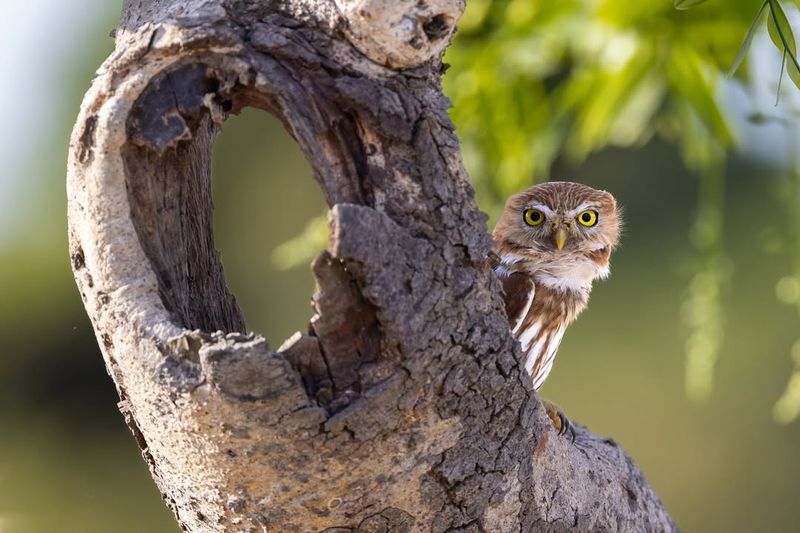
The Cactus Ferruginous Pygmy Owl is one of Arizona’s rarest owls and is a small but notable bird with distinctive behaviors. Measuring just 5.5 to 7.1 inches long with a wingspan of about 11.8 inches, this little owl is listed as a threatened subspecies.
It lives primarily in southeastern Arizona, especially in and around the Tucson area, where saguaro cacti and dense desert scrub provide ideal nesting spots.
Unlike most owls, this species is active during the day, making it slightly easier to spot if you know where to look. It often perches openly on cactus tops or low branches, scanning for lizards, large insects, and small birds.
Birdwatchers visiting southern Arizona sometimes hear its repetitive tooting call before ever seeing the bird itself.
Habitat loss has made this owl increasingly rare across Arizona. Conservation efforts are ongoing to protect the desert lowlands it depends on.
If you ever get the chance to see one in the wild, consider yourself very lucky, because sightings are considered rare and exciting by birdwatchers.
2. Northern Saw-Whet Owl With Tiny Fierce Eyes
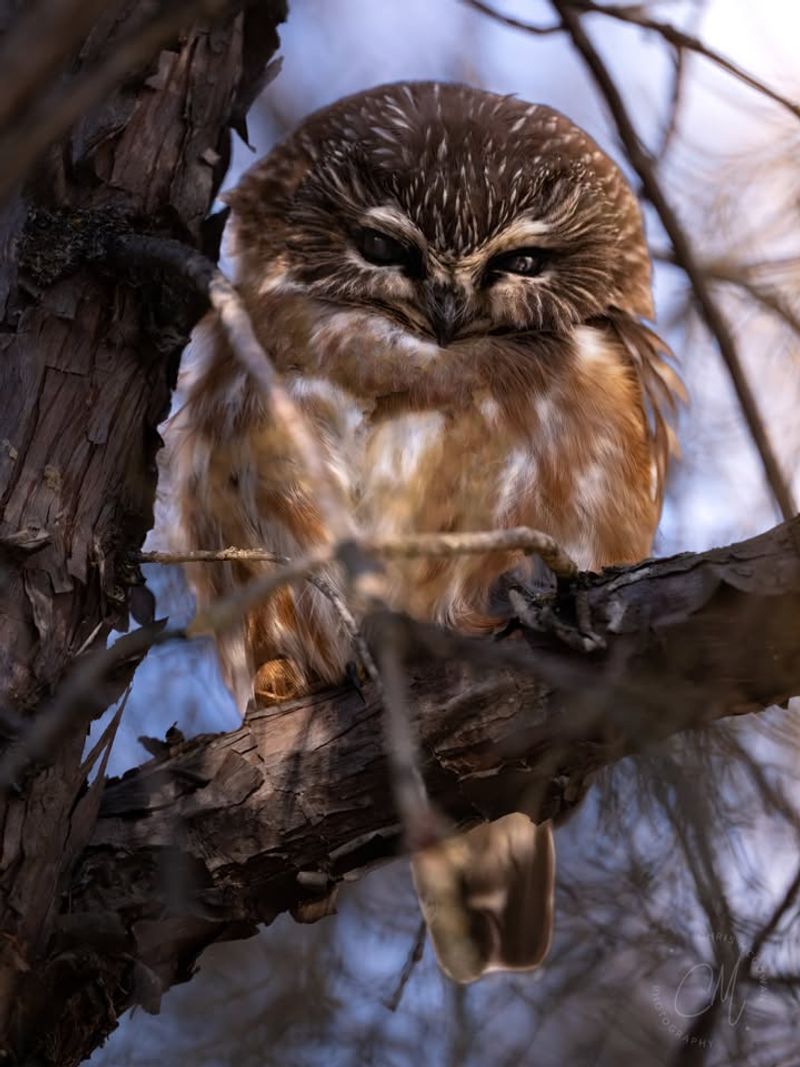
With oversized yellow eyes and a round, expressive face, the Northern Saw-whet Owl looks like something straight out of a storybook. This compact little bird measures between 6.7 and 8.7 inches in length, with a wingspan reaching up to 22 inches.
In Arizona, it maintains a year-round presence in the northern and eastern parts of the state, while also appearing as a winter visitor in other regions, except near the far southern border.
Saw-whet owls prefer dense conifer and mixed forests, where they roost quietly during the day and hunt at night. Deer mice make up a large portion of their diet, though they will also take small birds and insects when available.
Their name comes from one of their calls, which reportedly sounds like a saw being sharpened on a whetstone.
Spotting one in Arizona takes patience, since they tend to roost motionless and blend perfectly into tree bark. Checking known roost sites during daylight hours, especially in winter, gives birders the best chance of finding one tucked away on a low branch.
3. Short-Eared Owl Of Open Fields
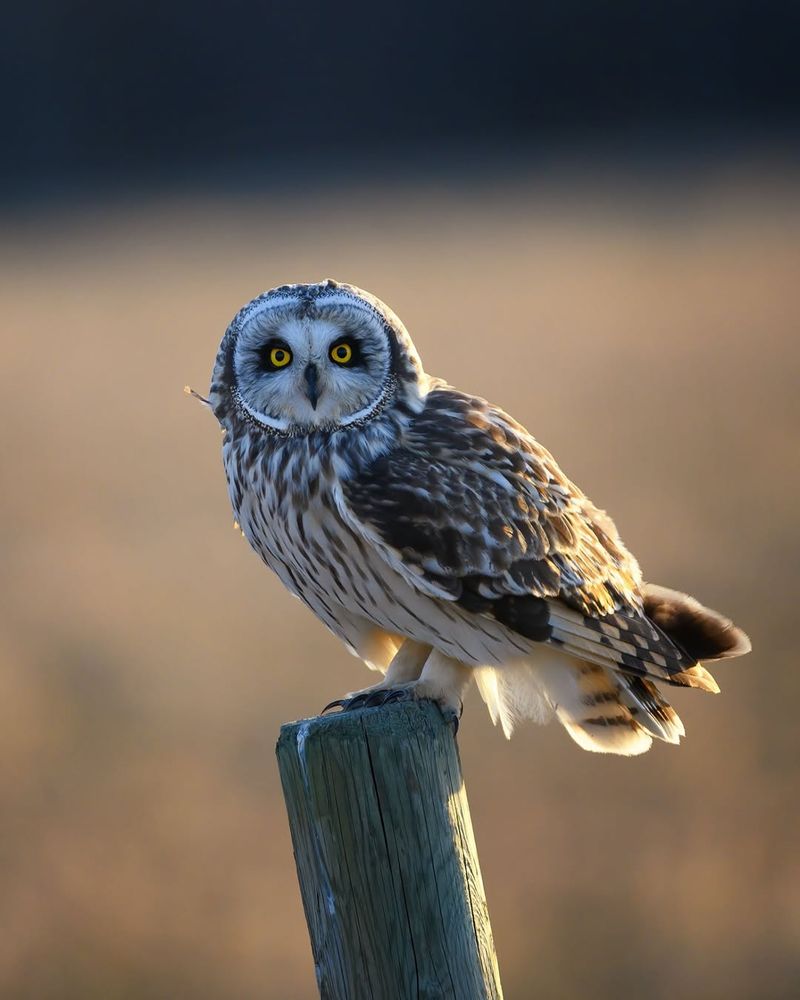
Few birds make a more dramatic entrance than the Short-eared Owl gliding silently over an open field at dusk. This medium-sized owl measures 13.4 to 16.9 inches long with a wingspan that can stretch up to 43 inches, giving it a buoyant, moth-like flight style that is instantly recognizable.
In Arizona, it shows up as a non-breeding winter visitor, arriving from northern breeding grounds when the weather turns cold.
Grasslands, agricultural fields, and desert flats are its preferred hunting grounds across the state. It hunts during low-light hours, coursing back and forth close to the ground in search of voles, mice, and other small mammals.
Unlike many owls, it often hunts in groups, especially in areas where prey is plentiful.
Short-eared Owls are one of the most widely distributed owls in the world, yet seeing one in Arizona is still a treat worth celebrating. Scanning open fields near Willcox or the Sulphur Springs Valley during winter months gives you the best shot at catching one in action.
Binoculars and patience are your best tools for this hunt.
4. Long-Eared Owl With Mysterious Gaze
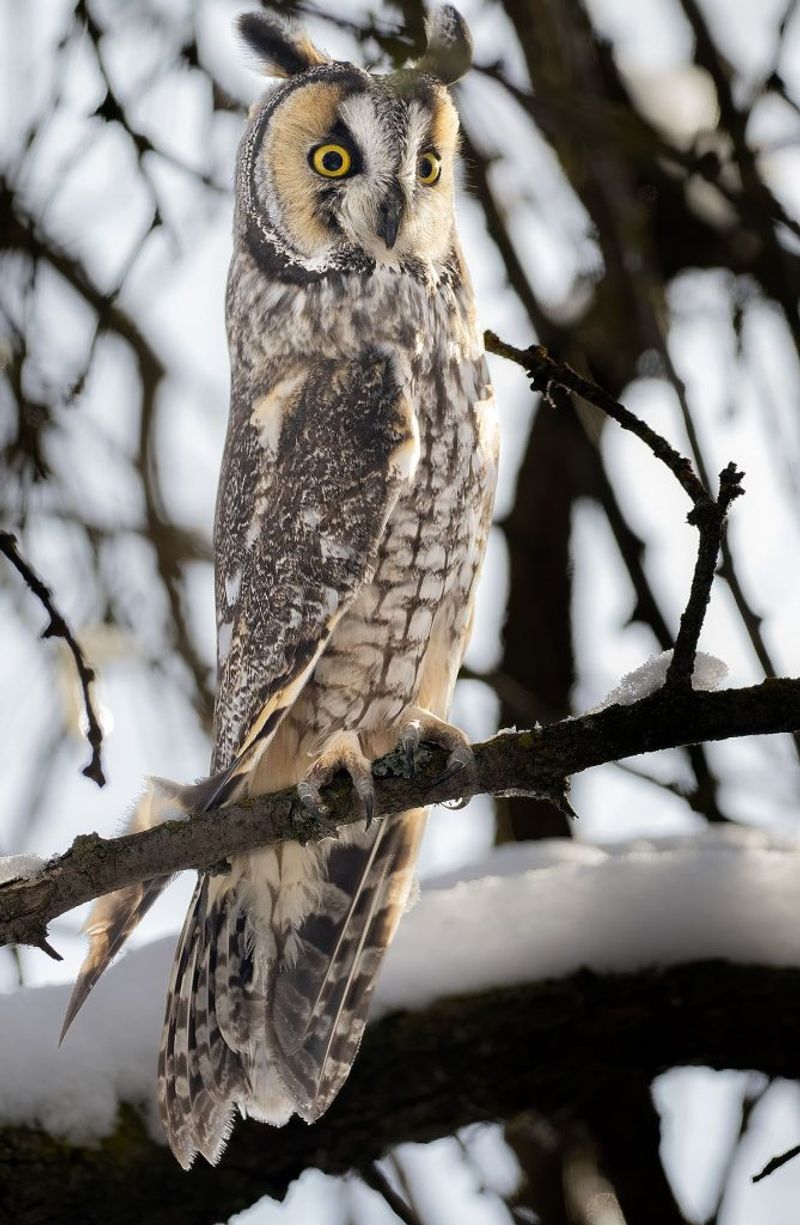
Tall, slender, and almost regal-looking, the Long-eared Owl is one of Arizona’s more secretive residents. Measuring 12.2 to 15.7 inches in length with a wingspan reaching up to 40 inches, it is noticeably larger than many other Arizona owls.
Long-eared Owls are year-round residents throughout most of the state, though the far southwestern corner only sees them during winter, as they do not breed there.
These owls love roosting in dense thickets of willows, tamarisks, or junipers, often pressing tightly against a trunk to blend in with the bark. They are communal roosters, meaning several birds will sometimes share a single roost tree during the winter months.
At night, they head out to hunt over open fields and meadows, relying on their exceptional hearing to locate prey beneath snow or leaf litter.
Voles and mice are their top food choices, and they are remarkably efficient hunters. Finding a communal roost in Arizona can feel like striking gold for birders.
Checking riparian corridors and dense shrub patches in the early morning or late afternoon often produces results during the colder months.
5. Mexican Spotted Owl Of Hidden Canyons
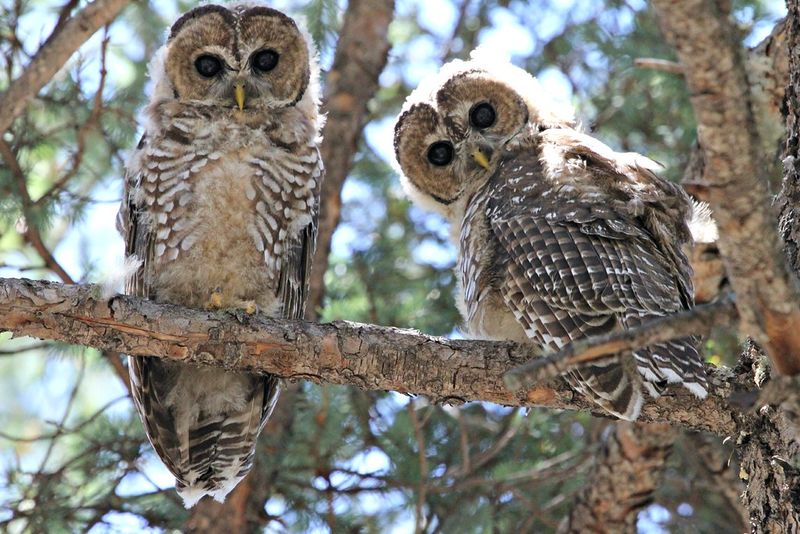
Mysterious and rarely seen, the Mexican Spotted Owl is one of Arizona’s most talked-about birds among serious wildlife enthusiasts. This medium-to-large owl measures 16 to 19 inches long, with a wingspan ranging from 24 to 45 inches.
It is classified as a threatened species, and its population has been declining due to habitat loss and changes in forest structure caused by fire suppression and logging.
Arizona’s steep canyons, old-growth forests, and rocky cliff areas provide critical habitat for this species. Places like the Chiricahua Mountains and the Pinaleno Mountains are known hotspots where lucky observers have reported sightings.
The owl tends to stay in shaded, cool microhabitats even during warmer months, which helps explain why canyon environments suit it so well.
Mexican Spotted Owls are shy and often respond to recorded calls during surveys, but disturbance should always be kept to a minimum. Researchers use carefully designed monitoring programs to track their numbers across the Southwest.
If you are visiting Arizona’s sky island mountain ranges, keep your eyes and ears open, because a brief encounter with this rare owl is something you will never forget.
6. Flammulated Owl With Secret Songs
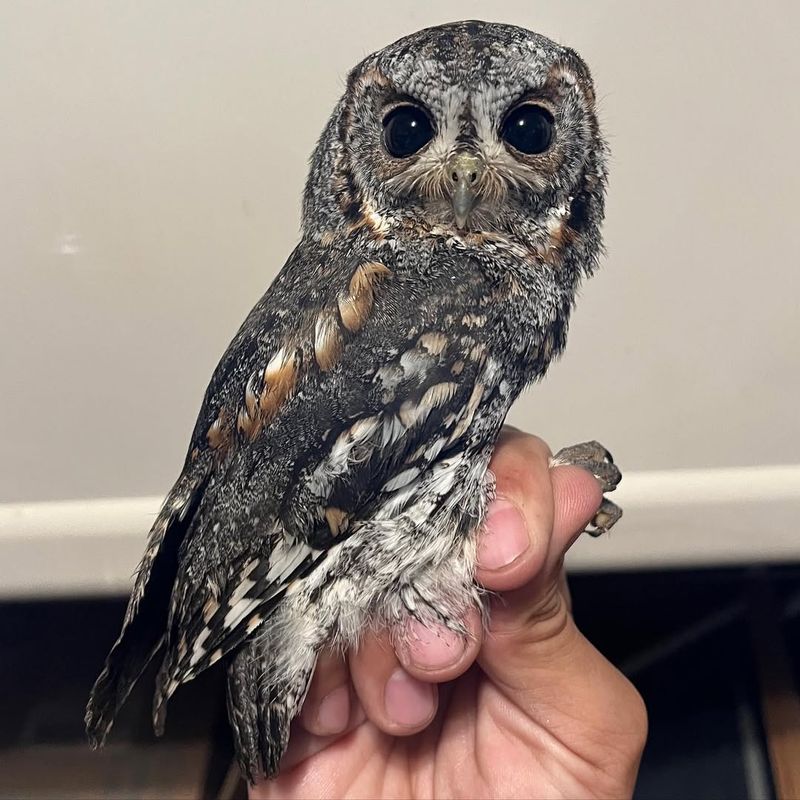
Barely bigger than a sparrow and almost impossible to spot during the day, the Flammulated Owl is one of Arizona’s most intriguing little birds. Measuring around 6 inches long with a wingspan of about 14 inches, this migratory species breeds in high-elevation pine forests across the state before heading south for the winter.
What really sets it apart from other small owls is its dark brown eyes, which are unique among North American screech-owl relatives.
Ponderosa pine forests in central and eastern Arizona are the best places to search for Flammulated Owls during the breeding season, roughly from May through August. They feed almost entirely on insects, especially moths and beetles, which they pluck from tree bark or catch in mid-air.
Their low, hooting call is surprisingly deep for such a small bird, making them sound much larger than they actually are.
Because they are strictly nocturnal and roost silently during the day, most people rarely notice Flammulated Owls in their forest campsites. Nighttime listening surveys near Flagstaff and the White Mountains have revealed that populations in Arizona are more robust than once thought, which is genuinely encouraging news.
7. Northern Pygmy Owl Of Forest Shadows
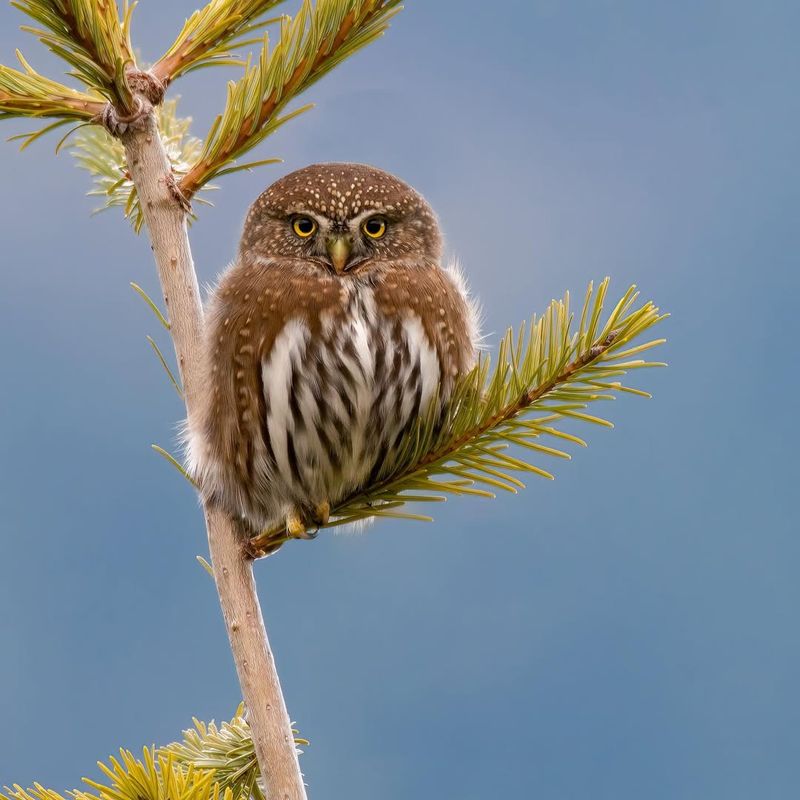
Do not let its small size fool you. The Northern Pygmy Owl is a bold, fearless predator that regularly takes on prey larger than itself.
Measuring just 6.3 to 7.1 inches in length, this compact owl is active during the day, which makes it one of the easier owls to observe in Arizona if you are in the right habitat. Eastern Arizona’s mountain forests, particularly in the White Mountains and the Mogollon Rim area, are prime territory for this species.
Songbirds, small mammals, and large insects are all fair game for this tenacious hunter. It has a pair of false eye spots on the back of its head, which helps deter attacks from birds that might try to mob it from behind.
Small birds actually react strongly to its presence, often gathering in noisy mobs to drive it away, which can help birdwatchers locate it.
Northern Pygmy Owls tend to perch near the tops of trees, flicking their tails in a distinctive side-to-side motion. Learning their repetitive tooting call is probably the single best trick for tracking one down in the dense forests of eastern Arizona during a morning hike.
8. Whiskered Screech-Owl With Bold Whiskers
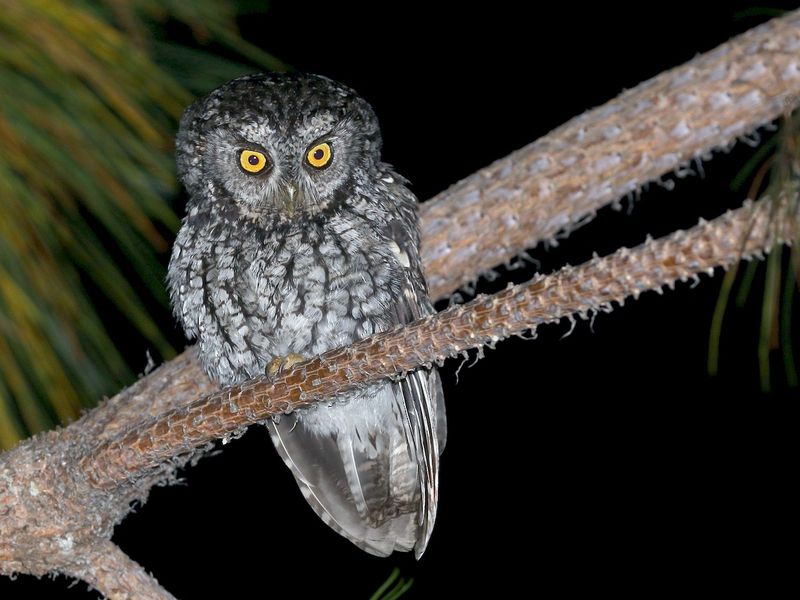
Tucked away in the oak woodlands and pine-oak canyons of far southeastern Arizona, the Whiskered Screech-Owl is a charming and somewhat secretive little bird. Measuring 6.5 to 7.9 inches long with a wingspan reaching nearly 19.7 inches, it looks very similar to the Western Screech-Owl but has a distinctly different call and slightly coarser feather pattern.
Its range in Arizona is limited to areas south and east of Tucson, particularly in places like Madera Canyon and the Huachuca Mountains.
This owl is strictly nocturnal and spends its days roosting inside tree cavities or pressed against bark where its streaked plumage provides excellent camouflage. At night, it hunts insects almost exclusively, including beetles, moths, and grasshoppers, which it catches with quick, agile flights through the forest understory.
Birders who visit southeastern Arizona specifically for sky island specialties often have the Whiskered Screech-Owl near the top of their wish list. Playing its unique Morse-code-like call after dark in the right habitat often produces a quick response.
Hearing it call back from the darkness of an Arizona canyon oak grove is a genuinely spine-tingling experience for any bird enthusiast.
9. Elf Owl With Mighty Personality
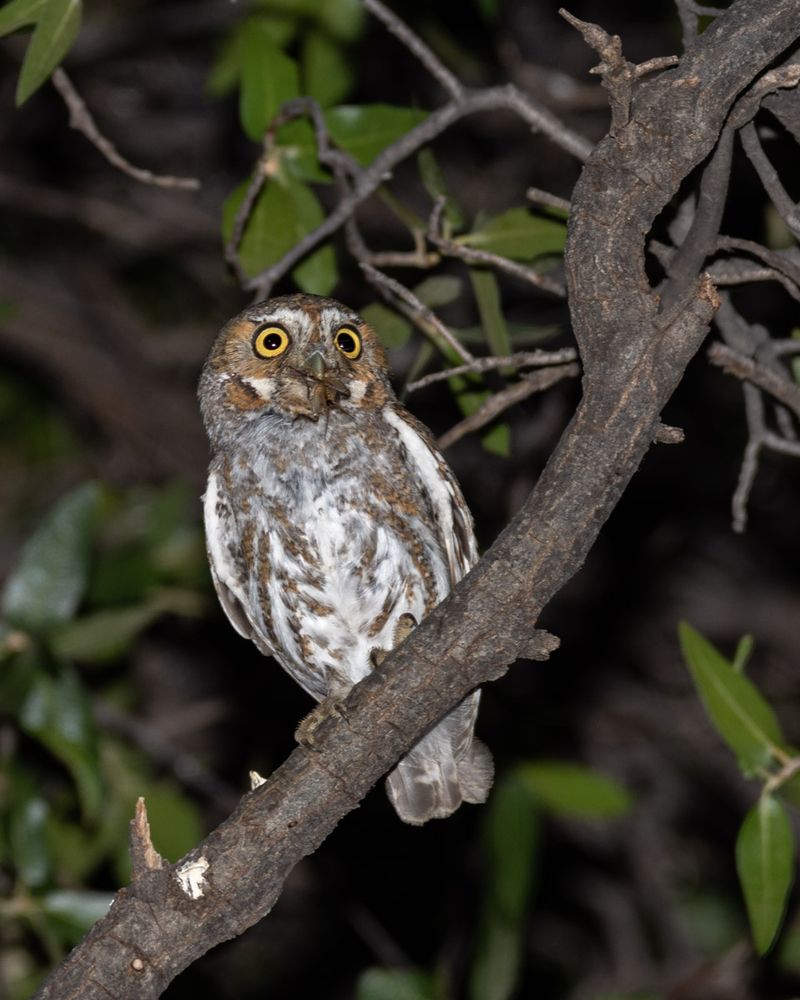
Meet the smallest owl in all of North America. The Elf Owl is a tiny powerhouse that weighs less than a golf ball, measuring just 4.9 to 5.7 inches long with a wingspan barely over 10 inches.
Despite its miniature size, this little bird travels all the way from Mexico each spring to breed in the southern half of Arizona, making it one of the state’s most beloved seasonal visitors.
Saguaro cacti are absolutely essential to Elf Owls, as they nest almost exclusively in old woodpecker holes carved into these giant cacti. You can also find them nesting in cavities in sycamores and cottonwoods along Arizona’s desert washes.
Their diet consists almost entirely of insects and scorpions, which they catch with impressive skill during their nightly hunting forays.
Listening for the Elf Owl’s high-pitched, puppy-like yipping call after dark in places like Saguaro National Park near Tucson can be a rewarding experience for birdwatchers. Spring and early summer evenings are the best time to hear them calling from their cactus roosts, often just after sunset when the desert finally begins to cool down.
10. Barn Owl Dominating Silent Nights
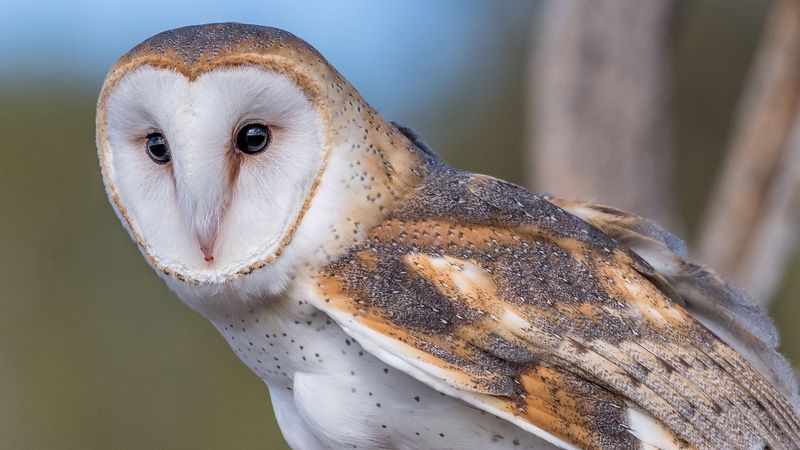
With a ghostly white heart-shaped face and silent, floating flight, the Barn Owl has inspired legends and folklore across cultures for thousands of years. In Arizona, it is a year-round resident found in a wide range of habitats, from agricultural valleys and desert grasslands to suburban neighborhoods with old buildings and open water sources nearby.
Barn Owls are among the most widespread owl species globally, and they adapt well to Arizona’s climate.
Rodents make up nearly the entire diet of a Barn Owl, and a single nesting pair can consume well over a thousand mice and voles in a year. Farmers across Arizona have long recognized the value of having Barn Owls around, and nest box programs have been used successfully to encourage them to settle near crop fields.
Their eerie, raspy screech is nothing like the classic hoot most people associate with owls, and first-time listeners are often startled by the sound. Barn Owls nest in barns, cliff ledges, palm trees, and even church steeples across Arizona.
Putting up a nest box in the right location is one of the most reliable ways to attract a nesting pair to your property.
11. Western Screech-Owl With Tiny Roars
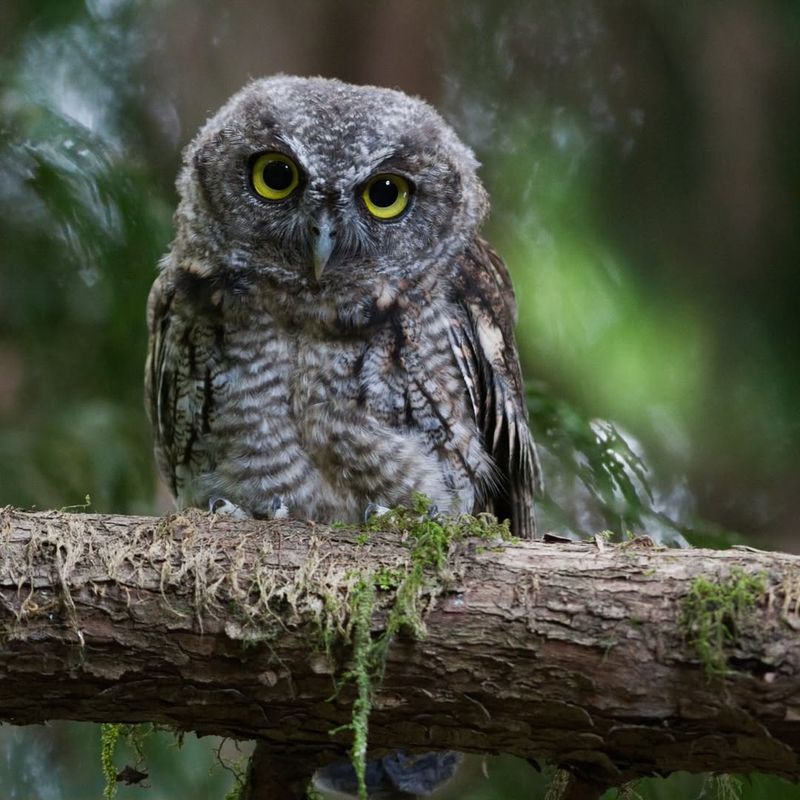
If there is one owl that truly belongs to the backyards and neighborhoods of Arizona, it is the Western Screech-Owl. This adaptable little bird is a year-round resident found throughout the entire state, measuring about 7.5 to 9.8 inches long with a wingspan that can reach up to 24 inches.
Its gray-brown streaked plumage makes it one of the most perfectly camouflaged birds in North America, able to disappear completely against tree bark.
Riparian woodlands, desert washes, suburban parks, and even backyard trees with nest boxes all serve as home for this highly adaptable owl. It hunts a wide variety of prey, including insects, small mammals, crayfish, earthworms, and small birds, making it one of the most flexible hunters in Arizona’s owl lineup.
The Western Screech-Owl’s call is a descending whinny or a series of evenly spaced hoots, both of which are commonly heard on warm Arizona evenings.
Attracting one to your yard is surprisingly straightforward. Placing a wooden nest box on a mature tree in a quiet corner of your property, especially near water, gives Western Screech-Owls exactly what they are looking for.
Some Arizona homeowners have reported seeing pairs take up residence near their homes.
12. Burrowing Owl With Ground-Level Adventures

Standing bolt upright on long legs outside their underground burrow, Burrowing Owls are one of the quirkiest and most entertaining birds you can find in Arizona. Unlike any other owl in the state, this species nests underground, typically taking over old prairie dog or ground squirrel burrows rather than digging their own.
Open grasslands, desert flats, and even golf course rough areas across Arizona serve as home for these ground-dwelling birds.
Burrowing Owls are active during the day and at dusk, which makes them far easier to observe than most other owl species. They feed on a mix of large insects, small mammals, lizards, and even small birds, depending on what is most available in their territory.
During the breeding season, males can often be seen standing guard on a fence post or mound of dirt near the burrow entrance while the female tends to the eggs below.
Some Arizona populations migrate south for winter, while others remain year-round in warmer parts of the state. Open areas around Tucson, Phoenix, and the agricultural fields of the Sulphur Springs Valley are reliable spots for finding these charming owls.
Watching a family group interact near their burrow is one of the most joyful wildlife experiences Arizona can offer.
13. Great Horned Owl Ruling The Night Sky
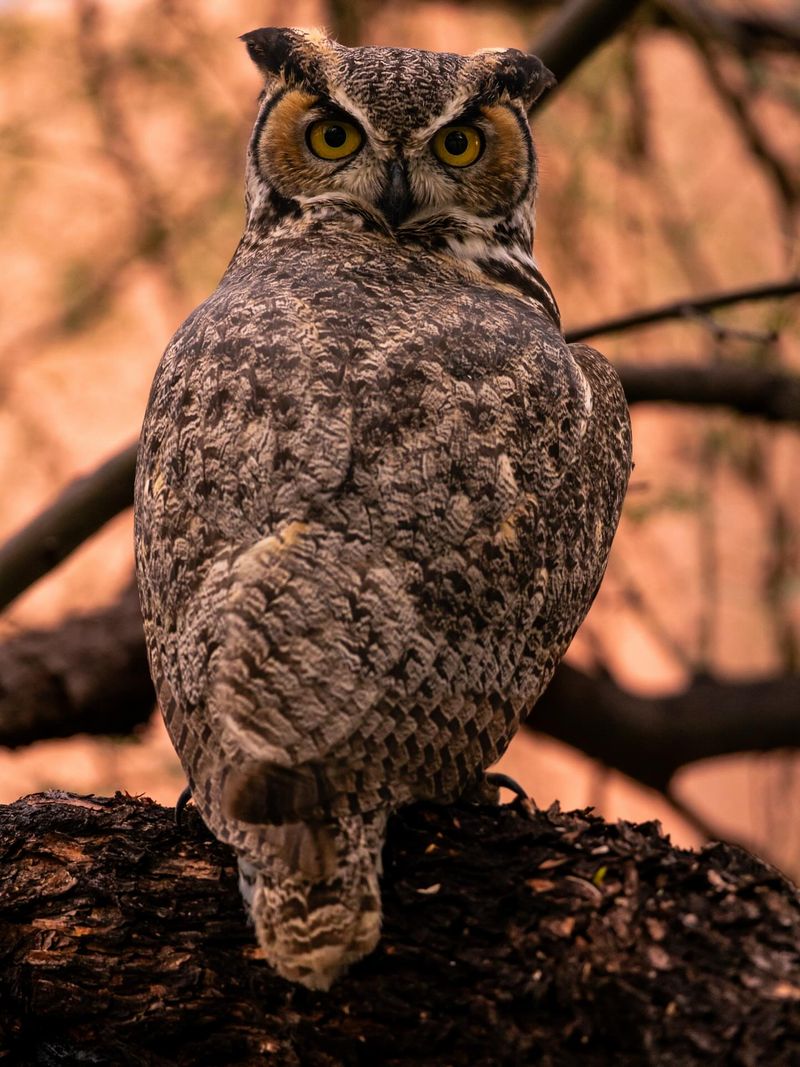
Powerful, adaptable, and unmistakably impressive, the Great Horned Owl reigns as the largest and most common owl in Arizona. Measuring anywhere from 16.9 to 25.2 inches in length with a wingspan that can reach a whopping 60 inches, this bird commands attention wherever it appears.
Its iconic silhouette, complete with prominent ear tufts and piercing yellow eyes, is recognized by bird lovers and casual observers alike across the state.
Great Horned Owls are found in virtually every habitat Arizona has to offer, from the Sonoran Desert lowlands and ponderosa pine forests to urban parks and suburban neighborhoods. They are among the earliest nesting birds in North America, often beginning to incubate eggs in January while snow still covers the ground at higher elevations.
Their deep, resonant hooting is one of the most familiar nighttime sounds across Arizona.
Rabbits, skunks, geese, and even other raptors are all on the menu for this apex predator. Great Horned Owls will nest in old hawk nests, cliff ledges, and large tree cavities.
Spending an evening outdoors in Arizona, whether in the desert or the mountains, may give you an opportunity to hear that deep, booming call.