10 Drought-Tolerant Plants That Grow Well In Colorado
Gardening in Colorado can feel like playing a tough hand with the odds stacked against you.
One week brings blazing sun and dry winds, the next drops a surprise cold snap, and water always seems in short supply.
Many plants wave the white flag early, leaving gardeners chasing hoses and crossing their fingers.
That is where drought tolerant plants earn their stripes.
These plants know how to roll with the punches.
Built to handle dry soil, bright sun, and big temperature swings, they keep growing when others burn out. Instead of constant watering and babying, they settle in, dig deep, and get on with the job.
For Colorado gardeners, that kind of resilience is worth its weight in gold.
Choosing the right drought tolerant plants is not about settling for dull or lifeless gardens.
Many offer bold color, texture, and movement, all while sipping water instead of guzzling it.
From perennials that come back strong each year to shrubs that anchor a landscape, smart plant choices can turn dry conditions into a winning hand.
With the right mix, Colorado gardens can thrive, not just survive, even when rain clouds stay scarce.
1. Blue Grama Grass
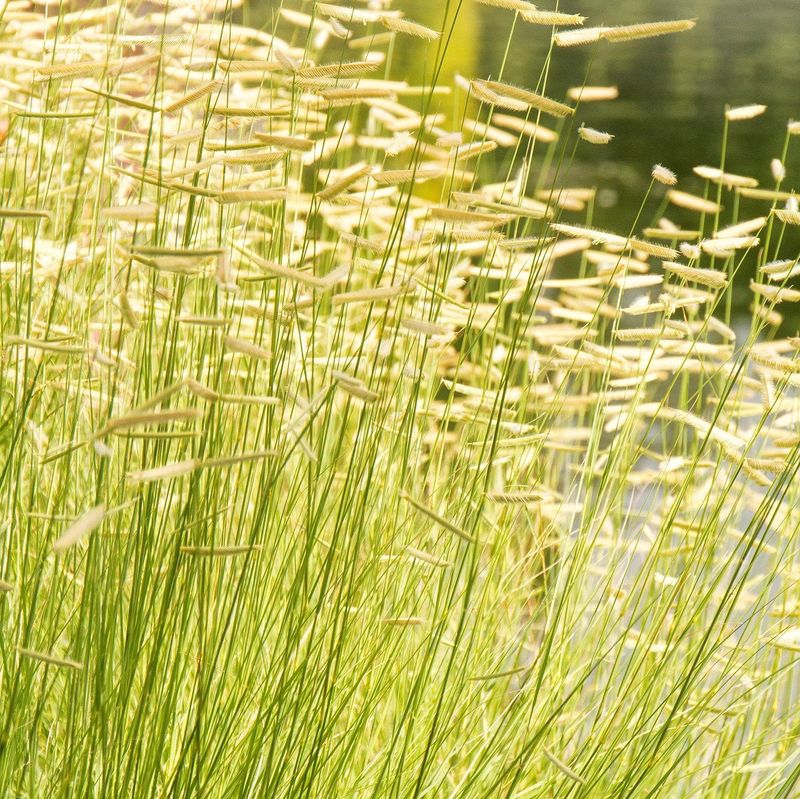
Native to the Colorado plains, Blue Grama Grass brings an authentic prairie feel to any landscape.
This warm-season grass grows naturally across much of the state and requires almost no supplemental watering once its roots take hold.
The distinctive seed heads curve horizontally like tiny eyelashes, creating a unique visual texture that sets it apart from typical lawn grasses.
Homeowners appreciate how this grass stays relatively short, typically reaching only 12 to 18 inches tall.
It forms dense clumps that gradually spread to create a naturalized lawn or meadow appearance.
Unlike traditional turf grasses that demand frequent mowing and irrigation, Blue Grama adapts perfectly to Colorado’s dry summers and cold winters.
The golden-tan color it develops in fall adds seasonal interest to landscapes throughout the state.
Many Colorado gardeners use it as a low-maintenance alternative to water-hungry bluegrass lawns.
It provides excellent erosion control on slopes and thrives in full sun with minimal care.
Wildlife benefits from Blue Grama too, as it offers food and shelter for birds and small mammals.
This grass proves that beautiful landscapes in Colorado don’t require constant attention or excessive water.
Its deep roots access moisture far below the surface, making it remarkably resilient during drought periods.
2. Penstemon
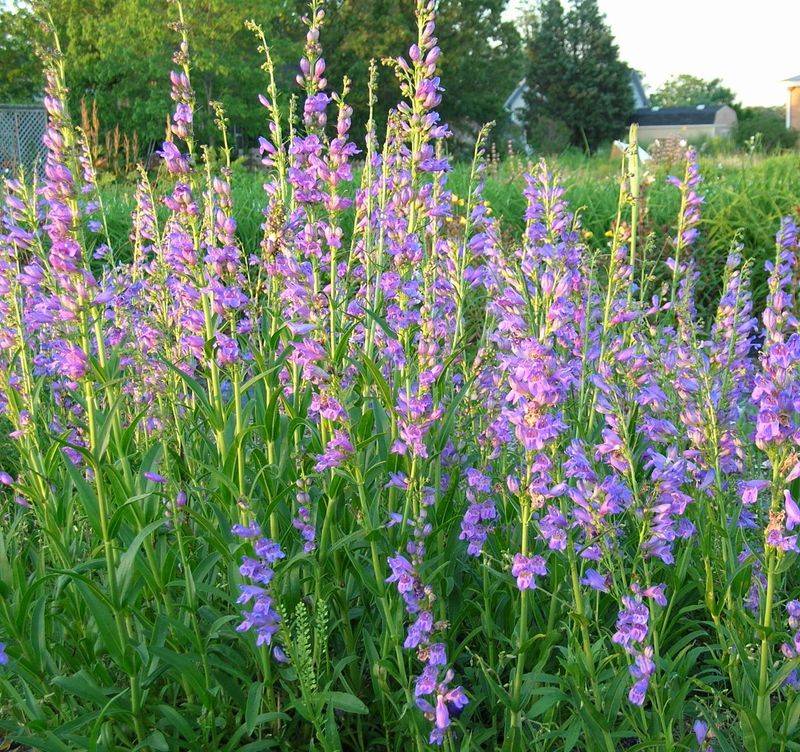
Bursting with tubular blooms in shades of pink, purple, red, and white, Penstemon captures attention from late spring through summer.
Colorado boasts numerous native Penstemon species that have adapted perfectly to the state’s challenging growing conditions.
These perennials attract hummingbirds and butterflies, transforming gardens into lively habitats for pollinators.
Gardeners love Penstemon because it delivers spectacular color without demanding much water.
The bell-shaped flowers cluster along tall stems that rise above narrow, often evergreen foliage.
Different varieties bloom at various times, allowing you to create extended color displays throughout the growing season in Colorado landscapes.
Rocky Mountain Penstemon and Firecracker Penstemon rank among the most popular choices for Colorado gardens.
Both species handle full sun, poor soil, and dry conditions with remarkable ease.
They establish quickly and return reliably year after year, expanding slowly to fill garden spaces with vibrant blooms.
Once established, Penstemon needs watering only during extremely dry periods.
The plants develop deep taproots that reach moisture unavailable to shallow-rooted species.
They resist most pests and diseases, making them truly low-maintenance additions to Colorado gardens.
Deadheading spent flowers encourages additional blooming and keeps plants looking tidy throughout summer.
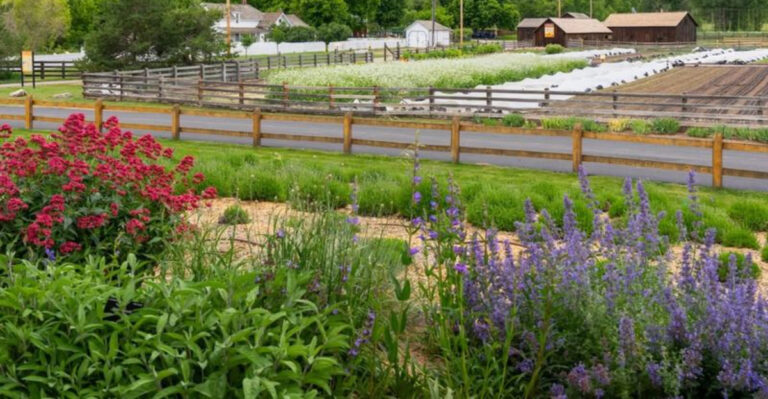
3. Russian Sage
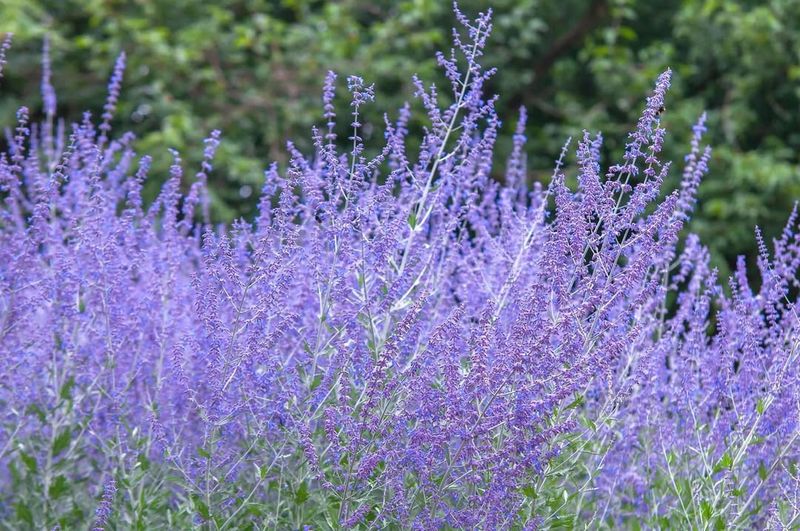
With airy clouds of lavender-blue flowers and silvery foliage, Russian Sage creates a soft, romantic atmosphere in Colorado gardens.
This woody perennial grows into a substantial shrub, typically reaching three to four feet tall and equally wide.
The fine-textured leaves release a pleasant fragrance when brushed, adding a sensory dimension to landscape designs.
Colorado’s intense sunlight and dry air suit Russian Sage perfectly.
It blooms prolifically from midsummer into fall, providing color when many other plants have finished their show.
The silvery stems remain attractive even in winter, offering structure and interest to dormant gardens across the state.
Bees and butterflies visit Russian Sage constantly during its long blooming period.
Deer typically avoid it due to its aromatic foliage, making it an excellent choice for Colorado properties where wildlife browsing presents challenges.
The plant tolerates poor soil, reflected heat from pavement or walls, and neglect better than most ornamentals.
Minimal pruning in early spring keeps Russian Sage vigorous and shapely.
Cut stems back to about 12 inches to encourage bushy growth and abundant flowering.
Once established in Colorado gardens, this plant survives on natural rainfall alone in most years.
Its drought tolerance improves significantly after the first growing season when roots have spread deeply into the soil.
4. Blanket Flower
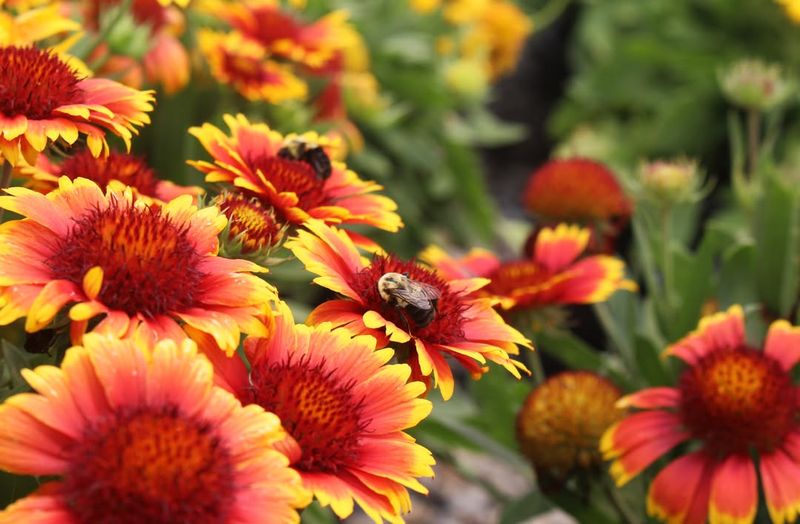
Cheerful and bright, Blanket Flower brings warmth to Colorado gardens with daisy-like blooms in fiery combinations of red, orange, and yellow.
This native wildflower blooms continuously from early summer until frost, creating months of non-stop color.
The flowers resemble colorful blankets, which explains the common name and makes them instantly recognizable.
Gardeners across Colorado appreciate how Blanket Flower handles heat, wind, and drought without missing a beat.
It grows quickly from seed or transplants, establishing easily in sunny locations with well-drained soil.
The plants typically reach 12 to 18 inches tall, forming neat clumps that work well in borders, rock gardens, or wildflower meadows.
Butterflies flock to Blanket Flower throughout its extended blooming season.
Deadheading spent blooms encourages even more flowers, though many gardeners leave some seed heads for birds to enjoy in fall.
The plant self-sows moderately, filling in gaps and naturalizing over time without becoming invasive in Colorado landscapes.
Unlike many perennials that struggle in Colorado’s alkaline soil, Blanket Flower actually prefers these conditions.
It needs minimal fertilizer and thrives on neglect once roots have established.
Overwatering causes more problems than underwatering, making this plant ideal for water-wise gardens throughout the state.
Its long-lasting cut flowers also bring Colorado’s summer beauty indoors.
5. Rabbitbrush
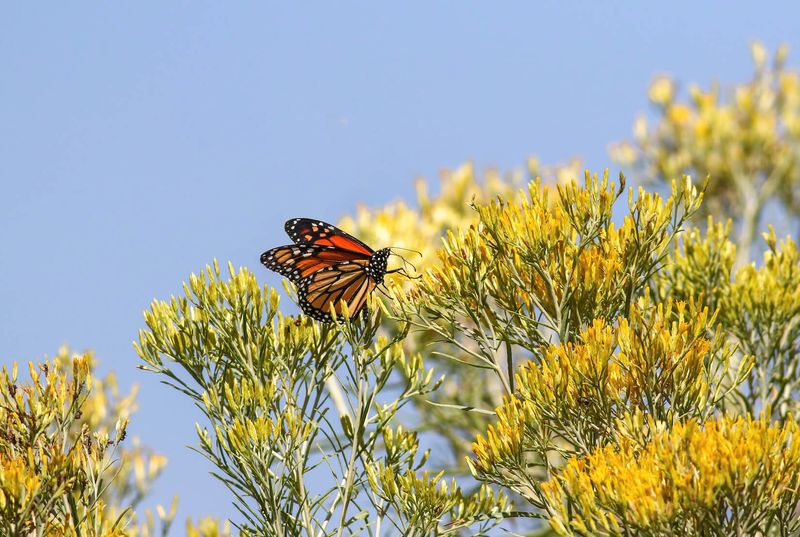
Golden explosions of late-season color make Rabbitbrush a standout in Colorado’s autumn landscape.
When most plants are winding down for winter, this native shrub bursts into brilliant yellow bloom.
The tiny flowers cluster densely at branch tips, creating a spectacular display that lights up roadsides and gardens across the state.
Rabbitbrush grows naturally throughout Colorado, from plains to mountain foothills.
It handles extreme conditions including intense sun, poor soil, cold winters, and minimal water.
The gray-green foliage provides subtle color all season, then the plant transforms into a golden beacon during September and October.
Pollinators treasure Rabbitbrush because it blooms when few other nectar sources remain available.
Bees, butterflies, and beneficial insects visit constantly during its flowering period.
The shrub typically reaches three to five feet tall and wide, making it suitable for hedges, screens, or standalone specimens in Colorado landscapes.
Pruning Rabbitbrush in early spring maintains a compact shape and encourages vigorous growth.
The plant tolerates shearing if you need a more formal appearance, though its natural rounded form fits beautifully into informal designs.
Once established, it survives entirely on natural precipitation in most Colorado locations.
The aromatic foliage deters deer browsing, and the plant resists common pests and diseases that trouble less adapted species.
6. Yucca
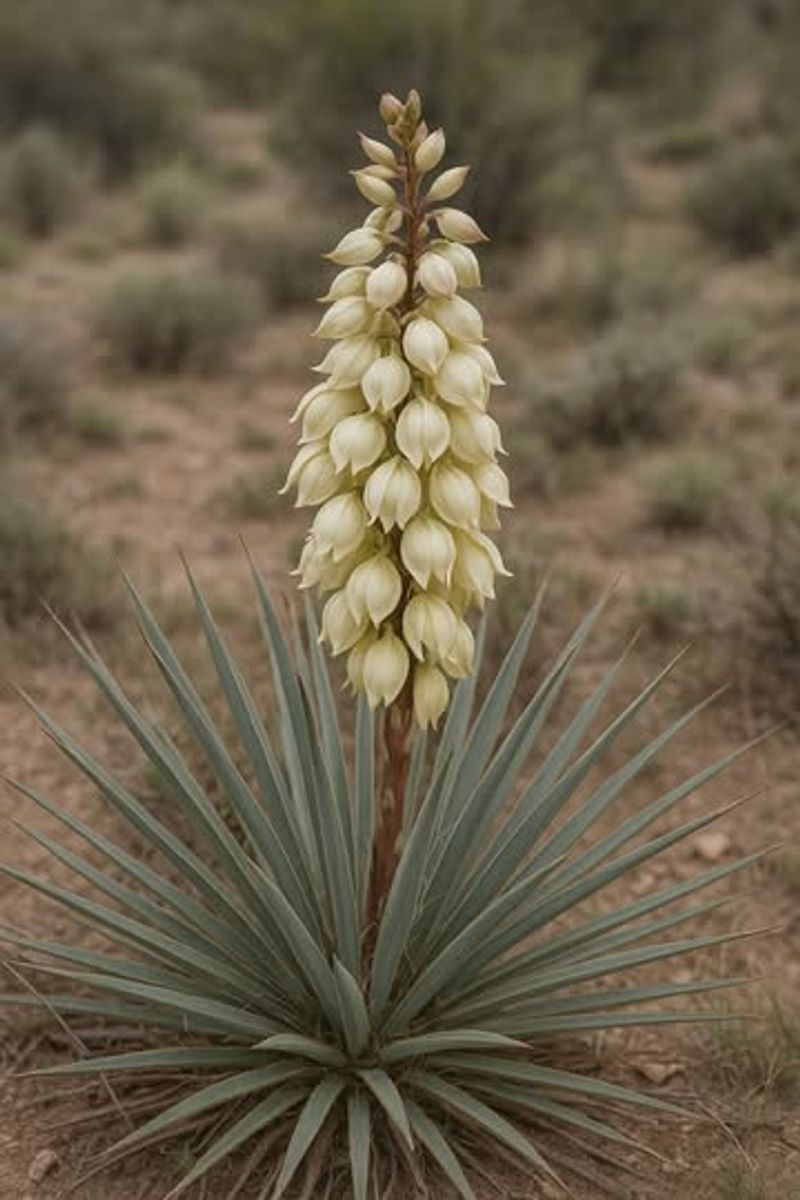
Architectural and bold, Yucca adds dramatic structure to Colorado landscapes year-round.
The sword-like evergreen leaves form striking rosettes that command attention even when the plant isn’t blooming.
In early summer, tall spikes of creamy white, bell-shaped flowers rise several feet above the foliage, creating stunning vertical accents.
Several Yucca species thrive in Colorado’s climate, with Yucca glauca being particularly well-adapted to the state’s conditions.
These plants evolved in harsh desert environments, making Colorado’s dry climate feel almost luxurious by comparison.
They require essentially no supplemental water once established and tolerate neglect better than nearly any other ornamental.
The spiky foliage provides textural contrast against softer plants in mixed borders.
Yucca works exceptionally well in rock gardens, southwestern-style landscapes, and modern minimalist designs throughout Colorado.
Deer avoid the sharp-tipped leaves, solving browsing problems that plague many other ornamentals in the state.
Yucca flowers attract specialized moths that pollinate them in a fascinating ecological relationship.
The spent flower stalks can be removed for tidiness or left standing for architectural winter interest.
These plants grow slowly but live for decades, becoming permanent landscape features.
They handle reflected heat from buildings, thrive in poor soil, and never complain about Colorado’s temperature extremes or intense sunlight.
7. Pineleaf Penstemon
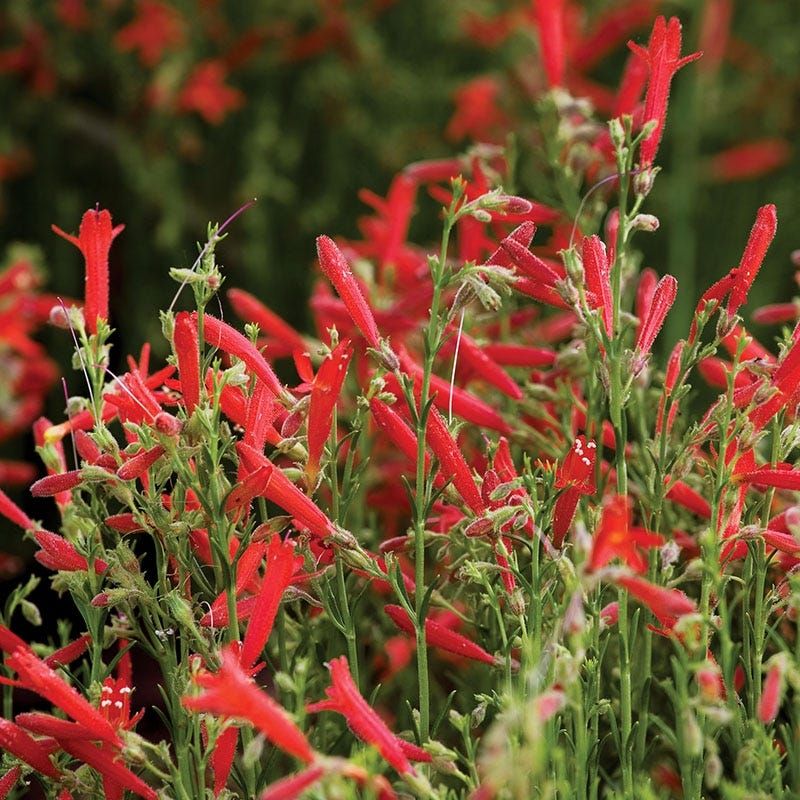
Brilliant orange-red flowers make Pineleaf Penstemon one of Colorado’s most eye-catching native plants.
Unlike its taller Penstemon relatives, this species stays low to the ground, typically reaching only 12 inches tall.
The narrow, needle-like evergreen leaves resemble pine needles, giving the plant its common name and providing year-round texture in Colorado gardens.
This groundcover spreads slowly to form dense mats that suppress weeds and stabilize slopes.
Hummingbirds adore the tubular flowers that bloom profusely in late spring and early summer.
The vibrant color stands out beautifully against Colorado’s often neutral-toned landscapes, creating focal points that draw the eye across garden spaces.
Pineleaf Penstemon grows naturally in Colorado’s foothills and mountain regions.
It handles rocky, poor soil with ease and actually performs better without fertilizer or rich amendments.
The plant thrives in full sun and requires excellent drainage, making it perfect for rock gardens, slopes, or raised beds throughout the state.
Once established, this tough native needs water only during extended drought periods.
It resists deer browsing and tolerates cold winters without protection.
The evergreen foliage provides color even under snow, and the plant bounces back quickly each spring.
Many Colorado gardeners use Pineleaf Penstemon as a colorful alternative to traditional groundcovers that demand far more water and maintenance.
8. Apache Plume
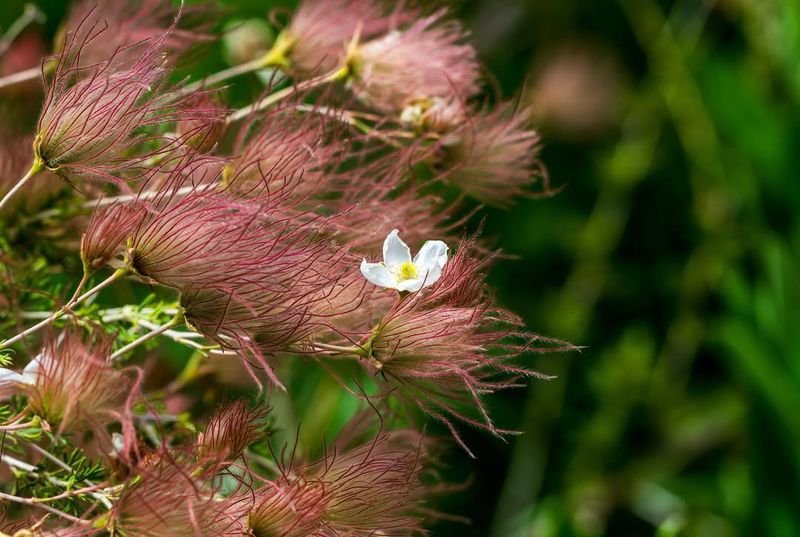
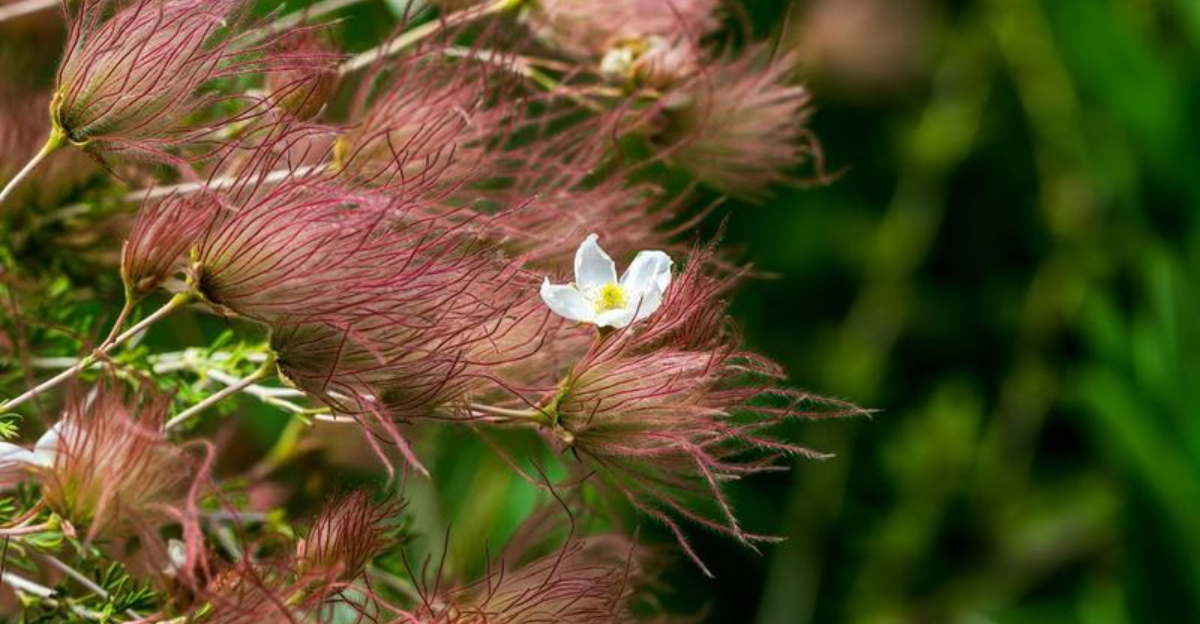
Delicate white flowers give way to showy pink feathery seed plumes on Apache Plume, creating a two-season display.
This native shrub blooms from late spring through summer, producing rose-like white flowers with prominent yellow stamens.
After flowering, the seeds develop wispy pink plumes that persist for weeks, giving the plant a soft, romantic appearance.
Apache Plume grows naturally in Colorado’s lower elevations, particularly in the southern and western parts of the state.
The shrub typically reaches four to six feet tall with an equal spread, forming a loose, open shape.
Its small evergreen leaves remain attractive year-round, and the peeling bark adds winter interest to dormant landscapes.
Butterflies visit the flowers regularly, while birds appreciate the seeds and the shelter the shrub provides.
Apache Plume tolerates alkaline soil, reflected heat, and extreme drought once established in Colorado gardens.
It handles full sun exposure without stress and actually performs poorly with too much water or shade.
Pruning Apache Plume in early spring removes dry wood and maintains an attractive shape.
The plant works beautifully in informal hedges, mixed borders, or as a specimen shrub in water-wise Colorado landscapes.
It combines well with other drought-tolerant natives, creating cohesive designs that reflect the state’s natural plant communities.
Deer typically leave Apache Plume alone, making it reliable even in areas with heavy wildlife pressure.
9. Sedum
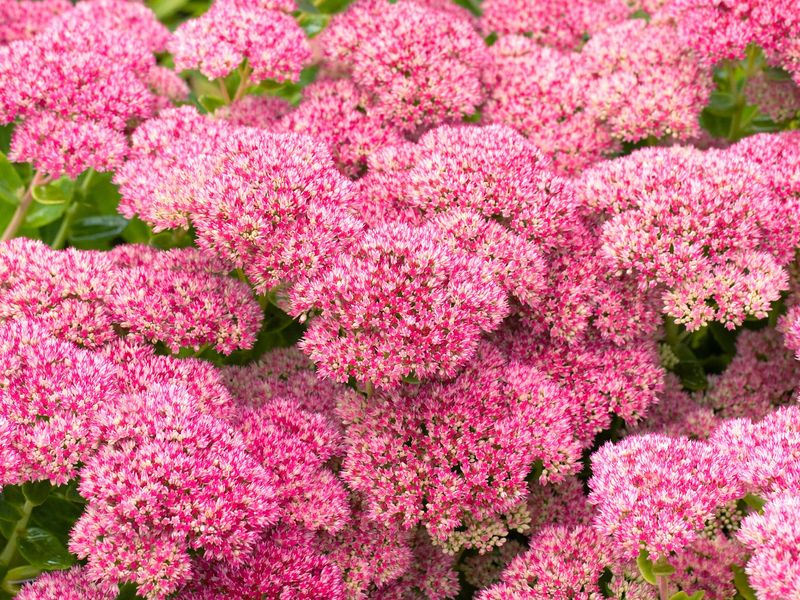
Fleshy, water-storing leaves make Sedum one of the most drought-tolerant plant groups available to Colorado gardeners.
These succulents come in countless varieties, from low-growing groundcovers to upright border plants.
Most produce clusters of star-shaped flowers in shades of pink, red, yellow, or white that attract butterflies and bees throughout the blooming season.
Colorado’s dry climate and intense sun create ideal conditions for Sedum cultivation.
The plants establish quickly and spread to fill spaces between rocks, cascade over walls, or carpet sunny slopes.
Many varieties offer colorful foliage in shades of green, blue-gray, burgundy, or variegated patterns that provide interest even when flowers aren’t present.
Popular choices for Colorado include Autumn Joy Sedum, which produces large pink flower heads in late summer, and various creeping Sedums perfect for rock gardens.
These plants require virtually no maintenance once established and actually prefer neglect to excessive care.
Overwatering causes more problems than underwatering with these succulents.
Sedum handles Colorado’s temperature extremes beautifully, remaining evergreen or semi-evergreen through winter in many cases.
The plants tolerate poor soil, reflected heat, and foot traffic better than traditional groundcovers.
They propagate easily from stem cuttings, allowing you to expand plantings throughout your landscape.
Deer rarely bother Sedum, and the plants resist most pests and diseases common in Colorado gardens.
10. Threadleaf Coreopsis
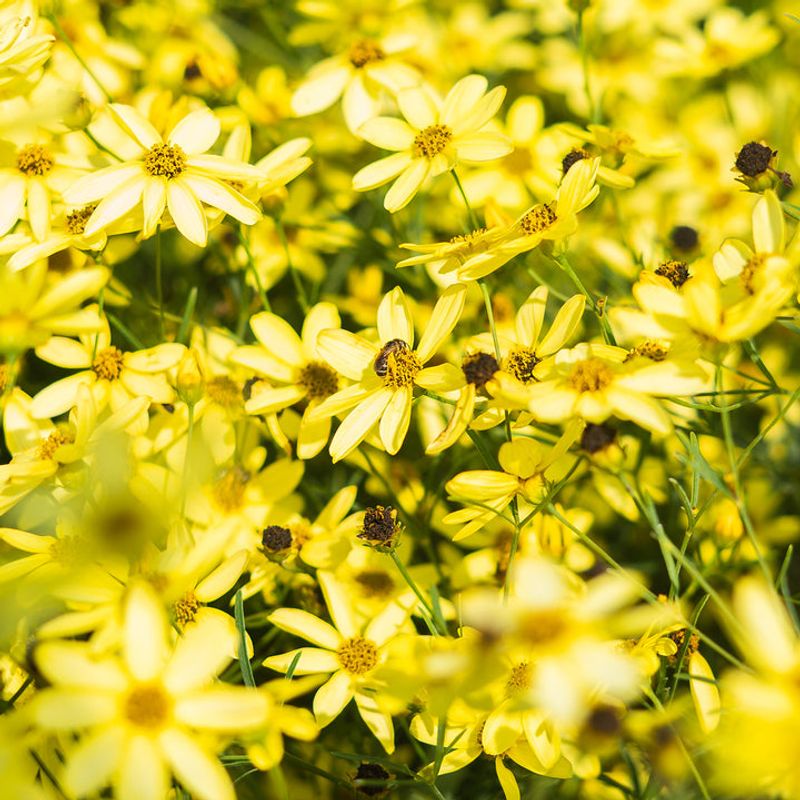
Sunshine-yellow flowers cover Threadleaf Coreopsis from early summer through fall, creating cheerful displays in Colorado gardens.
The fine, thread-like foliage gives this perennial a delicate, airy appearance that contrasts beautifully with bolder-leaved plants.
Despite its delicate looks, this plant handles tough conditions with remarkable resilience.
Threadleaf Coreopsis forms neat mounds typically 12 to 18 inches tall and wide.
The abundant flowers attract butterflies constantly during the long blooming season.
Deadheading encourages continuous flowering, though even without this maintenance, the plant produces waves of blooms throughout summer in Colorado’s climate.
This perennial adapts well to Colorado’s alkaline soil and handles heat, wind, and drought once established.
It grows quickly from transplants and fills in garden spaces rapidly.
The fine-textured foliage provides a soft backdrop for other plants even when Coreopsis isn’t blooming.
Many Colorado gardeners use it as an edging plant or incorporate it into mixed perennial borders.
Threadleaf Coreopsis needs minimal water after its first season in the ground.
It prefers full sun and well-drained soil but tolerates less-than-perfect conditions better than many ornamentals.
The plant rarely suffers from pest or disease problems in Colorado’s dry climate.
Dividing clumps every few years maintains vigor and provides new plants to expand your garden or share with friends.