8 Early Pest Signs Arizona Gardeners Should Watch For In April
April in Arizona can feel like your garden suddenly comes alive. Bright sun, warming soil, and new spring growth set the stage for vibrant blooms but they also signal a surge in pest activity.
Even experienced gardeners can be caught off guard as insects and mites move quickly onto tender leaves, flowers, and stems.
In the desert heat, some populations can explode in just days, causing damage before you even notice.
Spotting these early warning signs now not only helps protect your plants it also reduces the need for chemical sprays and keeps hummingbirds, bees, and other beneficial insects thriving in your garden.
1. Leaves Turning Yellow Or Pale Could Mean Tiny Feeders Are Present
Walking through your Arizona garden on a warm April morning and spotting leaves that have faded from healthy green to a washed-out yellow is one of the earliest clues that something small and hungry has moved in.
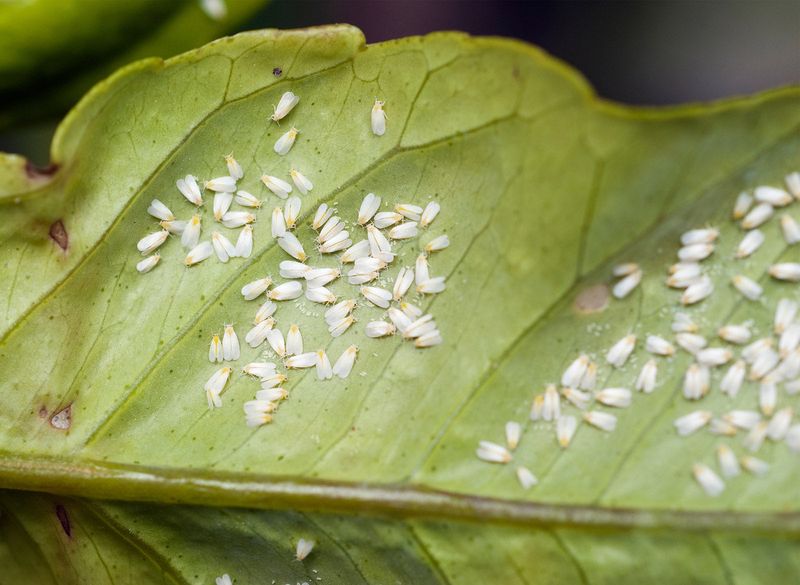
Sap-sucking pests like whiteflies, spider mites, leafhoppers, and scale insects pierce plant tissue and remove chlorophyll, causing that telltale yellowing or pale, bleached look.
The damage often starts on the oldest or lowest leaves and works its way upward.
In the low desert, including the Phoenix metro area, warming temperatures in April create near-ideal conditions for these feeders to multiply fast.
Gardeners in higher elevations like Prescott may notice the same signs a few weeks later as their temperatures rise more gradually.
Either way, catching discoloration early gives you a real advantage.
Start by flipping leaves over to look for tiny insects, eggs, or sticky residue on the underside. A magnifying glass helps a lot.
Once you confirm the pest, a targeted spray of insecticidal soap or neem oil applied in the early morning can reduce populations without harming pollinators like bees.
Encouraging natural predators such as ladybugs and lacewings by planting companion flowers like alyssum or dill is a smart, low-impact strategy worth adding to your April routine.
2. New Growth Curling Or Twisting May Signal Aphids Or Thrips
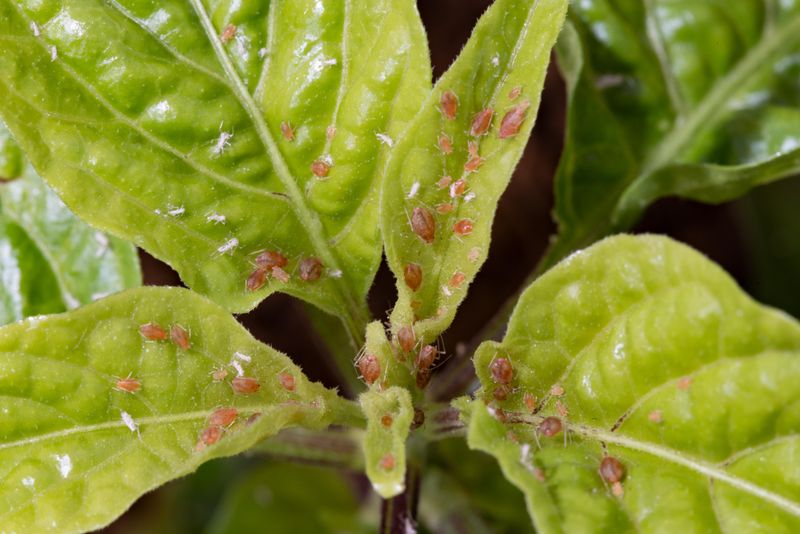
Fresh spring growth in an Arizona garden is supposed to look bright and upright, so when new leaves start curling inward, puckering, or twisting in odd directions, that is a strong sign that aphids or thrips have already found your plants.
Both pests are incredibly small, but their feeding habits cause big structural changes in tender new tissue.
Aphids cluster on soft growth and inject saliva that disrupts normal cell development, while thrips rasp through leaf surfaces and cause similar distortion.
Roses, peppers, citrus, and many flowering annuals popular in Arizona landscapes are especially attractive to both pests in spring.
In the Phoenix area, aphid populations can explode in April before natural predator populations have had time to build up.
Thrips are also active during dry, warm conditions, which describes most of Arizona in April pretty well.
Checking new growth every two or three days is one of the most effective habits you can build during spring. A strong stream of water directed at affected stems can dislodge aphids without any chemicals at all.
For thrips, sticky blue or yellow traps placed near plants help you monitor population levels before deciding on treatment.
Avoid broad-spectrum insecticides during peak pollinator hours since these can harm bees and other beneficial insects visiting your garden.
3. Sticky Leaf Surfaces Often Indicate Hidden Pests Producing Honeydew
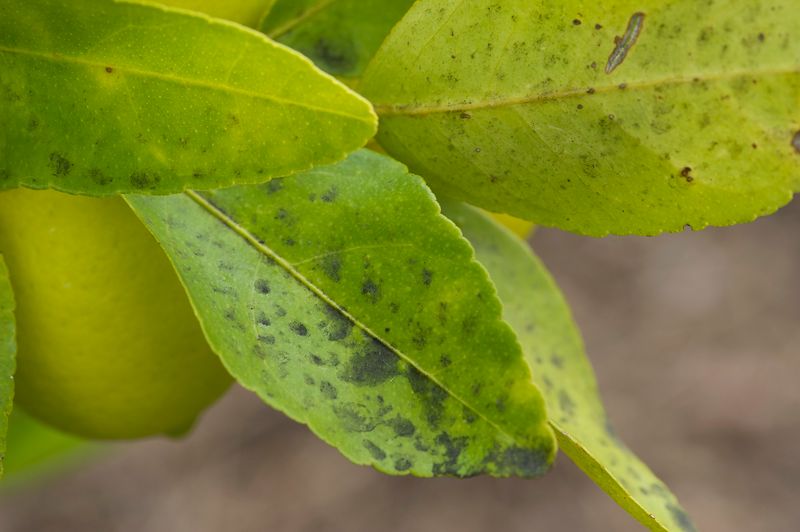
Running your fingers across a leaf and feeling an unexpected stickiness is not something most gardeners expect, but in April across Arizona, it is a fairly common discovery.
That sticky coating is honeydew, a sugary waste product excreted by sap-sucking insects like aphids, whiteflies, mealybugs, and soft scale.
The presence of honeydew almost always means a pest population is feeding somewhere on or near that plant, even if you cannot see the insects right away.
Citrus trees in Arizona are particularly prone to this problem in spring. Honeydew creates a moist, sugary surface that quickly attracts ants and encourages a black fungal growth called sooty mold.
While sooty mold itself does not feed on the plant, it blocks sunlight and can reduce photosynthesis over time, slowing growth noticeably.
When you find sticky leaves, start by checking the undersides thoroughly along with stems and branch joints where pests tend to hide.
Ants traveling up and down a plant stem are another reliable clue since they actively protect aphid colonies from predators in exchange for honeydew access.
A sticky band or barrier applied around the base of the trunk can interrupt ant activity.
From there, addressing the underlying pest with insecticidal soap or horticultural oil gives plants a real chance to recover and resume healthy growth through the rest of spring.
4. Leaves With Chewed Edges Or Skeletons Show Caterpillars Or Beetles At Work
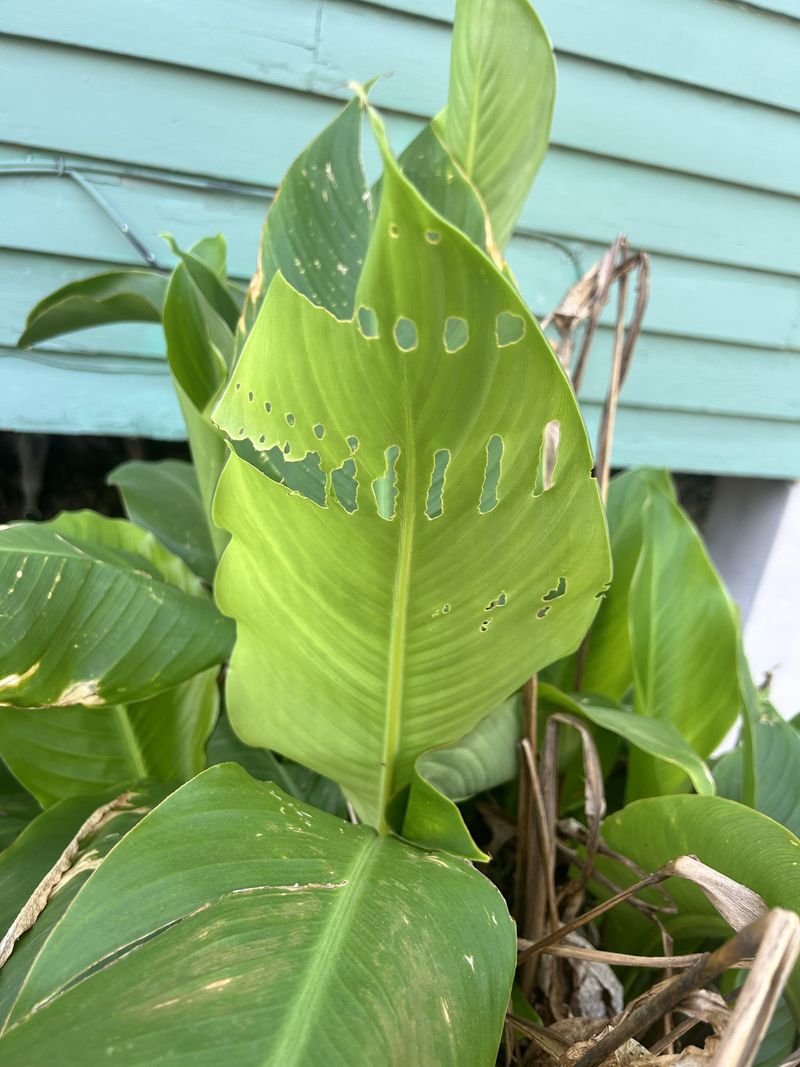
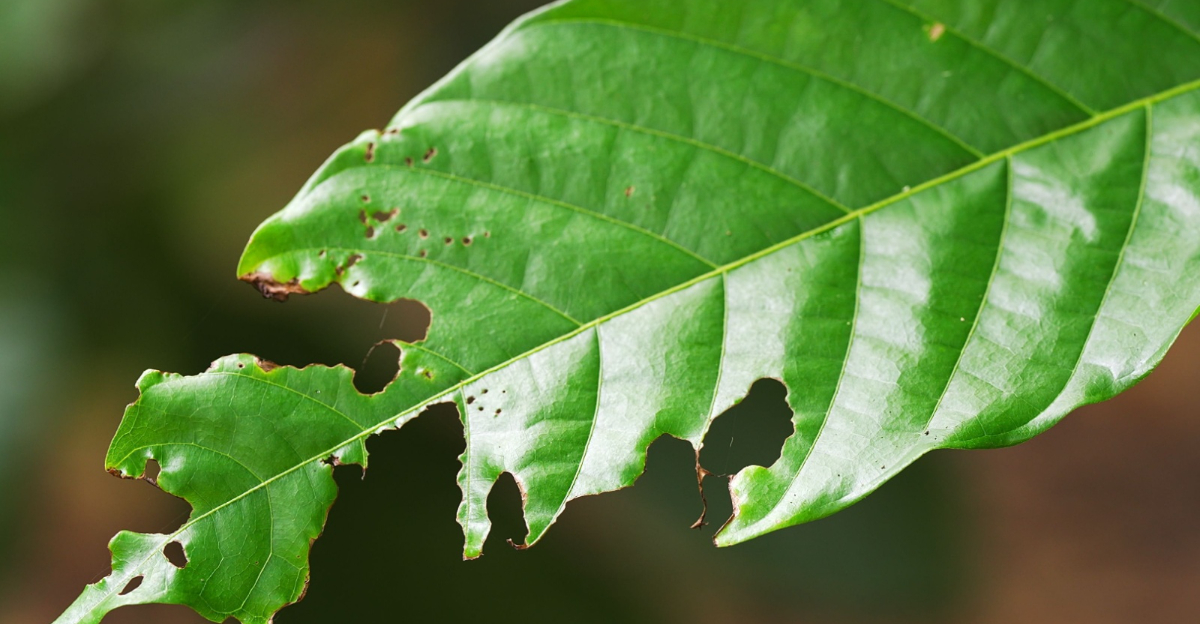
Ragged leaf edges and leaves that look like lace or skeletons are hard to ignore, and in April across Arizona, caterpillars and beetles are usually the first suspects.
Caterpillars, which are the larvae of various moth and butterfly species, tend to feed from the edges inward or consume everything except the tougher leaf veins, leaving that classic skeletonized pattern.
Some beetle species, including flea beetles and cucumber beetles, also chew distinctive holes and notches into foliage early in the season.
Vegetable gardens in the Phoenix Valley and Tucson areas often see cabbage looper caterpillars and tomato hornworm activity picking up in April as temperatures become consistently warm.
Hornworms in particular can strip a tomato plant of its foliage surprisingly fast, making daily monitoring during this month genuinely worthwhile.
Handpicking caterpillars in the early morning or evening when they are most active is one of the most straightforward control methods available. Drop them into soapy water to remove them from the garden.
For larger infestations, Bacillus thuringiensis, commonly known as Bt, is a naturally occurring soil bacterium that targets caterpillars specifically without harming bees, birds, or other beneficial garden visitors.
Applying Bt in the late afternoon gives it the best chance of being consumed before it breaks down in Arizona’s intense spring sunlight.
5. Wilting Plants Even When Watered Could Be Caused By Root Pests
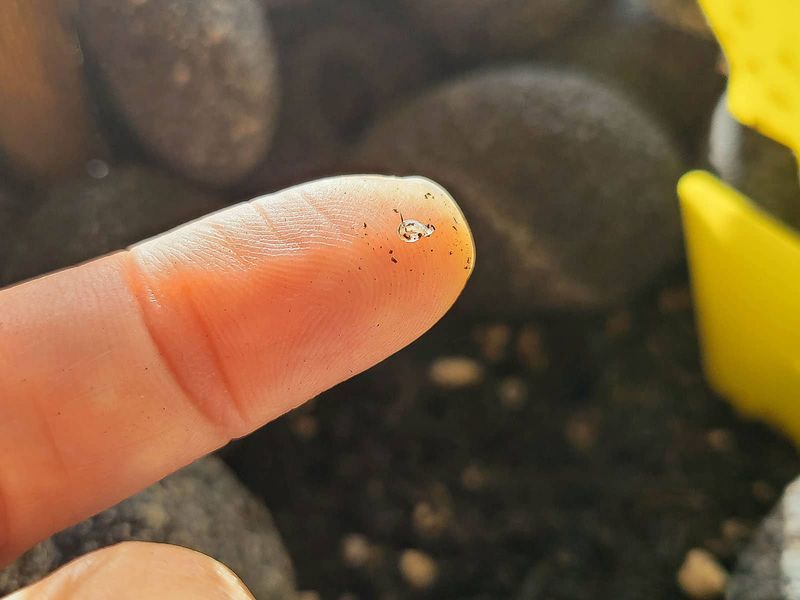
Few things are more frustrating than watching a plant wilt in the middle of spring even though you have been watering it consistently.
In Arizona, where gardeners already think carefully about irrigation, unexplained wilting that does not recover after watering is a red flag worth investigating below the soil surface.
Root pests including root aphids, fungus gnat larvae, and certain beetle grubs can damage feeder roots to the point where a plant simply cannot absorb enough water, no matter how much you provide.
Root aphids are particularly tricky because they look similar to regular aphids but live entirely underground, making them easy to miss until a plant shows serious stress.
In Arizona’s sandy, well-draining desert soils, these pests can spread through the root zone relatively quickly.
Fungus gnat larvae, while small, also feed on roots and are more common in container gardens or raised beds where organic-rich potting mixes hold moisture.
Gently pulling a struggling plant from its container or loosening the soil around its base can reveal the presence of insects or larvae on the roots.
Yellowing lower leaves combined with wilting despite adequate water is a strong combined indicator.
Beneficial nematodes applied to moist soil are a natural and reasonably effective option for managing soil-dwelling pests without disrupting the broader garden environment or putting pollinators at risk.
6. Tiny Webs On Leaves Or Stems Can Signal Spider Mite Activity
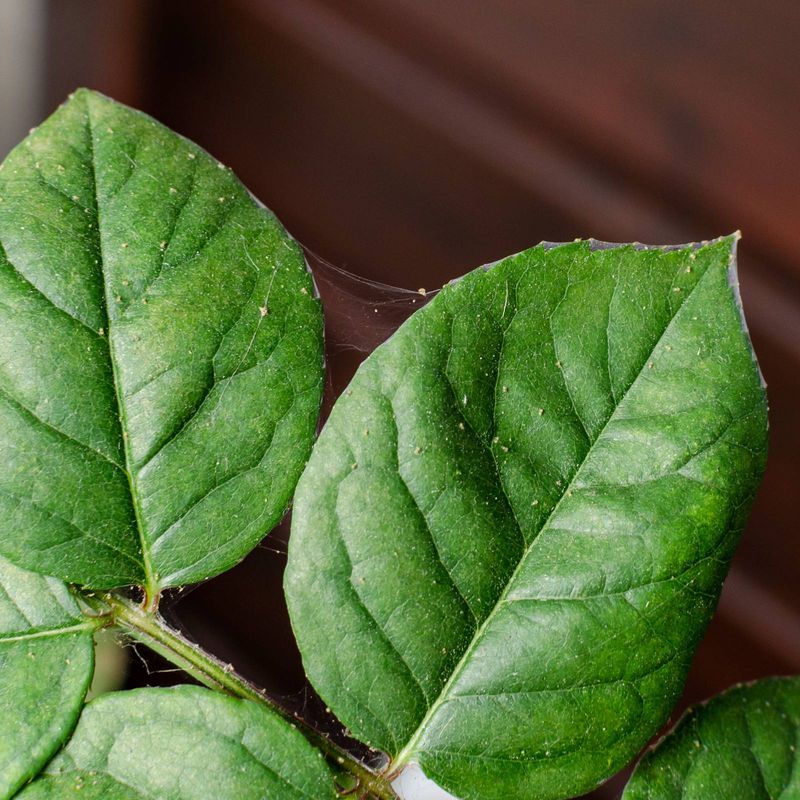
Arizona’s low humidity and blazing spring sunshine create near-ideal conditions for spider mites, and April is often when their populations start climbing fast.
These tiny arachnids are barely visible to the naked eye, but the fine, silky webbing they produce on the undersides of leaves and along stems is a reliable giveaway.
If you hold a white sheet of paper beneath a suspect leaf and tap it gently, tiny moving specks falling onto the paper confirm mite activity.
Spider mites cause a distinctive type of damage called stippling, where hundreds of tiny feeding punctures give leaves a dusty, bronze, or silvery appearance. Heavily infested leaves eventually turn yellow and drop.
Plants under water stress are more vulnerable, which means Arizona gardeners dealing with uneven irrigation schedules may see more severe mite problems than those who water consistently.
In the Phoenix area, two-spotted spider mites are among the most common species encountered in spring vegetable and ornamental gardens.
Because mites reproduce rapidly, acting early makes a meaningful difference.
A forceful spray of water on leaf undersides every few days can reduce populations significantly. Neem oil and insecticidal soap are both effective when applied in the cooler hours of early morning.
Avoid applying treatments during midday heat in Arizona since plant tissue can be sensitive to oil-based products when temperatures are high.
7. Holes In Flowers Or Fruit Often Come From Hungry Beetles Or Caterpillars
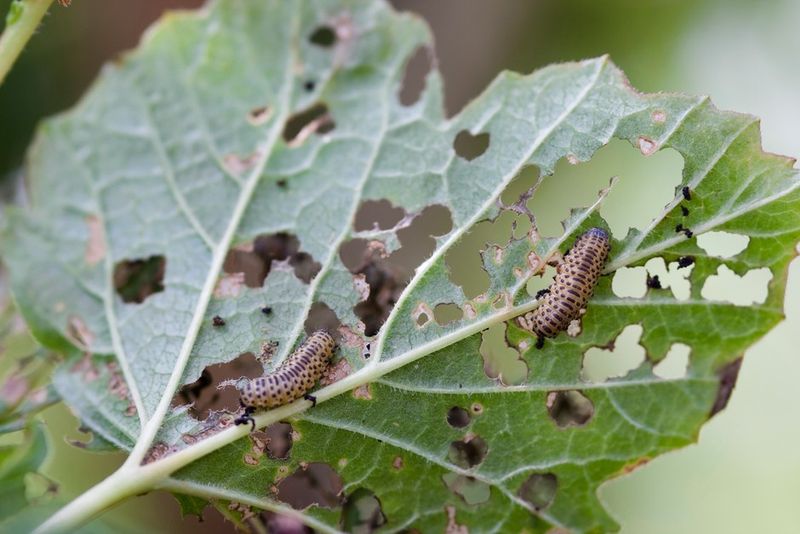
Spotting ragged holes in flower petals or small punctures in developing fruit can feel discouraging, especially after nurturing plants through Arizona’s winter and early spring.
Beetles and caterpillars are often behind this kind of damage, and both tend to become more active as April temperatures stabilize.
Spotted cucumber beetles, blister beetles, and various moth caterpillars are among the most common culprits found in Arizona gardens during this period.
Flowers are particularly attractive targets because they offer concentrated nutrition. Caterpillars that feed inside flower buds or on developing fruit can ruin the harvest before it has a real chance to develop.
Blister beetles, which sometimes appear in large groups in Arizona gardens, can cause rapid and widespread flower damage when populations are high.
Handling blister beetles directly is not recommended since they release a defensive chemical that can irritate skin.
Checking flowers and young fruit in the morning when beetles are less mobile gives you a better chance of spotting and removing them manually.
Row covers placed over vulnerable plants like squash, beans, or strawberries provide a physical barrier that keeps flying and crawling pests away without any chemical input.
If caterpillar damage is the main concern, Bt applied directly to flowers and foliage in the late afternoon is a targeted approach that protects pollinators by breaking down before morning bee activity begins in earnest.
8. Clusters Of Tiny Insects On Stems Are Early Signs Of Aphids And Thrips
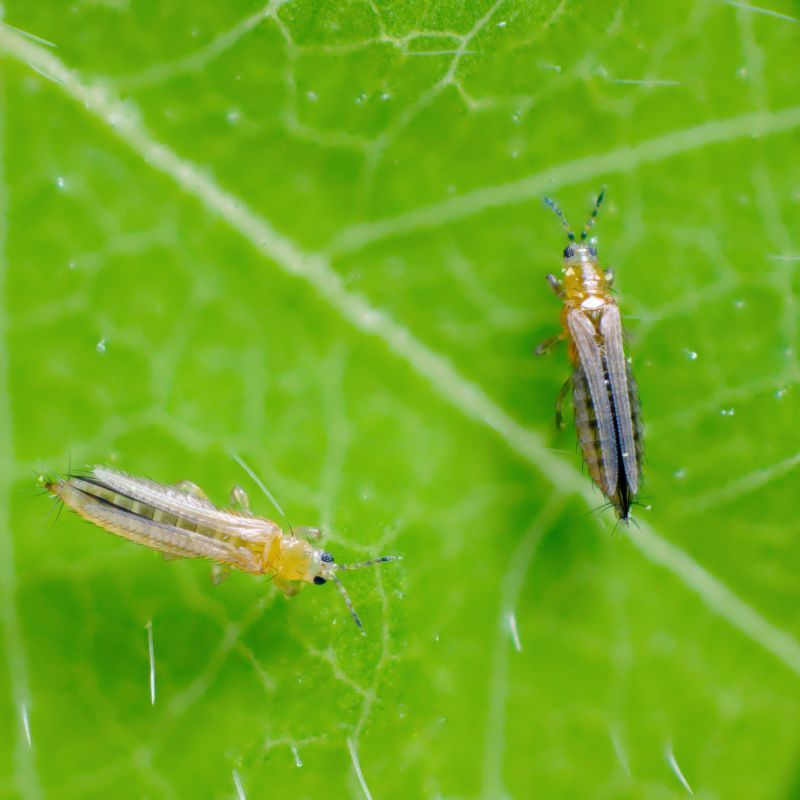
Spotting a dense cluster of tiny, soft-bodied insects crowded along a stem or tucked into the junction where a leaf meets the stalk is one of the most direct early warnings a gardener can receive.
Aphids are often green, yellow, black, or pinkish depending on the species, and they tend to gather in groups rather than spreading out individually.
Thrips, which are even smaller and more slender, also congregate on stems and inside flower buds, making them harder to spot without a close look.
Both pests are widespread across Arizona in April, showing up on roses, vegetables, native plants, and ornamental shrubs alike.
In the Tucson and Phoenix areas, warm days in early spring allow aphid colonies to grow at a remarkable pace since many females reproduce without mating during peak season.
A colony that seems manageable on Monday can become a serious infestation by the weekend.
Inspecting stems and bud clusters two or three times per week during April gives you the best chance of catching populations before they spread.
A targeted spray of insecticidal soap, applied carefully to the affected areas in the early morning, works well on both pests.
Planting nectar-rich flowers nearby, such as yarrow or fennel, encourages parasitic wasps and lacewings that naturally reduce aphid and thrip numbers without any additional effort from the gardener.