9 Easy Plants That Strengthen Backyard Landscaping In Arizona
Arizona backyards thrive when plants are chosen for strength as much as style, especially under intense sun and long dry stretches.
Some plants naturally support the landscape, filling space, holding soil, and creating structure without demanding constant care.
These reliable choices make yards feel fuller and more intentional while staying practical in desert conditions.
If you want a backyard that holds up season after season, these easy plants do a lot of the heavy lifting.
1. Red Yucca
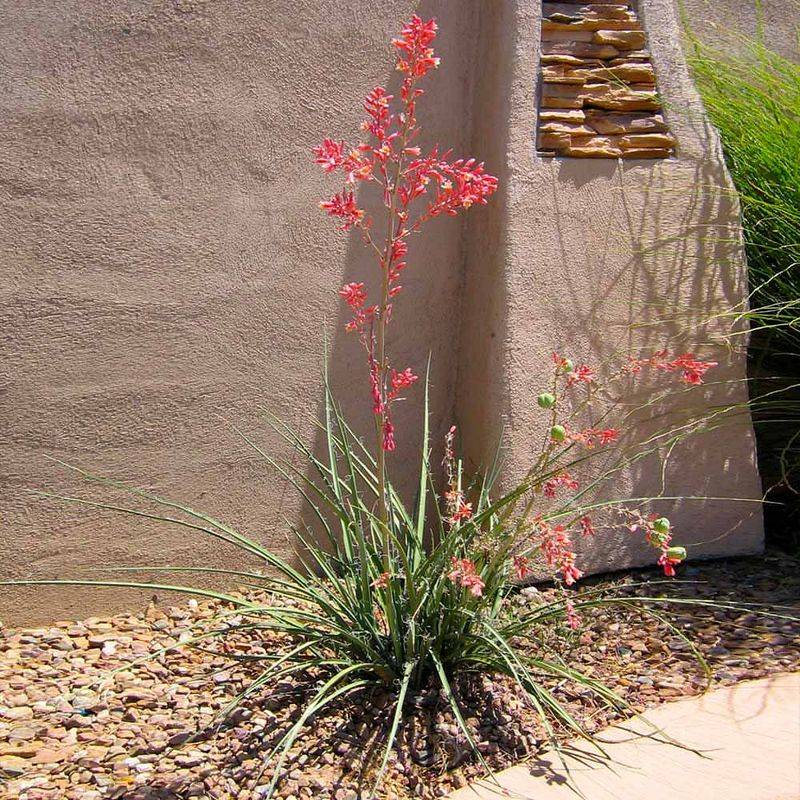
Stunning coral blooms rise on tall stalks from spring through summer, drawing hummingbirds to your Arizona yard with their tubular flower shapes.
Narrow blue-green leaves form attractive clumps that stay evergreen year-round, adding texture even when the plant isn’t flowering at all.
Minimal watering keeps this tough customer happy once established, making it perfect for busy homeowners who forget to turn on sprinklers regularly.
Full sun exposure brings out the best color in both foliage and flowers, so plant it where afternoon rays hit hardest.
Sandy or rocky soil works wonderfully since red yucca originates from similar desert environments and actually prefers excellent drainage over rich earth.
Mature plants spread about three feet wide, creating natural borders along walkways or filling empty corners that need visual interest without constant maintenance.
Arizona gardeners appreciate how this species handles temperature swings from freezing nights to scorching days without showing stress or dropping leaves unexpectedly.
Deer tend to avoid munching on the tough foliage, giving you one less pest problem to worry about in rural areas.
2. Desert Marigold
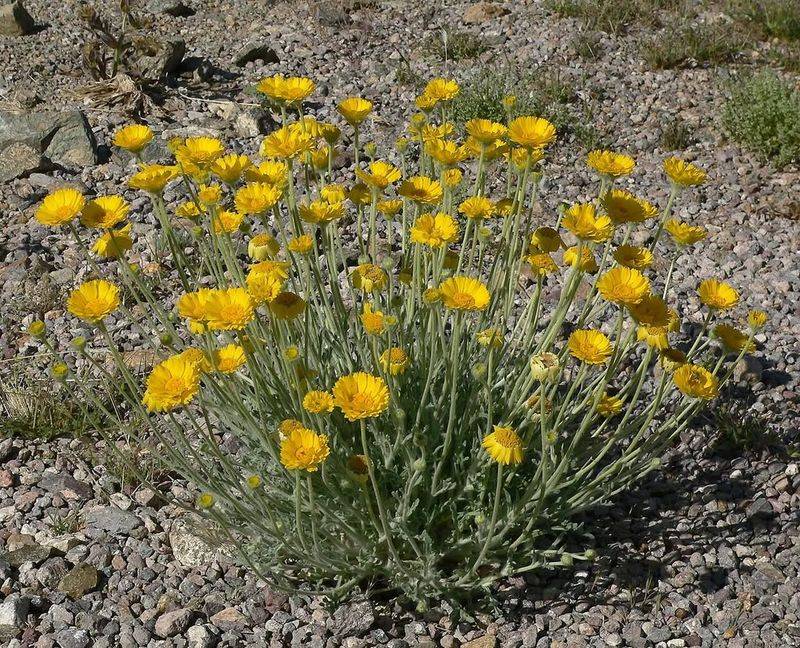
Cheerful golden petals brighten up landscapes from March clear through November, offering months of continuous color when many other plants go dormant.
Low-growing mounds rarely exceed twelve inches tall, making desert marigold ideal for front-of-border placement where taller vegetation would block smaller specimens behind.
Reseeding happens naturally in Arizona yards, so you’ll notice new plants popping up each spring without lifting a finger or buying more nursery stock.
Afternoon shade in extremely hot zones helps prolong blooming periods, though full sun works fine in most residential settings across the state.
Water requirements drop dramatically after the first growing season, with established plants surviving on rainfall alone during typical years without supplemental irrigation.
Butterflies and native bees visit constantly, turning your backyard into a pollinator haven that supports local ecosystems and helps nearby vegetable gardens produce better.
Deadheading spent flowers encourages fresh blooms but isn’t strictly necessary since the plant performs well even when left completely alone for weeks.
Fast growth from seed to flowering takes just weeks, giving impatient gardeners quick results that build confidence in desert landscaping techniques.
3. Palo Verde

Brilliant yellow blossoms blanket the entire canopy each spring, creating a spectacular show that announces warmer weather has arrived in Arizona neighborhoods.
Green bark on trunk and branches performs photosynthesis even when tiny leaves drop during drought, allowing the tree to conserve moisture intelligently.
Filtered shade underneath accommodates other desert plants that appreciate protection from intense midday sun while still receiving adequate light for healthy growth.
Deep root systems seek water far below the surface, meaning established specimens rarely need supplemental irrigation except during extreme dry spells or heatwaves.
Fast vertical growth provides privacy screening and shade within just a few years, unlike slow-growing species that take decades to reach useful sizes.
Native wildlife including doves and quail shelter in the branches, adding natural soundscapes and movement to your outdoor living spaces throughout seasons.
Arizona homeowners value the tree’s ability to handle poor soil without amendments, saving money on expensive compost or fertilizer applications that other species demand.
Thorny branches on some varieties deter unwanted foot traffic, making palo verde useful as a natural barrier along property lines or sensitive areas.
4. Mexican Honeysuckle

Vibrant orange tubes appear continuously from spring until frost, providing reliable color when summer heat causes many flowering plants to pause their displays.
Hummingbirds visit multiple times daily, hovering right at eye level if you plant Mexican honeysuckle near patios or windows for easy viewing.
Evergreen foliage in milder Arizona zones keeps the plant looking fresh year-round, though freezing temperatures may cause temporary leaf drop in colder areas.
Moderate water needs strike a balance between drought-tolerant natives and thirsty exotics, making this species manageable for typical residential irrigation schedules without waste.
Partial shade during afternoon hours prevents leaf scorch in low-elevation desert regions, though plants handle full sun in higher elevations beautifully.
Compact growth reaches about three feet in all directions, fitting neatly into foundation plantings or mixed borders without overwhelming neighboring specimens over time.
Arizona gardeners find that occasional trimming maintains tidy shapes, but the plant tolerates neglect better than fussier ornamentals that sulk without constant attention.
Butterflies and bees supplement hummingbird visits, creating a lively garden atmosphere that feels vibrant and connected to the natural desert ecosystem surrounding urban areas.
5. Texas Sage
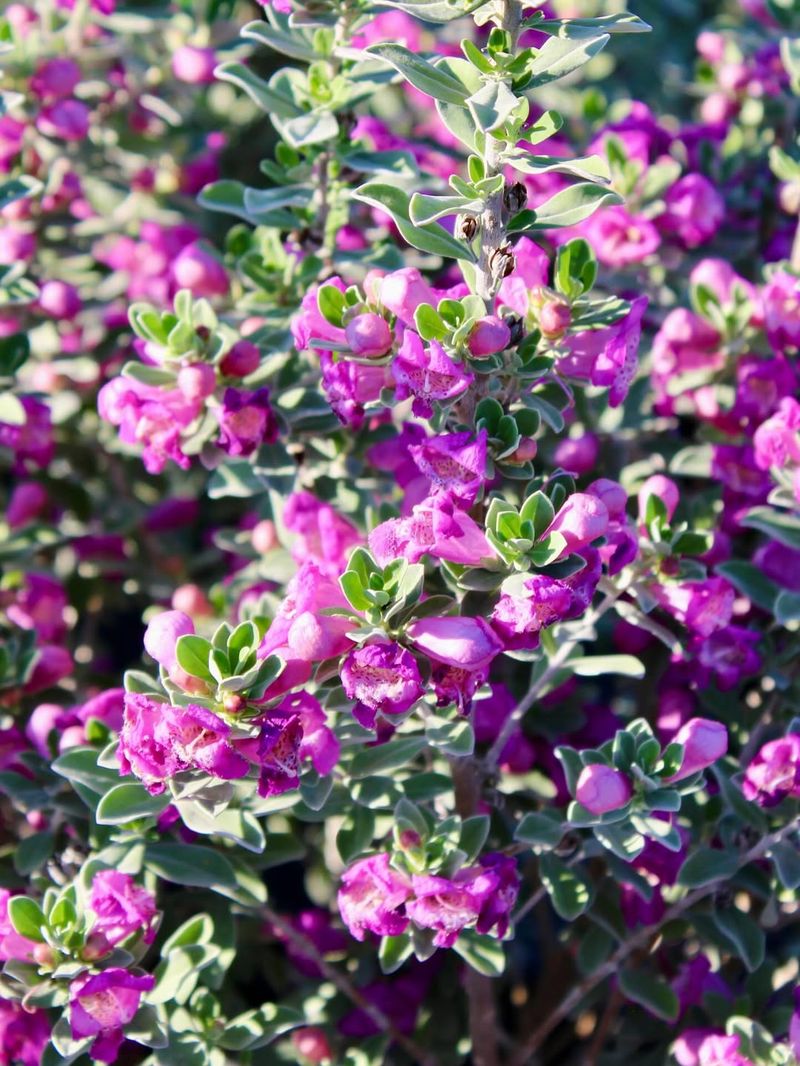
Soft purple blooms emerge after summer monsoon rains, earning this shrub the nickname rain sage among Arizona residents who watch for the colorful display.
Silvery foliage provides striking contrast against darker green plants, adding visual depth to landscape designs that might otherwise feel flat or monotonous in composition.
Extreme drought tolerance means established plants survive months without supplemental water, relying entirely on natural precipitation patterns common to the region’s climate.
Rounded form grows naturally into attractive mounds without constant shearing, reducing maintenance time compared to formal hedges that demand frequent trimming sessions.
Full sun exposure brings out the best leaf color and promotes heavy flowering, so avoid planting in shaded spots where the plant stretches awkwardly.
Arizona landscapes benefit from Texas sage’s ability to handle reflected heat from walls and pavement, thriving in tough spots where other species struggle.
Multiple cultivars offer flower colors ranging from white to deep magenta, letting homeowners customize their palette while keeping care requirements consistently low across varieties.
Mature size varies by selection but generally stays under six feet, making this shrub useful for foundation plantings or as informal property dividers.
6. Agave
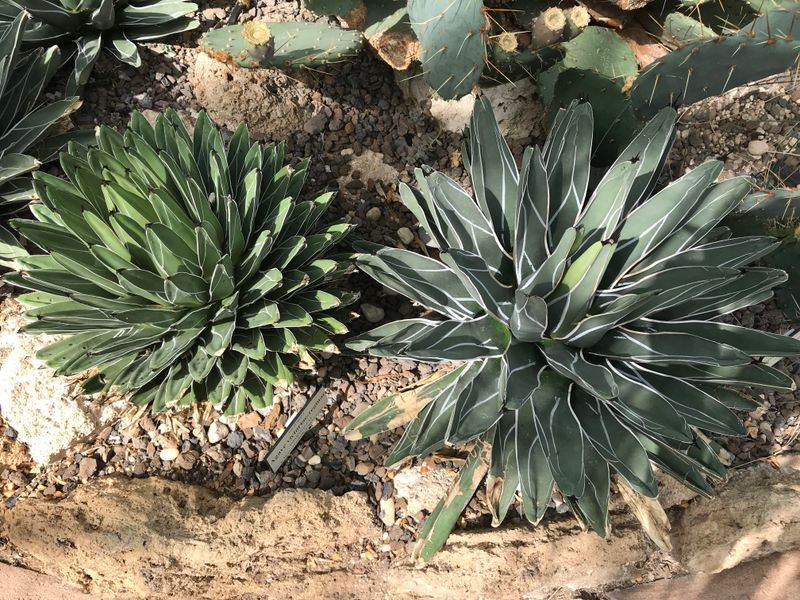
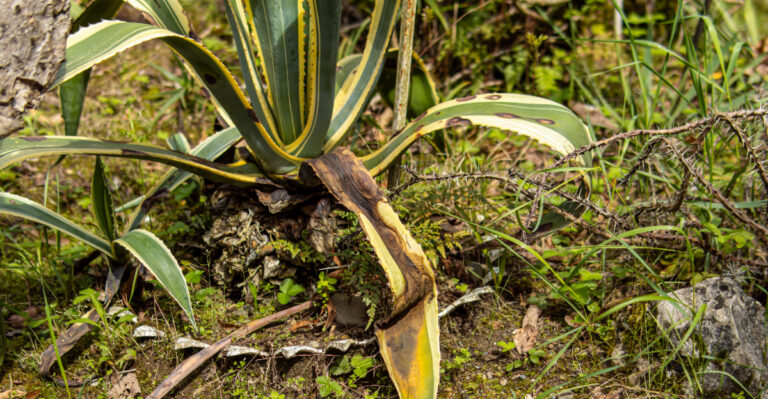
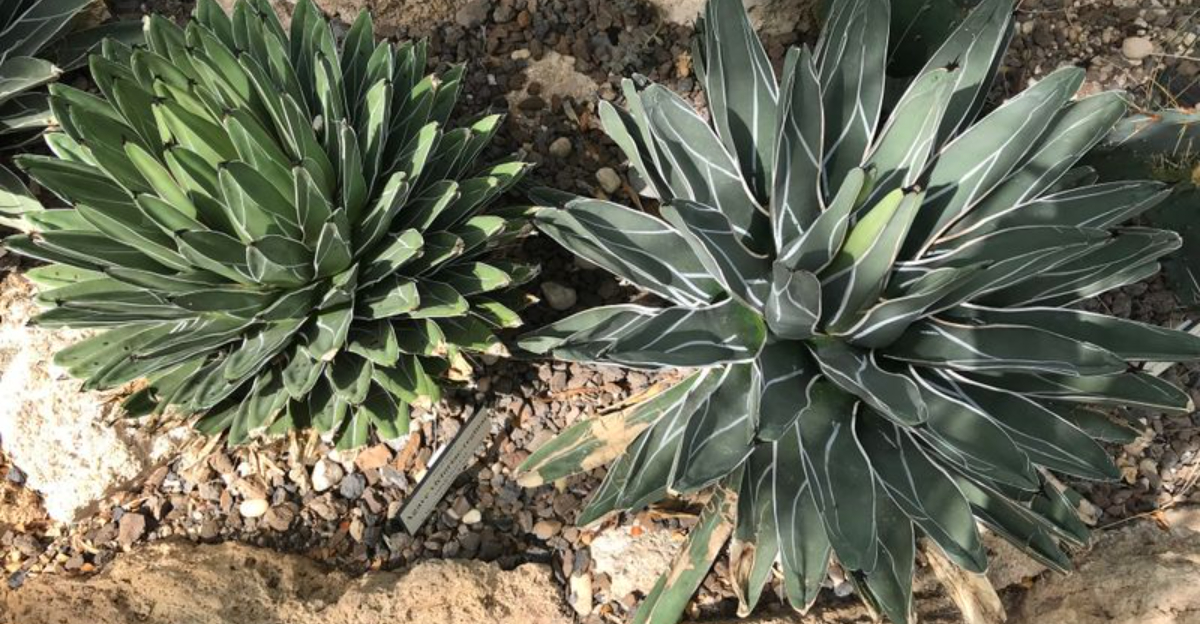
Architectural rosettes create bold focal points that draw the eye immediately, giving Arizona yards a distinctive southwestern character that feels authentic and regionally appropriate.
Thick succulent leaves store water internally, allowing agave to survive extended dry periods that would stress or damage plants with thinner foliage and shallower roots.
Sharp leaf tips and edges provide natural security, discouraging foot traffic near windows or along pathways without installing unsightly fencing or barriers around property.
Slow growth means less frequent division or transplanting, letting you establish a design that remains stable for years without constant rearranging of specimens.
Arizona gardeners appreciate agave’s tolerance for neglect, thriving when left completely alone except for occasional debris removal after windstorms blow through neighborhoods.
Dozens of species offer varied sizes and colors, from compact blue varieties perfect for containers to massive specimens that anchor large landscape beds.
Flowering occurs once in the plant’s lifetime, sending up tall dramatic stalks that attract pollinators before the original rosette completes its natural cycle.
Rocky or sandy soil suits agave perfectly, eliminating the need for soil amendments or special preparations that add expense and labor to planting projects.
7. Lantana
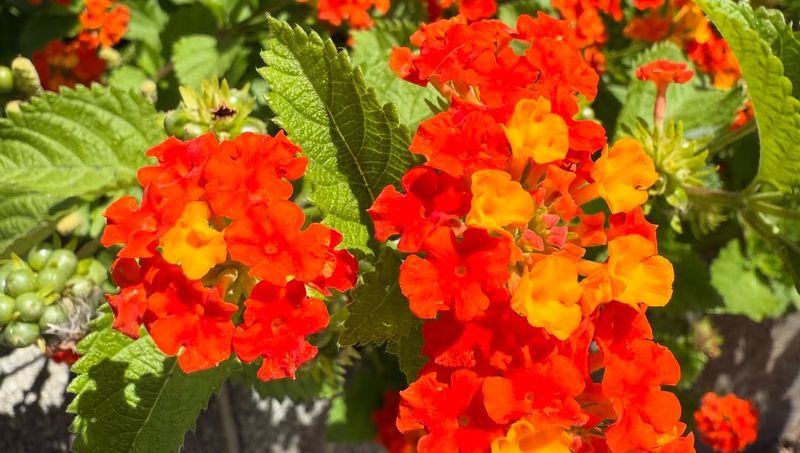
Multicolored flower clusters shift through shades of yellow, orange, pink, and red on the same plant, creating a kaleidoscope effect that changes daily.
Continuous blooming from spring through fall provides reliable color when many desert plants rest, keeping Arizona yards vibrant during the hottest months of year.
Butterflies swarm lantana flowers constantly, sometimes covering entire plants with fluttering wings that delight children and adults watching from nearby patios or windows.
Heat-loving nature means lantana actually performs better during summer than spring, opposite to many ornamentals that fade when temperatures climb past one hundred degrees.
Low water requirements after establishment make this plant suitable for water-conscious Arizona landscapes that aim to reduce consumption without sacrificing beauty or visual interest.
Spreading growth habit fills empty spaces quickly, serving as an effective groundcover on slopes or in broad beds where bare soil looks unfinished.
Frost sensitivity means lantana may die back in winter at higher elevations, but roots usually survive and resprout when warm weather returns reliably.
Arizona gardeners value lantana’s resistance to pests and diseases, rarely seeing problems that require chemical treatments or special interventions to maintain plant health.
8. Penstemon

Tubular blooms in shades ranging from pink to red to purple rise on tall spikes, creating vertical accents that break up horizontal lines.
Native species adapted to Arizona conditions require minimal intervention once established, thriving on natural rainfall patterns supplemented only during extreme drought periods occasionally.
Hummingbirds prefer penstemon flowers over many other options, making this plant essential for anyone wanting to attract these tiny aerial acrobats to backyard spaces.
Spring flowering peaks just as temperatures warm, providing early-season color when winter-blooming species finish and summer performers haven’t started yet in garden beds.
Well-drained soil prevents root problems that plague penstemon in heavy clay, so amend planting areas with gravel or sand if necessary before installation.
Arizona’s native penstemon varieties handle cold winters and hot summers equally well, showing adaptability that imported species simply cannot match in challenging climates.
Short-lived perennial nature means replanting every few years, but self-seeding often produces replacement plants naturally without purchasing new nursery stock or starting seeds indoors.
Full sun exposure promotes compact growth and heavy flowering, while shade causes stretching and reduced bloom production that disappoints gardeners expecting showy displays.
9. Fairy Duster
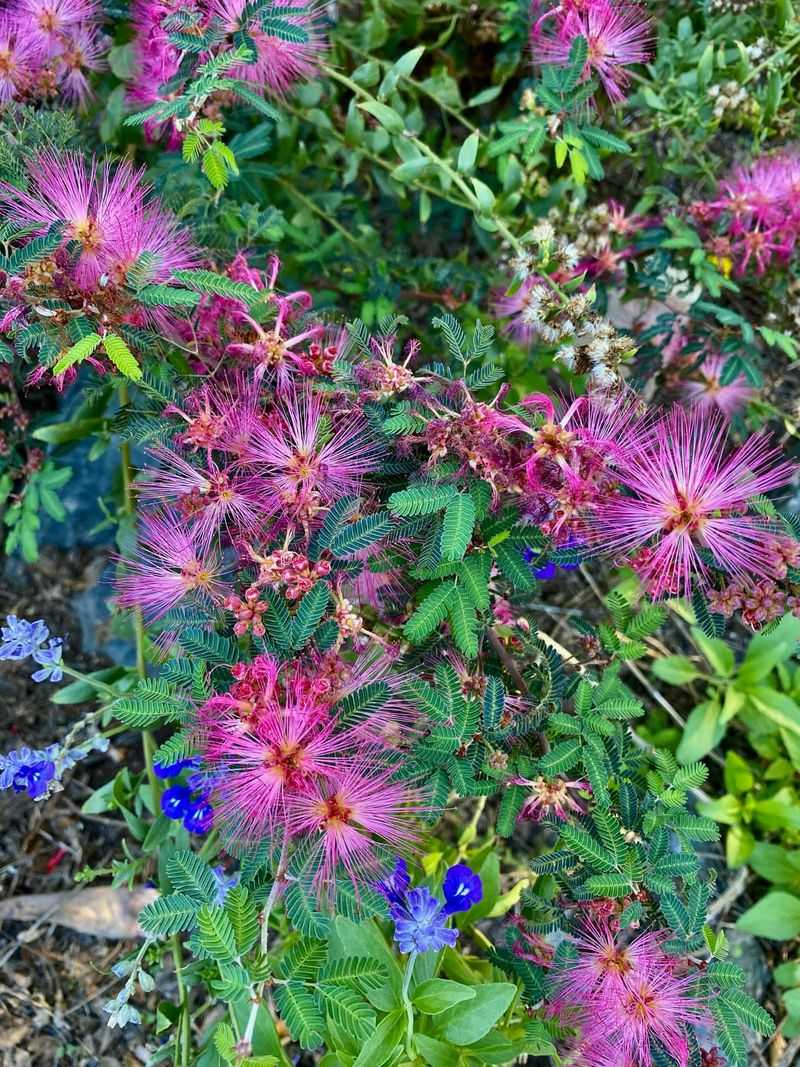
Fluffy pink flower puffs resemble tiny fireworks exploding across the shrub, bringing whimsy and charm to Arizona landscapes that might otherwise feel too serious.
Nearly year-round blooming in mild climates provides constant interest, with peak displays occurring during spring but scattered flowers appearing even in winter months.
Delicate appearance belies tough constitution, as fairy duster handles full desert sun and minimal water once roots establish themselves in native soil conditions.
Compact size stays under three feet tall and wide, fitting into small yards or narrow planting strips where larger shrubs would overwhelm available space.
Arizona native status means excellent adaptation to local soils, temperatures, and rainfall patterns without requiring special care or unusual amendments to thrive successfully.
Hummingbirds and butterflies visit frequently, drawn by nectar-rich flowers that provide essential food sources in urban environments where natural desert vegetation has disappeared under development.
Fine-textured foliage adds softness to landscapes dominated by bold succulents or architectural plants, creating pleasing contrast that makes both plant types look more interesting.
Frost tolerance varies by species, with some selections handling light freezes while others prefer warmer microclimates near walls or under tree canopies in yards.