7 Evergreen Plants That Light Up Shady Spots In Georgia Yards
Georgia yards know a thing or two about sunshine, but every landscape has a few shady corners that feel dull and forgotten.
Those low-light spots can seem hopeless, yet the right evergreen plants can turn them into real showstoppers.
While grass struggles and flowers fade, evergreens step up and carry the load all year long.
These plants pull their weight through every season, keeping their color when other greenery throws in the towel.
Deep greens, glossy leaves, and textured shapes bring life to spaces under trees, along fences, or beside shaded porches.
They add depth, soften hard lines, and make yards feel polished instead of patchy.
In Georgia’s warm climate, shade-loving evergreens thrive without much fuss.
They stand tough against heat, humidity, and sudden cold snaps, proving they are more than just a pretty face.
Once planted, they work around the clock, brightening dark corners and creating balance across the yard.
With the right choices, even the shadiest spots can shine, turning overlooked areas into inviting, eye-catching parts of the landscape that look good year after year.
1. Aucuba Japonica (Gold Dust Plant)
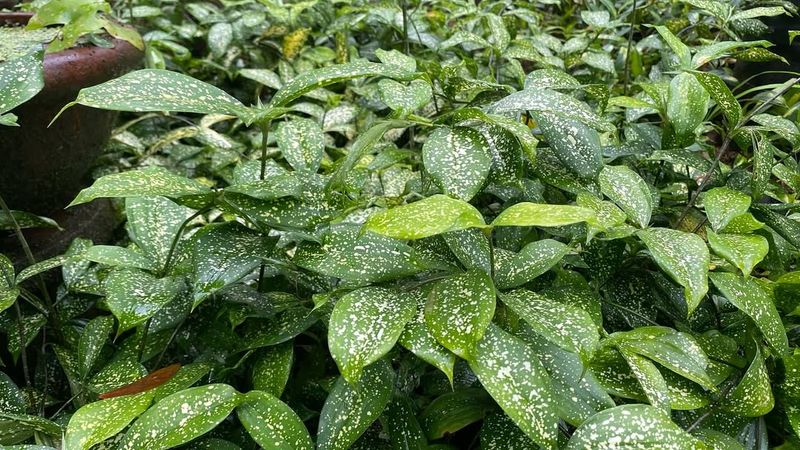
Picture a plant with leaves so brightly speckled that they look like someone sprinkled gold dust across them.
That’s exactly what Aucuba japonica brings to your Georgia shade garden.
This Japanese native has been a Southern favorite for generations because it handles our humid summers and occasional cold snaps with ease.
The glossy leaves feature random splashes of golden-yellow that catch whatever dim light filters through, making dark corners appear much brighter than they actually are.
Aucuba grows slowly into a rounded shrub that typically reaches four to six feet tall, though some varieties stay more compact.
It’s incredibly forgiving of neglect and poor soil conditions, which makes it perfect for those trouble spots where nothing else seems happy.
The plant produces small purple flowers in spring, followed by bright red berries on female plants if a male pollinator grows nearby.
These berries add another layer of visual interest during fall and winter months.
Georgia gardeners appreciate how Aucuba tolerates deep shade under decks, beside north-facing walls, or beneath dense tree canopies.
The plant rarely suffers from pest problems and doesn’t require frequent pruning or special fertilizers.
Just give it well-drained soil with some organic matter mixed in, and it’ll reward you with year-round color.
During particularly dry periods in Georgia summers, a deep watering once a week keeps the foliage looking its best.
The gold-speckled leaves create a cheerful focal point that draws the eye and brightens spaces where most flowering plants would struggle to survive.
2. Fatsia Japonica (Japanese Aralia)
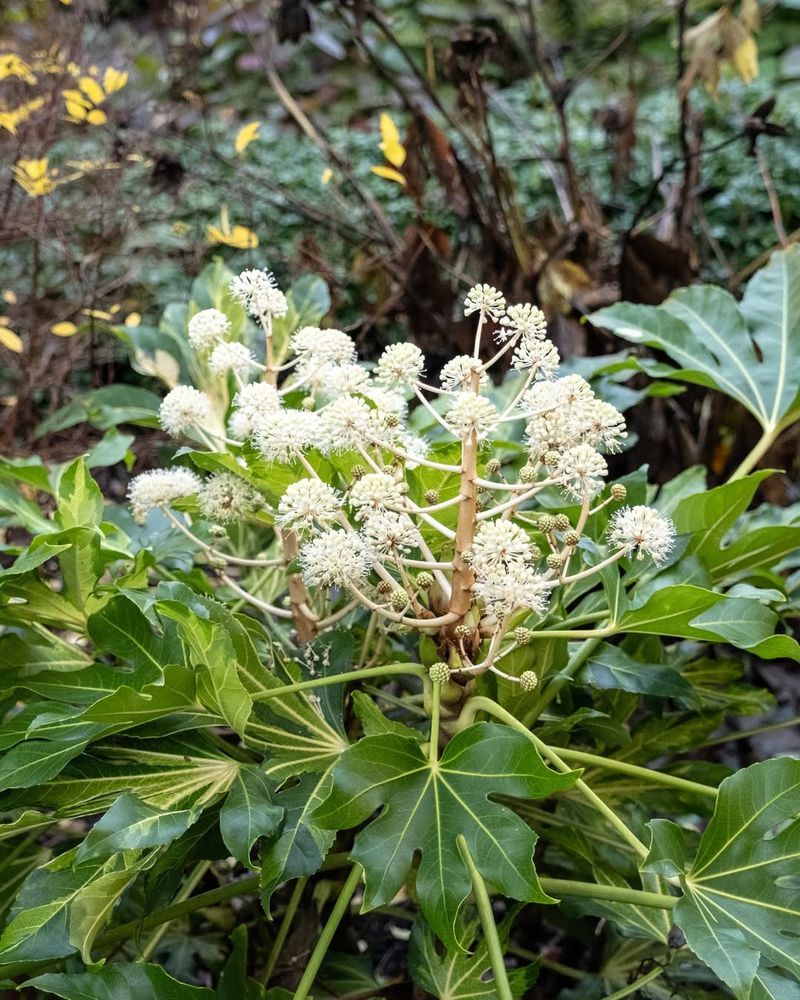
Bold and architectural, Fatsia japonica makes a dramatic statement with its enormous hand-shaped leaves that can span over a foot wide.
This evergreen shrub brings a tropical vibe to Georgia landscapes without requiring tropical care.
Native to the coastal regions of Japan and South Korea, it adapted perfectly to the Southeast’s climate and now thrives in shady spots across the state.
The deep green, glossy foliage reflects light beautifully, creating bright spots even in areas that receive minimal sun exposure throughout the day.
What sets Fatsia apart is its unique leaf structure, with seven to nine finger-like lobes radiating from a central point.
The plant grows upright, typically reaching six to eight feet in height, creating a substantial presence that fills empty spaces under trees or along shaded foundation beds.
In late fall, clusters of creamy-white flowers emerge at the branch tips, adding unexpected interest when most other plants have finished blooming for the season.
Georgia’s moderate winters suit Fatsia well, though extremely cold snaps below 10 degrees might damage exposed foliage.
The plant bounces back quickly when spring arrives, sending out fresh new growth.
It prefers consistently moist soil enriched with compost or leaf mold, mimicking the forest floor conditions of its native habitat.
Fatsia rarely needs pruning except to remove damaged leaves or control size.
The dramatic foliage creates wonderful contrasts when planted alongside finer-textured shade plants like ferns or hostas.
For homeowners wanting instant impact in shady Georgia yards, few evergreens deliver the bold presence that Japanese Aralia provides year after year.
3. Leucothoe Fontanesiana (Drooping Leucothoe)
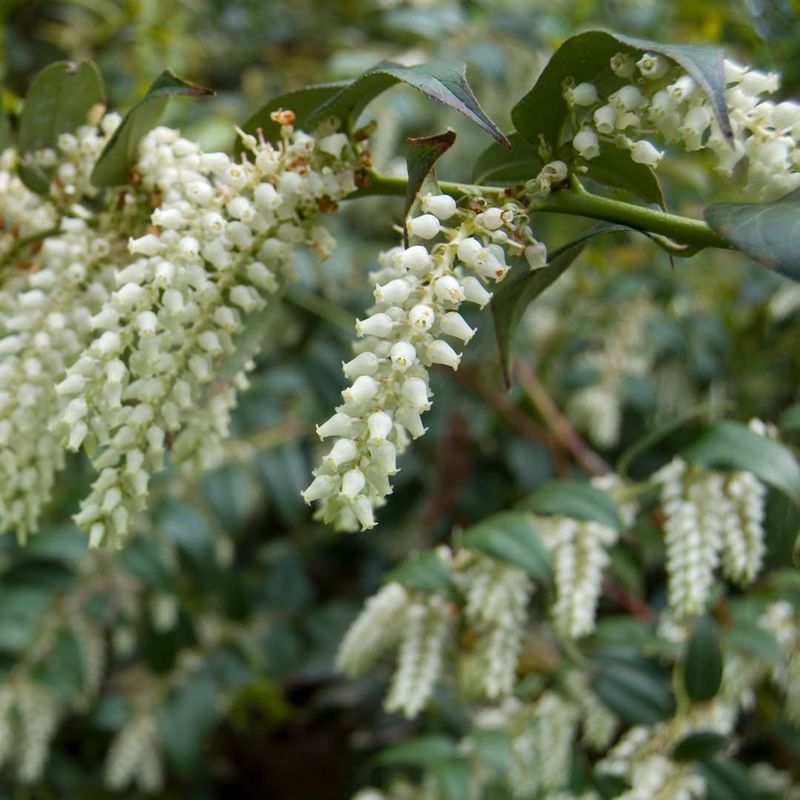
Graceful arching branches give Leucothoe fontanesiana its common name and its special charm.
This native evergreen shrub grows wild in the Appalachian mountains and adapts beautifully to cultivated Georgia gardens.
The plant’s cascading form creates movement and softness in shaded areas, with stems that bow elegantly under the weight of their lance-shaped leaves.
What really catches attention is the seasonal color change: new spring growth emerges in shades of bronze, burgundy, or deep red before maturing to dark green, giving you a two-toned effect that adds dimension to shadowy spots.
Leucothoe typically stays compact, reaching three to four feet tall and spreading slightly wider, making it suitable for smaller yards or tight planting areas.
In mid-spring, tiny white bell-shaped flowers dangle beneath the branches, releasing a subtle sweet fragrance that attracts early-season pollinators.
The blooms often go unnoticed at first glance but reward anyone who takes time to look closely.
This understated beauty fits the plant’s overall refined character perfectly.
Being a Georgia native, Drooping Leucothoe handles local conditions without fuss.
It prefers acidic soil similar to what azaleas and rhododendrons enjoy, so it makes an excellent companion for those popular shrubs.
The plant appreciates consistent moisture and benefits from a layer of mulch that keeps roots cool during hot Georgia summers.
Leucothoe works wonderfully as a foundation plant, in woodland gardens, or along shaded pathways where its arching form can be appreciated up close.
The colorful new growth provides natural seasonal interest without requiring any deadheading or special maintenance, making it a smart choice for busy homeowners.
4. Liriope Muscari (Big Blue Lilyturf)
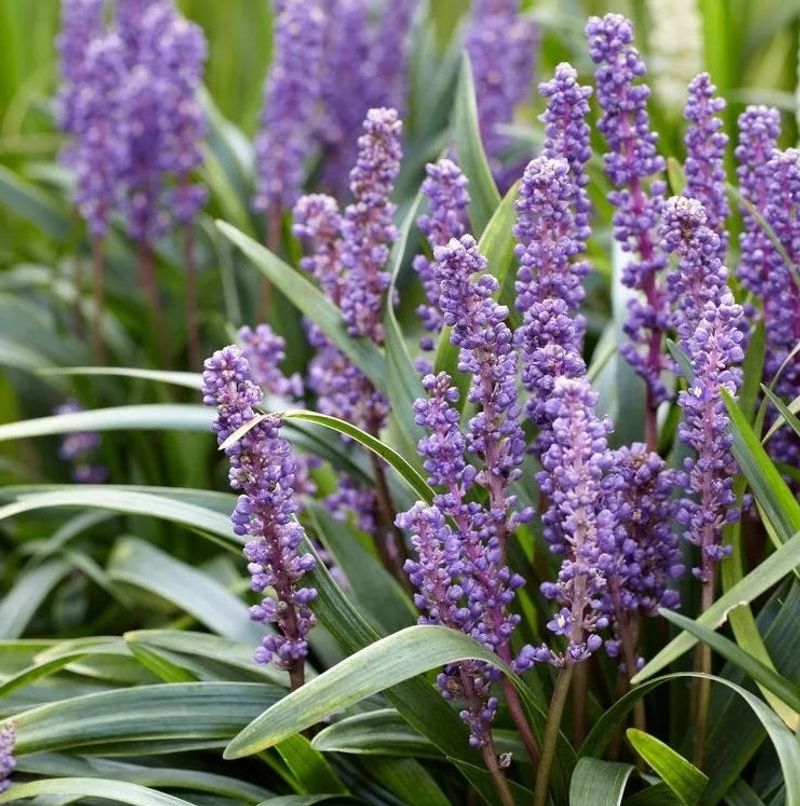
Tough as nails yet surprisingly pretty, Liriope muscari solves multiple landscaping challenges at once.
This clump-forming evergreen groundcover spreads slowly to create dense mats of grass-like foliage that stays green throughout Georgia’s mild winters.
The narrow arching leaves grow about a foot tall, forming tidy mounds that work equally well as border edging, groundcover beneath trees, or mass plantings on shaded slopes where erosion might otherwise be a concern.
Liriope’s real magic happens in late summer when spikes of purple, lavender, or white flowers rise above the foliage, bringing unexpected color to shady areas when most shade plants have finished their show.
Georgia gardeners rely on Liriope because it tolerates almost anything: deep shade, root competition from trees, clay soil, drought, humidity, and even occasional foot traffic.
Once established, it needs virtually no maintenance beyond an annual trim in late winter to remove old foliage before new growth emerges.
The plant spreads through underground rhizomes but never becomes aggressively invasive, making it easy to control and manage over time.
Several cultivars offer different looks, from variegated varieties with cream-striped leaves to extra-dark green selections.
All produce those characteristic flower spikes followed by black berries that birds appreciate during fall and winter.
Liriope works beautifully lining shaded walkways, filling difficult spots under shallow-rooted trees like maples, or creating a living mulch that suppresses weeds naturally.
In Georgia’s climate, this reliable evergreen performs year after year without complaint, making it a favorite among both professional landscapers and weekend gardeners looking for dependable shade solutions.
5. Osmanthus Heterophyllus (False Holly)
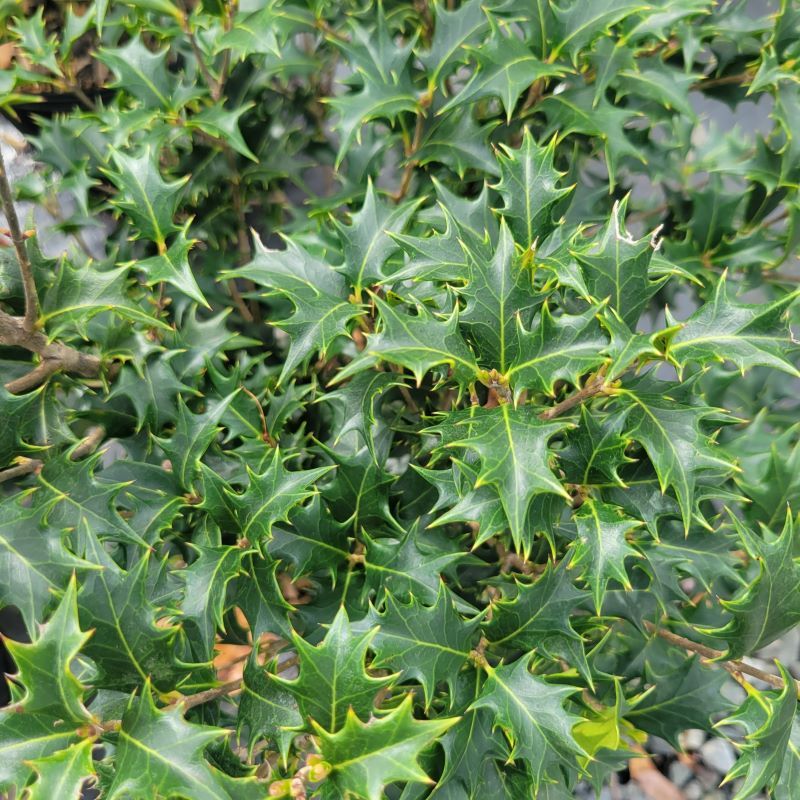
Don’t let the common name fool you.
While Osmanthus heterophyllus looks remarkably like traditional holly with its spiny-edged leaves, it’s actually unrelated and offers some distinct advantages for Georgia shade gardens.
The glossy evergreen foliage stays dark green year-round, creating a formal, polished appearance that works well in both traditional and contemporary landscapes.
Young plants produce leaves with sharp spines along the margins, but mature specimens often develop smoother foliage on upper branches, giving you an interesting textural progression as the plant ages.
False Holly grows into a dense, rounded shrub that can reach eight to ten feet if left unpruned, though it responds beautifully to shearing and shaping.
This makes it incredibly versatile for Georgia yards: use it as a privacy screen, foundation plant, specimen shrub, or even a formal hedge.
In fall, small white flowers appear hidden among the leaves, releasing an intensely sweet fragrance that fills the entire garden.
The scent often surprises people who didn’t even realize the plant was blooming since the flowers themselves are quite inconspicuous.
Osmanthus handles Georgia’s climate beautifully, tolerating both summer heat and winter cold without dropping leaves or showing stress.
It adapts to various light conditions, from full shade to partial sun, making it useful in transitional areas where light levels change throughout the day.
The plant prefers well-drained soil but isn’t particularly fussy about soil type once established.
Variegated cultivars with cream or yellow leaf margins are available for gardeners wanting extra brightness in shady spots.
False Holly’s combination of attractive foliage, fragrant flowers, and low maintenance needs makes it a standout choice for Georgia landscapes.
6. Pieris Japonica (Japanese Andromeda)
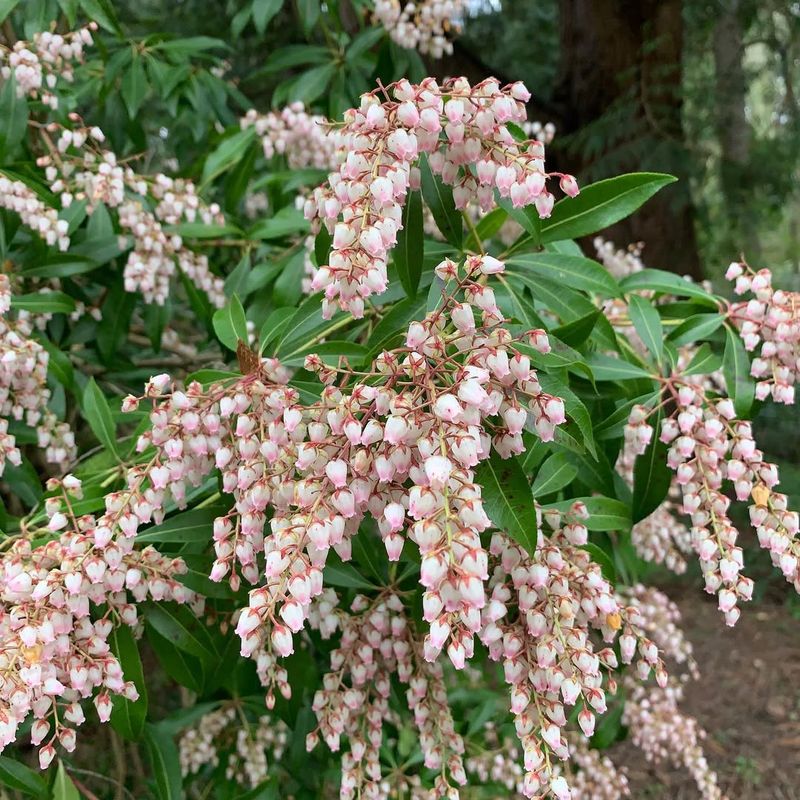
Few shade-loving evergreens put on a spring show quite like Pieris japonica.
This elegant shrub offers three seasons of interest packed into one plant.
The show begins when colorful new growth emerges in shades ranging from brilliant red to pink, bronze, or cream, depending on the variety.
These vibrant young leaves create stunning contrasts against the dark green mature foliage, making the plant appear to glow even in deep shade.
As spring progresses, long chains of small bell-shaped flowers cascade from the branch tips, resembling strings of tiny pearls or lanterns hanging in midair.
The flowers typically bloom white or pale pink and often carry a light, pleasant fragrance that attracts early bees and other beneficial insects to Georgia gardens.
After flowering finishes, the plant settles into its role as a handsome evergreen backdrop, with glossy leaves arranged in attractive whorls at the stem tips.
Pieris typically grows four to six feet tall with a slightly narrower spread, fitting comfortably into foundation beds or mixed shade borders throughout the state.
Being in the same plant family as azaleas and rhododendrons, Japanese Andromeda shares their preference for acidic, organic-rich soil.
It performs best in Georgia’s northern counties where slightly cooler temperatures suit its mountain origins, though it adapts to central Georgia with adequate moisture and protection from hot afternoon sun.
The plant appreciates consistent watering during dry spells and benefits from mulch that keeps roots cool.
Pieris works wonderfully combined with other acid-loving shade plants, creating layered woodland gardens that offer year-round interest.
The combination of colorful new growth, abundant spring flowers, and evergreen structure makes this shrub a true standout.
7. Sarcococca Hookeriana (Sweet Box)
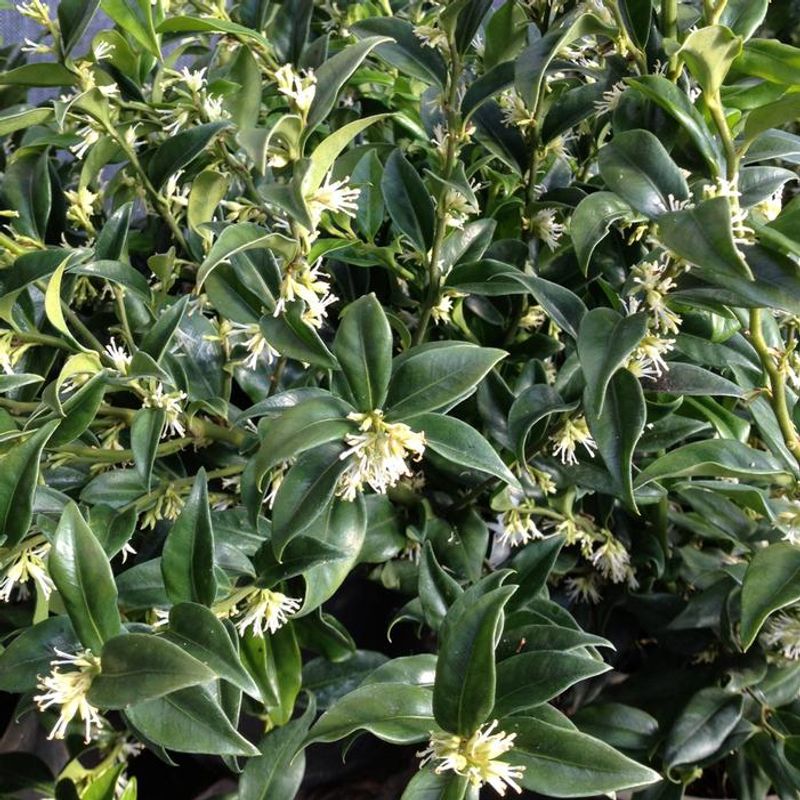
Small in stature but mighty in fragrance, Sarcococca hookeriana deserves a spot in every Georgia shade garden.
This low-growing evergreen shrub rarely exceeds three feet in height, spreading slowly through underground runners to form dense colonies of glossy dark green foliage.
The narrow leaves create fine texture that contrasts beautifully with larger-leaved shade plants, adding visual variety to plantings that might otherwise feel heavy or monotonous.
Sweet Box earns its name from the incredible perfume its winter flowers produce, filling entire garden areas with a honey-vanilla scent that seems impossibly strong for such tiny blooms.
The flowers themselves are barely noticeable, appearing as small white tufts tucked along the stems in late winter or early spring when Georgia gardens need cheering up most.
What they lack in visual impact, they more than compensate for in fragrance that carries on the breeze and greets visitors long before they see the source.
Black berries follow the flowers, adding another subtle ornamental feature that birds discover and appreciate.
The plant’s compact size and spreading habit make it ideal as a groundcover under trees, along shaded pathways, or in narrow side yards where taller shrubs wouldn’t fit.
Sarcococca thrives in the deep shade that challenges many other plants, making it valuable for those really difficult spots in Georgia landscapes.
It tolerates dry shade once established, though it looks best with occasional deep watering during extended dry periods.
The plant remains evergreen through Georgia winters and requires virtually no maintenance beyond occasional removal of damaged stems.
Position Sweet Box near entryways, patios, or along frequently used paths where people can enjoy its remarkable winter fragrance.