9 Evergreen Shrubs That Keep Georgia Yards Colorful All Year
You can plant bright flowers every spring and still feel disappointed when your yard turns flat the rest of the year. If you want a Georgia landscape that never looks bare or tired, evergreen shrubs are the backbone that keeps everything looking alive.
They hold rich foliage through humid summers, sudden cold snaps, and those in-between weeks when nothing else is blooming.
Evergreens give your yard steady color when flowers come and go. They frame walkways, anchor garden beds, and make the entire space feel finished in every season.
When structure stays strong, the whole yard looks intentional instead of temporary.
Choose the right evergreen shrubs once, and your Georgia yard keeps its depth, texture, and color from January through December without depending only on short-lived blooms.
1. Camellias Bloom In Late Fall And Winter
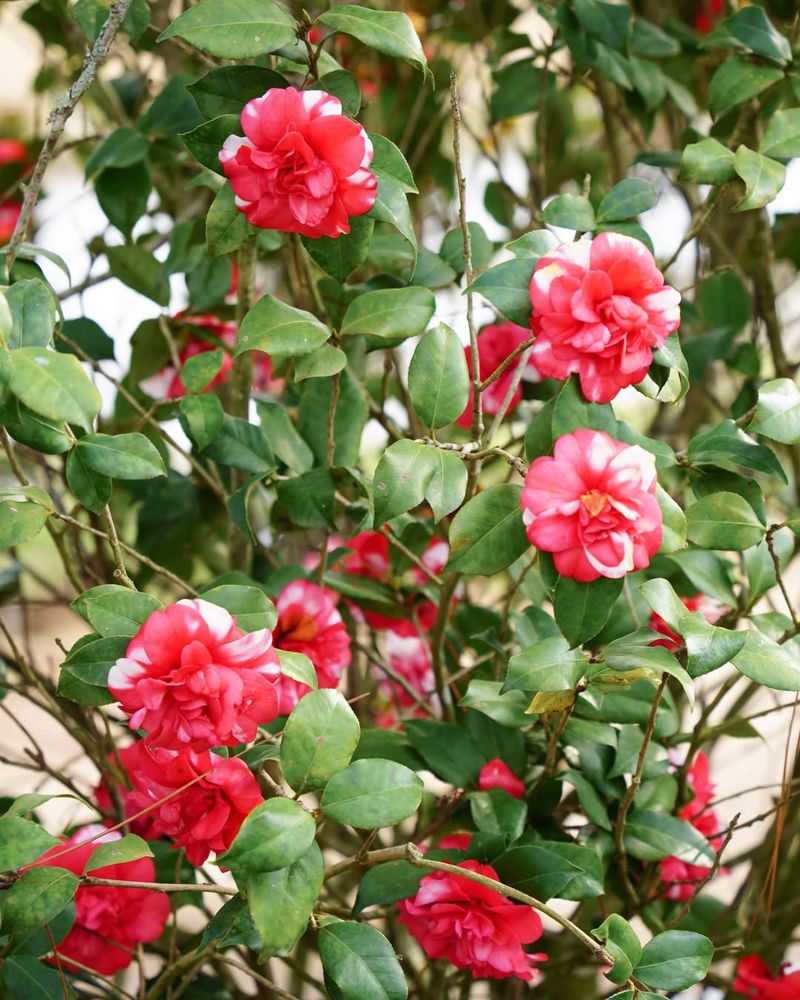
When most plants shut down for winter, camellias put on their best show.
These southern classics burst into bloom between November and March, depending on the variety, bringing splashes of pink, red, white, or variegated flowers to Georgia yards when color is scarce.
Their glossy, dark green leaves stay attractive all twelve months, creating a perfect backdrop for those spectacular winter blooms.
Camellias prefer partial shade and acidic soil, conditions that match much of Georgia’s natural landscape perfectly. Plant them under tall pines or on the north side of your home where they’ll get morning sun and afternoon protection.
They grow slowly but steadily, eventually reaching heights between four and twelve feet depending on the cultivar you choose.
Proper watering makes all the difference with these beauties. Keep the soil consistently moist but never waterlogged, especially during their first few years in the ground.
A thick layer of pine straw mulch helps maintain soil acidity while keeping roots cool during Georgia summers.
With minimal pruning needed and few pest problems, camellias reward you with decades of reliable winter color that brightens even the grayest January days.
2. Gardenias Keep Deep Green Leaves Year Round
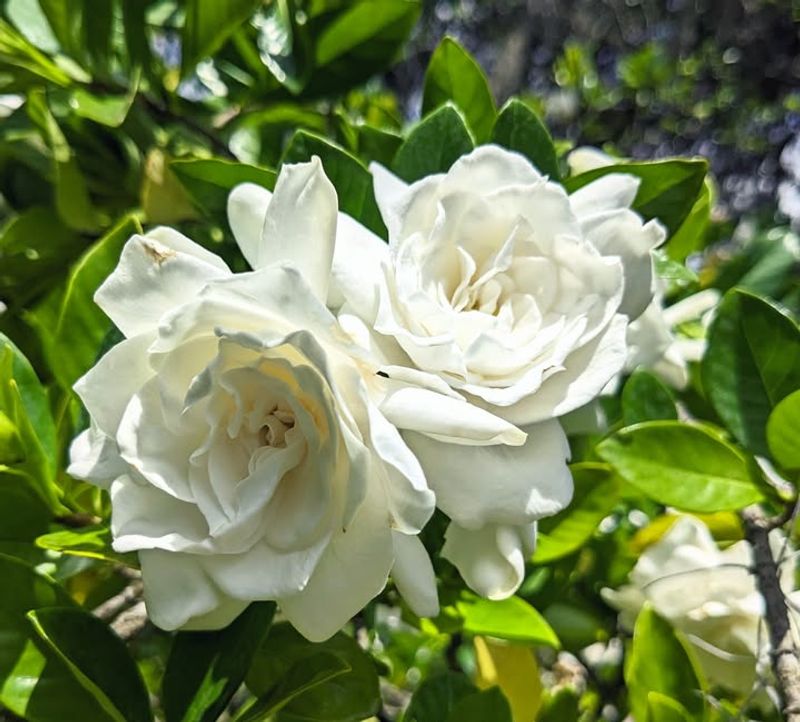
Few plants match the intoxicating fragrance that gardenias release on warm spring and summer evenings. Their creamy white blooms appear from May through July in Georgia, filling entire yards with a sweet perfume that drifts through open windows.
Between bloom cycles, the plant’s rich, emerald foliage maintains visual interest with leaves so shiny they almost look polished.
Growing gardenias successfully in Georgia requires attention to soil chemistry. These acid-loving shrubs need pH levels between 5.0 and 6.5 to prevent yellowing leaves, a common problem in areas with alkaline soil.
Regular applications of sulfur or iron supplements keep foliage that deep green color that makes the white flowers pop so dramatically.
Gardenias work beautifully as foundation plantings or grouped in beds where their uniform growth habit creates clean lines.
They typically reach three to six feet tall and wide, making them perfect for areas where you need substantial presence without overwhelming scale.
Morning sun with afternoon shade produces the healthiest plants across most Georgia regions.
Watch for whiteflies during humid summer months, but otherwise these shrubs require surprisingly little maintenance for such an elegant appearance.
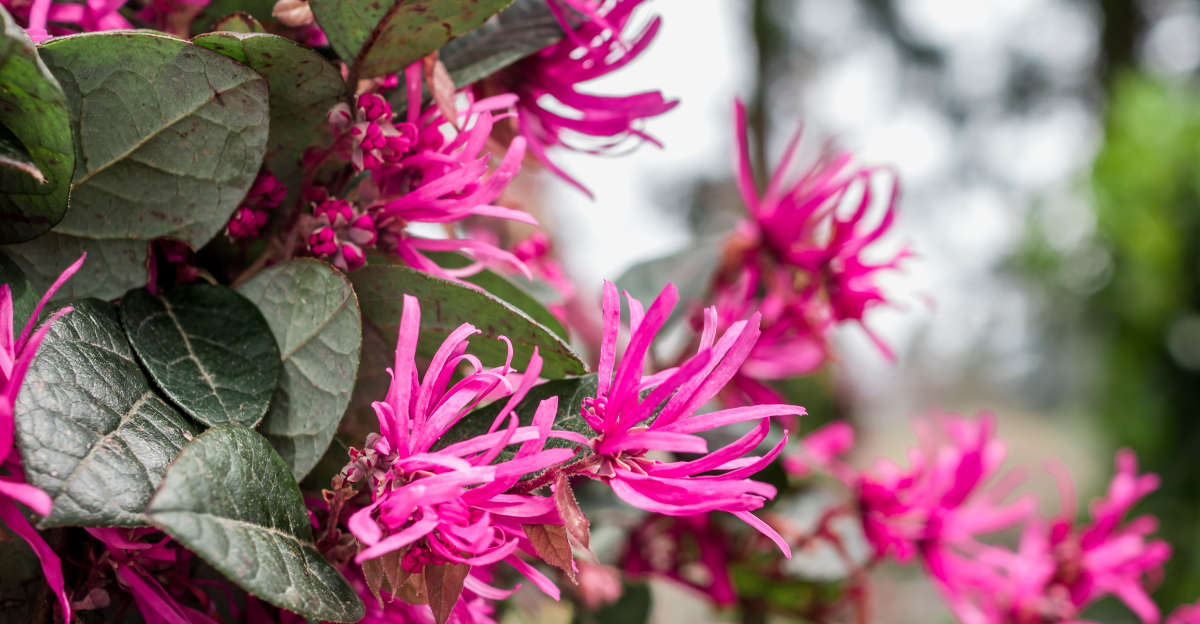
3. Loropetalum Holds Bold Purple Foliage All Year
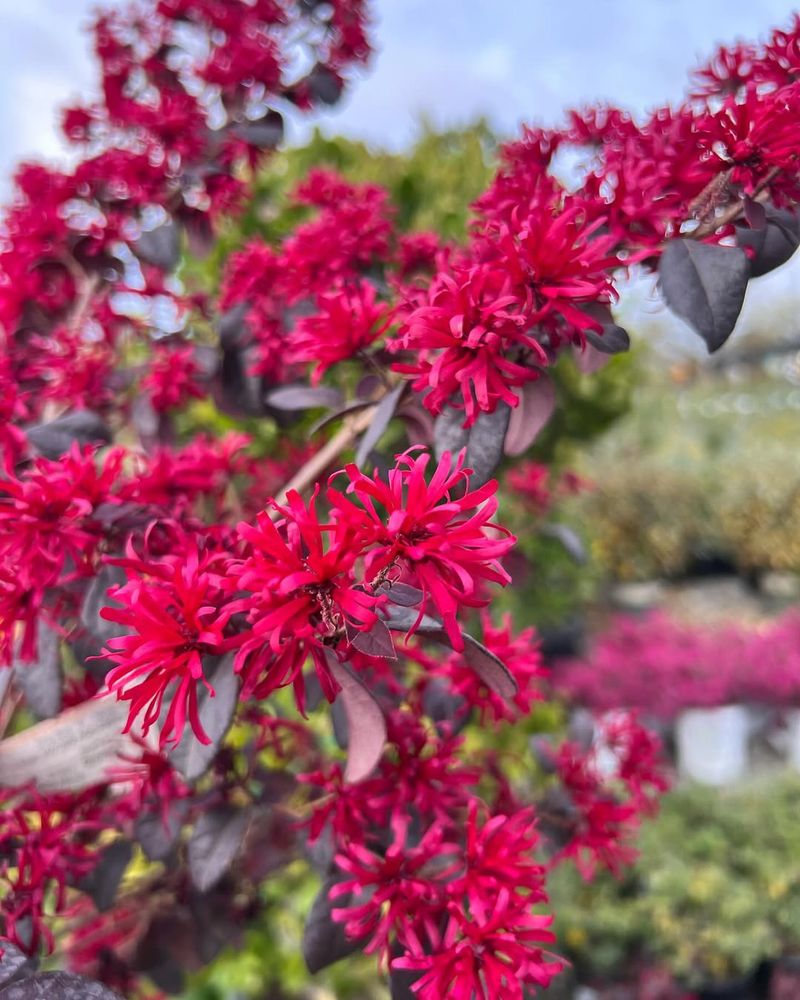
Purple foliage creates instant drama in any landscape, and loropetalum delivers that color intensity every single day of the year. This Chinese fringe flower has become wildly popular across Georgia for good reason.
Its burgundy to plum-colored leaves never fade to green, maintaining their rich tones through summer heat and winter cold. Pink, fringy flowers appear in spring and often rebloom sporadically throughout warmer months.
Loropetalum adapts to various landscape roles with remarkable flexibility. Compact varieties stay under three feet tall, perfect for low hedges or mass plantings along walkways.
Larger cultivars can reach ten feet or more, serving as privacy screens or standalone specimen plants. Full sun intensifies the purple coloration, though plants tolerate partial shade reasonably well throughout Georgia.
Pruning requirements stay minimal if you select the right size variety for your space from the start. These shrubs naturally form rounded shapes without constant shearing.
They prefer slightly acidic soil but tolerate a wider pH range than gardenias or camellias.
Established plants show impressive drought tolerance once their roots spread deep, though regular watering during the first growing season ensures strong establishment.
Deer generally leave them alone, another bonus for Georgia gardeners dealing with browsing wildlife.
4. Yaupon Holly Brings Bright Red Winter Berries
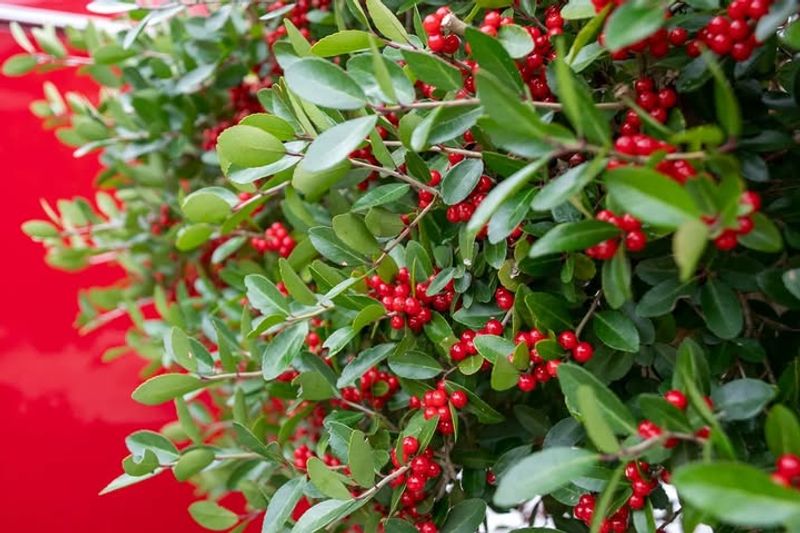
Native to the southeastern United States, yaupon holly thrives in Georgia’s climate like few other plants can. Female plants produce abundant bright red berries that persist through winter, providing crucial food for birds when other sources become scarce.
The tiny, dark green leaves create fine texture year-round, and the plant’s natural form ranges from upright columns to spreading mounds depending on the variety.
Yaupons handle challenging conditions that defeat many other shrubs. They tolerate salt spray in coastal Georgia, survive periodic flooding, and push through drought once established.
This adaptability makes them ideal for problem areas where other plants struggle. Full sun to partial shade works equally well, and they’re not particular about soil type as long as drainage is adequate.
Consider dwarf varieties for low hedges or foundation plantings, typically staying under four feet tall. Standard forms can grow fifteen to twenty feet, perfect for screening or small tree substitutes.
Only female plants produce berries, and they need a male pollinator nearby, so ask your nursery about plant sex before purchasing.
Pruning can be done anytime, and these hollies recover quickly from heavy cutting if you need to reduce size.
Their minimal maintenance requirements and wildlife value make them exceptional choices for Georgia yards.
5. Boxwood Keeps Structure In Every Season
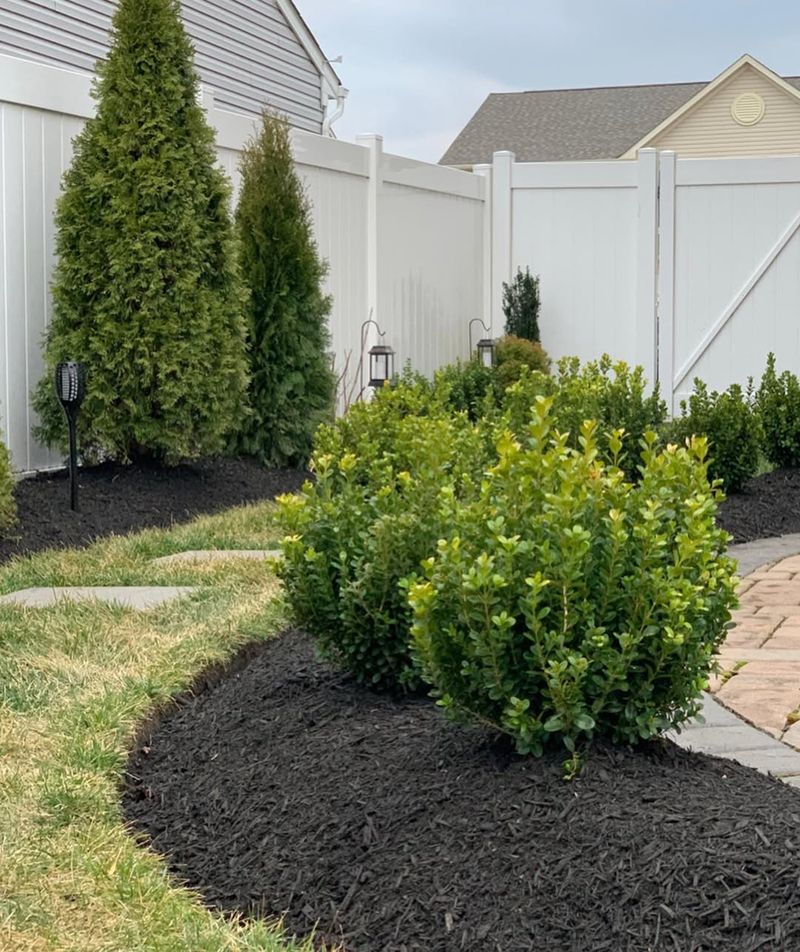
Boxwoods have defined formal gardens for centuries, and they perform that same role beautifully in modern Georgia landscapes.
Their dense branching and small leaves create the tightest, most refined texture of any evergreen shrub commonly grown in the state.
Whether sheared into geometric shapes or left to develop natural rounded forms, boxwoods provide structure that anchors garden designs through all four seasons.
Several varieties suit different Georgia applications. English boxwood grows slowly but develops that classic, fine texture prized in traditional gardens.
American boxwood tolerates heat better and grows faster, reaching larger sizes more quickly. Korean boxwood, the most cold-hardy type, works well in north Georgia where occasional hard freezes occur.
All prefer partial shade in the hottest parts of the state.
Root rot can trouble boxwoods in poorly drained clay soil, common across much of Georgia. Amend planting areas with compost and consider raising beds slightly to improve drainage.
Space plants according to their mature size rather than planting too close for instant fullness, which restricts air circulation and invites disease. Light shearing in late spring maintains shape without stressing plants.
Despite some disease concerns, properly sited boxwoods remain remarkably long-lived, with some specimens thriving for decades in Georgia gardens.
6. Japanese Holly Stays Dense And Green All Year
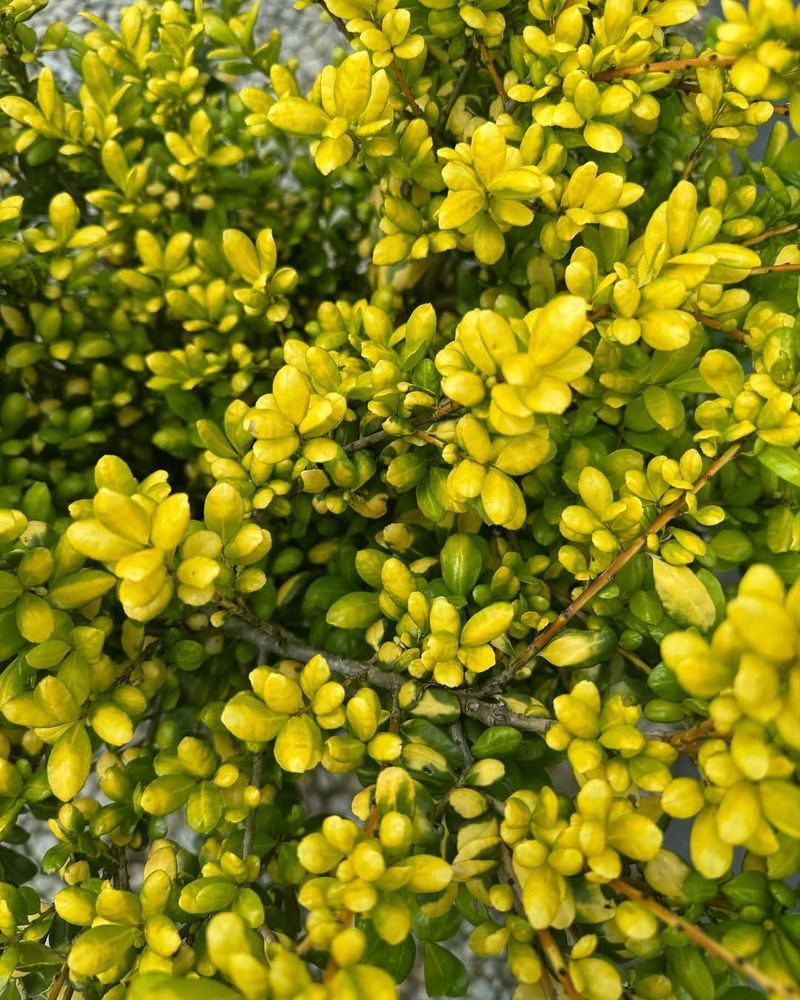
Japanese holly fools many people at first glance because its small, serrated leaves look nothing like traditional holly foliage.
Instead, they resemble boxwood leaves, giving you that same fine texture and formal appearance with better disease resistance in Georgia’s humid climate.
The dense branching creates solid masses of green that hold their color through every season without bronzing in winter cold.
Compact varieties like ‘Soft Touch’ and ‘Carissa’ stay under three feet tall, making them perfect for foundation plantings or low borders. Larger types such as ‘Helleri’ reach four feet, useful for taller hedges or mass plantings.
Unlike true hollies, Japanese holly berries are black rather than red and often hidden within the foliage, so these shrubs are grown primarily for their evergreen leaves rather than showy fruit.
Japanese hollies adapt to sun or shade across Georgia, though they appreciate some afternoon protection in the southern parts of the state. They tolerate pruning exceptionally well, bouncing back quickly from shearing or selective cuts.
Spider mites occasionally appear during hot, dry weather, but a strong spray from the hose usually controls light infestations.
These shrubs prefer consistent moisture and benefit from mulch that keeps roots cool.
Their versatility and reliability make them go-to choices for Georgia landscapes needing evergreen structure.
7. Juniper Maintains Blue Green Color Through Heat And Cold
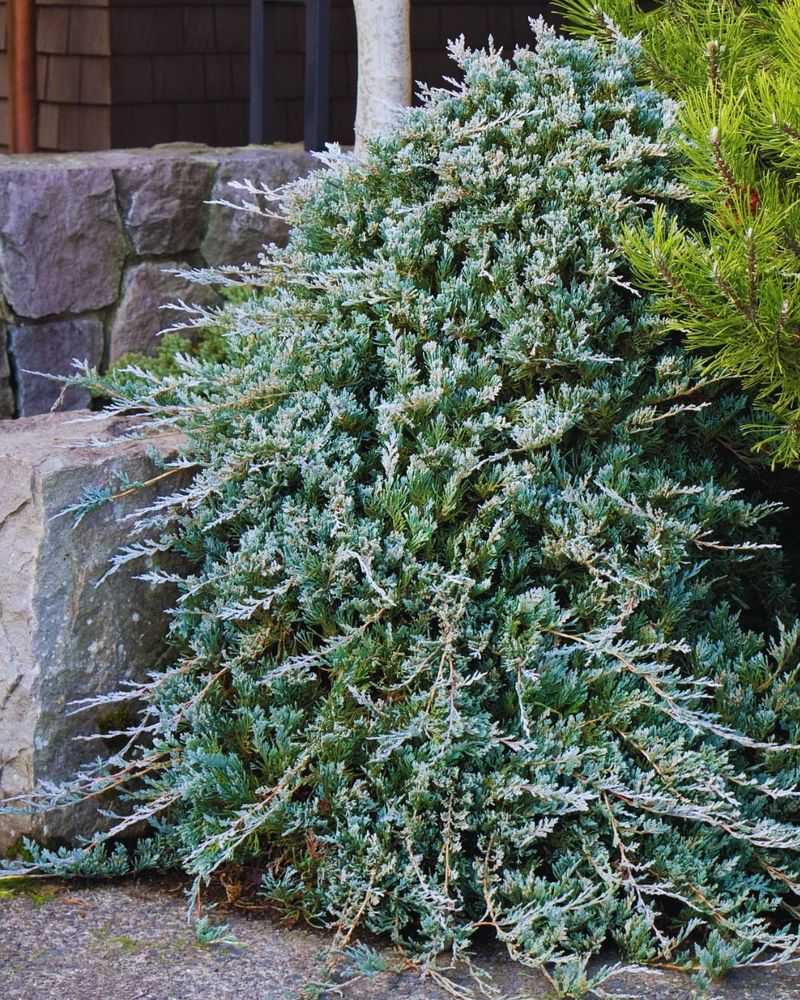
Junipers bring a completely different texture to Georgia landscapes with their needle-like or scale-like foliage. Many varieties display blue-green or silver-blue coloration that contrasts beautifully with the darker greens of broadleaf evergreens.
This unique color stays consistent year-round, providing cool tones that balance warmer landscape hues. From low groundcovers to upright columns, junipers offer forms for nearly any design need.
Drought tolerance ranks among juniper’s greatest strengths once plants establish deep root systems. They handle Georgia’s summer heat without wilting or browning, even during extended dry spells.
Full sun brings out the best color and densest growth, though most varieties tolerate light shade. Well-drained soil is essential because junipers rot quickly in constantly wet conditions, making them poor choices for low spots that collect water.
Spreading junipers like ‘Blue Rug’ and ‘Bar Harbor’ work wonderfully as groundcovers on slopes or in rock gardens, controlling erosion while requiring almost no maintenance.
Upright forms such as ‘Skyrocket’ create narrow vertical accents without taking much horizontal space.
Avoid shearing junipers into tight shapes because cutting into old wood rarely produces new growth. Instead, use selective pruning to maintain natural forms.
Bagworms sometimes attack junipers in Georgia, so check plants in late spring and remove any bags you find before the pests mature.
8. Distylium Stays Glossy And Reliable In Georgia Landscapes
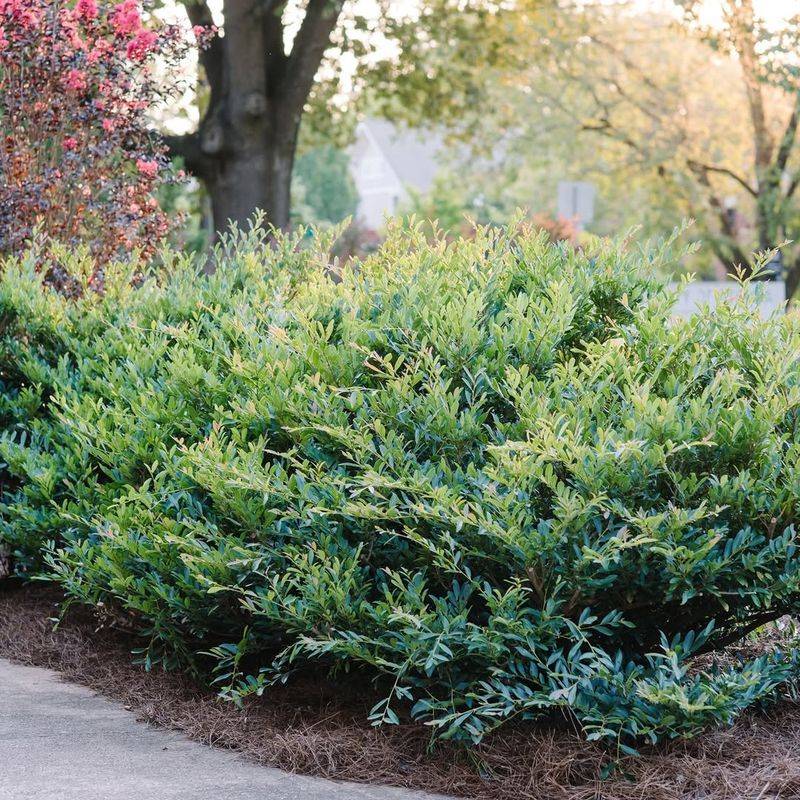
Distylium has emerged as one of the most exciting evergreen shrubs for Georgia in recent years. Breeders have developed varieties specifically for southern landscapes, and these plants deliver outstanding performance with almost zero maintenance.
Their glossy leaves stay rich green throughout the year, with some cultivars showing burgundy or bronze tones on new growth that adds seasonal interest. Small red flowers appear in late winter, though they’re subtle rather than showy.
Compact varieties like ‘Vintage Jade’ stay under three feet tall and wide, perfect for small gardens or tight spaces. ‘Linebacker’ grows larger and denser, reaching six feet, ideal for privacy hedges or foundation plantings.
All distylium varieties share exceptional heat tolerance, drought resistance once established, and remarkable freedom from pests and diseases.
They’ve proven tough enough to handle full Georgia sun yet adaptable enough to grow in partial shade.
These shrubs require virtually no pruning to maintain attractive shapes, naturally forming rounded mounds without intervention. They tolerate a wide range of soil types and aren’t fussy about pH like some acid-loving plants.
Deer ignore them, another significant advantage in areas where browsing pressure is high.
Plant distylium anywhere you want reliable evergreen presence without constant attention, and they’ll reward you with years of steady, attractive growth across all Georgia regions.
9. Dwarf Southern Magnolia Keeps Large Shiny Leaves Year Round
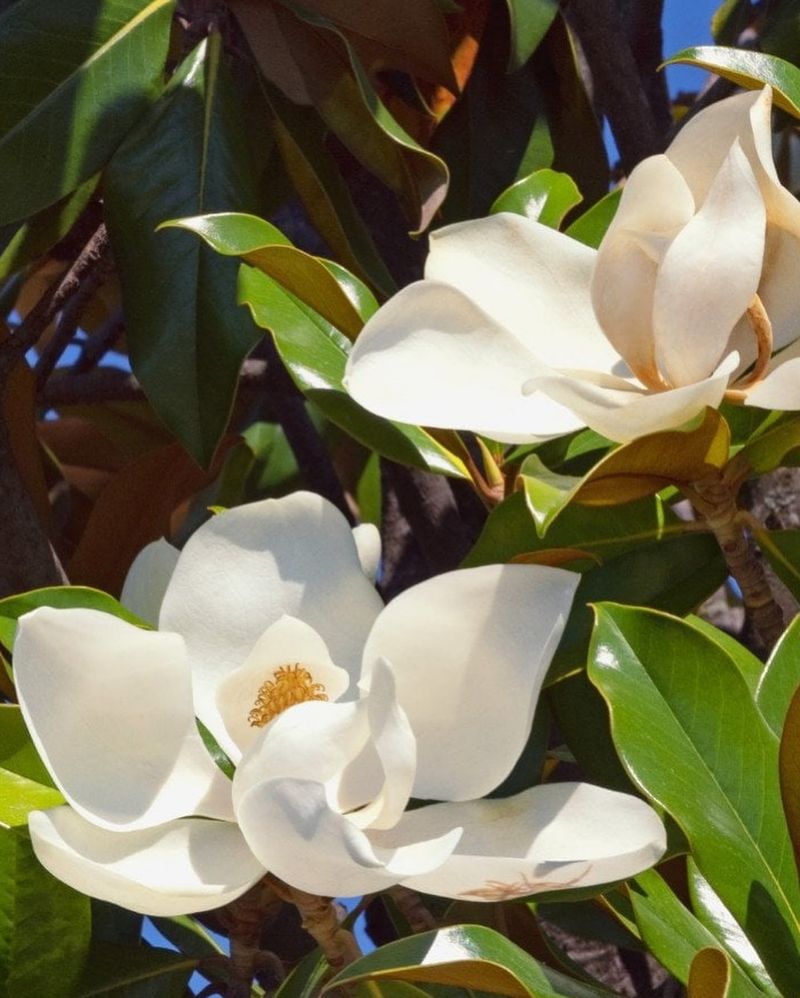
Southern magnolias typically grow into massive trees, but dwarf cultivars bring that same iconic foliage to shrub-sized packages perfect for smaller Georgia yards.
Their leaves are the largest of any evergreen shrub commonly grown in the state, with glossy dark green tops and rusty brown undersides that flutter in breezes.
Creamy white flowers appear in late spring and summer, filling the air with lemony fragrance and creating dramatic contrasts against the dark foliage.
Varieties like ‘Little Gem’ reach ten to fifteen feet tall at maturity, much smaller than the sixty-foot standard magnolia trees. They work beautifully as specimen plants, foundation shrubs, or even espalier subjects against walls.
Full sun produces the most flowers and densest growth, though plants tolerate some shade. Southern magnolias are true Georgia natives, so they’re perfectly adapted to the state’s climate, soil, and weather patterns.
These shrubs drop leaves year-round rather than all at once, which some people find messy but others consider a small price for such dramatic evergreen presence.
The large leaves decompose slowly, so rake them up if you prefer tidy beds or leave them as natural mulch.
Magnolias rarely need pruning except to remove damaged branches.
They establish slowly but live for many decades once settled, becoming permanent landscape features that increase in character and beauty with age.