10 Fast Growing Climbing Plants That Cover Fences Quickly In Michigan
A bare fence can make even a well kept Michigan yard feel unfinished. Many homeowners assume it takes years for climbing plants to cover a fence, but the right vines can transform that empty space surprisingly fast.
With the right choice, a plain stretch of wood or chain link can become a lush green wall within a single growing season. Michigan’s climate actually works well for many vigorous climbing plants.
Warm summers encourage rapid growth, while cold winters help keep aggressive vines under control. Gardeners across the Upper and Lower Peninsulas often rely on these fast growers to add privacy, soften hard edges, and bring life to overlooked corners of the yard.
Whether you want bright blooms, dense leafy coverage, or plants that attract birds and pollinators, the right vine can make a dramatic difference in your landscape.
1. Clematis

Few flowering vines can match the showstopping beauty of clematis, and Michigan gardeners have been falling for it for good reason. This vine comes in hundreds of varieties, offering colors ranging from deep purple and bright pink to snowy white and soft lavender.
Plant it along a fence in full sun or partial shade, and it will reward you generously with blooms from late spring through early fall.
Clematis grows quickly once its roots settle in, and it uses twisting leaf stalks to grip trellises and fence wires with ease. A helpful trick experienced gardeners swear by is keeping the roots shaded while the top of the plant soaks up sunlight.
You can place a flat stone near the base or plant a low-growing perennial nearby to keep the soil cool and moist.
Pruning is the key to keeping clematis looking its best year after year. Different varieties have different pruning needs, so checking the label when you buy is always a smart move.
In Michigan, most clematis varieties are reliably cold-hardy and bounce back strong every spring, making them one of the most rewarding climbers you can plant along any fence.
2. Trumpet Vine (Campsis Radicans)
Hummingbirds will find your yard before you even finish planting trumpet vine, and that is one of its most exciting selling points.
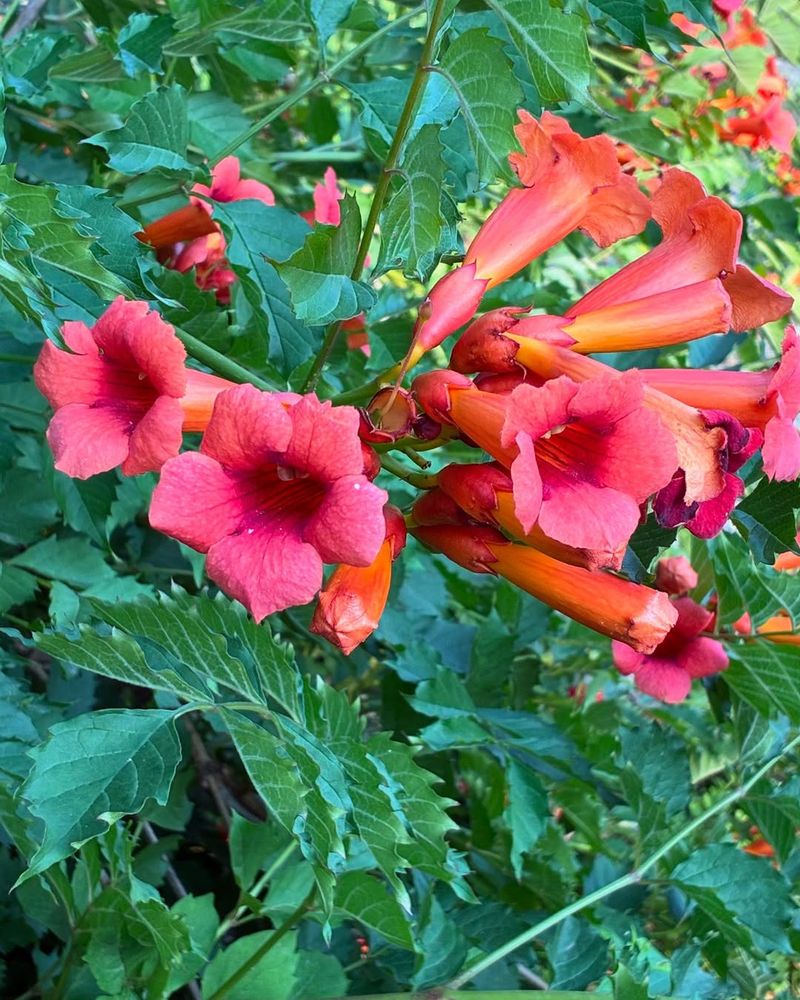
The bold, fiery orange and red trumpet-shaped blooms are practically irresistible to these tiny birds, and the vine itself grows with a kind of enthusiasm that is hard to beat.
In a single season, trumpet vine can shoot up to 30 feet, covering a fence faster than almost any other climber in Michigan.
It thrives in full sun and prefers well-drained soil, but it is surprisingly adaptable to less-than-perfect conditions. Once established, this vine is extremely tough and handles Michigan winters without much fuss.
The woody stems cling to surfaces using small aerial rootlets, so it can attach directly to fences, walls, and pergolas without needing extra wire or support.
One thing to keep in mind is that trumpet vine can spread aggressively if left unchecked. Regular pruning in late winter or early spring keeps it tidy and encourages an even more spectacular bloom show through summer.
Plant it where you want bold, reliable coverage and do not mind giving it a firm trim each year. It is one of the hardest-working climbers available to Michigan gardeners who want fast, dramatic results.
3. Virginia Creeper (Parthenocissus Quinquefolia)
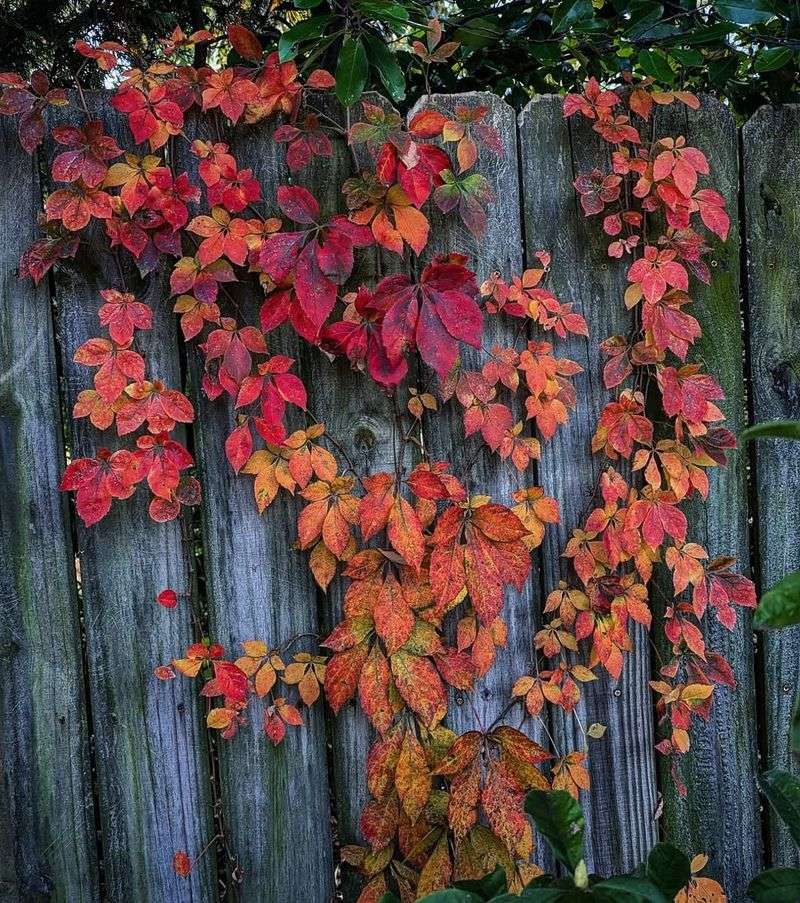
Virginia creeper is one of those plants that makes you stop in your tracks every single fall. During summer it offers a thick wall of rich green leaves, but once October rolls around in Michigan, the entire vine transforms into a blazing display of deep red and crimson.
Few plants put on a seasonal show quite like this native climber, and it does it all with very little help from you.
This vine is native to Michigan and much of eastern North America, which means it is perfectly adapted to the local climate and soil conditions. It clings to fences, brick walls, and wooden structures using small adhesive discs at the tips of its tendrils.
There is no need for extra wires or support structures, making it one of the most low-maintenance fence coverers you can choose.
Virginia creeper grows vigorously in full sun, partial shade, and even deep shade, which makes it incredibly versatile for different parts of your yard. It can cover a long fence run surprisingly fast, especially after its first full growing season in the ground.
Wildlife also loves it, as birds feed on the small dark berries in fall. For Michigan gardeners looking for a tough, beautiful, and native climbing plant, Virginia creeper is an outstanding choice.
4. Honeysuckle (Lonicera)
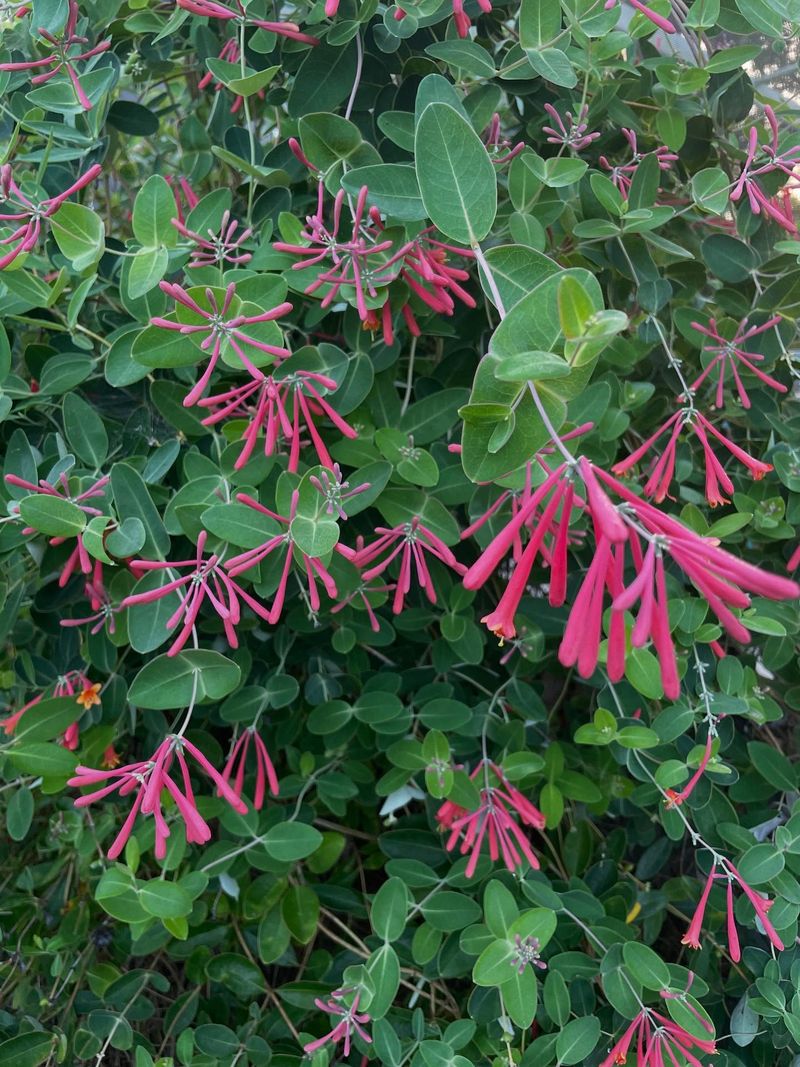
The sweet, unmistakable scent of honeysuckle drifting through a warm Michigan evening is something that stays with you.
This fast-growing vine has been a garden favorite for generations, and it earns that reputation by covering fences quickly while filling the air with a fragrance that is hard to describe but impossible to forget.
Butterflies, bees, and hummingbirds all flock to its tubular blooms throughout summer.
Honeysuckle thrives in full sun to partial shade and grows happily in well-drained soil across most of Michigan. It twines naturally around fence posts, wires, and trellises without needing much guidance.
Heights of 15 to 30 feet are common for well-established plants, meaning a single vine can cover a substantial stretch of fencing in just a few seasons.
For Michigan gardeners, choosing a native or non-invasive variety is important. Major Wheeler and Dropmore Scarlet are two excellent cultivars that bloom heavily and stay well-behaved in the garden without spreading aggressively into natural areas.
Regular watering during the first growing season helps the plant establish strong roots quickly.
After that, honeysuckle is remarkably self-sufficient and will reward you with blooms and fragrance every summer for many years to come, making it a true garden treasure worth planting along any fence.
5. Wisteria

There is something almost magical about wisteria in full bloom, with its long, drooping clusters of purple or white flowers hanging like living curtains from a fence or pergola.
In Michigan, wisteria blooms in late spring and the display lasts for several weeks, turning an ordinary fence into something that looks straight out of a fairy tale. Gardeners who plant it once almost never want to be without it again.
Wisteria needs full sun and well-drained soil to perform at its best. It is also a vigorous grower that can reach up to 25 feet, so giving it a strong, sturdy support structure from the very beginning is essential.
A flimsy trellis will not hold up to a mature wisteria, so investing in solid fence posts or a heavy-duty arbor makes a big difference down the road.
Patience is part of the wisteria experience, as younger plants sometimes take a few years before they produce their first big bloom display. Once they hit their stride though, the flowering is spectacular and reliable every spring.
American wisteria varieties like Amethyst Falls are a great choice for Michigan because they are hardier in cold winters and less aggressive than some Asian varieties. Pruning twice a year keeps the plant shapely and encourages more blooms the following season.
6. Morning Glory (Ipomoea Tricolor)
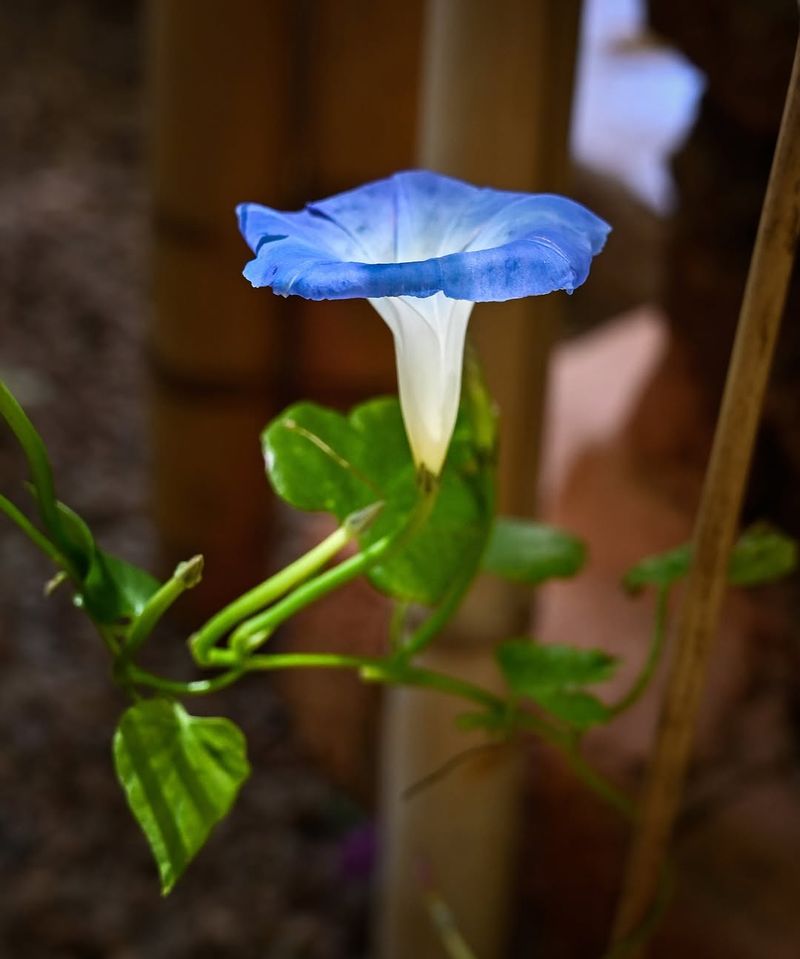
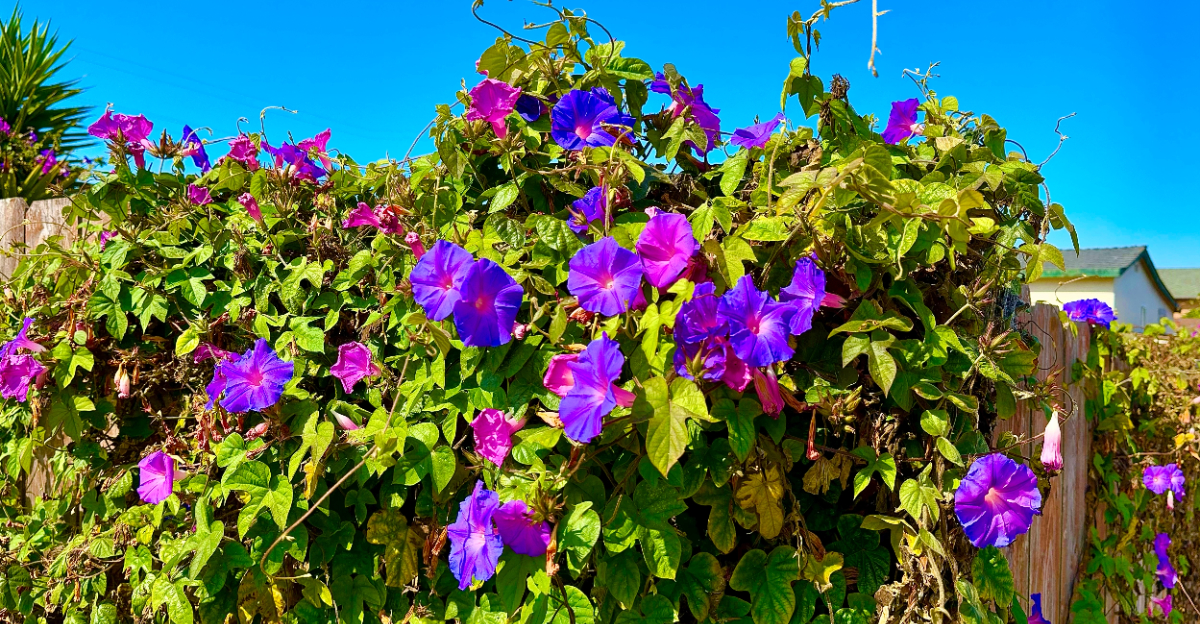
Morning glory is the ultimate quick-fix climbing plant for Michigan gardeners who want serious fence coverage in a single season.
As an annual vine, it completes its entire life cycle from seed to fully bloomed fence-coverer between spring and fall, making it one of the fastest options available.
Plant seeds directly in the ground after the last frost and watch this vine race up your fence with impressive speed.
The trumpet-shaped flowers open fresh every morning in shades of vivid blue, purple, pink, and white, then gently close by afternoon. That daily rhythm gives the garden a lively, ever-changing feel throughout the summer months.
Morning glory prefers full sun and well-drained soil, and it actually performs better in slightly leaner soil since too much fertilizer pushes leafy growth at the expense of flowers.
One creative trick many Michigan gardeners use is planting morning glory alongside a perennial climber. The morning glory provides quick, colorful coverage while the slower perennial vine establishes its roots below.
By the following year the perennial takes over, and you can decide whether to replant the annual for extra color or let the perennial shine on its own.
Morning glory seeds are inexpensive and widely available, making this one of the most budget-friendly ways to transform a bare fence in one growing season.
7. Climbing Hydrangea (Hydrangea Anomala Petiolaris)
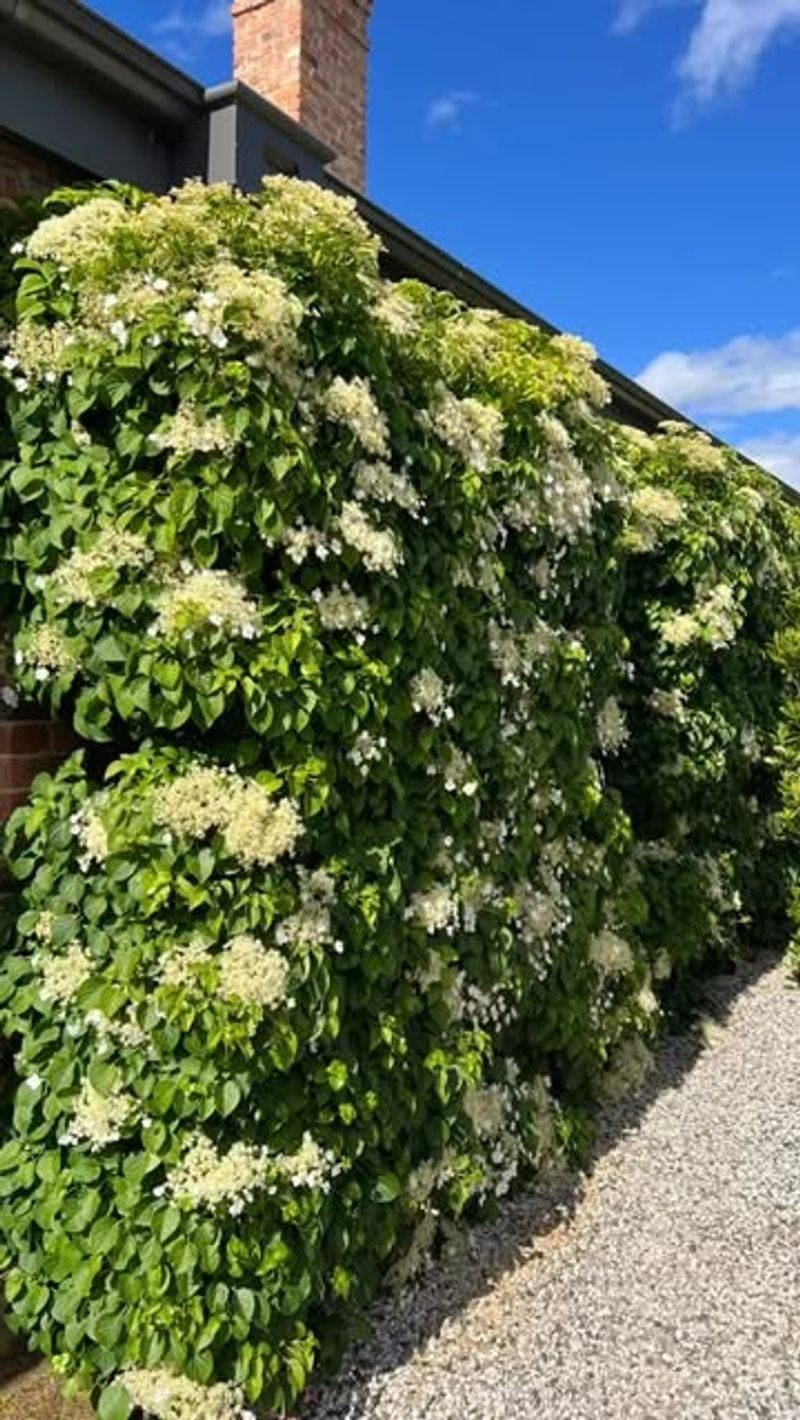
Shaded fences in Michigan often feel like a problem without a solution, but climbing hydrangea is exactly the answer many gardeners have been searching for.
Unlike most climbing plants that demand full sun, this stunning vine thrives in partial to full shade and produces gorgeous, flat-topped clusters of white flowers every June.
The blooms have a delicate, lacy look that feels both elegant and completely natural in a woodland-style garden.
Climbing hydrangea attaches itself to fences and walls using small aerial rootlets, clinging firmly without damaging most surfaces.
The first year or two after planting, it focuses on growing its root system rather than shooting upward, so do not be discouraged by slow early growth.
Once established, it picks up the pace significantly and can eventually reach up to 50 feet, creating a thick, layered coverage that looks incredible all season long.
Beyond the summer flowers, climbing hydrangea offers attractive peeling bark on mature stems and lovely yellow fall foliage, giving it genuine four-season interest.
It is also very cold-hardy, which makes it a reliable performer across Michigan even in the colder northern regions.
If you have a shady fence that nothing else seems to cover well, climbing hydrangea is the plant that will finally solve that problem and make that corner of your yard something truly beautiful.
8. Black-Eyed Susan Vine (Thunbergia Alata)

Bright, cheerful, and absolutely bursting with personality, the black-eyed Susan vine brings a tropical energy to Michigan gardens that is hard to match.
The flowers are small, round, and vivid, typically golden yellow or orange with a deep chocolate-brown center that gives the plant its memorable name.
From early summer through the first frost, this vine blooms almost continuously, keeping your fence looking festive for months on end.
As an annual in Michigan, black-eyed Susan vine grows quickly from transplants or seeds started indoors about six weeks before the last frost date. It reaches around 6 to 8 feet tall, making it ideal for shorter fence panels, mailbox posts, or container trellises on a patio or deck.
Full sun and well-drained soil are its two main requirements, and it responds well to regular watering during hot summer stretches.
What makes this vine especially fun is how well it pairs with other plants. Try growing it alongside a purple clematis or a white-flowered vine for a bold, contrasting color combination that looks intentional and designer-worthy.
The flowers also attract bees and butterflies, adding even more life and movement to your fence area. For Michigan gardeners who want quick, colorful results without a big investment of time or money, this vine is an absolute gem worth planting every single year.
9. American Bittersweet (Celastrus Scandens)
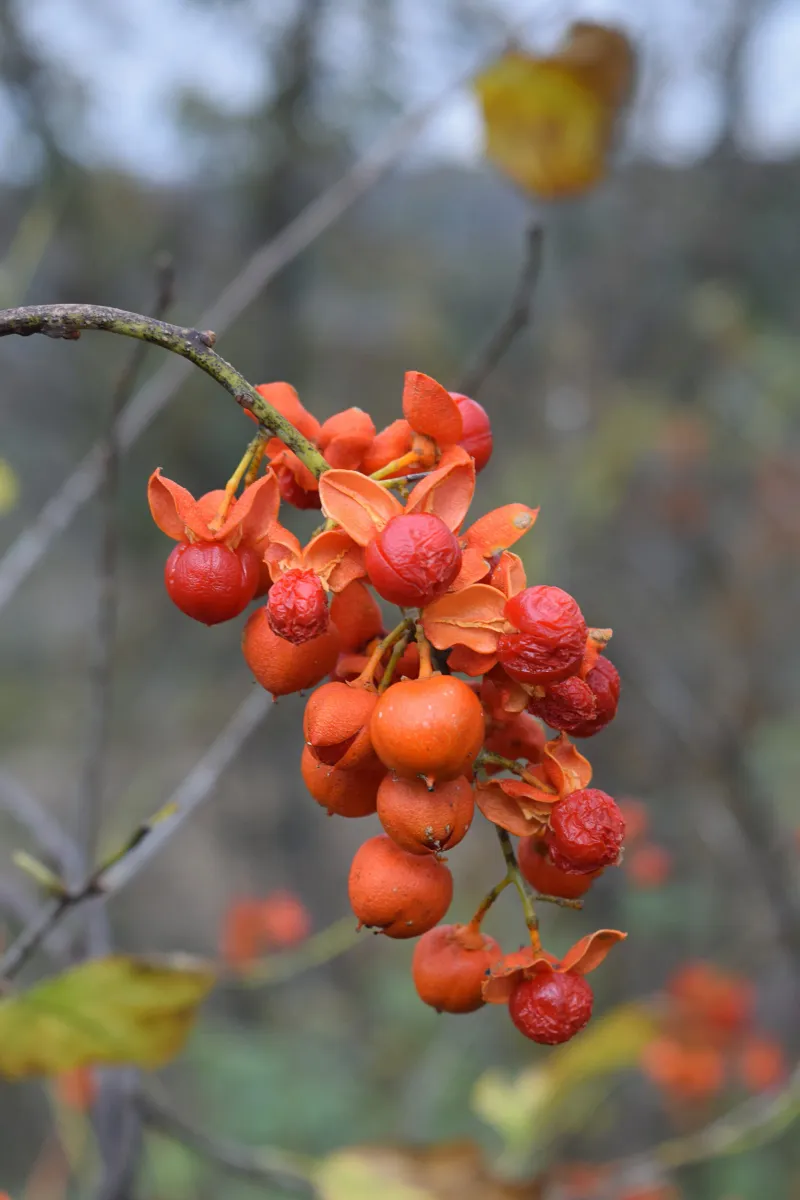
American bittersweet is a native Michigan vine that most people recognize from its spectacular fall display of bright orange and red berries.
Those colorful berry clusters cling to the vine well into winter, making it one of the most visually striking plants you can grow along a fence.
Birds absolutely love the berries, so planting bittersweet is also a wonderful way to attract wildlife to your yard during the colder months.
This vine is a vigorous grower that can reach 20 feet or more, twining its stems tightly around fence posts and wires as it climbs. It grows well in full sun to partial shade and tolerates a wide range of soil types, including the heavy clay soils common in many parts of Michigan.
That adaptability makes it a practical choice for yards where other vines might struggle to establish.
One important detail to know before planting is that American bittersweet produces separate male and female plants, meaning you need at least one of each for berry production.
Most garden centers sell them in pairs or label them clearly, so getting the right combination is straightforward. Choose the native American bittersweet over the Asian variety, which is invasive in Michigan.
With the right selection and a little space to stretch, American bittersweet becomes one of the most rewarding and wildlife-friendly climbing plants you can add to your Michigan fence line.
10. Hops (Humulus Lupulus)
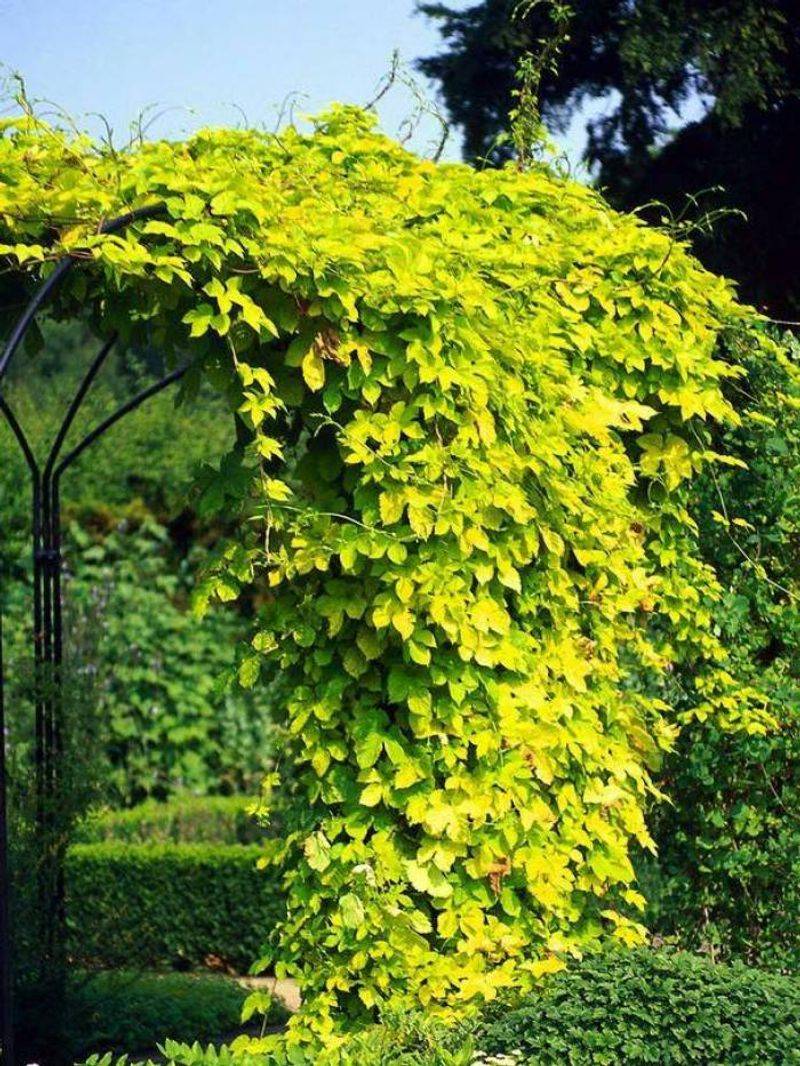
Hops might be best known for their role in brewing beer, but Michigan gardeners have discovered that this incredibly fast-growing vine is also one of the best fence-coverers available.
In a single season, hops can grow 20 to 25 feet, producing a dense wall of large, textured leaves that creates impressive privacy coverage almost overnight.
Few plants match its raw speed when it comes to transforming a bare fence into a lush green screen.
The vine thrives in full sun and well-drained soil, and it grows from a perennial root system that gets stronger and more productive each year. During summer the plant produces papery, cone-shaped flowers called hops, which have a pleasant, slightly earthy fragrance.
The foliage itself is bold and attractive, with deeply lobed leaves that create interesting texture and movement in a breeze.
Hops die back to the ground each winter in Michigan, which actually makes them very easy to manage. Simply cut the old vines down in fall and let the roots rest until spring, when new shoots emerge with remarkable energy.
The plant comes back faster and fuller every year, making it more impressive with each growing season.
For Michigan gardeners who prioritize speed above everything else, hops is arguably the single fastest fence-covering climbing plant you can grow, and it doubles as a genuinely useful crop if you enjoy home brewing.