8 Fast-Growing Flowers In California That Love Spring Sun
There is something deeply satisfying about looking out the window and seeing the yard come back to life after the winter slumber. While we have all spent years perfecting the art of the slow-growing perennial, there is a special kind of joy in finding plants that don’t make us wait.
With the California spring sun finally making its daily appearance, the timing is perfect to add some immediate color to your outdoor space.
Whether you are looking to fill a gap in a well-established border or brighten up a few pots on the patio, certain varieties thrive under that bright West Coast sky.
A handful of local favorites are known for their ability to take off almost the moment their roots hit the soil.
From native wildflowers that paint the hillsides to reliable garden classics, a few specific choices will have your garden overflowing with blooms before the summer heat even arrives.
1. California Poppy That Shines
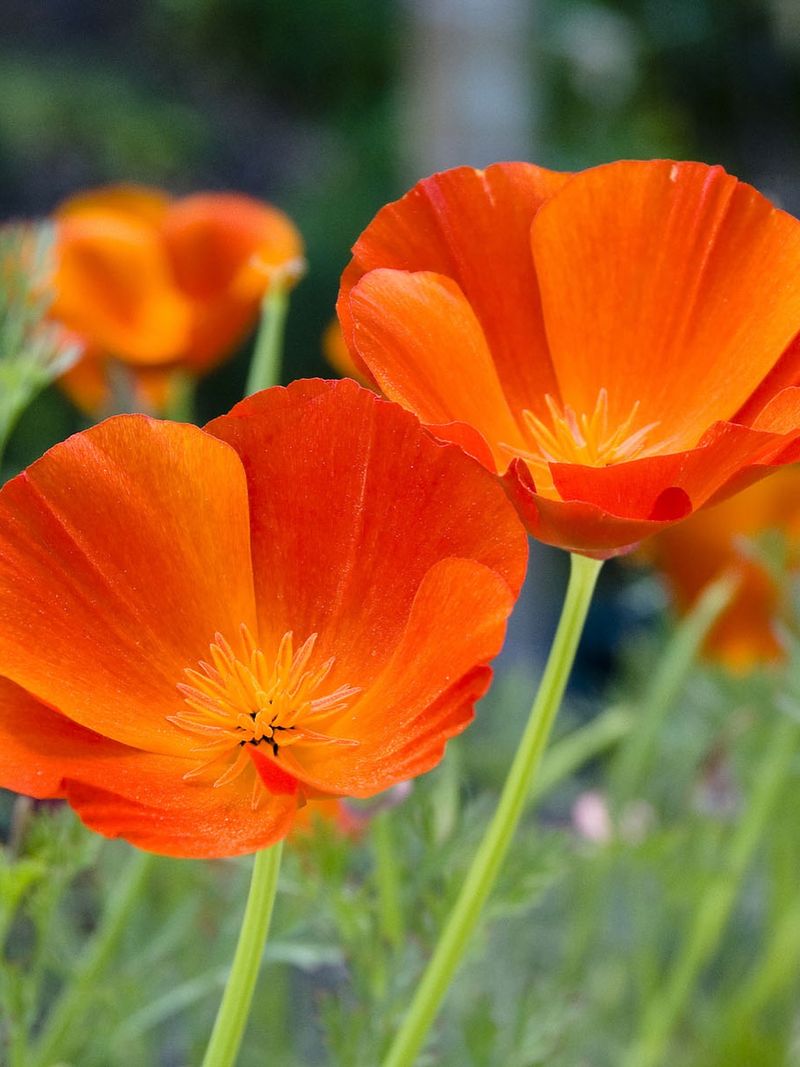
When spring sunshine returns to California, bright orange blooms can suddenly brighten fields, borders, and garden pots, signaling that the season is underway. One of the most iconic of these early bloomers is the California Poppy (Eschscholzia californica), the state flower known for its cheerful color and relatively low maintenance.
Its delicate petals open in full sun, creating vibrant displays that can be admired from late February through May.
California poppies grow from seeds sown directly into the soil, ideally in a sunny spot with well-drained conditions. Germination and bloom timing depend on soil quality, moisture, and temperature, but in favorable conditions, plants often begin flowering within about 60 to 70 days after sowing.
Once established, they are fairly drought-tolerant and require minimal care, making them suitable for gardeners seeking quick, early-season color.
Another advantage of these poppies is their ability to self-seed. Many plants return year after year without intervention, gradually forming larger patches that can resemble naturalized meadows.
Their vibrant color pairs beautifully with native grasses and other spring wildflowers, and the blooms provide an early source of nectar for bees and other pollinators.
By incorporating California poppies into garden beds or containers, gardeners can enjoy both the aesthetic appeal and ecological benefits of a hardy, native plant that thrives under the state’s sunny skies, offering cheerful color and early-season support for wildlife while requiring relatively little maintenance.
2. Desert Bluebells With Electric Blue Bells
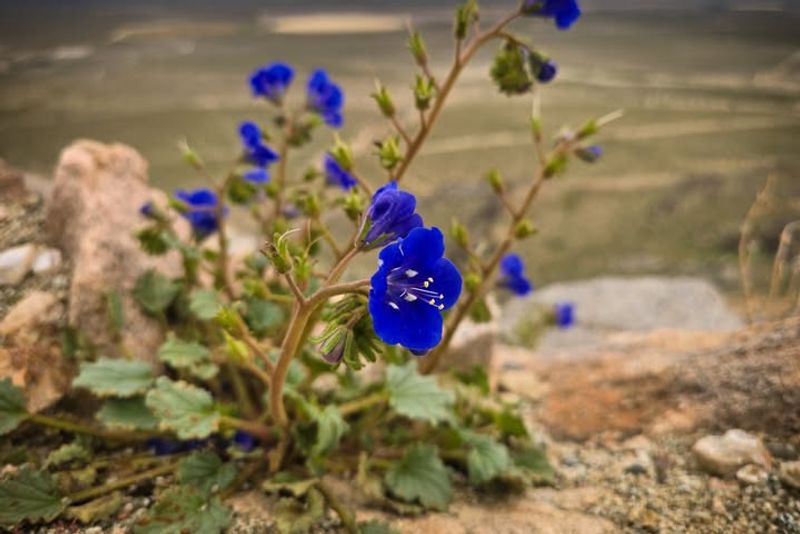
In the sun-baked landscapes of Southern California, even small patches of vivid color can transform gardens and open spaces. Desert Bluebells, with their deep blue-purple, bell-shaped flowers, provide just that splash of drama in sandy or rocky soils.
These annuals thrive in full sun and well-drained conditions, making them particularly suited to the dry regions of the Mojave Desert, Inland Empire, and other similar climates across the state.
Typically reaching between 6 and 20 inches in height, Desert Bluebells remain compact enough to work well in borders, containers, or rock gardens, while still offering a striking visual contrast against light-colored soil. When sown in favorable conditions, blooms often appear within six to eight weeks, though the exact timing depends on soil, temperature, and moisture.
While these plants are short-lived, they are capable of filling small areas quickly with vibrant color that attracts native pollinators. Bees and other beneficial insects frequently visit the flowers, supporting local ecosystems.
Gardeners should be aware that the leaves can sometimes cause mild skin irritation, so wearing gloves during planting or maintenance is recommended. With thoughtful soil preparation, full sun placement, and careful watering in early growth stages, Desert Bluebells provide an eye-catching, low-maintenance option that enriches both the aesthetic and ecological value of California gardens during early spring.
3. Baby Blue Eyes Spreading Spring Color
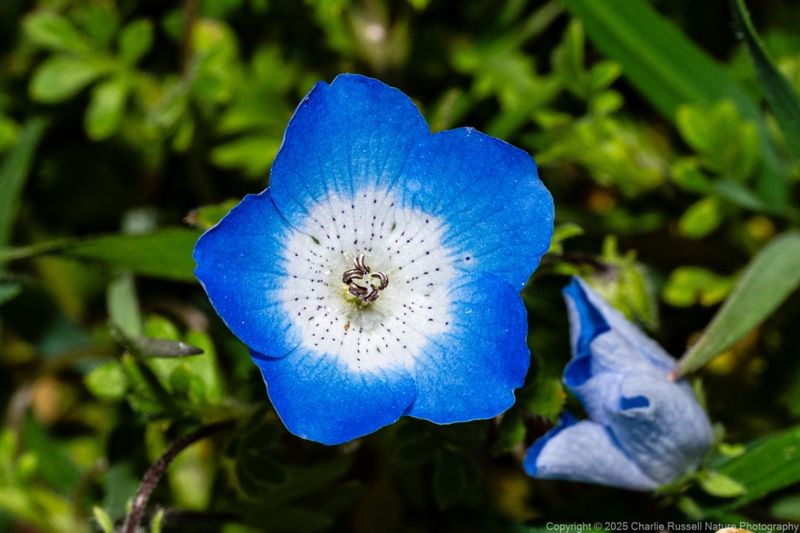
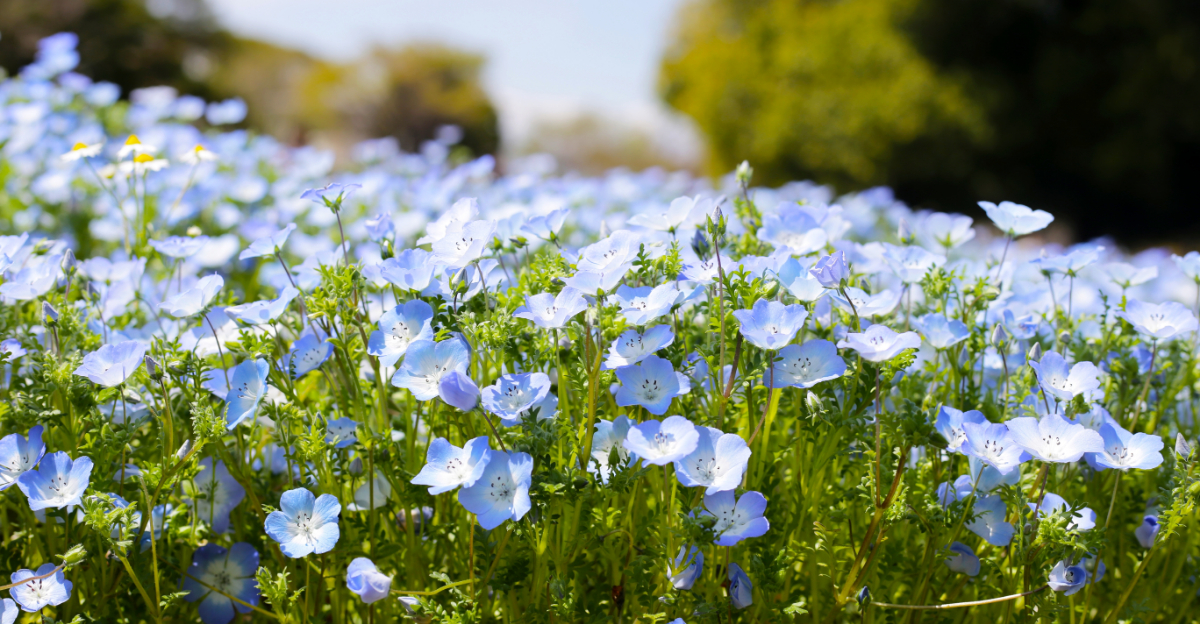
In early spring, garden beds, borders, and even open spaces can be transformed by carpets of delicate, sky-blue flowers with white centers. Baby Blue Eyes (Nemophila menziesii), a California native, are valued for their charm, versatility, and ability to naturalize over time, making them a favorite among gardeners seeking both beauty and ecological benefit.
These annuals thrive in mild coastal spring conditions but can also grow successfully in inland regions if provided with appropriate sun exposure and soil moisture.
Typically reaching heights of 6 to 12 inches, Baby Blue Eyes are ideal for groundcover, edging along pathways, filling spaces between taller plants, or softening the edges of larger beds. They perform best in full sun to partial shade and prefer consistently moist, well-drained soil.
Under favorable conditions, blooms often appear within seven to ten weeks of sowing, though timing can vary based on temperature, soil quality, and watering practices.
One of the plant’s notable features is its ability to self-seed. When sown in suitable locations, Baby Blue Eyes often return the following year, gradually expanding their coverage without additional effort.
Pairing them with California poppies produces a striking orange-and-blue contrast, while the blooms attract native bees, hoverflies, and other beneficial insects, supporting local pollinator populations. With careful attention to placement, soil, and sunlight, Baby Blue Eyes provide a low-maintenance, wildlife-friendly display that enhances both coastal and inland California gardens, offering early-season color and ecological value.
4. Common Sunflower That Follows The Sun
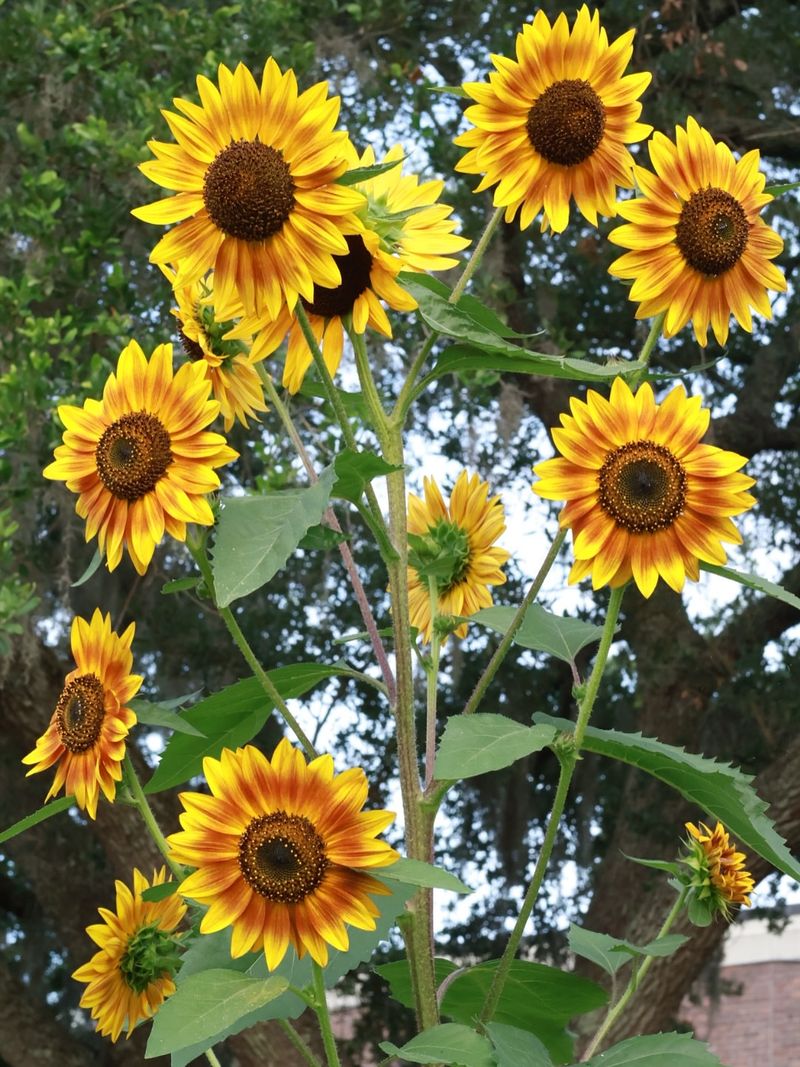
Nothing brightens a sunny California garden quite like the tall, vibrant blooms of the common sunflower (Helianthus annuus). These annuals create an immediate visual impact, adding height, color, and ecological value to a variety of landscapes.
Sunflowers grow best in full sun with well-drained soil and are adaptable to a range of soil types, though overly wet conditions can reduce performance. Depending on the variety, plants can reach heights from 2 to over 10 feet, making them versatile for both small gardens and large open spaces.
Seeds germinate readily when planted after the last frost, and under favorable conditions, flowering often occurs within approximately 70 to 85 days. Growth and bloom timing can vary based on soil fertility, sunlight, and watering.
Dwarf varieties, such as Sunspot, are well-suited for containers or limited garden spaces, while taller cultivars like Mammoth provide dramatic vertical structure.
Sunflowers are important for wildlife, attracting bees, butterflies, and other pollinators, which helps support local ecosystems. Young plants exhibit heliotropism, where flower heads track the sun throughout the day, creating dynamic visual movement in the garden.
Some varieties also produce edible seeds, though yield and flavor vary depending on growing conditions. With proper placement, care, and attention to sunlight and soil, sunflowers provide striking beauty, wildlife support, and potential harvest, making them a rewarding choice for gardeners of all experience levels across California.
5. Sweet Alyssum With Fragrant Tiny Flowers
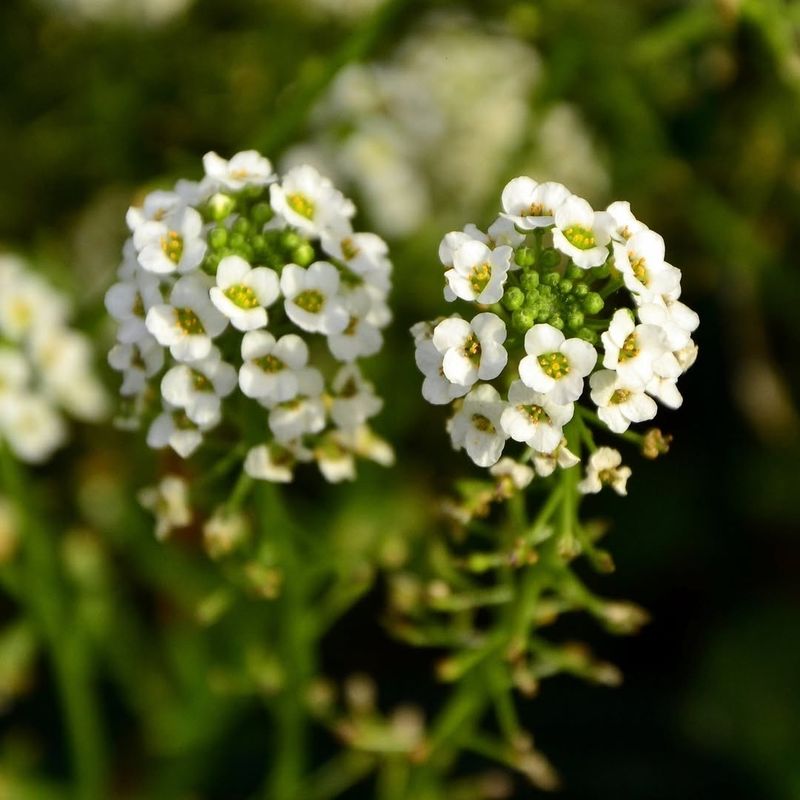
In garden paths, containers, or low borders, Sweet Alyssum (Lobularia maritima) creates dense, fragrant carpets of tiny flowers in shades of white, pink, or lavender, often filling the air with a subtle honey-like scent. This low-growing annual performs best in full to partial sun and prefers cool spring temperatures with well-drained soil, making it ideal for California gardens in both coastal and inland regions.
Blooming typically begins six to eight weeks after sowing, though timing can vary depending on soil quality, sunlight exposure, and moisture levels. Sweet Alyssum grows only 3 to 6 inches tall, which makes it especially useful for filling small gaps between plants, edging pathways, or cascading gracefully over container edges.
Its compact size and spreading habit allow gardeners to create continuous, low-maintenance floral coverage in a variety of garden spaces.
One of the standout benefits of Sweet Alyssum is its ability to attract beneficial insects, such as hoverflies and parasitic wasps, which help naturally manage pests in nearby vegetable beds or ornamental plantings. Regular deadheading or light trimming can encourage continued flowering and help maintain a tidy appearance.
In mild climates, Sweet Alyssum can bloom for an extended period if growing conditions remain favorable.
With careful placement, proper soil preparation, and adequate sunlight, this fragrant annual provides vibrant spring color, pollinator support, and low-maintenance ground coverage. Its combination of beauty, ecological benefit, and ease of care makes Sweet Alyssum a practical and rewarding choice for California gardens.
6. Calendula That Adds Sunny Orange Blooms
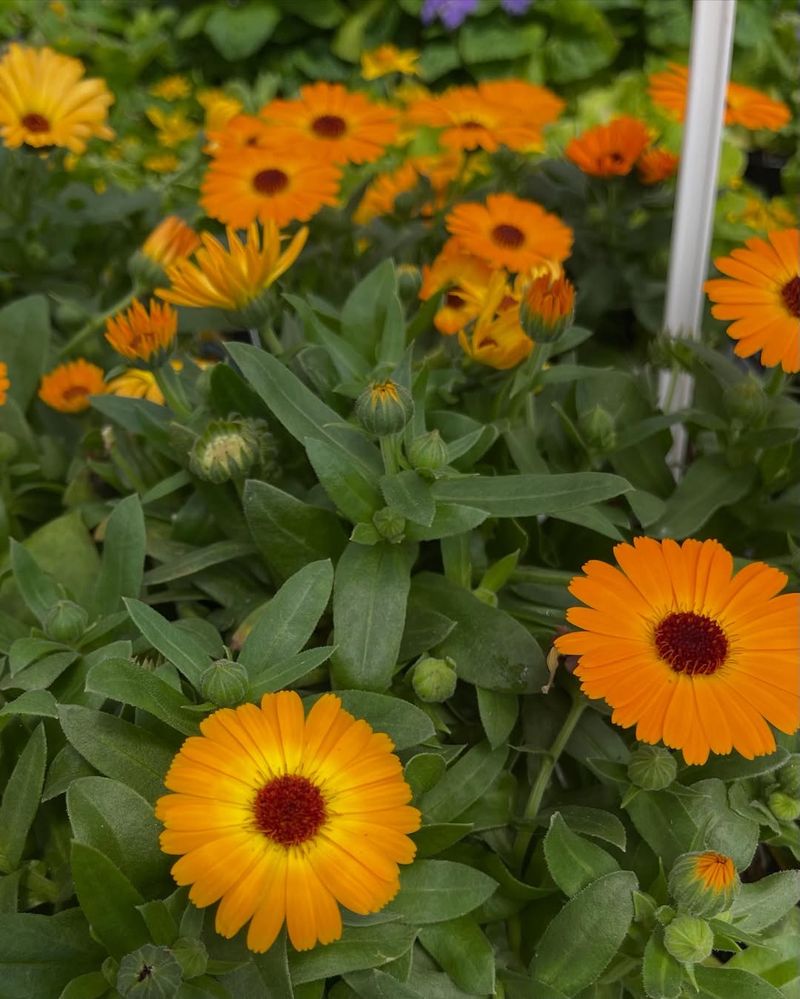
Adding bright orange and yellow hues to spring gardens, Calendula (Calendula officinalis), also called pot marigold, is a fast-growing annual that provides both color and practical benefits. Seeds typically germinate within 5 to 10 days under favorable conditions, and plants can start producing flowers within approximately 45 to 60 days, though timing depends on soil quality, moisture, and local temperature.
Calendula thrives in full sun with well-drained soil and tolerates a variety of soil types, including moderately fertile or sandy soils. It performs particularly well in California’s cooler coastal spring climates, but it can also grow successfully in warmer inland areas if watered appropriately.
The blooms are edible and have long been used to add color to salads, teas, and soups. They also have historical use in natural skincare preparations, including salves and infusions for soothing minor skin irritations.
Regular deadheading of spent flowers encourages continued blooming and helps maintain a tidy appearance. Under suitable conditions, Calendula also self-seeds, often returning the following year without additional planting, making it a low-maintenance choice for gardeners seeking early-season color.
Beyond their visual appeal, the bright flowers provide an important food source for bees and other pollinators during spring when nectar can be limited.
These combined traits – quick growth, ease of care, edible and decorative blooms, and pollinator support – make Calendula a versatile, rewarding plant for both novice and experienced gardeners across California, adding aesthetic, ecological, and culinary value to the garden.
7. Cosmos With Airy Butterfly-Friendly Blooms
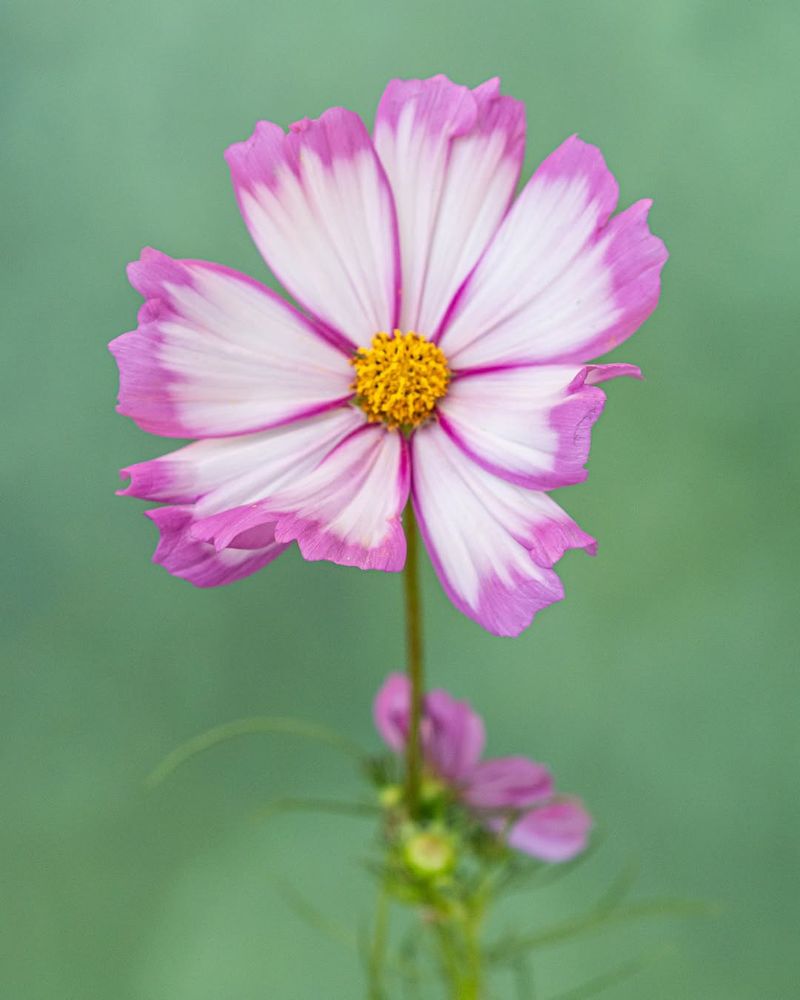
In sunny garden beds and borders, feathery foliage and delicate daisy-like blooms bring a soft, airy charm to spring and summer landscapes. Cosmos (Cosmos bipinnatus) are annual plants that perform best in full sun and tend to grow well in poor to average soils, as heavy fertilization can produce more leaves than flowers.
Their lightweight stems and fine-textured leaves provide movement in breezes, making them especially appealing in informal or cottage-style plantings.
These plants typically grow between 2 and 6 feet tall and bloom about eight weeks after sowing under favorable conditions. Bloom timing and growth can vary depending on factors such as soil type, sunlight, and watering frequency.
Cosmos flowers are highly attractive to pollinators, including butterflies and hummingbirds, providing both aesthetic beauty and ecological support. The long-lasting blooms also make excellent cut flowers, bringing their vibrant colors indoors while extending their enjoyment beyond the garden.
For best results, sow seeds after the last frost, spacing plants to allow airflow and proper development. Minimal care is required once plants are established, although occasional watering during prolonged dry periods helps maintain steady flowering.
Cosmos are particularly versatile for California gardens, as they combine quick growth, colorful blooms, and wildlife support in sunny locations. By including them in pollinator-friendly plantings, gardeners can create a lively, ecologically valuable landscape that provides continuous color from early summer through fall.
8. Morning Glory Climbing With Trumpet Flowers
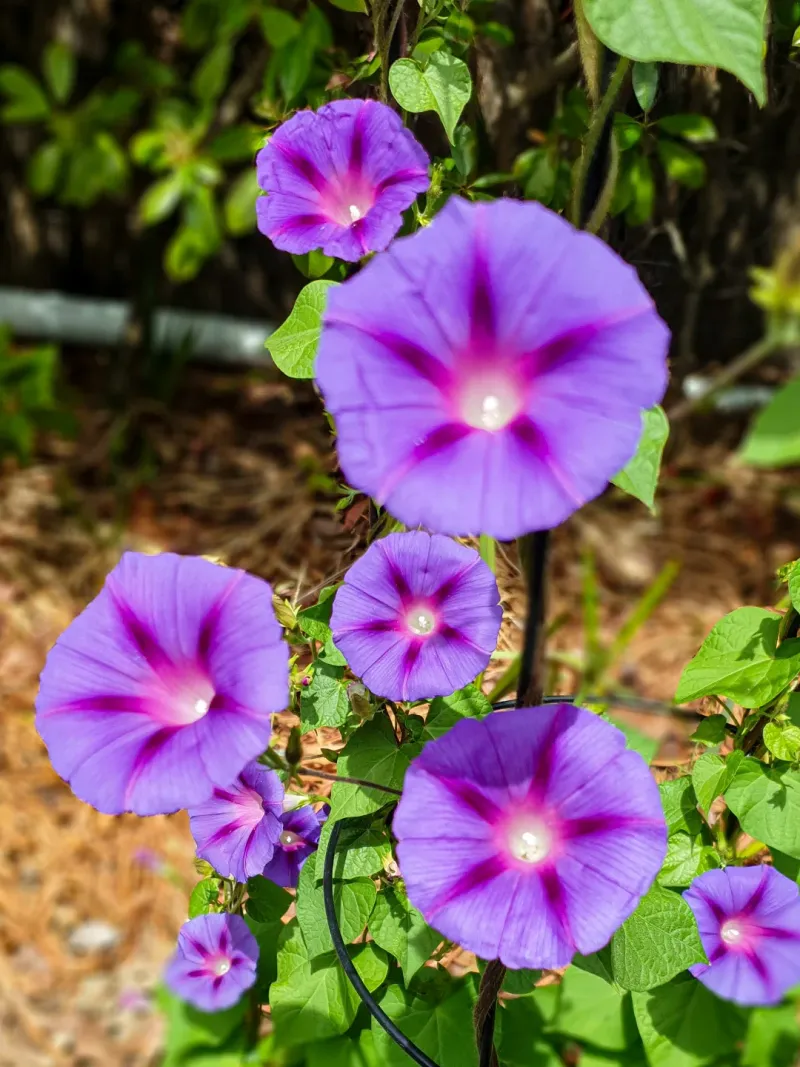
Climbing trellises, fences, or walls, Morning Glory vines produce trumpet-shaped blooms in shades of purple, blue, pink, and white. These fast-growing annual vines thrive in full sun with warm, well-drained soil, making them a reliable choice for sunny California gardens during spring and summer.
They can also tolerate slightly poorer soils, which makes them versatile for a variety of planting sites.
Seeds germinate most effectively when soaked overnight before planting, and blooms typically appear within 60 to 90 days under favorable conditions. Growth rate depends on sunlight, soil, and water availability, with vines able to climb several feet when provided support such as a trellis, fence, or arbor.
Once established, Morning Glories are relatively drought-tolerant, though consistent watering during extreme heat helps maintain flowering.
The flowers attract bees, butterflies, and hummingbirds, contributing to local pollinator populations and supporting the garden ecosystem. Gardeners should take care, as the seeds are toxic if ingested, so placement out of reach of pets or small children is recommended.
With proper care and support, Morning Glories can quickly turn bare structures into colorful vertical displays, providing continuous blooms from early spring through late summer. Their rapid growth, climbing habit, and vibrant flowers make them a favorite for adding both height and visual interest in residential and community gardens.