9 Fast-Growing Plants For Backyard Privacy In Ohio
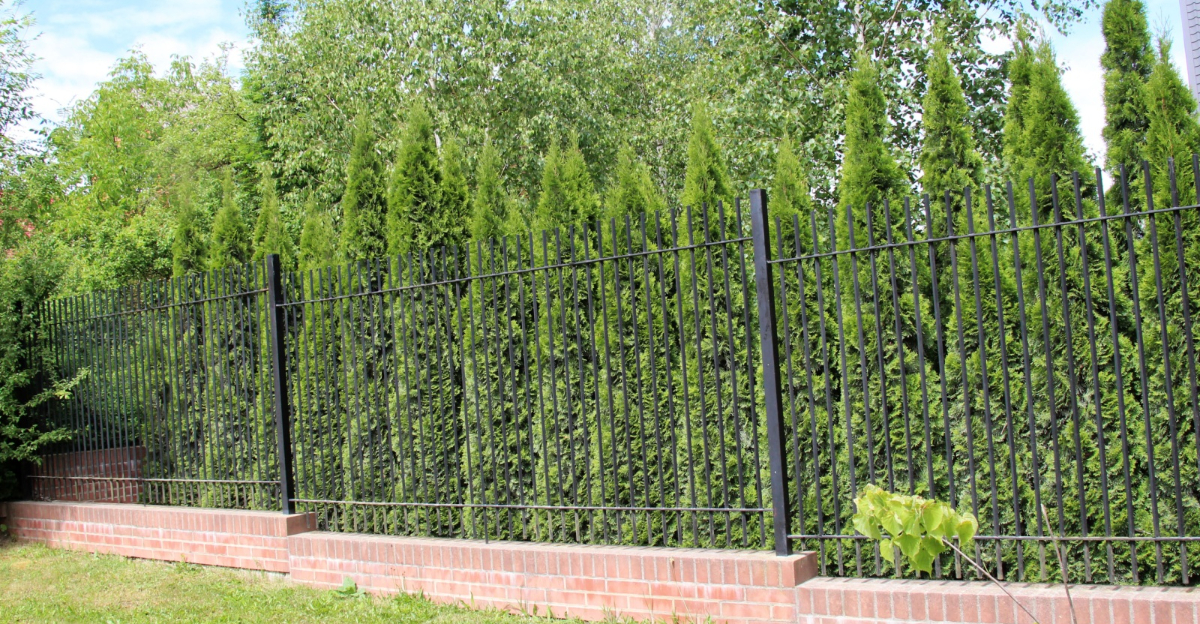
One summer of growth can completely change how private your backyard feels. A bare fence line turns into a leafy wall.
Curious neighbors fade from view. The yard suddenly feels calmer and more secluded.
Many Ohio homeowners want that kind of privacy, yet slow growing plants test patience. Some hedges take years to fill in, and thin plantings leave gaps that never quite block the view.
Faster growing shrubs and trees offer a much better solution. The right plants grow quickly, form dense foliage, and adapt well to Ohio’s climate and soil conditions.
A smart planting plan can transform an exposed yard into a green screen in far less time than most people expect. Choose the right species and privacy comes naturally.
Instead of staring at fences or neighboring windows, you gain a living barrier that looks beautiful while it quietly does its job season after season.
1. Plant American Arborvitae For Year Round Backyard Privacy
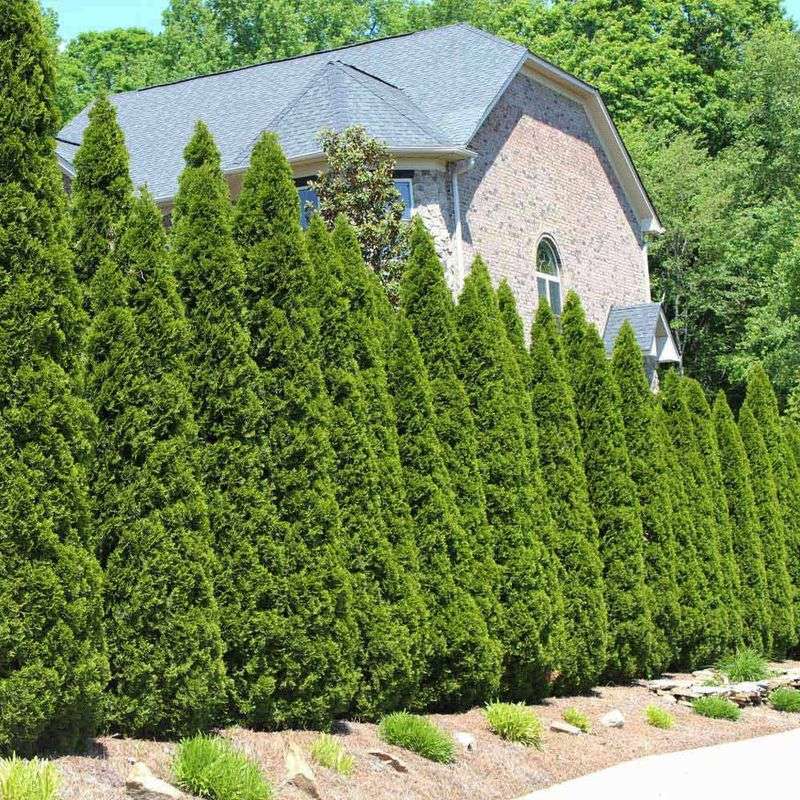
Walk through almost any Ohio suburb and you will notice the same tall, columnar evergreen lining fences and property borders everywhere you look. American Arborvitae, known botanically as Thuja occidentalis, has earned that popularity for very good reasons.
It produces dense, scale-like foliage that stays rich green through every season, making it one of the most reliable year-round privacy plants available to Ohio homeowners.
American Arborvitae can grow one to three feet per year depending on the cultivar Popular varieties like Emerald Green stay narrow and tidy, while Techny and American Pillar put on more bulk and height. Planting them six to eight feet apart in a single row creates a solid living wall within three to five years.
American Arborvitae performs best in full sun but tolerates some light shade. It adapts well to most Ohio soils as long as drainage is reasonable.
Ohio State University Extension recommends watering newly planted arborvitae consistently during the first two growing seasons to help roots establish firmly. Mulching around the base helps retain soil moisture and keeps roots cool during summer heat.
Deer pressure can be a concern in rural Ohio areas, so selecting resistant cultivars or using protective wraps during winter is worth considering.
2. Grow Eastern Redcedar For A Tough Evergreen Screen
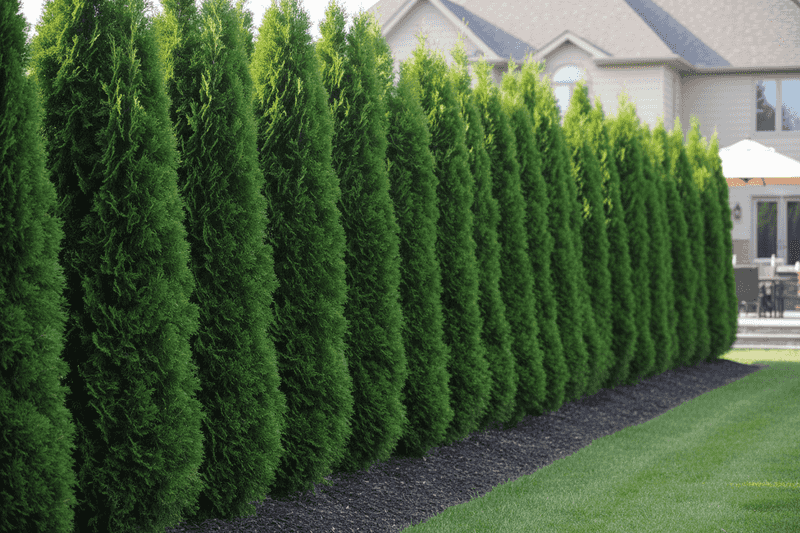
Tough enough to grow in rocky hillsides, clay-heavy fields, and windswept open land, Eastern Redcedar is one of the hardiest native evergreens Ohio has to offer. Juniperus virginiana is not a true cedar at all but a juniper, and it brings the same rugged adaptability that junipers are famous for.
Its dense, layered branching fills in beautifully over time, creating a screen that blocks wind and views with impressive efficiency.
Eastern Redcedar grows about one to two feet per year and can eventually reach 40 to 60 feet tall, making it a strong long-term investment for privacy planting. It tolerates drought, poor soils, and even the heavy clay that frustrates so many Ohio gardeners.
This native tree also supports wildlife generously, producing small blue berries that cedar waxwings, bluebirds, and other birds rely on through winter.
For privacy screens, planting Eastern Redcedar in staggered double rows spaced eight to ten feet apart creates a thicker, more natural-looking barrier than a single line. Ohio gardeners should note that this species can act as an alternate host for cedar-apple rust, so avoid planting it near apple or crabapple trees.
Otherwise, it is a low-fuss, long-lived screening plant that rewards patient gardeners with outstanding results.
3. Use Eastern White Pine For Fast Growing Backyard Privacy
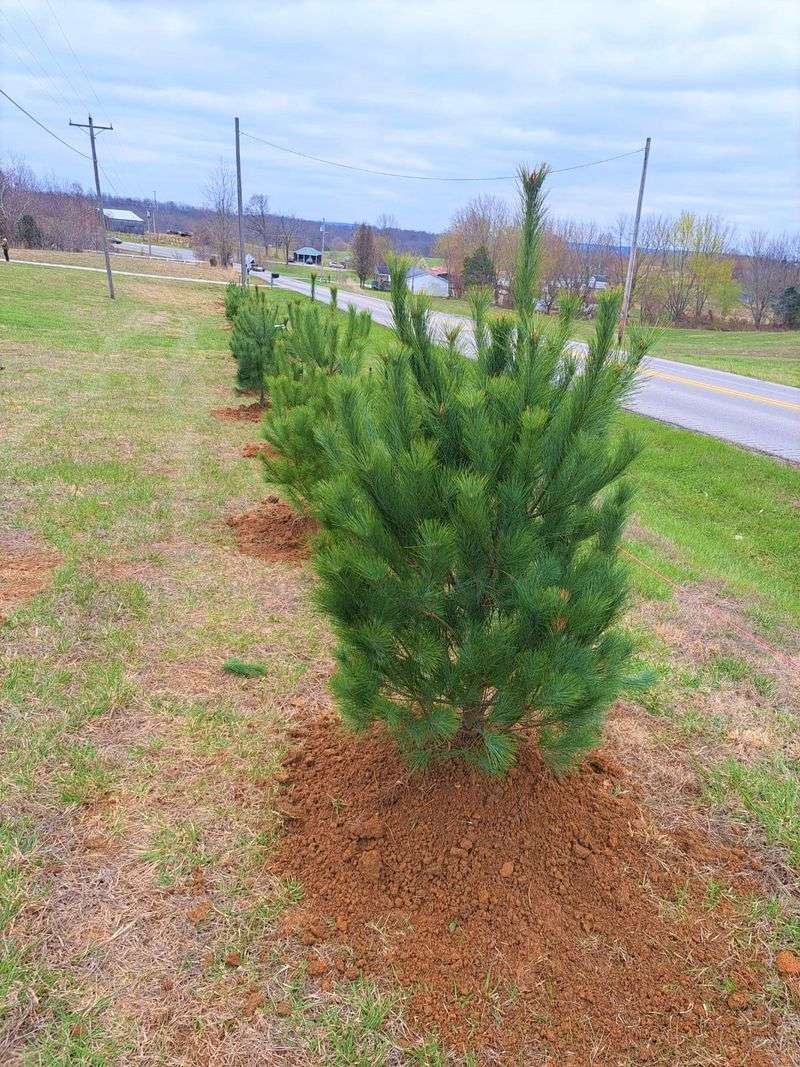
If speed is your top priority, Eastern White Pine deserves serious attention. Pinus strobus is one of the fastest-growing native conifers in Ohio, often putting on two to three feet of new growth every single year under favorable conditions.
Planted in a row along a property line, a group of young white pines can grow into an impressive privacy screen within just four or five years.
The soft, feathery blue-green needles give Eastern White Pine a graceful, almost airy appearance that contrasts nicely with the stiffer texture of arborvitae or spruce. Trees can ultimately reach 50 to 80 feet tall with a spread of 20 to 40 feet, so this plant works best in larger Ohio yards where there is plenty of room to grow upward and outward without crowding structures or utility lines.
Eastern White Pine prefers well-drained, slightly acidic soil and does best in full sun to light partial shade. It is less tolerant of heavy clay soils and road salt than some other conifers, so placement matters.
Ohio homeowners in suburban settings should plant it away from roads treated with winter salt. Spacing trees ten to fifteen feet apart allows each tree to develop full branching while still forming a connected canopy that screens views effectively from neighbors and passing traffic.
4. Add Red Osier Dogwood For A Dense Natural Privacy Hedge
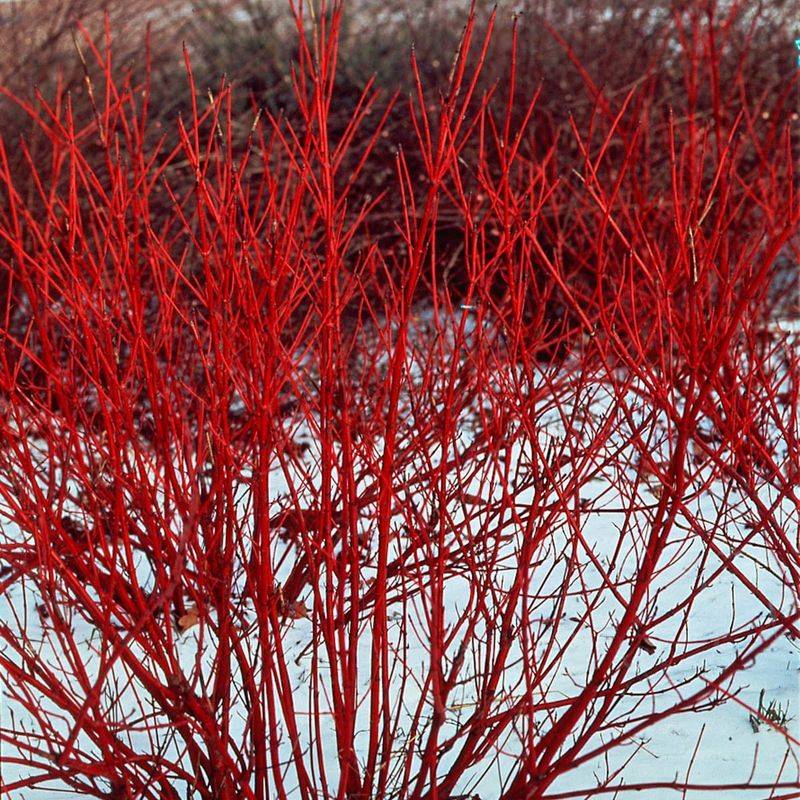
Few native shrubs pull double duty as well as Red Osier Dogwood. During the growing season, Cornus sericea fills out with broad green leaves and clusters of small white flowers that attract pollinators.
Come winter, after the leaves drop, the bare stems turn a brilliant fire-engine red that lights up the landscape like a natural piece of art. Ohio gardeners who want privacy screening that also looks beautiful in January will find this shrub hard to beat.
Red Osier Dogwood spreads by root suckers, naturally forming dense colonies that thicken over time into a solid hedgerow. Planted in a row three to four feet apart, individual shrubs merge together within a few seasons to create a screen that can reach six to nine feet tall and just as wide.
That thick growth makes it genuinely difficult to see through, even without leaves, because of the tangled network of stems.
This native shrub thrives in moist to wet soils and works especially well along Ohio stream banks, rain gardens, or low-lying backyard areas where other plants struggle. It tolerates full sun and partial shade equally well.
Birds love the white berries that follow the spring flowers, and the dense branching offers nesting cover for robins, catbirds, and other Ohio backyard species. Hard pruning every few years keeps the growth vigorous and the stem color vivid.
5. Plant Silky Dogwood To Create A Thick Living Screen
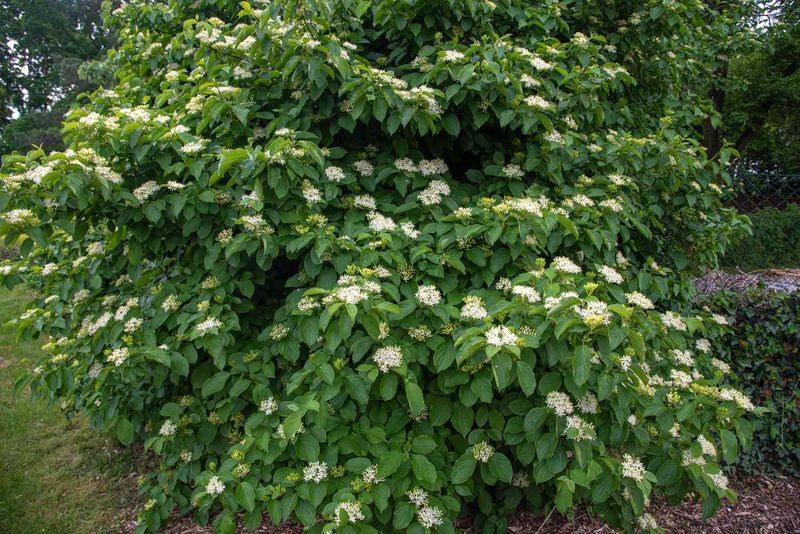
Silky Dogwood, Cornus amomum, is a native Ohio shrub that earns its place in natural privacy plantings through sheer density. When given room to spread, it forms a multi-stemmed thicket of overlapping branches and large, deep green leaves that can block sightlines from neighboring yards quite effectively.
Gardeners who prefer a naturalistic, wildlife-friendly landscape over a clipped formal hedge will appreciate everything this shrub brings to the yard.
Growing six to ten feet tall and equally wide, Silky Dogwood spreads gradually through root sprouts, slowly building a broader colony with each passing season. Planting several shrubs three to five feet apart along a fence line or property boundary speeds up the process considerably.
Within three to four years, the planting can develop into a thick, bushy screen that feels more like a woodland edge than a planted border.
Silky Dogwood performs best in moist soils and tolerates seasonal flooding, making it an excellent choice for Ohio yards with drainage challenges. It grows in full sun to partial shade and is highly adaptable to the clay-heavy soils common across central and northwest Ohio.
The small blue-black berries that ripen in late summer are a favorite food source for wood thrushes, veeries, and other migrating songbirds. Minimal maintenance is required once plants are established, making it a genuinely low-effort privacy solution.
6. Grow American Hazelnut For Fast Natural Backyard Privacy
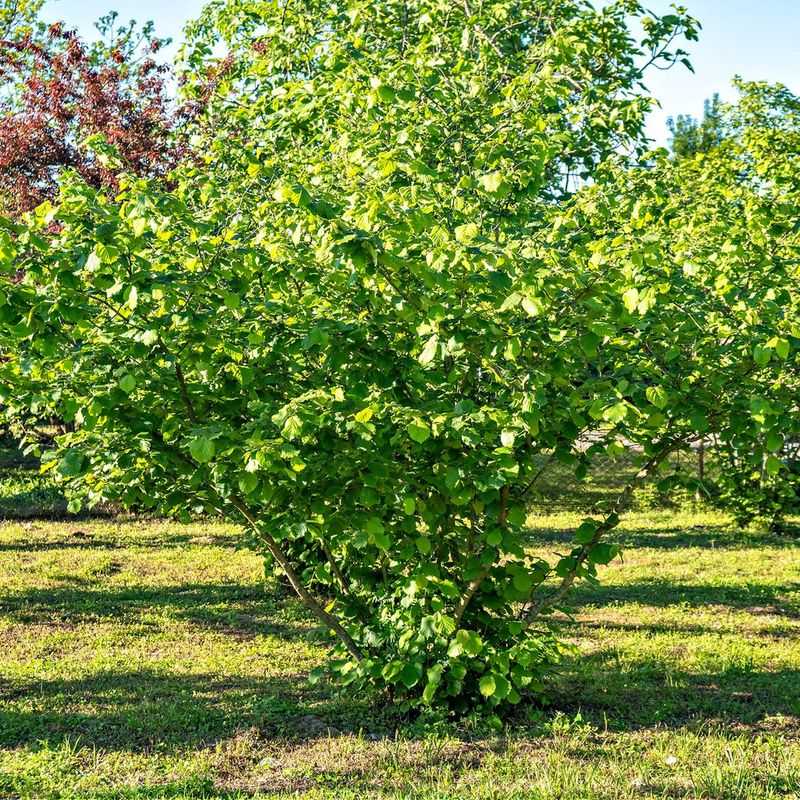
Not many privacy shrubs reward you with a snack, but American Hazelnut is happy to do exactly that. Corylus americana is a native Ohio shrub that grows into a broad, multi-stemmed clump reaching six to ten feet tall and often just as wide.
The dense branching and large, textured leaves fill in quickly to create a natural screen that feels lush and full from late spring through fall, and the hazelnuts that ripen in late summer are a genuine bonus for both people and wildlife.
American Hazelnut grows at a moderate to fast pace, typically adding two to three feet of new growth per year under good conditions. Planting several shrubs four to six feet apart creates a connected thicket that thickens naturally over time.
Unlike some fast-growing shrubs that require constant trimming to stay tidy, American Hazelnut has a naturally rounded, attractive form that needs very little shaping.
This native shrub adapts well to most Ohio soil types, including clay, and performs in full sun to partial shade. It is drought-tolerant once established and extremely cold-hardy, handling Ohio winters without any protection needed.
Ohio State University Extension recognizes American Hazelnut as a valuable native plant for wildlife-friendly landscapes. Squirrels, deer, turkeys, and many songbirds all use the nuts and dense branching throughout the year.
7. Use Ninebark For A Tough Low Maintenance Privacy Hedge
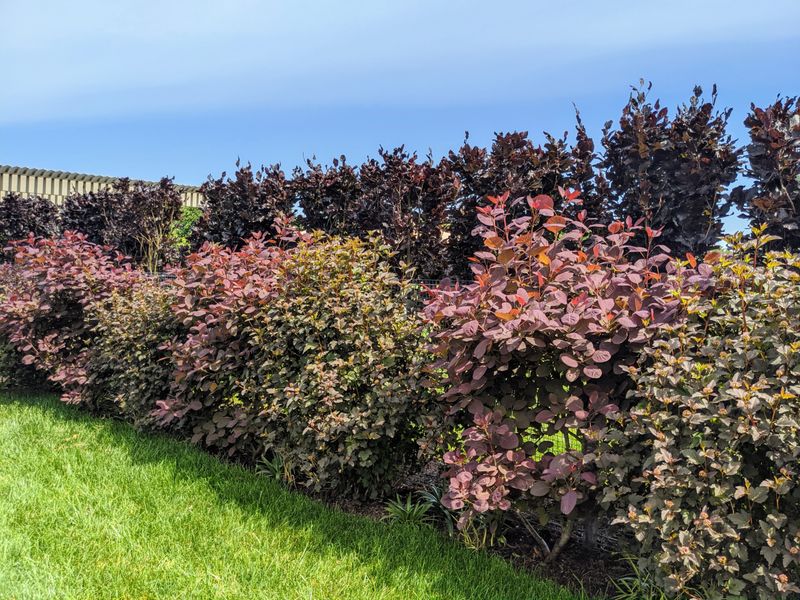
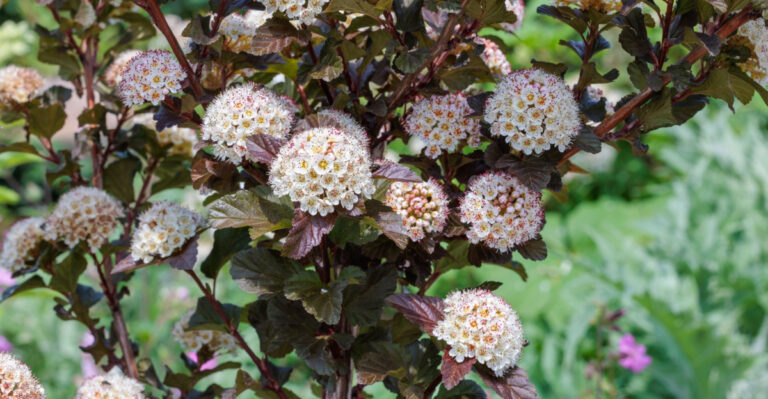
Gardeners who have struggled to keep shrubs alive through Ohio’s unpredictable weather will find Ninebark to be a refreshing change. Physocarpus opulifolius is a native shrub built for the Midwest, tolerating clay soils, drought, flooding, shade, and cold temperatures with barely a complaint.
Extension specialists at Ohio State University and throughout Midwest university programs consistently recommend Ninebark as one of the most adaptable native shrubs available for challenging Ohio landscapes.
Ninebark grows quickly, adding two to three feet per year, and can reach six to ten feet tall at maturity depending on the cultivar. Varieties like Diablo and Coppertina offer striking burgundy to copper-toned foliage that makes the privacy hedge look ornamental as well as functional.
The arching branches fill in densely, and clusters of small white or pale pink flowers appear in late spring, attracting pollinators enthusiastically.
The peeling, exfoliating bark on older stems gives Ninebark a distinctive winter texture that keeps the planting visually interesting even after the leaves have dropped. For a privacy hedge, planting shrubs four to five feet apart works well, as the arching growth naturally fills the gaps between plants within a season or two.
Pruning right after flowering keeps plants compact and encourages fresh, vigorous growth from the base each year.
8. Add Witch Hazel For Privacy In Part Shade Yards
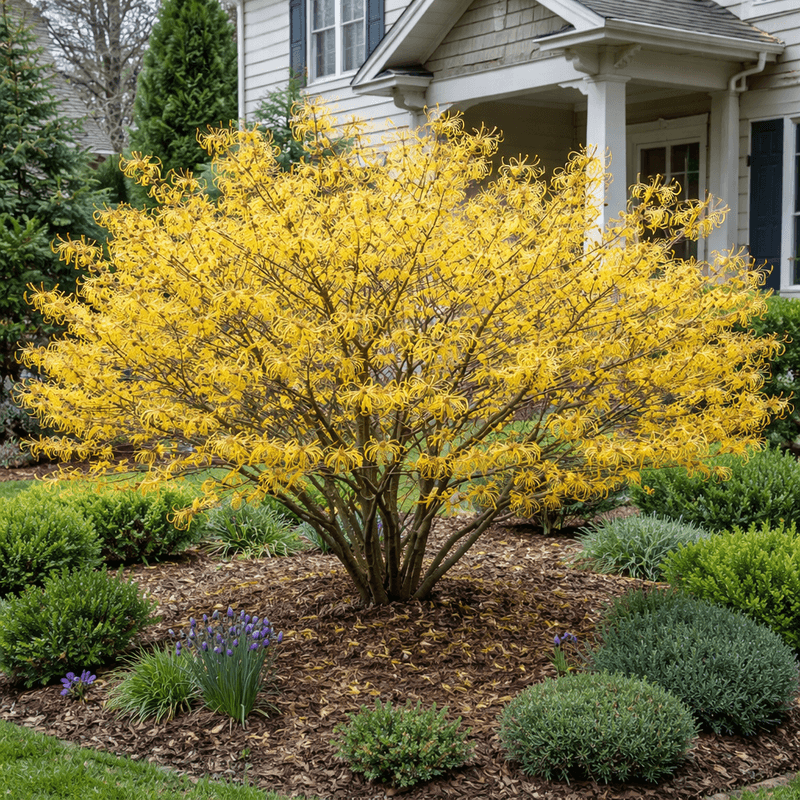
Shaded backyards in Ohio present a real challenge when it comes to finding privacy plants that actually thrive without full sun. Witch Hazel, Hamamelis virginiana, is one of the best native answers to that problem.
This large native shrub grows naturally along the edges of Ohio woodlands, which means it is genuinely adapted to the filtered light and root competition that come with shaded landscapes.
Witch Hazel grows into a broad, multi-stemmed shrub or small tree reaching ten to fifteen feet tall and equally wide over time. The growth rate is moderate, averaging one to two feet per year, but the eventual size and density make it an outstanding long-term privacy plant for shadier spots.
Planting several shrubs six to eight feet apart creates a connected canopy that screens views while feeling completely natural and relaxed in style.
What makes Witch Hazel truly memorable is its bloom season. Spidery, fragrant yellow flowers appear on bare branches in late fall and early winter, often blooming after the first frost, which makes it one of the last flowering native plants of the Ohio season.
Wildlife benefits are strong as well, with the seeds feeding birds and small mammals through winter. Witch Hazel adapts to moist, well-drained soils and requires almost no maintenance once it settles in.
9. Plant Pussy Willow Where You Need Quick Natural Screening
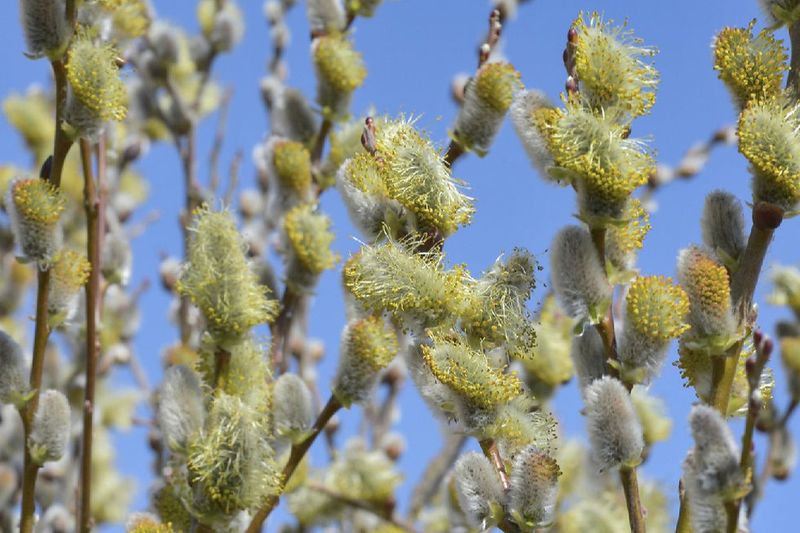
If there is a wet, low-lying corner of your Ohio yard where nothing seems to grow well, Pussy Willow might just be the fast-growing solution you have been looking for. Salix discolor is a native shrub that genuinely thrives in moist to wet conditions, sending up vigorous upright stems that can add three to eight feet of growth in a single season under the right circumstances.
Few plants match that kind of speed when you need screening in a hurry.
Pussy Willow grows naturally along stream banks and wetland edges across Ohio, which tells you a lot about where it performs best. Planted in a row along a wet fence line or drainage swale, it fills in rapidly to create a tall, arching screen of soft green foliage from late spring through fall.
The iconic silver catkins that appear in late winter and early spring are a charming bonus that many Ohio gardeners look forward to each year.
Shrubs can reach ten to fifteen feet tall at maturity and spread into multi-stem clumps over time. Regular cutting back to the ground every few years keeps Pussy Willow vigorous, bushy, and producing the freshest stem growth.
It works well in full sun to partial shade and pairs beautifully with Red Osier Dogwood in rain garden or streamside privacy plantings throughout Ohio.