8 Fast-Growing Shrubs And Bushes That Build Privacy Fast In Arizona Yards
Arizona yards can feel wide open, and that lack of privacy becomes more noticeable once outdoor spaces get more use. Fences do not always solve it, and many plants take too long to fill in or lose their shape once heat sets in.
Fast growth sounds like the answer, but not every shrub keeps up under intense sun and dry conditions. Some grow quickly at first, then thin out or struggle to hold a solid form, which defeats the purpose.
The difference shows when the right shrubs go in from the start. Structure builds sooner, coverage looks fuller, and the yard begins to feel more enclosed without constant replacement or extra work.
Privacy does not have to take years to develop in Arizona, but it depends on choosing plants that can handle the conditions and keep growing without losing their strength.
1. Oleander Forms A Thick Privacy Wall Faster Than Most Shrubs
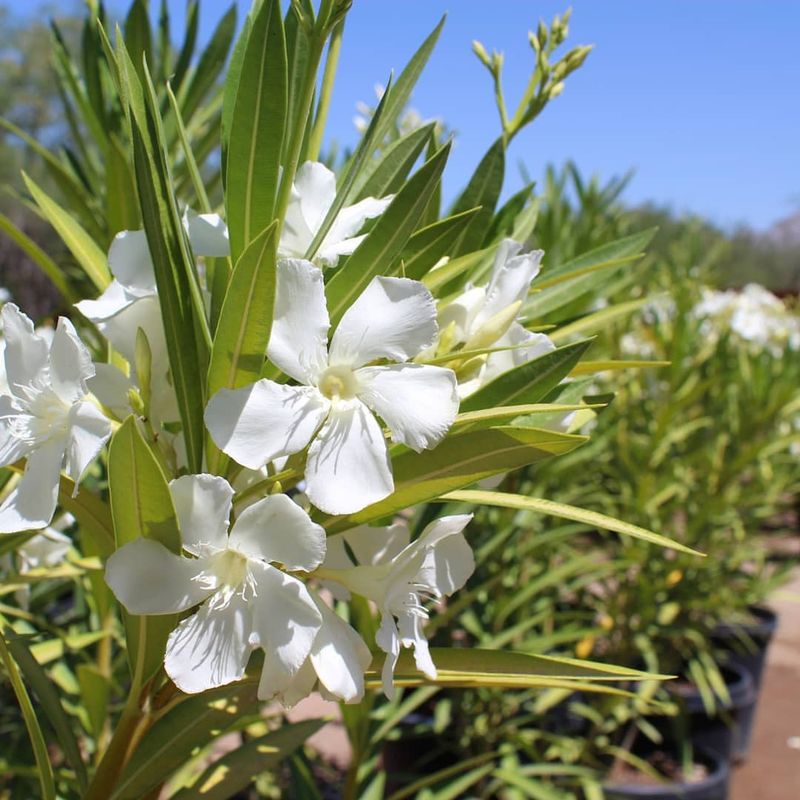
Few shrubs in Arizona can match oleander when it comes to sheer size and speed of coverage.
Under the right conditions, established plants can push 10 to 20 feet tall, and a well-watered young plant in full Arizona sun can put on several feet of growth within its first couple of seasons.
Plant them three to five feet apart if you want a solid wall rather than individual specimens.
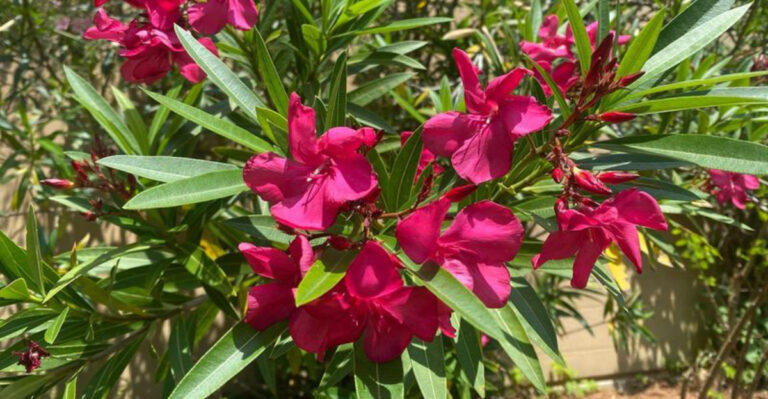
Oleander blooms in shades of white, pink, red, and salmon, which means your privacy screen actually looks attractive from both sides. It holds its leaves year-round, so you get consistent coverage even through Arizona’s mild winters.
That evergreen quality is a big reason so many homeowners across the Phoenix and Tucson areas reach for it first when planning a screen.
Worth noting upfront: every part of this plant is toxic if eaten, so households with young children or pets that chew on plants should think carefully before planting it.
It thrives in full sun and handles dry stretches reasonably well after the first year, though consistent drip irrigation during establishment makes a real difference in how quickly it fills in.
Avoid planting in low spots where water pools, since wet roots cause more problems than dry soil does for this particular shrub.
2. Texas Sage Fills In Quickly And Keeps A Full, Rounded Shape
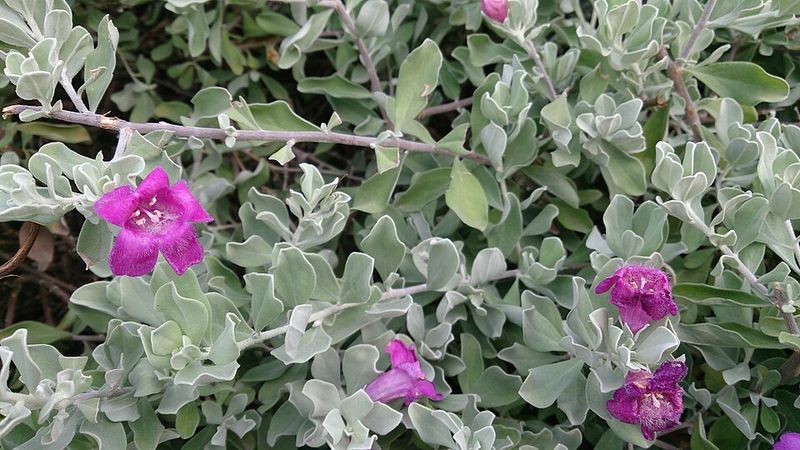
Right after a monsoon rain rolls through, Texas sage bursts into a flush of purple blooms that practically glow against the silvery foliage.
That visual is one reason it shows up in yards all across Arizona, but the real story is how reliably full and dense it grows without much fuss.
Plants typically reach three to six feet tall and nearly as wide, making them a solid mid-height option for privacy borders.
Spacing matters here. Planting them about three feet apart gives them room to develop their natural rounded form while still creating a continuous screen as they mature.
In full sun with well-draining soil, Texas sage stays compact and bushy rather than leggy. It handles the low-water reality of Arizona landscaping well, though young plants benefit from regular watering during their first summer to help roots settle in.
One thing that surprises people is how responsive this shrub is to humidity. Blooming is often triggered by moisture in the air or a good rain, so monsoon season in Arizona tends to bring on a spectacular show.
Pruning too aggressively can reduce flowering and disrupt the natural shape, so keep trimming light and strategic.
If you want a privacy planting that looks intentional and polished without constant upkeep, Texas sage fits that role well across most of Arizona’s lower elevations.
3. Hop Bush Grows Tall Fast And Creates A Strong Evergreen Screen
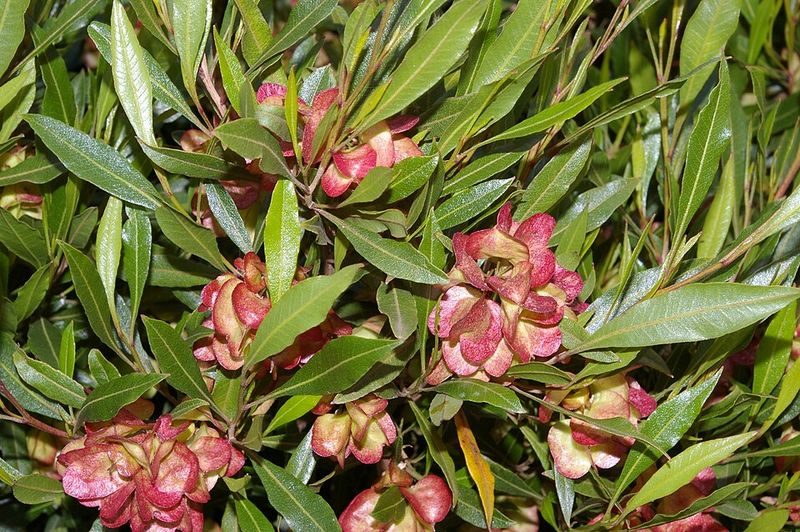
Hop bush earns its spot on this list by doing something most desert shrubs struggle with: growing tall, staying dense, and keeping its leaves through every season.
In Arizona yards, it commonly reaches eight to twelve feet, and some plants push even taller when they have good drainage and regular water during the growing season.
That height makes it one of the more useful options when you need to block a second-story view or a tall fence gap.
The foliage has a rich, slightly bronze or purple tint depending on the variety, which adds a visual layer that plain green hedges can’t match.
Leaves are narrow and overlap well, creating the kind of dense coverage that actually blocks sightlines rather than just suggesting privacy.
Along property lines in Scottsdale, Mesa, or anywhere in the Valley, a row of hop bush planted four feet apart can close up noticeably within two to three growing seasons under normal conditions.
Full sun is where this shrub performs best, though it tolerates partial shade without falling apart. It adapts to a range of soil types, including the caliche-heavy ground common across many Arizona properties.
Breaking up that compacted layer before planting gives roots room to spread and speeds up establishment. Drip irrigation helps considerably during the first year, after which hop bush handles Arizona’s dry stretches with much less intervention needed from you.
4. Orange Bells Grow Rapidly And Add Height With Bright Color
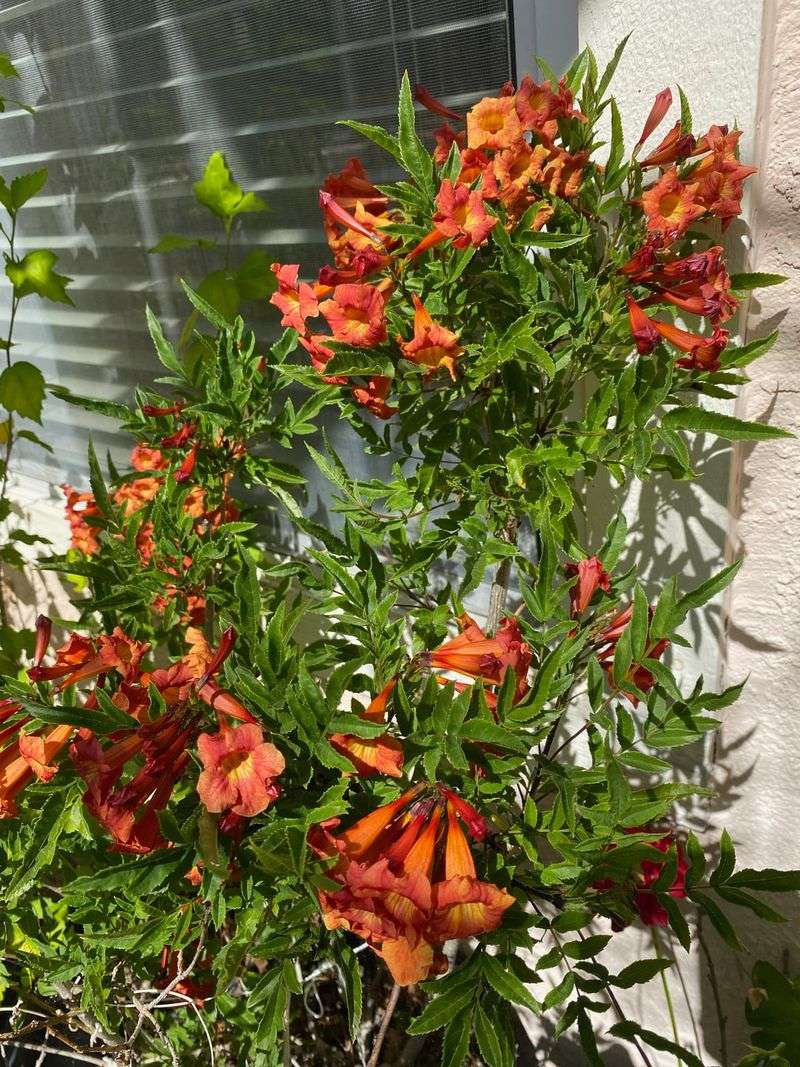
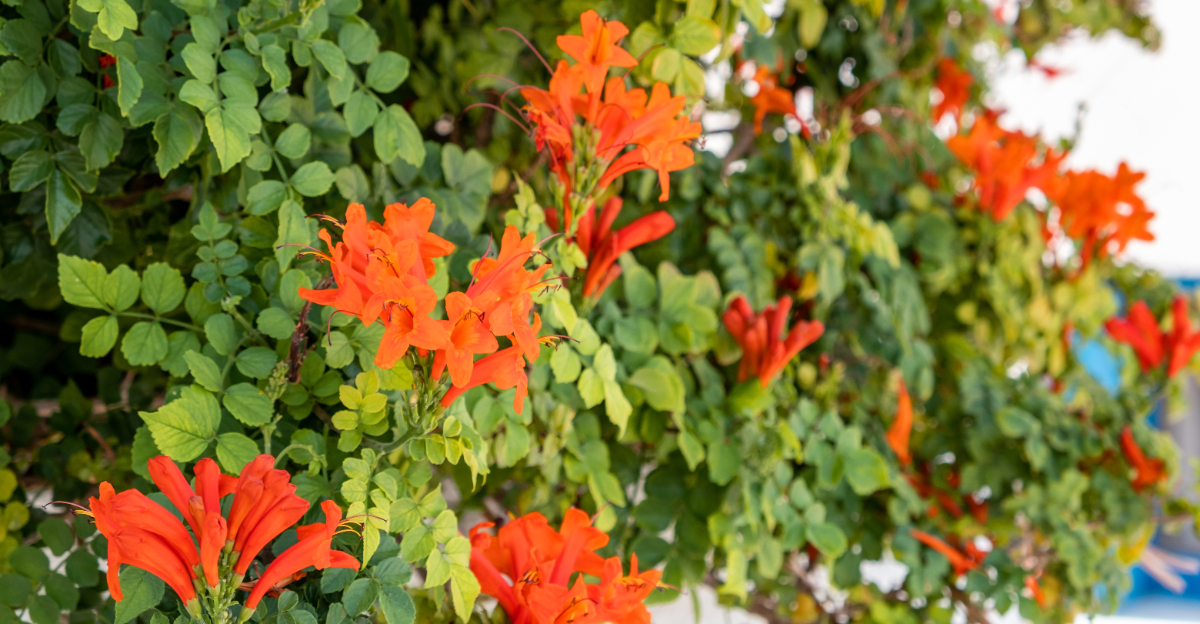
Clusters of vivid orange, trumpet-shaped flowers hanging from arching branches are hard to ignore, and in Arizona’s warm climate, orange bells can produce those blooms across a surprisingly long season. Beyond the color, this shrub grows with real energy.
Under good conditions in a low-desert yard, plants can reach six to eight feet tall and nearly as wide within a few years, which makes them genuinely useful for privacy planting rather than just ornamental use.
It works particularly well when planted behind lower shrubs in a layered privacy design. The upper canopy fills in with dense foliage and flowers while shorter plants cover the base of the planting.
That combination gives you coverage from ground level up rather than a wall of bare stems with leaves only at the top, which is a common problem with single-species screens.
Orange bells prefer full sun and well-draining soil, both of which Arizona delivers in abundance. Consistent watering during the first season helps roots establish before the brutal summer heat sets in.
After that first year, it handles moderate drought conditions reasonably well, though occasional deep watering during extended dry stretches keeps growth steady.
Light pruning after the main bloom cycle helps maintain a fuller shape and encourages fresh branching.
Across southern and central Arizona, this shrub tends to hold its foliage through mild winters, giving you year-round coverage most years.
5. Yellow Bells Shoot Up Fast And Stay Light And Airy
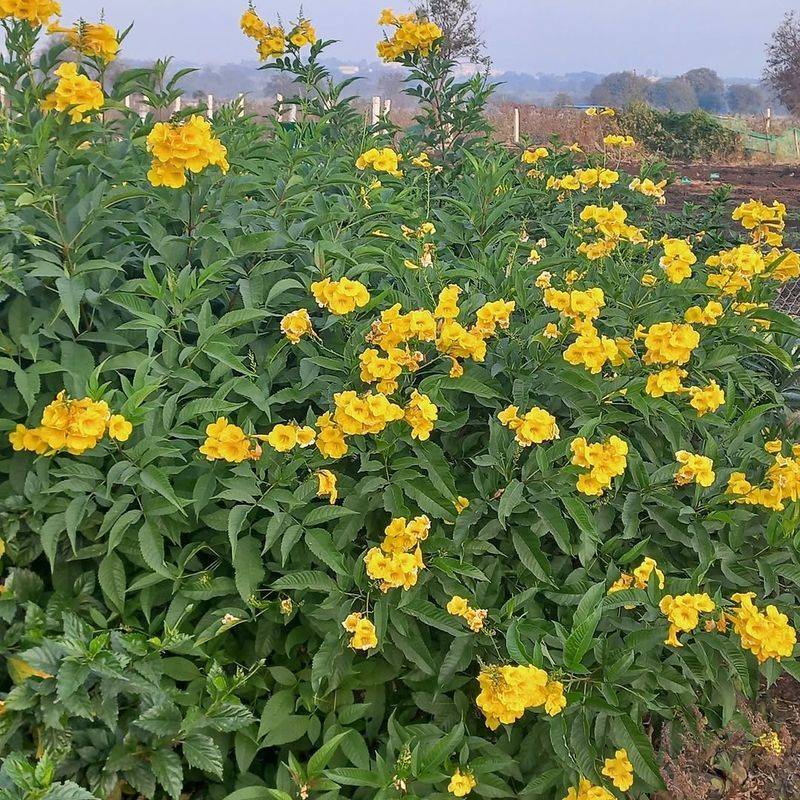
Yellow bells is one of those shrubs that practically thrives on neglect once it gets going in Arizona’s climate. Bright yellow trumpet flowers appear from spring through fall, and the light, feathery foliage gives it a softer look than most dense privacy shrubs.
It grows fast enough to reach five to eight feet in height, and under good conditions with regular water, it can put on two to three feet of growth in a single warm season.
Unlike some privacy shrubs that look stiff and formal, yellow bells has a relaxed, open structure. That quality makes it a good choice for yards where you want privacy without the yard feeling boxed in or heavy.
Pair it with denser shrubs along the lower section of a border, and the combination gives you both coverage and a visually comfortable space.
Heat is not a problem for this plant. In fact, Arizona’s intense summer temperatures seem to push it into its most active growth.
Full sun placement is ideal, and well-draining soil helps prevent root problems during the monsoon season when water can linger. Avoid cutting it back too hard during the growing season, as aggressive pruning removes the budding tips where new flowers form.
A light shaping in late winter or early spring keeps the plant tidy and encourages a strong flush of new growth as temperatures rise across Arizona’s lower elevations.
6. Cape Honeysuckle Spreads Quickly And Covers Gaps With Ease
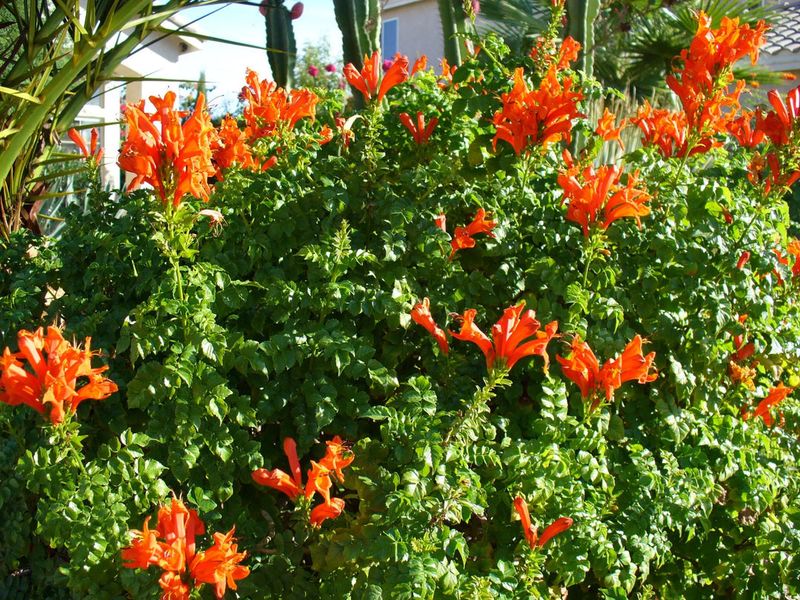
Cape honeysuckle moves fast. Given a fence, a wall, or just open ground, it spreads laterally and fills horizontal gaps in a way that most upright shrubs simply cannot.
In warmer parts of Arizona like the Phoenix metro and Yuma areas, it stays evergreen year-round, which means the coverage it builds in summer doesn’t disappear when temperatures drop. That persistence makes it especially valuable in a privacy planting.
Bright orange-red tubular flowers appear heavily in fall and winter, which is a welcome burst of color during the months when most other plants have slowed down.
Hummingbirds visit regularly, so if you enjoy wildlife in your yard, this shrub pulls them in without any extra effort on your part.
Growth habit is somewhat sprawling, so light trimming a couple of times a year helps keep it from overtaking neighboring plants or walkways.
It handles full sun and reflected heat well, which matters along south and west-facing walls in Arizona where conditions can be extreme. Young plants benefit from consistent watering during the first summer, after which they handle dry periods more comfortably.
If you have a bare fence section that needs coverage quickly, planting cape honeysuckle every three feet along it gives you a relatively dense screen within one to two growing seasons under typical Arizona conditions.
Soil quality affects speed, so loosening compacted ground before planting helps considerably.
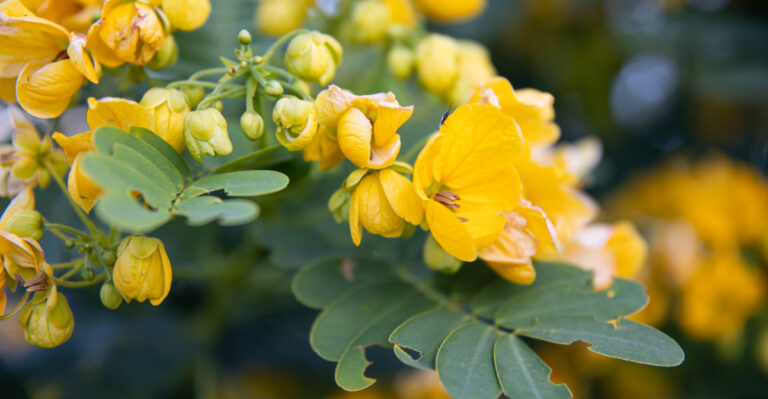
7. Feathery Senna Grows Fast And Softens The Look Of Privacy Plantings
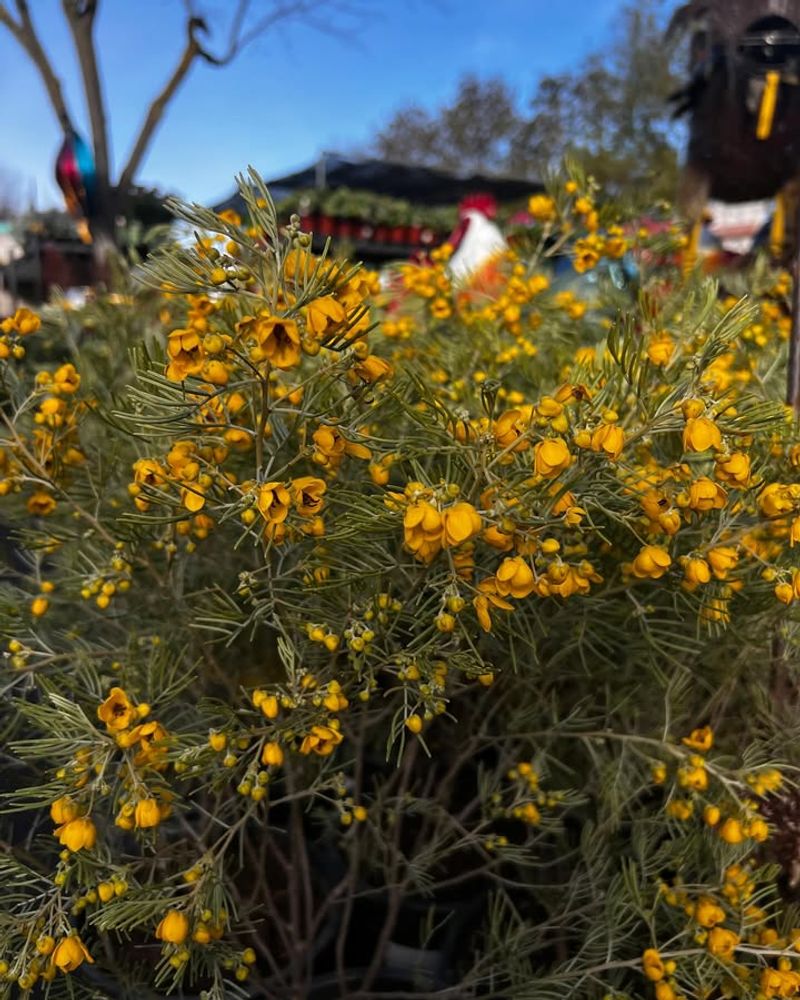
Not every privacy shrub needs to look like a wall. Feathery senna brings a softer, almost cloud-like texture to a planting that helps the overall design feel more natural and less like a barricade.
The fine-textured, gray-green foliage has a quality that catches the eye and softens the visual weight of denser shrubs planted nearby.
Yellow flowers appear in winter and early spring, which adds seasonal interest during months when most of the yard looks quiet.
Growth rate is genuinely solid for a desert-adapted shrub. Under good conditions in Arizona’s low desert, feathery senna can reach six to eight feet tall and develop a fairly wide spread within a few seasons.
That combination of height and width makes it useful both as a background plant in layered screens and as a standalone specimen along a property line.
Full sun placement is essential. It handles Arizona heat without much complaint and tolerates the kind of reflected heat that comes off block walls and concrete surfaces.
Watering young plants consistently through the first summer helps them push roots down before the dry season stresses them.
After establishment, they manage on less frequent irrigation, though they tend to look and grow better with occasional deep watering rather than complete neglect.
Avoid heavy pruning, as cutting back too far can damage the natural branching structure and slow regrowth significantly in this species.
8. Red Bird Of Paradise Fills Space Fast With Bold Seasonal Growth
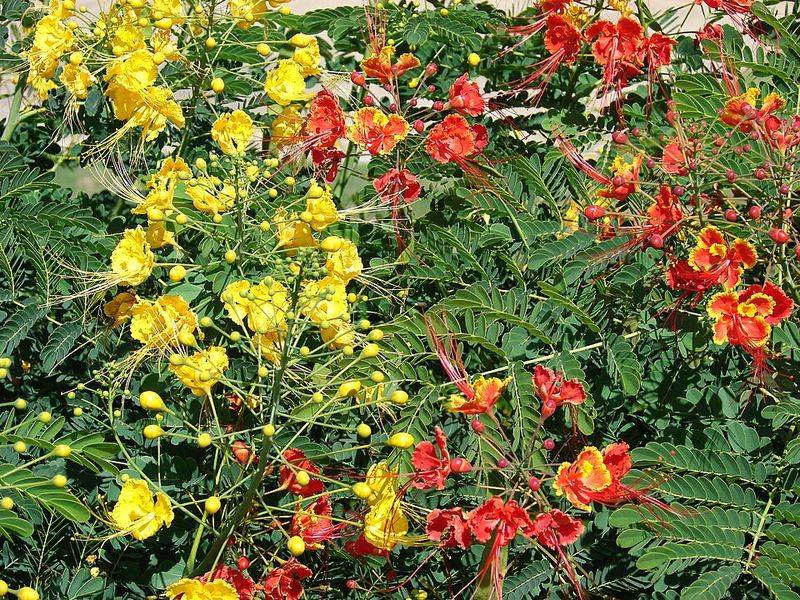
Bold, tropical-looking flowers on a plant that genuinely belongs in the Arizona desert sounds like a contradiction, but red bird of paradise pulls it off without any drama.
Clusters of red and orange blooms appear from late spring through fall, and the fern-like foliage creates a lush, layered look that fills horizontal space quickly.
In warm Arizona locations, plants can reach four to eight feet tall and spread just as wide, creating a substantial mass of coverage.
Spring planting gives this shrub the longest possible growing window before the following winter. In Tucson and Phoenix area yards, it puts on its most aggressive growth during the hot months, which works in your favor when you’re trying to fill a gap in a privacy screen.
Spacing plants about four feet apart allows them to grow into each other and create a continuous mass within two to three seasons.
One honest limitation: in colder parts of Arizona, red bird of paradise can get cut back by frost in winter. It typically regrows from the base in spring, but that cycle does interrupt the coverage temporarily.
In low-desert locations where hard freezes are rare, this is much less of a concern. Full sun and well-draining soil are the two non-negotiable requirements.
Consistent drip irrigation through the first year sets the plant up for the kind of vigorous growth that actually delivers on the privacy promise.