February Is The Best Time To Start Peppers Indoors In Georgia
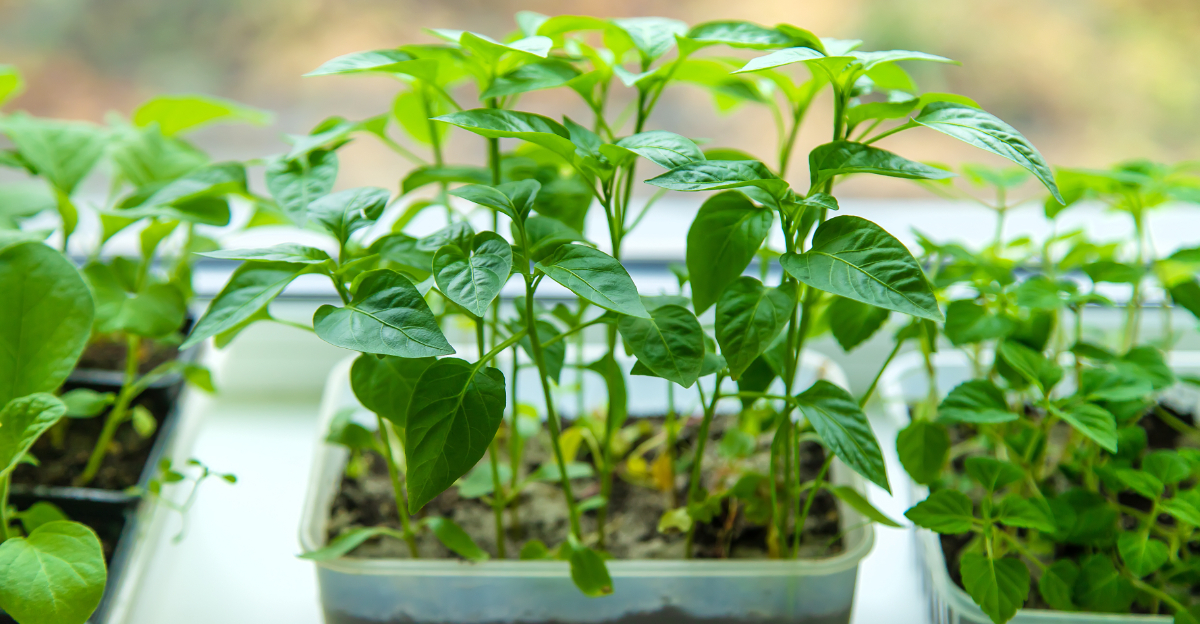
Peppers take their time, and in Georgia that long growing season works best when plants get an early start indoors. Starting in February gives seedlings enough time to build strong roots and thick stems before outdoor planting begins.
Waiting until spring often leads to smaller plants that struggle to catch up once temperatures rise.
By the time soil warms consistently across Georgia, indoor-started peppers are sturdy, established, and ready to move outside without shock.
That head start shows up in earlier flowers, longer production, and heavier harvests through summer.
Peppers need warmth, but they also need time, and beginning indoors now gives them both. If strong growth and steady yields are the goal, starting peppers indoors at this point in the season sets everything up the right way.
1. Start Seeds Indoors Before Georgia’s Last Frost Date
Georgia’s last frost typically arrives between mid-March in southern areas and mid-April in northern counties.
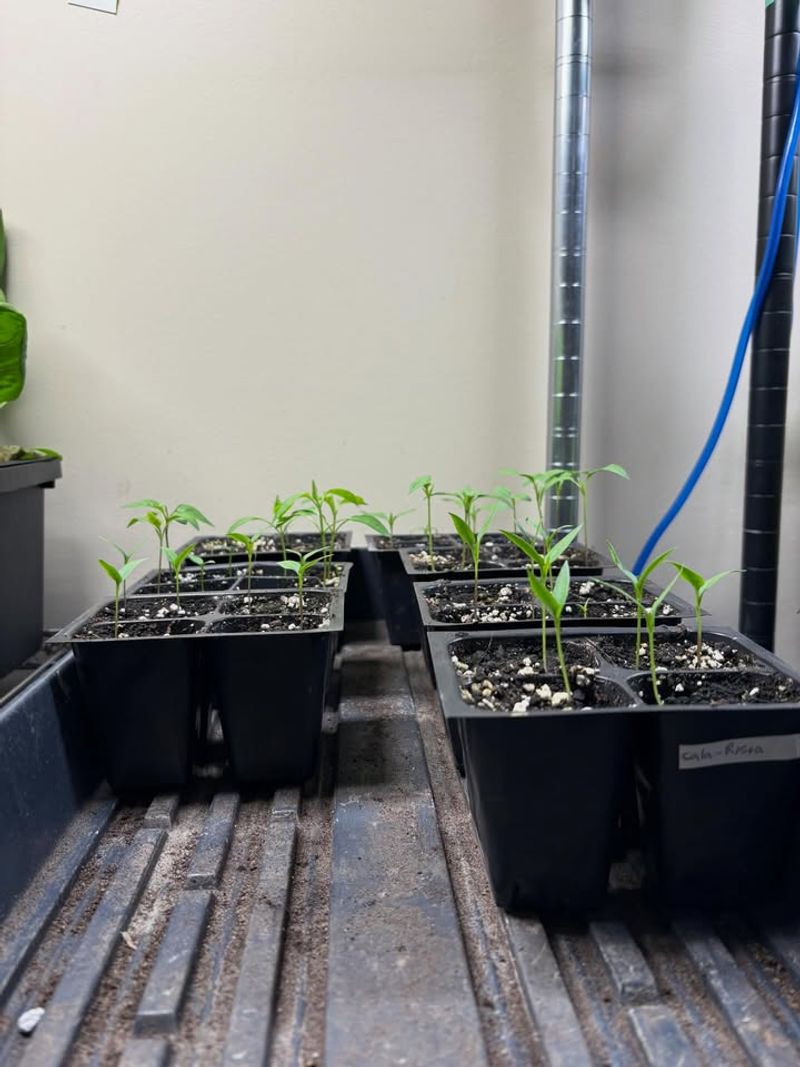
Peppers need eight to ten weeks of indoor growing time before they’re ready for transplanting, which puts February right in the sweet spot for starting seeds.
Waiting until March leaves your plants too small and vulnerable when planting time arrives.
Different pepper varieties need slightly different timing considerations. Hot peppers like habaneros and ghost peppers benefit from starting even earlier in February since they take longer to germinate and grow.
Sweet bell peppers and milder varieties can handle starting in mid-February without problems. Checking your specific county’s frost date helps you calculate the perfect starting time.
Mark your calendar for the second week of February as your seed-starting reminder. This timing gives plants enough development without making them too large for their containers.
Overgrown seedlings become stressed and root-bound, leading to slower growth after transplanting into Georgia gardens.
Temperature patterns across Georgia vary significantly from Augusta to Atlanta to Albany. Northern gardeners should start seeds during the first week of February, while southern growers can wait until the third week.
Coastal areas with milder winters offer the most flexibility for timing.
Setting up your seed-starting supplies before February begins prevents last-minute scrambling. Having everything ready means you can start seeds on your target date without delays.
Georgia’s unpredictable spring weather makes proper timing even more critical for pepper success.
2. Give Pepper Seeds Warm Soil So They Germinate Faster
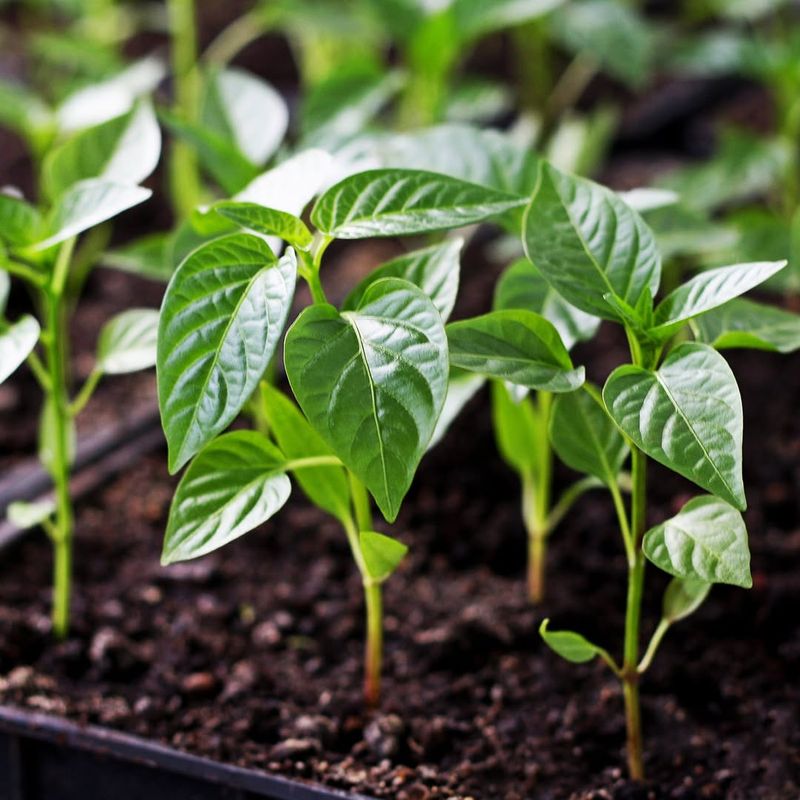
Pepper seeds refuse to germinate in cold soil, sitting dormant for weeks or rotting before they ever sprout. Soil temperatures between 75 and 85 degrees Fahrenheit trigger rapid germination, with seeds sprouting in just five to seven days.
Room temperature soil around 65 to 70 degrees slows germination to two or three weeks, if seeds sprout at all.
Seedling heat mats transform germination success rates dramatically. These affordable devices sit under seed trays and maintain consistent warmth that pepper seeds crave.
Georgia homes often feel comfortable to people but remain too cool for optimal pepper germination without supplemental heat.
Position your seed trays on heat mats in a location away from cold windows and drafts. Basements and garages stay too cold even with heat mats working overtime.
A spare bedroom, laundry room, or kitchen area maintains ambient warmth that helps heat mats work efficiently.
Check soil temperature with an inexpensive soil thermometer rather than guessing. Stick the probe into the growing mix to verify temperatures stay in the ideal range.
Adjusting heat mat settings or adding insulation underneath helps maintain perfect conditions.
Remove trays from heat mats immediately after seedlings emerge from the soil. Continued bottom heat can stress young plants and encourage fungal problems.
Moving sprouted seedlings to a cooler location with bright light becomes the next priority for healthy growth in your Georgia indoor garden.
3. Use Bright Light Early To Prevent Weak Leggy Seedlings
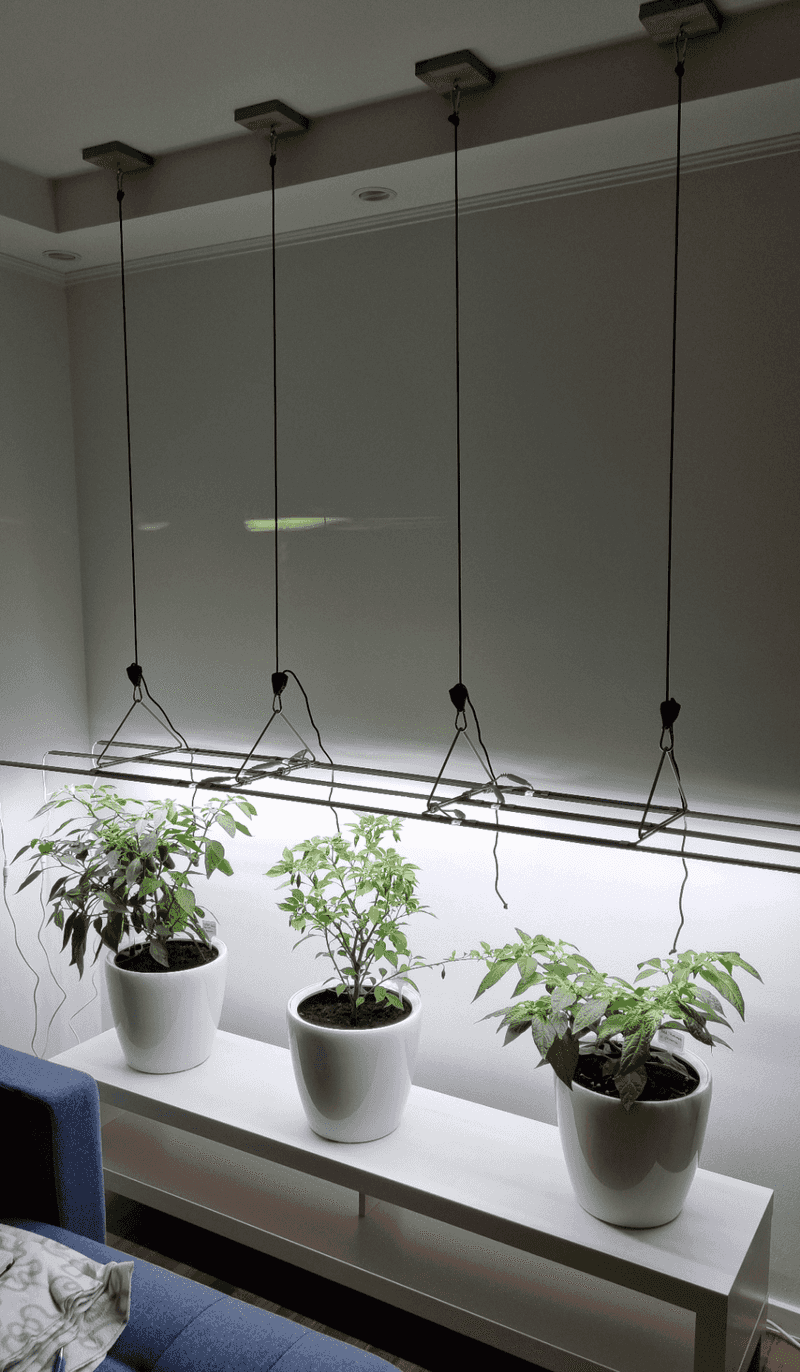
Weak, stretched seedlings reaching desperately toward inadequate light never develop into strong pepper plants. Insufficient light during the first weeks creates tall, spindly stems that flop over and struggle throughout their entire lives.
Georgia’s February sunlight through windows rarely provides enough intensity for proper seedling development.
LED grow lights deliver the bright, consistent illumination pepper seedlings require for compact, sturdy growth. Position lights just two to three inches above seedling tops, raising them gradually as plants grow taller.
This close placement provides intensity that mimics summer sunshine even during Georgia’s cloudy winter days.
Running grow lights for sixteen hours daily gives seedlings the extended daylight they need. Set up an inexpensive timer to automate the light schedule, ensuring consistent day length without remembering to flip switches.
Darkness during the remaining eight hours allows plants to rest and process the day’s growth.
South-facing windows can supplement grow lights but shouldn’t serve as the sole light source. Combining natural sunlight with artificial lighting creates ideal conditions.
Rotating trays regularly prevents seedlings from leaning permanently toward window light.
Watch for signs of insufficient lighting like pale green leaves and excessive stem length between leaf sets. Adjusting light height or increasing daily hours corrects these problems quickly.
Strong lighting from the start creates stocky seedlings with thick stems and deep green foliage that transplant successfully into Georgia gardens later.
4. Pot Up Young Plants Before They Become Root Bound
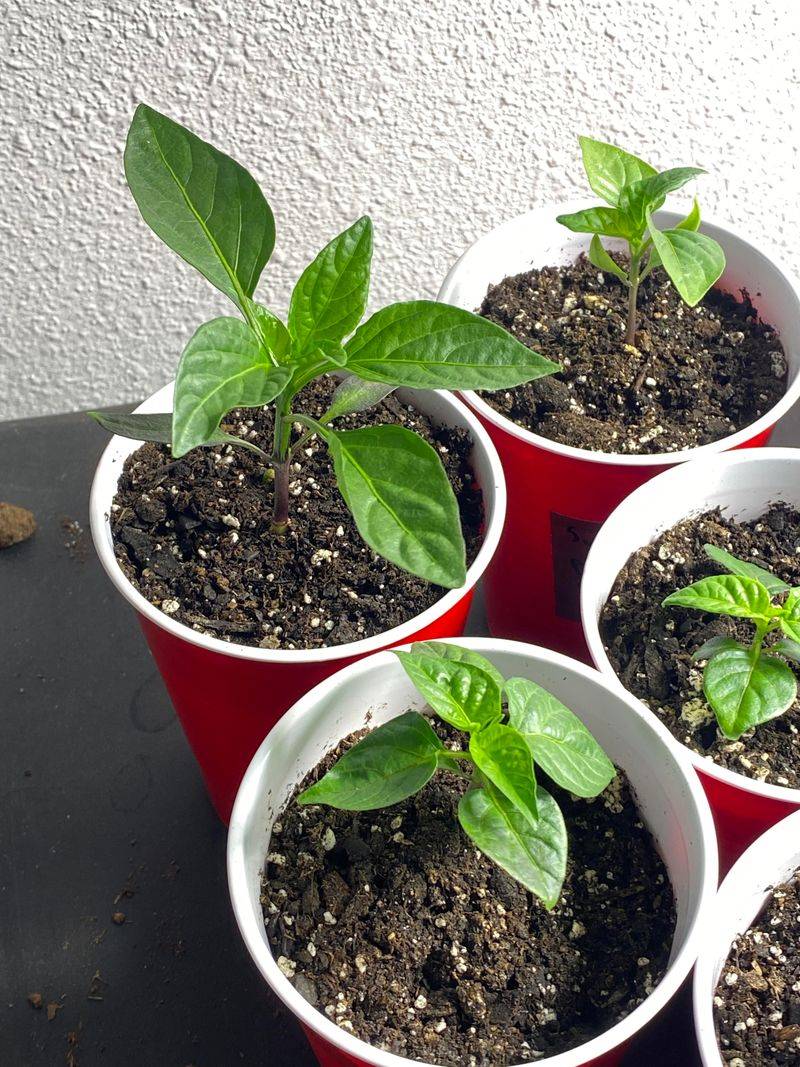
Roots circling endlessly around tiny cell containers signal that seedlings desperately need more growing space. Root-bound plants stop developing properly, with growth slowing to a crawl even under perfect conditions.
Transplanting seedlings into larger containers at the right time keeps them growing vigorously through their indoor phase.
Watch for the first true leaves to emerge after the initial seed leaves appear. This milestone indicates roots have developed enough to handle transplanting stress.
Moving seedlings to three-inch pots gives them room to expand without shocking them with excessive space too soon.
Gently remove seedlings from starting cells by pushing up from the bottom drainage holes. Supporting the stem while easing roots free prevents damage to delicate tissues.
Inspect roots briefly to ensure healthy white growth without brown, mushy sections.
Fill larger pots with fresh seed-starting mix or potting soil, creating a hole deep enough to bury stems up to the seed leaves. Pepper plants develop additional roots along buried stem sections, creating stronger root systems.
Firming soil gently around transplanted seedlings eliminates air pockets.
Water thoroughly after transplanting to settle soil and help roots make contact with their new growing medium. Keep newly transplanted peppers out of direct bright light for one day, then return them to normal growing conditions.
Georgia gardeners who master timely transplanting grow peppers that transition smoothly into outdoor gardens when spring arrives.
5. Feed Lightly Once True Leaves Appear
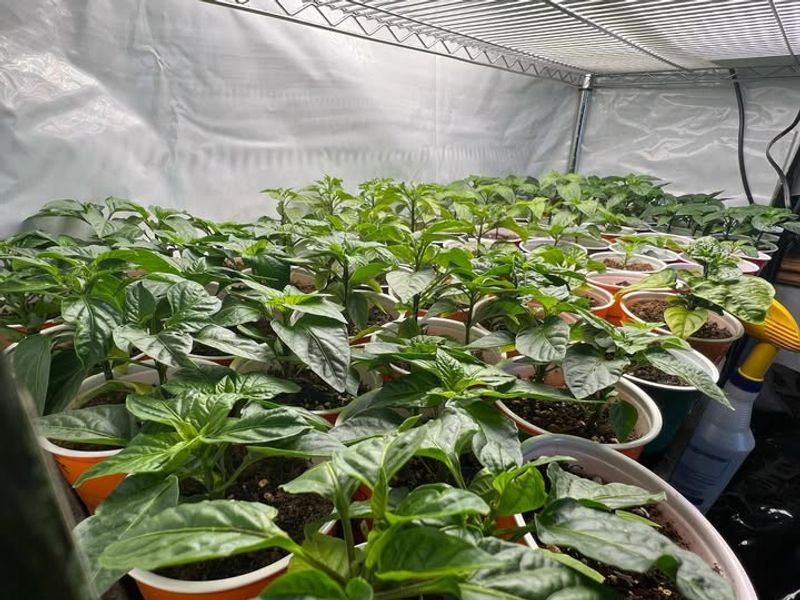
Seed-starting mix contains minimal nutrients by design, forcing seedlings to develop strong root systems while searching for food.
Once true leaves develop beyond the initial seed leaves, pepper seedlings need supplemental nutrition to fuel continued growth. Fertilizing too early or too heavily causes more problems than it solves.
Dilute liquid fertilizer to one-quarter the strength recommended on the label for your first feeding. This gentle introduction provides nutrients without overwhelming young root systems.
Gradually increase concentration to half-strength over the following weeks as plants grow larger and hungrier.
Feed seedlings once weekly rather than with every watering during the indoor growing phase. This schedule provides steady nutrition without risking fertilizer buildup in containers.
Overfed pepper plants develop excessive foliage at the expense of strong root development.
Choose balanced fertilizers with equal nitrogen, phosphorus, and potassium numbers like 10-10-10 or 5-5-5. Specialized seedling fertilizers work well but aren’t necessary for success.
Any quality water-soluble fertilizer diluted properly supports healthy pepper growth in Georgia indoor gardens.
Watch for signs of nutrient deficiency like yellowing lower leaves or purple-tinged foliage. These symptoms indicate seedlings need more frequent feeding or slightly stronger fertilizer solutions.
Adjusting your feeding program based on plant appearance keeps seedlings growing steadily without setbacks before transplanting time arrives.
6. Keep Air Moving To Prevent Fungal Problems
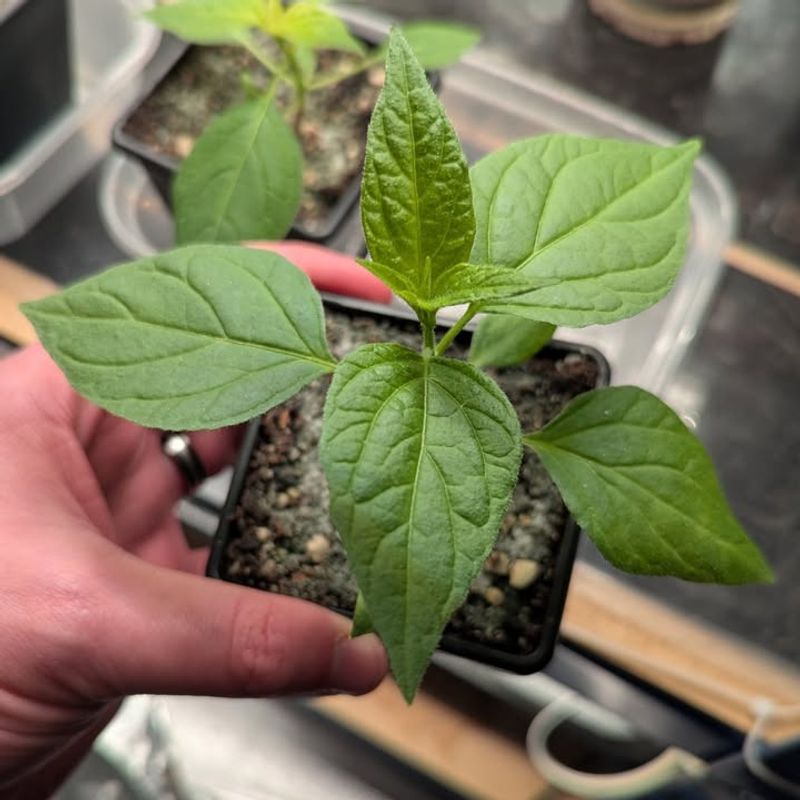
Stagnant air around pepper seedlings creates perfect conditions for fungal diseases that devastate young plants. Damping off and other fungal problems strike suddenly, causing seedlings to collapse and perish overnight.
Gentle air circulation strengthens stems while keeping foliage dry enough to discourage fungal growth.
Small oscillating fans provide ideal air movement without creating hurricane-force winds that damage tender seedlings. Position fans to move air across and around plants rather than blasting them directly.
Leaves should rustle gently, indicating adequate circulation without excessive stress.
Running fans continuously throughout the day and night maintains consistent air movement. This constant circulation prevents humidity from building up around foliage during dark hours when fungal problems develop most readily.
Georgia homes often maintain comfortable humidity levels that become problematic in enclosed growing areas without air movement.
Air circulation strengthens pepper stems through a process similar to wind hardening outdoor plants. Seedlings grown with steady air movement develop thicker, sturdier stems that support heavy foliage and fruit loads better.
This strengthening effect reduces transplant shock when seedlings move outside.
Clean fan blades regularly to prevent dust buildup that reduces air movement efficiency. Positioning fans safely away from water sources protects electrical components.
Proper air circulation combined with other best practices creates the healthiest possible environment for growing pepper seedlings indoors before Georgia’s outdoor growing season begins.
7. Harden Off Slowly Before Moving Peppers Outside In Georgia
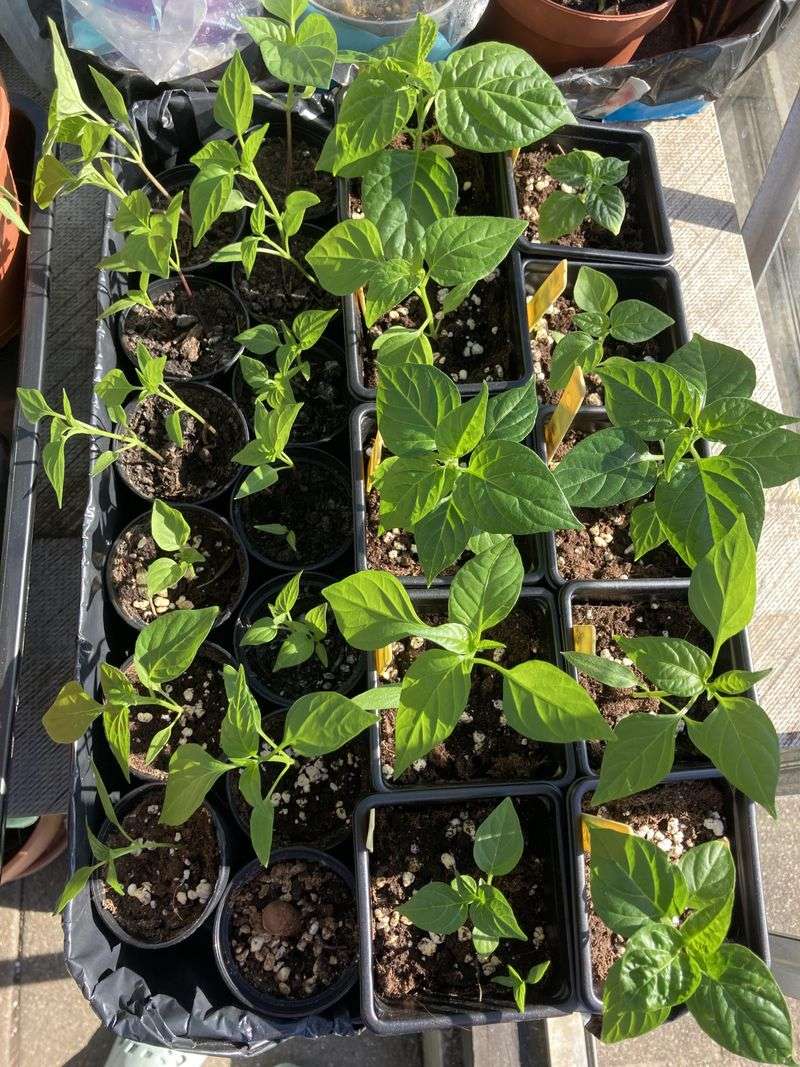
Pepper plants grown entirely indoors lack the toughness needed to survive sudden exposure to outdoor conditions. Direct sunlight, temperature swings, and wind stress pampered indoor seedlings severely if they don’t receive gradual acclimation.
Hardening off prepares plants for the transition from protected indoor environments to Georgia gardens.
Begin the hardening-off process ten to fourteen days before your planned transplanting date. Place pepper plants outside in a shaded, protected location for just one to two hours on the first day.
Gradually increase outdoor time by an hour or two daily while slowly introducing more direct sunlight.
Monitor weather forecasts carefully during the hardening-off period to avoid exposing plants to extreme conditions. Bring seedlings indoors immediately if temperatures threaten to drop below 50 degrees Fahrenheit.
Georgia’s spring weather can shift unpredictably, requiring flexibility in your hardening-off schedule.
Increase watering frequency during hardening off since outdoor conditions dry soil much faster than indoor environments. Check plants twice daily to prevent wilting from unexpected dryness.
Slight wilting indicates plants need water immediately but usually recover quickly with proper care.
Complete the hardening-off process by leaving plants outside overnight once nighttime temperatures stay consistently above 55 degrees. This final step ensures peppers can handle the full range of outdoor conditions.
Properly hardened pepper plants transplant into Georgia gardens without shock, establishing quickly and beginning their productive outdoor growing phase successfully.