Flowering California Shrubs That Establish Well Before Summer
California gardens come alive with sun-soaked colors, but getting shrubs to establish before the heat of summer requires planning and foresight.
For many gardeners, the challenge is choosing plants that not only survive but thrive in sandy soils, hot afternoons, and dry spells.
Early planting gives shrubs the edge they need to develop roots and resist stress when temperatures rise.
From blue and purple California lilacs to bright orange monkey flowers, there are hardy native shrubs that reward patience with long-lasting blooms and abundant pollinator visits.
These plants form the backbone of a garden that feels full and vibrant before the midsummer heat arrives, offering color and texture that lasts.
By selecting the right varieties and planting them at the right time, gardeners can enjoy lush, well-established shrubs that hold up through dry spells. The next steps will show which species are easiest to grow and how to give them a strong start.
1. Sticky Monkey Flower With Bright Blooms Attracting Wildlife
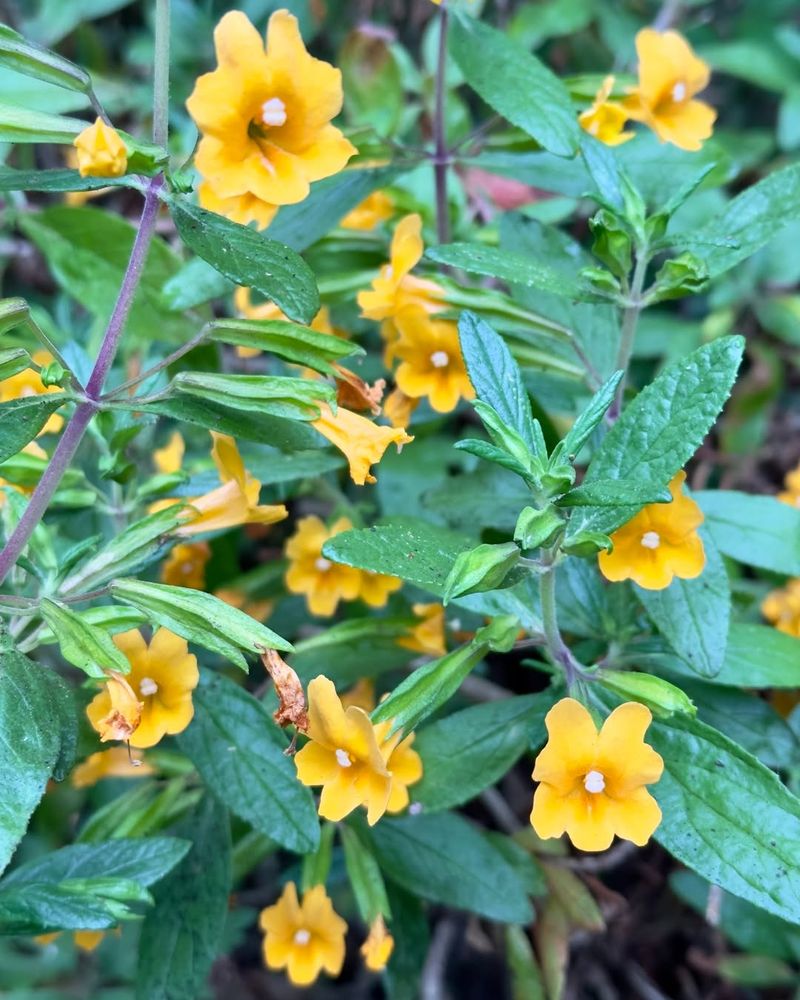
There is something wonderfully quirky about a plant called Sticky Monkey Flower, and its personality matches its name perfectly. Botanically known as Diplacus aurantiacus, this California native produces bright, trumpet-shaped blooms in shades of orange, yellow, and cream that hummingbirds simply cannot resist.
The flowers appear reliably in spring and can keep going well into early summer.
The plant gets its name from the sticky texture of its leaves, which help it conserve moisture during California’s long dry season. Plant it in full sun to light shade with fast-draining soil, and it will anchor itself firmly before the summer heat arrives.
It handles drought with ease once established, requiring very little supplemental water.
Sticky Monkey Flower works beautifully on slopes, in naturalistic garden designs, or mixed into a native plant border across California. It typically grows three to four feet tall and wide, forming a neat, rounded mound of evergreen foliage.
Pruning it lightly after the main bloom period encourages fresh new growth and another flush of flowers. Beyond its looks, it plays a genuine ecological role by feeding local pollinators during the crucial spring season when many insects are raising their young.
2. California Lilac With Striking Blooms
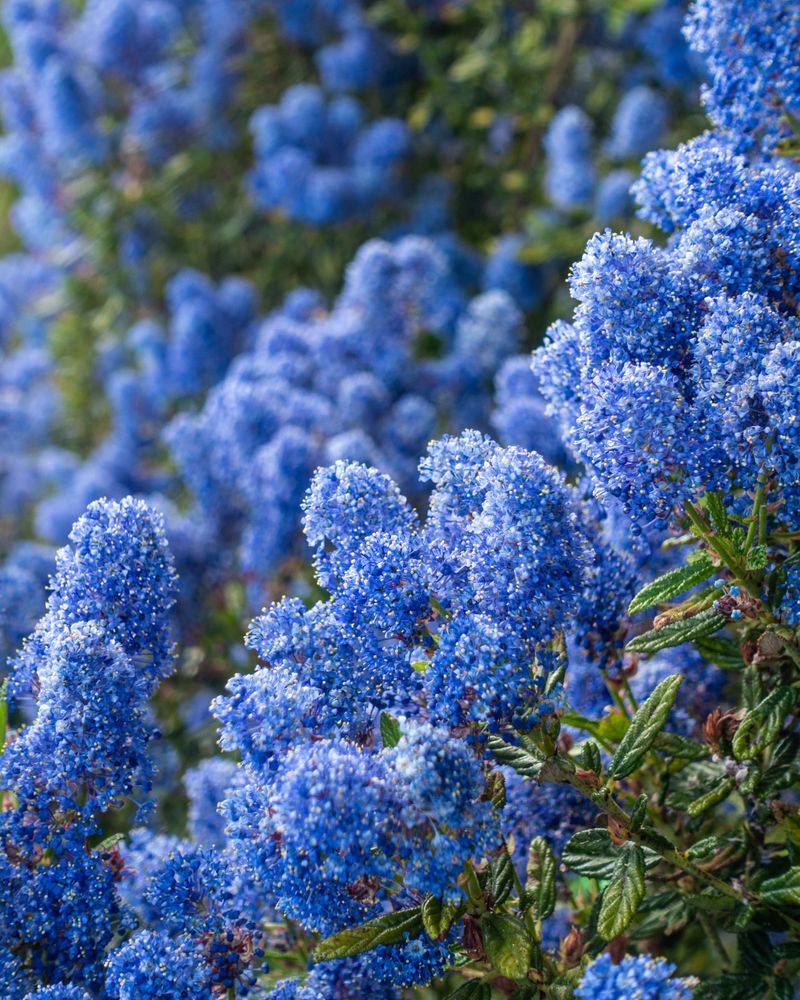
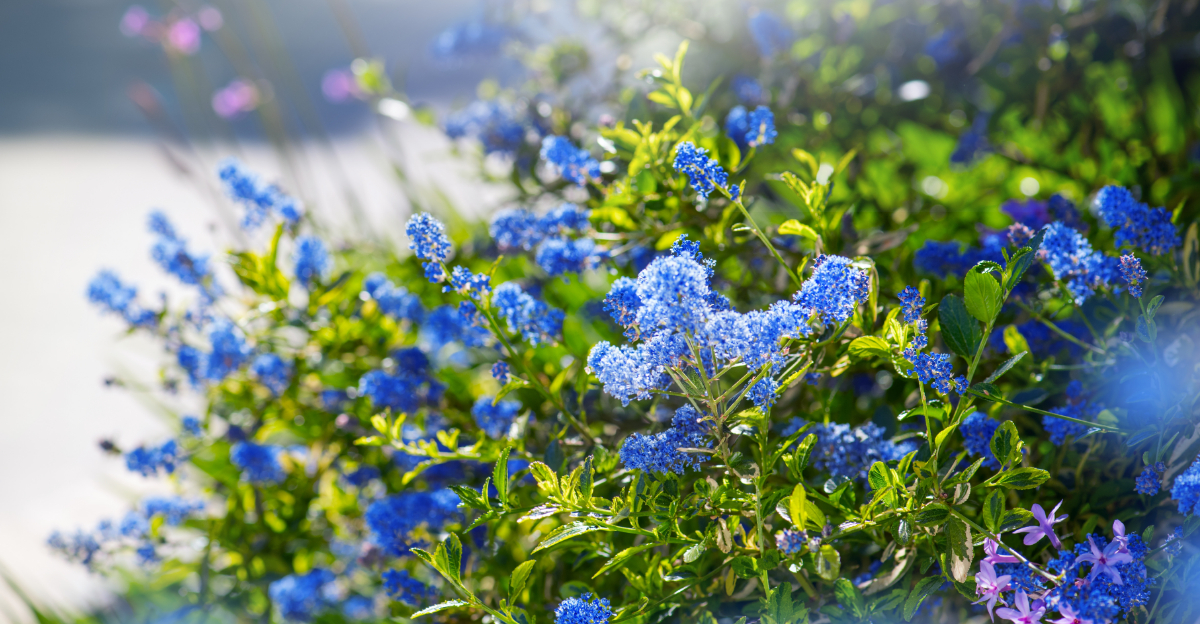
Few plants in California can match the jaw-dropping beauty of California Lilac, known scientifically as Ceanothus. When spring arrives, this shrub explodes into a cloud of small, honey-scented blue or white flowers that can stop anyone in their tracks.
Bees and butterflies are often attracted to it, helping your yard feel lively once the blooms open.
California Lilac is a fast grower, which means it establishes its root system quickly after planting in early spring. Give it full sun and well-drained soil, and it will reward you with vigorous growth before summer heat sets in.
Once established, it tolerates dry conditions well, reducing the need for frequent watering during the warm months.
This shrub comes in many sizes, from low ground-hugging varieties to tall, upright forms reaching ten feet or more. You can find a Ceanothus variety that fits almost any garden space in California.
Planting it near a walkway lets you enjoy that sweet floral fragrance every time you pass by. It also provides excellent erosion control on slopes, making it both practical and stunning for California landscapes.
3. Chaparral Currant With Early Flower Clusters In Spring
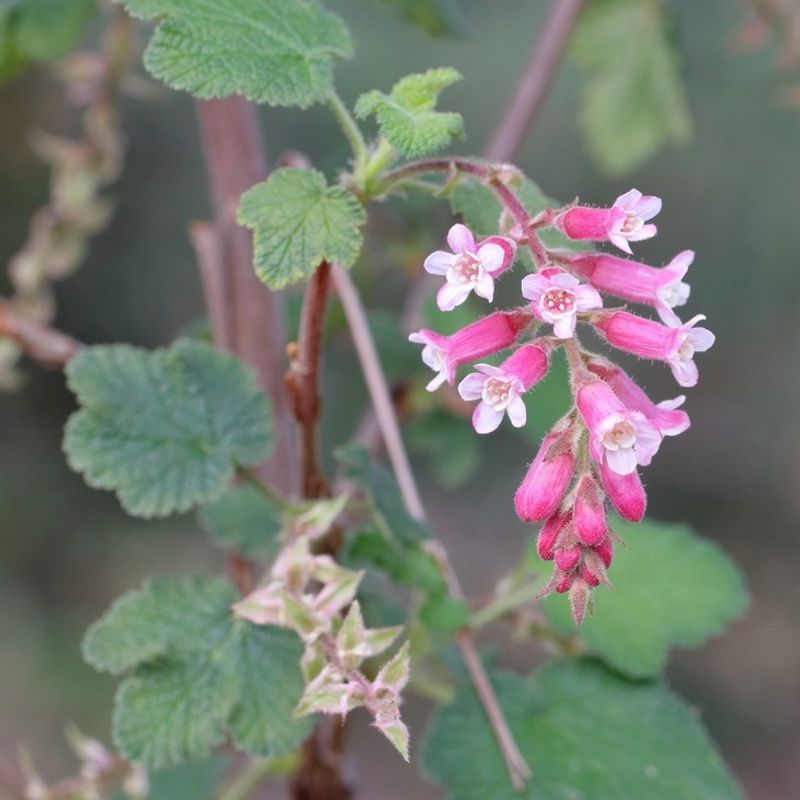
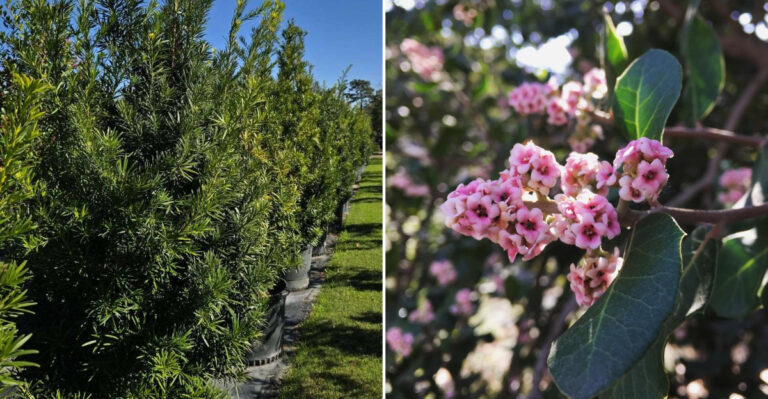
Walk through a California chaparral in late winter or early spring, and you might catch the sweet, spicy scent of Chaparral Currant drifting through the air before you even spot the plant. Ribes malvaceum blooms earlier than almost any other native shrub in California, often starting in December and carrying its rosy pink flower clusters through March.
That early bloom season makes it a lifesaver for hummingbirds returning from their winter grounds.
Because it blooms and establishes root growth during the cool, wet months, Chaparral Currant is perfectly timed for early spring planting. By the time California’s summer heat rolls in, this shrub has already built a deep, resilient root system.
It thrives in well-drained soils and handles full sun to partial shade without complaint.
The grayish-green leaves have a slightly fuzzy texture and give off a pleasant earthy fragrance when brushed. After flowering, the plant produces small, glandular berries that birds find appealing.
Chaparral Currant typically grows four to eight feet tall, giving it enough presence to serve as a privacy screen or backdrop plant in a California native garden. It is one of those underappreciated gems that gardeners who try it once tend to plant again and again.
4. Manzanita With Evergreen Foliage
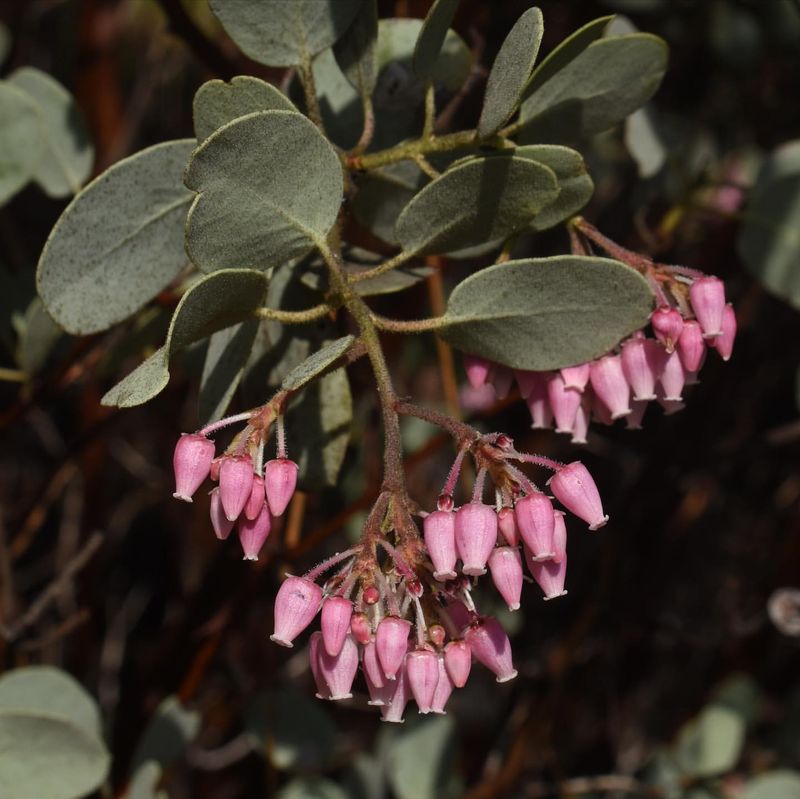
Ask any California native plant enthusiast which shrub they consider the most architecturally striking, and Manzanita will almost always come up. The smooth, mahogany-red bark of Arctostaphylos species is unlike anything else in the plant world, glowing beautifully in morning and afternoon light.
Small, nodding, urn-shaped flowers in white or soft pink hang in clusters from late winter through early spring, giving hummingbirds an early-season feast.
Manzanita establishes well when planted in fall or early spring in California, giving it time to anchor before summer arrives. It demands excellent drainage and full sun, and once settled, it becomes one of the most drought-tolerant shrubs you can grow in the state.
Overwatering is the one thing to avoid, as soggy roots can cause problems quickly.
Sizes range dramatically across the many Manzanita species and cultivars, from ground-hugging varieties just a foot tall to large shrubs reaching fifteen feet. This flexibility makes it useful in almost any California garden setting, from a coastal yard to an inland hillside.
After the flowers fade, showy red-tinged berries develop, which birds and small mammals enjoy through summer and fall. Few plants offer Manzanita’s combination of year-round visual interest, wildlife value, and rugged adaptability to California’s challenging conditions.
5. California Buckeye With Graceful Clusters
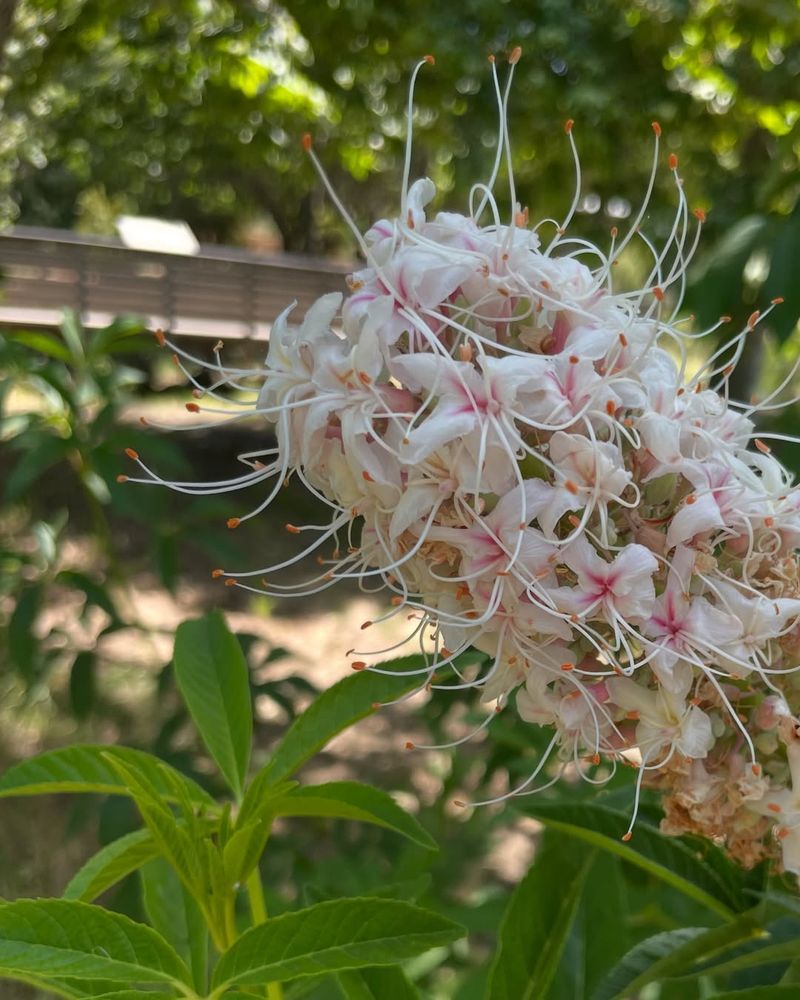
California Buckeye is a showstopper that commands attention when it blooms in late spring with tall, candle-like spikes of fragrant white to pale pink flowers. Aesculus californica is one of the most recognizable native plants in California, often seen decorating dry hillsides and canyon edges with its bold, tropical-looking foliage and stunning flower clusters.
The sweet floral fragrance can carry on the breeze for quite a distance.
One of the most fascinating things about this plant is its relationship with California’s dry season. As summer progresses, it drops its leaves early to conserve water, going dormant while other plants struggle in the heat.
This means it is perfectly adapted to the state’s climate and requires no summer irrigation once established, saving you both time and water.
Plant California Buckeye in early spring in a sunny to partly shaded spot with good drainage, and it will settle in confidently before temperatures climb. It can grow as a large shrub or small tree, reaching fifteen to thirty feet at maturity, so give it room to spread.
The large, round seed pods that develop after flowering are striking in their own right and are often used in dried floral arrangements. Wildlife, including deer and various birds, visit the plant throughout its seasonal cycle across California.
6. California Gooseberry With Spring Flowers
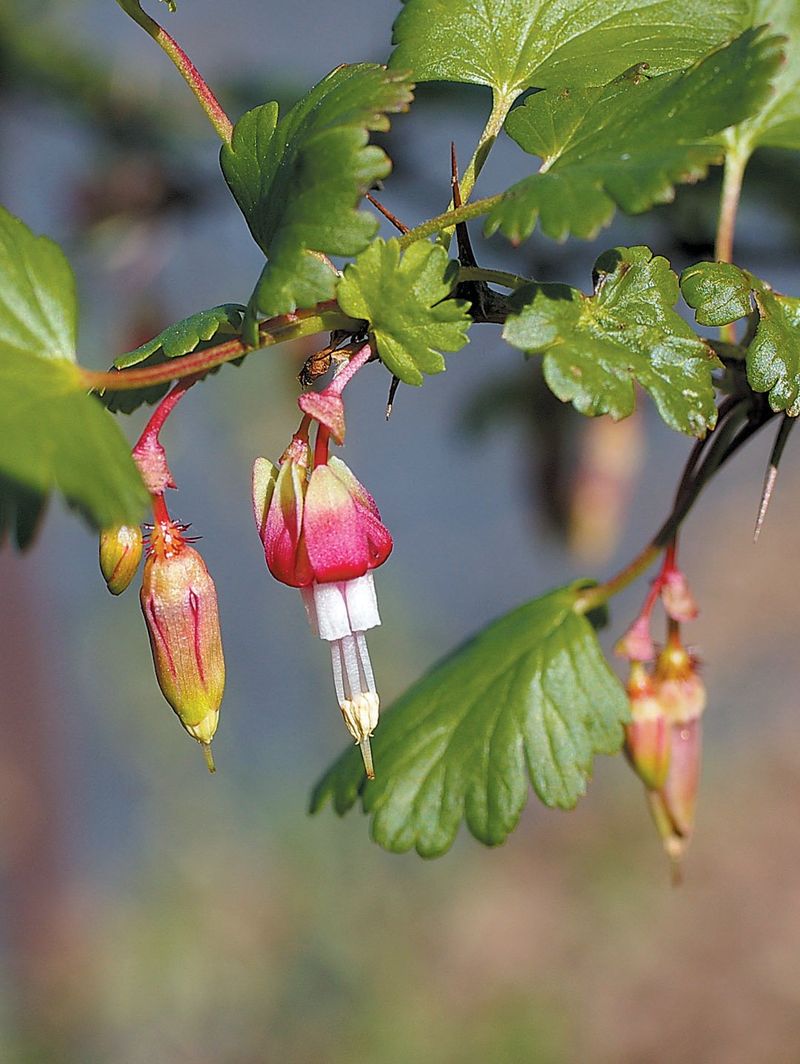
Tucked into the shaded edges of California woodlands and chaparral, California Gooseberry is the kind of plant that rewards a closer look. Ribes californicum produces delicate, dangling flowers with fuchsia outer petals and white inner parts that look almost like tiny, elegant lanterns hanging from spiny stems.
Hummingbirds are drawn to these blooms early in the season, often visiting before many other spring flowers have opened.
The spiny branches might seem like a drawback, but they actually make California Gooseberry a fantastic natural barrier or wildlife hedge in a California garden. Birds love nesting in the thorny protection the plant provides.
It blooms from late winter through spring, which means planting it early gives it plenty of time to establish before the dry summer months arrive.
California Gooseberry prefers partial shade and well-drained soils, making it a great choice for spots under oaks or along the north-facing side of a fence. It grows to about three to five feet tall and wide, forming a manageable rounded shape.
After flowering, small, tasty gooseberries develop that are technically edible for humans, though the local wildlife will likely get to them first. It is a wonderfully functional and charming addition to any California native plant garden focused on supporting local ecosystems.
7. Toyon With Bright Blooms Followed By Red Berries
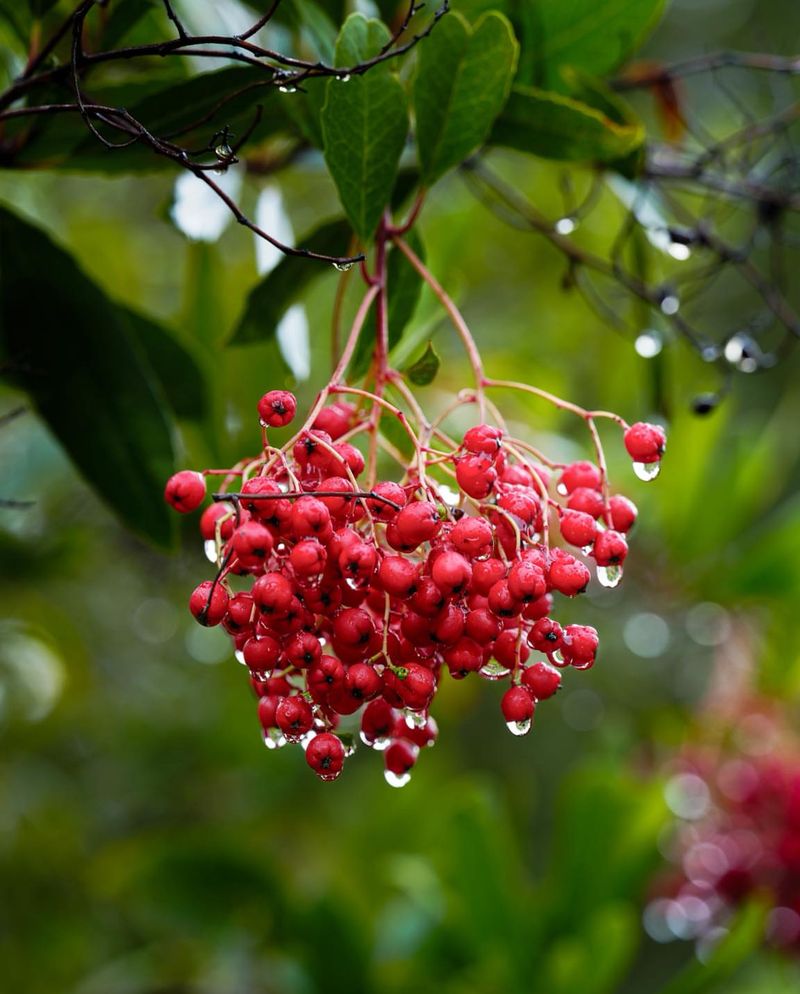
Hollywood, California actually got its name from Toyon, the native shrub whose bright red winter berries reminded early settlers of English holly. Heteromeles arbutifolia is a tough, evergreen plant that earns its place in any California garden with clusters of small white flowers in summer, followed by those iconic red berries that persist through winter.
It is genuinely one of the hardest-working native shrubs the state has to offer.
Spring planting gives Toyon a solid head start before the dry California summer arrives. It grows in full sun to partial shade and tolerates a wide range of soil conditions, including heavy clay soils that challenge many other plants.
Once established, it is drought-tolerant and generally requires minimal care, making it suitable for low-maintenance California landscapes.
Toyon can grow into a large shrub or small tree, sometimes reaching fifteen feet or more, which makes it useful as a privacy screen, windbreak, or standalone focal point. The glossy, serrated leaves provide year-round structure and color in the garden.
Birds flock to the red berries in winter, turning the plant into a natural bird feeder right in your backyard. Planting Toyon in California is both a beautiful choice and a meaningful act of support for local wildlife that depends on this iconic native plant.
8. Coastal Prickly Pear With Bold Spring Flowers
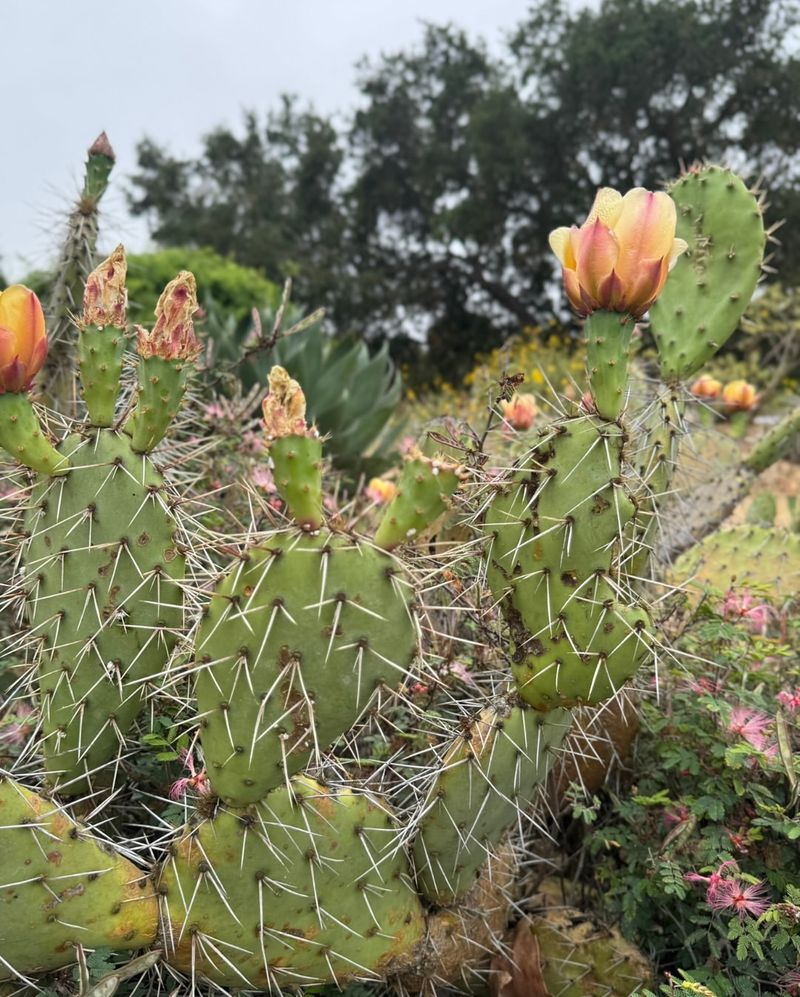
Bold, architectural, and surprisingly beautiful in bloom, Coastal Prickly Pear is not your typical flowering shrub, but it absolutely earns a spot on this list. Opuntia littoralis is a native California cactus-shrub that produces large, silky yellow flowers in spring, often with a gorgeous orange or red blush at their centers.
The blooms are striking against the flat, blue-green pads, and pollinators visit them eagerly when they open in the warm spring sunshine.
This plant is built for California’s coastal and inland conditions, thriving in sandy, rocky, or poor soils with full sun and excellent drainage. Once established, it requires minimal supplemental water, making it well suited to California’s increasingly dry summers.
Plant it in early spring and it will quickly root into its new home before temperatures rise.
Coastal Prickly Pear typically grows three to seven feet tall and can spread quite wide, forming impressive clumps over time. The spines mean it works well as a natural deterrent along property edges.
After flowering, edible red fruits called tunas develop and attract birds, coyotes, and other California wildlife. Handling the plant requires thick gloves due to both the large spines and the nearly invisible tiny glochids that can irritate skin.
Its dramatic look adds a distinctly California feel to any sunny garden space.
9. California Foamflower With Late Spring Blooms
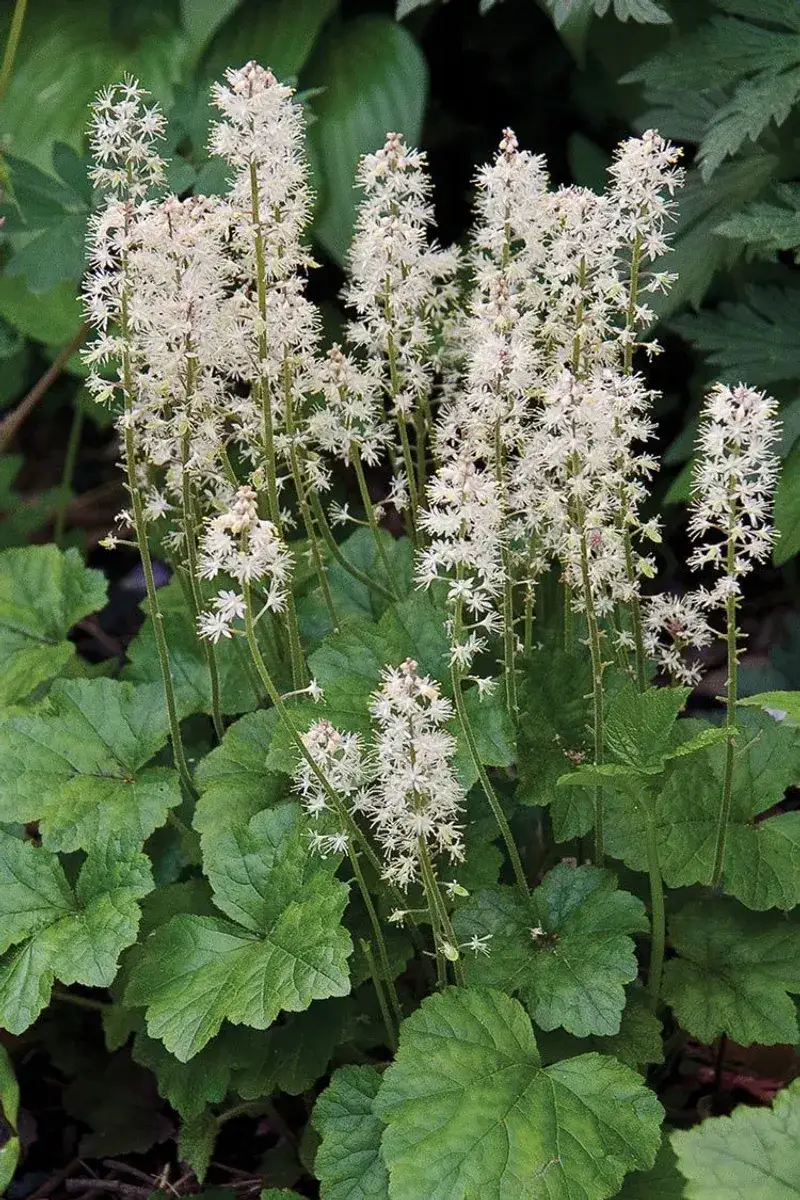
Soft, delicate, and almost ethereal in appearance, California Foamflower brings a quiet kind of magic to shaded garden corners. Tiarella species produce airy spikes of tiny white flowers that look like little puffs of foam floating above a carpet of attractive, deeply lobed green leaves.
The effect in a woodland garden is genuinely enchanting, especially in the cool, moist conditions of a California spring morning.
Unlike many of the sun-loving shrubs on this list, California Foamflower prefers shade or dappled light, making it ideal for planting beneath oaks, redwoods, or along the north-facing side of a structure. It thrives in moist, humus-rich soil and establishes its root system readily during the cooler spring months before California’s summer dryness sets in.
A layer of mulch helps retain the soil moisture it appreciates.
Growing about one to two feet tall, it works beautifully as a ground cover or border plant under taller native shrubs and trees. The foliage stays attractive even when the plant is not in bloom, providing season-long visual interest in shaded California gardens.
Bees and small insects visit the flowers for nectar and pollen during spring. It pairs especially well with other shade-loving California natives like redwood sorrel and sword fern, creating a lush, layered understory planting that feels like a walk through a California forest.