Flowering Shrubs That Easily Survive Tough Michigan Winters
Michigan winters test every plant in the yard. Freezing temperatures, heavy snow, and sharp winds across the Great Lakes region can push many landscape plants past their limits.
By the time spring arrives, gardeners quickly learn which shrubs were truly built to handle the cold. Fortunately, some flowering shrubs thrive in these tough conditions.
Across both the Upper and Lower Peninsulas, certain varieties handle long winters with surprising strength and still deliver beautiful blooms once warm weather returns.
These hardy plants settle into the landscape, survive the harshest months, and reward gardeners with color when the growing season begins.
Choosing the right shrubs can make a huge difference in how a Michigan yard performs year after year. With tough varieties that are adapted to the climate, your garden can stay resilient through winter and burst into life again every spring and summer.
1. Common Lilac
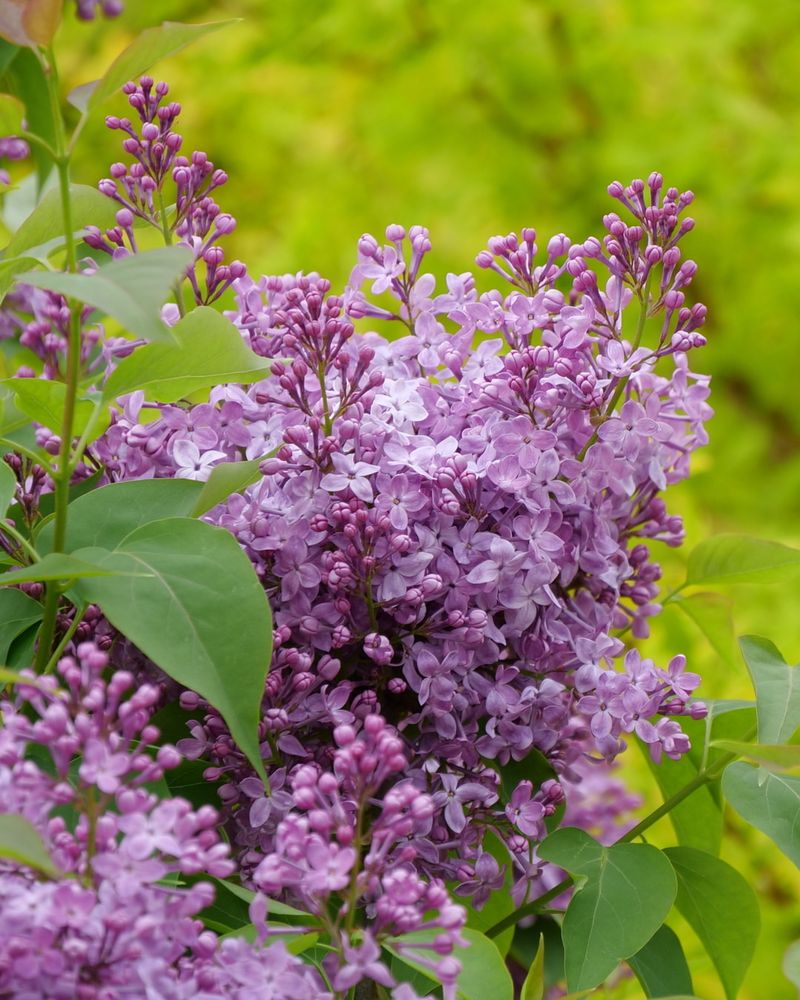
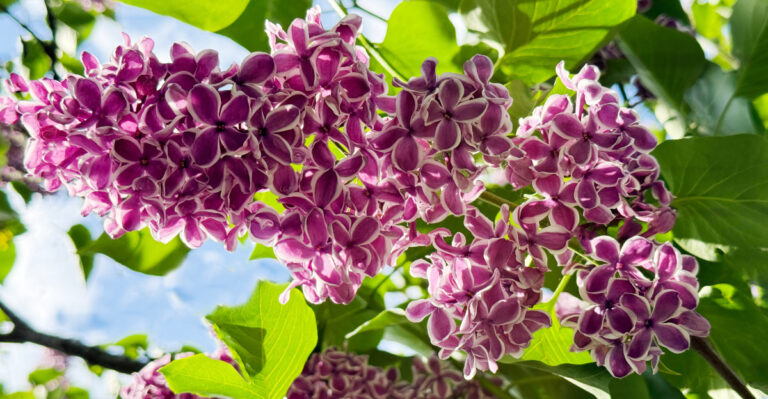
Few plants bring the kind of joy that a fully bloomed lilac does on a warm Michigan spring morning. The sweet, unmistakable fragrance drifts across the yard and stops you right in your tracks.
Syringa vulgaris, or Common Lilac, has been a staple in Michigan landscapes for generations, and for very good reason.
This tough shrub thrives in USDA Hardiness Zones 3 through 7, which covers the entire state of Michigan comfortably. It handles freezing winters without missing a beat and bounces back strong every single spring.
Plant it in a spot that gets full sun and has well-drained soil, and it will reward you for decades.
One thing many gardeners learn the hard way is when to prune. Lilacs bloom on old wood, meaning the flower buds form the previous season.
Prune right after the spring blooms fade, not in fall or winter, or you will cut off next year’s flowers by accident.
Spacing matters too. Give each shrub enough room for good airflow between plants to reduce the risk of powdery mildew, which lilacs can be prone to in humid conditions.
A spacing of about 5 to 15 feet apart works well depending on the variety. Common Lilac can grow quite tall, sometimes reaching 15 feet, so keep that in mind when choosing your planting spot in your Michigan garden.
2. Smooth Hydrangea
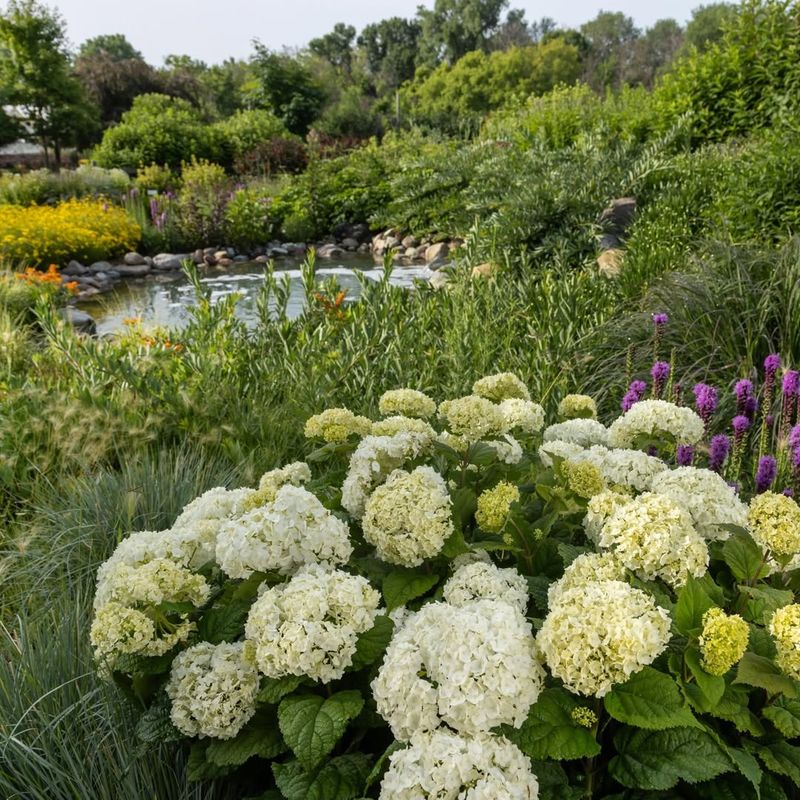
If you have ever walked past a shrub absolutely covered in big, round, white flower clusters and wondered what it was, chances are you were looking at a Smooth Hydrangea.
Hydrangea arborescens is one of the most reliable bloomers you can plant in a Michigan garden, and it genuinely thrives even after a brutal winter.
What makes this hydrangea so special for Michigan gardeners is that it blooms on new wood. That means it forms its flower buds during the current growing season, not the year before.
Even if a harsh Michigan winter damages the stems, the plant will still push out fresh growth and produce gorgeous blooms that same summer.
Pruning is straightforward with this one. Cut the plants back in early spring before new growth starts, ideally to about 12 inches from the ground.
This encourages strong, upright stems that can hold up those heavy flower heads without flopping over in summer rain.
Popular varieties like Annabelle and Incrediball are widely available at Michigan nurseries and garden centers. They perform beautifully in full sun to partial shade and are not picky about soil as long as it stays reasonably moist.
Plant a few together for a bold, lush display that runs from mid-summer well into fall. Smooth Hydrangea is honestly one of the easiest wins in any Michigan landscape.
3. Panicle Hydrangea
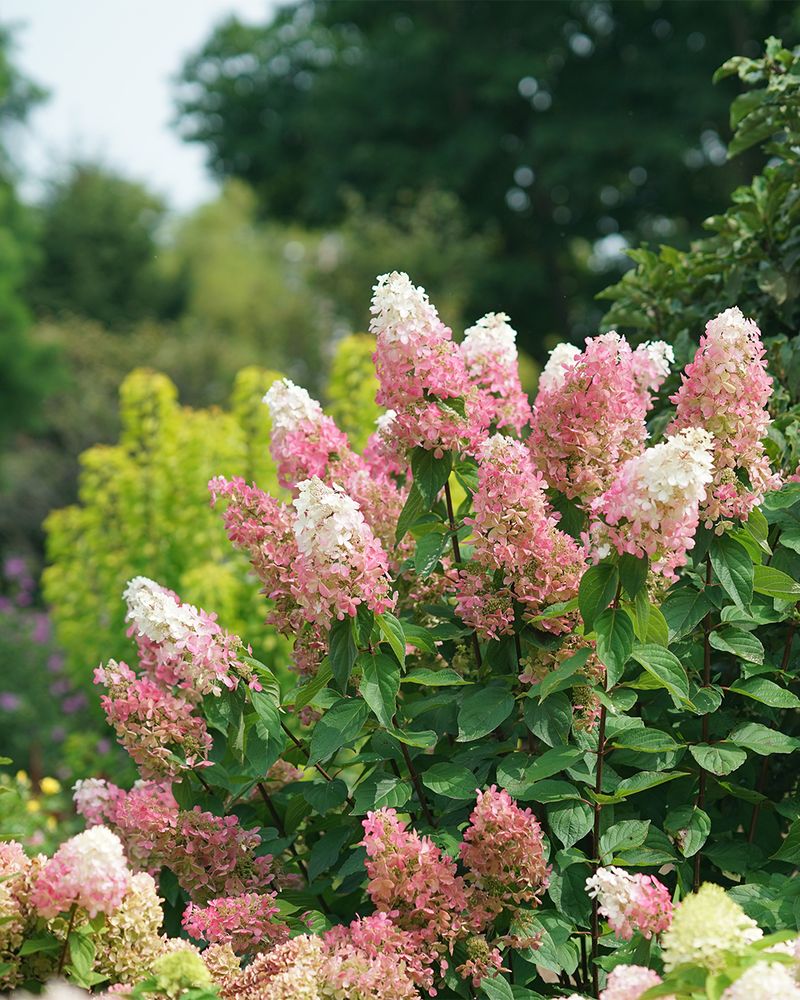
Panicle Hydrangea might just be the toughest hydrangea you can grow in Michigan. Hydrangea paniculata handles freezing winter temperatures with ease, making it one of the most dependable flowering shrubs across the entire state.
Unlike some other hydrangeas that struggle after a rough winter, this one shows up ready to perform every single year.
The flowers are hard to miss. Large, cone-shaped blooms emerge creamy white in summer and slowly transition to shades of pink and dusty rose as fall approaches.
The display lasts for months, giving Michigan gardeners a long season of color that stretches from July well into October.
Because Panicle Hydrangea blooms on new wood, pruning in late winter or early spring keeps it in great shape. Cut back the previous year’s stems by about one-third to encourage vigorous new growth and bigger flower clusters.
Avoid heavy pruning in fall since the dried blooms actually look beautiful standing through winter.
Plant it in full sun to partial shade for the best results. It tolerates a wider range of soil conditions than most shrubs, though it does best with consistent moisture.
Popular varieties like Limelight and Quick Fire are excellent choices for Michigan landscapes.
These shrubs can grow anywhere from 6 to 15 feet tall, so they work beautifully as a focal point, a privacy screen, or even a small specimen tree when trained properly.
4. Ninebark
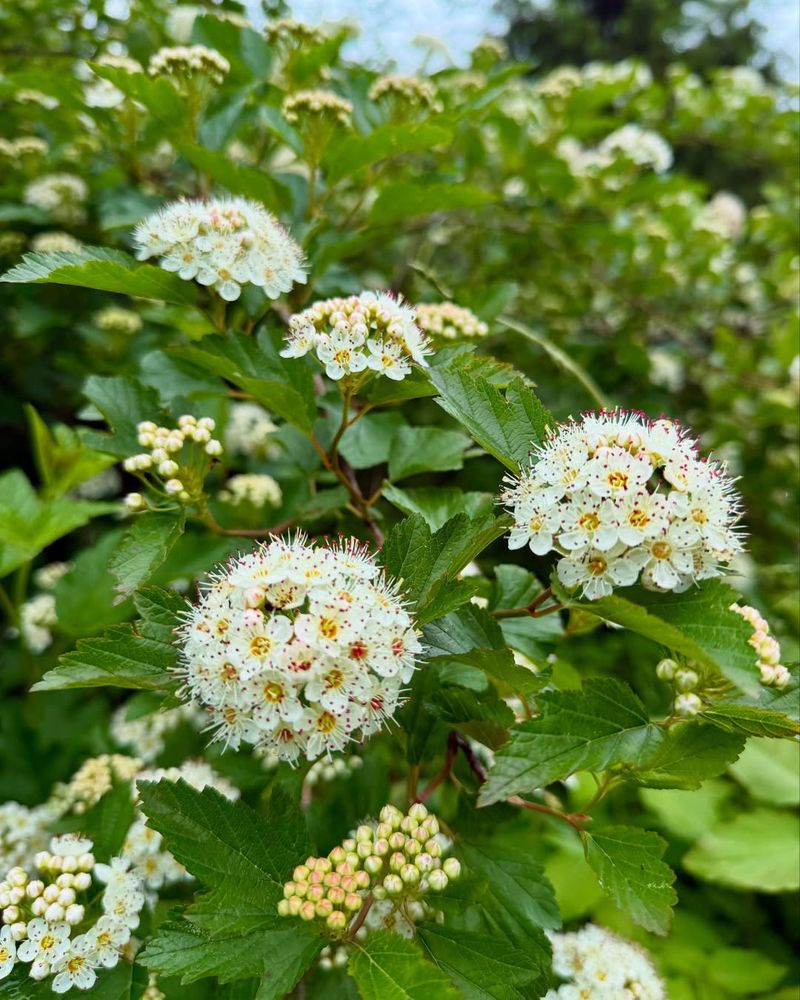
Ninebark is one of those shrubs that makes every Michigan gardener look like a pro. Physocarpus opulifolius is native to North America and has deep roots in the Great Lakes region, which means it already knows exactly how to handle a Michigan winter.
It does not need coddling, and it certainly does not mind the cold. Come late spring, Ninebark bursts into clusters of small white or soft pink flowers that cover the entire plant.
Pollinators absolutely love it, so expect plenty of bees and butterflies buzzing around during bloom time.
After the flowers fade, reddish seed capsules develop and add another layer of visual interest through summer and into fall.
One of the biggest selling points for Michigan gardeners is how forgiving this shrub is about soil. It tolerates clay, poor drainage, drought, and even urban pollution without complaint.
That kind of flexibility is hard to find in any plant, let alone one that also looks this good. Pruning Ninebark lightly right after it finishes flowering helps maintain a tidy shape and encourages fresh growth.
Varieties like Diablo, Summer Wine, and Coppertina offer striking burgundy or copper-toned foliage that adds bold color to any Michigan landscape from spring through fall.
Whether you plant it as a specimen shrub, a hedge, or a naturalized border, Ninebark delivers season-long beauty without demanding much in return.
5. Red Twig Dogwood
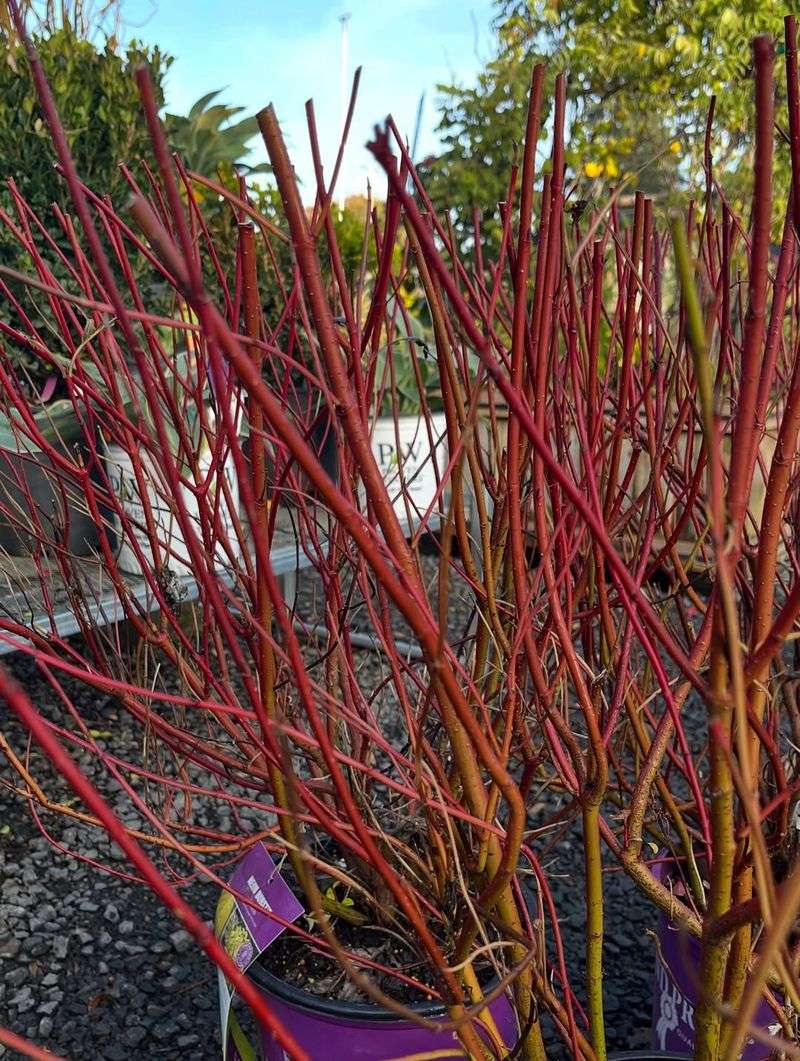
Most flowering shrubs earn their place in the garden during the warm months, but Red Twig Dogwood earns it year-round.
Cornus sericea is a Michigan native that delivers white flower clusters in late spring, attractive berries in summer, and then puts on its most dramatic show in winter when those brilliant red stems light up against a snowy Michigan landscape.
Gardeners who have not yet tried this shrub are seriously missing out. The vivid red stems become more intense as temperatures drop, turning almost electric against a backdrop of white snow.
Few plants offer that kind of winter color, and in Michigan where winters are long, that visual pop is genuinely valuable.
Growing Red Twig Dogwood is not complicated. It thrives in full sun to partial shade and tolerates a wide range of soils, including wet and poorly drained areas where many other shrubs struggle.
Plant it near a rain garden, a low-lying area, or along a stream bank and it will absolutely flourish.
The key to keeping those stems bright and bold is regular pruning. Older stems lose their vibrant color over time, so cut about one-third of the oldest canes down to the ground each late winter.
This encourages fresh young growth that brings the most intense red color. Red Twig Dogwood spreads gradually through suckers, making it a great choice for naturalizing larger areas of your Michigan property.
6. Potentilla
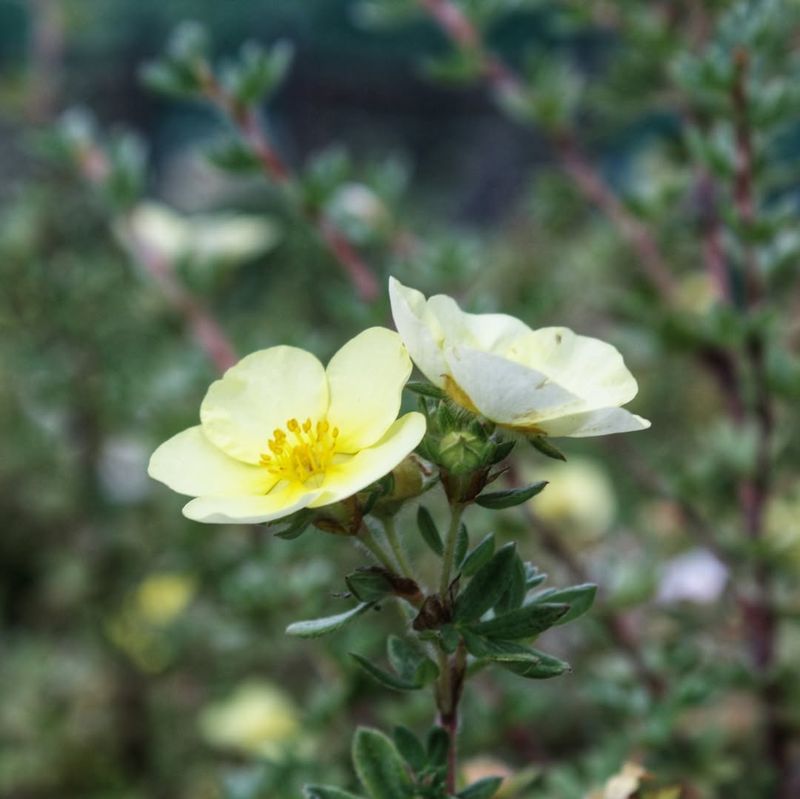
Looking for a shrub that blooms almost nonstop from early summer through fall without asking for much? Shrubby Potentilla, known botanically as Dasiphora fruticosa, might be exactly what your Michigan garden needs.
This compact little powerhouse is hardy all the way down to USDA Zone 2, so Michigan winters are absolutely no challenge for it at all.
The flowers come in shades of yellow, white, and soft pink depending on the variety, and they just keep coming. While many shrubs put on a big spring show and then go quiet, Potentilla keeps pushing out fresh blooms for months.
It is one of the longest-blooming shrubs you can grow in Michigan, which makes it incredibly practical for gardeners who want continuous color.
Care requirements are minimal, which is part of what makes it so appealing. Plant it in full sun with well-drained soil and it is largely self-sufficient.
It handles drought, poor soil, and cold snaps without drama. A light trim in early spring before new growth begins keeps the plant tidy and encourages a fresh flush of blooms.
Popular varieties like Happy Face Yellow, Goldfinger, and Snowbird are widely available at Michigan nurseries.
Potentilla stays relatively compact, usually reaching only 2 to 4 feet tall and wide, making it perfect for borders, rock gardens, low hedges, or planting in groups along a walkway. It is a genuinely underrated gem in the Michigan gardening world.
7. Weigela
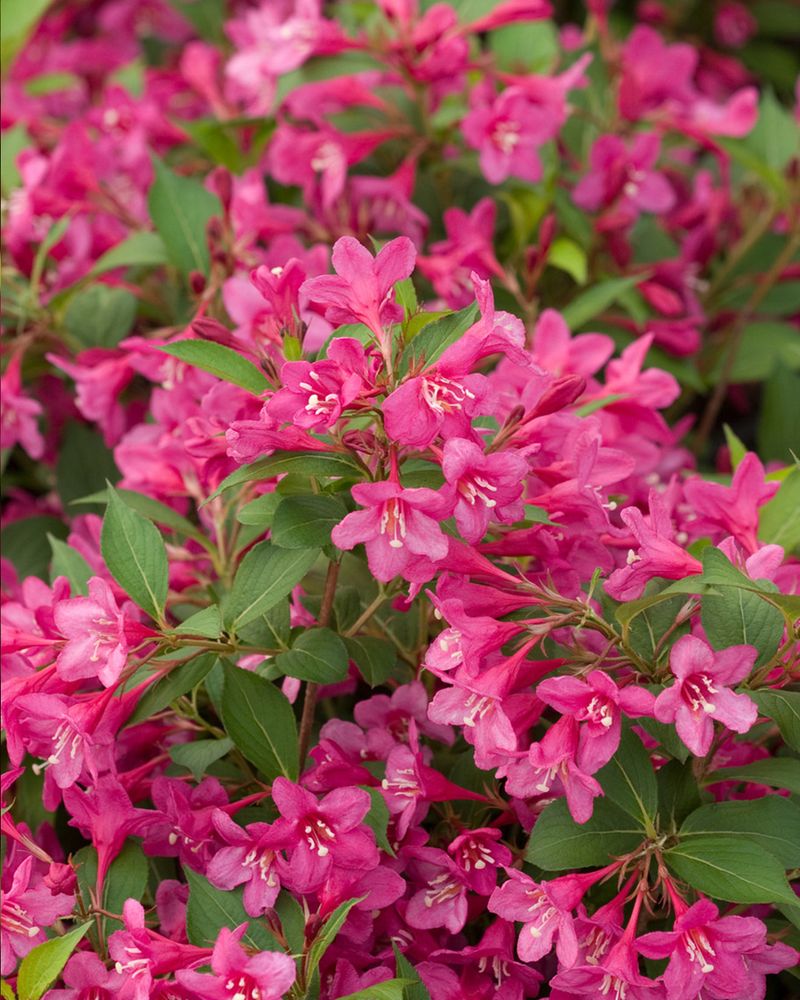
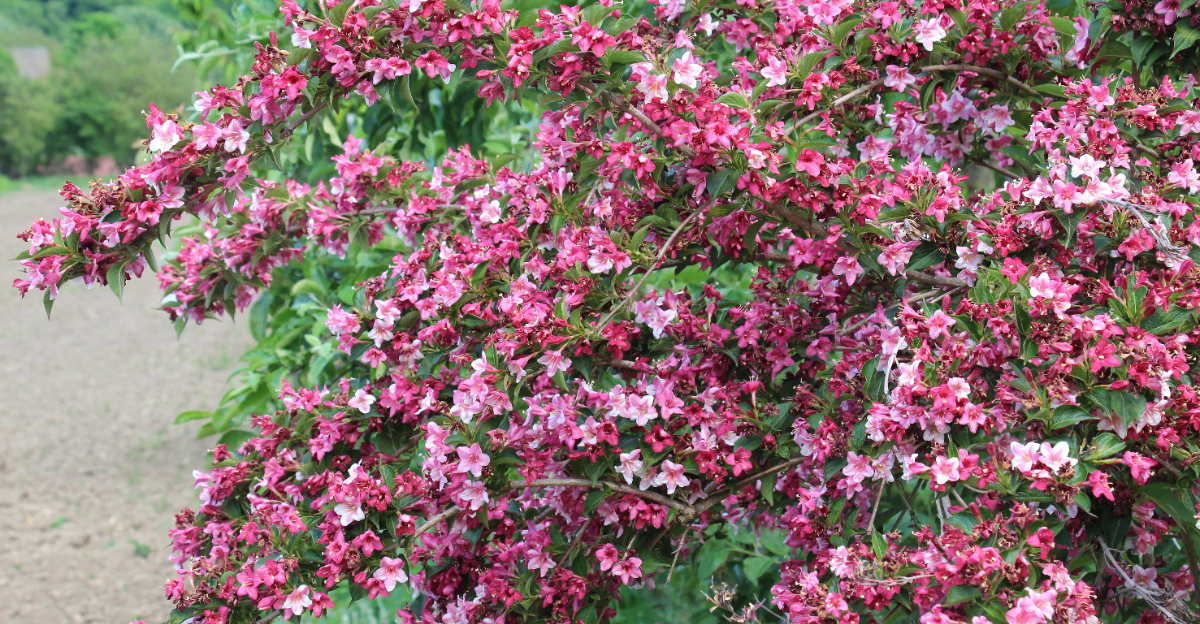
Hummingbirds are wild about Weigela, and once you see this shrub in full bloom, you will understand why. Weigela florida puts on a spectacular show in late spring with an abundance of trumpet-shaped flowers in shades of red, pink, and white.
The blooms practically glow in the garden, and they arrive right when Michigan gardeners are most eager for color after a long winter.
This shrub has proven itself as a reliable performer across Michigan landscapes for many years. It handles cold winters without significant damage and comes back strong each spring ready to bloom.
Full sun is where Weigela really shines, producing the most flowers and the most vibrant color when it gets at least six hours of direct sunlight each day.
Pruning timing matters with Weigela because it blooms on old wood, just like lilacs. The best time to prune is right after the spring flowering finishes, typically in early June in most parts of Michigan.
Pruning at any other time risks removing the buds that will become next year’s flowers, so stick to that post-bloom window.
Modern varieties like Wine and Roses, My Monet, and Spilled Wine offer stunning foliage colors ranging from deep burgundy to variegated green and white, adding extra interest beyond just the flowers.
Weigela grows to about 4 to 6 feet tall and wide in most Michigan settings, making it a great mid-sized shrub for mixed borders or foundation plantings.
8. American Highbush Cranberry
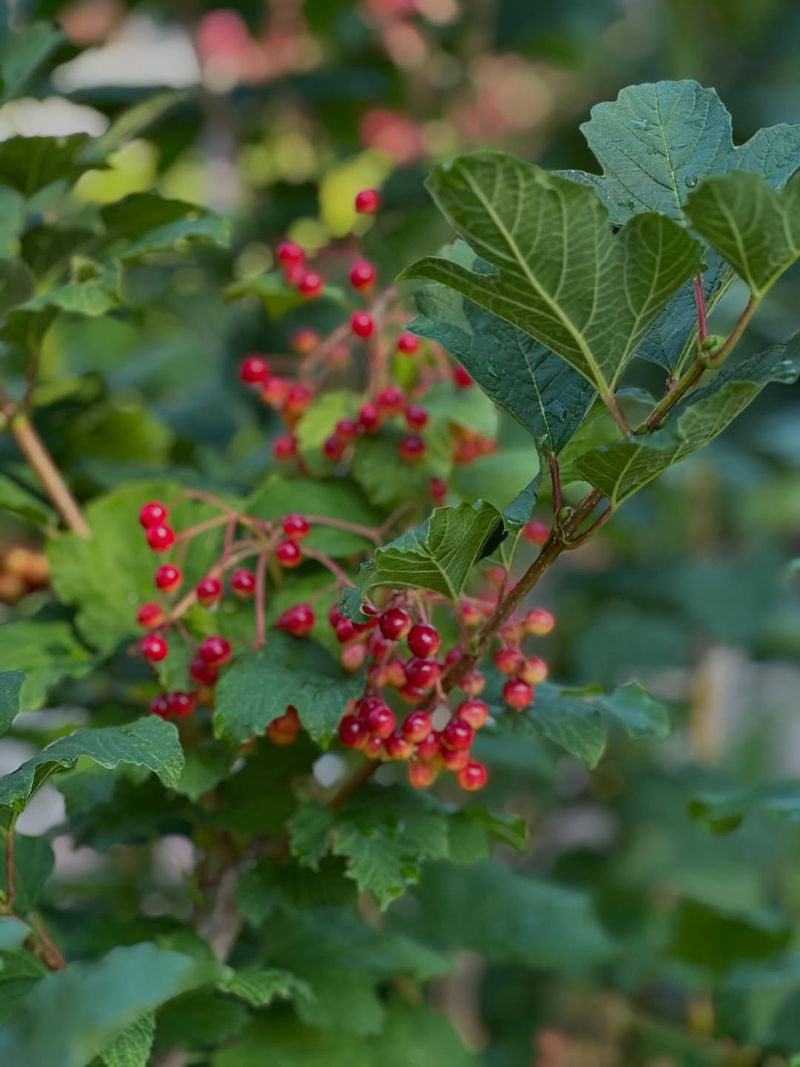
American Highbush Cranberry is one of those plants that looks almost too good to be true. Viburnum trilobum is native to the Great Lakes region, which means it is perfectly adapted to Michigan’s climate and winters right out of the gate.
It does not just survive here, it genuinely thrives, and it gives back to the landscape in multiple seasons.
Spring brings flat-topped clusters of delicate white flowers that cover the shrub and attract pollinators from across the yard. As summer transitions into fall, those flowers give way to clusters of bright red berries that hang on the branches well into winter.
Birds flock to these berries, making this shrub a fantastic choice for anyone who enjoys watching wildlife from their Michigan window.
Fall foliage is another highlight. The leaves turn brilliant shades of orange and red before dropping, giving you a third season of visual interest beyond just the flowers and berries.
Very few shrubs offer this kind of multi-season performance in a Michigan garden.
Plant American Highbush Cranberry in full sun to partial shade with moist, well-drained soil for the best results. It tolerates wet conditions better than many shrubs, which makes it a smart pick for low-lying areas of your Michigan yard.
This shrub typically grows 8 to 12 feet tall, so give it room to spread out and become the standout specimen it was born to be. It is truly a Michigan garden treasure.
9. Spirea
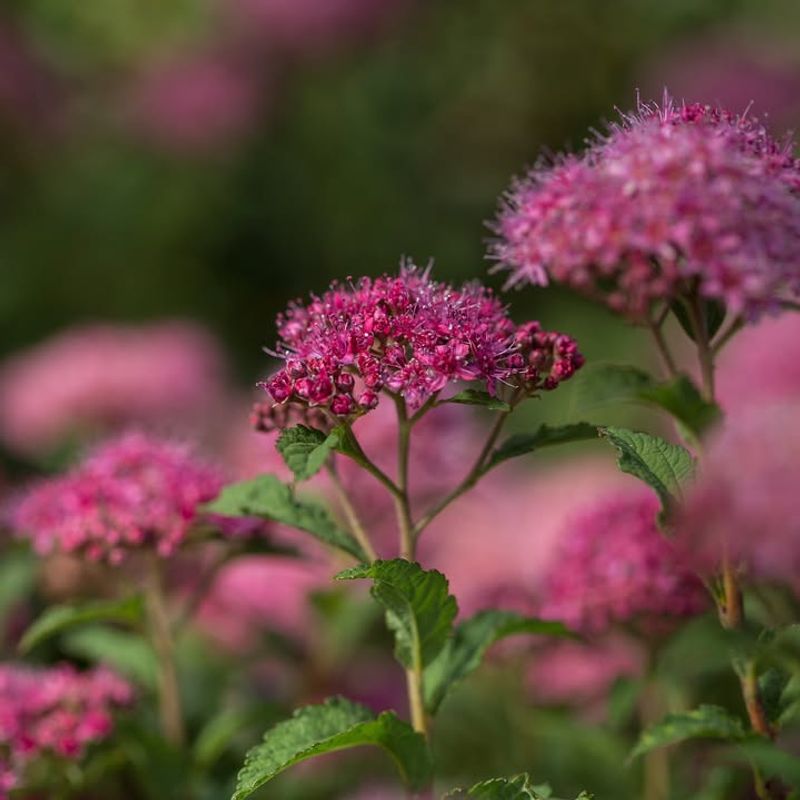
Spirea is one of those workhorses of the Michigan garden that never gets enough credit. Spiraea japonica, commonly known as Japanese Spirea, is a tough, adaptable shrub that comes back reliably every year no matter what Michigan’s winter throws at it.
Cold snaps, heavy snow, and ice do not slow this plant down one bit.
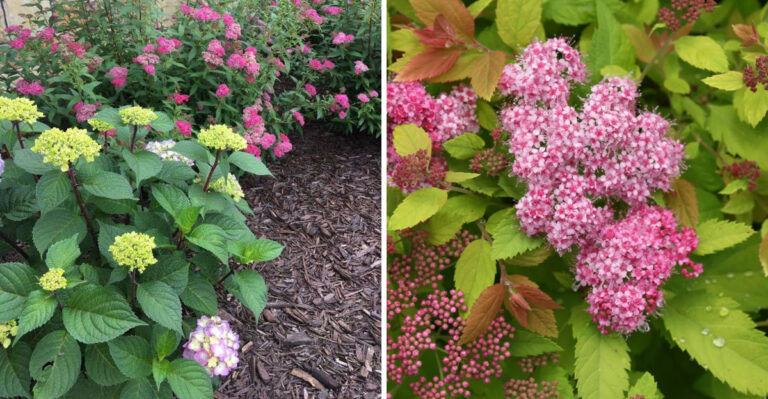
Summer is when Spirea really earns its place in the garden. Clusters of bright pink flowers smother the plant from late June through August, creating a cheerful pop of color during the hottest weeks of the Michigan growing season.
The blooms attract butterflies and beneficial insects, so the garden feels alive and buzzing while it is in full flower.
Full sun is the sweet spot for Spirea. The more sunlight it receives, the more flowers it produces and the more compact and tidy it stays.
Pruning in early spring before new growth emerges encourages fresh stems and a stronger bloom display each season. A light shaping after the first flush of flowers can also trigger a second round of blooms later in summer.
Spirea is incredibly versatile in the Michigan landscape. Use it as a low hedge along a walkway, a colorful border plant along a fence, or a mass planting on a slope for erosion control.
Most varieties stay between 2 and 4 feet tall, making them easy to manage. Varieties like Little Princess, Anthony Waterer, and Double Play are all excellent choices for Michigan gardens.