12 Flowers And Perennials That Keep Georgia Gardens Blooming All Year
Georgia gardens never stay quiet for long. From winter’s first blooms to summer’s bright colors and fall’s warm tones, there is always something changing.
A mix of flowers and perennials can keep your garden colorful almost all year and make every corner feel alive.
Gardeners in Georgia face hot summers, occasional northern freezes, and soils that range from sandy coastal plains to heavy Piedmont clay.
Choosing plants that bloom at different times keeps color coming, attracts pollinators, and makes the landscape interesting from season to season.
Winter-hardy hellebores, summer-bright coneflowers, and late-season asters help a garden grow and change throughout the year.
1. Hellebore Brings Elegant Winter And Early Spring Blooms To Shaded Gardens
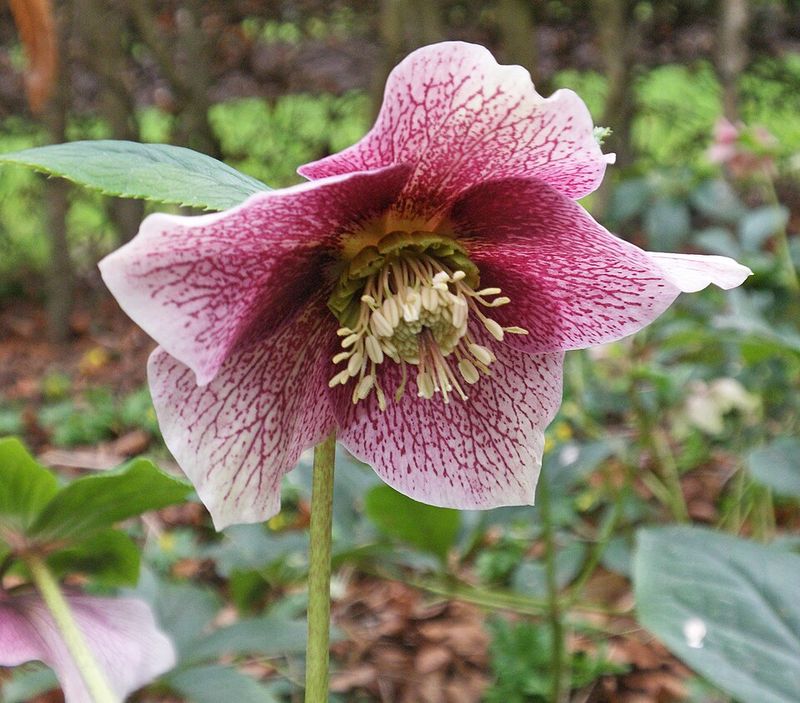
When most of the garden is still resting in late winter, hellebores are quietly opening some of the most elegant blooms of the year.
Known for flowering from late December through March across much of Georgia, these tough perennials thrive in the kind of dappled shade found beneath deciduous trees and along north-facing garden walls.
Hellebores prefer well-drained, humus-rich soil with a slightly alkaline to neutral pH. In Georgia, amending heavy clay with compost before planting makes a noticeable difference in how well they establish and spread over time.
Once settled in, they are remarkably low-maintenance and long-lived.
Blooms come in shades of white, cream, blush, burgundy, and deep plum, with some varieties showing attractive spotted or picotee markings.
The flowers nod downward, so planting them on a slight slope or raised bed lets you appreciate the detail inside each bloom.
Deer tend to leave them alone, which is a real advantage in many Georgia neighborhoods and rural properties.
Hellebores pair beautifully with early spring bulbs like snowdrops and daffodils, creating layered interest in shady corners that would otherwise look bare through the coldest months of the year.
2. Camellia Sasanqua Adds Fall Flowers And Evergreen Structure To Georgia Landscapes
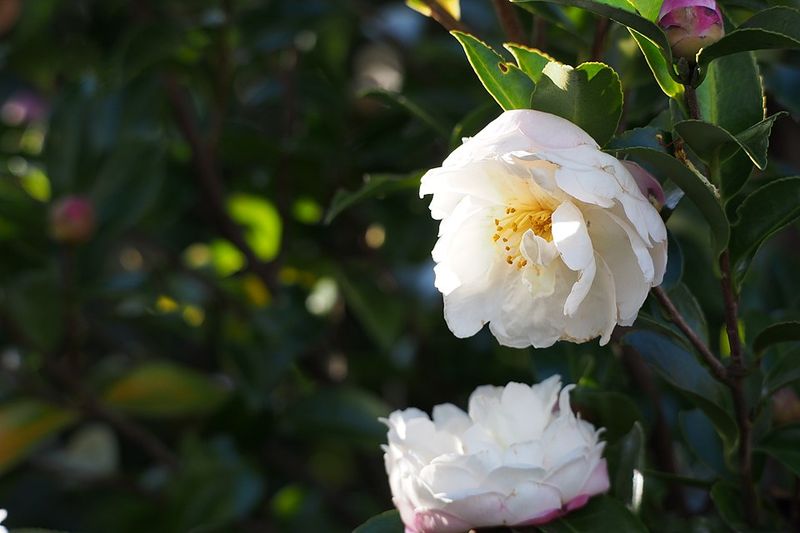
Fall can feel like a quiet season in the garden, but Camellia sasanqua challenges that entirely by putting on one of its best shows from October through December.
Unlike its spring-blooming cousin, sasanqua camellias fill the autumn landscape with flowers at a time when most perennials are winding down across Georgia.
These evergreen shrubs thrive in zones 7 through 9, which covers the majority of central and southern Georgia.
They prefer well-drained, acidic soil with a pH between 5.5 and 6.5, and they do best with morning sun and afternoon shade, though many varieties handle more sun than Camellia japonica.
Adding pine bark mulch helps maintain soil acidity and conserves moisture through Georgia’s dry fall periods.
Flowers range from single to semi-double forms in shades of white, pink, rose, and red. Because the blooms are smaller and more abundant than Camellia japonica, they create a soft, textured look across the shrub.
Bees actively visit sasanqua flowers during warm fall afternoons, providing a late-season food source when pollinator forage becomes limited.
The dense, glossy foliage also serves as a year-round privacy screen or foundation planting that earns its space in Georgia landscapes through multiple seasons.
3. Camellia Japonica Brightens Winter Gardens With Large Rose Like Blooms
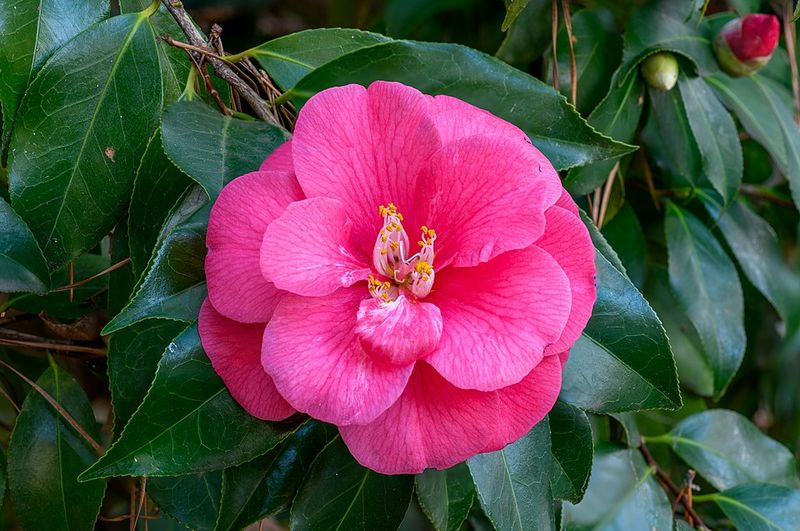
Midwinter in Georgia can surprise gardeners with something unexpected: a camellia in full bloom against a cold gray sky.
Camellia japonica typically flowers from late January through March across much of Georgia, filling the gap between the end of fall and the beginning of spring with blooms that rival roses in their size and formality.
These slow-growing evergreen shrubs prefer acidic, well-drained soil and partial shade, making them well-suited to planting beneath tall pines or along the shaded side of a fence.
In North Georgia’s zone 6 areas, selecting cold-hardy cultivars such as ‘April Kiss’ or ‘Korean Fire’ helps reduce the risk of frost-damaged buds during late cold snaps.
Mulching around the base helps protect shallow roots through winter temperature swings common in the Georgia Piedmont.
Blooms come in formal double, semi-double, and single forms across a range of colors from white and blush to deep crimson.
Individual flowers can reach four to five inches across on established plants, making them a true focal point in the winter garden.
Camellia japonica works well as a foundation shrub, a specimen plant, or a backdrop for shade-loving perennials like hellebores and hostas.
Over decades, well-placed camellias become defining features of Georgia home landscapes.
4. Daffodils Bring Cheerful Late Winter And Early Spring Color To Garden Beds
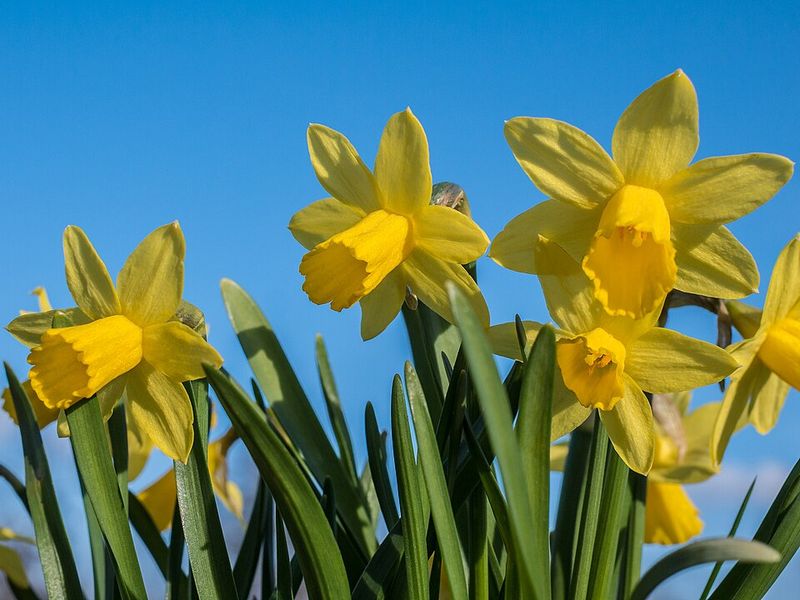
Few sights signal the shift from winter to spring quite like a sweep of daffodils opening across a garden bed in late February.
Across Georgia, daffodils typically begin blooming anywhere from mid-February in the southern part of the state to early March in the cooler foothills of the north, depending on the season and variety.
Daffodils are among the most reliable spring bulbs for Georgia gardens because they naturalize well in the state’s climate and are largely ignored by deer and other wildlife. They prefer full sun to light shade and well-drained soil.
In Georgia’s heavy clay soils, planting bulbs in raised beds or amended planting areas with added compost and coarse sand improves drainage and helps prevent bulb rot during wet winters.
Choosing a mix of early, mid-season, and late-blooming varieties extends the display from February into April.
Species like Narcissus jonquilla and its hybrids are particularly well-adapted to the South and tend to multiply reliably over time in Georgia gardens.
After blooming, allow the foliage to yellow naturally before removing it so the bulbs can store energy for next year’s flowers.
Interplanting daffodils with hostas or daylilies helps disguise the ripening foliage as warmer weather arrives.
5. Bearded Iris Adds Classic Spring Blooms With Bold Petal Structure
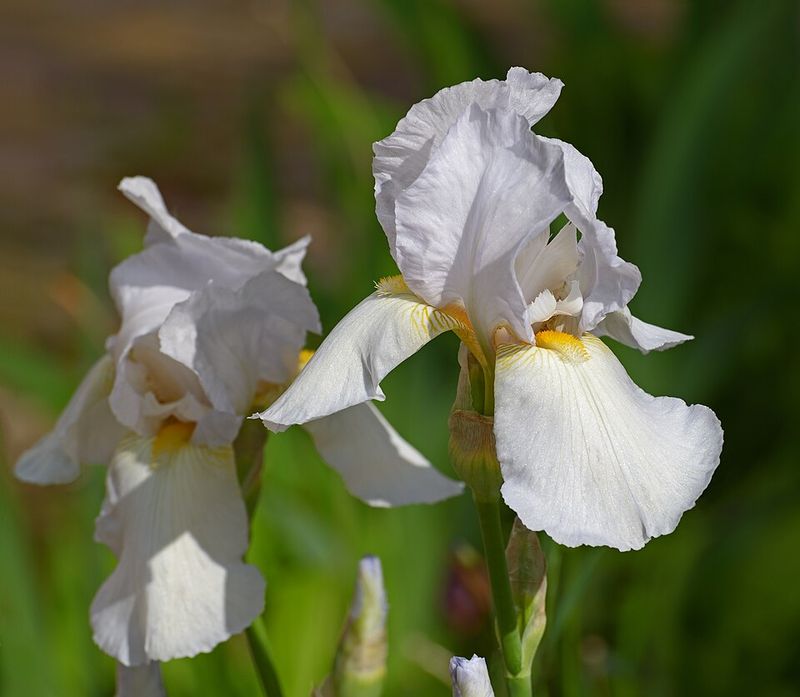
Spring gardening in Georgia reaches a dramatic peak when bearded iris open their ruffled, richly colored flowers in April and May.
The blooms are unlike almost anything else in the garden – large, layered, and often fragrant, with the distinctive fuzzy beard that gives this group its name sitting at the center of each fall petal.
Bearded iris thrive in full sun and well-drained soil with a neutral to slightly acidic pH. In Georgia, one of the most common problems is planting the rhizomes too deeply.
They should sit at or just slightly below the soil surface so the top of the rhizome receives warmth from the sun, which encourages strong flowering.
Raised beds and sloped garden areas work particularly well in Georgia’s sometimes heavy clay soils.
Dividing clumps every three to four years keeps bearded iris blooming vigorously. Late summer – typically August in Georgia – is the recommended time for dividing and replanting.
Iris borers are a potential pest concern, so removing old foliage in fall helps reduce overwintering sites.
With hundreds of cultivar choices available, gardeners can select colors ranging from pure white and soft yellow to deep burgundy and near-black, making bearded iris one of spring’s most versatile and rewarding perennials across Georgia landscapes.
6. Coreopsis Keeps Georgia Gardens Bright With Long Lasting Yellow Flowers
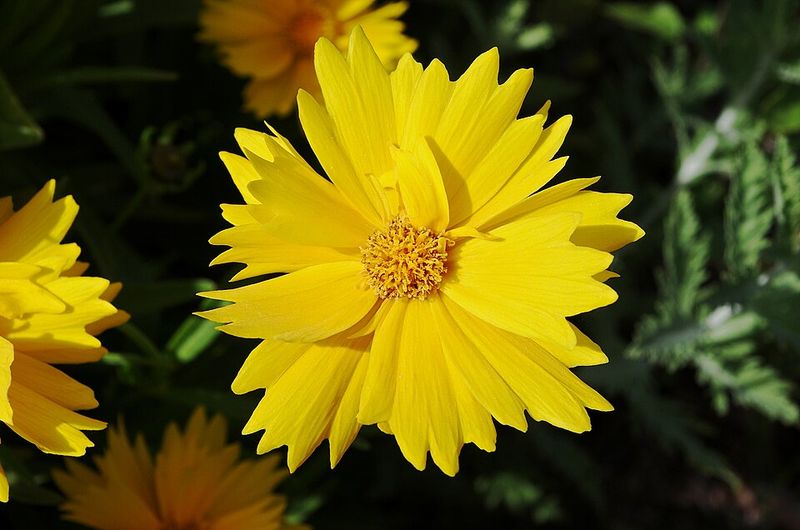
Summer heat that slows down many flowering plants barely seems to affect coreopsis.
Native species like Coreopsis lanceolata and Coreopsis verticillata are well-adapted to Georgia’s warm summers, blooming from late spring through early fall with minimal care once established in the right conditions.
Full sun and well-drained soil are the primary requirements for coreopsis to perform at its best.
In fact, this plant handles dry, sandy, or poor soils better than rich, moist ones – a useful trait for Georgia gardeners dealing with sandy coastal plain soils or dry, rocky patches in the Piedmont.
Avoid overwatering and heavy fertilization, which can lead to floppy stems and reduced flowering.
Deadheading spent blooms regularly encourages continuous flowering through the season. Leaving some seed heads in place in late summer provides food for small songbirds like goldfinches.
The bright yellow flowers attract native bees, butterflies, and other beneficial insects throughout the blooming period.
Threadleaf coreopsis varieties like ‘Zagreb’ and ‘Moonbeam’ offer fine-textured foliage that adds visual interest even when plants are not in bloom.
Coreopsis also works well at the front of mixed borders, along sunny pathways, or massed in naturalistic plantings that reflect Georgia’s native plant heritage and support local pollinator populations.
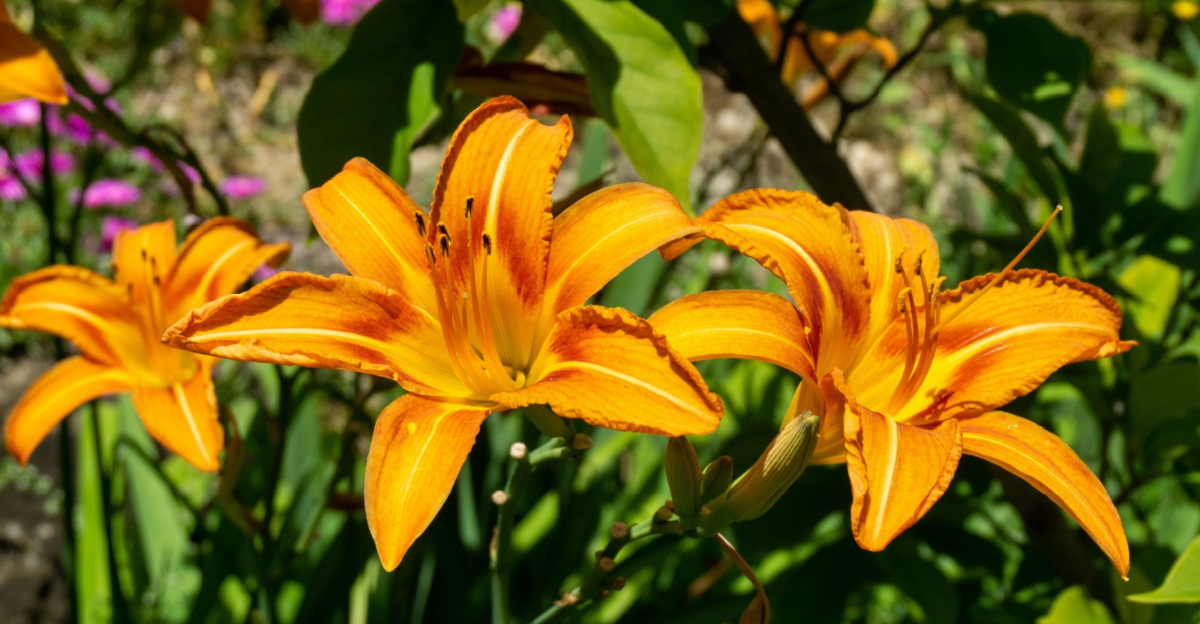
7. Daylilies Deliver Waves Of Color Through Late Spring And Summer
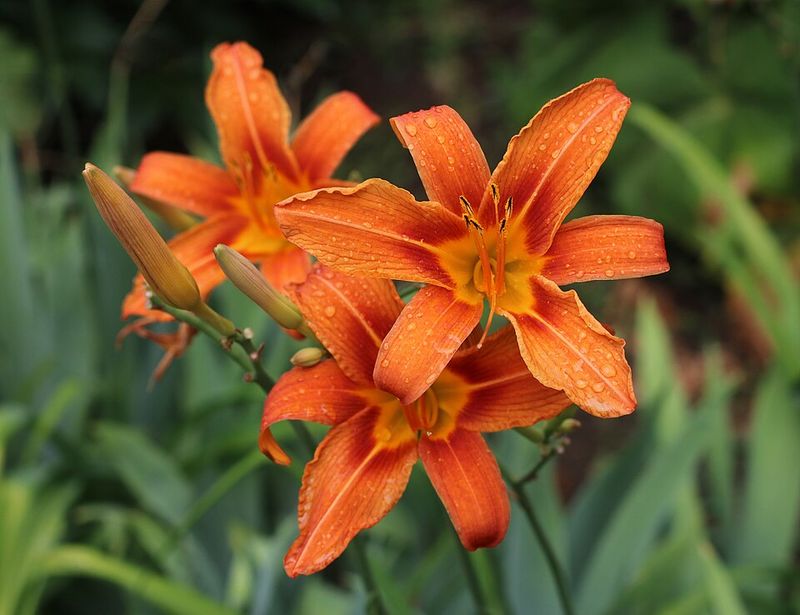
Walk through almost any established Georgia neighborhood in June and you will spot daylilies – spilling over garden edges, lining driveways, and brightening sunny slopes with their trumpet-shaped blooms.
Tough, adaptable, and available in thousands of named cultivars, daylilies have earned their reputation as one of the most dependable flowering perennials for the South.
Daylilies prefer full to partial sun and are tolerant of a wide range of soil types, though they bloom most abundantly in fertile, well-drained soil.
In Georgia, the common tawny daylily (Hemerocallis fulva) naturalizes along roadsides and spreads readily, while named cultivars bred by Southern hybridizers offer extended bloom periods and repeat flowering in late summer.
The American Hemerocallis Society recognizes thousands of registered cultivars, many developed specifically for performance in warm Southern climates.
Choosing a combination of early, mid-season, and late-blooming varieties stretches the daylily show from May into August in Georgia.
Reblooming varieties add another flush of color in late summer or early fall when temperatures begin to ease slightly.
Dividing clumps every four to five years maintains vigor and improves flowering. Daylilies also stabilize slopes effectively, making them a practical as well as ornamental choice for Georgia homeowners managing erosion on sloped terrain.
8. Purple Coneflower Attracts Pollinators With Bold Summer Flowers
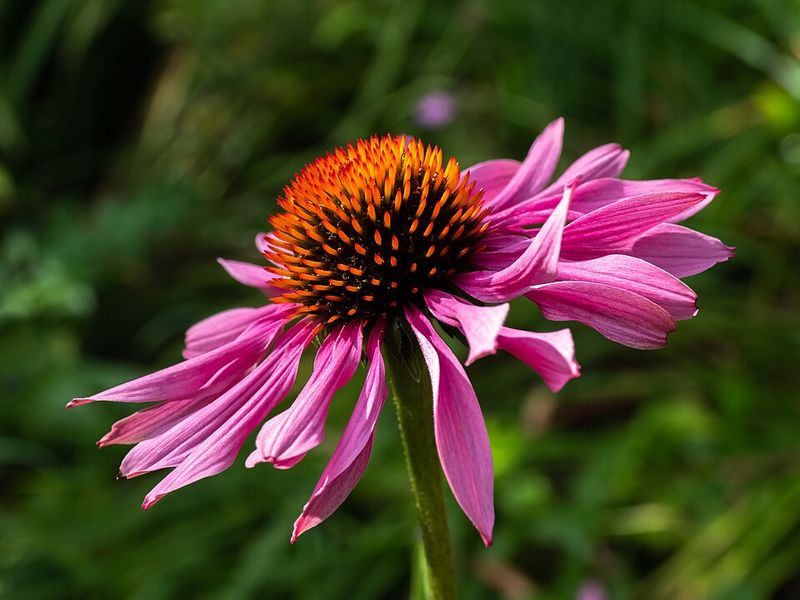
On a warm Georgia summer afternoon, a patch of purple coneflower in full bloom is rarely quiet.
Bumblebees, native bees, swallowtail butterflies, and monarchs move steadily from flower to flower, drawn by the nectar-rich centers of this widely adaptable native perennial.
Echinacea purpurea is native to the eastern United States and thrives across Georgia’s diverse growing regions.
Purple coneflower blooms from June through August in most parts of Georgia, with individual plants producing multiple flowers over an extended period.
It performs best in full sun with average to well-drained soil and shows good drought tolerance once established – a useful quality during Georgia’s hot, dry midsummer stretches.
Overly rich or consistently wet soil can reduce flowering and lead to floppy growth.
Deadheading encourages continued blooming through the summer, but leaving seed heads intact in late summer and fall benefits goldfinches and other seed-eating birds that forage through Georgia gardens into winter.
The spiny brown seed cones add textural interest to the fall and winter garden even after petals drop.
Purple coneflower works well in naturalistic plantings, mixed perennial borders, and pollinator gardens.
It also pairs attractively with black-eyed Susan, garden phlox, and ornamental grasses in summer garden designs across the state.
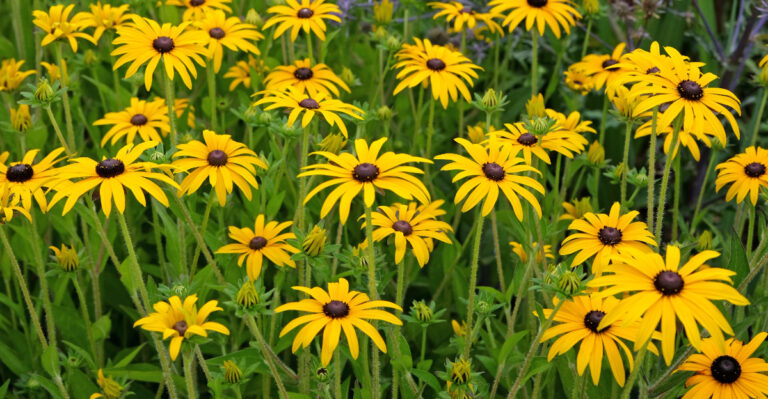
9. Black Eyed Susan Keeps The Garden Glowing With Golden Summer Blooms
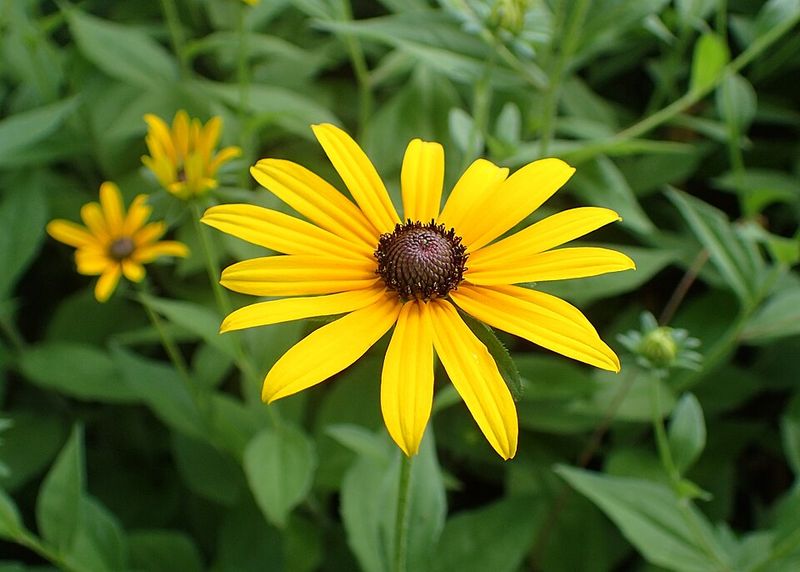
Golden and cheerful, black-eyed Susan lights up the summer garden with a warmth that feels almost like bottled sunshine.
Rudbeckia hirta is native to North America and grows readily across Georgia, where it thrives in the kind of sunny, open conditions found in meadow-style plantings, roadside gardens, and mixed perennial borders.
In Georgia, black-eyed Susan typically blooms from June through September, making it one of the longer-performing summer perennials in the state.
It grows well in full sun and tolerates poor, dry, or sandy soils with minimal supplemental watering once established.
Good drainage is important, as consistently wet roots can cause problems during Georgia’s humid summers. Raised beds or sloped areas where water moves away from roots work particularly well.
Native bees, butterflies, and beetles visit the flowers regularly through the blooming season, and the seed heads that follow support finches and sparrows into fall and winter.
Rudbeckia fulgida ‘Goldsturm’ is a popular cultivar widely used in Georgia landscapes for its reliable performance and compact habit.
Planting black-eyed Susan alongside purple coneflower, garden phlox, and ornamental grasses creates a naturalistic summer border that requires relatively little maintenance while providing multi-season interest across Georgia’s warm growing season.
10. Garden Phlox Adds Fragrant Clusters Of Color In The Heat Of Summer
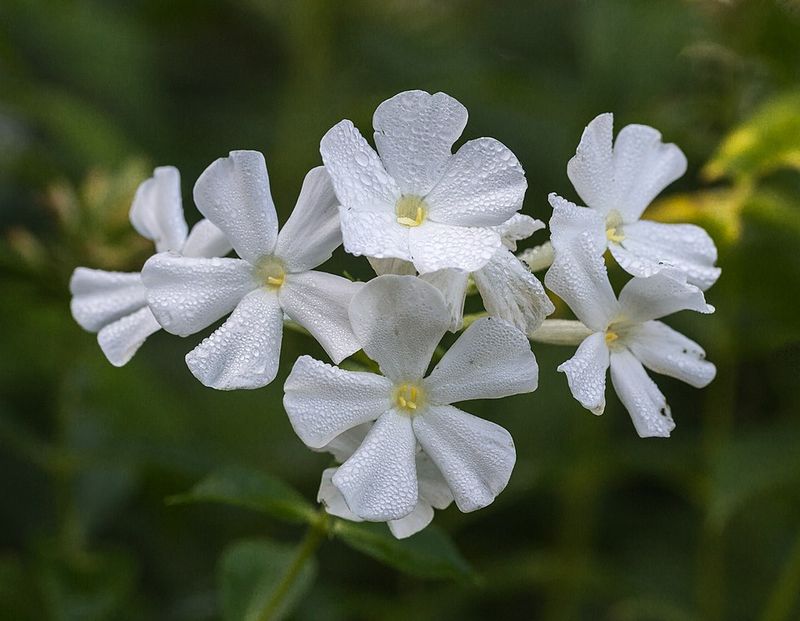
Few perennials bring the combination of fragrance and color that garden phlox delivers on a warm Georgia summer evening.
Phlox paniculata blooms from July through September across much of Georgia, producing large, dome-shaped flower clusters in shades of white, pink, lavender, red, and bicolor combinations that stop visitors in their tracks.
Garden phlox grows best in full sun to light afternoon shade with consistently moist, fertile, well-drained soil. In Georgia’s humid summers, choosing powdery mildew-resistant cultivars is strongly recommended.
Varieties like ‘David,’ ‘Jeana,’ and ‘Robert Poore’ have shown good mildew resistance in Southern trials and perform reliably through Georgia’s warm, humid conditions.
Spacing plants generously and ensuring good air circulation around stems also helps reduce fungal issues.
Hummingbirds are frequent visitors to garden phlox, attracted by the tubular flower structure and bright colors. Swallowtail butterflies and native bees work the clusters regularly as well.
Deadheading the first flush of blooms encourages a secondary round of flowering later in the season.
Garden phlox works beautifully at the back of a mixed perennial border.
Its height, often three to four feet, provides a vertical backdrop for shorter companions like coreopsis, black-eyed Susan, and daylilies, adding structure and color throughout Georgia’s long summer growing season.
11. Asters Extend Garden Color With Late Season Purple And Blue Flowers
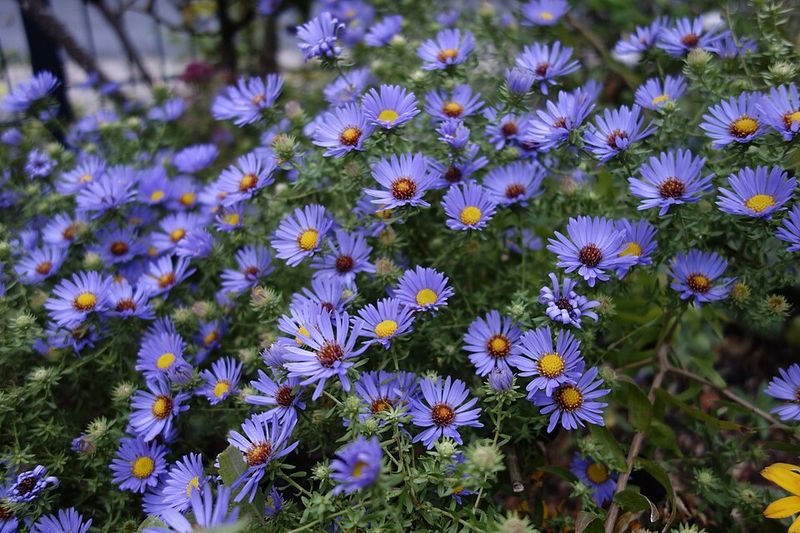
As summer blooms begin to fade across Georgia gardens in September and October, asters step forward with some of the most welcome color of the year.
Native asters like Symphyotrichum oblongifolium (aromatic aster) and Symphyotrichum laeve (smooth aster) are well-suited to Georgia’s climate and provide a reliable late-season show when the garden needs it most.
Most asters prefer full sun and well-drained to average soil. They are generally tolerant of dry conditions once established, which aligns well with Georgia’s tendency toward dry fall periods in some years.
Cutting plants back by about one-third in early June encourages more compact, bushy growth and helps prevent the tall, floppy stems that can occur when asters grow unchecked through summer.
The ecological value of fall-blooming asters in Georgia is difficult to overstress. Monarch butterflies migrating through Georgia in September and October rely heavily on asters as a nectar source.
Native bees, bumble bees, and skippers also visit asters actively during the fall blooming period. Asters pair naturally with ornamental grasses, goldenrod, and garden mums to create a rich fall garden palette.
Their seed heads also support small songbirds through winter, extending the wildlife value of these plants well beyond their blooming season.
12. Garden Mums Bring Rich Fall Color When Many Summer Plants Begin Slowing Down
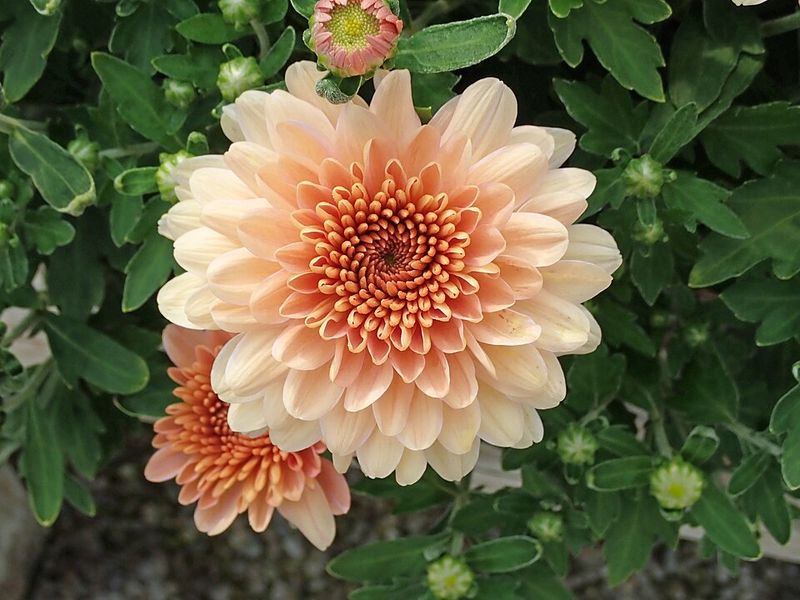
When the first hints of cooler air arrive across Georgia in September and October, garden mums respond by erupting into some of the richest, most saturated color of the entire growing year.
Hardy chrysanthemums – particularly those labeled as garden mums rather than florist mums – can establish as true perennials in Georgia’s warmer zones when planted early enough to root before winter.
For the best chance of perennial success in Georgia, plant garden mums in spring rather than fall so roots have a full growing season to establish. Full sun and well-drained soil are essential.
In clay-heavy Georgia soils, raised beds or heavily amended planting areas improve drainage and reduce the risk of root problems through wet winters.
Pinching plants back through June and into early July encourages compact, bushy growth and heavier bloom set in fall.
Flower colors range from soft yellow and warm peach to deep burgundy, bronze, and rich purple – a palette that complements the changing leaf colors of Georgia’s deciduous trees in October.
Garden mums pair well with ornamental grasses, asters, and ornamental kale for a layered fall garden display.
Even in years when they do not fully overwinter, their fall color contribution makes them one of Georgia’s most popular seasonal garden plants from September through November.