11 Fruit Trees That Fit Small Oregon Gardens (But Still Produce Big)
I’ve always loved the idea of growing my own fruit, but when I first looked at my small Oregon yard, I wasn’t sure it was even possible.
Space is tight, and I worried about trees taking over or not producing enough to make it worth the effort.
Over time, though, I discovered that small doesn’t have to mean limited, especially when it comes to fruit trees.
There are plenty of varieties that stay compact but still produce a surprising amount of fruit.
The trick is picking the right trees for Oregon’s climate and your specific garden conditions.
Sunlight, soil, and space all matter, but once you get the mix right, even a modest yard can yield peaches, apples, cherries, or pears that taste far better than anything from the store.
I’ve tried a few different varieties myself and have been amazed at how much they give without taking up too much room.
From dwarf trees to columnar options, there are ways to enjoy fresh, homegrown fruit without needing acres of land.
1. Dwarf Apple
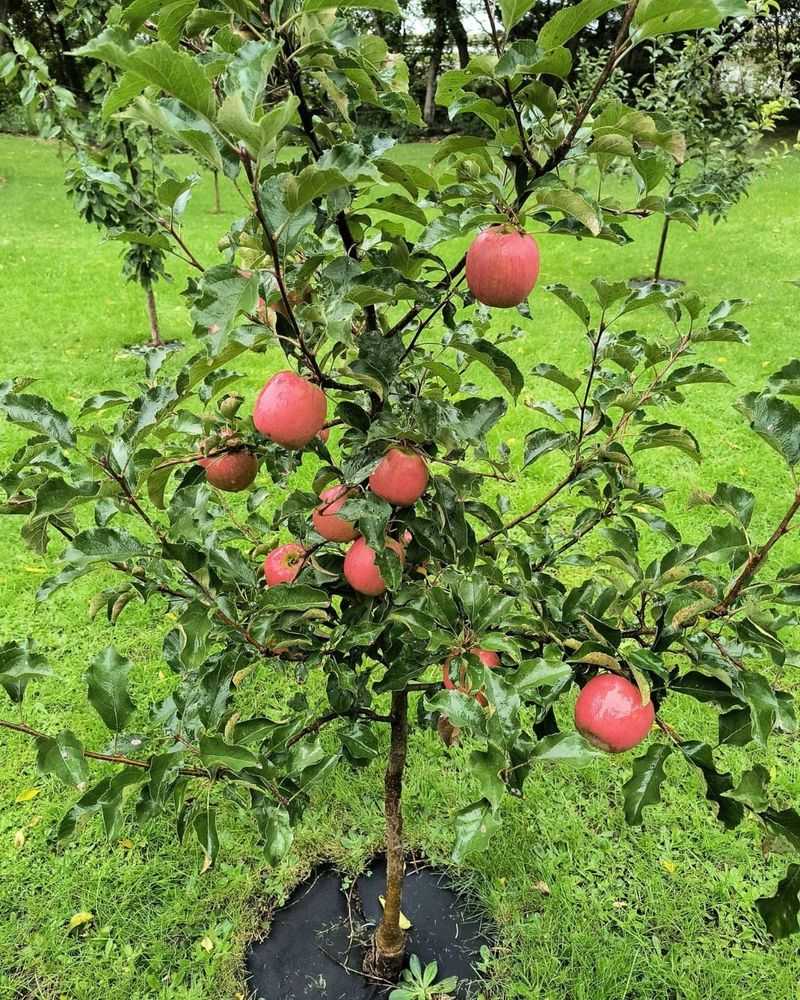
A dwarf apple tree brings all the classic orchard charm to your backyard without taking over the entire space.
Most varieties stay under 10 feet tall, making them easy to prune, harvest, and protect from late spring frosts.
Oregon’s climate suits apples beautifully, especially when you pick varieties like Honeycrisp, Fuji, or Gala that handle cooler temperatures and moderate rainfall.
Dwarf rootstocks also speed up fruiting, so you might see apples in just two to three years instead of waiting half a decade.
Plant your tree in a sunny spot with well-draining soil, and add a layer of mulch to keep roots happy during dry summer months.
Cross-pollination boosts yields, so consider planting two different varieties if you have room.
Apples store well, which means you can enjoy fresh fruit long after harvest season ends.
Compact size also means easier pest management, since you can spot aphids or codling moths before they become a serious problem.
A dwarf apple tree fits beautifully along a fence line, in a corner bed, or even in a large container on a sunny deck.
Fresh, homegrown apples taste better than anything from the store, and picking them right off the branch is a joy every September.
2. Columnar Apple (Urban Apple Types)
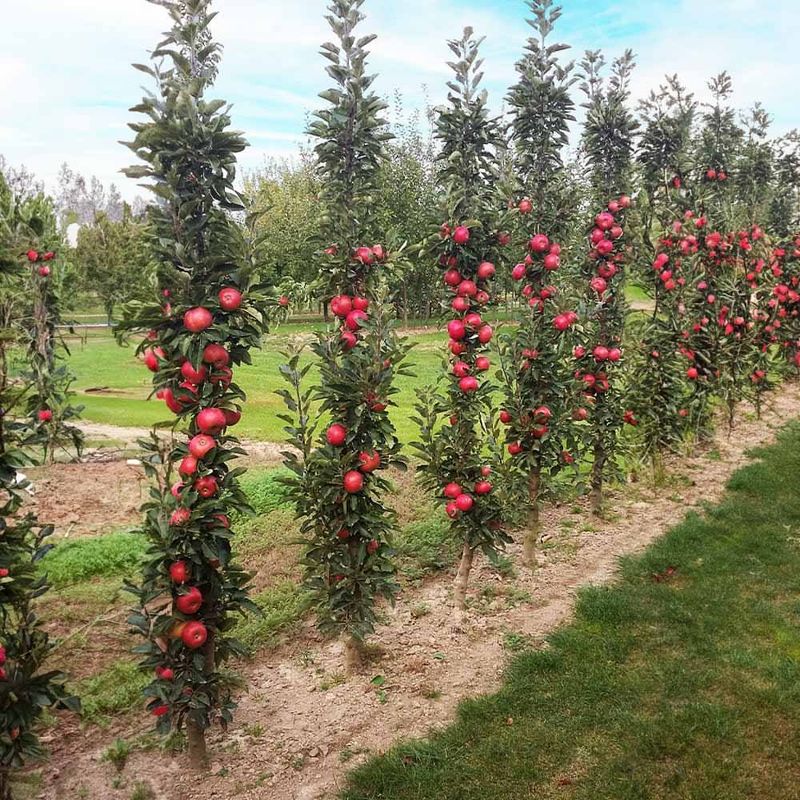
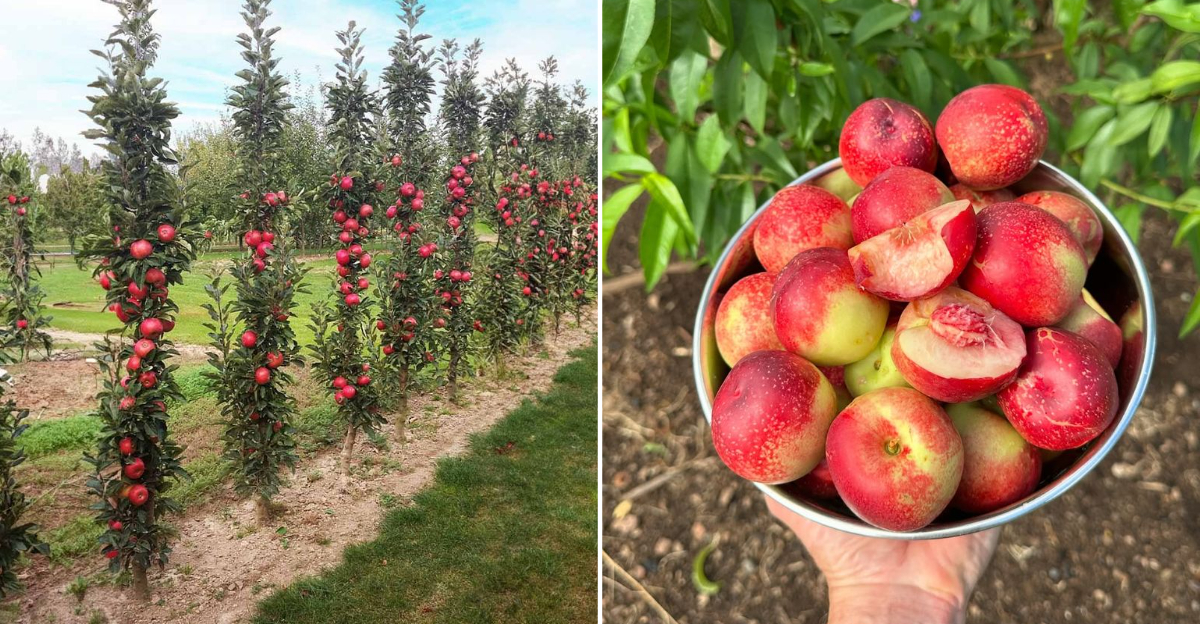
Columnar apples grow straight up like green pillars, perfect for narrow spaces where width matters more than anything else.
These trees rarely exceed two feet wide, but they can reach eight to ten feet tall, making them ideal for planting along walkways, driveways, or tight side yards.
Urban Apple varieties such as Scarlet Sentinel and Golden Sentinel produce full-sized fruit on a super-slim frame, so you get big harvests without the sprawl.
Oregon gardeners love these trees because they fit into raised beds, container gardens, and even balcony planters with enough depth.
Columnar apples need full sun and regular watering, especially during the dry months of July and August.
Pruning is minimal since the natural shape stays narrow, which saves you time and effort compared to traditional apple trees.
Plant multiple columnar varieties together to create a living fence that produces fruit instead of just blocking the view.
These trees start bearing fruit quickly, often within the first or second year after planting.
They also make great conversation starters when neighbors notice your vertical orchard tucked into a space they thought was too small for anything edible.
Columnar apples prove that you do not need a sprawling yard to grow your own crisp, juicy apples every fall.
3. Dwarf Pear
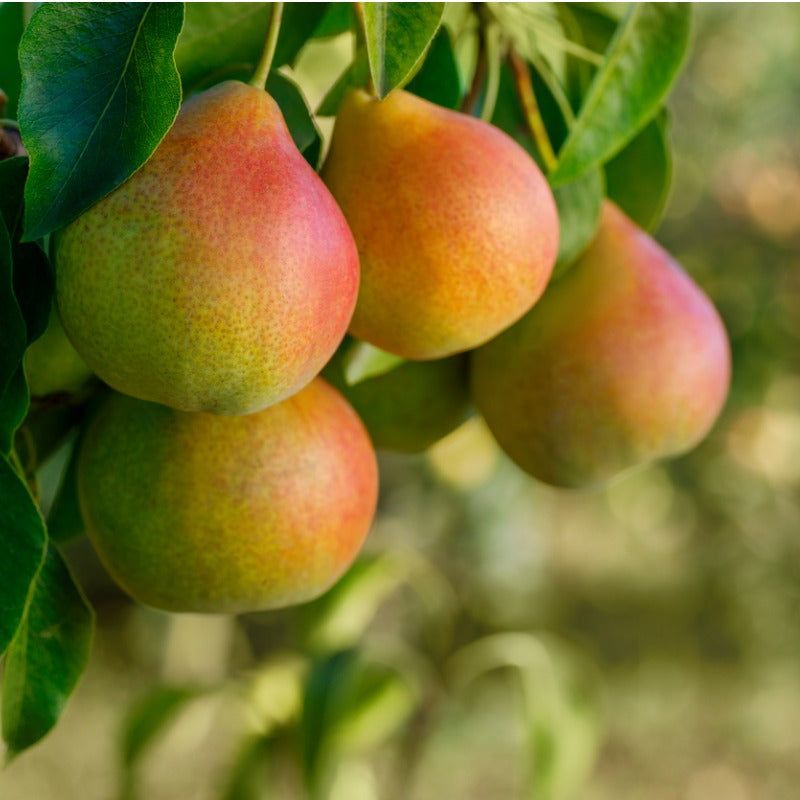
Pears ripen beautifully in Oregon’s mild climate, and dwarf varieties make them accessible for gardeners with limited space.
Bartlett, Anjou, and Bosc pears all come in dwarf forms that stay around eight to ten feet tall, which is manageable for most small yards.
Dwarf pear trees produce generous harvests of sweet, juicy fruit that tastes amazing fresh, baked, or canned for winter storage.
Plant your tree in full sun and give it well-draining soil to prevent root rot, which pears can be sensitive to during Oregon’s wet winters.
Most pear varieties need a pollination partner, so plan to plant at least two different types within 50 feet of each other.
Pears ripen off the tree, so you pick them firm and let them soften indoors for the best flavor and texture.
Dwarf rootstocks also make harvesting easier since you can reach most branches without a ladder.
Fire blight can be a concern in the Pacific Northwest, so choose resistant varieties and prune out any infected wood as soon as you spot it.
A dwarf pear tree fits nicely into a mixed border, edible landscape, or small orchard setup.
Watching the delicate white blossoms in spring and tasting your first homegrown pear in late summer makes every bit of care worthwhile.
4. Asian Pear
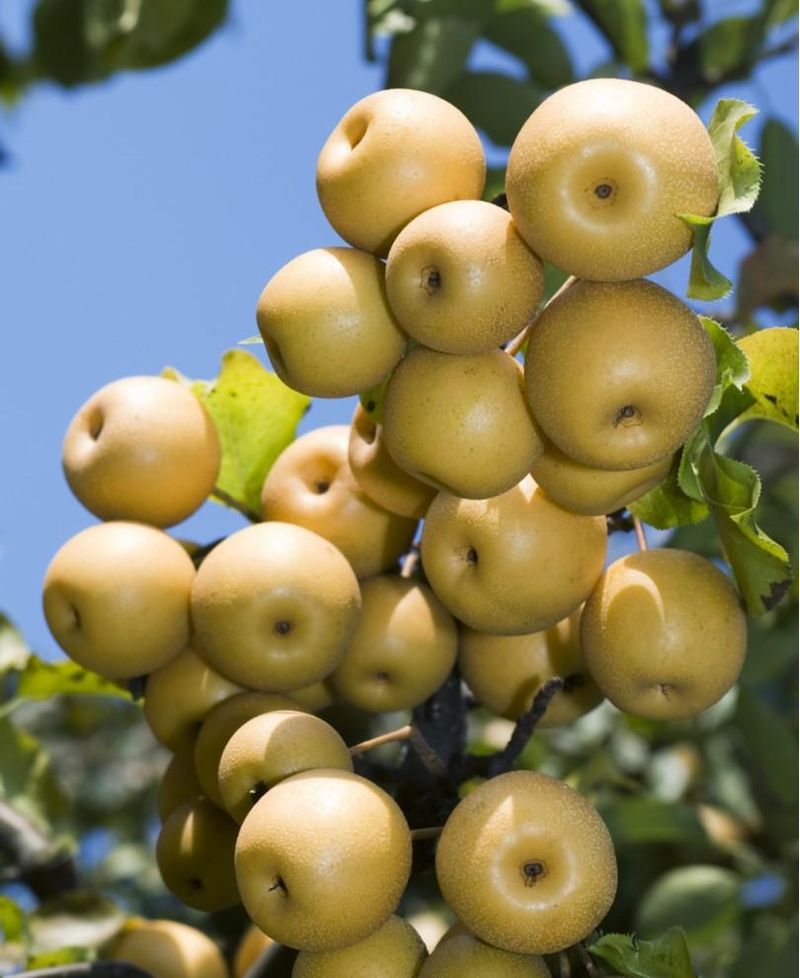
Asian pears offer a crisp, apple-like texture with the sweetness of a traditional pear, making them a favorite for fresh eating.
Varieties like Shinseiki, 20th Century, and Hosui grow well on dwarf or semi-dwarf rootstocks, keeping trees under 12 feet tall.
Oregon’s climate provides the chill hours Asian pears need to set fruit, and the mild summers help them develop their signature crunch.
These trees also bloom later than many other fruit trees, which helps them avoid damage from late spring frosts.
Asian pears need a pollination partner, so plant two different varieties close together for the best fruit set.
The fruit ripens on the tree, so you can pick and eat it right away without waiting for it to soften indoors.
Dwarf Asian pear trees fit beautifully into small gardens, and their rounded shape adds ornamental appeal even when not in fruit.
Thin the fruit clusters early in the season to encourage larger, sweeter pears and reduce the risk of branch breakage.
Asian pears store well in the fridge for several weeks, making them a practical choice for gardeners who want fresh fruit over a longer period.
Plant your tree in full sun with good air circulation to minimize disease pressure and enjoy a bumper crop every late summer.
5. Dwarf Peach
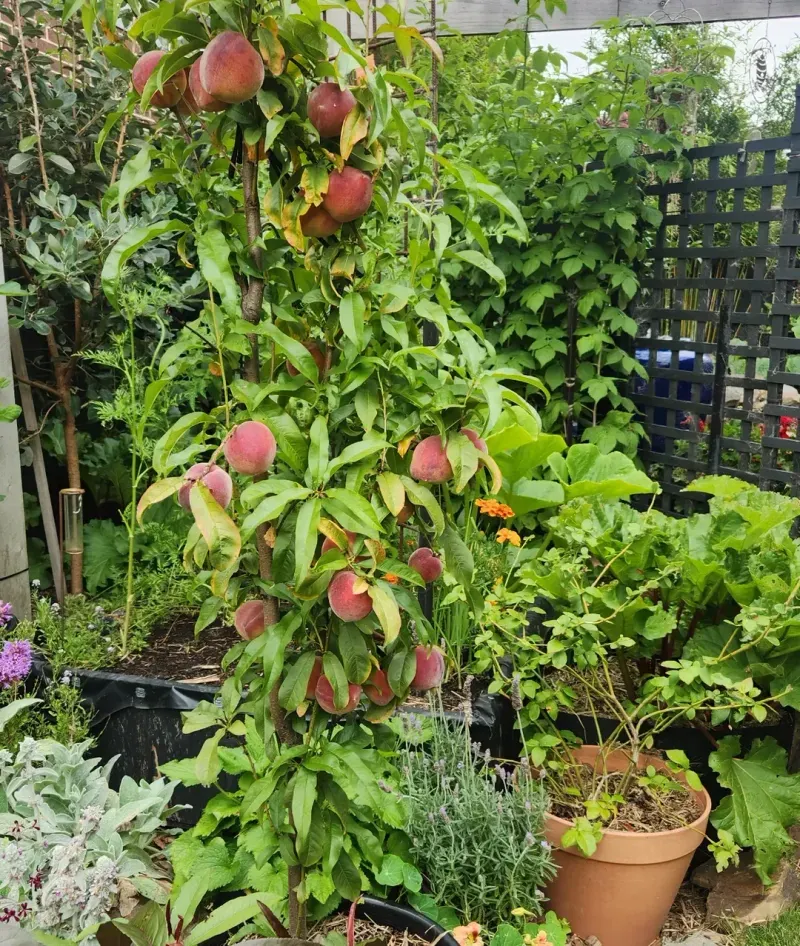
Nothing says summer like biting into a ripe, juicy peach, and dwarf varieties make it possible even in the smallest Oregon gardens.
Compact peach trees like Bonanza and Elberta stay under six feet tall, perfect for patios, raised beds, or tucked into a sunny corner.
Oregon’s warm summers provide the heat peaches need to develop their full sweetness, especially in the Willamette Valley and southern regions.
Peaches are self-pollinating, so you only need one tree to get fruit, which saves space and simplifies planning.
Plant your dwarf peach in the sunniest spot you have, with well-draining soil to prevent root issues during wet winters.
Peach trees bloom early, so protect blossoms from late frosts by covering the tree with a light blanket or frost cloth on cold nights.
Thinning the fruit to one peach every six inches along the branch helps each one grow larger and sweeter.
Dwarf peaches also grow well in large containers, which means you can move them to shelter during harsh weather or extreme cold snaps.
Prune your tree annually to maintain its compact shape and encourage strong, productive branches.
Fresh peaches from your own tree taste miles better than grocery store fruit, and the tree itself adds beauty with its pink spring blossoms and lush green foliage.
6. Dwarf Nectarine
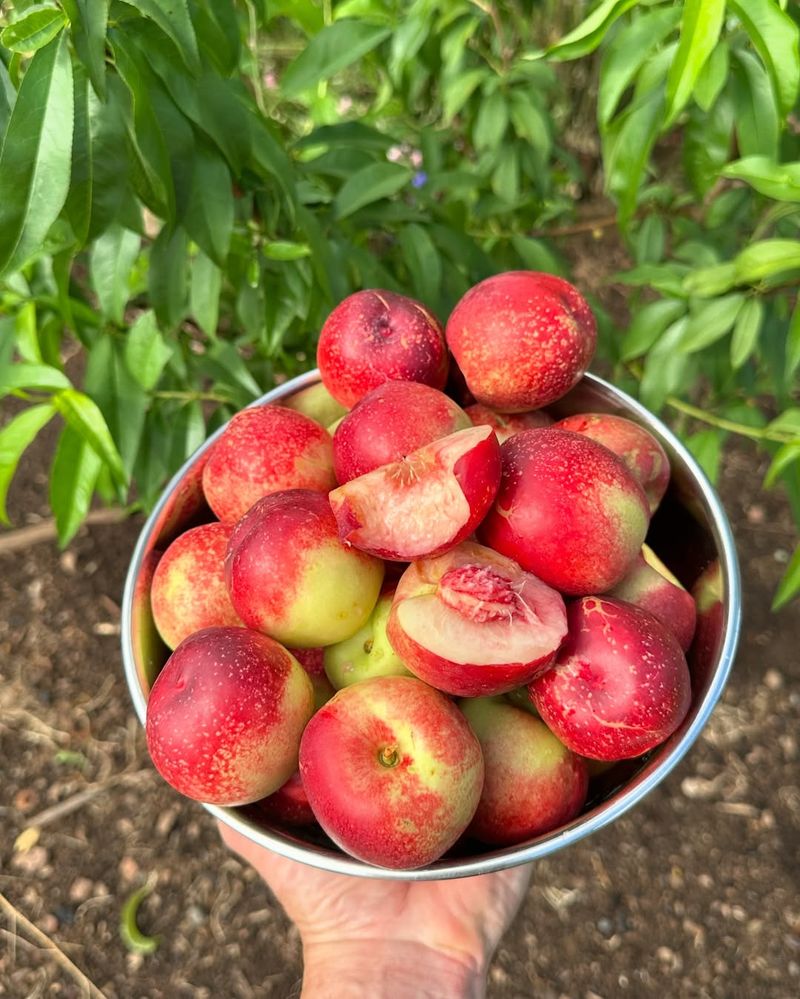
Nectarines are essentially smooth-skinned peaches, and dwarf varieties bring that same delicious flavor to compact gardens.
Trees like Necta Zee and Garden Delight stay small, usually under six feet, making them easy to manage and harvest without a ladder.
Oregon’s climate works well for nectarines, especially in warmer microclimates like south-facing walls or sheltered patios.
Nectarines are self-pollinating, so one tree is all you need to enjoy a harvest of sweet, juicy fruit every summer.
Plant your dwarf nectarine in full sun with well-draining soil, and add compost or aged manure to boost soil fertility.
Early blooming means you should watch for late frosts and cover the tree if cold weather threatens the blossoms.
Thin the fruit when they reach marble size, leaving about four to six inches between each nectarine for the best size and flavor.
Dwarf nectarines also thrive in containers, which gives you flexibility to move the tree around or bring it into a greenhouse during extreme weather.
Prune annually to maintain the tree’s compact shape and remove any dead or crossing branches.
Fresh nectarines taste incredible right off the tree, and the smooth skin makes them easy to eat without peeling, perfect for snacking on warm summer afternoons.
7. Compact Sweet Cherry
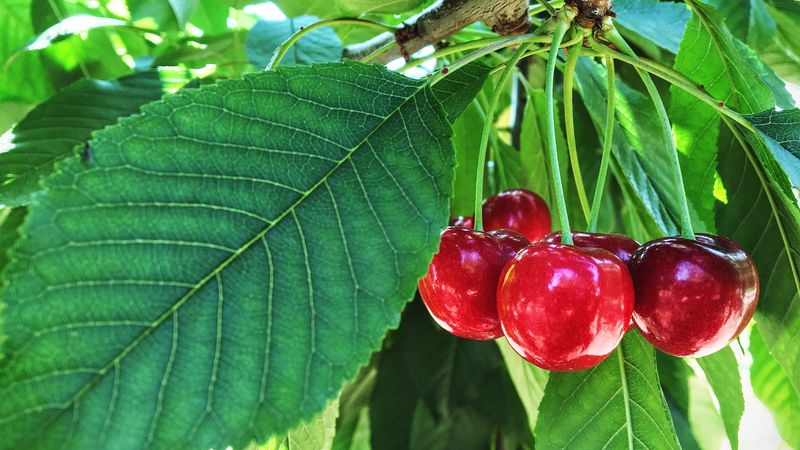
Sweet cherries on Gisela rootstock bring the luxury of fresh, dark cherries to small Oregon gardens without the massive tree size.
Gisela 5 or Gisela 6 rootstocks keep trees under 10 feet tall, making them manageable for urban yards and easy to cover with bird netting.
Varieties like Bing, Rainier, and Stella produce abundant fruit with the same rich flavor as full-sized cherry trees.
Oregon’s climate provides the chill hours sweet cherries need, and the mild summers help fruit ripen evenly without splitting.
Most sweet cherries need a pollination partner, so plant two different varieties close together for the best fruit set.
Plant your compact sweet cherry in full sun with well-draining soil, and mulch around the base to retain moisture during dry spells.
Birds love cherries as much as we do, so drape netting over the tree as soon as the fruit starts to ripen.
Compact size also makes it easier to spot and manage pests like aphids or cherry fruit flies before they cause serious damage.
Prune your tree in late winter to maintain its shape and encourage strong, productive branches.
Fresh sweet cherries taste amazing straight from the tree, and having your own supply means you can pick them at peak ripeness for the best flavor and texture.
8. Sour Cherry
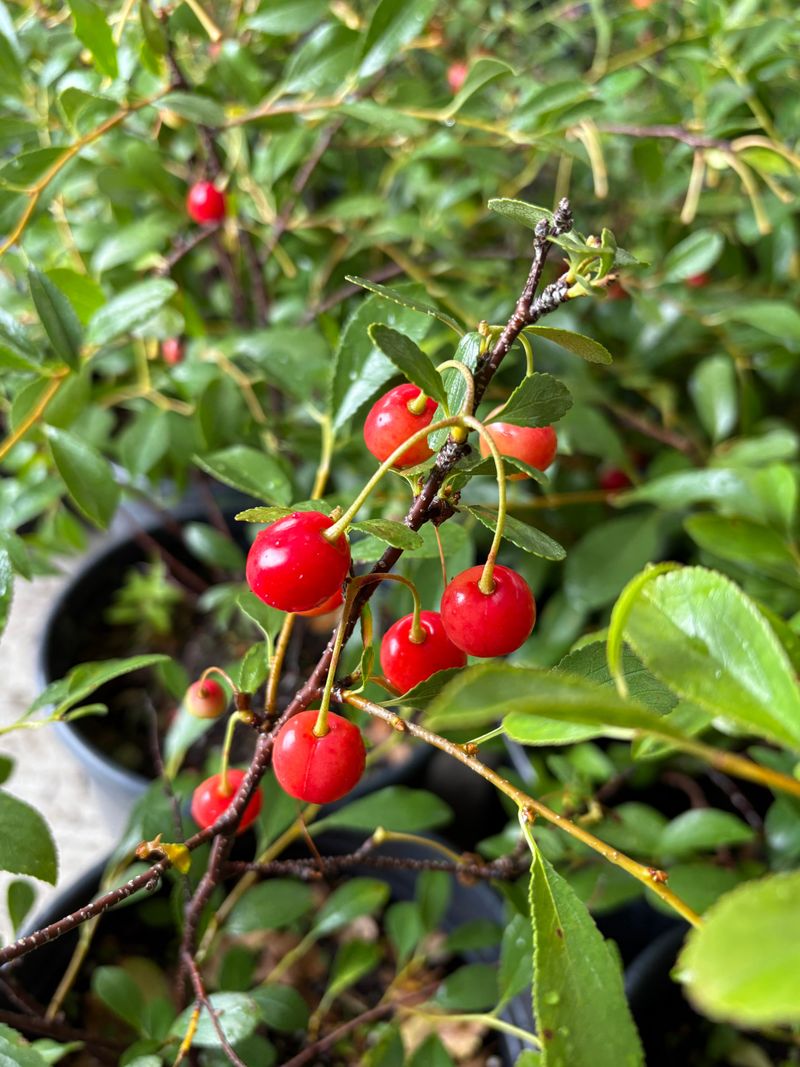
Sour cherries grow naturally smaller than sweet cherries, making them a smart choice for gardeners with limited space.
Varieties like Montmorency and North Star stay under 12 feet tall, and they produce heavy crops of tart, bright red cherries perfect for pies, jams, and baking.
Oregon’s climate suits sour cherries beautifully, and they handle wet winters better than many other stone fruits.
Sour cherries are self-pollinating, so you only need one tree to get a full harvest, which simplifies planning and saves space.
Plant your tree in full sun with well-draining soil, and add a layer of mulch to keep roots cool and moist during summer heat.
Sour cherries ripen later than sweet cherries, which helps them avoid some of the pest and disease pressure that early-season fruit faces.
Birds are less interested in sour cherries than sweet ones, so you might not need to cover the tree with netting.
Prune your sour cherry tree in late winter to remove dead wood and maintain a strong, open structure.
Fresh sour cherries taste too tart for most people to eat raw, but they transform into incredible pies, preserves, and desserts.
A sour cherry tree fits nicely into a small orchard, edible landscape, or mixed border, and the white spring blossoms add beauty to your garden every year.
9. Dwarf Plum
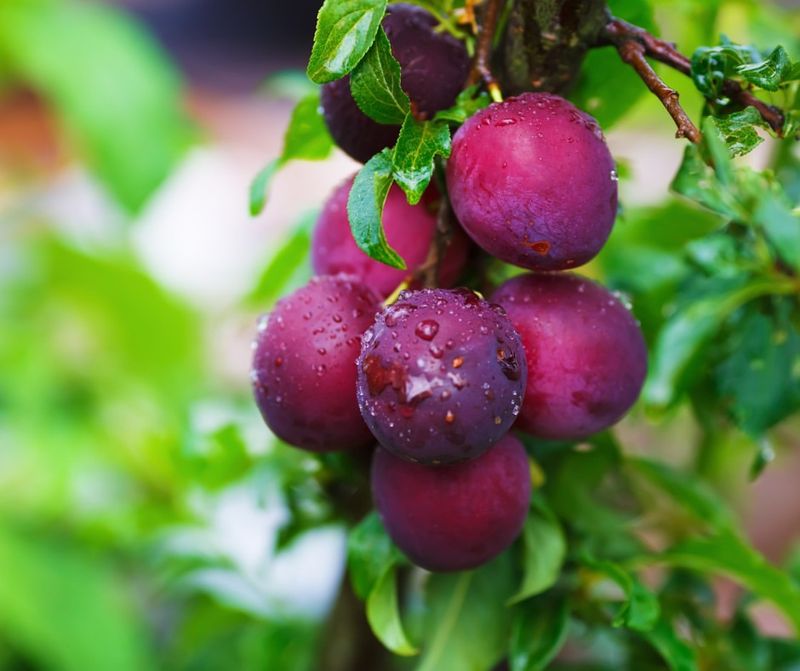
Plums thrive in Oregon’s climate, and dwarf varieties make them accessible for gardeners with small yards or limited growing space.
Trees like Santa Rosa, Methley, and Italian Prune stay under 10 feet tall, producing generous crops of sweet, juicy fruit every summer.
Oregon’s mild winters provide the chill hours plums need, and the moderate summers help fruit ripen without becoming mealy or bland.
Most plums need a pollination partner, so plant two different varieties within 50 feet of each other for the best fruit set.
Plant your dwarf plum in full sun with well-draining soil, and add compost or aged manure to improve soil fertility.
Plums bloom early, so watch for late frosts and cover the tree with a light blanket or frost cloth if cold weather threatens the blossoms.
Thin the fruit clusters early in the season to encourage larger, sweeter plums and reduce the risk of branch breakage from heavy loads.
Dwarf plums also grow well in large containers, which gives you flexibility to move the tree around or protect it during extreme weather.
Prune your tree annually to maintain its compact shape and remove any dead or crossing branches.
Fresh plums taste incredible right off the tree, and they also make wonderful jams, preserves, and baked goods that showcase their rich, sweet flavor.
10. Fig (Especially Hardy Varieties Like ‘Chicago Hardy’)
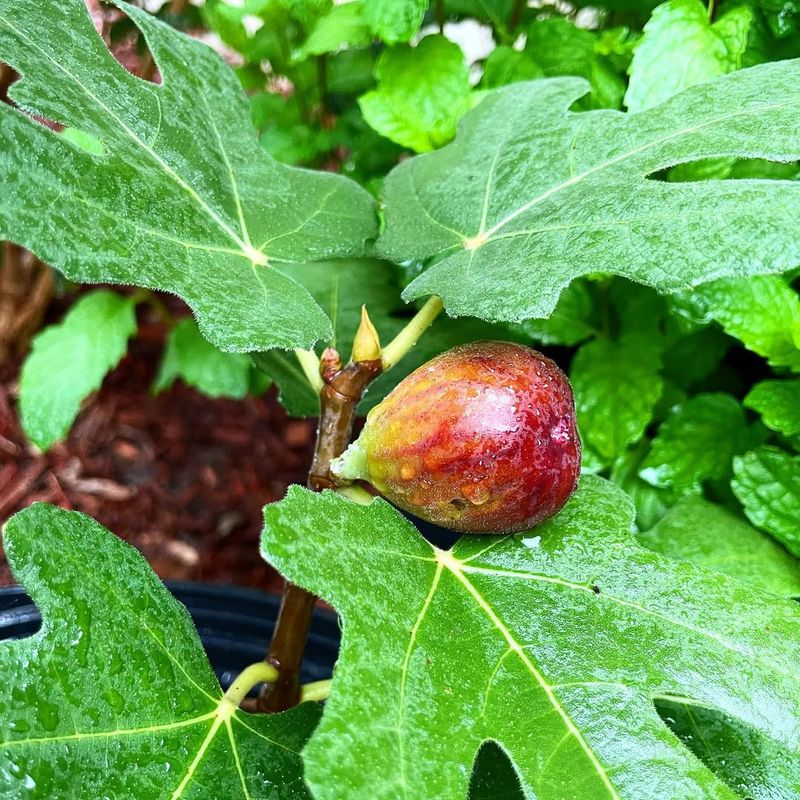
Figs might seem exotic, but hardy varieties like Chicago Hardy grow surprisingly well in Oregon’s mild climate.
Chicago Hardy figs can survive winter temperatures down to 10 degrees Fahrenheit, and they bounce back from the roots even if the top growth freezes.
These trees stay naturally compact, usually under 10 feet tall, and they produce sweet, purple-brown figs with rich, honey-like flavor.
Oregon gardeners often plant figs against south-facing walls or in sheltered patios where the extra warmth helps fruit ripen fully.
Figs are self-pollinating, so you only need one tree to get a harvest, which makes them perfect for small spaces.
Plant your fig in full sun with well-draining soil, and add a thick layer of mulch to protect roots during winter.
Figs also grow beautifully in large containers, which gives you the option to move the tree into a garage or greenhouse during extreme cold snaps.
Prune lightly in late winter to remove dead wood and shape the tree, but avoid heavy pruning since figs fruit on new growth.
Fresh figs taste incredible right off the tree, and they also dry well for long-term storage or use in baking and cooking.
A fig tree adds a Mediterranean vibe to your Oregon garden, and the large, lobed leaves create a lush, tropical look even in the Pacific Northwest.
11. Dwarf Apricot
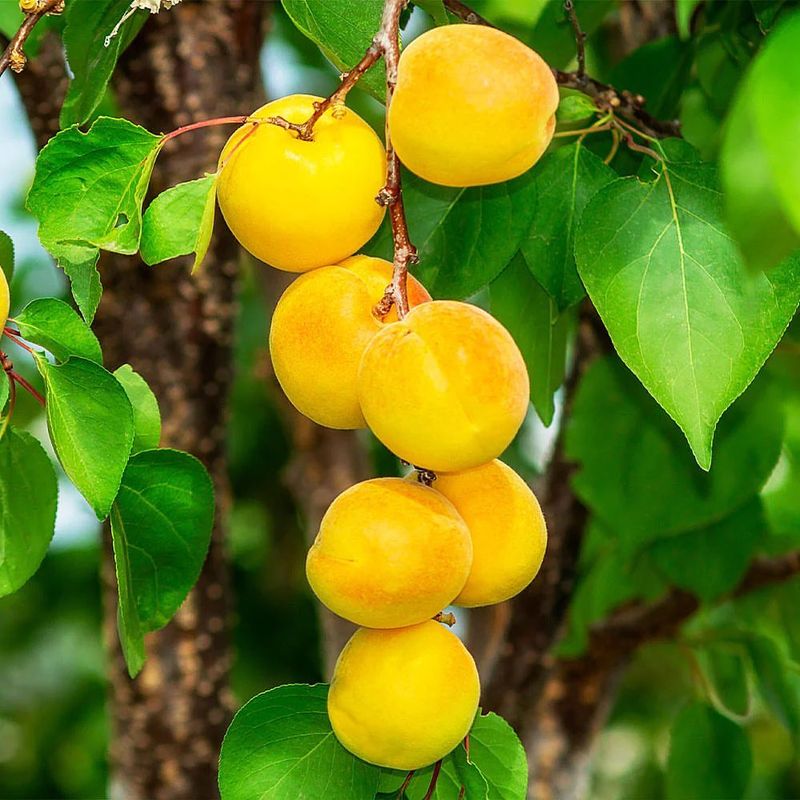
Apricots bring a taste of summer sunshine to Oregon gardens, and dwarf varieties make them possible even in tight spaces.
Trees like Moorpark and Goldcot stay under eight feet tall, producing sweet, golden fruit with a rich, complex flavor.
Oregon’s climate provides the chill hours apricots need, and the mild summers help fruit ripen without becoming dry or mealy.
Apricots are self-pollinating, so you only need one tree to get a harvest, which saves space and simplifies planning.
Plant your dwarf apricot in the sunniest spot you have, with well-draining soil to prevent root rot during wet winters.
Apricots bloom very early, often in late February or March, so protect blossoms from late frosts by covering the tree with a light blanket or frost cloth.
Thin the fruit clusters early in the season to encourage larger, sweeter apricots and reduce the risk of branch breakage from heavy loads.
Dwarf apricots also grow well in large containers, which gives you flexibility to move the tree into shelter during harsh weather.
Prune annually to maintain the tree’s compact shape and encourage strong, productive branches.
Fresh apricots taste amazing right off the tree, and they also dry beautifully for long-term storage or use in baking, jams, and preserves that capture the flavor of summer.