8 Fuzzy Cacti That Bring Whimsy And Texture To Arizona Desert Gardens
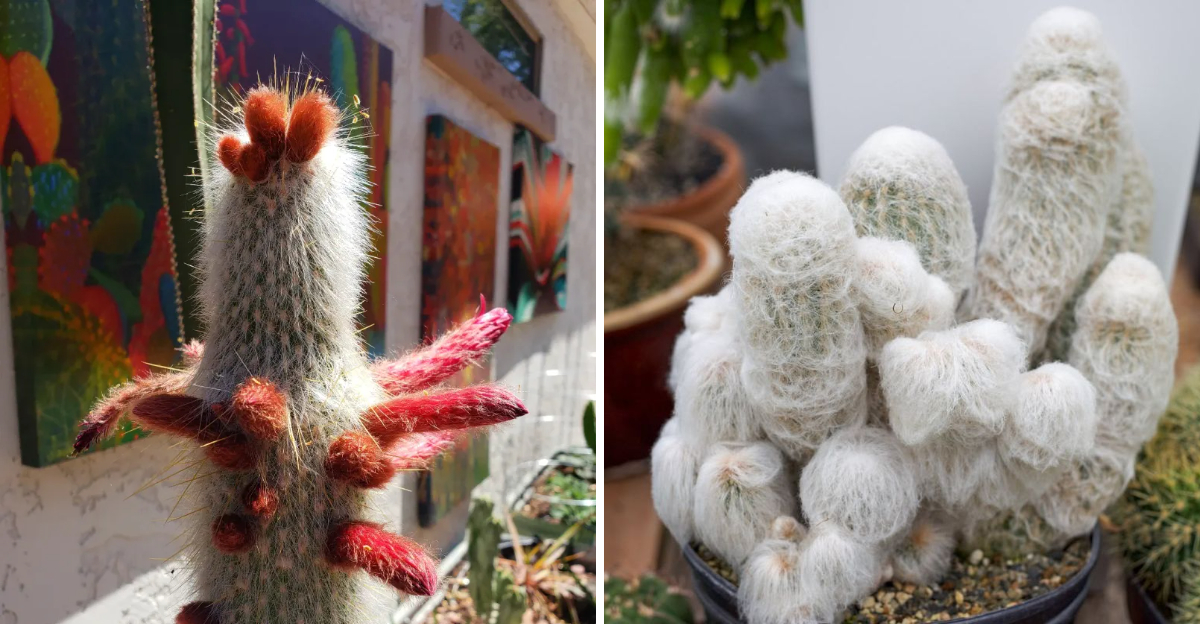
Some cacti grab attention in a completely different way, not with bright flowers, but with texture that feels unexpected in a desert setting.
That soft, fuzzy look catches light and creates contrast against the sharper shapes most Arizona landscapes are known for, giving the whole space a calmer, more layered feel without trying too hard.
It is a small detail, but it changes how everything looks. Instead of a garden that feels harsh or repetitive, there is suddenly depth, movement, and something that makes people pause for a second longer.
These plants are not just about appearance either. They handle intense sun, dry soil, and long stretches without water, which makes them a strong fit for Arizona conditions without adding extra work.
When a yard starts to feel flat or too predictable, texture is often what is missing. This is where these fuzzy cacti quietly stand out and shift the entire feel of the space.
1. Old Man Cactus Adds Soft White Texture
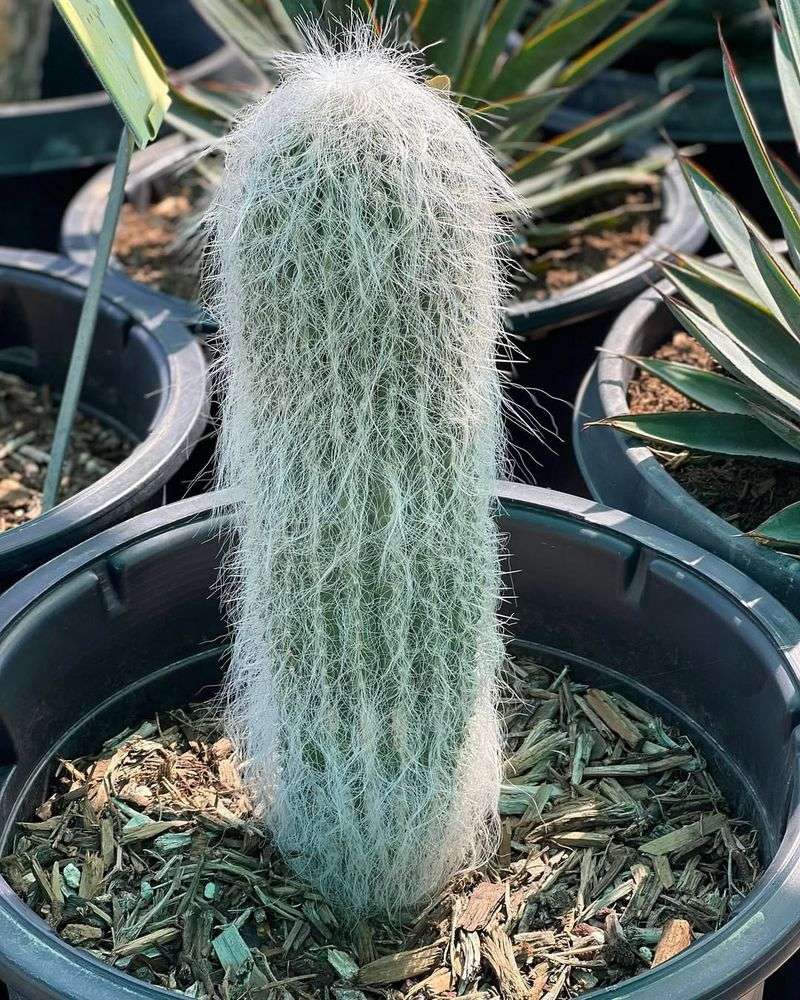
Nobody walks past an Old Man Cactus without doing a double-take. Long, white, hair-like spines drape over the entire column of this plant, giving it the look of a shaggy old wizard rather than a typical cactus.
It grows slowly, but the payoff is a truly one-of-a-kind texture that catches afternoon light in a beautiful way.
Planted in a sunny Arizona garden, this cactus prefers gritty, fast-draining soil and does best with minimal watering during cooler months. Overwatering is the main problem most people run into, especially during humid stretches.
Keep it dry, give it full sun, and it will reward you with years of low-fuss growth.
Heights can reach six feet or more over many years, making it a natural focal point near pathways or garden borders. The white fibers are actually modified spines that protect the plant from intense desert heat and cold nights.
Up close, the texture almost looks soft, but underneath those fibers are sharp spines, so handle with gloves. For Arizona gardeners who want something that genuinely sparks curiosity, this is a plant worth adding to any collection.
Visitors always ask about it first.
It also works surprisingly well in containers, especially when paired with simple gravel topdressing that highlights its unique texture without distraction.
Just make sure the pot drains quickly, because sitting water will cause problems faster than anything else.
2. Silver Torch Cactus Grows Tall With Bright Blooms
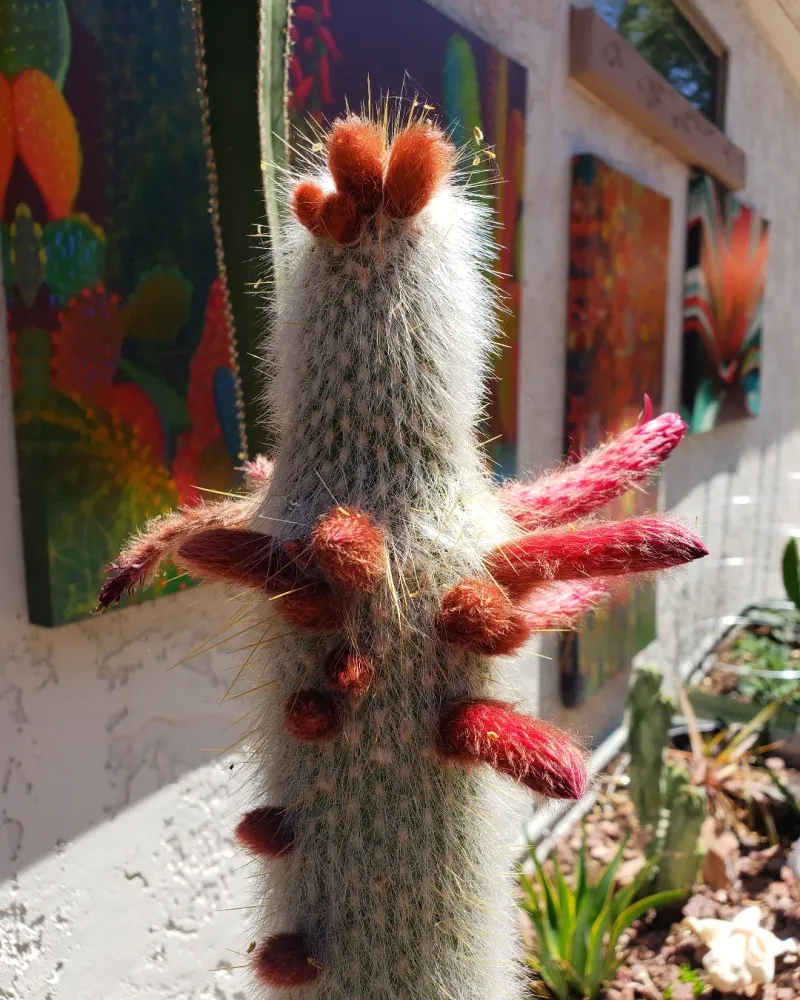
Imagine a column of silver rising straight up from the desert floor, dotted with vivid red flowers along the sides.
Silver Torch Cactus does exactly that, producing narrow, upright stems so densely covered in white spines that the whole plant shimmers in bright Arizona sunlight.
It is striking in a way that photographs barely do justice.
Each stem can grow several feet tall, and over time, a single plant sends up multiple columns that form a dramatic cluster.
Gardeners in Scottsdale and Mesa have used it as a vertical accent near walls or alongside boulders, where the contrast of white spines against dark rock looks sharp and intentional.
Spacing matters here — give each cluster room to breathe.
Red tubular blooms appear along the upper portions of mature stems, usually in late spring. Hummingbirds notice them fast.
Soil needs to drain quickly, and a spot with full sun all day keeps the spines dense and bright. Partial shade tends to thin out the coverage and soften the silver effect.
Water deeply but infrequently, letting the soil dry completely between sessions. For anyone building a tall, textured backdrop in an Arizona xeriscape, Silver Torch earns its spot without much fuss at all.
As it matures, the contrast only gets better, with brighter spines and more blooms showing up over time, giving the entire planting a stronger, more established look without extra effort.
3. Bunny Ears Cactus Forms Playful Paddle Shapes
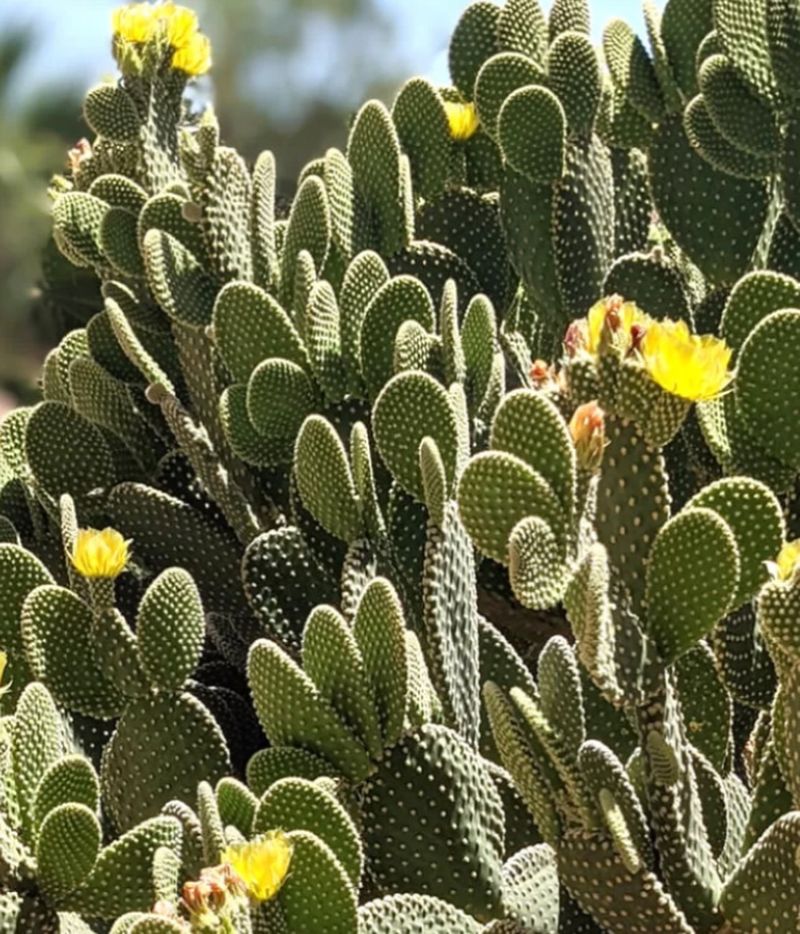
Few cacti get as many smiles as this one. Bunny Ears Cactus grows flat, rounded pads in pairs that genuinely resemble rabbit ears, and the entire surface is covered in tiny, soft-looking tufts called glochids.
From a distance, it looks almost cuddly. Up close, those glochids are incredibly irritating if they get in your skin, so admire it without grabbing.
Popular in Phoenix and Tucson gardens alike, this cactus stays relatively compact, usually reaching two to three feet tall. It spreads outward as new pads form, making it a solid choice for filling in low borders or surrounding larger desert plants.
Yellow or white glochid clusters give different varieties slightly different looks, so you can find one that fits your color scheme.
Bright sun and dry soil are the two things this plant needs most. It handles Arizona summers without complaint and bounces back from cold snaps that would stress other plants.
Cream-colored flowers appear in spring, followed by small reddish fruits that birds enjoy. Repotting or dividing it requires thick gloves and patience — those glochids stick to everything.
Plant it where you can appreciate the shape without brushing against it, and Bunny Ears will thrive for years in your Arizona landscape with almost no intervention needed.
This cactus works well in containers where the shape stays controlled and easy to place. Over time, the pads stack into a fuller cluster that stands out even more.
4. Powder Puff Cactus Stays Small And Rounded
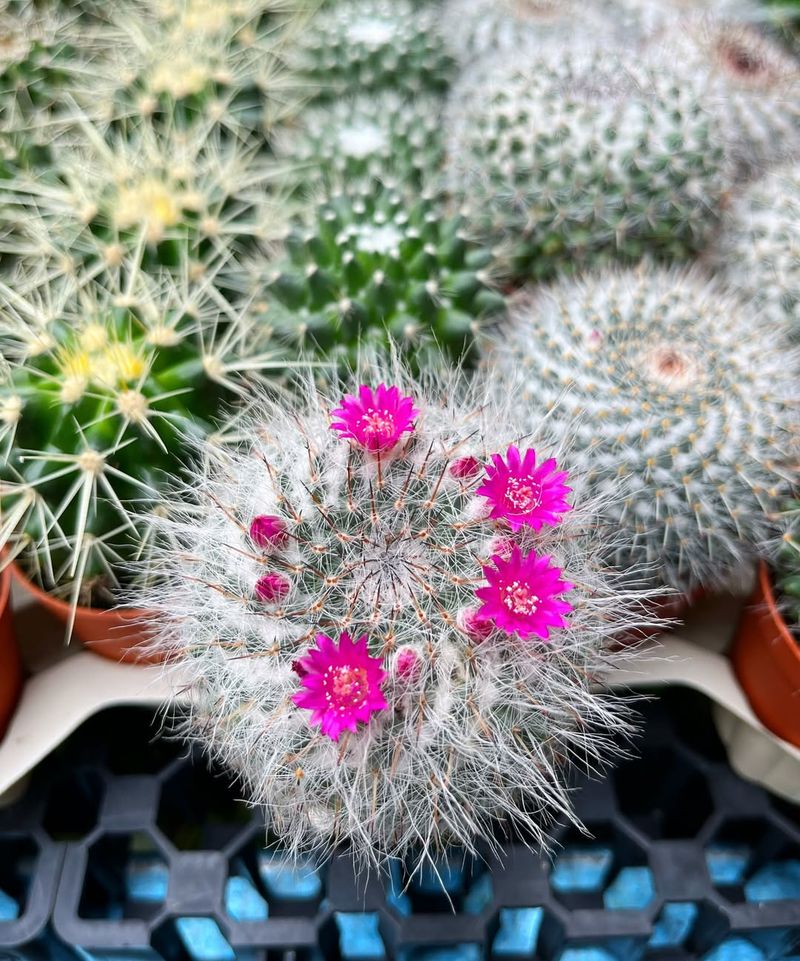
Compact, rounded, and covered in silky white spines, Powder Puff Cactus looks like something you would find in a miniature fairy garden. It rarely grows taller than six inches, but what it lacks in size it more than makes up for in charm.
A ring of small pink or cream flowers crowns the top during blooming season, which turns an already pretty plant into something genuinely delightful.
Arizona gardeners with limited space love this one. It thrives in containers on patios, along sunny windowsills, or tucked into rock gardens where its small scale feels right at home.
Because it stays so tidy, it works well grouped with other small cacti for a varied, low-maintenance display that changes with each blooming cycle.
Watering should be minimal, especially in winter when the plant needs a dry rest period to bloom well the following spring. Use a fast-draining cactus mix and avoid heavy clay soils that hold moisture.
Full sun encourages the tightest, most attractive growth habit. In Tucson and other parts of Arizona, this cactus handles outdoor temperatures without much trouble as long as drainage is solid.
One quirky detail worth knowing — each white spine cluster has a hooked central spine hiding inside, barely visible but worth remembering when handling bare-handed.
5. Old Lady Cactus Produces Pink Spring Flowers
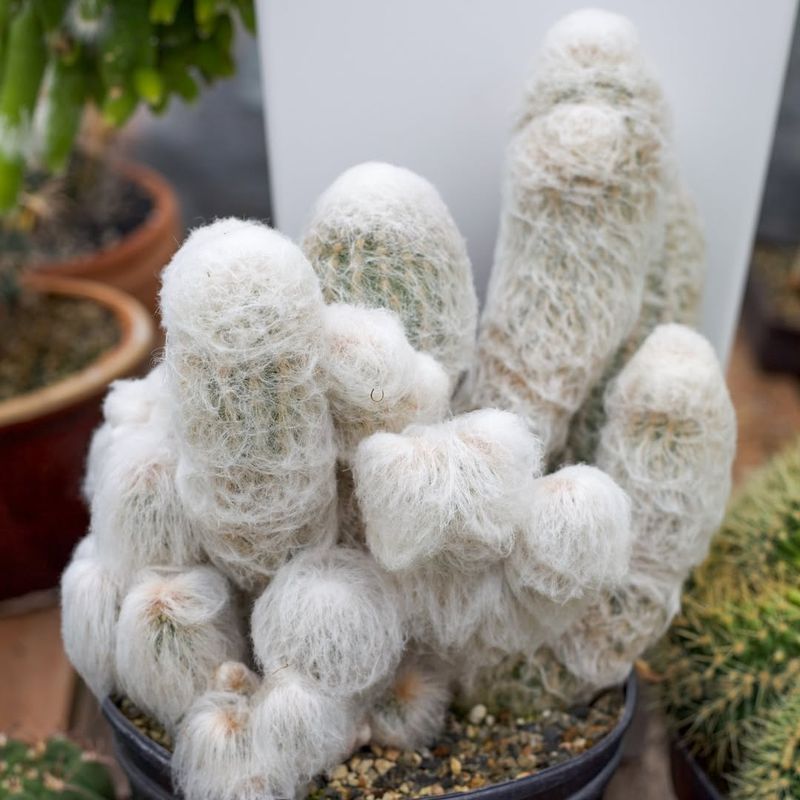
Wrapped in a soft halo of white hair and fine bristles, Old Lady Cactus has one of the most distinctive appearances of any small cactus in Arizona gardens.
It looks gentle and unassuming most of the year, but come spring, a full ring of deep pink flowers circles the crown like a floral crown.
That bloom moment is genuinely worth waiting for.
Most plants stay globe-shaped and compact, topping out around four to five inches tall. Over time, some specimens produce offsets that cluster together into a wider mound.
Both the single globe and the clustered form look great in shallow terracotta bowls or positioned at the front of a rock garden bed where the details are easy to see and appreciate.
Across Arizona, this cactus handles warm temperatures well and asks for very little in return. Gritty soil, good sun, and restrained watering keep it healthy and blooming year after year.
One thing that trips people up is watering too much in fall and winter — the plant genuinely prefers to stay dry during cooler months. Bright light keeps the white covering dense and full, while too much shade causes sparse, stretched growth.
It is one of those plants that rewards patience and benign neglect more than constant attention. Straightforward and quietly beautiful.
6. Feather Cactus Shows Delicate White Spines
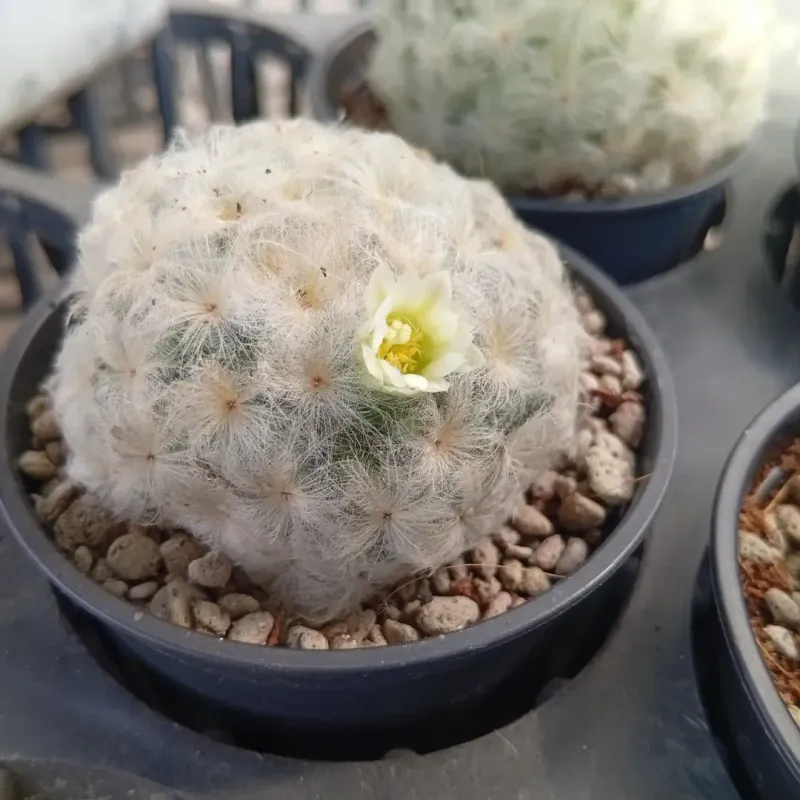
Soft as a snowball and strange as anything in the desert, Feather Cactus is one of those plants that makes people question whether it is even real.
Every spine on this small cactus is feathery and white, branching outward in fine plumes that completely hide the green body underneath.
It looks like it belongs in a terrarium or a dream, not baking under an Arizona sun.
Reaching only about three to four inches tall, it grows slowly and clusters into small groups over time. Each individual head is round and tightly packed with those distinctive feathery coverings.
Placed in a shallow dish with coarse sand and small gravel, it creates an almost sculptural effect that holds attention without demanding much space.
Full sun and sharp drainage are non-negotiable. In the ground across Arizona desert gardens, it works best raised slightly in a mounded bed where water runs away fast.
Container growing also suits it well, especially in decorative pots that highlight its unusual texture. Small white or pale yellow flowers appear in winter or early spring, adding a quiet seasonal surprise.
Unlike many cacti, this one is genuinely safe to brush lightly — the feathery spines are soft and non-piercing. That tactile quality makes it a favorite for gardens where kids and curious visitors are part of the picture.
7. Snowball Cactus Keeps A Compact Shape
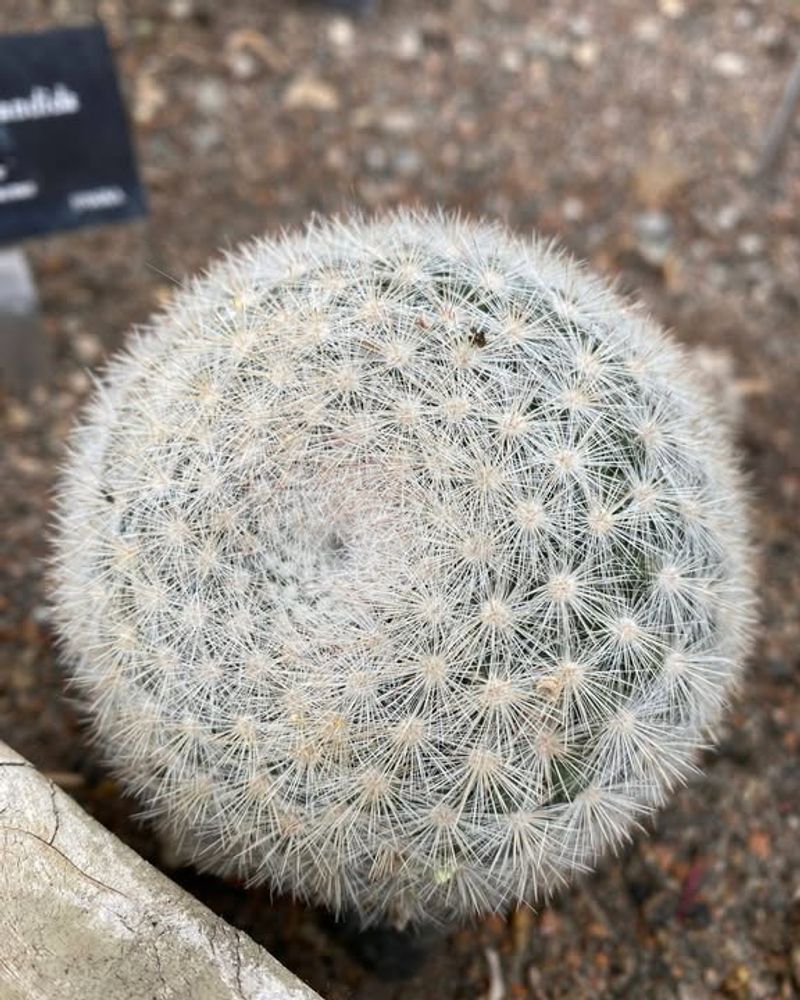
Round, white, and almost perfectly symmetrical, Snowball Cactus earns its name without any exaggeration. Dense white spines cover the entire surface so thoroughly that the green stem beneath is nearly invisible.
Sitting in a sunny Arizona garden, it looks like a small snowball that somehow refuses to melt in triple-digit heat.
Most plants grow as a single globe, though some eventually produce a few offsets that cluster at the base.
Heights stay modest, usually between three and six inches, making it a natural fit for container gardens, windowsill collections, or the front edge of a raised desert bed.
Grouped with other Mammillaria species, it creates a varied textural display that holds interest across seasons.
Watering rhythm matters a lot with this one. During Arizona summers, a deep soak every couple of weeks is usually enough.
In winter, hold back almost entirely and let the plant rest dry. That rest period is what triggers reliable spring blooming — small pink flowers form a ring around the crown, a pleasant contrast against all that white.
Soil must drain fast; standing moisture causes problems quickly. Full sun produces the tightest, most attractive form.
Partial shade stretches the growth and dulls the white spine coverage. For a clean, minimal look that still brings real character, Snowball Cactus fits almost any Arizona garden style.
8. Golden Barrel Cactus Starts Soft Then Turns Bold
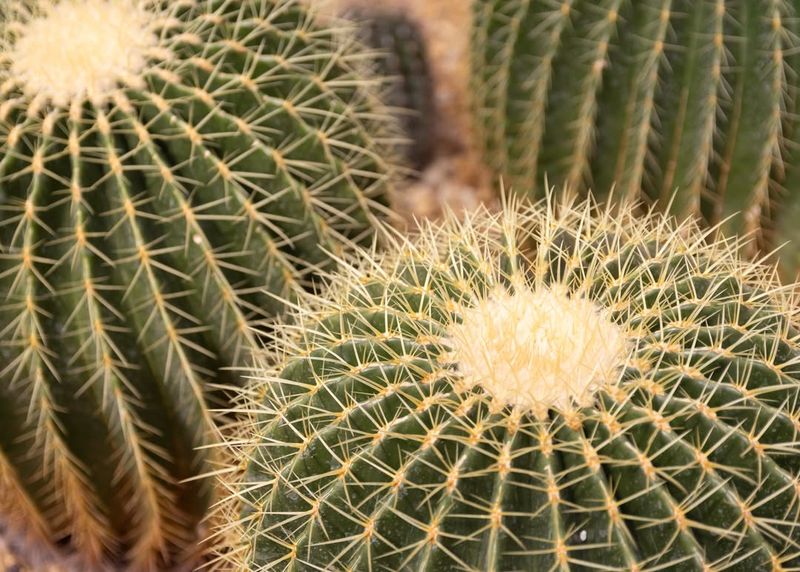
Young Golden Barrel Cacti have a soft, almost gentle look — small, round, and covered in pale golden spines that glow in Arizona afternoon light. Give them a decade or two and the story changes completely.
Mature plants grow into impressive, ribbed barrels that can reach three feet tall and just as wide, with bold yellow spines that command attention in any desert landscape.
Few cacti are more recognizable across Arizona neighborhoods and public gardens. Planted in groups of three or five, they create a rhythm across a yard that feels both structured and natural.
Paired with dark gravel or volcanic rock, the golden color pops in a way that catches eyes from the street. Landscapers in Phoenix use them constantly, and for good reason — the visual payoff is hard to match.
Full sun all day keeps the spines their brightest and encourages that classic barrel shape. In shadier spots, growth slows and the form can lean toward the light over time, which is actually a known behavior — Golden Barrels tilt slightly south in the wild.
Well-drained soil and infrequent deep watering suit them perfectly. Yellow flowers ring the top of mature plants in summer, though blooming takes many years to begin.
Starting with a small one and watching it develop over time is one of the quiet pleasures of gardening in Arizona.