14 Garden Shed Essentials Every North Carolina Gardener Swears By
North Carolina gardeners know that having the right tools makes all the difference between a thriving garden and a frustrating chore.
From the coastal plains to the mountain foothills, our state’s unique climate and soil conditions demand specific equipment that can handle hot summers, unpredictable rain, and clay-heavy earth.
Whether you’re growing heirloom tomatoes in Charlotte or tending azaleas in Asheville, stocking your garden shed with these tried-and-true essentials will save you time, energy, and plenty of headaches throughout the growing season.
1. Bypass Pruners For Everyday Cutting Tasks
Every gardener reaches for their bypass pruners more than any other tool in the shed.
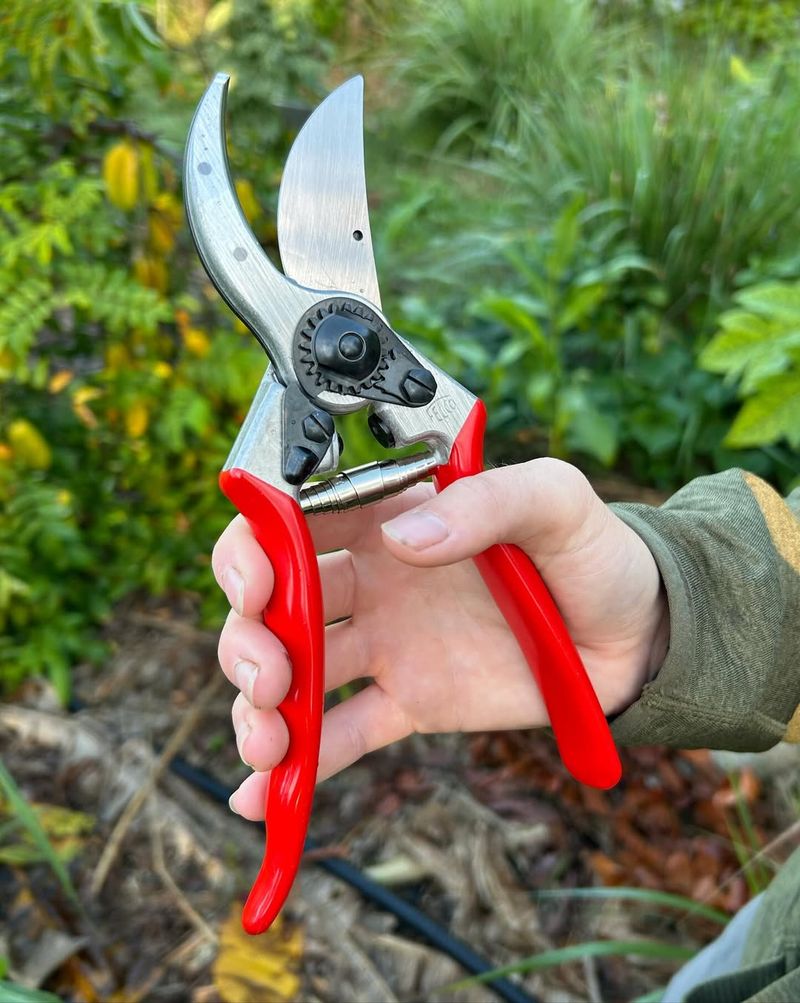
These sharp, scissor-like cutters make clean slices through stems up to three-quarters of an inch thick, which helps plants heal faster and stay healthier.
North Carolina’s long growing season means you’ll be snipping roses, trimming herbs, deadheading perennials, and shaping shrubs from March through November.
Quality bypass pruners feature curved blades that slide past each other like scissors, creating precise cuts without crushing delicate plant tissue.
Look for models with comfortable rubber grips and a safety lock to prevent accidental injuries when the tool sits in your pocket.
Gardeners in our state particularly appreciate pruners with replaceable blades since sandy coastal soil and red clay can dull even the best steel over time.
After each major pruning session, wipe the blades with rubbing alcohol to prevent spreading plant diseases.
A quick spray of oil on the pivot point keeps them moving smoothly through thousands of cuts.
Many experienced gardeners keep two pairs handy—one for general work and another specifically for diseased plants.
Investing in a respected brand means your pruners will last decades with proper care, making them one of the most valuable tools hanging in your shed.
2. Loppers For Thick Branches And Shrubs
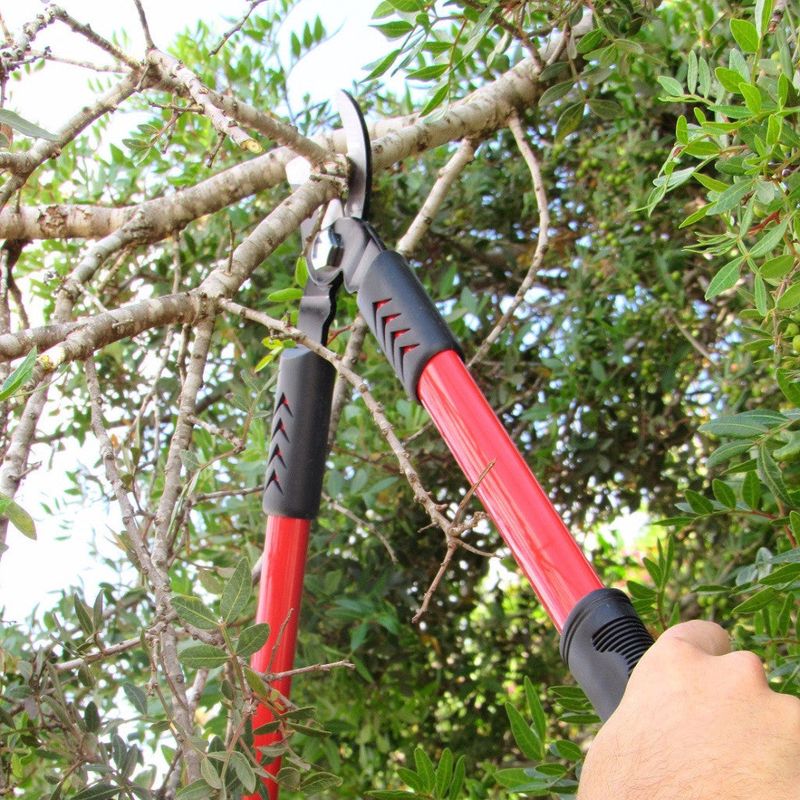
When bypass pruners meet their match, loppers step in to handle the heavy lifting.
These long-handled cutting tools give you the leverage needed to slice through branches up to two inches thick without straining your arms or shoulders.
North Carolina landscapes feature plenty of woody growth—from overgrown crape myrtles to wild privet hedges—that require serious cutting power to keep under control.
The extended handles, typically ranging from twenty-four to thirty-six inches, let you reach into dense shrubs without scratching your arms on thorny branches.
Gardeners swear by loppers with telescoping handles that adjust to different lengths, giving you extra reach for high branches without needing a ladder.
Ratcheting models make cutting thick wood easier by applying pressure in stages, which is especially helpful if you have arthritis or reduced hand strength.
Look for loppers with shock-absorbing bumpers that cushion each cut and reduce fatigue during extended pruning sessions.
Spring is the busiest season for loppers in North Carolina, when gardeners shape fruit trees, trim forsythia after blooming, and cut back butterfly bushes.
Keep your loppers sharp with a file or sharpening stone at least twice per season.
Store them hanging on a wall hook rather than tossed in a corner, which protects the blades and keeps them ready for action whenever vigorous growth demands attention.
3. Hand Trowel For Planting And Transplanting
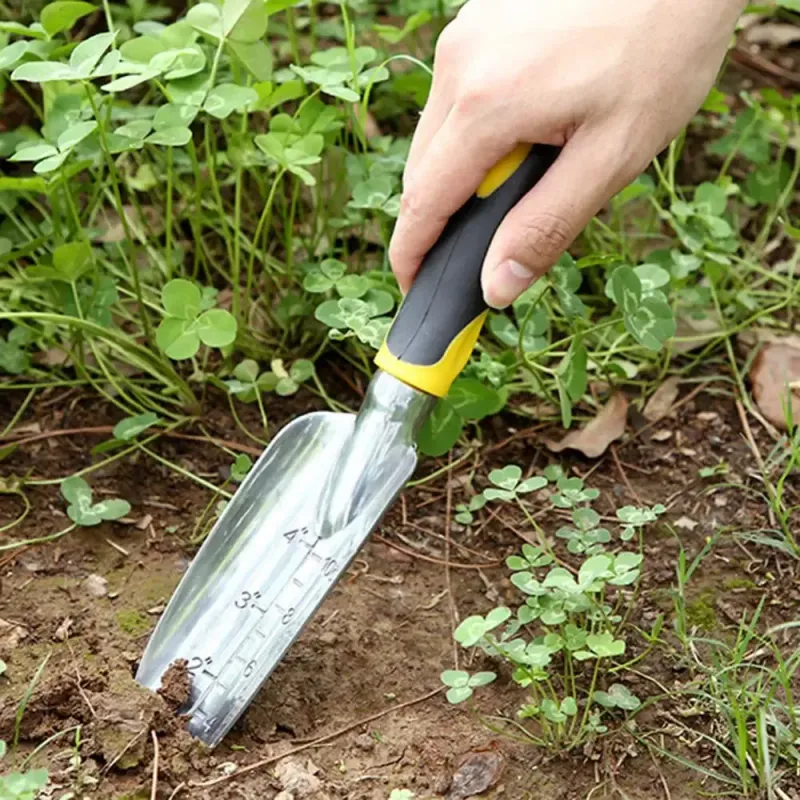
A sturdy hand trowel ranks as the most-used tool for gardeners who love getting their hands in the soil.
This small scoop-shaped implement digs perfect holes for bedding plants, transplants seedlings, fills containers with potting mix, and removes stubborn weeds that laugh at your bare fingers.
North Carolina soils vary dramatically—from sandy loam near the coast to dense red clay in the Piedmont—so your trowel needs to be tough enough to handle whatever ground you’re working.
Stainless steel blades resist rust even when left damp overnight, which happens more often than any gardener wants to admit.
The best trowels feature blades that extend all the way through the handle in one piece of metal, preventing the annoying break that happens when cheap trowels snap at the neck.
Comfortable grips matter tremendously when you’re planting dozens of pansies or setting out a whole flat of tomato seedlings in spring.
Many experienced gardeners prefer wooden handles that mold to their grip over time, though rubber-coated versions offer excellent cushioning for sensitive hands.
Measurement marks etched along the blade help you plant bulbs at consistent depths without guessing.
After each gardening session, knock off clinging soil and rinse your trowel before hanging it up.
This simple habit prevents rust and keeps your favorite planting companion ready for decades of service in your North Carolina garden beds.
4. Garden Fork For Loosening Compacted Soil
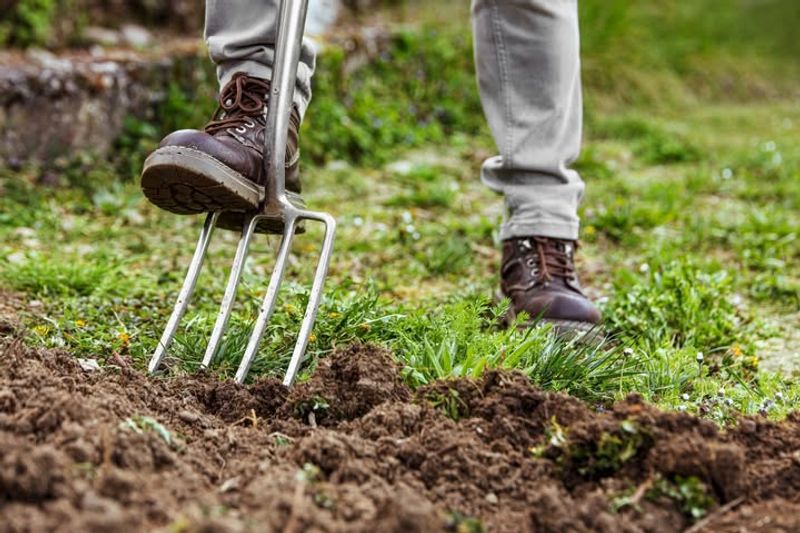
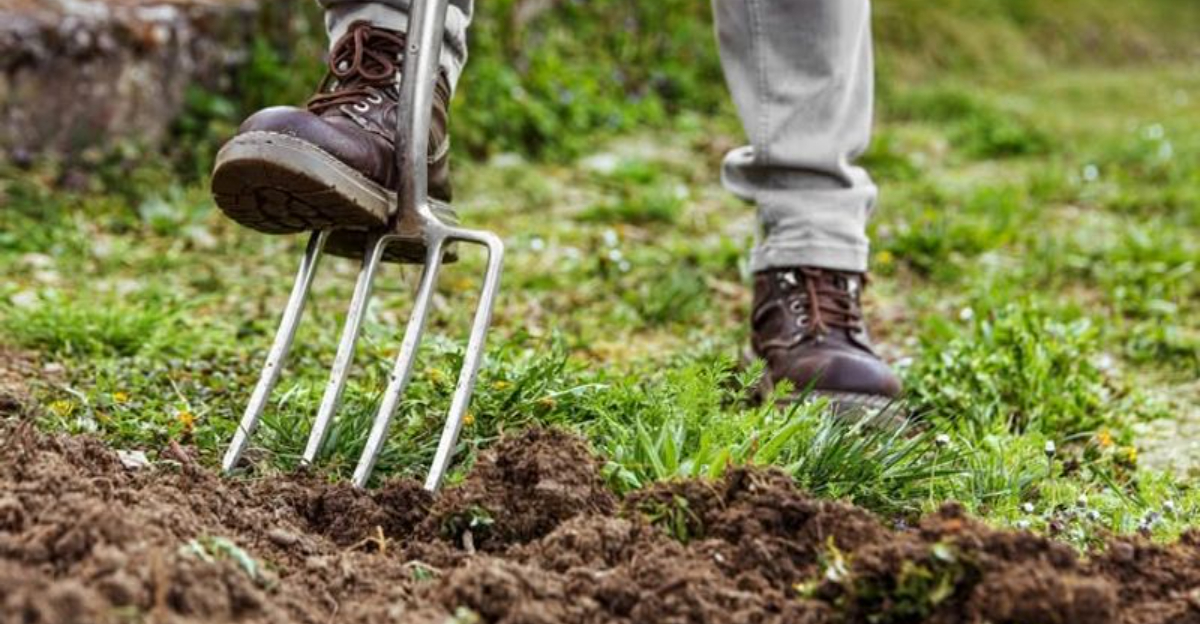
North Carolina’s notorious clay soil can turn rock-hard during dry spells, making a garden fork absolutely essential for breaking up compacted ground.
This sturdy tool features four thick metal tines that penetrate stubborn earth far better than a spade, creating channels that improve drainage and allow plant roots to spread freely.
Gardeners across the Piedmont region particularly appreciate how forks work clay soil without turning it into sticky clumps the way shovels do.
Insert the fork vertically into the ground, rock it back and forth a few times, then move six inches over and repeat the process across your entire bed.
This technique aerates the soil without completely flipping it over, which preserves beneficial microorganisms living at different depths.
Garden forks also excel at lifting root vegetables like potatoes and carrots without slicing through them the way spade edges often do.
In autumn, use your fork to turn compost piles, incorporating kitchen scraps and yard waste that will feed next season’s plants.
Look for forged steel construction rather than welded tines, which can bend or break when you hit an unexpected rock buried in your bed.
D-shaped handles give you better control and leverage than straight grips, especially when working heavy clay.
Keep your garden fork clean and dry between uses, and it will serve you faithfully through decades of soil improvement projects that transform challenging North Carolina earth into productive growing space.
5. Hoe For Weed Control In Long Growing Seasons
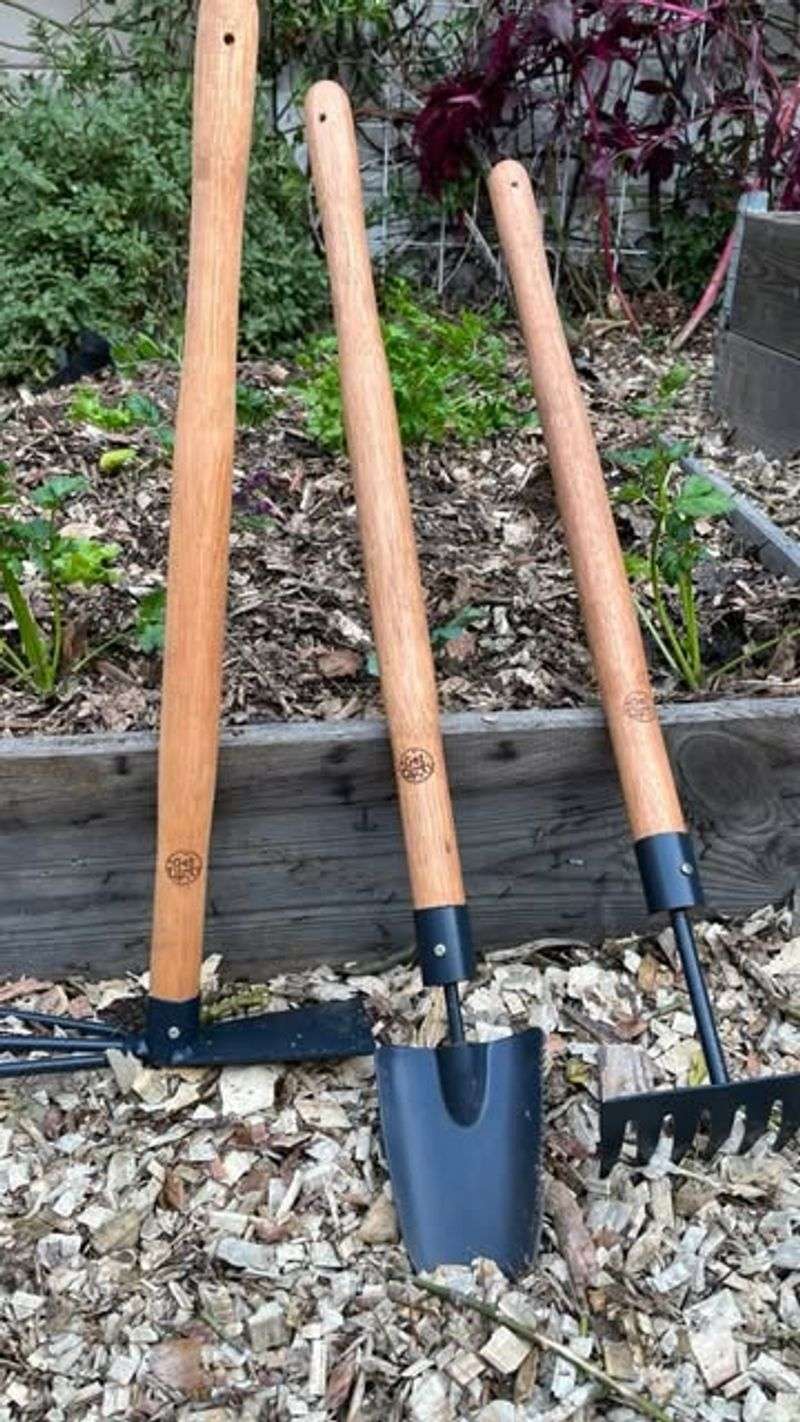
Weeds never take a vacation in North Carolina, where mild winters and long growing seasons give unwanted plants plenty of opportunity to invade your carefully tended beds.
A sharp hoe becomes your best friend for keeping ahead of aggressive growth without spending hours on your hands and knees pulling individual plants.
The traditional stirrup hoe, shaped like a rectangle on a long handle, slices weeds just below the soil surface as you push and pull it through your rows.
This back-and-forth motion cuts through weed stems while you remain standing upright, saving your knees and back from unnecessary strain.
Warren hoes, with their triangular pointed blades, excel at creating furrows for planting seeds and hilling up soil around potato plants or squash stems.
Gardeners fighting persistent weeds in pathways often prefer scuffle hoes that glide along the ground, severing roots with minimal effort.
The key to effective hoeing is catching weeds when they’re small, before they develop extensive root systems or set seed.
A quick fifteen-minute session with your hoe every few days prevents weed explosions that would require hours of backbreaking work later.
Choose a hoe with a handle length that reaches your shoulder when standing on the ground, which allows comfortable use without bending.
Sharpen the blade regularly with a file to maintain that satisfying slicing action through weed stems and shallow roots throughout our extended North Carolina growing season.
6. Wheelbarrow Or Garden Cart For Heavy Loads
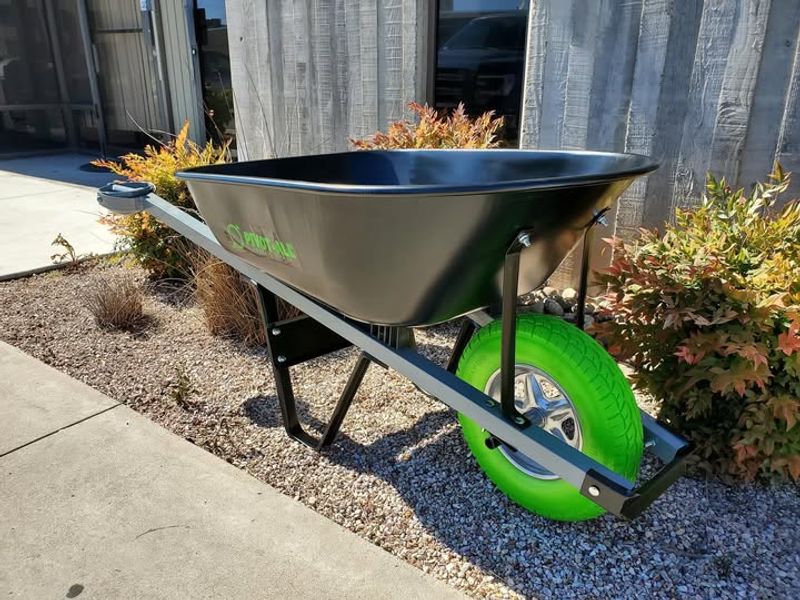
Hauling fifty-pound bags of mulch, moving piles of pulled weeds, and transporting flats of plants would exhaust even the strongest gardener without a reliable wheelbarrow or garden cart.
North Carolina gardens often sprawl across large yards, making the distance between your compost pile, shed, and planting beds feel like a marathon when you’re carrying heavy loads by hand.
Traditional single-wheel wheelbarrows offer excellent maneuverability around tight corners and through narrow gates, though they require good balance to prevent tipping on uneven ground.
Two-wheeled garden carts provide superior stability and can carry heavier loads without the balancing act, making them ideal for gardeners with mobility challenges or those managing large properties.
Look for pneumatic tires rather than solid wheels, which roll smoothly over grass, gravel, and bumpy terrain without jarring your arms with every rock.
Plastic bins resist rust and clean easily but may crack in extreme cold, while steel beds last forever if you keep them painted and store them under cover.
Gardeners who work hilly properties appreciate carts with brakes that prevent runaway loads on slopes.
A quality wheelbarrow or cart easily pays for itself by preventing back injuries and saving countless trips back and forth across your yard.
Many North Carolina gardeners keep both styles handy—a nimble wheelbarrow for quick jobs and a sturdy cart for major projects like spreading yards of mulch or moving a season’s worth of compost to hungry garden beds.
7. Quality Garden Gloves For Protection And Comfort
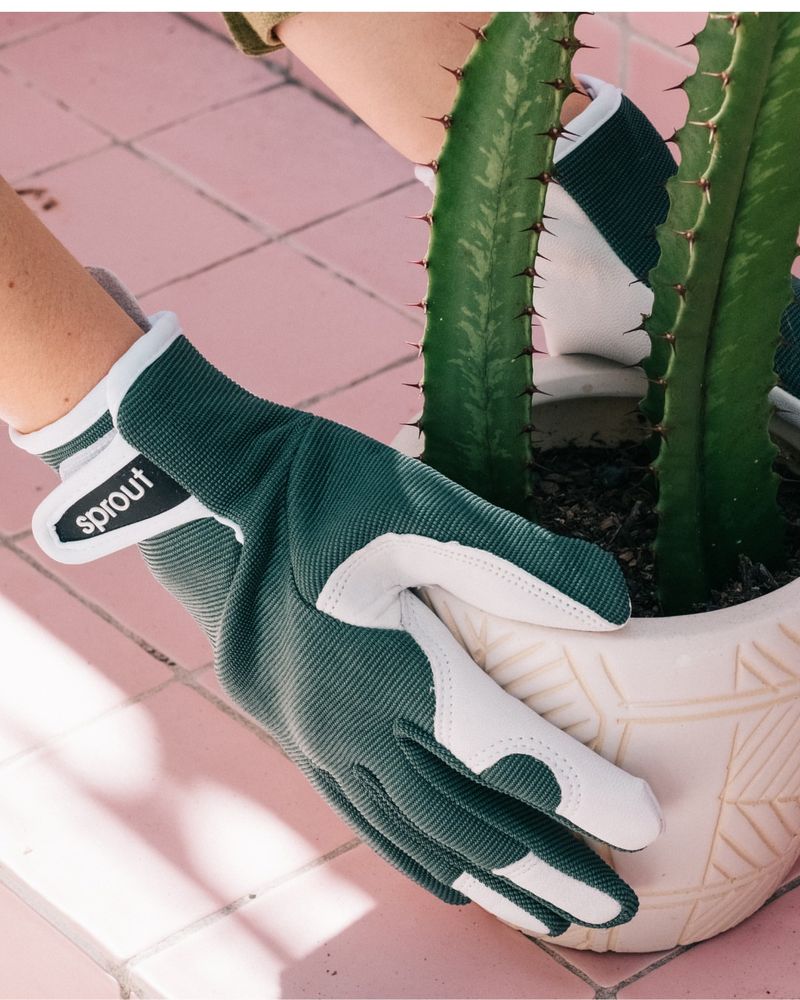
Your hands are your most valuable gardening tools, and protecting them with quality gloves prevents painful blisters, thorny punctures, and irritating contact with sap or insects.
North Carolina gardens present plenty of hazards—from rose thorns and blackberry canes to stinging caterpillars and the occasional fire ant mound discovered too late.
Lightweight nitrile-coated gloves offer excellent grip when handling wet tools or slippery pots while still allowing enough dexterity to tie delicate tomato vines or transplant tiny seedlings.
Heavier leather gloves become essential when pruning thorny shrubs, handling rough lumber for raised beds, or wrestling with prickly holly branches during winter cleanup.
Many experienced gardeners keep several pairs in rotation—thin gloves for detailed work, medium-weight for general tasks, and armored versions for battle with aggressive plants.
Look for gloves with snug wrists that prevent soil from sliding inside or insects from crawling up your sleeves during ground-level work.
Breathable materials keep your hands comfortable during humid North Carolina summers when even simple tasks can leave you sweating.
Women and men with smaller hands should seek out properly sized gloves rather than settling for bulky options that reduce control and increase fatigue.
Wash fabric gloves regularly to remove soil, sap, and oils that can irritate skin or harbor plant diseases.
Hanging multiple pairs near your shed door ensures you always have clean, dry gloves ready for whatever gardening challenge the day presents.
8. Hose With Adjustable Nozzle For Efficient Watering
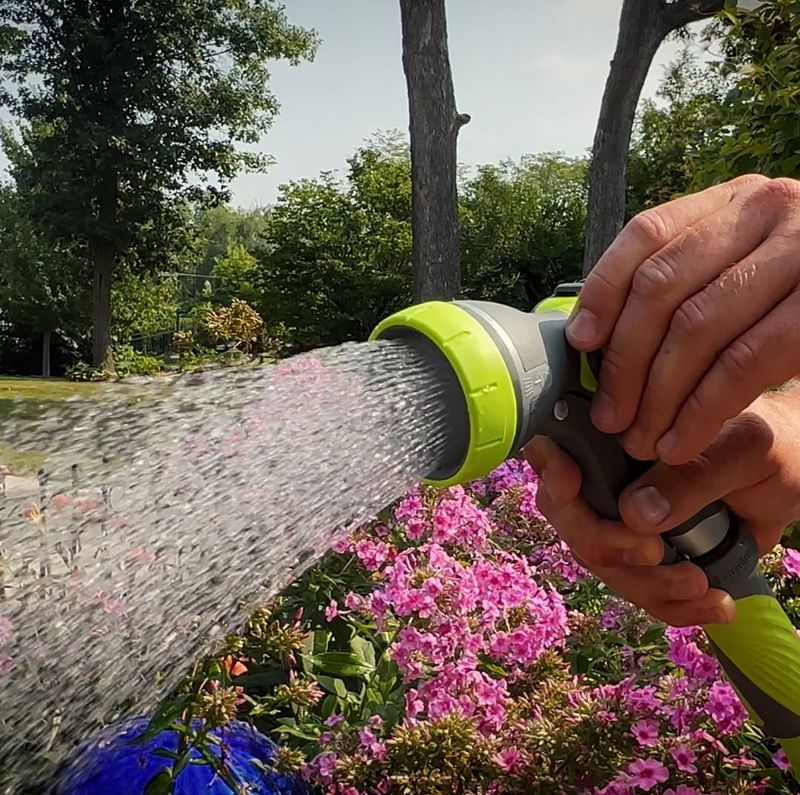
Watering ranks as one of the most time-consuming garden tasks, especially during North Carolina’s steamy summers when plants can wilt by midday without adequate moisture.
A durable rubber or reinforced vinyl hose paired with an adjustable nozzle gives you precise control over water flow, from gentle mist for delicate seedlings to powerful jet for cleaning muddy tools.
Gardeners with large properties often invest in multiple hose lengths that reach every corner without dragging across prized plantings or creating kinked tangles.
Look for hoses with brass fittings rather than plastic connectors, which crack and leak after a season or two of North Carolina sun exposure and temperature fluctuations.
Adjustable nozzles with multiple spray patterns let you switch from soaking vegetable roots deeply to misting hanging baskets without walking back to the spigot between tasks.
Trigger controls with lock-on features prevent hand fatigue during extended watering sessions and allow you to set down the nozzle without water continuing to flow.
Proper storage extends hose life dramatically—coil your hose loosely on a reel or hanger after each use rather than leaving it kinked in the sun.
Drain hoses completely before winter storage to prevent ice damage during occasional hard freezes.
Many North Carolina gardeners install splitters at outdoor faucets, allowing them to keep a hose permanently attached while still connecting sprinklers or filling watering cans.
Quality hoses and nozzles represent a worthwhile investment that makes daily watering efficient rather than exhausting.
9. Mulch Fork Or Pitchfork For Handling Organic Material
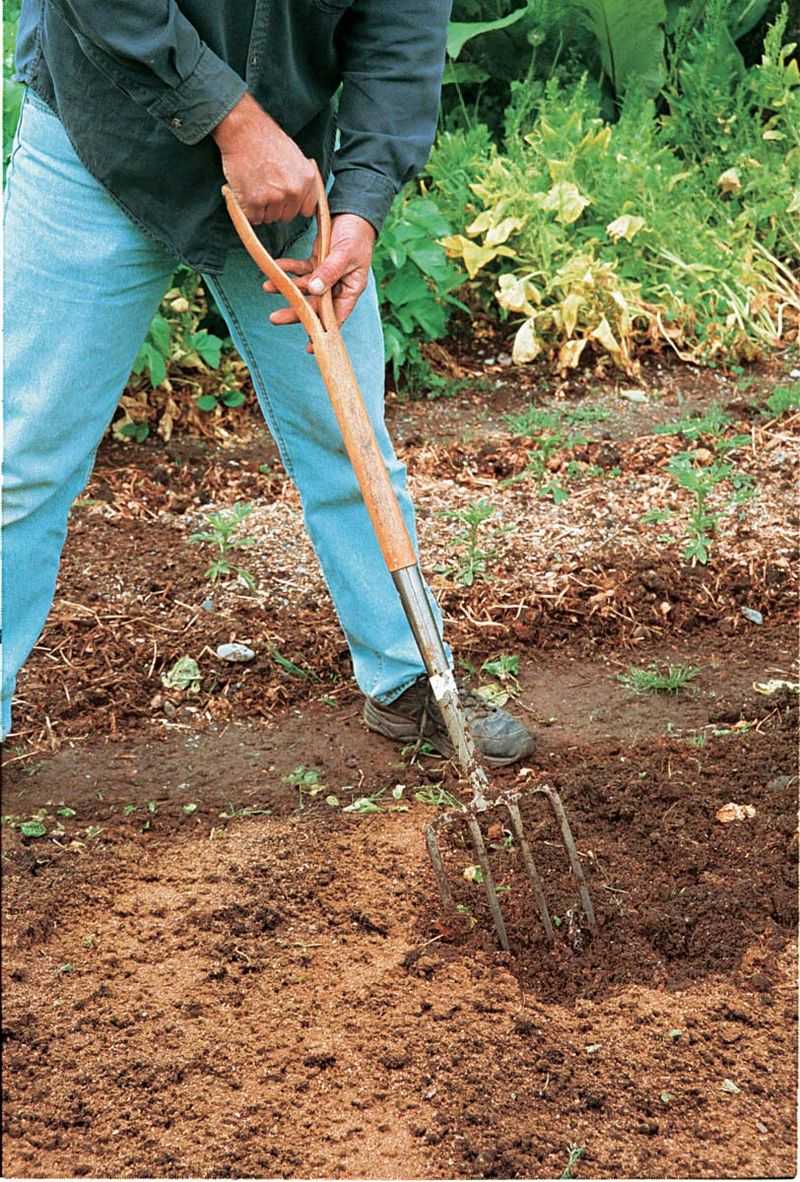
Moving mountains of mulch, turning compost piles, and spreading leaf litter become effortless tasks when you have a proper mulch fork in your shed arsenal.
These specialized tools feature multiple thin tines spaced wider than garden forks, designed specifically for lifting and tossing light, bulky materials without the weight of captured soil.
North Carolina gardeners rely heavily on organic mulches—pine straw in the coastal plain, hardwood chips in the Piedmont, and shredded leaves everywhere—to suppress weeds and retain precious moisture during summer heat.
A mulch fork scoops up generous amounts of these materials and spreads them evenly around plants without the back-straining effort required when using a shovel or rake alone.
The tines slide easily into bales of pine straw or bags of mulch, breaking them apart and making distribution quick work instead of an all-day project.
When autumn arrives and leaves blanket your yard, a mulch fork collects them efficiently for adding to compost bins or spreading as natural mulch around perennial beds.
Look for models with at least eight tines for maximum scooping capacity, though some gardeners prefer ten or twelve tines for handling really fluffy materials.
Wooden handles absorb vibration better than fiberglass, making them comfortable during extended use.
After spreading mulch or turning compost, simply hose off your fork and hang it up.
This simple tool transforms tedious bulk-material tasks into manageable jobs that help your North Carolina garden thrive with proper organic matter coverage.
10. Soil Test Kit For Smarter Plant Choices
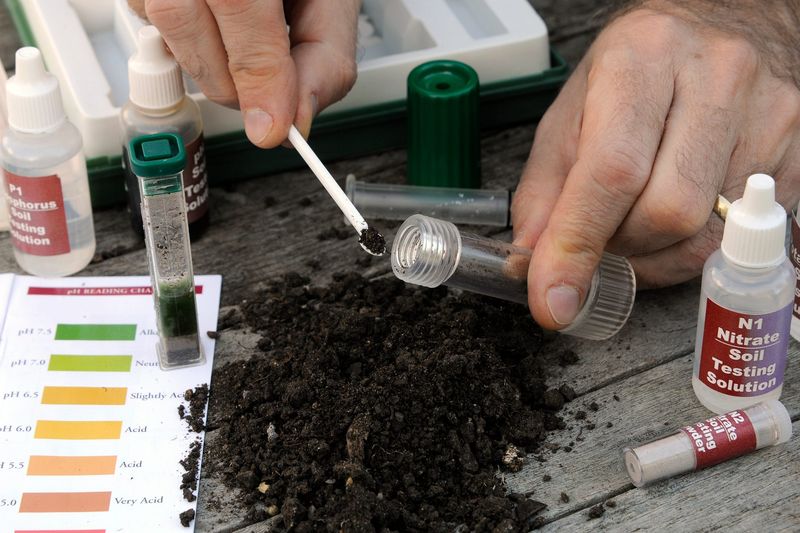
Guessing about your soil’s pH and nutrient levels leads to frustrated gardening, with plants struggling despite your best efforts to feed and water them properly.
A simple soil test kit removes the mystery by revealing exactly what your ground contains, allowing you to make informed decisions about amendments and plant selection.
North Carolina soils tend toward acidity, which suits azaleas and blueberries perfectly but causes tomatoes and vegetables to underperform without lime additions.
Home test kits provide quick results for pH, nitrogen, phosphorus, and potassium levels using color-change indicators that anyone can interpret without scientific training.
More accurate results come from sending samples to your local Cooperative Extension office, which offers comprehensive testing for a modest fee and includes specific recommendations for your gardening goals.
Test different areas of your property separately since soil conditions often vary dramatically between sunny vegetable beds, shaded woodland areas, and spots near your home’s foundation.
Spring and fall represent ideal testing times, giving you opportunity to adjust pH and add amendments before planting seasons begin.
Knowing your soil’s characteristics helps you choose plants naturally suited to your conditions rather than fighting nature with constant interventions.
Test results also prevent over-fertilizing, which wastes money and can harm plants while contributing to water pollution when excess nutrients wash away during North Carolina’s heavy rains.
Keep a simple notebook recording test results over the years, which helps you track improvements and understand how your amendments affect long-term soil health in your specific garden beds.
11. String Trimmer Or Manual Edger For Clean Borders
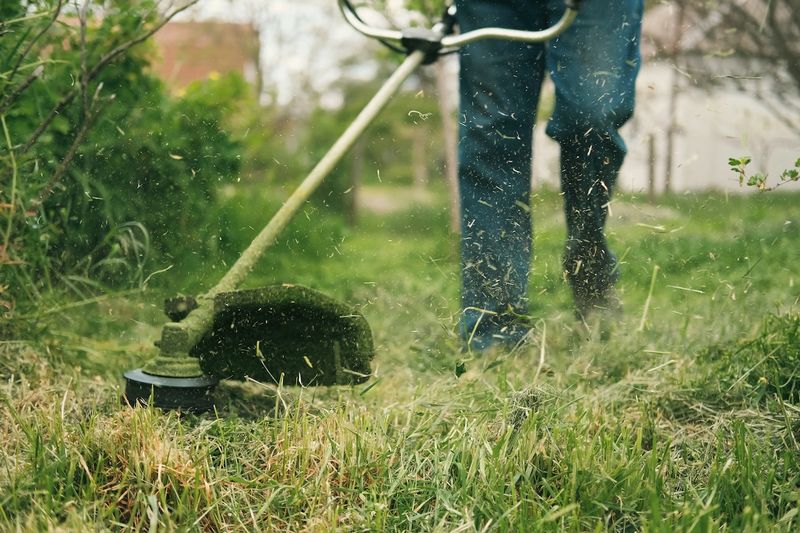
Crisp, clean edges separate well-maintained gardens from overgrown yards, and achieving those professional-looking borders requires either a string trimmer or manual edger in your tool collection.
Grass constantly creeps into flower beds, sidewalk cracks, and around fence posts, creating a messy appearance that detracts from your carefully chosen plants and hardscaping.
Electric or battery-powered string trimmers zip through edging tasks quickly, using spinning nylon line to slice through grass and weeds along borders, foundations, and tree bases.
Manual edgers, featuring a sharp half-moon blade on a long handle, create perfectly defined edges between lawns and beds by cutting a neat vertical line into the turf.
Many North Carolina gardeners use both tools—the manual edger to establish crisp lines in spring, then the string trimmer for quick maintenance throughout the growing season.
Battery-powered trimmers have improved dramatically in recent years, offering power comparable to gas models without the noise, fumes, or maintenance headaches.
When using string trimmers, wear safety glasses to protect your eyes from flying debris, and long pants to shield your legs from grass and pebbles.
Replace trimmer line regularly to maintain clean cuts rather than ragged tears that stress grass and create brown edges.
For manual edgers, keep the blade sharp with a file and clean it after use to prevent rust.
Well-defined borders make your garden beds appear larger and more intentional while reducing the amount of weeding required as grass struggles to invade across that barrier.
12. Stakes And Ties For Supporting Growing Plants
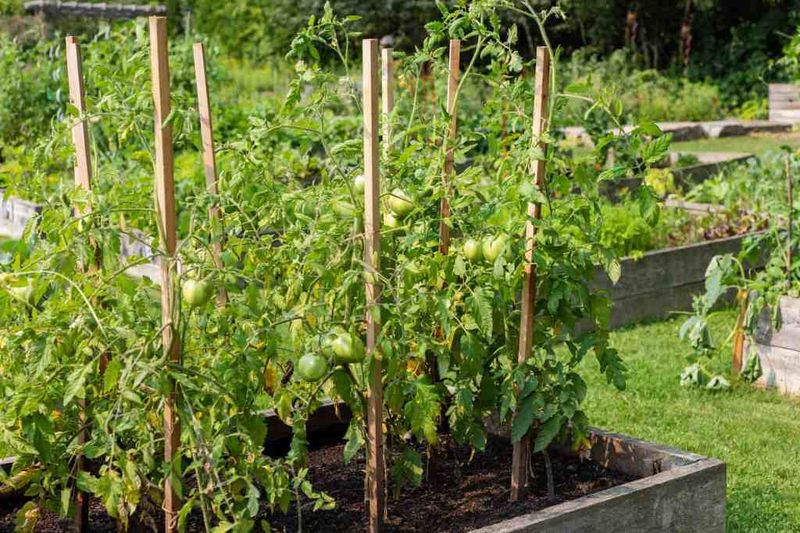
Tomatoes loaded with fruit, top-heavy sunflowers, and young trees all share one common need—sturdy support that keeps them upright through wind, rain, and the weight of their own success.
North Carolina’s summer thunderstorms arrive with startling intensity, packing winds that can flatten unsupported plants in minutes and undo months of careful cultivation.
Bamboo stakes work beautifully for lightweight tasks like supporting pepper plants or staking individual dahlia stems, and they’re inexpensive enough to buy by the bundle.
Heavier tomato cages or thick wooden stakes become necessary for indeterminate tomato varieties that can reach six feet tall while bearing dozens of pounds of fruit.
Soft ties made from stretchy fabric, foam-covered wire, or even strips of old t-shirts secure plants without cutting into stems the way string or twist ties often do.
Figure-eight ties, which loop around both stake and plant stem, allow some movement while providing support, which actually strengthens plant stems over time.
Install stakes at planting time rather than waiting until plants topple, which risks damaging roots when you drive stakes through established root systems.
Young trees benefit from loose staking that allows some trunk movement, developing stronger wood than trees tied rigidly in place.
Remove tree stakes after one growing season to prevent the ties from girdling expanding trunks.
Keep a variety of stake sizes and tie materials in your shed so you’re prepared when unexpected wind threatens prized plants or heavy fruit production requires emergency support.
13. Garden Rake For Cleanup And Soil Prep
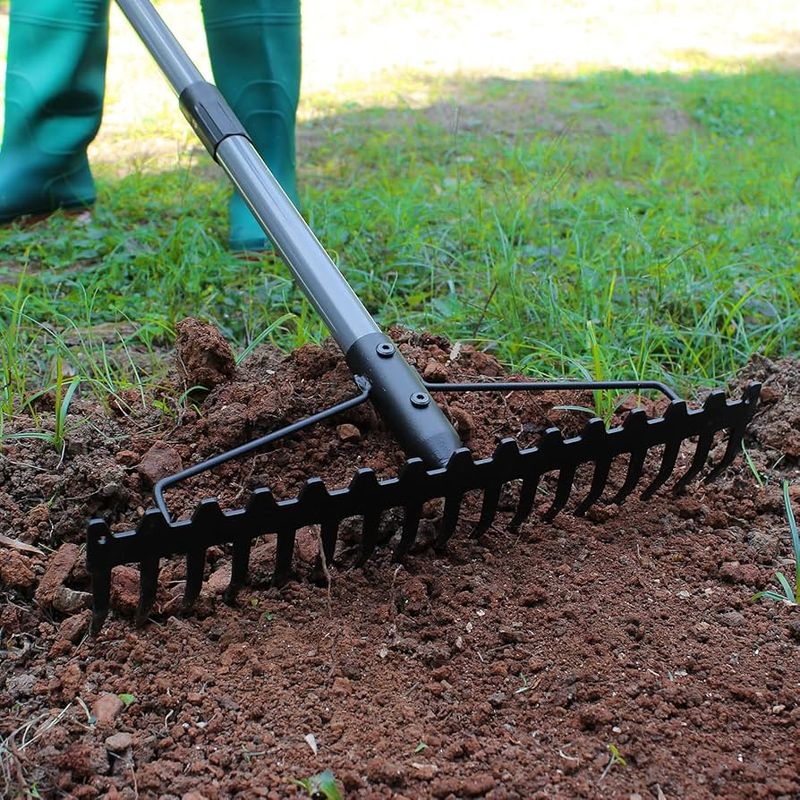
Few tools match the versatility of a good garden rake, which smooths freshly tilled beds, removes rocks and debris, spreads compost evenly, and collects leaves with equal efficiency.
The traditional bow rake, with its sturdy metal tines and straight edge, excels at leveling soil before planting and breaking up clumps left behind by tillers or digging.
North Carolina’s autumn leaf drop can bury gardens under inches of foliage, and a flexible leaf rake with springy plastic or metal tines gathers them quickly without damaging plants beneath.
Many experienced gardeners keep both styles handy—the bow rake for heavy soil work and bed preparation, plus a leaf rake for gentler cleanup tasks around delicate perennials.
When preparing beds for planting, use your bow rake to create a smooth, level surface that ensures even seed depth and prevents water from pooling in low spots.
The flat back of a bow rake tamps down soil gently after sowing seeds, ensuring good seed-to-soil contact without compacting the ground too firmly.
Leaf rakes gather grass clippings after mowing, collect pine needles for mulch, and sweep patios clean without scratching surfaces.
Choose rakes with handles long enough to use comfortably without constant bending, which saves your back during extended cleanup sessions.
After use, knock off clinging soil and hang rakes with tines facing the wall to prevent accidents and protect the working edge.
A quality rake lasts for decades of North Carolina gardening, making it one of those fundamental tools that earns its place through constant usefulness across all seasons.
14. Storage Hooks And Shelving To Keep Tools Organized
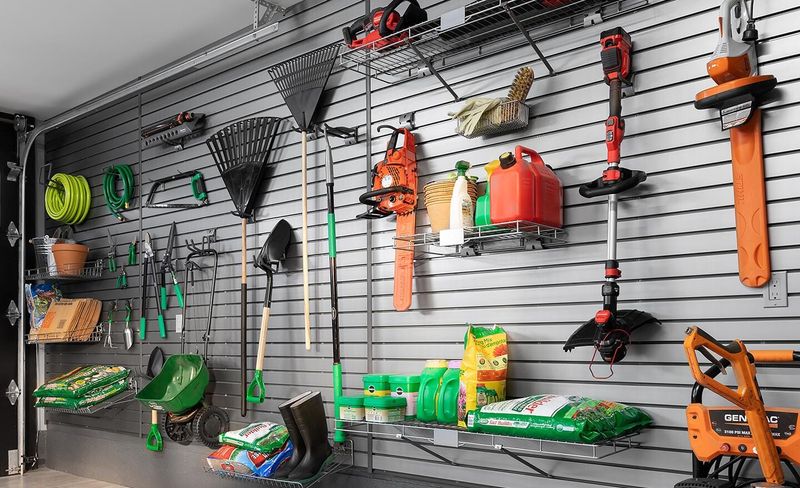
The most expensive tools in the world become useless when you can’t find them buried under piles of bags, pots, and random garden supplies.
Proper storage systems transform chaotic sheds into efficient workspaces where every tool has a designated spot and remains visible, accessible, and protected from damage.
Wall-mounted hooks keep long-handled tools like rakes, hoes, and shovels hanging vertically, which saves floor space and prevents the frustrating domino effect when one leaning tool knocks down six others.
Pegboard systems offer incredible flexibility, allowing you to arrange hooks, baskets, and shelves in configurations that match your specific tool collection and work style.
Sturdy shelving holds bags of fertilizer, pots in various sizes, seed-starting supplies, and all those half-used bottles of amendments that accumulate over gardening seasons.
Clear plastic bins with labels keep small items like plant markers, twist ties, and seed packets organized and protected from moisture that can ruin paper packages.
Tool racks near the door hold your most frequently used items—pruners, trowel, gloves—making them easy to grab for quick garden tasks without entering the entire shed.
North Carolina’s humidity can rust unprotected metal quickly, so hanging tools rather than leaving them on damp floors significantly extends their useful life.
Investing an afternoon to install proper storage systems pays dividends every time you garden, eliminating wasted time searching for misplaced tools and reducing replacement costs for equipment that would otherwise deteriorate from poor storage conditions.