9 Gardening Tips Michigan Gardeners Use To Grow Perfect Rhubarb
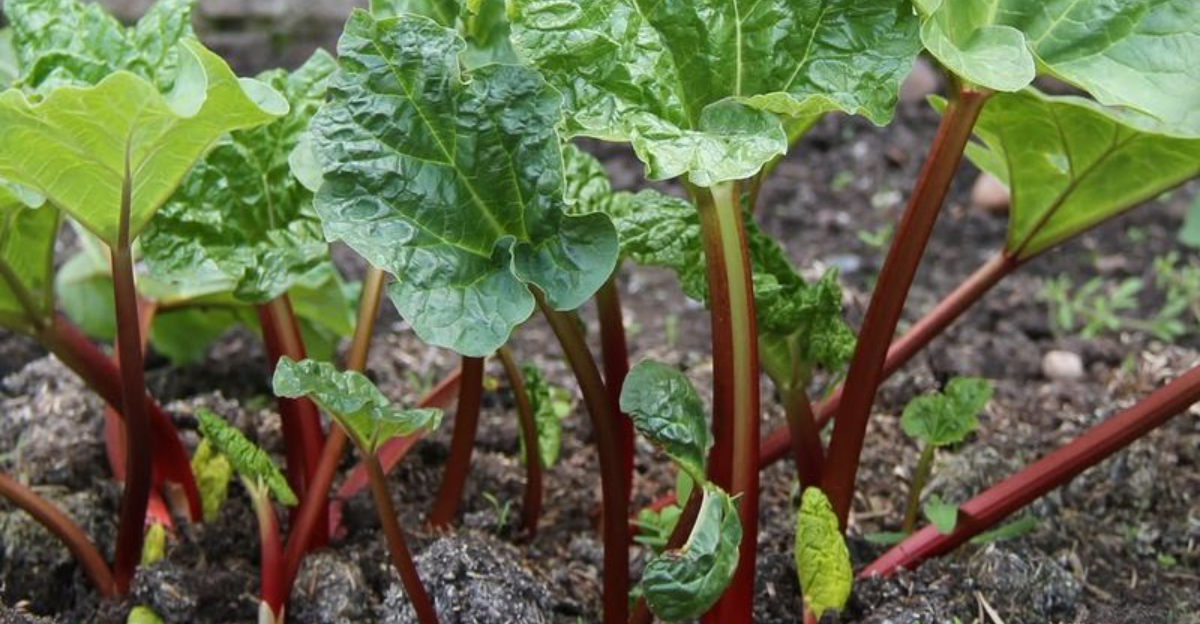
Rhubarb is a classic spring favorite in Michigan gardens, prized for its tart flavor and vibrant stalks.
But growing strong, healthy rhubarb takes more than planting, it requires care, timing, and the right techniques to ensure consistent, delicious harvests year after year. Perfect rhubarb doesn’t happen by chance, it takes a little Michigan know-how!
Michigan gardeners swear by nine essential strategies, from soil preparation and proper spacing to watering, fertilization, and winter protection.
Timing the first harvest, dividing crowns, and controlling weeds also make a big difference in plant health and productivity.
Following these tips ensures rhubarb produces thick, tender stalks without stress or decline. Strong roots and proper care make all the difference in your harvest.
For Michigan gardeners, applying these proven techniques results in flavorful, high-quality rhubarb that’s perfect for pies, sauces, and preserves. Grow it right, and your rhubarb will thrive year after year!
1. Plant Rhubarb Where It Gets Full Sun With Some Afternoon Relief
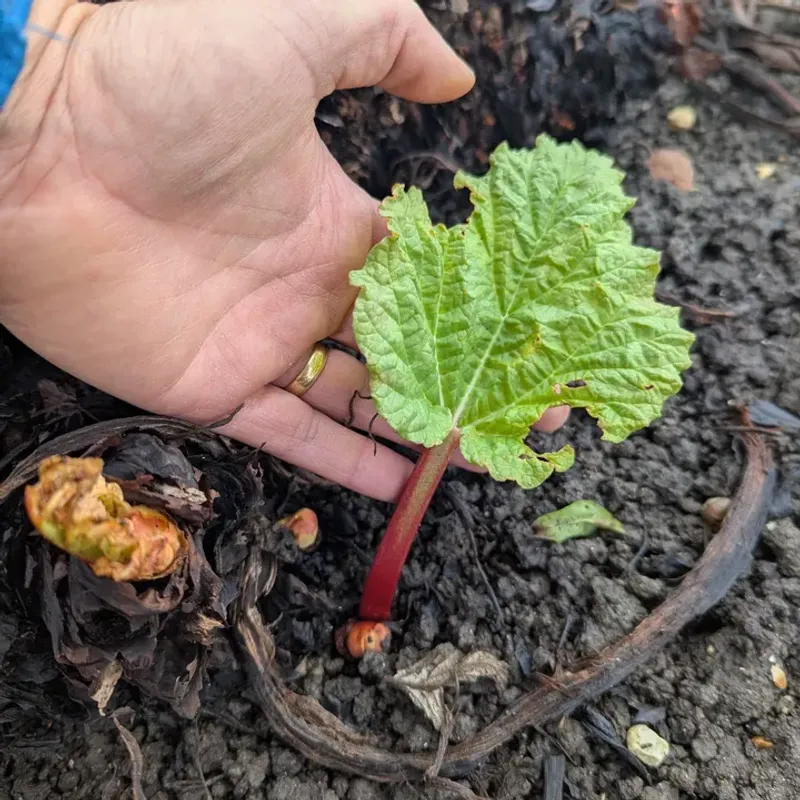
Rhubarb loves soaking up sunshine, and Michigan’s spring weather provides just the right amount of bright light to fuel strong stalk development.
When you position your plants where they receive at least six hours of direct sun each day, they build the energy reserves needed to produce thick, vibrant stalks.
Morning sun is especially valuable because it dries dew quickly, reducing the chance of fungal issues that can slow growth.
However, during those occasional hot spells in June and July, a bit of afternoon shade can prevent stress and keep leaves from wilting.
Planting near a fence, trellis, or taller perennials offers natural protection without blocking the essential morning rays.
This balance helps rhubarb maintain steady growth even when temperatures climb unexpectedly.
Choosing the right spot also means thinking long-term, since rhubarb can stay productive in the same location for a decade or more.
Avoid areas that become waterlogged after heavy rains, as soggy soil combined with intense sun can weaken roots.
A well-lit, slightly sheltered site sets the stage for years of reliable harvests, giving you plenty of tart stalks to enjoy in pies, crisps, and preserves throughout the season.
2. Start With Crowns, Not Seeds
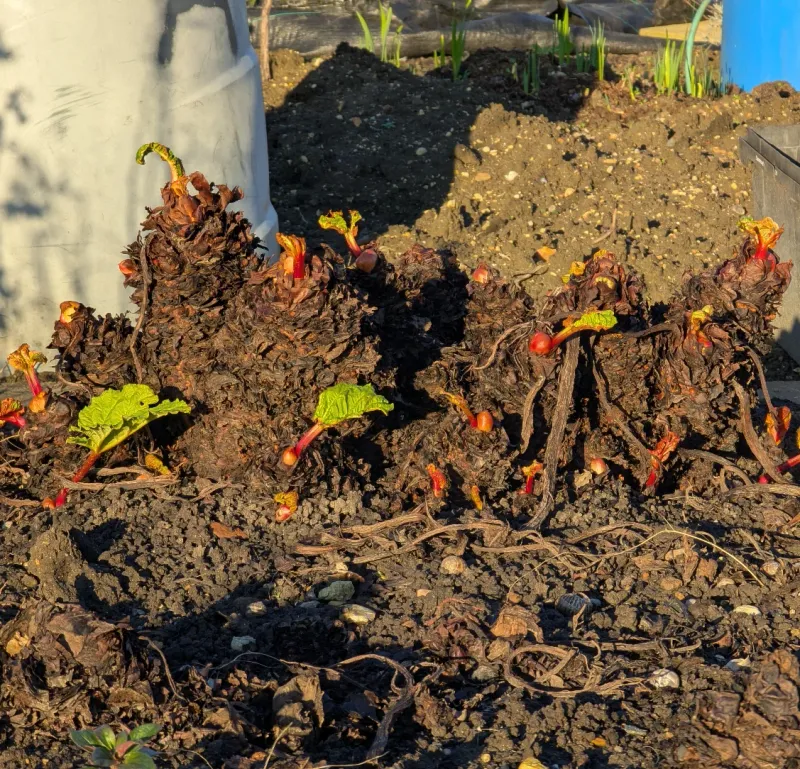
Michigan gardeners know that planting rhubarb crowns gives you a huge head start compared to sowing seeds.
Crowns are sections of mature root systems that already have buds ready to sprout, which means you can often harvest a few stalks by the second season.
Seeds, on the other hand, take much longer to develop into strong plants, and they don’t always produce the same stalk quality as their parent plants.
Buying crowns from a local nursery or a trusted neighbor ensures you’re getting varieties that perform well in Michigan’s climate. Look for crowns that feel firm and have at least one healthy bud visible on the surface.
Plant them in early spring as soon as the soil can be worked, setting each crown so the buds sit just below the soil line.
Crowns establish faster because they already have stored energy and a developed root network, allowing them to focus on leaf and stalk production right away.
This method also reduces the guesswork, since you know exactly what type of rhubarb you’re growing.
Whether you prefer deep red stalks or greener varieties, starting with crowns means less waiting and more consistent results, making it the go-to choice for gardeners who want reliable harvests without the extra fuss.
3. Choose Deep, Well-Draining Soil Rich In Organic Matter
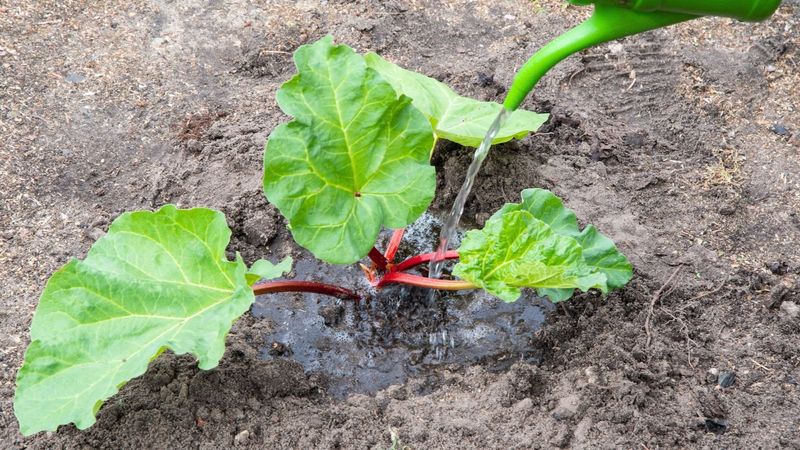
Rhubarb roots dive deep into the ground, sometimes reaching two feet or more as the plant matures, so they need soil that’s loose enough to accommodate that growth.
Heavy clay or compacted dirt restricts root expansion and can trap water around the crown, leading to rot during Michigan’s wet spring months.
Mixing in generous amounts of compost or aged manure before planting creates a fluffy, nutrient-rich environment that encourages strong development.
Organic matter does more than improve texture; it also feeds beneficial microbes that help break down nutrients into forms rhubarb roots can absorb.
A soil test can reveal pH levels, and rhubarb prefers a slightly acidic to neutral range, around 6.0 to 6.8. If your soil is too acidic, adding lime can bring it into balance, while sulfur can lower pH if needed.
Good drainage is essential because even a day or two of standing water can damage crowns and slow growth. Raised beds or gently sloped areas work well if your garden tends to stay soggy.
By investing time in soil preparation, you set up a foundation that supports thick, tender stalks and keeps plants productive for many seasons, making every effort worthwhile when harvest time arrives.
4. Give Rhubarb Plenty Of Space To Mature
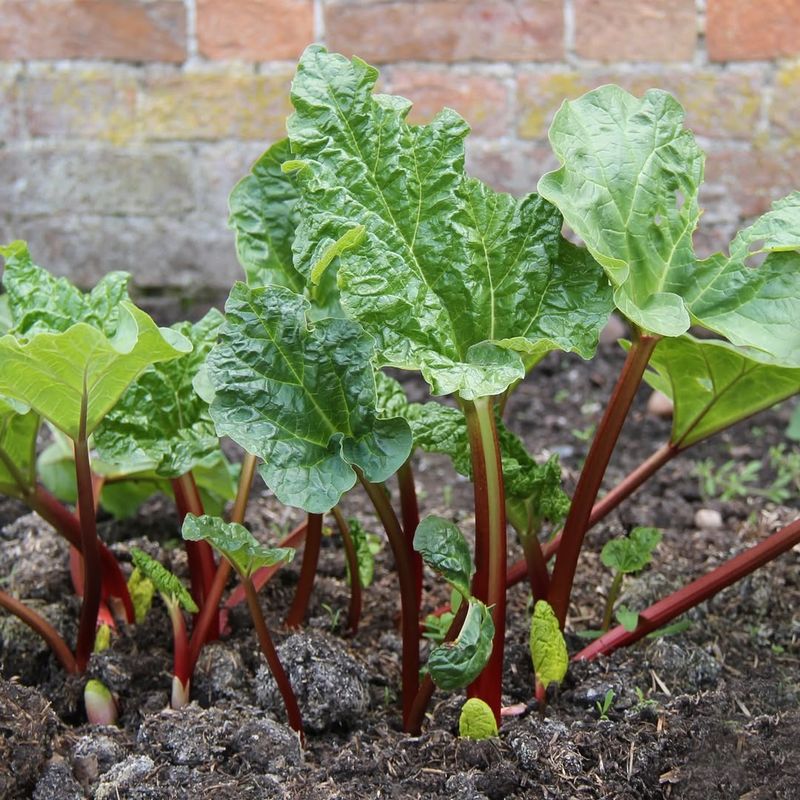
Crowding rhubarb plants is a common mistake that leads to disappointing harvests, because each crown needs room to spread its roots and push up large leaves.
When plants compete for nutrients and water, they produce thinner, less flavorful stalks that don’t have the robust texture you want for cooking.
Spacing crowns at least three to four feet apart in all directions gives each plant the territory it needs to reach full size.
Mature rhubarb can span three feet across, and the root system extends even farther underground, so planning ahead prevents overcrowding as plants age.
If you’re planting multiple rows, leave at least four feet between rows to make weeding and harvesting easier. This extra space also improves air circulation, reducing the risk of fungal problems that thrive in damp, crowded conditions.
Proper spacing pays off over the long term, because well-spaced plants develop thicker stalks and larger crowns that yield more harvestable stems each season.
You’ll also find it simpler to divide plants when the time comes, since there’s room to work without disturbing neighboring crowns.
Giving rhubarb the space it deserves transforms a cramped patch into a productive, easy-to-manage garden feature that delivers armloads of tart, delicious stalks year after year.
5. Mulch Heavily To Protect Roots And Retain Moisture
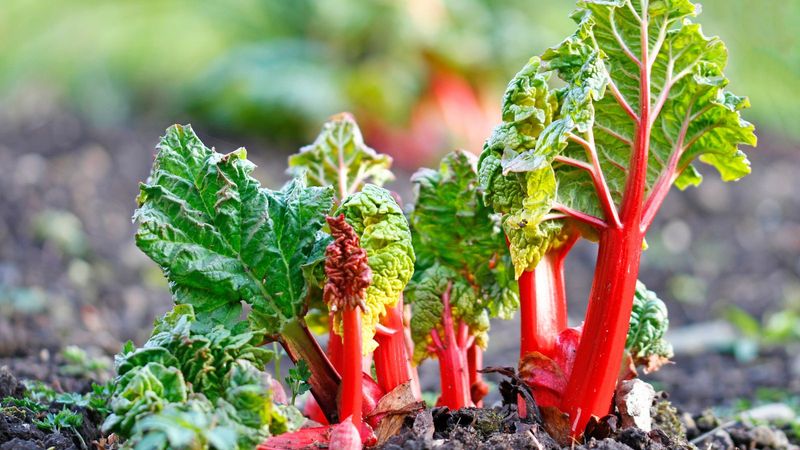
Applying a thick layer of mulch around rhubarb plants is one of the simplest ways to boost their health and productivity throughout the growing season.
Straw, shredded leaves, or compost spread three to four inches deep insulates the soil, keeping it cooler during hot stretches and warmer during chilly spring nights. This steady temperature helps roots stay active and encourages consistent stalk growth.
Mulch also acts as a moisture barrier, slowing evaporation and reducing the need for frequent watering, which is especially helpful during dry spells.
By keeping the soil surface covered, you suppress weed seeds that would otherwise compete for nutrients and water. Fewer weeds mean less time spent pulling them and more energy directed toward your rhubarb.
As organic mulch breaks down over time, it adds valuable nutrients back into the soil, enriching the root zone and supporting long-term plant vigor. Refresh the mulch layer each spring and again in fall to maintain its benefits.
This practice not only protects crowns from temperature swings but also creates a tidy, attractive garden bed that’s easier to manage.
Mulching is a small investment of time that pays off with healthier plants, bigger harvests, and less maintenance throughout the year.
6. Water Consistently, Especially In Late Spring
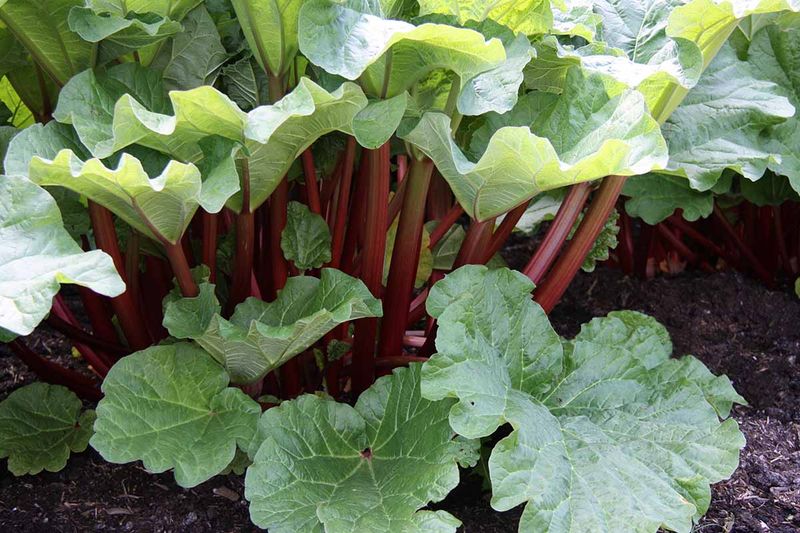
Late spring is prime time for rhubarb stalk formation, and steady moisture during this period makes all the difference between tough, stringy stems and tender, juicy ones.
Rhubarb plants draw heavily on soil water as they push up new growth, and even a few days of drought can slow development and reduce stalk quality.
Aim to provide about an inch of water per week, either from rainfall or supplemental irrigation. Drip irrigation or soaker hoses work beautifully because they deliver water directly to the root zone without wetting leaves, which can invite fungal issues.
Watering in the morning allows any splashed foliage to dry quickly, further reducing disease risk. Checking soil moisture a few inches down helps you gauge when it’s time to water, since the surface can look dry while deeper layers still hold plenty of moisture.
Consistent watering also supports leaf growth, and those large leaves are the powerhouse that fuels stalk production. If leaves wilt or turn brown at the edges, it’s a sign the plant is stressed and needs more water.
By keeping the soil evenly moist through late spring, you encourage rhubarb to produce stalks that are thick, crisp, and full of flavor, ready to star in your favorite recipes all season long.
7. Harvest Stalks Properly, Never Cut Them
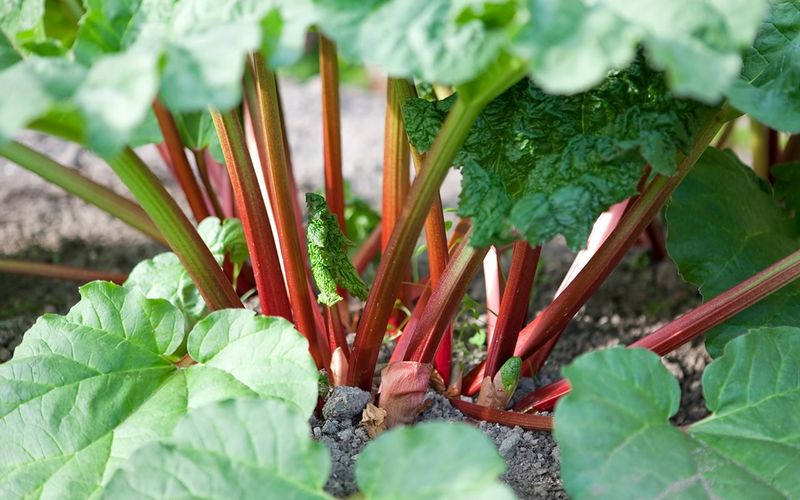
Many new gardeners reach for a knife or scissors when it’s time to harvest rhubarb, but cutting stalks leaves behind stubs that can rot and invite disease into the crown.
The correct method involves grasping a stalk firmly near its base, then twisting and pulling gently until it releases from the plant. This technique removes the entire stalk cleanly, leaving no tissue behind to decay.
Twisting also signals the plant to seal off the spot where the stalk was attached, reducing the chance of infection. You’ll feel the stalk pop free with a satisfying tug, and the crown remains intact and healthy.
Harvest only the thickest, most mature stalks, leaving smaller ones to continue growing and feeding the plant.
Timing matters, too, wait until stalks are at least ten inches long and have reached their full color before harvesting. Pulling too early results in thin, less flavorful stems, while waiting too long can make them woody.
By using the twist-and-pull method, you protect your rhubarb from unnecessary damage and ensure it stays productive for many years.
This simple technique is a hallmark of experienced Michigan gardeners who know that gentle handling leads to better harvests and healthier plants over the long haul.
8. Stop Harvesting By Early Summer
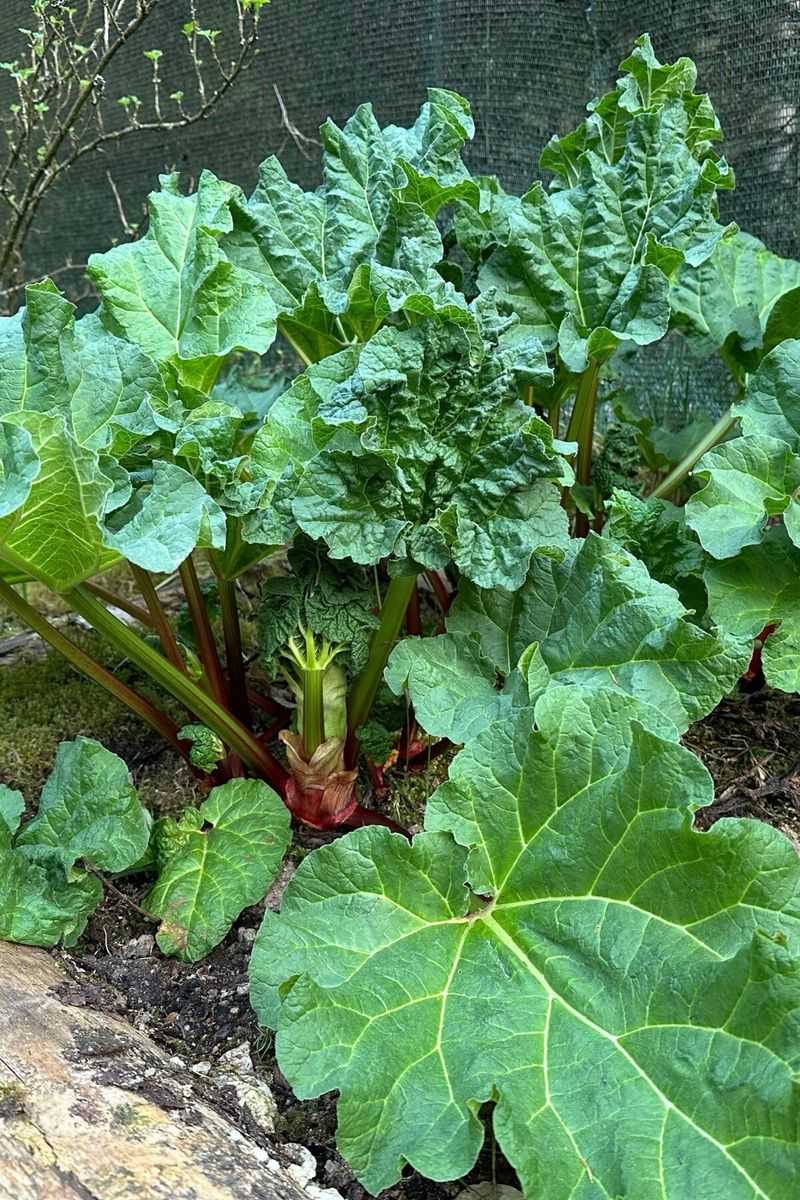
It’s tempting to keep picking those delicious stalks all summer long, but Michigan gardeners know that rhubarb needs time to recharge its energy reserves before winter arrives.
By early June, it’s wise to stop harvesting and let the plant focus on building up its crown and root system.
Those large leaves continue photosynthesizing through summer and fall, storing carbohydrates that fuel next spring’s growth.
Harvesting too late weakens the plant, leaving it vulnerable to stress and reducing stalk production the following year.
A good rule of thumb is to harvest for no more than eight to ten weeks, starting in late April or early May. This gives you plenty of time to enjoy fresh rhubarb while still allowing the plant to recover.
Leaving stalks on the plant after early summer also helps the crown expand, which leads to bigger, more abundant harvests in future seasons. If flower stalks appear, remove them promptly so the plant doesn’t waste energy on seed production.
By respecting rhubarb’s natural cycle and giving it a rest, you ensure it stays vigorous and productive for many years, rewarding your patience with thick, flavorful stalks every spring that are perfect for all your favorite recipes.
9. Divide Crowns Every Few Years For Bigger Harvests

Rhubarb crowns grow larger and more congested over time, and after four to five years, you’ll notice stalk production starts to decline as the plant becomes crowded.
Dividing the crown rejuvenates growth by giving each section more room and fresh soil to explore.
Early spring or late fall are the best times to divide, when the plant is dormant and less likely to suffer transplant shock.
Start by digging up the entire crown with a spade, then use a sharp knife or spade to cut it into sections, making sure each piece has at least one or two healthy buds.
Replant the divisions immediately, spacing them according to the guidelines mentioned earlier, and water them in well. The original planting hole can be refreshed with compost before replanting one of the divisions.
Dividing not only boosts stalk size and quantity but also gives you extra plants to share with friends or expand your own rhubarb patch.
Within a season or two, each division will establish itself and start producing thick, tender stalks again.
This simple maintenance task keeps your rhubarb bed productive and prevents the slow decline that happens when crowns become overcrowded, ensuring you enjoy abundant harvests for decades to come.