Georgia Native Plants To Plant In April
Warm soil, longer days, and regular spring rain all come together in Georgia right about now, creating one of the easiest planting windows of the year.
Gardens start filling in quickly, and new plants have a chance to settle before the heavier heat arrives across much of the state.
This is where native plants really stand out. Georgia’s climate can be demanding, with humid summers and changing soil conditions across regions, but native species are already adapted to handle those shifts with far less effort.
They also play a bigger role in supporting local wildlife and pollinators.
Some of these plants establish faster than expected and keep going with very little attention, and a few of them tend to become favorites once you see how they handle Georgia conditions in real garden settings.
1. Oakleaf Hydrangea With Its Bold Leaves
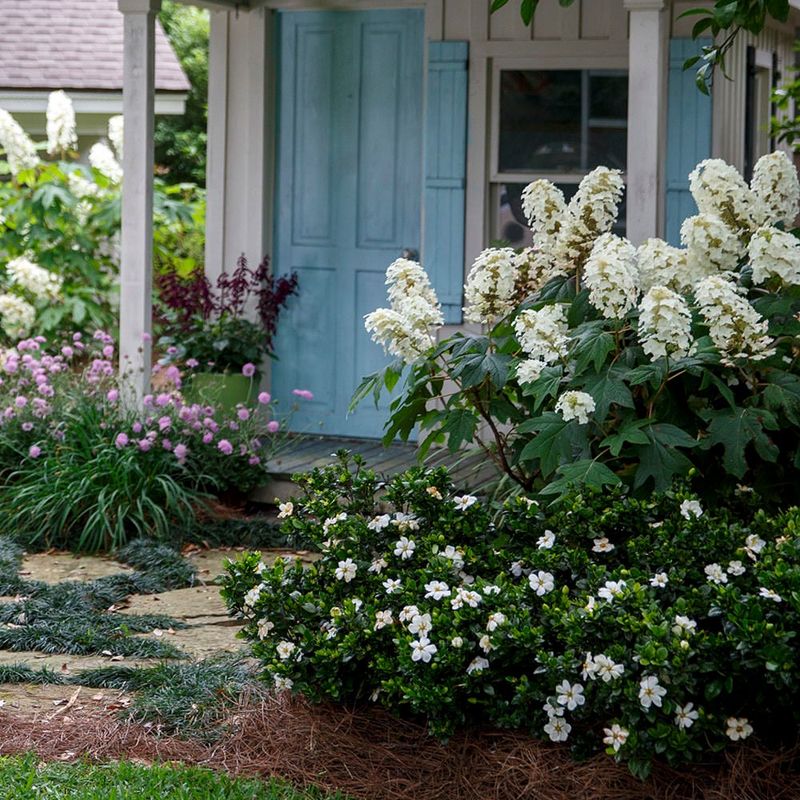
Few shrubs make as bold a statement in a Georgia garden as the Oakleaf Hydrangea. Native to the southeastern United States, this stunning shrub earns its name from its large, deeply lobed leaves that look remarkably like oak leaves.
In April, it begins putting on new growth, making it the perfect time to get one established in your yard.
Oakleaf Hydrangeas produce large, cone-shaped clusters of white flowers that can stretch up to a foot long. These blooms appear in late spring and early summer, but the show does not stop there.
By fall, the flower heads turn a beautiful papery tan or pinkish color, and the leaves shift to shades of deep red and orange.
This plant loves partial shade, which makes it ideal for spots under tall trees or along the north side of a building. It tolerates Georgia’s summer heat and humidity surprisingly well.
The bark peels attractively in winter, giving the plant year-round visual interest. Plant it in well-drained, slightly acidic soil and give it room to spread, since mature shrubs can reach six to eight feet wide.
Birds love to shelter in its dense branches.
2. American Beautyberry Covered In Bright Purple Berries
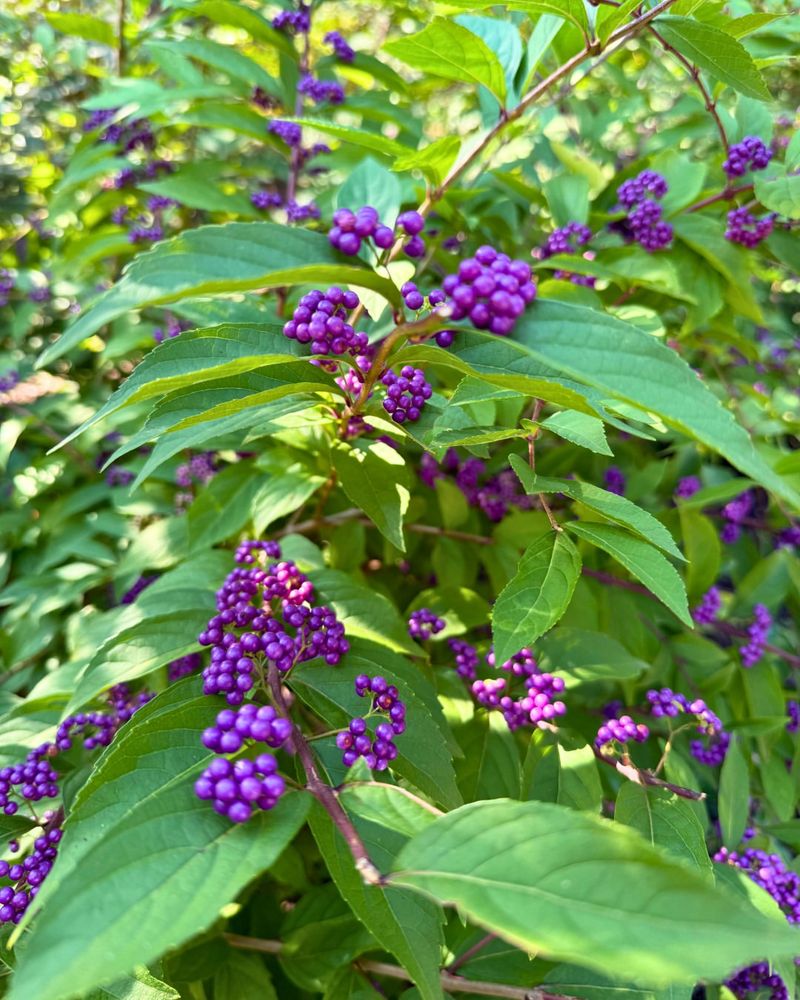
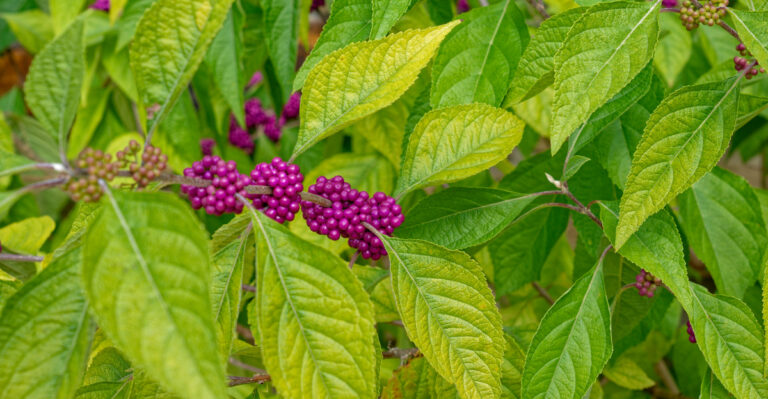
Walk through any Georgia woodland in late summer and you might spot clusters of the most vivid purple berries you have ever seen. That is American Beautyberry, one of Georgia’s most eye-catching native shrubs.
April is a great month to plant it because the roots have the whole warm season to establish before the berry show begins.
American Beautyberry grows quickly and can reach six to eight feet tall with graceful, arching branches. The berries appear in tight clusters that wrap directly around the stems, creating a look unlike almost any other plant in the garden.
Birds, including mockingbirds and robins, absolutely love feasting on these berries during fall and winter.
One of the best things about this shrub is how low-maintenance it truly is. It grows well in full sun to partial shade and handles Georgia’s clay soils with ease.
You can cut it back hard in late winter and it will bounce right back with fresh, vigorous growth. The leaves are large and slightly rough with a pleasant fragrance when brushed.
Plant it near a patio or walkway so you can enjoy both its bold summer foliage and its spectacular fall berry display up close.
3. Native Azaleas Lighting Up Spring With Soft Blooms
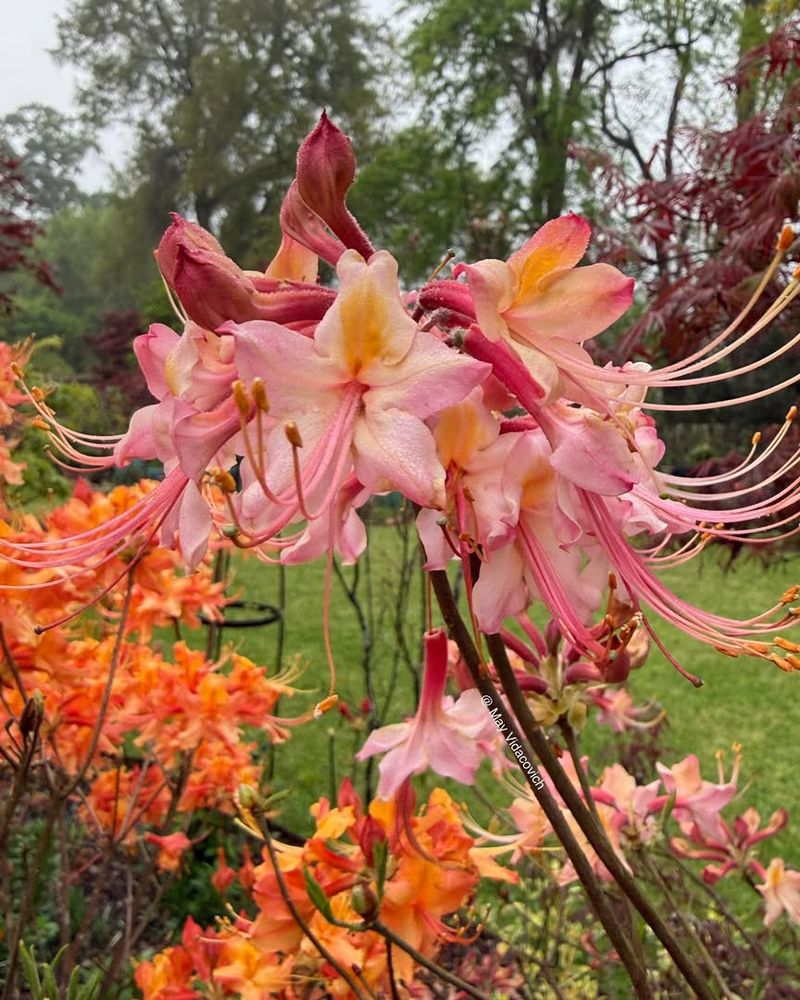
Georgia is home to some of the most spectacular native azaleas found anywhere in North America. Unlike the common evergreen azaleas you see lining suburban driveways, Georgia’s native azaleas are deciduous and carry a wild, natural charm that is hard to match.
April is prime planting time, with several species like the Florida Azalea and Oconee Azalea bursting into bloom right around this time.
Native azaleas come in a wonderful range of colors, from soft white and pale pink to fiery orange and deep red. Many are also sweetly fragrant, which is a bonus you do not always get with the common nursery varieties.
Hummingbirds and butterflies are drawn to their tubular flowers, making them a fantastic choice for wildlife gardeners across Georgia.
These shrubs prefer partial shade and moist, well-drained, acidic soil, which is exactly what you find under Georgia’s pine and oak trees. Avoid planting them in heavy clay without amending the soil first.
Give them space to grow naturally since they look best when allowed to take their natural shape rather than being pruned into tight balls. With a little patience, native azaleas reward Georgia gardeners with a breathtaking spring display year after year.
4. Coral Honeysuckle Climbing With Pollinator Friendly Flowers
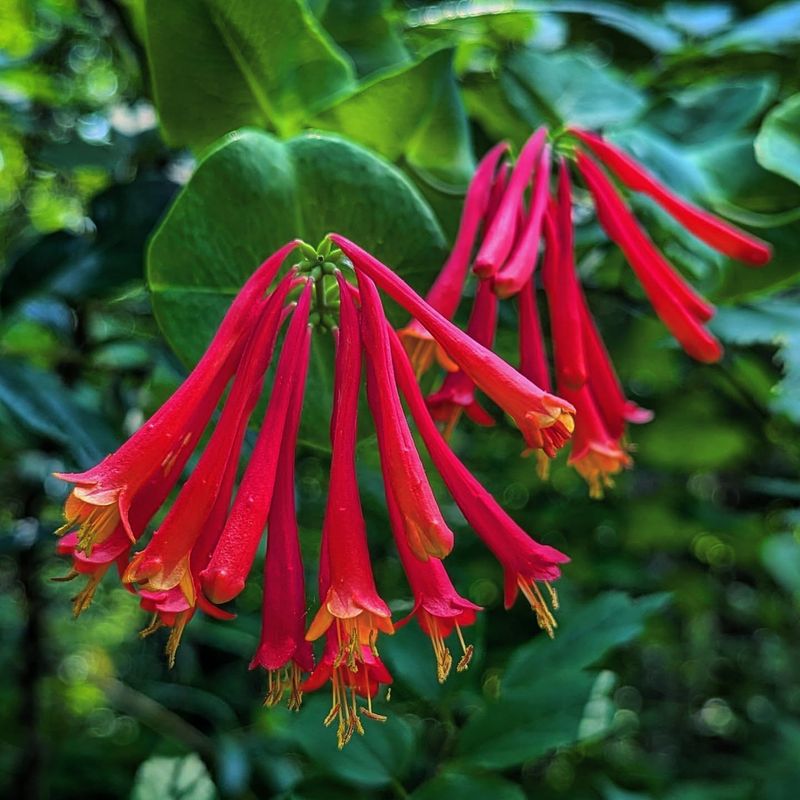
If you have a fence, trellis, or mailbox post that needs dressing up, Coral Honeysuckle is your answer. This native vine produces gorgeous clusters of tubular red and orange flowers that hummingbirds simply cannot resist.
Unlike its invasive cousin, Japanese Honeysuckle, this Georgia native plays nicely in the garden and will not take over your yard.
Coral Honeysuckle begins blooming in spring and often continues producing flowers well into fall, giving you months of color and wildlife activity. The flowers are followed by small red berries that songbirds like finches and thrushes love to snack on.
The semi-evergreen leaves stay on the vine through mild Georgia winters, providing some year-round coverage.
Plant it in full sun to partial shade in well-drained soil and give it something sturdy to climb. It grows at a moderate pace and typically reaches ten to twenty feet in length at maturity.
Established plants are quite drought-tolerant, which is a real advantage during Georgia’s hot, dry summers. Coral Honeysuckle works beautifully as a privacy screen, a garden focal point, or even as a ground cover on slopes.
It is one of the most rewarding native vines you can add to a Georgia garden this April.
5. Crossvine Spreading Fast With Fiery Orange Blooms
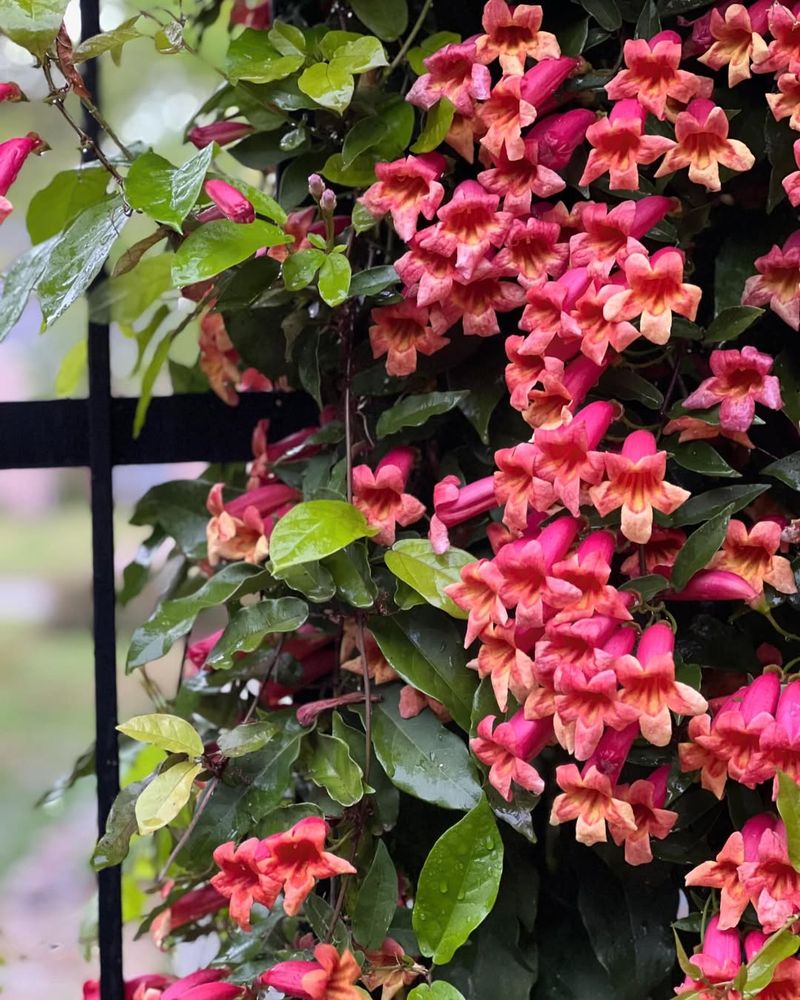
Crossvine is one of those plants that stops people in their tracks when it is in full bloom. Named for the cross-shaped pattern you see when you cut through its stem, this native vine produces big, bold trumpet flowers in shades of orange, red, and yellow.
April marks the beginning of its main bloom season, making it a showstopper right when you plant it.
This vigorous climber can reach thirty feet or more, so it is ideal for covering large structures like pergolas, fences, or the sides of buildings. It uses tendrils and adhesive discs to grip surfaces, meaning it can climb brick or wood without needing extra support.
Hummingbirds are especially fond of its nectar-rich flowers, and you will likely see them hovering around your Crossvine all spring long.
Crossvine is semi-evergreen in Georgia, holding onto most of its leaves through the mild winters the state often experiences. It thrives in full sun to partial shade and adapts well to a range of soil types, including Georgia’s sometimes tricky clay.
Once established, it is remarkably drought-tolerant. For the most impressive flower display, plant it where it will receive at least six hours of direct sunlight each day.
It is a truly bold and beautiful native choice for Georgia landscapes.
6. Butterfly Weed Essential For Monarchs In Summer
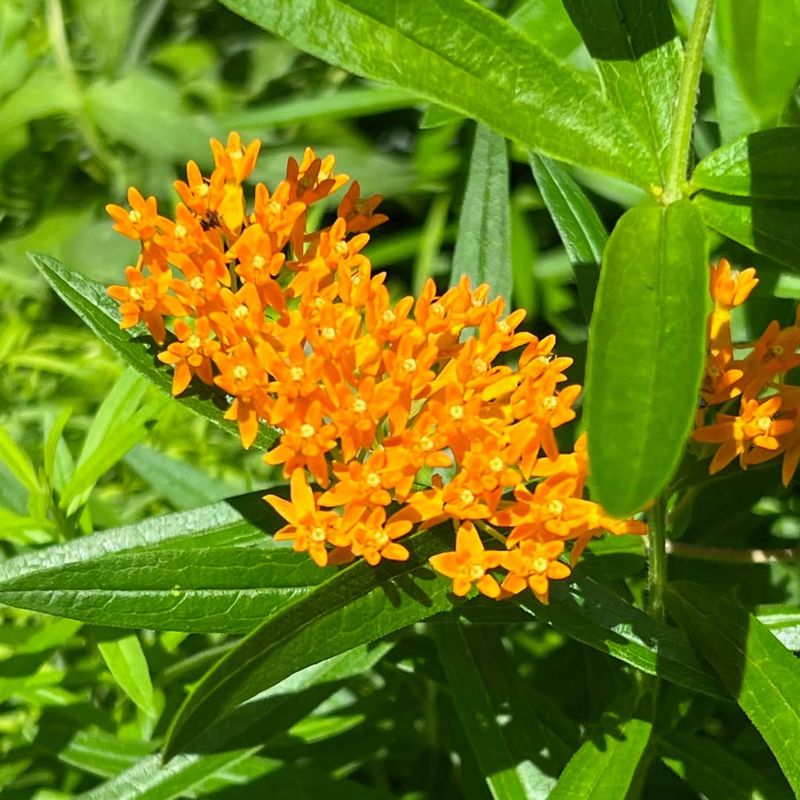
Bright, bold, and absolutely beloved by butterflies, Butterfly Weed is one of Georgia’s most celebrated native wildflowers. It belongs to the milkweed family, which means it serves as a critical host plant for monarch butterfly caterpillars.
Planting it in April gives it plenty of time to establish and bloom by midsummer, just when monarchs are on the move through Georgia.
Unlike many milkweeds, Butterfly Weed produces much less milky sap than other species, though it can still release some latex when stems or leaves are damaged. Its stems and leaves are a bit firmer and less floppy, making it a tidier choice for garden beds.
The flowers are a vivid orange that practically glows in the sun, and they attract not just monarchs but also swallowtails, fritillaries, and many species of native bees.
This plant is a champion of tough conditions. It thrives in full sun and actually prefers dry, sandy, or rocky soils where many other plants struggle.
Heavy clay or overly wet soil is its main enemy, so make sure drainage is good before planting. Once established, Butterfly Weed is extremely drought-tolerant, which suits Georgia’s summer weather perfectly.
It grows one to two feet tall and looks wonderful planted in drifts or mixed with other native wildflowers like Black-Eyed Susan and Purple Coneflower for a vibrant pollinator garden.
7. Black-Eyed Susan Filling Beds With Golden Color
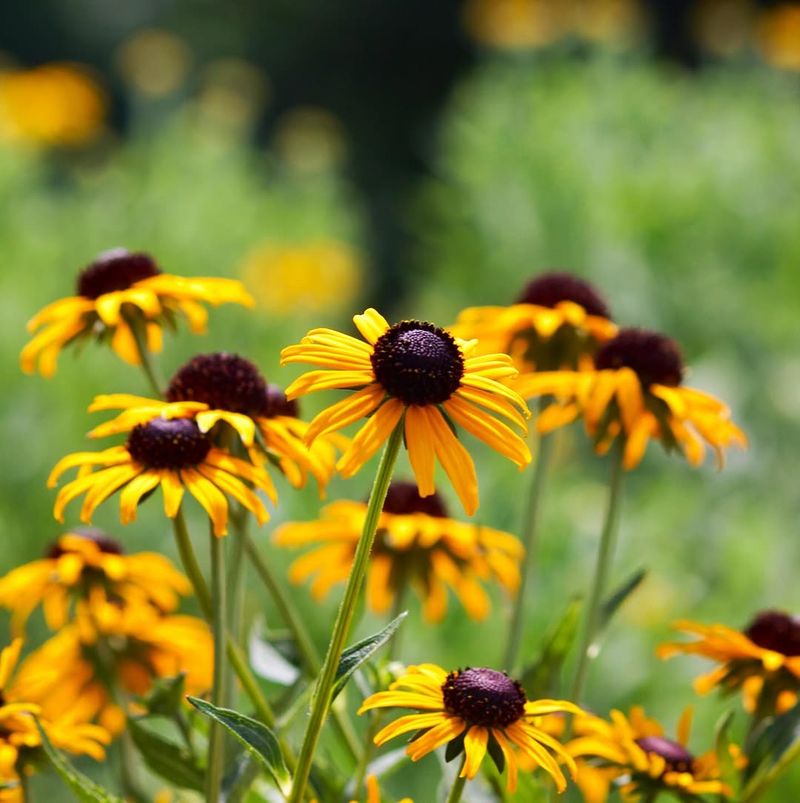
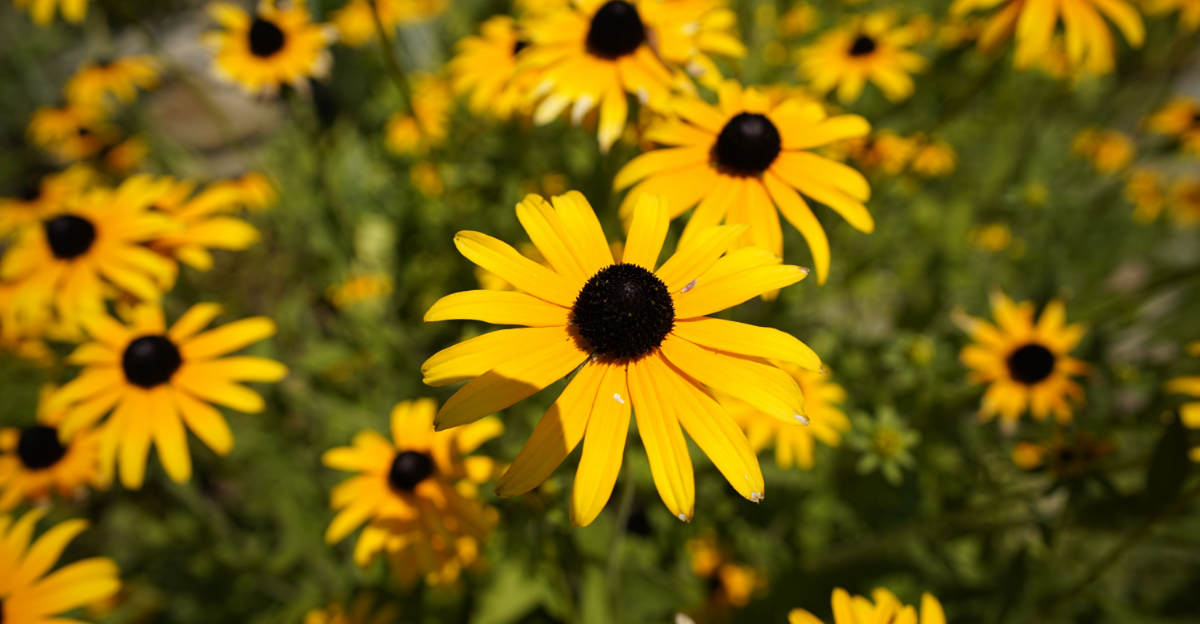
There is something undeniably cheerful about a patch of Black-Eyed Susans. Their bright golden-yellow petals surrounding a rich chocolate-brown center look like tiny suns scattered across the garden.
Native to Georgia and much of the eastern United States, these wildflowers are incredibly easy to grow and absolutely wonderful for pollinators.
April is a smart time to plant Black-Eyed Susans in Georgia because the warm soil encourages strong root development before the summer heat kicks in. They bloom from late spring through early fall, giving you months of color.
Bees, butterflies, and even goldfinches are frequent visitors, with birds feeding on the seed heads as flowers fade in late summer and fall.
Black-Eyed Susans love full sun and well-drained soil. They handle heat and drought with remarkable toughness once established, making them perfectly suited to Georgia’s climate.
You can grow them from seed or transplants, and they tend to spread naturally over time, filling in bare spots and creating lush, naturalistic drifts of color. They pair beautifully with Purple Coneflower and Butterfly Weed in a pollinator garden.
These plants also make excellent cut flowers, so you can bring some of that Georgia sunshine right into your home during the blooming season.
8. Purple Coneflower Supporting Pollinators All Season
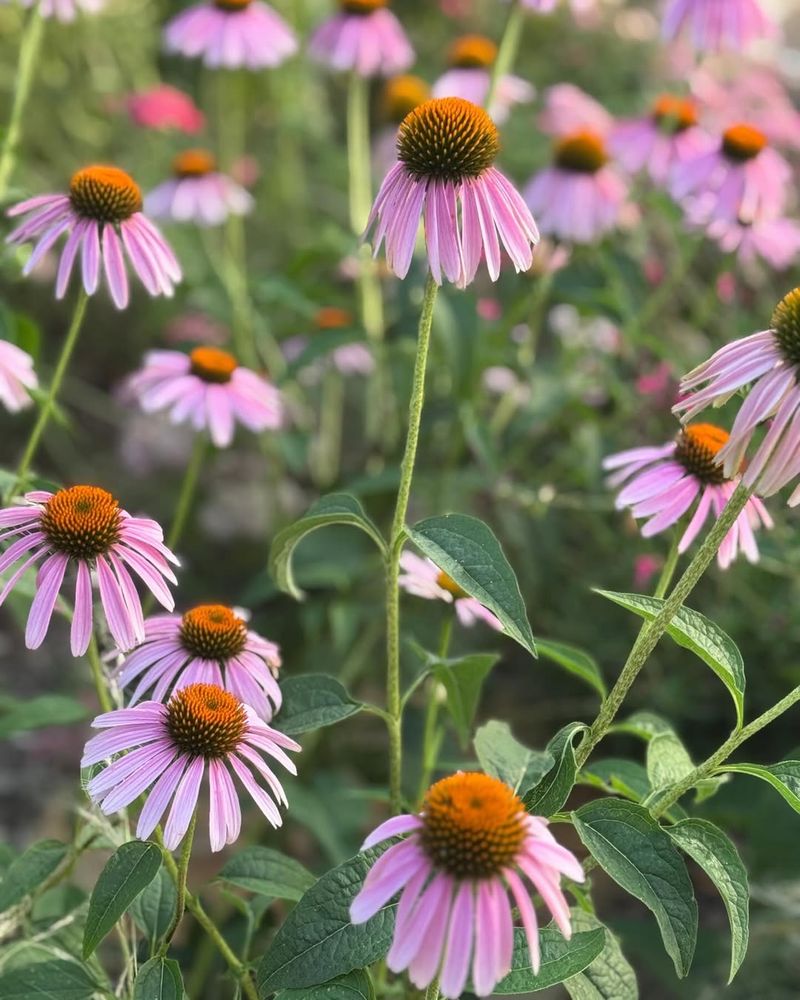
Ask any Georgia native plant gardener for their top recommendations and Purple Coneflower will almost certainly make the list. This tough, beautiful wildflower has been a garden favorite for generations, and for good reason.
Its rosy-purple petals surrounding a spiky, cone-shaped center are both striking and instantly recognizable, blooming from early summer through early fall.
April planting gives Purple Coneflower a strong head start so it can produce an impressive show by June. Pollinators go absolutely wild for it.
Bees, butterflies, and hummingbirds visit the flowers constantly during bloom time, and once the petals drop, goldfinches and other seed-eating birds flock to the spiky seed heads throughout fall and winter. Leaving the seed heads standing through the colder months provides valuable food for wildlife.
Purple Coneflower is remarkably adaptable across Georgia’s varied landscapes, from the mountains in the north to the coastal plain in the south. It grows best in full sun with well-drained soil and becomes very drought-tolerant once its roots are established.
It reaches two to four feet tall and looks stunning planted in large groups or mixed borders. It also has a long history of medicinal use among Native American communities, which adds a fascinating layer of cultural depth to this already impressive plant.
9. Eastern Redbud Bursting With Early Pink Blooms
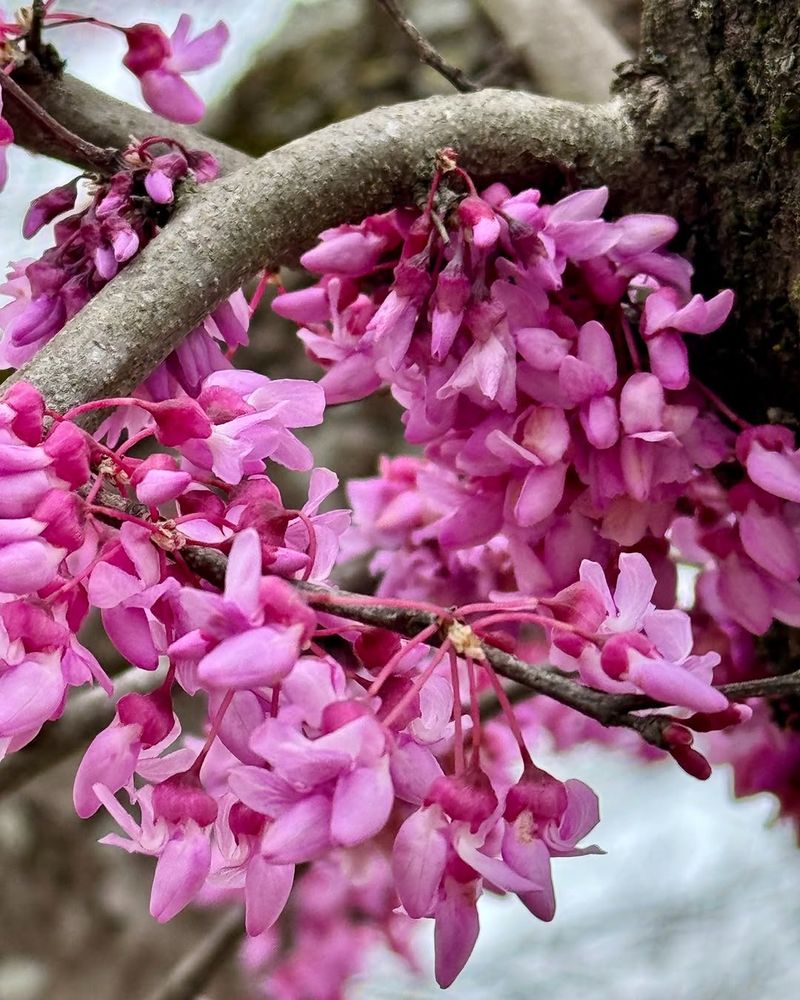
Every spring in Georgia, the Eastern Redbud puts on one of the most magical flower shows of any native tree. Before a single leaf unfurls, the entire tree erupts in clusters of tiny, vivid pink-purple flowers that coat every branch from tip to trunk.
It is a sight that makes drivers slow down and neighbors stop to ask what that stunning tree is.
April is an ideal time to plant an Eastern Redbud because the tree is just finishing its bloom cycle and shifting energy into root growth. It is a relatively small tree, typically reaching twenty to thirty feet tall, which makes it perfect for residential yards in Georgia where space can be limited.
The heart-shaped leaves that follow the flowers are attractive all summer long, and in fall they turn a warm yellow.
Eastern Redbud adapts well to a variety of soil types found across Georgia, including clay-heavy soils that challenge many other trees. It grows well in full sun to partial shade and is quite drought-tolerant once established.
Native bees are among the first pollinators to take advantage of its early spring flowers, making it an ecologically valuable addition to any Georgia landscape. Plant it as a specimen tree, along a driveway, or at the edge of a woodland garden for maximum impact.
10. Flowering Dogwood Adding Classic Spring Beauty
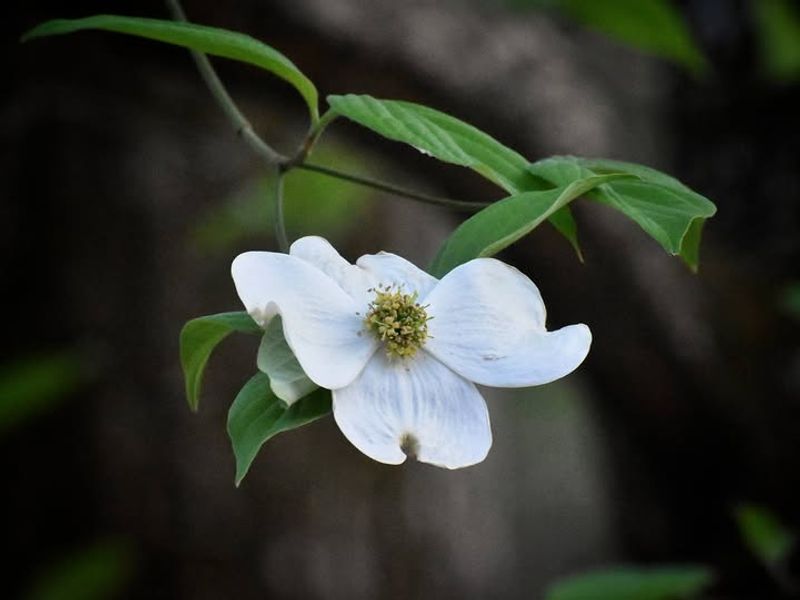
No list of Georgia native plants would be complete without the Flowering Dogwood. It is arguably the most beloved native tree in the entire southeastern United States, and Georgians have a special connection to it.
In April, Flowering Dogwoods are at their absolute peak, covered in large, showy white or pink bracts that look like four-petaled flowers surrounding a cluster of tiny true blooms at the center.
Beyond its jaw-dropping spring display, Flowering Dogwood gives you something special in every season. Summer brings glossy green leaves that cast light, dappled shade.
Fall transforms the tree with brilliant red foliage and clusters of bright red berries that over forty species of birds eat, including bluebirds, robins, and cedar waxwings. Winter reveals an elegant branching structure that stands out beautifully against a pale sky.
Flowering Dogwood grows best in partial shade with moist, well-drained, acidic soil, which is very common throughout Georgia’s piedmont and mountain regions. It typically reaches fifteen to twenty-five feet tall, making it a great choice for smaller yards.
Avoid planting it in areas with poor drainage or heavy foot traffic near the trunk. With proper care, a Flowering Dogwood planted this April in Georgia will reward you with decades of breathtaking seasonal beauty.