10 Golden Foliage Shrubs That Illuminate Oregon Gardens
In Oregon, gardens shine brightest when layers of color, texture, and light work together to create a vibrant landscape.
Golden foliage shrubs are the secret ingredient that brings warmth and radiance even on cloudy Pacific Northwest days.
Their sun-kissed leaves stand out against green backdrops, catching the eye and adding a sense of cheer to any garden bed or border.
Golden-leaved shrubs do more than brighten spaces.
They act as natural highlights, framing paths, anchoring corners, and creating contrast that makes flowers, perennials, and groundcovers pop.
Sunlight bouncing off rich yellow or golden tones can turn ordinary landscapes into lively, dynamic scenes that feel thoughtfully designed.
In Oregon’s long growing season, these shrubs hold their color and structure, making them dependable focal points that work year after year.
Choosing golden foliage shrubs is like adding brushstrokes of sunshine to the garden.
They thrive in Oregon soil, handle seasonal weather swings, and provide low-maintenance impact.
A few well-placed golden shrubs can transform ordinary plots into vibrant gardens, adding dimension, warmth, and visual intrigue that draw the eye and lift the spirit of anyone wandering through.
1. Golden Barberry (Berberis Thunbergii ‘Aurea’)
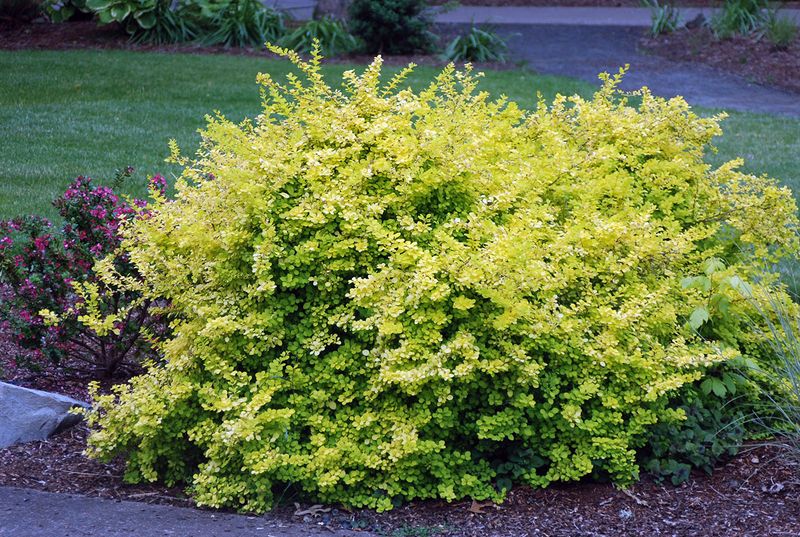
Compact and cheerful, this shrub brings buttery yellow leaves that practically glow in spring and early summer.
Golden barberry reaches about three to four feet tall and wide, making it perfect for smaller Oregon garden spaces where you need impact without overwhelming nearby plants.
The rounded shape requires almost no pruning to look tidy and well-maintained.
This variety loves full sun to partial shade, though the golden color intensifies with more sunlight exposure.
In shadier Oregon garden spots, the foliage takes on a softer lime-green tone that still provides beautiful contrast.
The leaves transition to orange and red shades in fall, giving you multiple seasons of interest from one tough little plant.
Drought tolerance develops once established, which helps during Oregon’s dry summer months when water restrictions might limit irrigation.
Small thorns along the stems discourage deer browsing, a helpful feature in many Oregon neighborhoods where these animals wander through yards.
Golden barberry pairs wonderfully with purple-leafed plants like heuchera or with blue-flowering perennials that make the yellow foliage pop even brighter.
Plant it along walkways, in mixed borders, or as a low informal hedge that adds sunshine without blocking views.
This shrub handles our wet winters without complaint and bounces back quickly each spring with fresh golden growth.
2. Gold Mop Falsecypress (Chamaecyparis Pisifera ‘Gold Mop’)
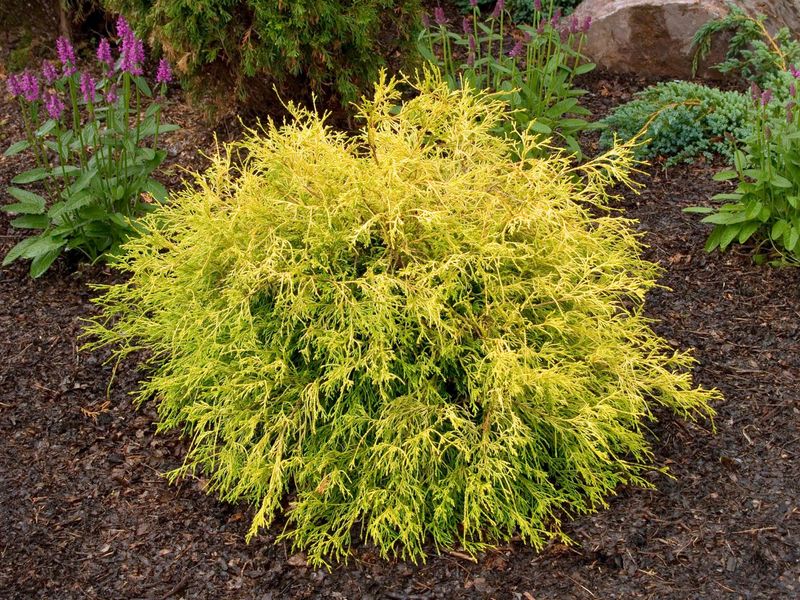
Soft threadlike foliage cascades in a mounded form that resembles a golden waterfall frozen in time.
This evergreen conifer keeps its bright color all year long, providing constant sunshine even during Oregon’s gray winter months.
The texture feels soft to the touch, almost feathery, creating wonderful contrast against broader-leafed plants in mixed garden beds.
Growing slowly to about three feet tall and slightly wider, Gold Mop falsecypress fits beautifully into foundation plantings or rock gardens throughout Oregon.
The golden-yellow color deepens slightly in cooler weather, taking on richer amber tones that complement fall and winter garden palettes.
Because it stays relatively small, this shrub works well in container plantings on patios or near entryways where you want year-round color.
Partial shade to full sun both work fine, though afternoon shade in hotter inland Oregon areas prevents any foliage browning during summer heat waves.
Well-drained soil matters more than anything else for this plant’s long-term health.
Avoid planting in spots where water pools after heavy rains, as soggy roots can cause problems.
Pair Gold Mop with burgundy-leafed Japanese maples or with blue spruce for stunning color combinations that look professionally designed.
The mounding habit means zero pruning requirements, making this one of the easiest golden shrubs you can grow in Oregon gardens.
3. Sunshine Ligustrum (Ligustrum Sinense ‘Sunshine’)
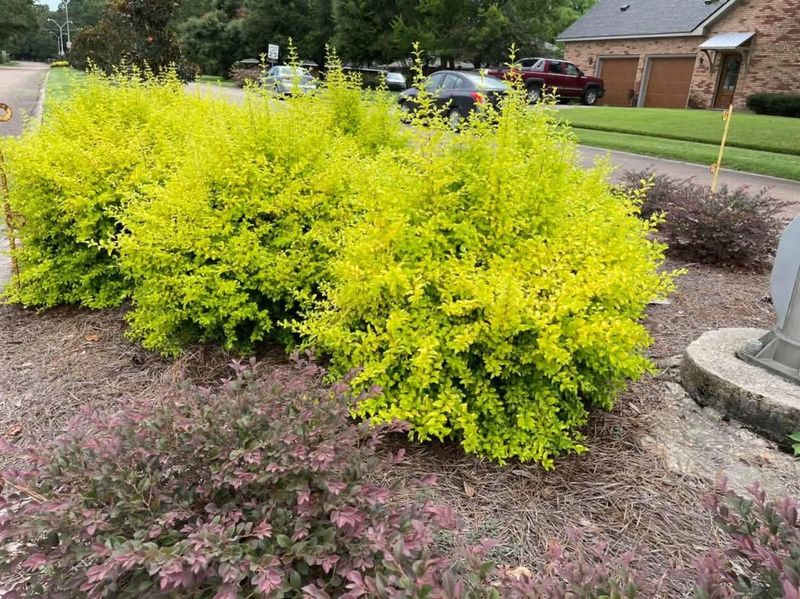
Bright chartreuse leaves emerge in spring like little bursts of neon light, gradually maturing to golden-yellow as the season progresses.
This semi-evergreen shrub keeps most of its foliage through mild Oregon winters, though it may drop some leaves during particularly cold snaps.
The upright spreading habit creates a fountain-like silhouette that adds movement and grace to garden beds.
Reaching four to six feet tall with similar spread, Sunshine ligustrum works beautifully as a specimen plant or grouped in threes for bigger impact.
The color stays vibrant in both sun and partial shade, making it versatile for different garden locations around Oregon properties.
New growth continues pushing out through summer, keeping the plant looking fresh and lively rather than tired by season’s end.
Fragrant white flower clusters appear in late spring, attracting beneficial pollinators to Oregon gardens and adding sweet scent near outdoor seating areas.
After flowers fade, small blue-black berries develop that birds appreciate during fall migration.
Pruning flexibility means you can shape this shrub formally or let it grow naturally with minimal intervention.
Drought tolerance once established makes Sunshine ligustrum practical for water-wise Oregon landscapes.
Pair it with dark green evergreens to make the golden foliage stand out dramatically, or combine it with pink-flowering shrubs for a cottage garden feel that looks effortlessly beautiful throughout the growing season.
4. Golden Spirea (Spiraea Japonica ‘Goldflame’)
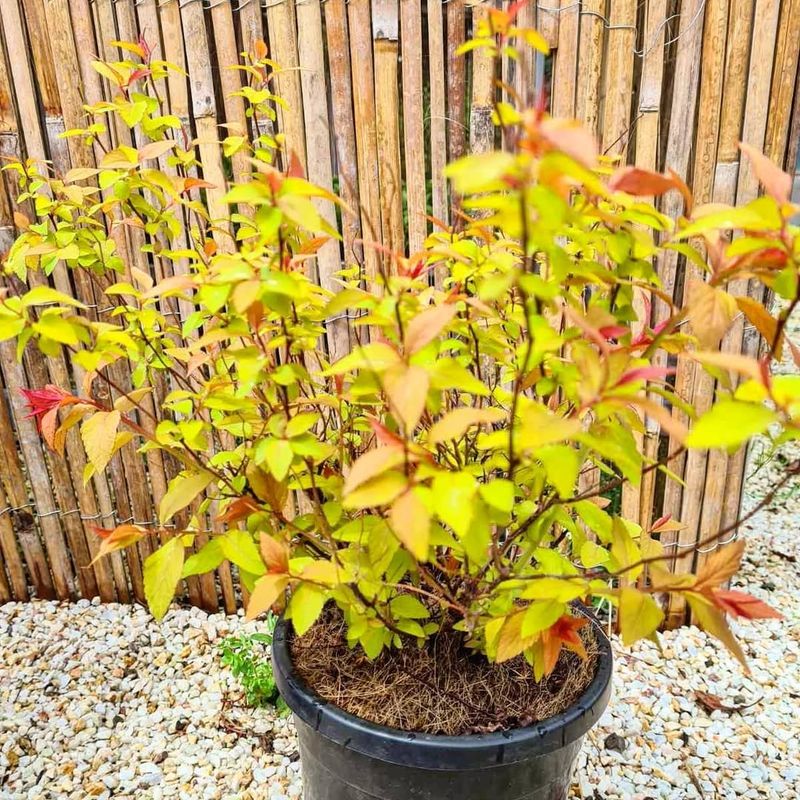
Few shrubs deliver such dramatic color changes through the seasons as Goldflame spirea does in Oregon gardens.
New spring growth emerges in shades of bronze-red and orange before shifting to bright golden-yellow, then finishing summer with lime-green tones.
Pink flower clusters top the foliage in early summer, creating a beautiful two-toned effect that catches every eye.
This deciduous shrub grows two to three feet tall and wide, staying compact enough for front-of-border positions or foundation plantings near low windows.
The mounding habit requires little to no pruning, though you can trim spent flowers to encourage a second lighter bloom flush.
Goldflame spirea handles Oregon’s climate beautifully, tolerating both our wet winters and drier summers without special attention.
Full sun brings out the most intense golden coloring, though the plant adapts to partial shade with slightly softer tones.
Deer usually leave it alone, making this shrub reliable in neighborhoods where browsing animals cause problems for other plants.
The fine-textured foliage creates nice contrast with bold-leafed perennials like hostas or with ornamental grasses that add movement.
Consider planting Goldflame spirea along walkways where you’ll appreciate the changing colors up close throughout the growing season.
It also works wonderfully in mass plantings where the collective golden glow creates real visual impact across larger Oregon landscape areas that need brightening up.
5. Golden Privet (Ligustrum × Vicaryi)
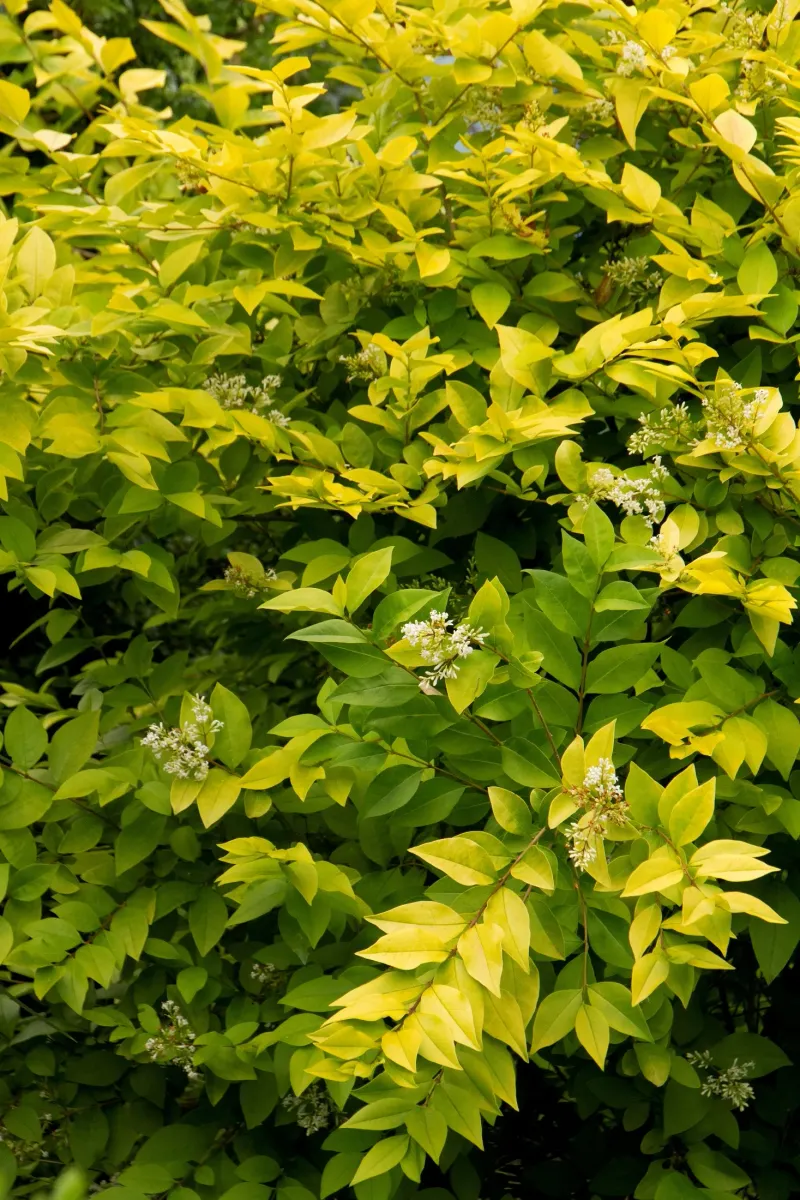
Bold golden-yellow leaves create an almost tropical look despite this shrub’s cold-hardy nature that handles Oregon winters perfectly.
Golden privet grows vigorously, reaching six to eight feet tall if left unpruned, but it responds beautifully to shearing for formal hedges or topiary shapes.
The semi-evergreen foliage persists through mild winters, giving structure to Oregon gardens even during dormant months.
Dense branching from ground level makes this shrub excellent for privacy screening or property line plantings where you want color along with function.
The golden foliage brightens shaded fence lines or north-facing walls that might otherwise feel dark and uninviting.
White flowers appear in early summer with a sweet fragrance that fills nearby garden areas, though some gardeners find the scent too strong for close proximity to windows or outdoor living spaces.
Full sun to partial shade both work well, with sunnier spots producing the most vivid golden tones.
Once established, golden privet tolerates drought conditions that often challenge other shrubs during Oregon’s dry summer stretch.
Fast growth means you’ll see results quickly when using this plant to fill spaces or create screening.
Pair golden privet with dark evergreens like yew or with purple-leafed plants for stunning contrast that looks intentional and sophisticated.
Regular shearing keeps the size manageable and promotes dense branching that makes the golden color appear even more intense throughout the growing season in Oregon landscapes.
6. Golden Ninebark (Physocarpus Opulifolius ‘Dart’s Gold’)
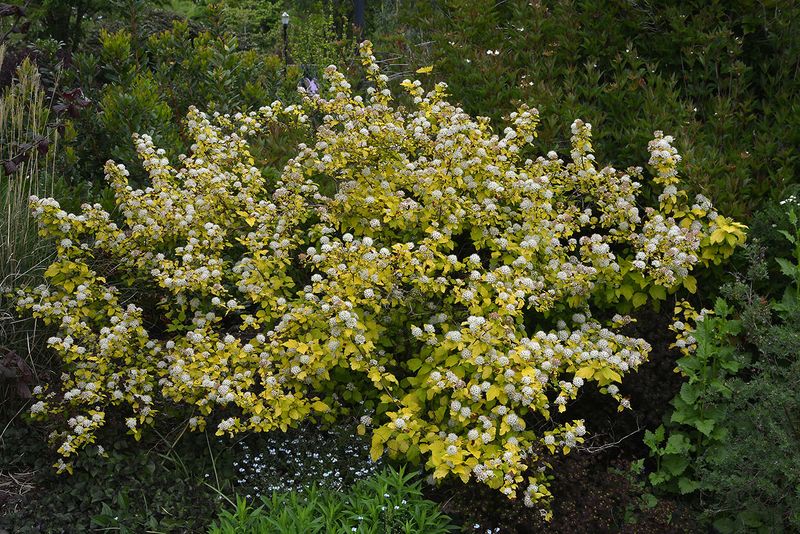
Native plant enthusiasts love this North American shrub that combines golden foliage with exceptional toughness and wildlife value.
Dart’s Gold ninebark grows five to six feet tall with an upright arching habit that adds vertical interest to Oregon garden beds.
The bright yellow leaves hold their color well through summer heat, unlike some golden shrubs that fade to green as temperatures rise.
Clusters of small white to pale pink flowers cover the branches in late spring, attracting native bees and other pollinators important to Oregon’s ecosystem.
After flowering, interesting seed heads develop that persist into winter, providing food for birds and adding textural interest when many other plants look bare.
Exfoliating bark on mature stems peels in thin strips, revealing cinnamon-colored layers underneath that add winter appeal.
This shrub handles a wide range of growing conditions, from full sun to partial shade and from moist to somewhat dry soils once established.
Deer resistance makes Dart’s Gold ninebark practical for Oregon properties where browsing animals limit plant choices.
The vigorous growth and dense branching create excellent informal hedges or background plantings in mixed borders.
Combine golden ninebark with purple-leafed varieties of the same species for dramatic two-toned hedge effects, or plant it alongside blue-flowering perennials that make the yellow foliage shine even brighter.
Minimal maintenance requirements and adaptability to Oregon’s climate make this shrub a smart choice for busy gardeners who want beauty without constant fussing.
7. Golden Elderberry (Sambucus Racemosa ‘Sutherland Gold’)
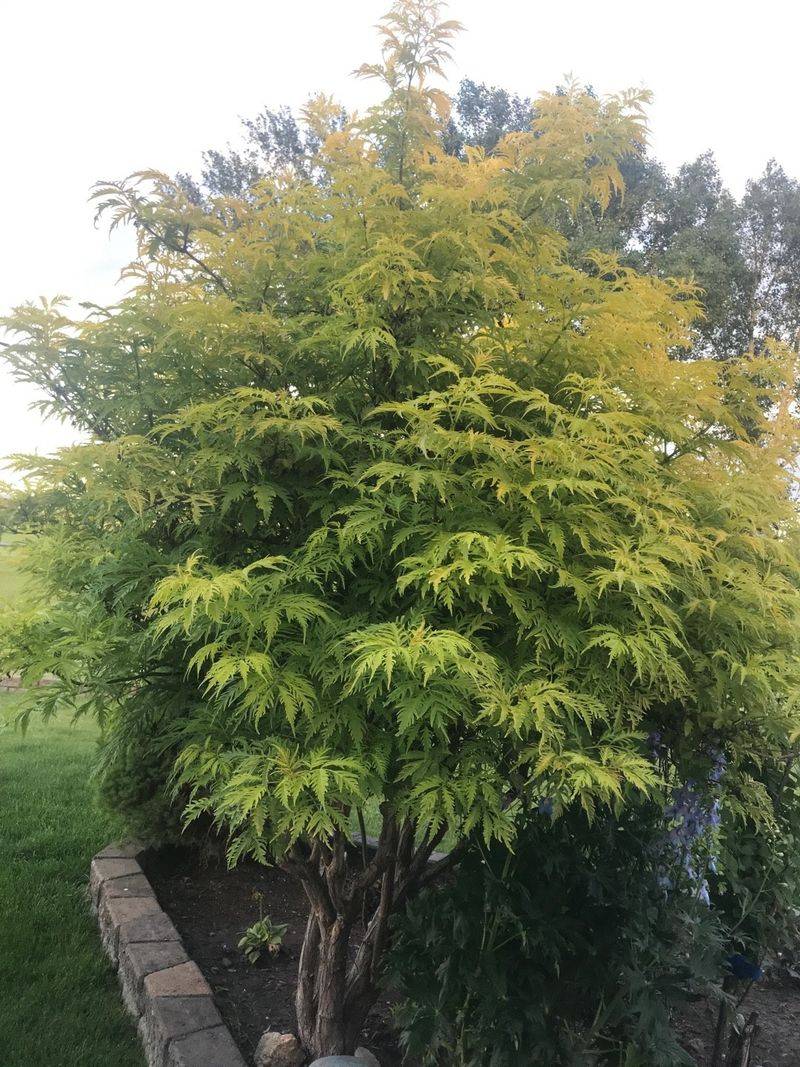
Deeply cut golden foliage creates a lacy appearance that brings elegance and brightness to Oregon gardens.
Sutherland Gold elderberry grows quickly, reaching eight to ten feet tall with a vase-shaped form that works beautifully as a backdrop for lower perennials and shrubs.
The finely divided leaves catch breezes and create dappled shade patterns that add movement and life to garden spaces.
Creamy white flower clusters appear in spring, filling the air with sweet fragrance and attracting butterflies and beneficial insects to Oregon landscapes.
Red berries follow the flowers, providing food for birds during summer months when natural food sources may be scarce.
The golden foliage color stays brightest in partial shade, making this one of the few golden shrubs that actually prefers some protection from intense afternoon sun.
Fast growth means you’ll establish presence quickly when using elderberry to fill large spaces or create natural privacy screens.
The plant tolerates Oregon’s wet winter soils better than many other shrubs, making it perfect for low spots or areas with heavy clay.
Occasional hard pruning keeps the size manageable and promotes fresh golden growth that looks vibrant and healthy.
Pair Sutherland Gold elderberry with blue-flowering hydrangeas or with dark green conifers that make the golden lacy leaves stand out dramatically.
This shrub brings both beauty and ecological value to Oregon gardens, supporting pollinators and birds while illuminating shaded corners that might otherwise feel dark and forgotten throughout the growing season.
8. Golden Boxwood (Buxus Microphylla ‘Golden Dream’)
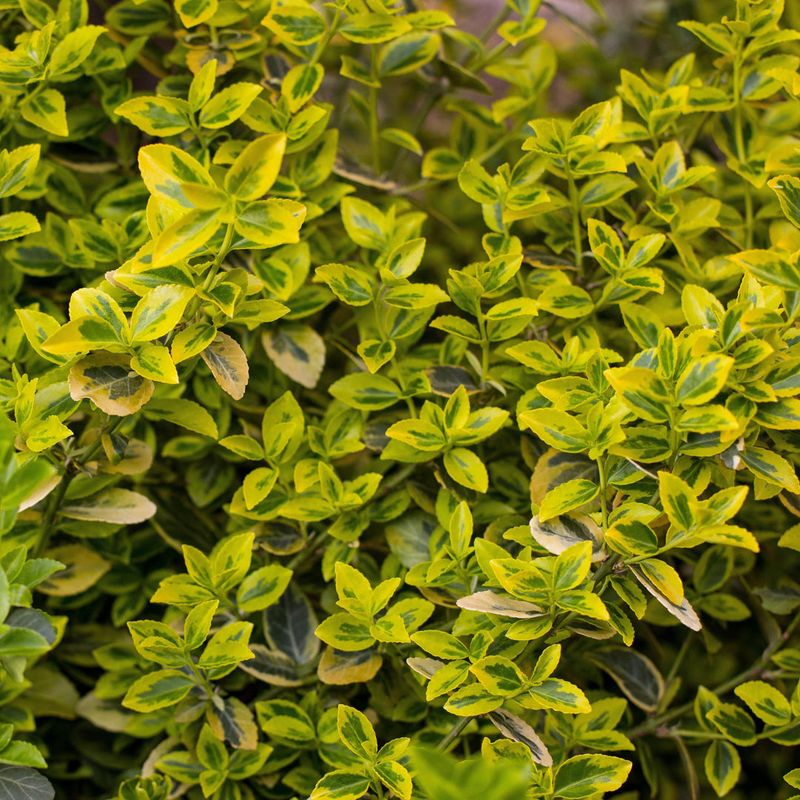
Formal gardens get a bright update when golden boxwood replaces traditional green varieties in Oregon landscapes.
This evergreen shrub grows slowly to about two to three feet tall and wide, maintaining a naturally rounded shape that needs minimal pruning.
Small golden-yellow leaves stay colorful all twelve months, providing consistent brightness through Oregon’s gray winter season when many gardens lack color.
The compact size makes Golden Dream boxwood perfect for edging flower beds, lining walkways, or creating low parterre-style plantings that add structure to formal garden designs.
Unlike larger golden shrubs, this variety works beautifully in container plantings on patios or flanking entryways where space limitations rule out bigger plants.
The dense branching creates solid visual mass despite the small leaf size.
Partial shade to full sun both work well in Oregon gardens, though some afternoon shade helps prevent any winter foliage burn during rare cold snaps.
Well-drained soil matters for long-term health, so avoid planting in low spots where water collects after heavy rains.
Once established, golden boxwood handles typical Oregon summers without needing constant irrigation.
Pair this shrub with purple-flowering perennials like salvia or with silver-leafed plants like lamb’s ear for sophisticated color combinations.
The slow growth means you won’t spend weekends constantly trimming to maintain size, making golden boxwood practical for gardeners who want formal elegance without high maintenance demands throughout the year in Oregon landscapes.
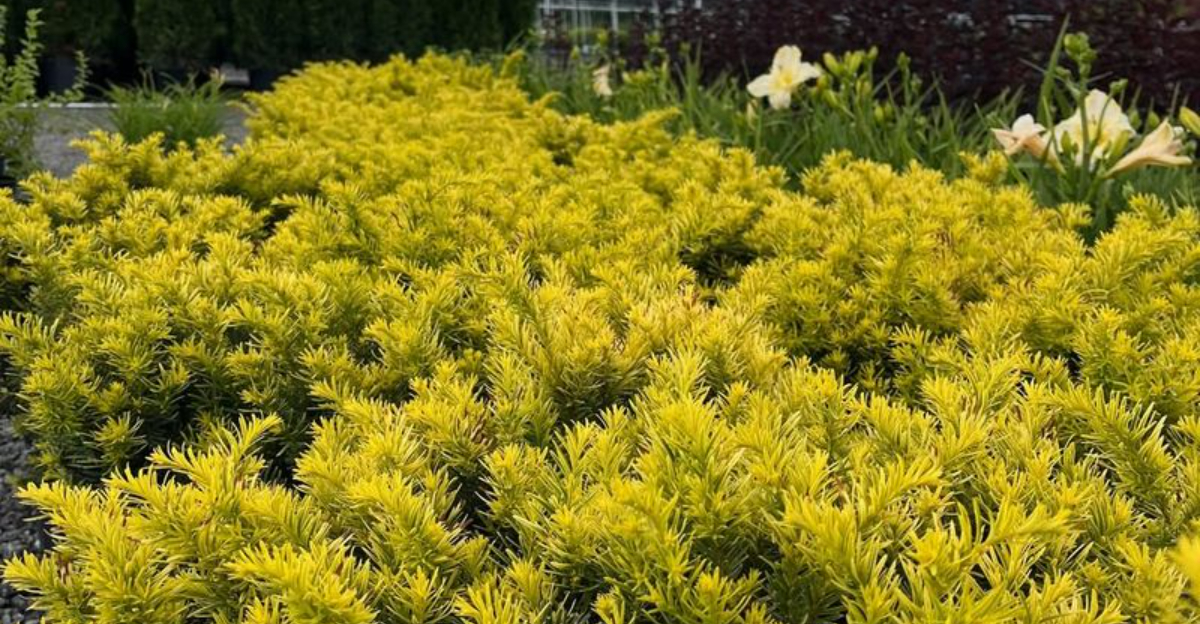
9. Golden Japanese Yew (Taxus Cuspidata ‘Aurescens’)
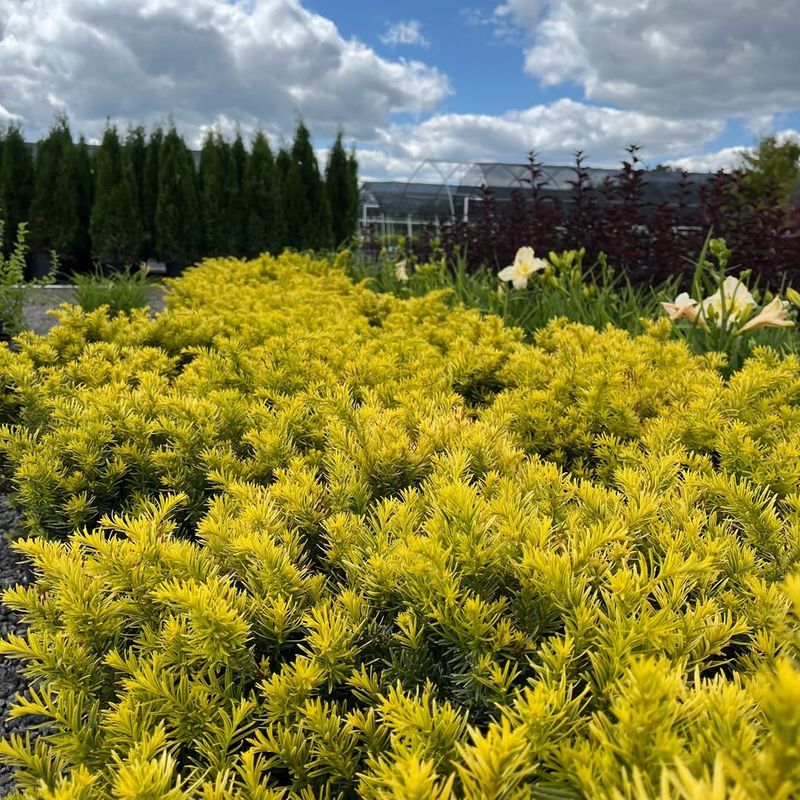
Elegant and refined, this evergreen conifer brings soft golden-yellow needle foliage that glows in Oregon gardens year-round.
Golden Japanese yew grows slowly, eventually reaching four to six feet tall with a spreading habit that creates layered horizontal lines in the landscape.
The needles emerge bright yellow in spring, gradually mellowing to chartreuse-gold through summer and taking on richer tones during winter months.
Shade tolerance makes this yew valuable for brightening difficult spots under tree canopies or along north-facing walls where most golden shrubs would struggle.
The plant handles Oregon’s wet winters beautifully, showing none of the root problems that plague some evergreens in poorly drained soils.
Deer usually avoid browsing yew foliage, making this shrub reliable in neighborhoods where animal pressure limits plant choices.
Foundation plantings gain year-round interest when golden Japanese yew anchors corners or flanks entryways with its soft glowing color.
The spreading habit also works well cascading over retaining walls or planted on slopes where erosion control matters.
Minimal pruning requirements mean you can plant this shrub and mostly forget about it except for occasional shaping if desired.
Combine golden Japanese yew with burgundy-leafed heuchera or with blue-flowering groundcovers that create stunning color contrasts.
The fine needle texture provides wonderful contrast against broad-leafed rhododendrons and azaleas that thrive in similar partially shaded conditions throughout Oregon gardens, creating sophisticated plant combinations that look professionally designed despite simple maintenance needs.
10. Golden Potentilla (Potentilla Fruticosa ‘Gold Drop’)
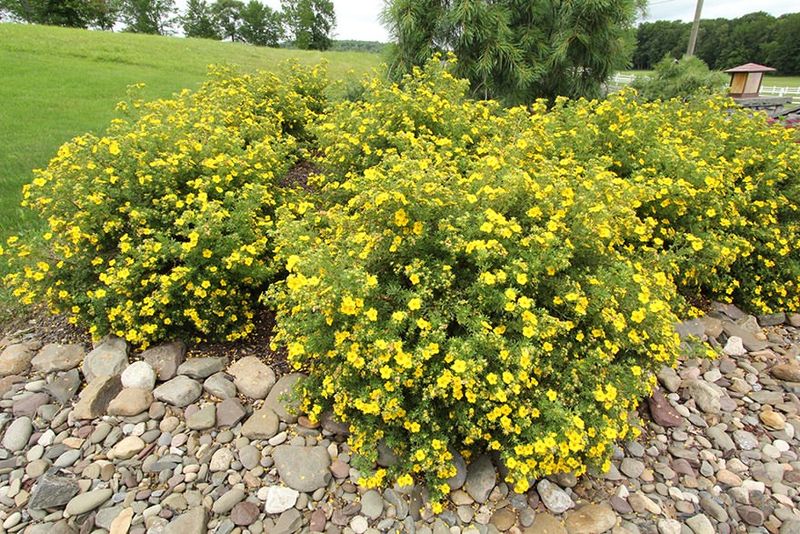
Cheerful yellow flowers bloom from late spring through fall on this tough little shrub with bright green foliage that takes on golden tones in full sun.
Gold Drop potentilla grows two to three feet tall and wide, creating a compact mounded shape perfect for front-of-border positions in Oregon gardens.
The long flowering season provides color when many spring bloomers have finished and before fall favorites begin their show.
Extreme cold hardiness and heat tolerance make this shrub adaptable to different microclimates across Oregon, from coastal gardens to inland valleys with hotter summers.
The flowers attract butterflies and native bees, supporting pollinator populations that benefit entire garden ecosystems.
Potentilla handles lean soils and drought conditions once established, making it practical for low-maintenance landscapes or areas where irrigation access is limited.
Full sun brings the most prolific flowering and the brightest golden-green foliage tones.
Occasional trimming after the first bloom flush encourages fresh flowers and keeps the plant looking tidy rather than straggly.
Deer resistance means you can rely on this shrub to look good even in neighborhoods where browsing animals damage other plants.
Pair Gold Drop potentilla with purple-leafed heuchera or with blue-flowering catmint for combinations that bloom together and create beautiful color harmonies.
The small size works perfectly in rock gardens, along walkways, or massed in groups where the collective golden flowers create bright patches that illuminate Oregon garden spaces throughout the entire growing season without demanding constant attention or special care.