Grow These California Natives Instead Of Lavender
Lavender is a popular garden plant, but it actually comes from the Mediterranean region, not California. If you live in California and want a garden that truly belongs here, native plants are the way to go.
They are built for the local climate, need less water, and support local wildlife like bees, butterflies, and hummingbirds. Swapping lavender for California natives means less work for you and a healthier yard all around.
Many of these plants look just as beautiful as lavender, with colorful blooms, amazing scents, and striking shapes that make any garden stand out.
Each one brings something special to the table, from deep purple flowers to sweet honey scents that drift through the air on warm afternoons.
1. California Lilac
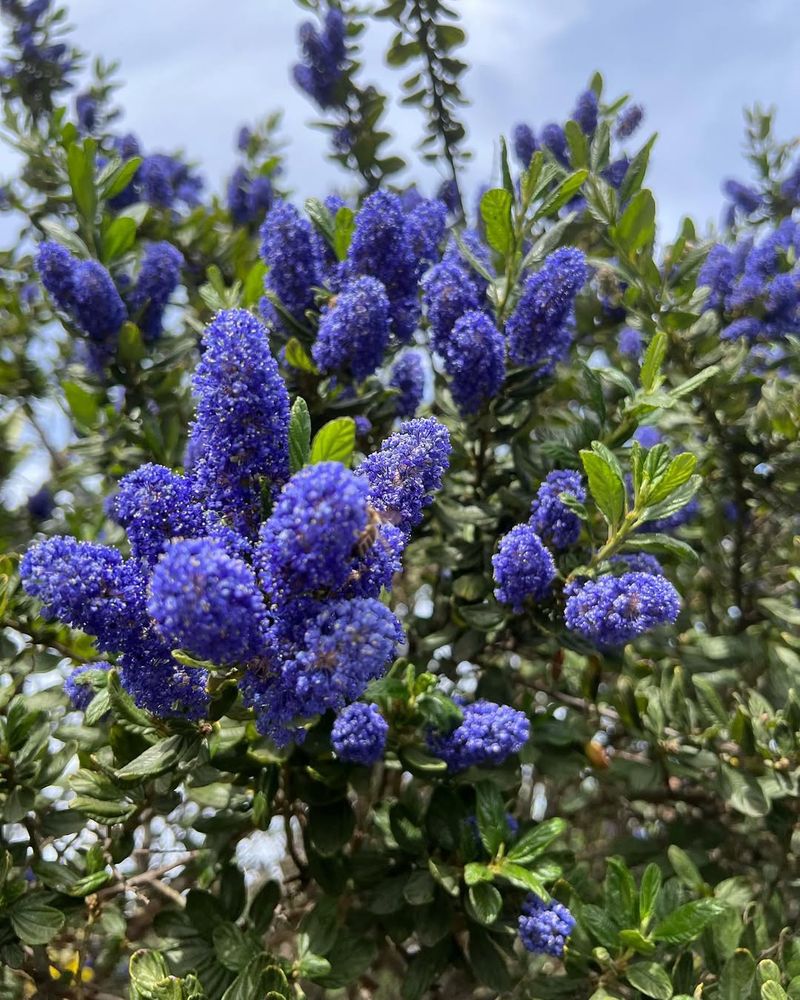
Few plants stop people in their tracks quite like California Lilac in full bloom. Known by its scientific name Ceanothus, this shrub explodes with clusters of tiny blue, purple, or white flowers every spring.
It is one of the most eye-catching native plants in the entire state.
California Lilac grows naturally across hillsides, coastal scrub, and chaparral regions throughout California. It loves full sun and well-drained soil.
Once established, it needs very little water, making it a smart choice for drought-prone areas. Some varieties stay low and spread wide, while others grow tall and bushy like a hedge.
Pollinators absolutely love this plant. Bees swarm the blooms, and butterflies visit regularly too.
Birds sometimes nest in its dense branches. Planting Ceanothus near a patio or walkway means you get to enjoy the light honey-like fragrance every time you step outside.
Pruning after bloom keeps it tidy and healthy. It does not do well with summer irrigation once it is established, so avoid overwatering.
With the right care, California Lilac can live for many years and become a stunning centerpiece in any California native garden.
2. Cleveland Sage
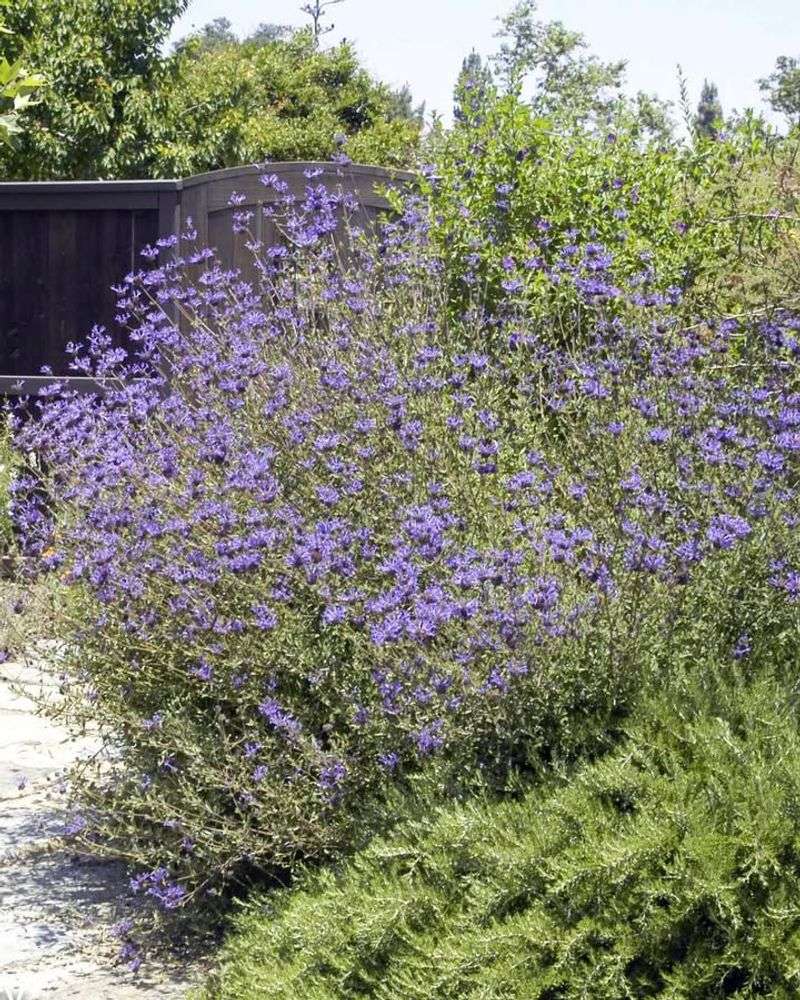
Walk past Cleveland Sage on a warm day and the air instantly fills with a bold, spicy fragrance that is hard to forget. Salvia clevelandii is native to Southern California and Baja California, and it thrives in the hot, dry conditions that define much of the region.
Gardeners love it because it looks and smells incredible with almost zero fuss.
The plant produces tall spikes of lavender-blue flowers that bloom in late spring and early summer. These blooms are magnets for hummingbirds, bees, and butterflies.
The silvery-gray leaves stay attractive even when the plant is not in bloom, giving your garden texture and color year-round.
Cleveland Sage does best in full sun and fast-draining soil. It handles drought very well once it gets established, which usually takes one to two seasons.
Avoid planting it in heavy clay or areas with standing water. Good drainage is the key to keeping this sage happy and thriving.
Trim it back lightly after flowering to encourage bushier growth and more blooms next season. In Southern California landscapes, it pairs beautifully with other natives like buckwheat and black sage.
It is a reliable, fragrant, and wildlife-friendly plant that earns its place in any garden.
3. Black Sage
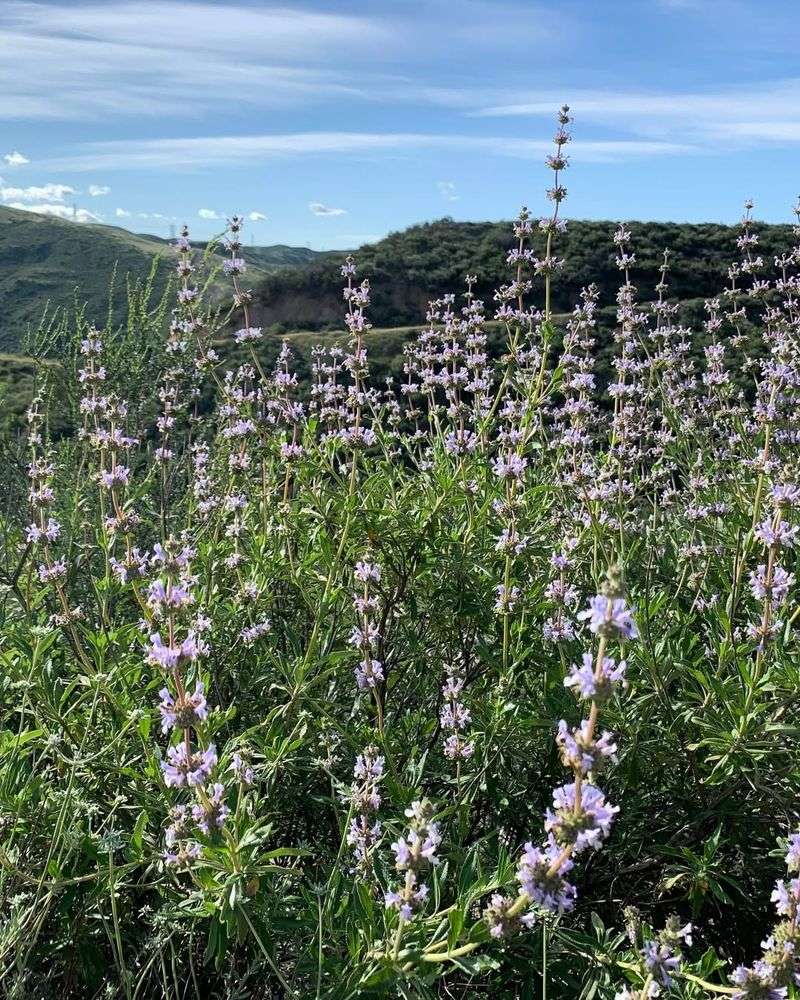
Black Sage has a mysterious name, but the plant itself is anything but dark. Salvia mellifera is one of the most common native sages found across coastal and inland California.
Its name actually comes from the way its dried seed heads turn dark in late summer, giving the shrub a moody, textured look even after blooming season ends.
In spring, Black Sage sends up tall stems covered in whorls of small white to pale lavender flowers. Bees go absolutely wild for these blooms.
In fact, some of the most flavorful honey in California comes from bees that feed on Black Sage nectar. That alone makes it a remarkable plant to have in your yard.
It grows naturally along the coast and inland valleys of California, thriving in rocky or sandy soils with excellent drainage. Full sun is ideal.
Once established, it requires very little supplemental water and handles summer heat well. It is a low-maintenance plant that rewards you with fragrance and wildlife activity throughout the season.
The leaves have a strong, pleasant herbal scent when brushed. Keep it on the drier side during summer months.
Black Sage is a tough, dependable native that brings both beauty and ecological value to California gardens.
4. Purple Sage
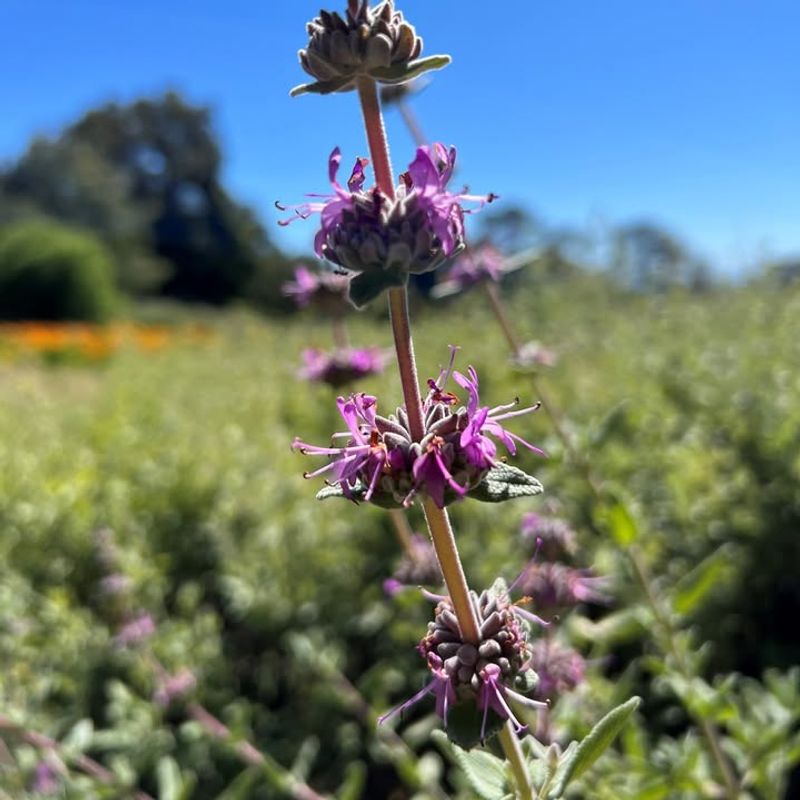
If you are looking for a plant that truly captures the spirit of California, Purple Sage is it. Salvia leucophylla grows along the coast and inland hills of Southern California, and it has been part of the landscape for thousands of years.
Native peoples used it for food, medicine, and ceremony, and today gardeners treasure it for its stunning beauty.
The plant features soft, gray-green leaves that release a strong, pleasant fragrance when touched. In late spring, it produces tall spikes covered in bright purple flowers that attract bees, hummingbirds, and butterflies by the dozen.
The contrast between the silvery foliage and vivid purple blooms is genuinely striking.
Purple Sage thrives in full sun and well-drained soils. It is highly drought-tolerant and actually prefers dry summers, which makes it perfectly suited for California gardens.
Avoid watering it heavily during warm months. Too much moisture can cause root problems and weaken the plant over time.
It works beautifully as a low hedge, a border plant, or a standalone specimen in a dry garden. Pair it with California Buckwheat or Black Sage for a cohesive native planting.
Prune lightly after flowering to keep the shape tidy and encourage fresh growth the following spring.
5. Hummingbird Sage
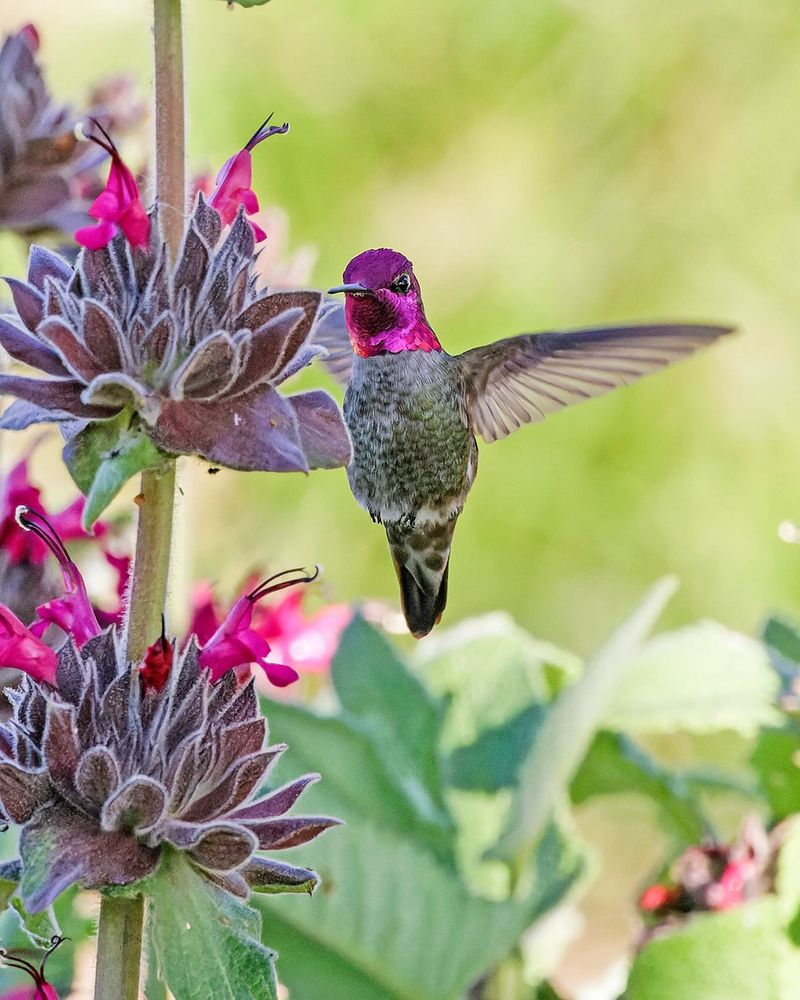
Hummingbirds have excellent taste, and Salvia spathacea is proof of that. Commonly called Hummingbird Sage, this California native is one of the few sages that actually prefers shade or partial shade.
That makes it a fantastic option for spots under trees or along the shady side of a fence where other plants struggle to grow.
The leaves are large, deeply textured, and wonderfully fragrant, with a sweet, fruity scent that is different from most other sages. In spring, tall magenta-pink flower spikes shoot up and attract hummingbirds almost immediately.
Watching a hummingbird hover over these blooms is one of the simple joys of having a California native garden.
This plant spreads slowly by underground runners, forming a low, lush ground cover over time. It is perfect for stabilizing slopes or filling in shaded areas where bare soil tends to erode.
Once established, it needs very little water and handles dry summers well, even in the shade.
Plant it in loose, well-drained soil enriched with a little compost for best results. It pairs well with native ferns, toyon, and coffeeberry in woodland-style gardens across California.
Hummingbird Sage is easygoing, rewarding, and one of the most charming native plants you can add to your yard.
6. Woolly Blue Curls
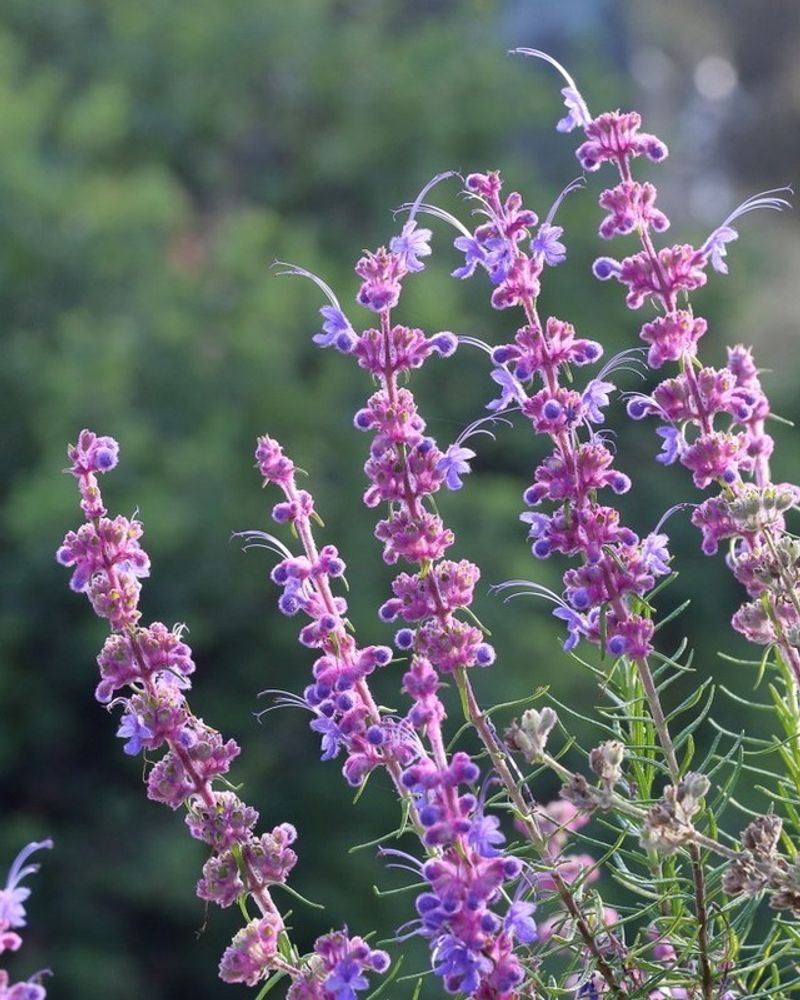
There is no plant quite like Woolly Blue Curls in all of California. Trichostema lanatum is one of those rare natives that looks almost too exotic to be real.
The flowers are a vivid lavender-blue with long, dramatically curved stamens that look like tiny curling ribbons. It is a true showstopper in any garden setting.
Native to the dry chaparral slopes of Southern and Central California, this plant is built for heat and drought. It thrives in full sun and fast-draining, rocky or sandy soil.
Good drainage is absolutely essential. Woolly Blue Curls will not tolerate wet roots, especially during warm summer months.
Hummingbirds visit the flowers constantly, and bees are frequent guests too. The narrow leaves are aromatic and release a pleasant herbal scent when brushed.
Even between bloom cycles, the plant has an interesting texture and form that keeps the garden looking lively.
Woolly Blue Curls blooms from spring through early summer, and sometimes again in fall if conditions are right. It can be tricky to establish, but once it settles in, it is quite tough and long-lived.
Start it from a container plant rather than seed for the best success rate. It is absolutely worth the extra effort.
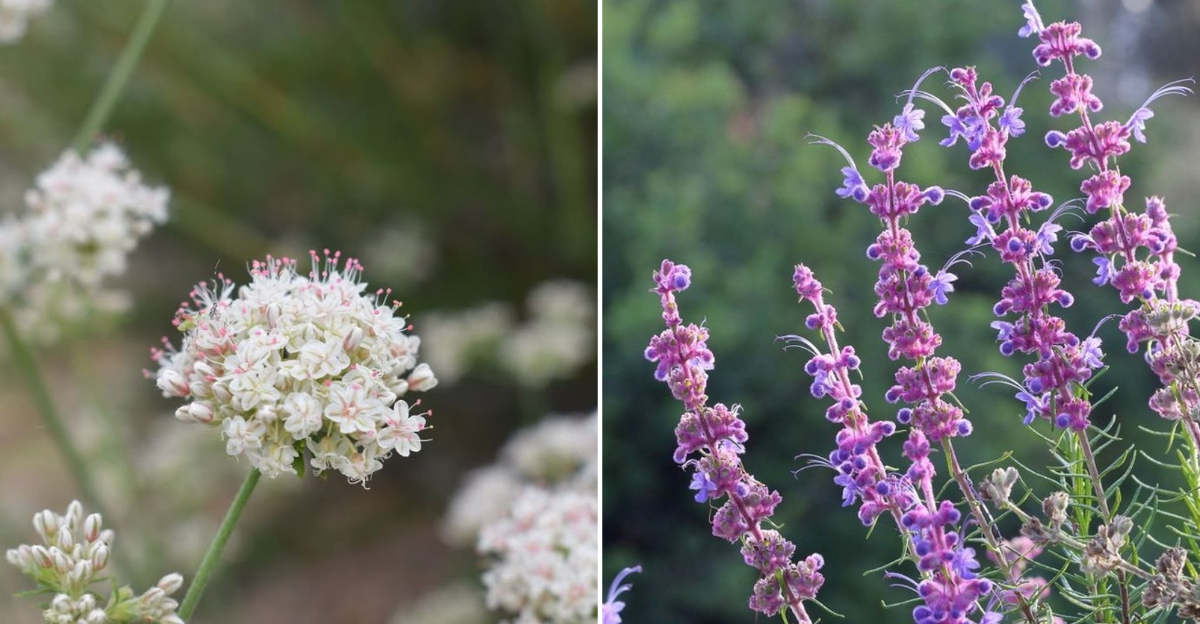
7. California Buckwheat
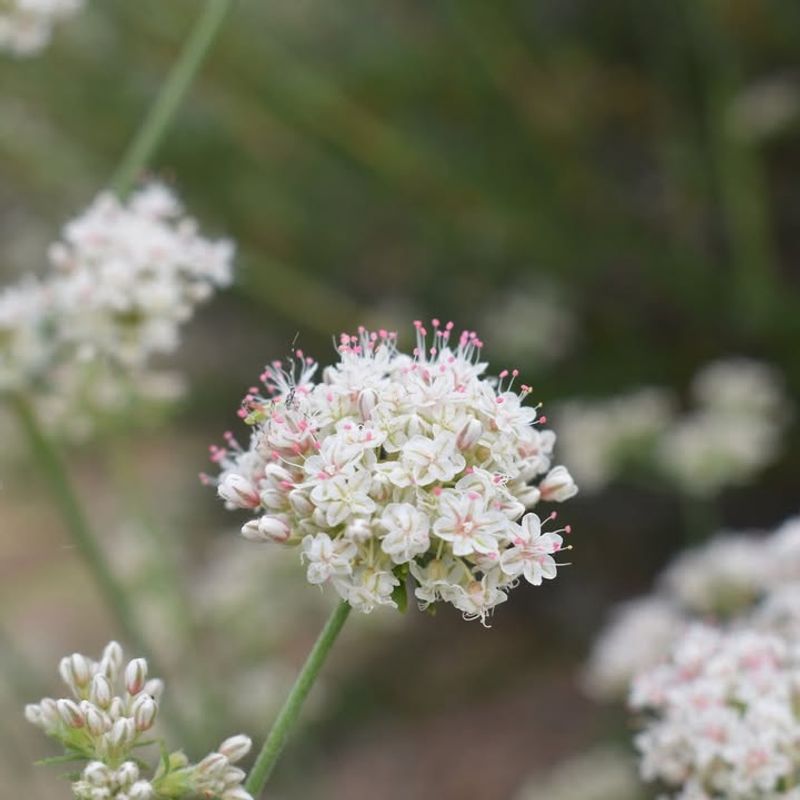
Tough, adaptable, and endlessly useful to wildlife, California Buckwheat is one of the hardest-working natives in the state. Eriogonum fasciculatum grows naturally across hillsides, coastal bluffs, and desert edges throughout California.
It is not flashy in the way some plants are, but its quiet beauty grows on you quickly.
The plant produces clusters of tiny white or pale pink flowers that bloom from spring through fall, which is one of the longest bloom seasons of any California native. As the flowers fade, they turn a warm rusty red and stay on the plant through winter.
That color shift gives the garden visual interest across multiple seasons without any extra effort on your part.
Buckwheat is a critical food source for native bees, butterflies, and birds. Many butterfly species, including several that are rare or threatened, depend on it as a host plant for their larvae.
Planting it means you are actively supporting local ecosystems in a real and meaningful way.
It grows well in rocky, sandy, or clay soils and handles both coastal fog and inland heat. Full sun is preferred.
Once established, it needs almost no supplemental water. Trim it lightly after the seed heads fade to keep it looking neat and to encourage strong new growth each spring.
8. Sticky Monkeyflower
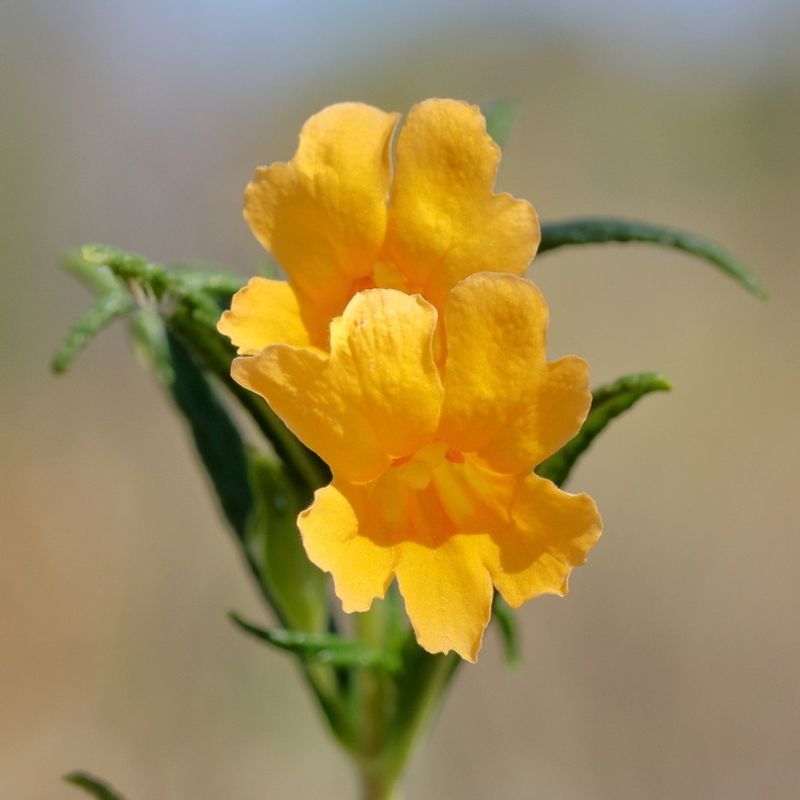
Bright, cheerful, and surprisingly tough, Sticky Monkeyflower brings a burst of warm color to California gardens that few other natives can match.
Diplacus aurantiacus, formerly known as Mimulus aurantiacus, grows naturally along coastal cliffs, dry slopes, and chaparral areas throughout the state.
The vivid orange or yellow trumpet-shaped flowers are impossible to miss.
Blooming from spring through early summer, the flowers attract hummingbirds and native bees with impressive reliability. The leaves are narrow, dark green, and slightly sticky to the touch, which is exactly how the plant got its common name.
That stickiness actually helps trap small insects, which may provide a minor nutrient boost to the plant.
Sticky Monkeyflower thrives in full sun to light shade and does well in a wide range of soil types, including poor, rocky, or sandy soils. It is drought-tolerant once established and does not need much fertilizer.
Avoid overwatering, especially in summer, as it prefers the dry conditions it evolved in across California.
Cut it back by about half after the main bloom period to encourage a second flush of flowers and keep the plant from getting too woody. It works beautifully along pathways, garden borders, or on slopes where erosion control is needed.
This is one native that delivers serious impact with minimal care.