Grow These 9 Shrubs To Feed Birds And Wildlife In Oregon
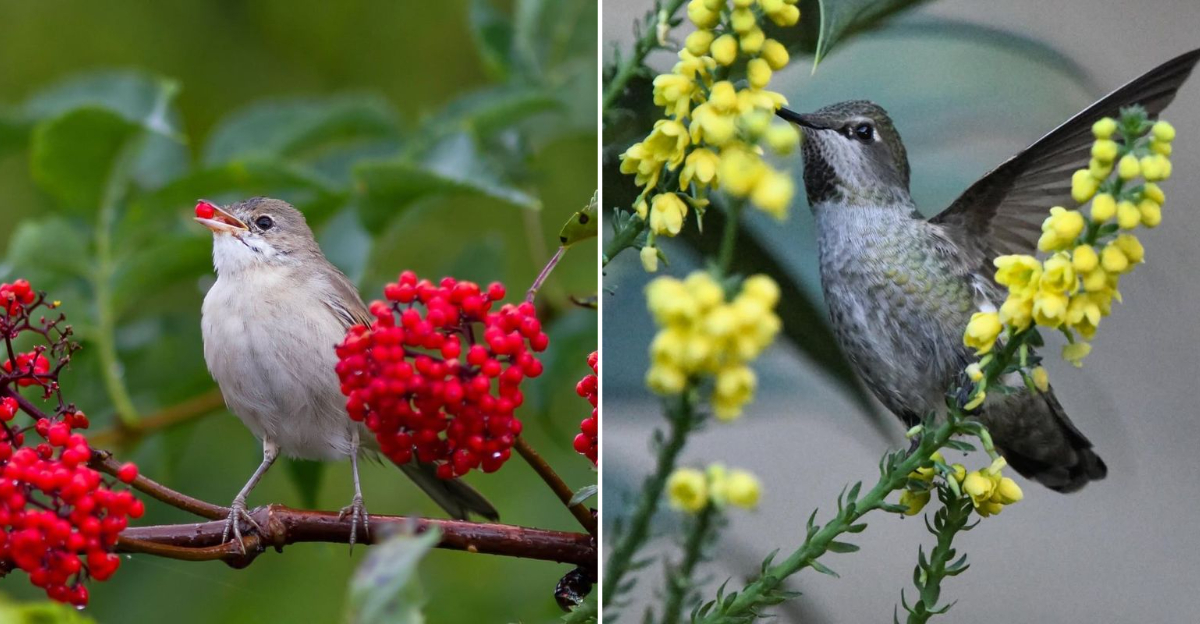
Watching birds show up in your yard is one of those small moments that just feels good. It’s calming, simple, and a reminder that nature is still close by, even in busy neighborhoods.
If you live in Oregon, you’ve probably noticed how much wildlife passes through during different seasons. Birds looking for berries, bees searching for flowers, and small animals moving from yard to yard.
Wouldn’t it be nice to make your space a little more welcoming for them?
The great part is that you don’t need a huge garden or fancy setup to help. Choosing the right shrubs can make a real difference.
Many native and well-adapted shrubs provide food, shelter, and nesting spots while also adding beauty to your landscape. It’s a win for wildlife and a win for your yard.
If you’ve ever wondered which plants actually help instead of just looking nice, you’re in the right place. Even adding one or two shrubs can create a ripple effect that brings more life into your space.
And if you already enjoy gardening, this is an easy way to make your efforts even more meaningful.
Here are 9 shrubs that grow well in Oregon and naturally support birds and wildlife all year long.
1. Red-Flowering Currant (Ribes sanguineum)
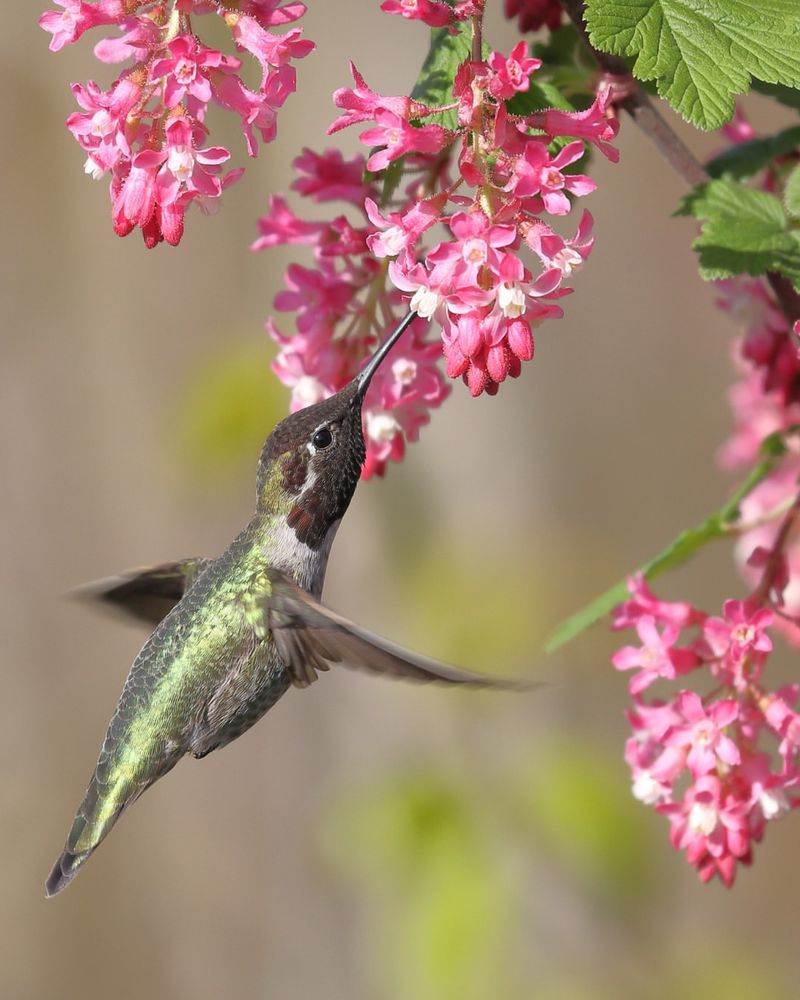
Each spring the Red-flowering currant bursts into bloom with clusters of pink to deep red flowers that hummingbirds absolutely adore. This native shrub grows between four and ten feet tall, making it perfect for medium-sized garden spaces or as a backdrop plant.
The tubular flowers appear before many other plants wake up, providing crucial early nectar when hummingbirds return from migration.
After the flowers fade, small blue-black berries develop that songbirds eagerly consume throughout summer. Robins, waxwings, and thrushes visit regularly to feast on the fruit.
The foliage also smells wonderful when you brush against it, releasing a pleasant aromatic scent.
This shrub tolerates partial shade but blooms most abundantly in full sun. It adapts well to various soil types as long as drainage is decent.
Once established, red-flowering currant handles Oregon’s dry summers without much supplemental watering.
Plant it near a window where you can watch hummingbirds hover and feed. The early bloom time means you get garden color when most landscapes still look bare.
Red-flowering currant asks for very little maintenance while delivering months of wildlife activity and visual appeal to your yard.
2. Salal (Gaultheria shallon)
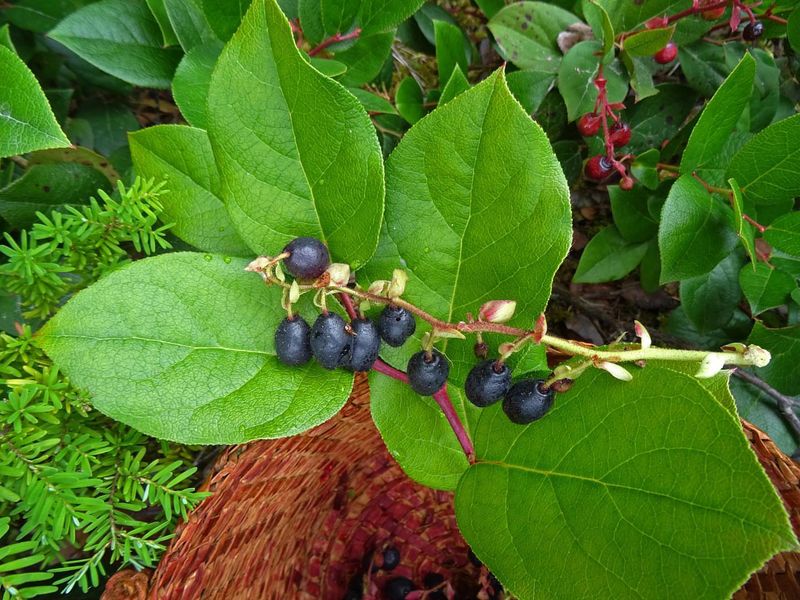
Salal grows naturally throughout Oregon’s forests, forming dense evergreen thickets that wildlife depend on for shelter and food. The glossy, leathery leaves stay green all year, providing cover when deciduous plants drop their foliage.
In late spring, small white or pink urn-shaped flowers dangle from the stems, attracting bees and other pollinators.
By late summer, dark purple berries ripen and become a favorite food source for band-tailed pigeons, varied thrushes, and many other birds. Bears and small mammals also munch on the berries when they can reach them.
The fruit tastes mildly sweet and was historically eaten by Indigenous peoples of the Pacific Northwest.
This shrub thrives in shade or partial shade, making it ideal for woodland gardens or spots under tree canopies. Salal tolerates dry conditions once its roots establish, though it appreciates occasional watering during extended droughts.
The dense growth habit creates excellent nesting sites for ground-dwelling birds.
Salal works beautifully as a groundcover or mid-layer shrub in naturalized landscapes. It grows slowly but steadily, eventually reaching three to five feet in height.
Maintenance is minimal since this tough native handles Oregon’s climate with ease while supporting diverse wildlife throughout every season.
3. Osoberry (Oemleria cerasiformis)
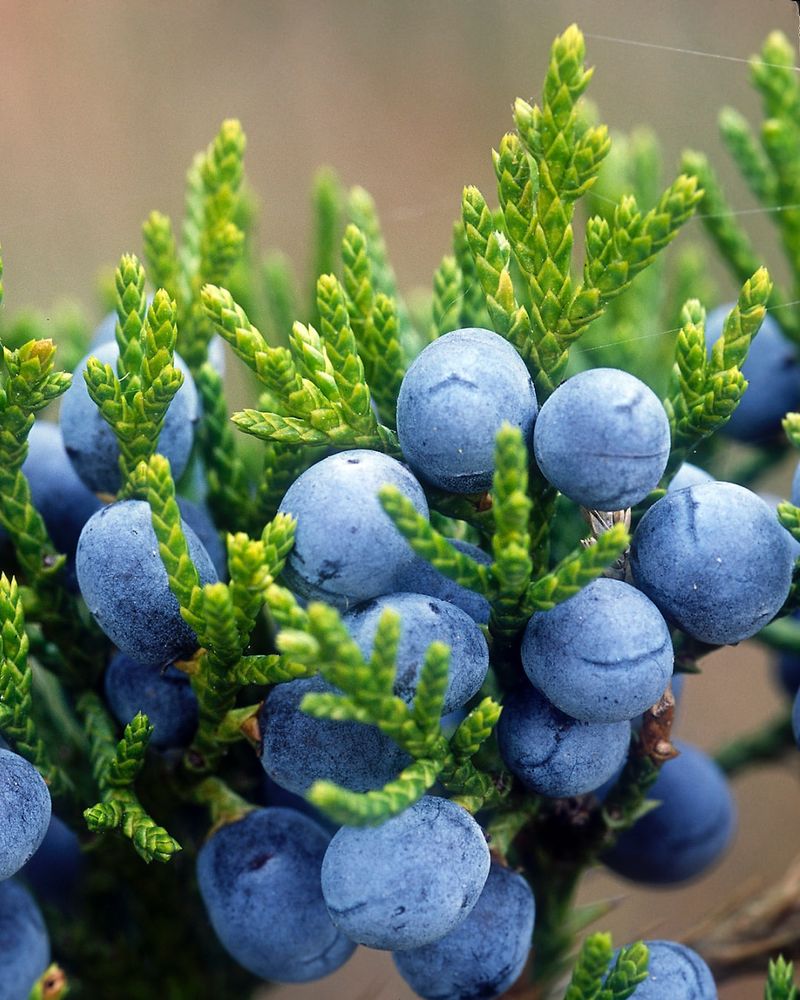
Osoberry earns the nickname “Indian plum” and stands out as one of the earliest shrubs to leaf out each year, sometimes as early as February. The bright green leaves emerge when most plants remain dormant, signaling spring’s arrival.
Drooping clusters of small white flowers follow quickly, filling the air with a sweet fragrance that early pollinators find irresistible.
By midsummer, the shrub produces small plum-like fruits that transition from green to red to dark blue-black as they ripen. Birds snatch up the berries enthusiastically despite the bitter taste that most humans find unpalatable.
Cedar waxwings, robins, and grosbeaks visit regularly during fruiting season.
This deciduous shrub grows naturally along stream banks and forest edges throughout western Oregon. It reaches heights of six to fifteen feet and spreads through underground runners, eventually forming colonies if left unchecked.
Osoberry tolerates both sun and shade but produces more fruit with adequate light.
The multi-stemmed growth creates dense thickets that provide excellent nesting habitat for songbirds. Deer browse the foliage, and the early bloom time makes osoberry valuable for native bees emerging from winter dormancy.
Plant it where its suckering habit won’t become problematic, and enjoy watching wildlife flock to this unassuming but ecologically important shrub.
4. Oregon Grape (Mahonia aquifolium)
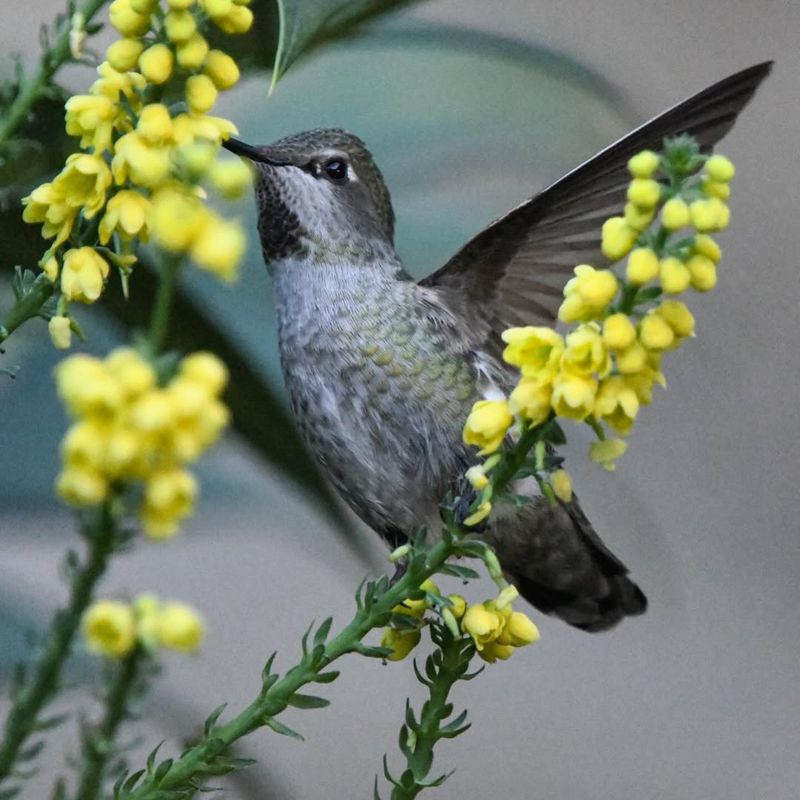
A shrub loved by many gardeners, holds the honor of being Oregon’s state flower, and for good reason. Bright yellow flower clusters appear in early spring, standing out boldly against the holly-like evergreen foliage.
Bees and early butterflies visit these blooms eagerly, gathering nectar when few other flowers have opened yet.
The flowers give way to clusters of blue-purple berries that ripen by late summer. Despite the name, these are not true grapes but rather small berry-like fruits that birds love.
Robins, waxwings, and quail all feed on the tart berries, which can also be made into jelly by adventurous humans.
This tough evergreen shrub typically grows three to six feet tall and spreads slowly through rhizomes. The spiny leaves turn bronze or purplish in winter, adding seasonal color to the landscape.
Oregon grape tolerates deep shade but produces more flowers and fruit when it receives some sunlight.
Drought tolerance makes this native shrub especially valuable in water-wise gardens. Once established, it rarely needs supplemental irrigation even during Oregon’s dry summers.
The dense foliage provides year-round cover for small birds and ground-feeding species, while the berries sustain wildlife when other food sources dwindle in late summer and fall.
5. Snowberry (Symphoricarpos albus)
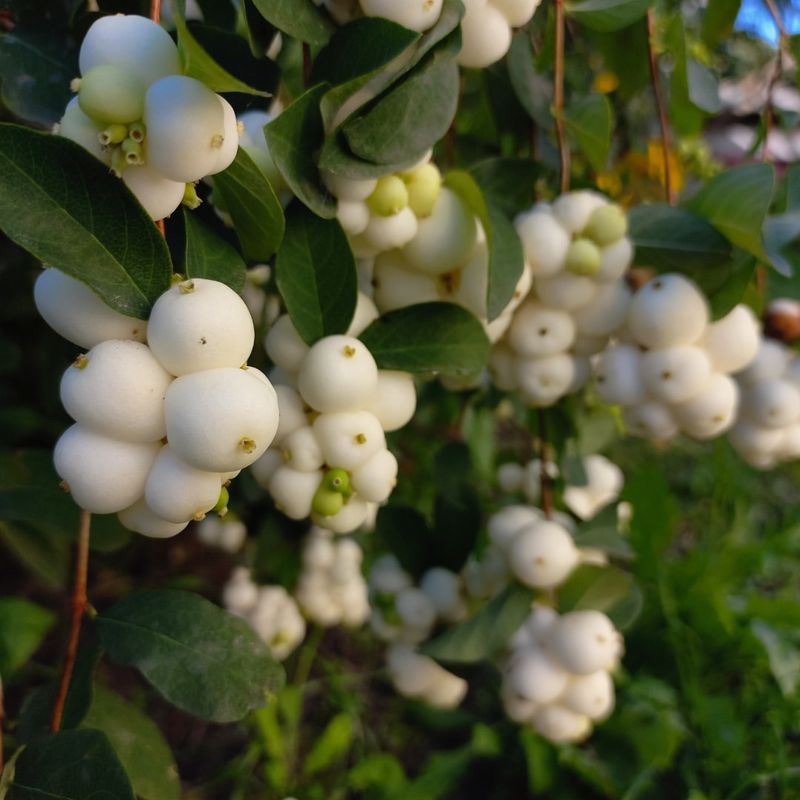
This shrub gets its charming name from the clusters of pure white berries that appear in fall and often persist through winter. The round, waxy berries stand out dramatically against bare branches and brown landscapes during the coldest months.
While not particularly tasty to humans, these berries provide crucial food for birds when insects and other food sources become scarce.
Waxwings, robins, and quail nibble the berries throughout winter. The dense, twiggy growth also shelters small birds from harsh weather and predators.
In summer, small pink bell-shaped flowers attract hummingbirds and native bees, adding another layer of wildlife value.
This deciduous shrub grows three to six feet tall and spreads readily through underground stems, eventually forming thickets. Snowberry tolerates a wide range of conditions, from full sun to fairly deep shade, and handles both moist and dry soils once established.
It grows naturally in forests, meadows, and disturbed areas throughout Oregon.
The arching branches create a graceful form that works well in naturalized landscapes or wildlife hedges. Snowberry requires little care beyond occasional pruning to control its spreading habit.
Plant it where its suckering nature is an asset rather than a nuisance, and appreciate how this unassuming native keeps birds fed during the toughest season of the year.
6. Red Elderberry (Sambucus racemosa)
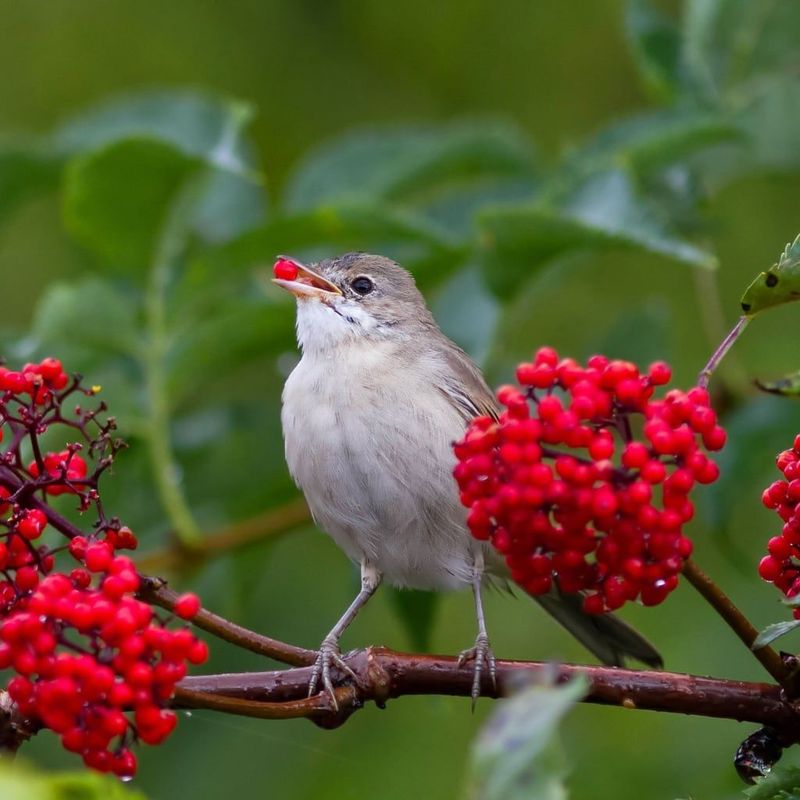
Red elderberry produces spectacular cone-shaped clusters of creamy white flowers in spring that seem to glow against the bright green compound leaves. Pollinators mob these blooms, creating a constant buzz of activity.
Butterflies, bees, and beneficial insects all visit the flowers enthusiastically, making this shrub a pollinator magnet.
By midsummer, bright red berry clusters replace the flowers, creating stunning visual impact. Birds devour these berries rapidly despite their bitter taste and mildly toxic properties for humans.
Waxwings, thrushes, and grosbeaks particularly favor red elderberries, often stripping branches clean within days of ripening.
This fast-growing shrub reaches heights of ten to twenty feet, forming a large multi-stemmed specimen. Red elderberry thrives in partial shade to full sun and prefers moist soil but adapts to drier conditions once established.
It grows naturally along stream banks and forest edges throughout Oregon’s mountains and lowlands.
The large compound leaves provide substantial cover for nesting birds, while the branching structure offers multiple perching spots. Red elderberry grows quickly, making it useful for filling in new landscapes or creating wildlife habitat in a hurry.
Prune older stems periodically to encourage vigorous new growth and maximum berry production for your feathered visitors.
7. Vine Maple (Acer circinatum)
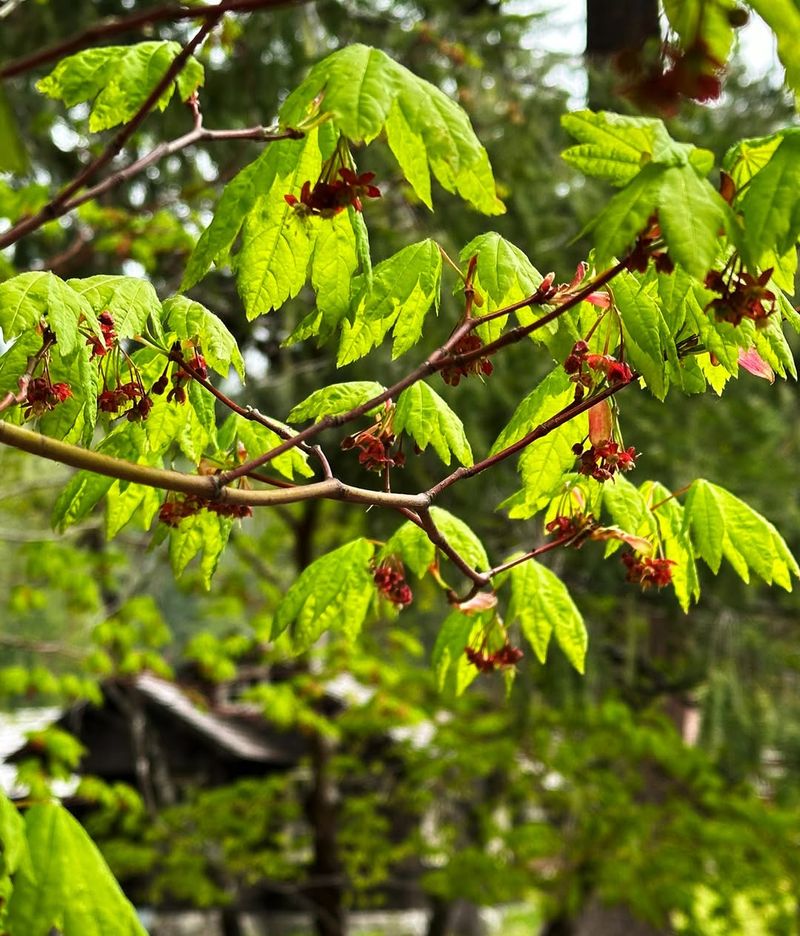
Although Vine maple technically qualifies as a small tree, it often grows as a large multi-stemmed shrub in garden settings. The elegant, round leaves with pointed lobes create beautiful texture throughout the growing season.
Small reddish-purple flowers appear in spring, attracting early pollinators including native bees and flies.
By fall, paired winged seeds called samaras develop, spinning through the air like tiny helicopters when they drop. Chipmunks, squirrels, and various bird species eat these nutritious seeds.
The spectacular fall color rivals any ornamental tree, with leaves turning brilliant shades of orange, red, and yellow.
Vine maple grows naturally in the understory of Oregon forests, tolerating significant shade while also handling full sun in cooler, moister locations. It typically reaches fifteen to twenty feet in height with a graceful, often leaning or twisting form.
The branches layer naturally when they touch the ground, creating dense thickets over time.
This native provides year-round interest with spring flowers, summer foliage, fall color, and attractive branching patterns in winter. The dense growth shelters birds and small mammals while the seeds provide food.
Vine maple adapts well to garden conditions and requires minimal maintenance once established, making it both beautiful and functional for supporting Oregon wildlife.
8. Pacific Ninebark (Physocarpus capitatus)
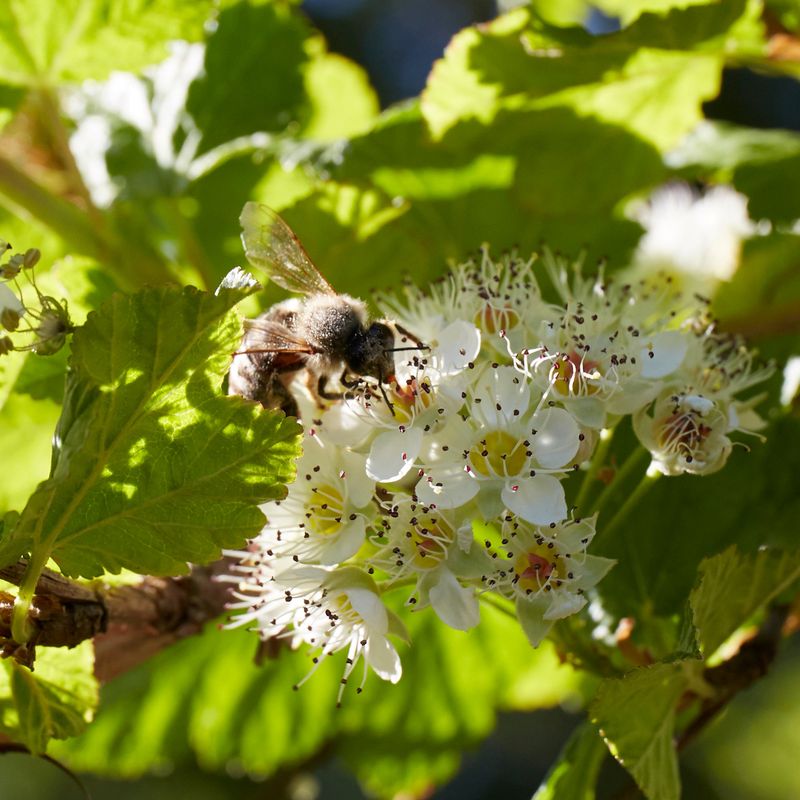
This shrub earns its unusual name from the peeling, layered bark that reveals multiple colors as it sheds in papery strips. The exfoliating bark adds winter interest when most shrubs look plain.
In late spring, rounded clusters of small white to pinkish flowers cover the branches, creating a spectacular display that native bees and other pollinators find impossible to resist.
The flowers mature into reddish seed capsules by late summer that persist into winter. Small songbirds pick at these seed heads, extracting the tiny nutritious seeds inside.
The dense branching structure provides excellent nesting sites and shelter for birds year-round.
This vigorous shrub grows six to ten feet tall and spreads nearly as wide, creating a substantial presence in the landscape. Pacific ninebark tolerates wet soils better than many native shrubs, making it ideal for rain gardens or areas with poor drainage.
It also handles full sun to partial shade and requires little care once its roots establish.
The maple-like leaves add nice texture throughout summer before turning yellow in fall. Pacific ninebark works beautifully in naturalized hedges or as a specimen plant.
Prune older stems occasionally to maintain vigor and encourage the attractive peeling bark on younger branches, creating a shrub that feeds wildlife while looking interesting in every season.
9. Serviceberry (Amelanchier alnifolia)
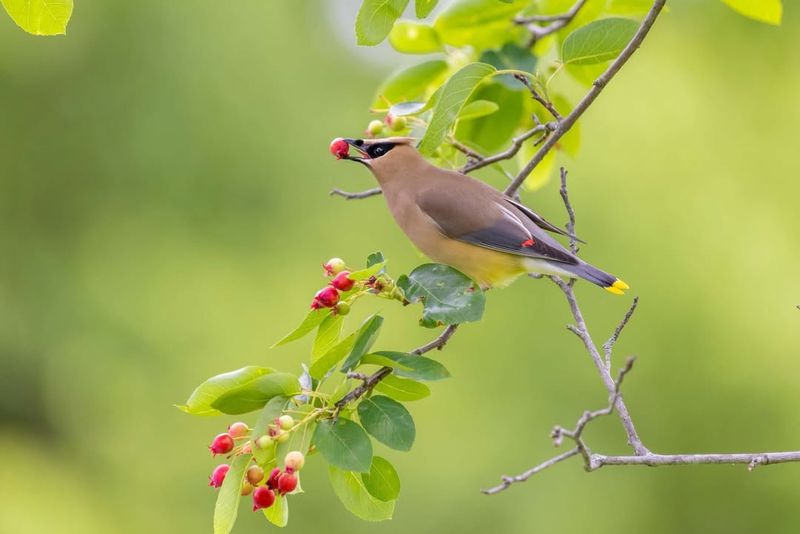
This berry produces clouds of delicate white flowers in early spring that transform the shrub into a stunning focal point. The five-petaled blooms appear before the leaves fully emerge, creating maximum visual impact.
Early pollinators including mason bees and butterflies visit these flowers enthusiastically, making serviceberry valuable for supporting beneficial insects.
The flowers develop into small purple-black berries by early summer that taste sweet and delicious to both humans and wildlife. Cedar waxwings, robins, and many other bird species compete eagerly for these berries, often consuming the entire crop within days.
Squirrels and chipmunks also climb the branches to reach the fruit.
This shrub grows six to fifteen feet tall with multiple stems and a rounded form. Serviceberry tolerates various soil types and handles both sun and partial shade, though berry production increases with more light.
The oval leaves turn orange to red in fall, adding seasonal color to the landscape.
Native Americans traditionally harvested serviceberries for food, and modern gardeners can also enjoy the fruit if they beat the birds to it. The berries work wonderfully in pies, jams, and fresh eating.
Beyond the edible harvest, serviceberry provides year-round value with spring flowers, summer fruit, fall color, and attractive branching that shelters wildlife through every season.