7 Hardy Flowering Trees That Thrive In Michigan Yards
Beautiful blossoms are the perfect way to bring new energy to your yard when Michigan finally warms up.
While the local weather can be quite unpredictable, many stunning trees are built to handle the cold winters and breezy springs. You can find amazing options that thrive from the northern forests down to the sunny southern plains.
Picking the right variety means you get to enjoy a massive show of color without any of the extra stress.
These seven flowering trees are tough enough to stand up to the local wind while looking like a professional masterpiece.
Your home will quickly become the most colorful spot in the neighborhood with these hardy choices.
We have found the best trees that grow strong and stay healthy in the unique climate of Michigan. Get ready to watch your landscape transform this season.
1. Redbud (Cercis canadensis)
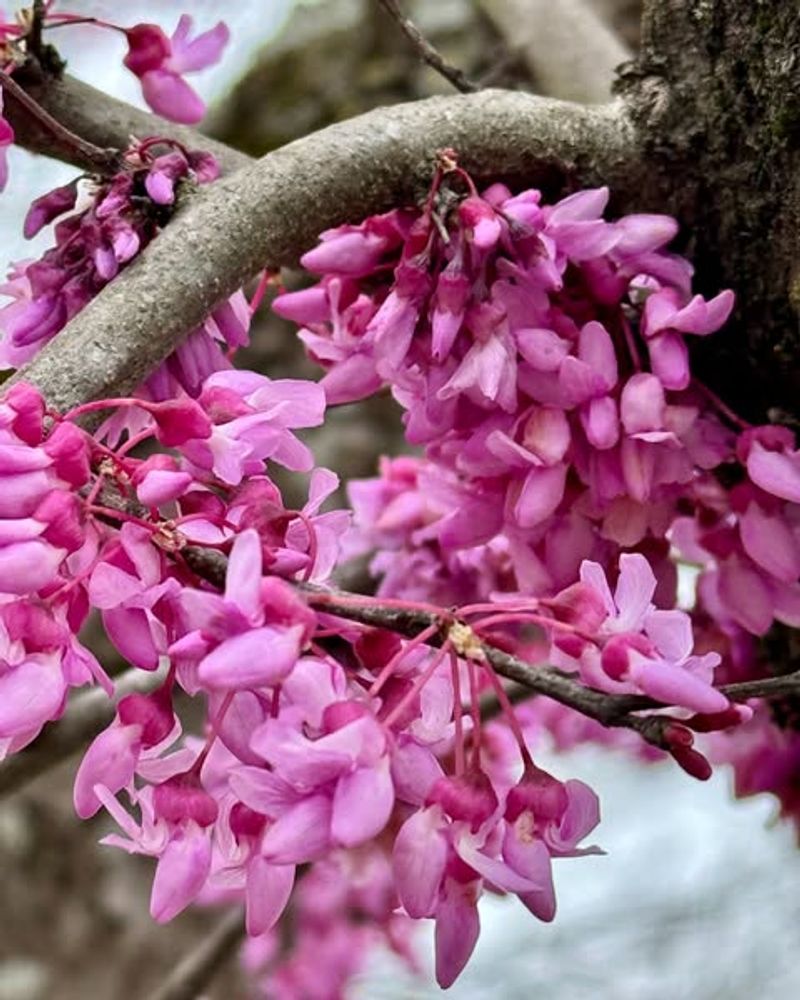
Before the rest of the yard even wakes up from winter, the Redbud bursts into a cloud of brilliant magenta-pink flowers that seem almost too bold to be real.
This native Michigan beauty is one of the earliest signs that spring has finally arrived, and it never fails to stop people in their tracks.
Cercis canadensis is hardy in USDA zones 4 through 9, which means it handles Michigan winters with no trouble at all.
Growing between 15 and 30 feet tall, the Redbud fits beautifully in both large and smaller yards across Michigan.
It thrives in full sun to partial shade, making it flexible enough to work in many different spots around the property.
The heart-shaped leaves that follow the blooms add another layer of charm through the summer months. Well-drained, moderately moist soil is all this tree really asks for, and it will reward you generously every spring.
Pollinators absolutely love Redbud flowers, so expect to see bees and butterflies visiting regularly once blooms open up.
Planting one near a patio or walkway means you get front-row seats to one of Michigan’s best early-spring shows.
Whether you have a newer home or a well-established landscape, this tree adds effortless color and natural character to any outdoor space.
2. Flowering Dogwood (Cornus florida)
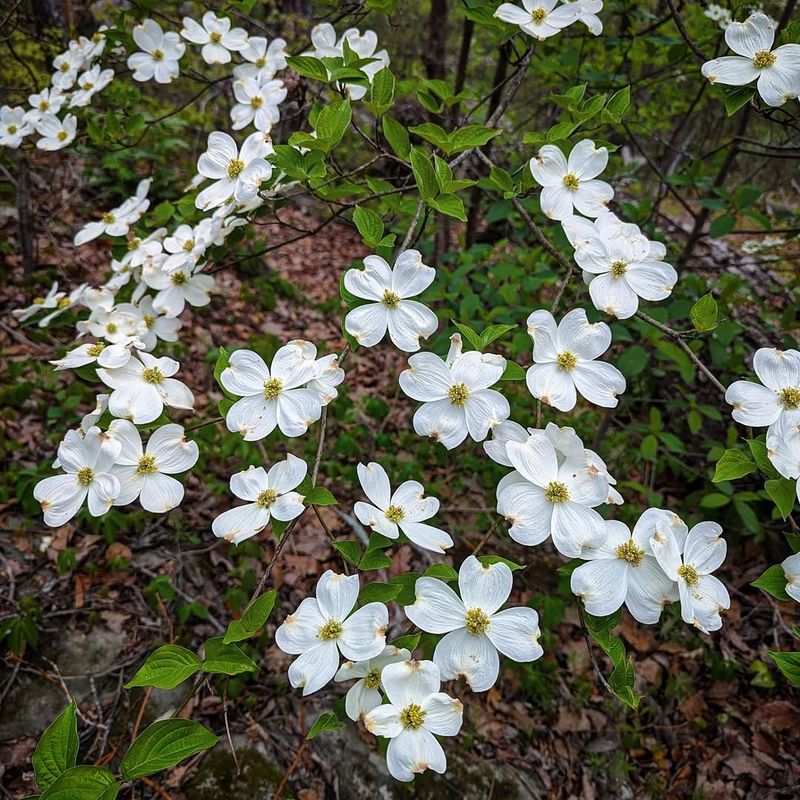
Few trees bring as much drama to a Michigan yard as the Flowering Dogwood, with its wide, flat blooms that seem to float in midair each spring.
Cornus florida is hardy in USDA zones 5 through 9, making it a reliable performer across most of Michigan’s Lower Peninsula.
The flowers come in white or soft pink and open up in early spring before most other trees have even thought about leafing out. What makes this tree especially appealing is how much it gives throughout the year.
After the blooms fade, glossy green leaves fill in for summer, followed by bright red berries and stunning fall color that ranges from deep red to purple.
Michigan gardeners love that a single tree can carry the yard through multiple seasons without needing constant attention. Flowering Dogwoods grow 15 to 30 feet tall and do well in both full sun and partial shade.
They prefer moist, well-drained soil and benefit from a layer of mulch around the base to keep roots cool during warm Michigan summers.
Relatively low-maintenance once established, this tree is a favorite choice for homeowners who want maximum beauty with minimal fuss.
Red berries in fall also attract birds, adding lively wildlife activity right to your backyard throughout the cooler months of the year.
3. Magnolia (Magnolia spp.)
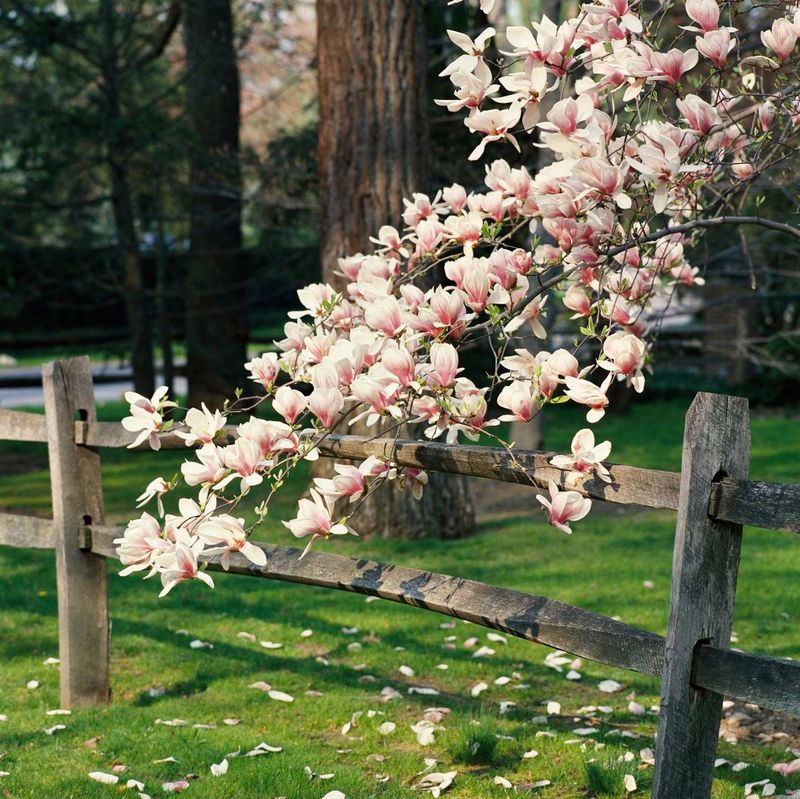
Magnolias have a way of making even the most ordinary Michigan yard feel like something out of a magazine.
The Star Magnolia, Magnolia stellata, is one of the best varieties for Michigan because it handles cold winters in USDA zones 4 through 9 without missing a beat.
Its flowers are large, showy, and pure white, opening up on bare branches in early spring before the leaves even begin to appear.
Some magnolia varieties also bloom in soft pink or light purple, giving Michigan gardeners plenty of options to match their landscape style.
The flowers are large enough to be visible from the street, creating an impressive focal point that neighbors will definitely notice.
Because the blooms arrive so early in the season, they bring color to the yard at a time when everything else still looks bare and gray.
Magnolias prefer full sun and slightly acidic, well-drained soil, which is easy to achieve in many parts of Michigan.
They grow at a moderate pace and stay manageable in size, making them a smart pick for yards that do not have unlimited space.
A fun fact worth knowing: magnolias are among the oldest flowering plants on Earth, with fossils dating back over 20 million years.
Planting one in your Michigan yard means connecting your landscape to something truly ancient and extraordinary.
4. Crabapple (Malus spp.)
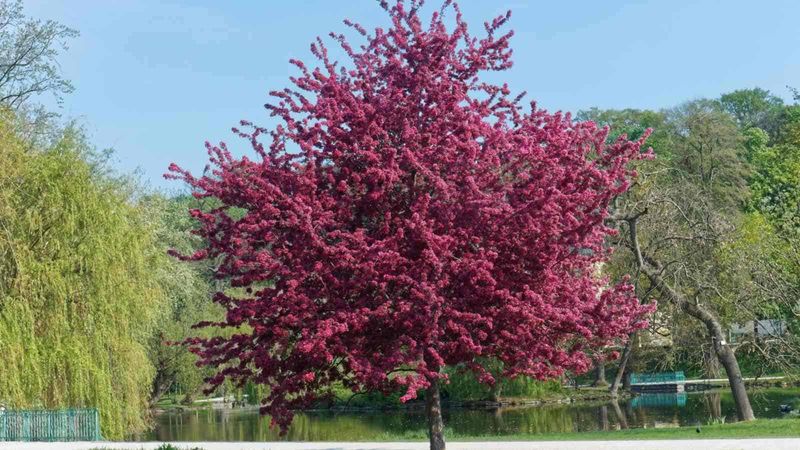
Spring in Michigan would not feel complete without the sight of a Crabapple tree exploding into a cloud of pink and white blossoms.
Malus spp. is one of the most popular flowering trees in the state, and for good reason. These trees are hardy in USDA zones 4 through 8, which covers virtually all of Michigan, and they bloom reliably every single spring without fail.
Beyond the incredible flowers, Crabapples are also known for attracting pollinators in large numbers.
Bees swarm the blossoms as soon as they open, and birds return in fall to feed on the small colorful fruits that follow.
Michigan gardeners who want a yard full of wildlife activity will find that a Crabapple tree is one of the best investments they can make.
Disease-resistant varieties are widely available now, which means you can enjoy all the beauty with far fewer problems than older varieties used to cause.
Crabapples grow 10 to 20 feet tall depending on the variety, fitting nicely into yards of almost any size across Michigan.
They require full sun and adapt well to different soil types, from sandy soils common in western Michigan to the heavier clay soils found in other parts of the state.
Low maintenance, stunning, and wildlife-friendly, the Crabapple earns its spot on every Michigan gardener’s wish list every single year.
5. Serviceberry (Amelanchier spp.)
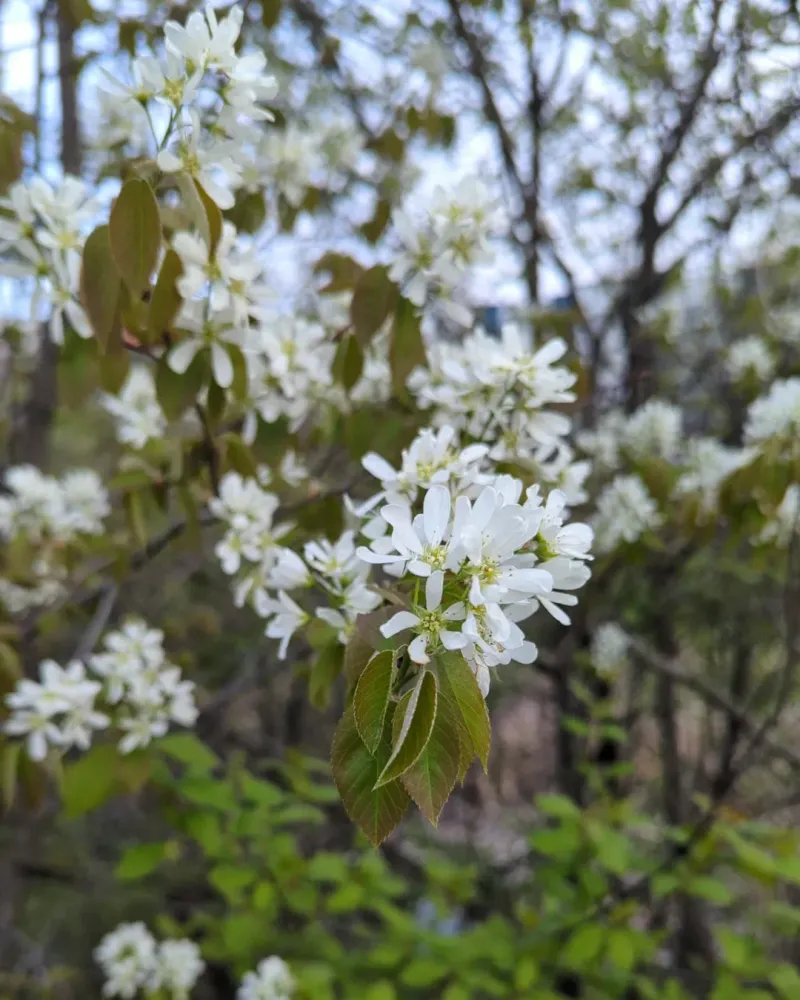
Not many trees can match the Serviceberry when it comes to giving Michigan gardeners something to enjoy across every single season.
Amelanchier canadensis, commonly called Downy Serviceberry, is one of the first trees to bloom each spring, producing delicate white flowers that appear even before the forsythia fully opens.
Hardy in USDA zones 4 through 9, this tree was practically made for Michigan’s climate. By early summer, those flowers transform into blue-purple berries that are sweet, edible, and absolutely irresistible to birds.
If you want to attract cedar waxwings, robins, and other Michigan native birds to your yard, planting a Serviceberry is one of the most effective moves you can make. The berries are also delicious for people and can be used in jams, pies, and fresh eating.
Fall brings yet another reward, as the foliage shifts into brilliant shades of orange, red, and gold that rival even the most colorful maples in the neighborhood.
Serviceberries grow 15 to 25 feet tall and adapt to a wide range of soil conditions, though they prefer well-drained soil and thrive in full sun to partial shade.
For Michigan homeowners interested in native plant gardening, this tree is an essential addition. It supports local ecosystems, looks stunning year-round, and requires very little care once it settles into the landscape.
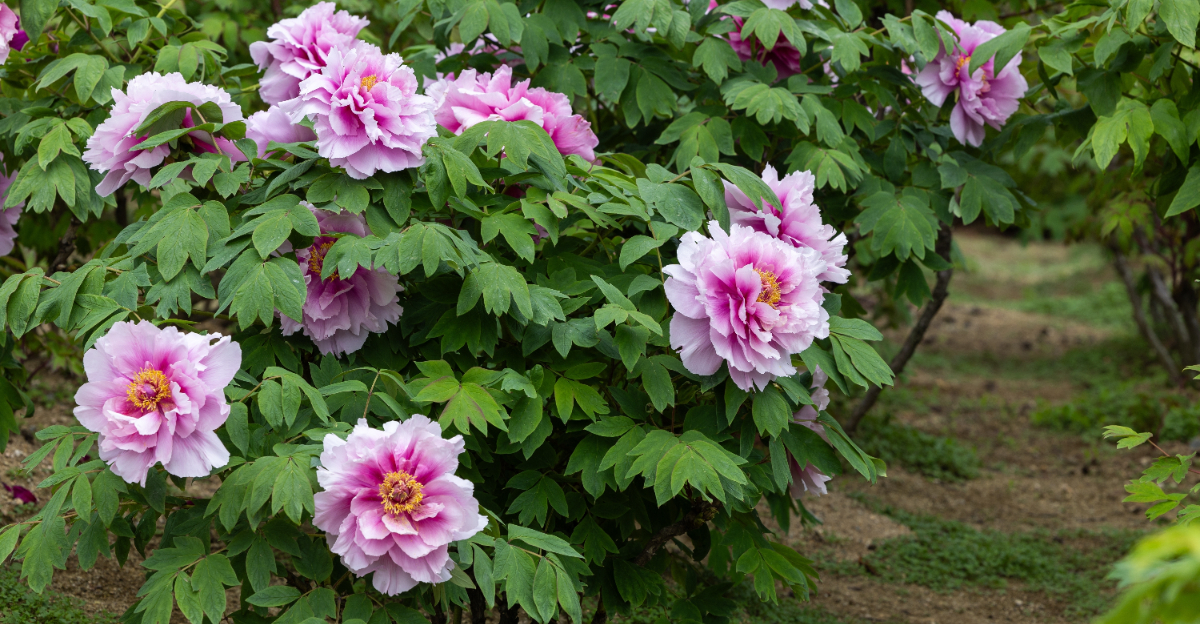
6. Tree Peony (Paeonia spp.)
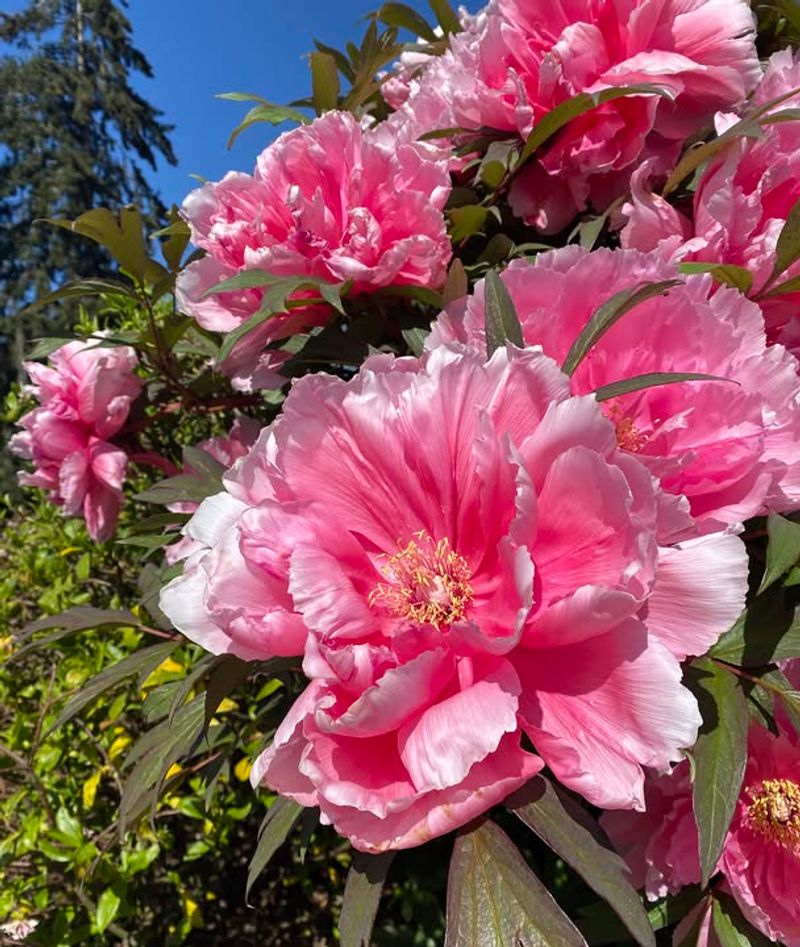
If you have ever wanted a tree that looks like it belongs in a fancy botanical garden, the Tree Peony is exactly what you need in your Michigan yard.
Paeonia spp. produces some of the most jaw-dropping blooms in the entire plant world, with flowers that can stretch up to 12 inches across in shades of pink, red, white, and even soft yellow.
Hardy in USDA zones 4 through 9, these trees handle Michigan’s cold winters and come back stronger each spring.
Unlike herbaceous peonies that disappear underground each winter, Tree Peonies keep a woody framework year-round.
That means they establish a permanent presence in your garden and grow more impressive with every passing year.
Late spring is when they truly shine, filling the yard with large, fragrant blooms that last for several weeks and perfume the air around them.
Tree Peonies prefer a spot with full sun to partial shade and well-drained soil that does not stay soggy after heavy Michigan rains.
They grow slowly but steadily, eventually reaching 3 to 5 feet tall, which makes them a great fit for smaller yards or mixed garden borders.
Once established, they are surprisingly tough and long-lived, with some plants known to bloom beautifully for 50 years or more. Planting a Tree Peony in Michigan is truly an investment in decades of breathtaking spring color.
7. Tulip Tree (Liriodendron tulipifera)
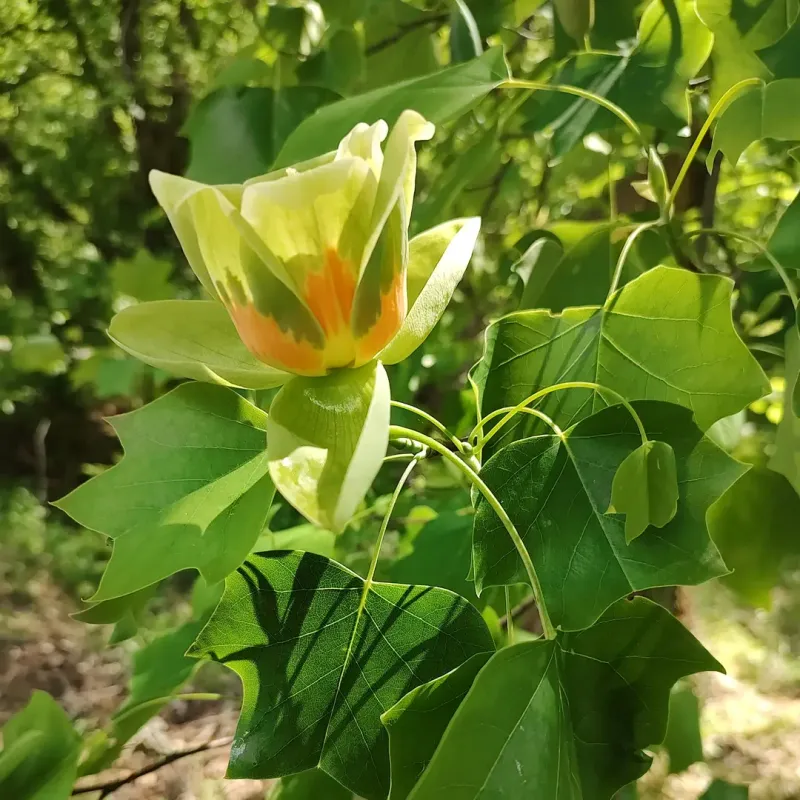
Standing beneath a Tulip Tree in full bloom is one of those experiences that Michigan gardeners never forget.
Liriodendron tulipifera is the tallest native flowering tree in North America, and its unique yellow-green flowers with orange bands at the base genuinely look like tulips perched high up in the canopy.
Hardy in USDA zones 4 through 9, this magnificent tree thrives across Michigan from the southern counties all the way up through the northern Lower Peninsula.
Blooms appear in mid-spring, typically in May and June, and attract pollinators including bees, hummingbirds, and a variety of butterfly species.
The flowers sit near the top of the tree, so they are best appreciated from a distance or spotted from an upstairs window as they open up against a blue Michigan sky.
Beyond the blooms, the Tulip Tree grows remarkably fast, adding shade to your yard far sooner than most other large trees would.
Full sun and well-drained soil are what this tree needs to perform at its best, and it adapts well to the range of soil types found throughout Michigan.
Mature trees can reach 60 to 90 feet tall, so they work best in larger yards where there is plenty of room to grow upward.
For Michigan homeowners who want a statement tree that also supports pollinators and creates generous summer shade, the Tulip Tree delivers on every front beautifully.