8 Hardy Plants That Survive Michigan Winters Without Trouble
Some plants do not just survive Michigan winters, they handle them with ease. Freezing temperatures, heavy snow, and icy winds can be tough on a garden, yet certain plants return every year without struggle.
Gardeners across Michigan often rely on these hardy choices because they stay strong through deep frost, bounce back in spring, and require far less protection than more delicate varieties.
Many of these plants are naturally built for cold climates. Deep roots help them stay stable in frozen soil, while tough foliage and sturdy structure protect against winter damage.
Even during long stretches of cold weather, they hold their shape and recover quickly once temperatures begin to rise. The result is a garden that feels dependable, even after the harshest season passes.
Choosing winter hardy plants helps create a landscape that stays resilient, low maintenance, and consistently healthy despite Michigan’s demanding winters.
1. Eastern White Pine (Pinus Strobus)
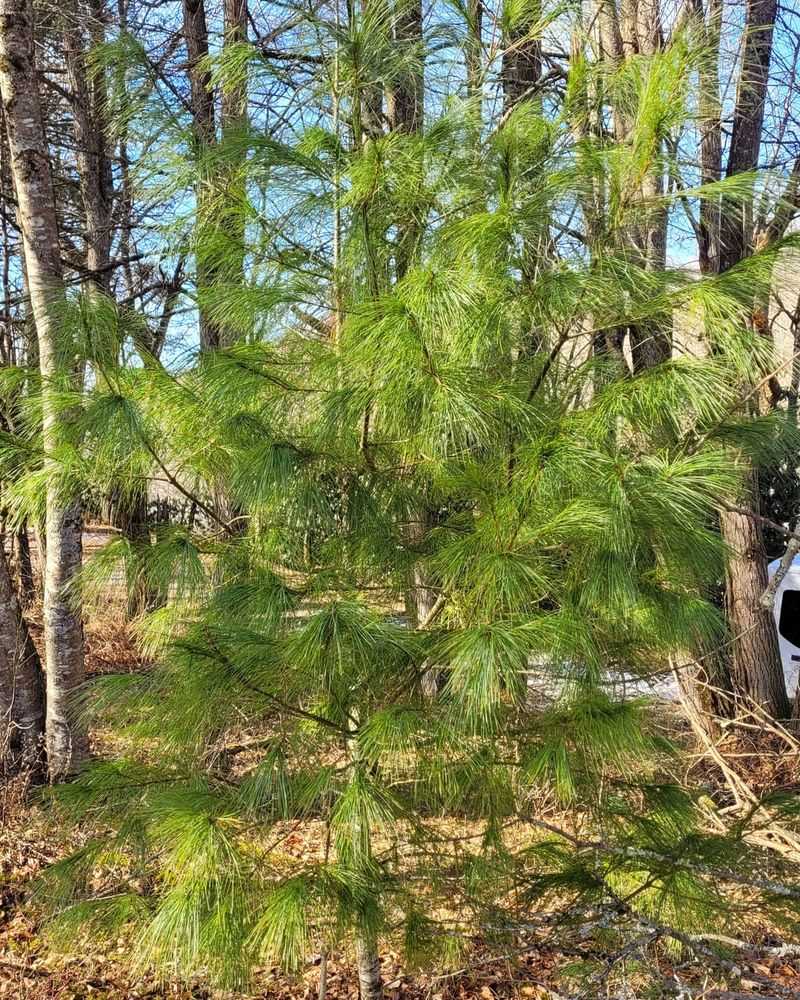
Native to Michigan forests, this majestic evergreen stands tall through the harshest winter storms. Its soft, blue-green needles grow in bundles of five, creating a delicate appearance that belies incredible strength.
The flexible branches bend under heavy snow loads rather than breaking, protecting the tree from damage.
The needles themselves contain special compounds that prevent ice crystals from forming inside their cells.
This natural antifreeze allows them to stay green and functional even when temperatures plummet well below zero. The thick, furrowed bark provides additional insulation for the living tissue underneath.
Mature trees develop deep root systems that anchor them firmly against strong winter winds.
Young trees benefit from their conical shape, which sheds snow efficiently and prevents branch breakage. The dense foliage also creates valuable shelter for birds and wildlife during brutal winter weather.
This pine tolerates Michigan’s freeze-thaw cycles without suffering crown damage or needle browning. It grows well in various soil types and requires minimal care once established.
Whether planted as a specimen tree or windbreak, Eastern white pine remains a reliable choice for year-round beauty in Michigan landscapes.
2. Norway Spruce (Picea Abies)
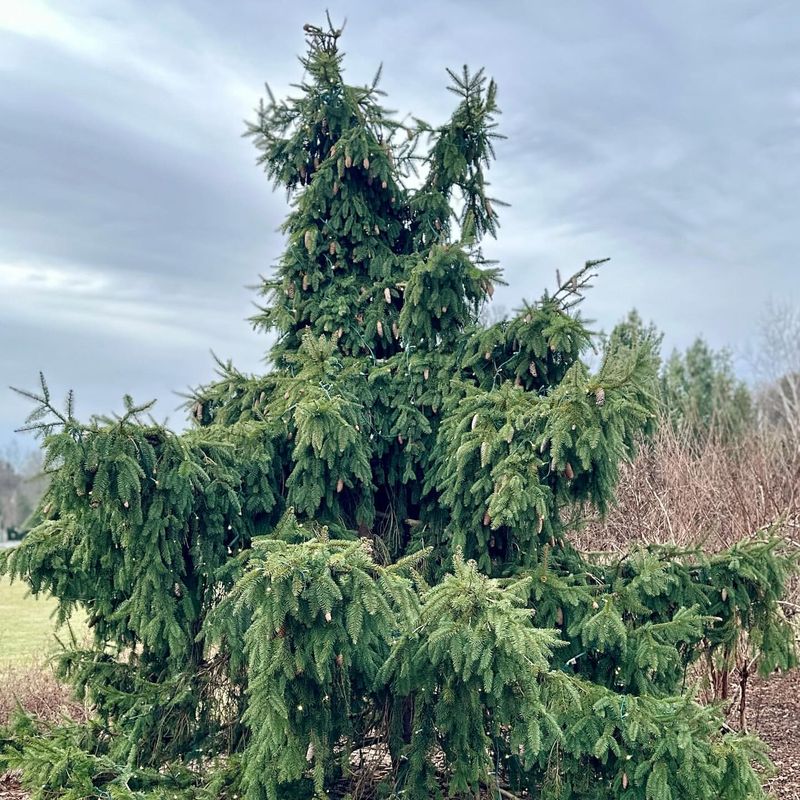
Originally from Scandinavia, Norway spruce has proven itself across Michigan’s coldest regions. The dark green needles stay vibrant throughout winter, maintaining their color when other plants fade.
Drooping branches give this tree a distinctive appearance while serving an important function during snowy months. The downward-hanging branches naturally shed accumulated snow before weight becomes problematic.
This adaptation prevents the limb breakage that affects many evergreens during ice storms. The short, sharp needles have a waxy coating that reduces moisture loss during freezing conditions.
Norway spruce develops a remarkably dense root system that spreads wide rather than deep. This growth pattern provides excellent stability against winter winds while accessing nutrients from frozen soil.
The tree’s pyramid shape minimizes wind resistance and prevents snow accumulation on upper branches.
These evergreens tolerate temperatures far below what Michigan typically experiences, making them virtually worry-free.
They grow relatively quickly compared to other conifers, establishing themselves within just a few seasons. The year-round greenery provides privacy screening and windbreak protection when deciduous plants stand bare.
Norway spruce asks for little maintenance while delivering reliable performance through decades of harsh winters.
3. Daylily (Hemerocallis)
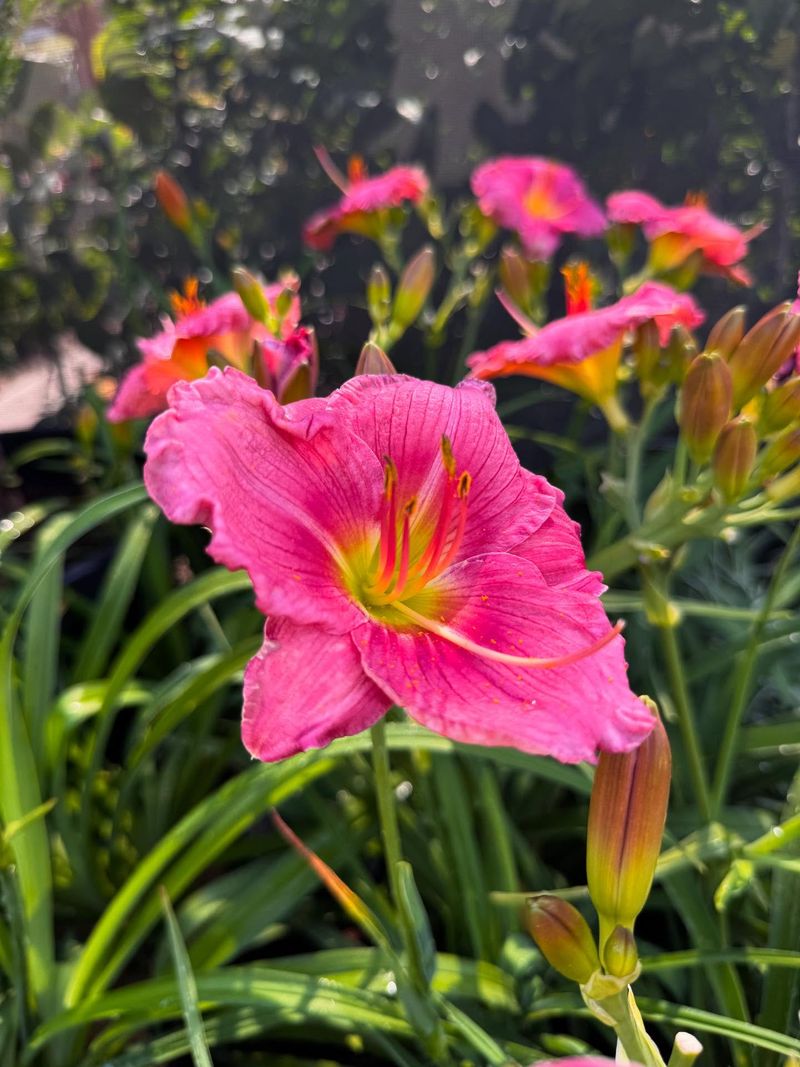
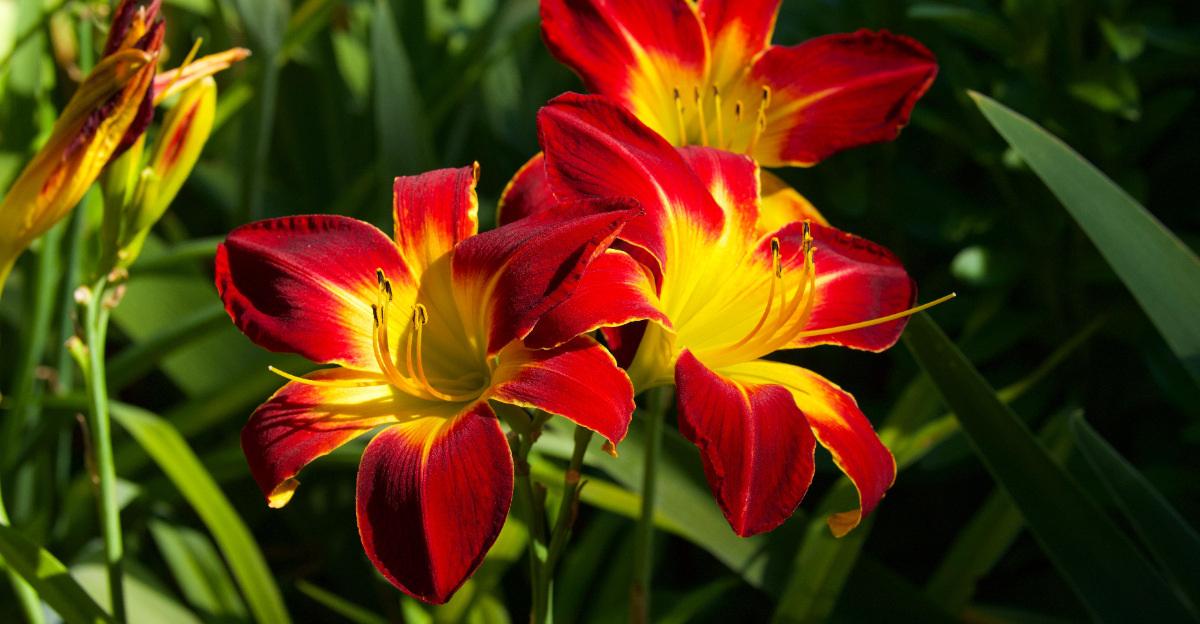
Few perennials match the daylily’s ability to bounce back after Michigan’s frozen months. Above-ground foliage completely disappears before winter arrives, but underground storage roots remain very much active.
These thick, fleshy roots contain everything needed for spectacular spring regrowth. The roots store carbohydrates and moisture throughout the growing season, preparing for winter dormancy.
When soil freezes solid, the roots enter a resting state that protects them from cold damage. This natural cycle has evolved over thousands of years, making daylilies perfectly adapted to temperature extremes.
Snow cover actually benefits these plants by providing insulation against temperature fluctuations. The soil beneath snow maintains a more consistent temperature than exposed ground.
When spring warmth returns, new shoots emerge quickly and begin their growth cycle without missing a beat.
Daylilies require zero winter protection or special preparation in Michigan gardens. Simply cut back the foliage after frost and let nature handle the rest. The plants multiply over time, forming larger clumps that bloom more abundantly each year.
Their reliability and low maintenance make them favorites among gardeners who want beautiful results without constant worry about winter survival.
4. Hostas
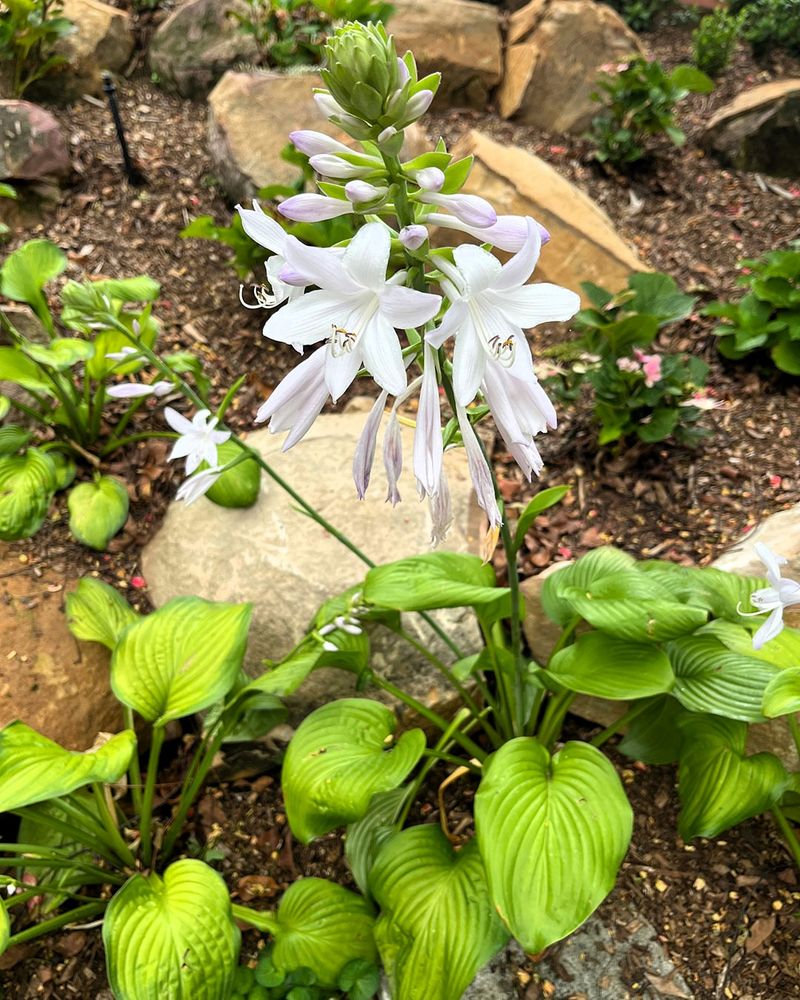
Shade-loving hostas completely vanish before winter sets in, leaving gardeners wondering where they went.
The lush leaves that filled shady corners throughout summer decompose naturally, returning nutrients to the soil. Below ground, tough crowns wait patiently for spring, protected by several inches of earth.
The crown contains numerous growth buds that remain dormant during freezing weather. Soil acts as a perfect insulator, maintaining temperatures above critical damage thresholds even when air temperatures plunge.
The fleshy roots continue minimal activity, absorbing moisture when conditions allow. Hostas actually benefit from cold winter temperatures, which help break their natural dormancy cycle.
Without adequate chilling, spring growth can be delayed or weakened. Michigan’s climate provides exactly what these plants need for vigorous annual renewal.
Adding a light mulch layer offers extra protection in exposed locations, though established plants rarely need it. The mulch prevents rapid temperature swings that can stress dormant crowns.
Come spring, distinctive shoots push through the soil with remarkable speed, unfurling into the beautiful foliage gardeners anticipate.
Hostas prove that disappearing completely can be the smartest winter survival strategy, allowing them to thrive in Michigan gardens for decades without special care or attention.
5. Sedum (Cold-Hardy Varieties)
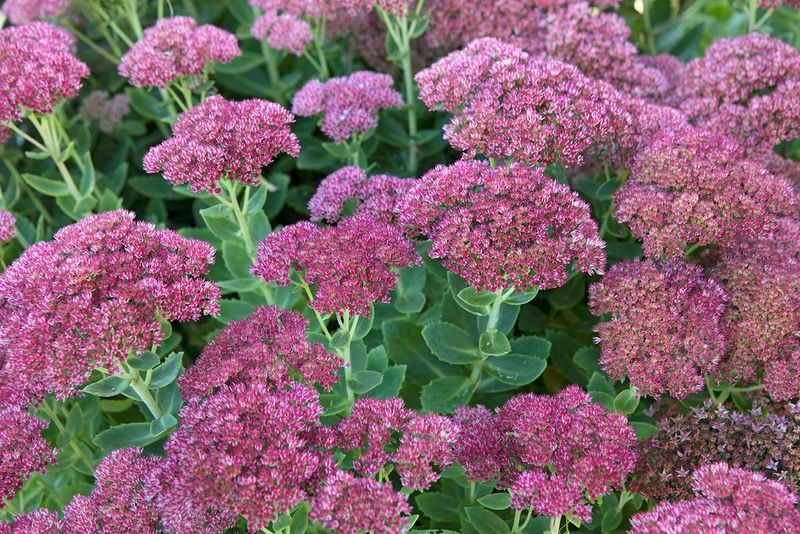
Succulent sedums bring unexpected toughness to Michigan gardens despite their delicate appearance.
The fleshy leaves contain moisture reserves that help them survive when water becomes unavailable. Hardy varieties like Autumn Joy actually look attractive through winter, with dried flower heads standing tall above snow.
The thick leaves have specialized cells that prevent ice crystal formation during freezing temperatures. This cellular adaptation allows tissues to remain flexible rather than rupturing when frozen.
The waxy leaf coating further reduces moisture loss during dry winter winds. Root systems on hardy sedums spread horizontally, creating dense mats that insulate themselves.
These shallow but extensive roots quickly absorb moisture during winter thaws before soil refreezes. The plants can photosynthesize on mild winter days, maintaining minimal growth even during cold months.
Sedums require excellent drainage to prevent crown rot, which becomes their only real winter concern. Raised beds or slopes provide ideal conditions where water never pools around roots. The plants actually prefer lean soil and need no fertilization or amendments.
Their ability to thrive in challenging conditions makes them perfect for rock gardens, borders, and difficult spots where other perennials struggle.
These remarkable succulents prove that cold-hardy doesn’t mean boring, offering texture and interest throughout every season.
6. Coneflower (Echinacea Purpurea)
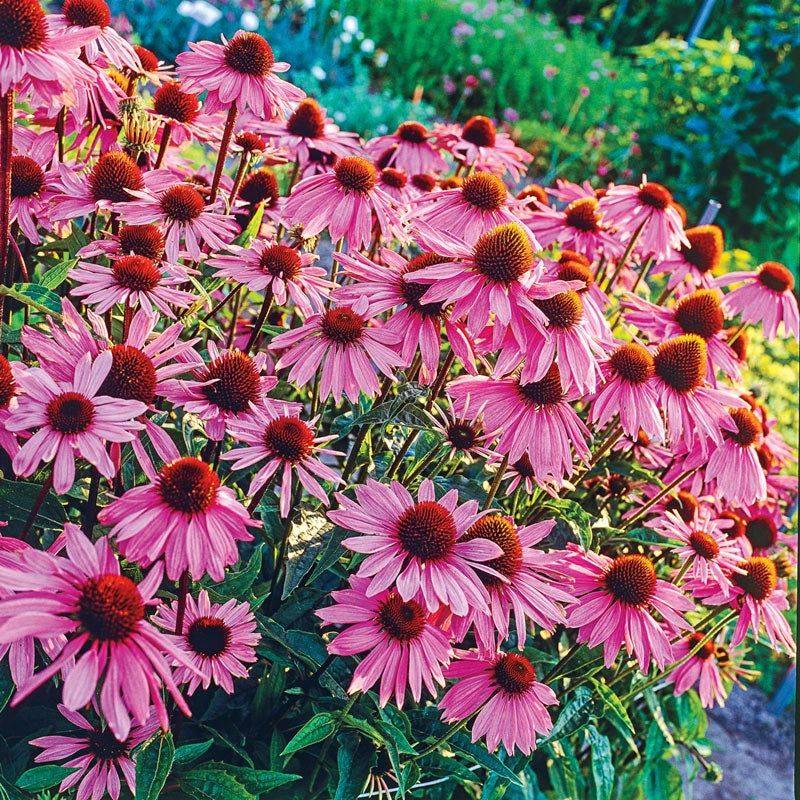
Purple coneflowers add prairie toughness to Michigan landscapes, evolved to handle far worse conditions than our winters bring.
The sturdy stems remain standing long after frost arrives, providing winter interest and wildlife food. Goldfinches flock to the seed heads, creating lively garden scenes throughout cold months.
Deep taproots extend far below the frost line, anchoring plants and accessing moisture unavailable to shallow-rooted species. These roots store energy reserves accumulated during the growing season.
The thick, woody taproot resists rot and damage from freeze-thaw cycles that challenge other perennials.
Crown buds form at soil level before winter, protected by the base of dried stems and natural leaf litter. These buds remain completely dormant until consistent spring warmth triggers growth.
The plant’s natural cycle perfectly matches Michigan’s climate patterns, requiring no intervention from gardeners.
Coneflowers actually prefer cold winters, which reduce pest populations and disease pressure for the following season.
Cutting back stems in fall removes this natural protection and food source for birds. Leaving them standing until spring provides better winter survival and ecological benefits.
These native perennials spread slowly over time, forming robust clumps that bloom more heavily each year while asking absolutely nothing in return for their reliable performance.
7. Black-Eyed Susan (Rudbeckia Hirta / Fulgida)
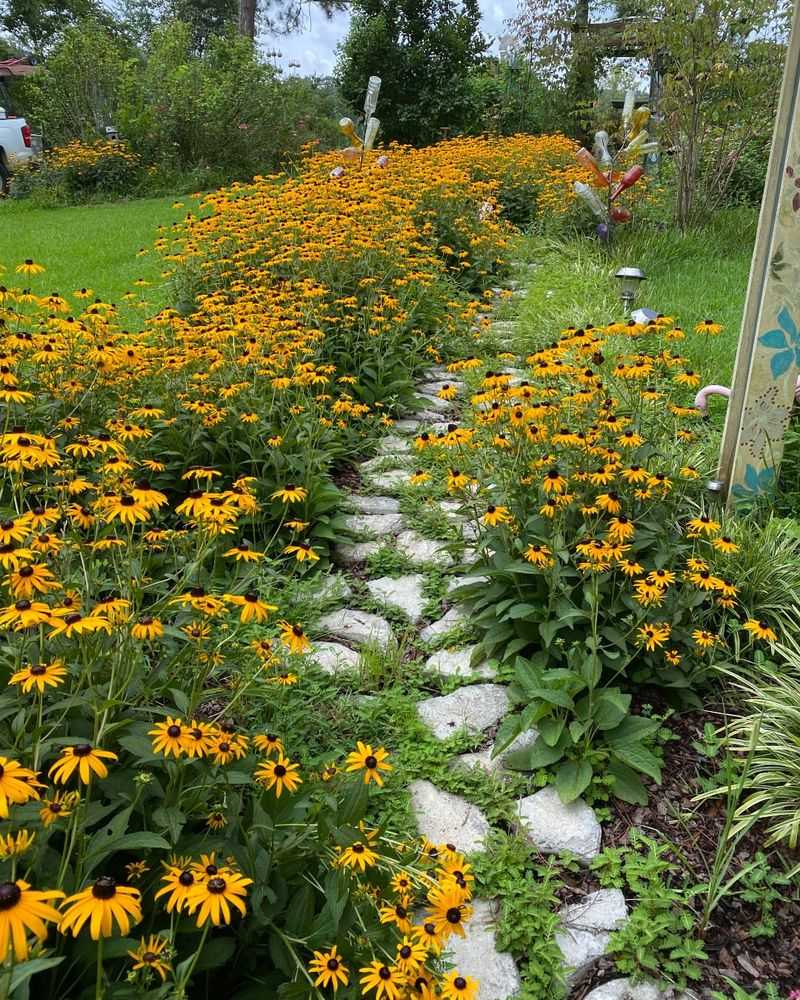
Cheerful black-eyed Susans bring prairie resilience to modern gardens, laughing at Michigan winters. The golden flowers of summer give way to prominent seed heads that persist through snow and ice.
These dried structures provide food for birds while protecting the crown below from temperature extremes.
Rudbeckia species employ a clever survival strategy involving both perennial roots and prolific self-seeding.
Established plants survive through tough underground crowns similar to other perennials. Meanwhile, seeds scattered in fall germinate the following spring, ensuring population continuity even if individual plants struggle.
The fibrous root system spreads through the top soil layers, quickly establishing new plants from seed. These roots tolerate frozen ground remarkably well, resuming growth immediately when conditions improve.
Some varieties behave as short-lived perennials, relying more heavily on reseeding than long-term root survival.
Black-eyed Susans thrive in full sun and tolerate poor soil, making them perfect for challenging locations.
They spread enthusiastically in favorable conditions, filling spaces with reliable color year after year. The plants require no deadheading, fertilizing, or winter protection to perform beautifully.
Their carefree nature and bright blooms make them garden favorites that return faithfully despite whatever winter throws their way, proving that native plants often outperform fussier alternatives.
8. Boxwood (Cold-Hardy Varieties)
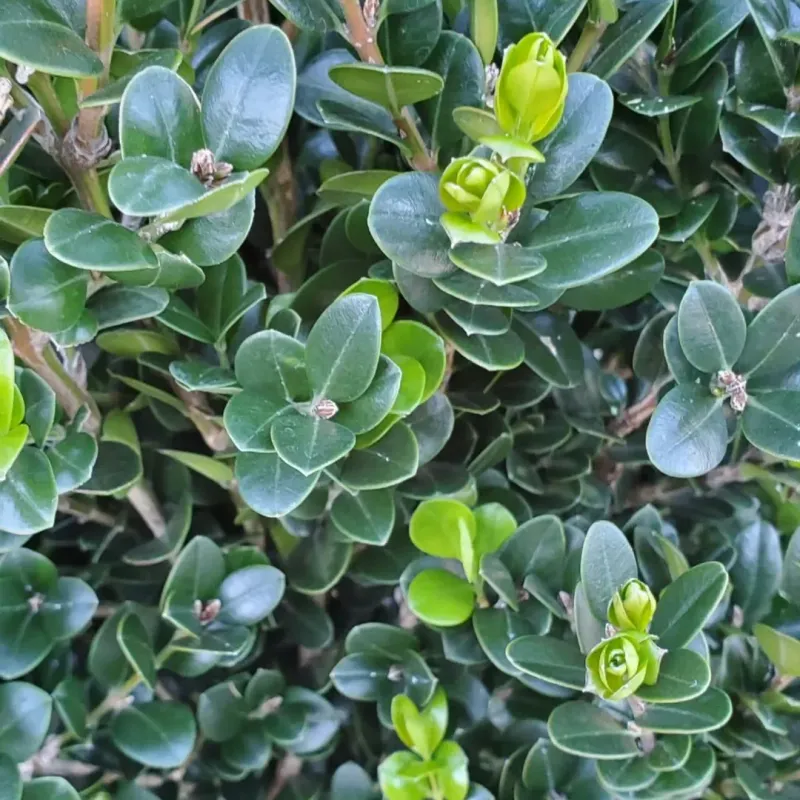
Not all boxwoods tolerate Michigan winters, but cold-hardy cultivars like ‘Green Gem’ and ‘Green Mountain’ perform admirably.
These compact evergreens maintain their dense foliage year-round, providing structure when gardens otherwise lack form. The small, leathery leaves resist winter damage when plants receive proper siting and care.
Cold-hardy varieties have been specifically bred to tolerate temperatures well below zero without leaf browning.
The key lies in choosing proven cultivars rather than southern varieties that suffer in northern climates. Proper placement away from harsh winds and afternoon winter sun prevents the most common damage.
Boxwood leaves contain waxy coatings that reduce moisture loss during freezing conditions. The dense branching pattern creates a microclimate within the shrub that moderates temperature extremes.
Plants establish deep roots over several seasons, improving their cold tolerance and drought resistance significantly.
Winter protection becomes necessary only in extremely exposed locations or during establishment years.
Burlap screens block drying winds without creating heat that causes premature spring growth. Adequate fall watering ensures plants enter winter fully hydrated, reducing stress from frozen soil.
These evergreen shrubs provide year-round garden structure and formality, proving that careful variety selection makes all the difference between winter success and disappointment in Michigan landscapes.