Here’s How Pennsylvania Gardeners Can Change The Color Of Their Hydrangeas
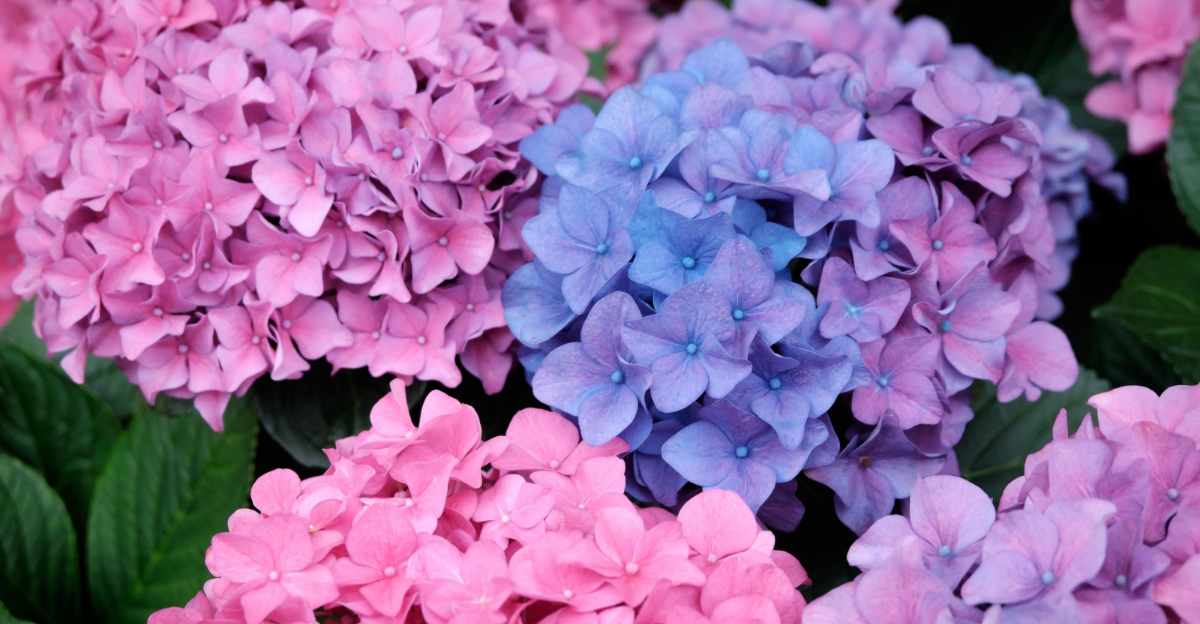
The vibrant color of a Pennsylvania hydrangea isn’t just luck – it’s a living chemistry experiment happening right under your feet.
While one yard glows with electric blue, the next might blush with soft pink, all thanks to our state’s diverse soil chemistry.
This gives local gardeners a unique advantage to “tune” their flower colors in ways others simply can’t.
By mastering variables like soil pH and aluminum availability, you can influence whether your shrubs lean toward cool ocean tones or warm rosy hues.
Whether you’re working with Piedmont clay or Allegheny loam – the power to change your palette is in your hands.
With a little patience and a solid local strategy, you can transform your garden into a custom-colored masterpiece season after season.
1. Start With Bigleaf And Mountain Hydrangeas
Not all hydrangeas respond to soil adjustments—knowing which types to plant is the first critical step.
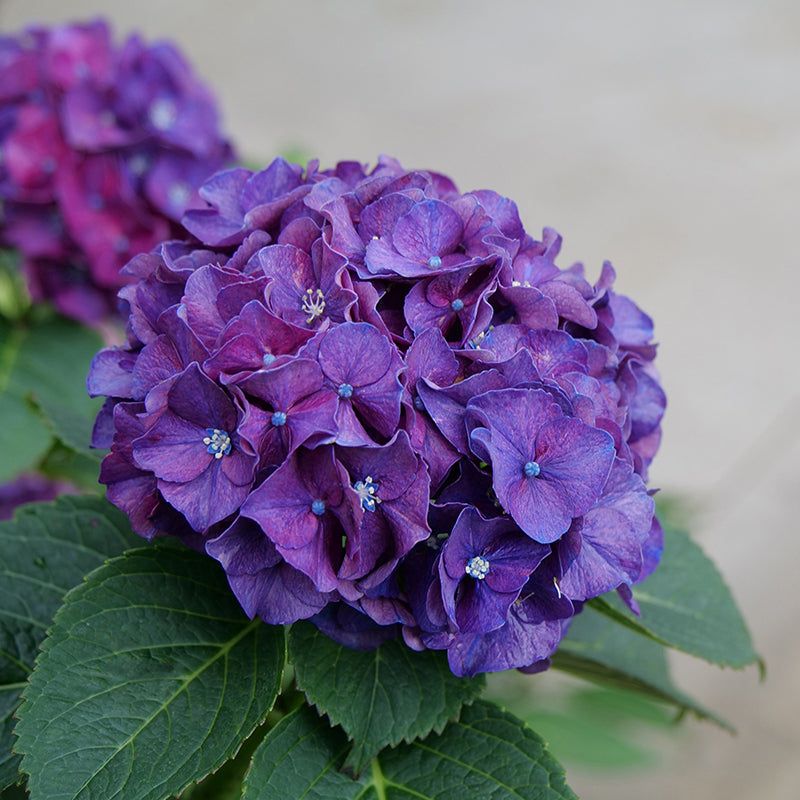
Bigleaf hydrangeas (Hydrangea macrophylla) and mountain hydrangeas (H. serrata) are the true color-shifters – they respond to soil pH and aluminum availability, allowing gardeners to nudge blooms toward blue or pink.
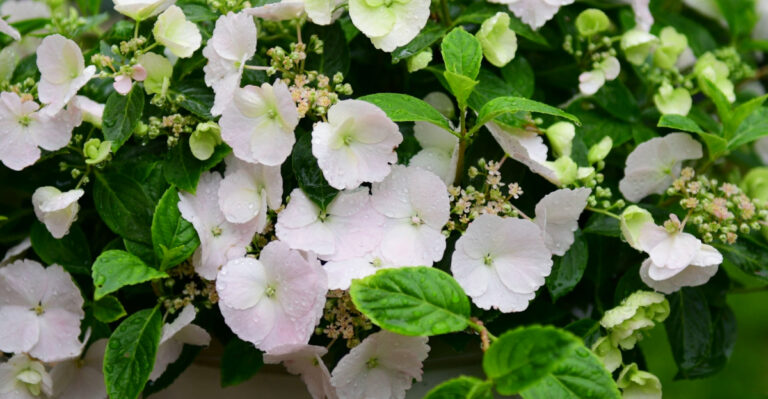
This includes both mophead varieties with large, rounded flower clusters and lacecap types with flatter, more delicate blooms.
Other types – panicle, oakleaf, and smooth hydrangeas like Annabelle – bloom white or cream regardless of soil conditions, so attempting to change their color is ineffective.
Starting with the right species saves time, money, and frustration, especially in Pennsylvania where soil variation can already create unpredictable results.
Look for cultivars known for strong color response, such as Nikko Blue or Endless Summer, and double-check plant tags or consult knowledgeable nursery staff.
Choosing the correct species sets the stage for successful color management, and ensures your soil amendments have a visible effect on blooms rather than wasted effort.
2. Soil pH Is The Real Color Switch
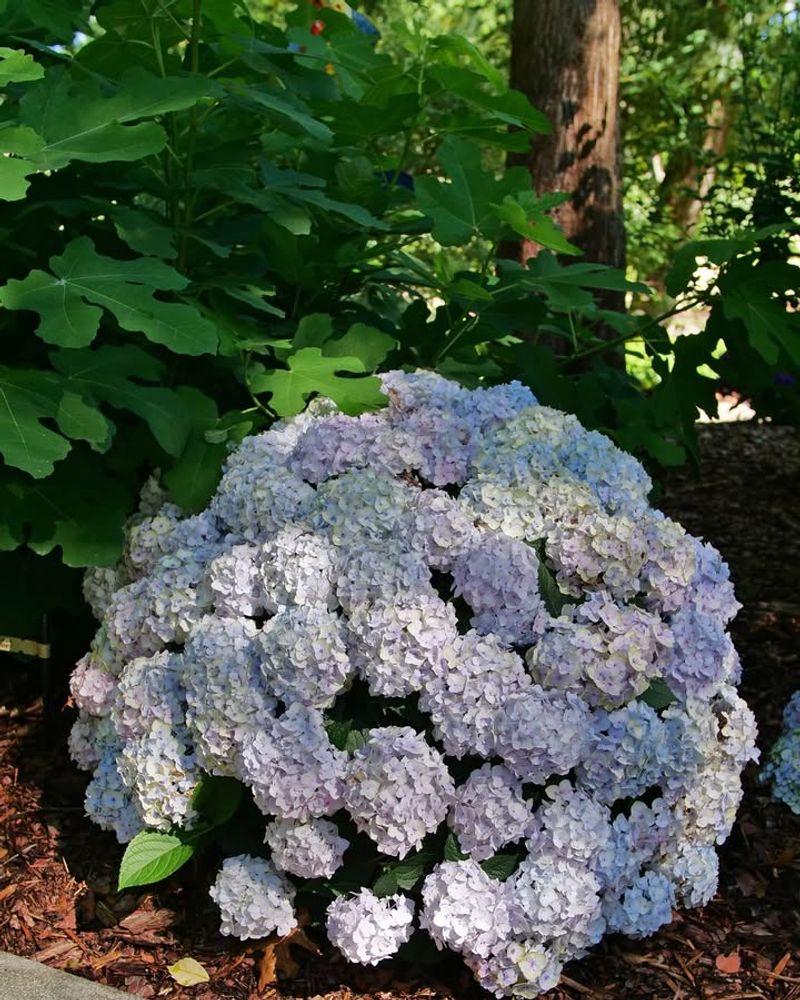
The secret behind hydrangea color isn’t the flowers themselves – it’s the soil chemistry controlling aluminum uptake. Bigleaf and mountain hydrangeas absorb aluminum from acidic soils, which encourages blooms to lean toward blue or purple.
Pennsylvania soils tend to be slightly acidic in many areas, but local variations can shift the results dramatically, so testing is essential.
A pH between 4.5 and 5.5 generally encourages aluminum absorption and blue blooms, while higher pH levels – around 6.0 to 6.5 – reduce aluminum availability and push blooms toward pink.
Microclimates and nearby construction or amendments – like concrete foundations, old lime, or purchased raised-bed soil – can alter the pH even within a single yard.
By understanding your baseline, you can adjust gradually – using aluminum sulfate for a quicker effect or elemental sulfur for slower, long-term management – without stressing the plant.
Small, consistent steps over time tend to produce more reliable color shifts than one large application, and monitoring soil annually helps Pennsylvania gardeners maintain the shades they want while keeping the plants healthy and vigorous.
3. A Soil Test Keeps You From Guessing
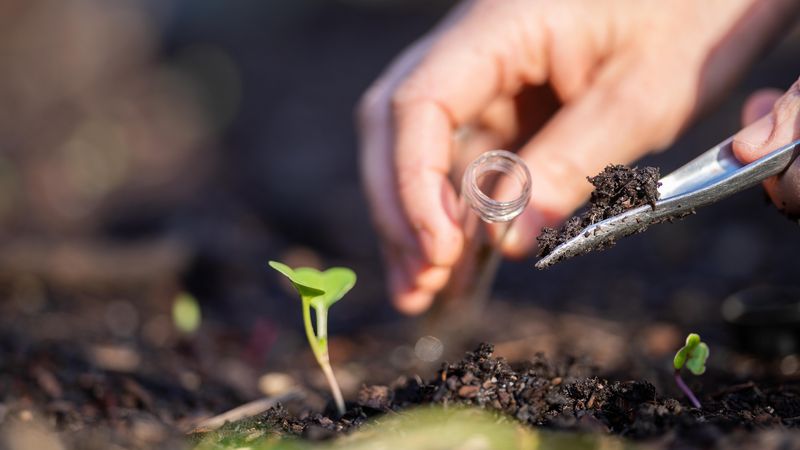
Every spring, Pennsylvania’s cooperative extension offices see a wave of gardeners who amended their soil heavily based on guesswork and ended up with stressed plants and muddy bloom colors instead of crisp blues or clean pinks.
A simple soil test takes that guesswork completely out of the picture.
You can pick up an inexpensive home test kit at most garden centers, or send a soil sample to a lab through your county’s cooperative extension office for a more detailed report.
A lab test will tell you your current pH, your nutrient levels, and often your soil’s organic matter content. That information tells you exactly how far you need to move the needle and how much amendment to apply.
Without it, you risk over-acidifying or over-liming, both of which can cause real problems for your plants.
Collect soil from several spots around the base of your hydrangea, going about four to six inches deep, and mix the samples together before testing.
Test in early spring before you add anything, and plan to retest after each season of amendments.
Gradual, informed adjustments produce far better results than large one-time applications, and your hydrangeas will respond more reliably when changes happen slowly.
4. How To Nudge Blooms Bluer In Pennsylvania
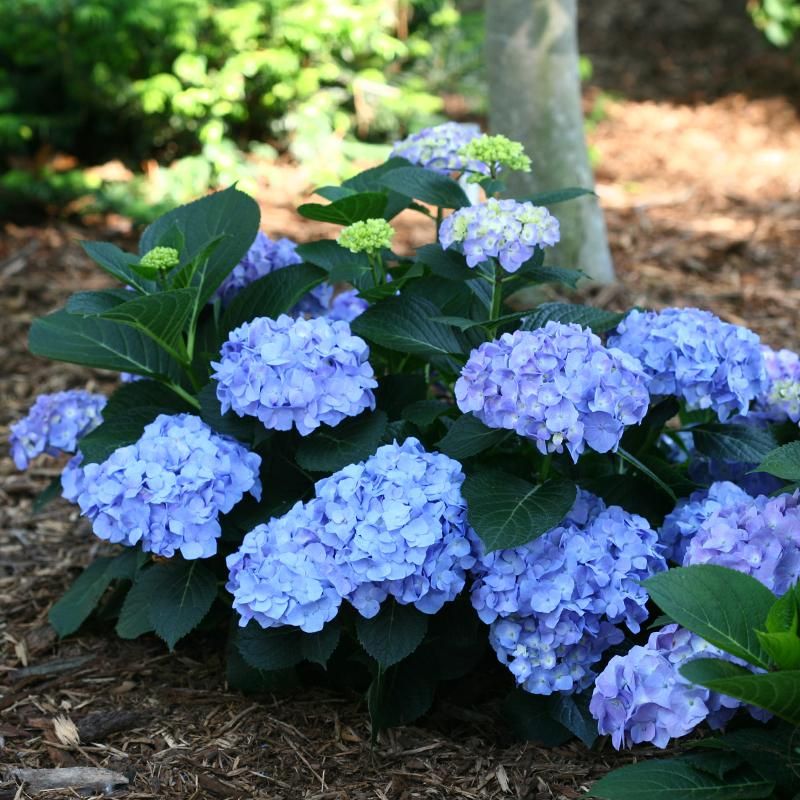
Getting that rich, saturated blue that stops people in their tracks takes a two-part approach: lowering the soil pH and making sure aluminum is actually available.
Aluminum sulfate is the most commonly used product for this purpose, and it works on both fronts at once by acidifying the soil and supplying aluminum directly.
Mix about one tablespoon per gallon of water and drench the soil around the plant’s drip line, keeping the solution away from the main stem.
Elemental sulfur is a slower-acting option that acidifies soil without adding aluminum directly, making it a good choice for long-term pH management. Apply it in fall or early spring and work it lightly into the top inch of soil.
Because Pennsylvania soils often already lean acidic, you may need less amendment than you expect, which is another reason a soil test matters so much before you start.
Aim for a soil pH between 5.0 and 5.5 for reliable blue color. Go below 4.5 and you risk stressing the roots.
Space out applications over multiple months rather than dumping everything at once, and check your pH again after each treatment. Patience and small, consistent steps produce far more dependable results than a single heavy dose.
5. Ways To Bring Out Pinker Blooms In Pennsylvania
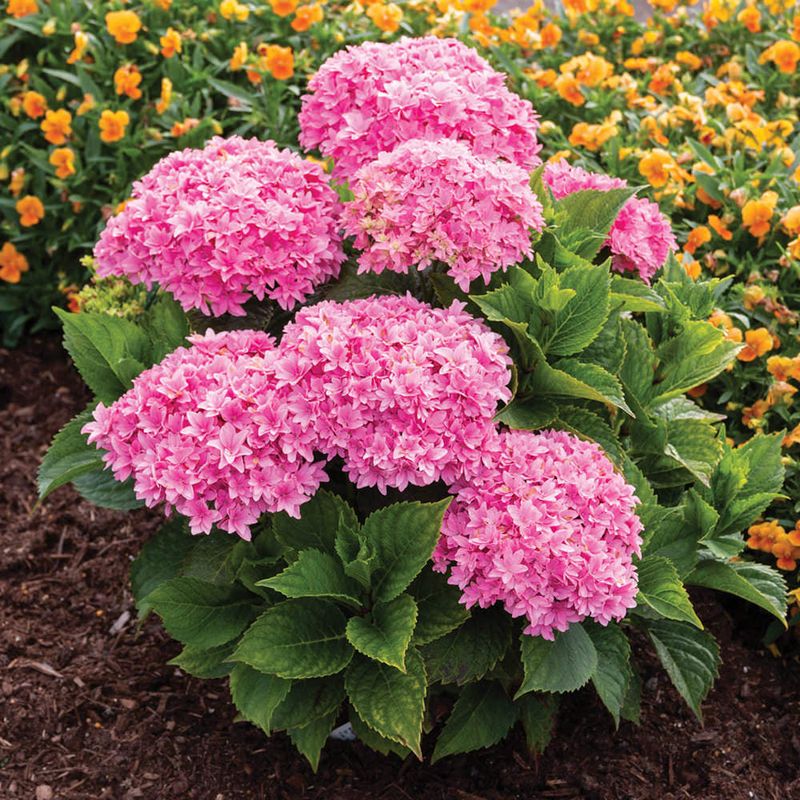
Coaxing a bigleaf hydrangea toward pink in Pennsylvania takes a bit more effort than getting blue, simply because the state’s naturally acidic soils work against you.
The goal is to raise the soil pH above 6.5, which ties up aluminum and prevents the plant from absorbing it.
Garden lime, specifically dolomitic or ground limestone, is the standard tool for this job. Spread it over the soil around your hydrangea and water it in well.
A general starting rate is about four pounds per 100 square feet, but your soil test results should guide the exact amount. Apply lime in fall so it has time to work through the soil before spring blooms develop.
Retest the following spring before adding more, because liming too aggressively can push pH too high and create nutrient deficiencies that cause more harm than a color shift is worth.
Gardeners who grow hydrangeas in containers have a real advantage when chasing pink, because container soil is much easier to control and adjust than in-ground beds.
Using a potting mix with a higher pH from the start, and avoiding acidic fertilizers, can keep container plants reliably pink with less ongoing effort.
Check the container’s drainage to make sure lime does not leach out too quickly.
6. Aluminum Availability Is The Hidden Ingredient
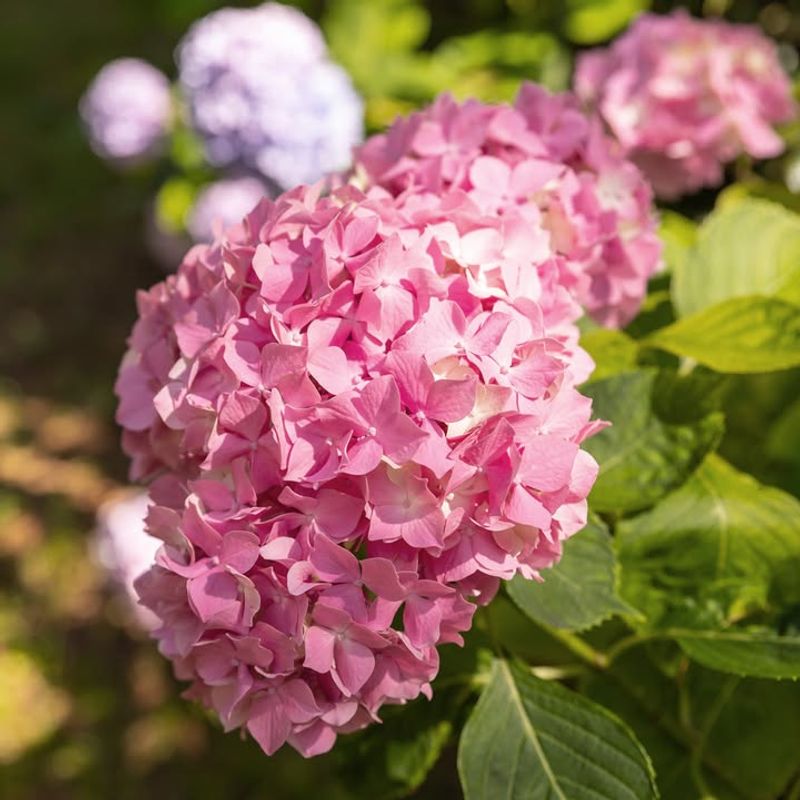
A lot of gardeners focus so heavily on soil pH that they miss the equally important role of aluminum itself. Even if your soil is acidic enough, blue blooms will not develop if there is no aluminum present for the plant to absorb.
Most Pennsylvania soils naturally contain aluminum, but certain soil conditions and amendments can reduce its availability even at the right pH level.
High phosphorus levels in the soil are a common culprit. Phosphorus bonds with aluminum and locks it away, preventing uptake even when conditions otherwise seem ideal.
This is why fertilizers loaded with phosphorus can quietly sabotage your blue color goals, even when your pH looks right on paper. Keeping phosphorus at moderate levels gives aluminum a better chance of moving freely through the soil and into the plant.
Organic matter content also plays a role. Soils rich in organic matter tend to hold aluminum in forms that are harder for plants to access.
That does not mean you should skip compost altogether, but it is worth understanding that heavily amended, very organic soils may resist bluing even when pH is well within the target range.
Balance is the key word in every part of this process, and aluminum availability is no exception.
7. Mulch Choices That Support Your Color Goal
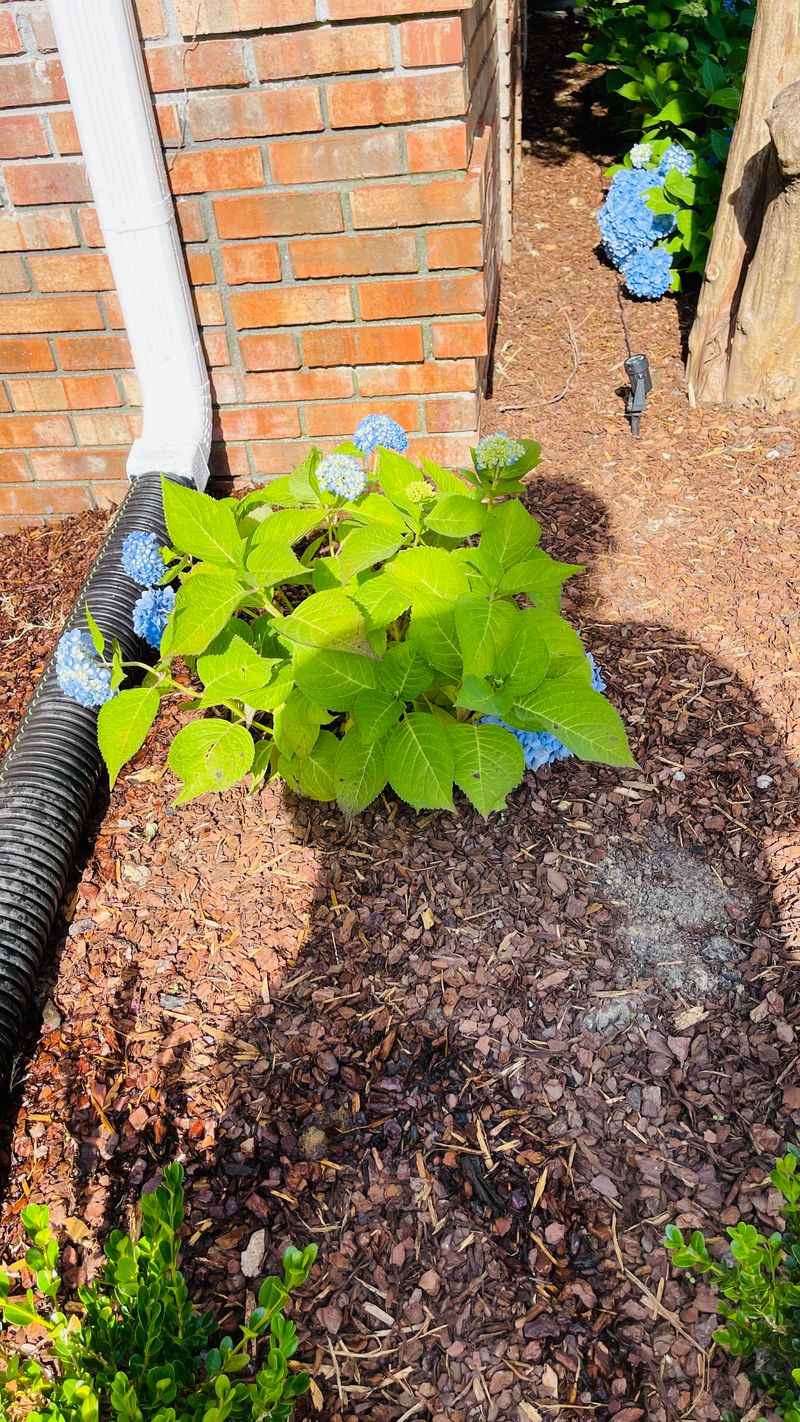
Mulch does a lot more than keep weeds down and hold moisture. The type of mulch you choose can gradually influence your soil’s pH over time, which means it can either support or work against your hydrangea color goals.
For Pennsylvania gardeners chasing blue blooms, pine bark mulch and pine needle mulch are both smart choices because they are naturally acidic and break down slowly, releasing mild acidity into the soil around the plant.
Wood chip mulch made from hardwoods tends to be more neutral and breaks down faster, which is fine for general garden use but less targeted for color work.
Avoid using fresh wood chips in large amounts right around the root zone, as they can temporarily tie up nitrogen during decomposition.
Mushroom compost and similar alkaline composts can raise pH over time, so they are better suited to gardens where you are trying to encourage pink blooms.
Apply mulch in a layer two to three inches deep, keeping it pulled back a few inches from the main stem to prevent moisture buildup against the wood.
Refresh the mulch layer each spring rather than piling on year after year, which can build up too thick and interfere with water and air movement into the root zone.
Small, consistent choices like mulch selection add up meaningfully over a full growing season.
8. Fertilizer Mistakes That Muddle Blue Blooms
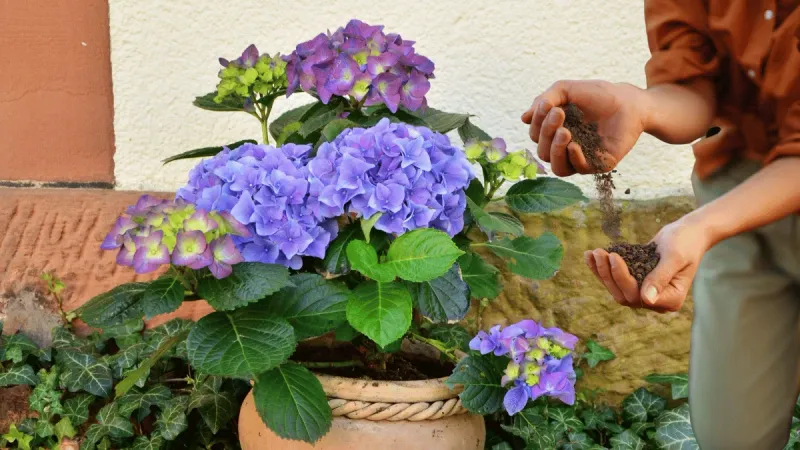
Walk into any Pennsylvania garden center in May and you will find shelves full of fertilizers marketed for flowering shrubs. Most of them are perfectly fine for general use, but some formulas can quietly work against your blue hydrangea goals.
Fertilizers with high phosphorus levels are the main concern, because excess phosphorus in the soil bonds with aluminum and prevents the plant from taking it up, even when the soil pH is exactly where you want it.
A fertilizer labeled something like 10-30-10, with that high middle number representing phosphorus, is the kind to avoid if blue is your target color.
For blue-leaning plants, look for a low-phosphorus formula, or one where potassium is higher than phosphorus.
A ratio closer to 25-5-30 is often recommended for supporting blue bloom development alongside proper soil pH management.
For gardeners hoping to encourage pink, a higher-phosphorus fertilizer can actually support that goal by helping tie up soil aluminum. Either way, avoid over-fertilizing altogether.
Too much nitrogen pushes lush green growth at the expense of blooms, and heavy fertilizer applications can stress roots when combined with pH amendments applied at the same time.
Space out your fertilizing and amending schedule so the plant has time to adjust gradually rather than facing multiple changes at once.
9. Why Purple Blooms Happen In The Middle
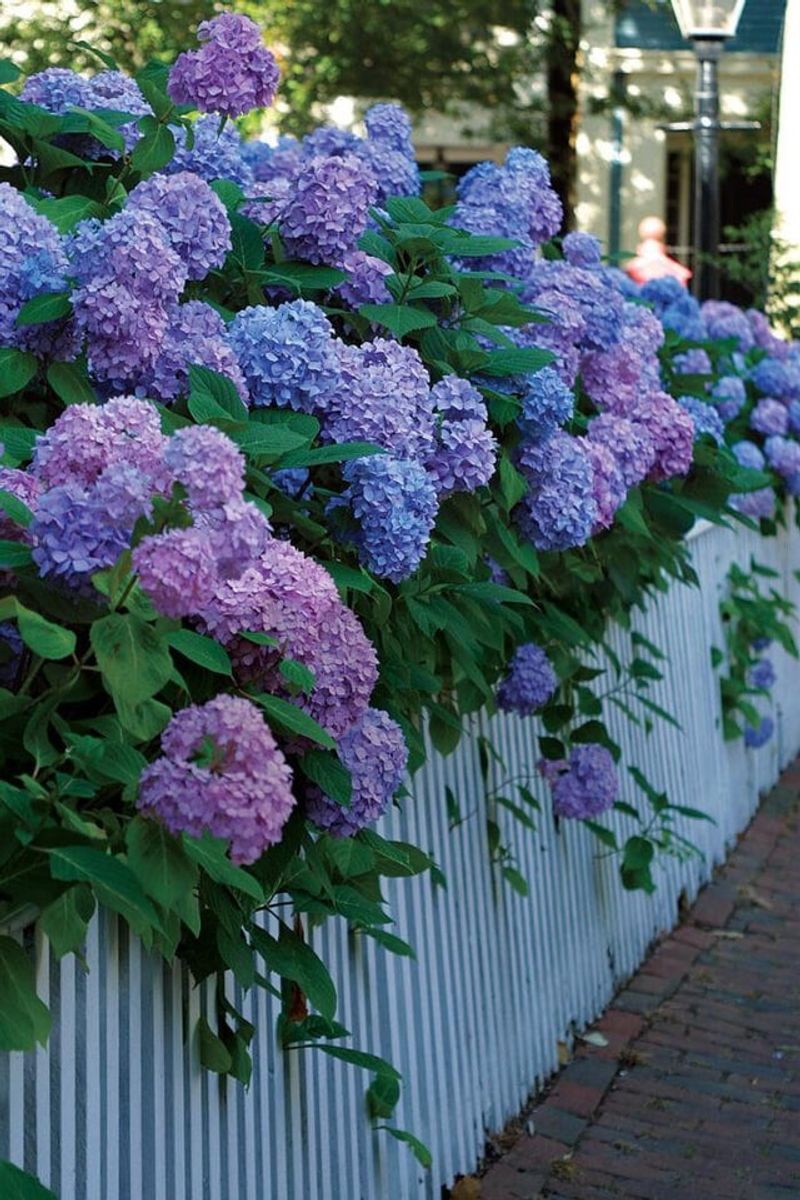
If your bigleaf hydrangea is producing blooms somewhere between blue and pink, landing in that soft lavender or purple zone, you are not doing anything wrong.
Purple blooms are simply what happens when soil conditions fall in the middle range, roughly between pH 5.5 and 6.5, where some aluminum is available but not enough for full blue saturation.
Many Pennsylvania gardeners actually find this in-between zone quite beautiful and choose to stay there intentionally.
Some cultivars are also naturally predisposed to purple tones regardless of soil pH. Varieties bred with deeper pigmentation can lean purple even in fairly acidic soils, and no amount of additional acidifying will push them to a pure cobalt blue.
Knowing your specific cultivar’s tendencies helps you set realistic expectations rather than chasing a color the plant is not capable of producing.
Purple blooms can also appear during seasonal transitions, particularly in early summer when soil conditions have not yet fully reflected amendments applied in spring.
As the season progresses and the plant continues absorbing nutrients, bloom color may shift noticeably.
Keeping notes from year to year about what you applied, when, and what color resulted is one of the most useful habits a Pennsylvania hydrangea grower can develop over time.
10. How Long Color Changes Usually Take
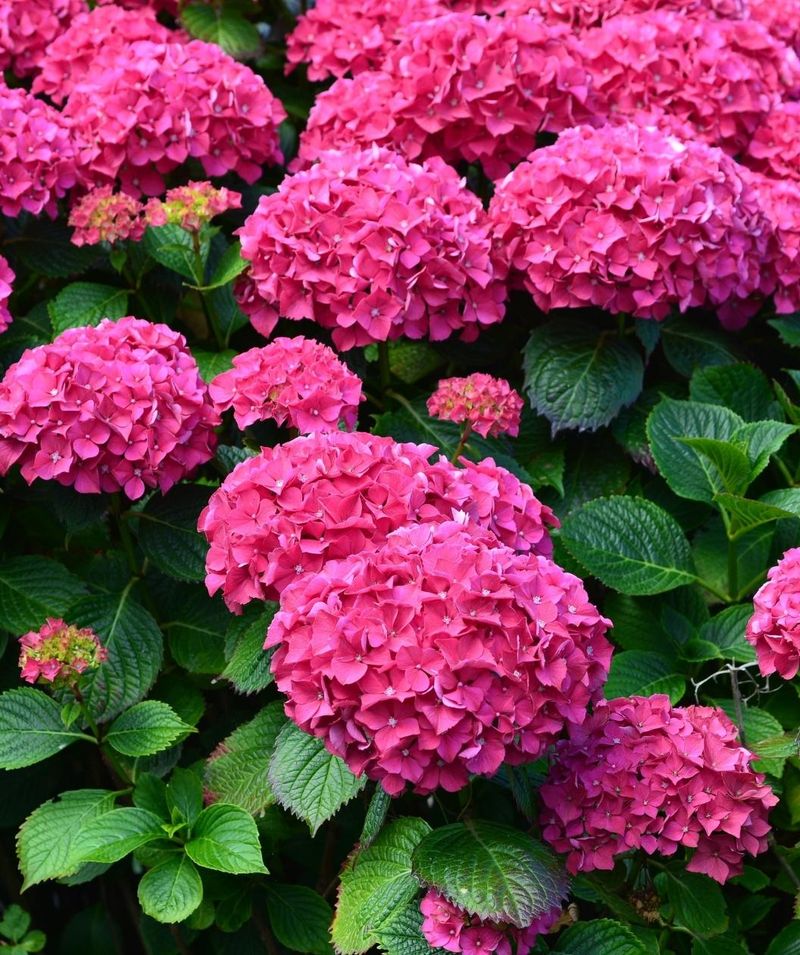
One of the most common frustrations Pennsylvania hydrangea growers run into is expecting fast results from soil amendments.
The reality is that meaningful color change usually takes at least one full growing season, and in many cases two seasons of consistent effort before the blooms settle into the color you are targeting.
Soil chemistry does not shift overnight, and neither does the plant’s response to those changes.
Plants that are already established in the ground take longer to respond than newly planted ones, simply because the existing root system is already spread through a large volume of soil.
Container plants respond the fastest because the entire root environment can be adjusted more completely and quickly.
For in-ground plantings, expect to amend, retest, and amend again across multiple seasons before reaching your goal pH and seeing consistent color results.
Consistency matters far more than intensity. Applying moderate amounts of the right amendment at the right time each season will produce more reliable color change than one large application that shocks the soil.
Keep your soil test results from each year and compare them side by side.
Progress may feel slow, but most Pennsylvania gardeners who stick with a steady, patient approach eventually land on the bloom color they were after, and it tends to hold once the soil stabilizes.