Homeowners Across Georgia Are Noticing A Metallic Bug In Their Yards
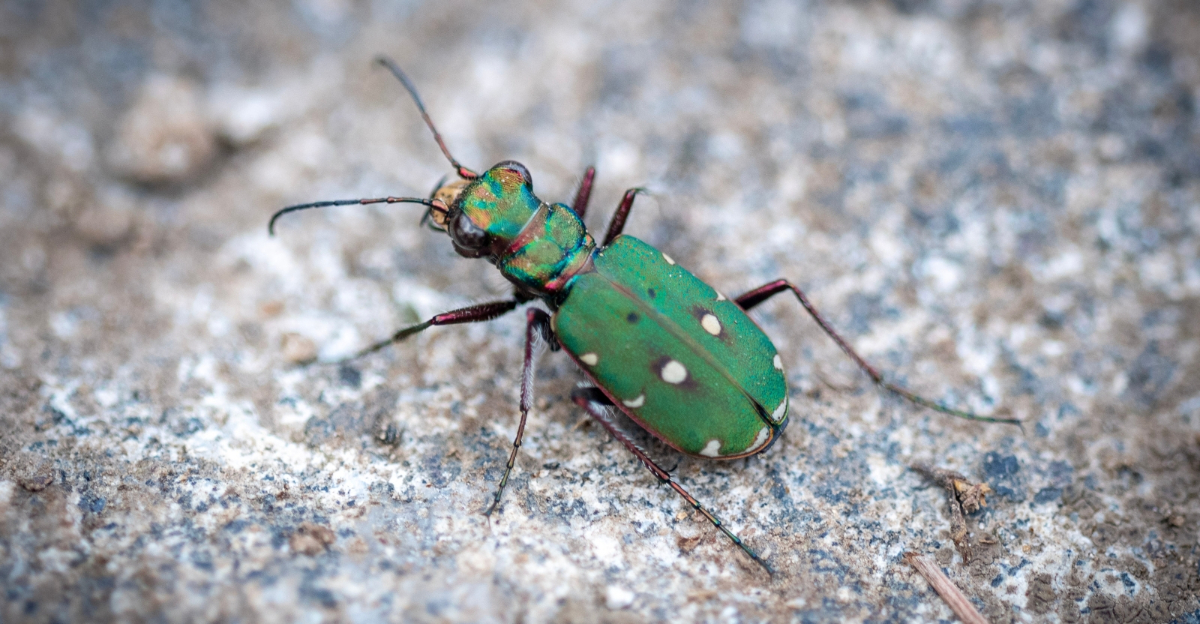
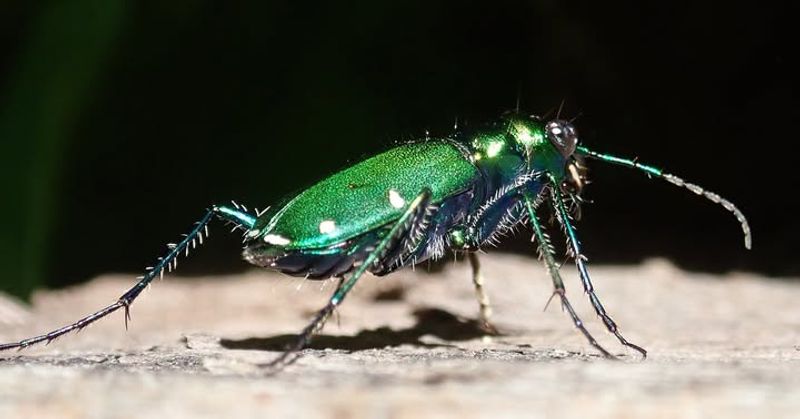
Homeowners across Georgia are noticing the Carolina Metallic Tiger Beetle flashing across yards with a shiny green and blue body that looks almost unreal in the sunlight.
The beetle’s speed catches people off guard, especially when it darts across driveways, sidewalks, or bare soil and vanishes before anyone can get a clear look.
Many homeowners assume something this metallic and fast must be invasive or harmful simply because it looks so unfamiliar.
I have heard people describe it as robotic or unnatural, mostly because it moves far quicker than most backyard insects.
Its sudden appearances make it feel new, even though it has been part of the local ecosystem for a long time.
What surprises most people is that it does not damage lawns, plants, or garden beds in any way.
Instead, it spends its time hunting other insects along open ground, quietly doing useful work.
Seeing it repeatedly around the yard can be confusing until its behavior starts to make sense.
Once homeowners learn what it is and why it shows up, concern usually fades fast.
Understanding the Carolina Metallic Tiger Beetle helps turn a startling sight into something far less alarming.
1. Stunning Metallic Appearance Makes Identification Easy
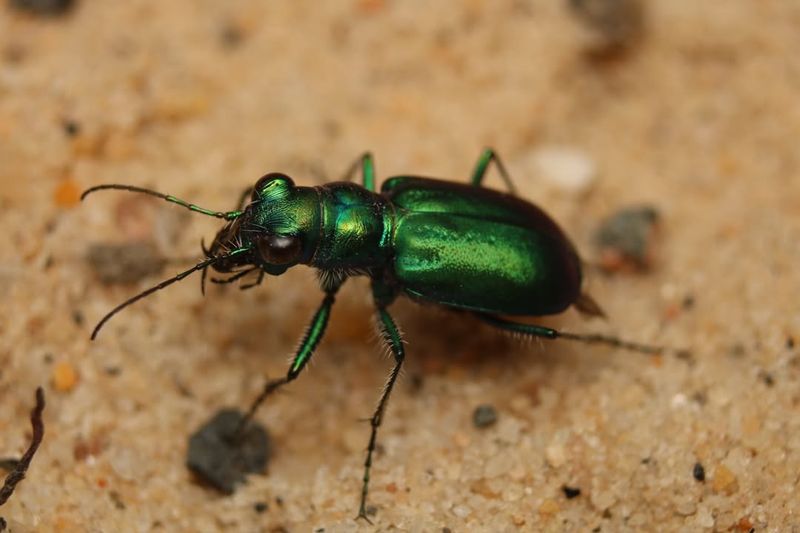
Spotting a Carolina metallic tiger beetle in your Georgia yard becomes simple once you know what colors and features to look for.
Bright metallic green covers most of the body, creating an iridescent shimmer that catches sunlight beautifully when the beetle moves across open ground.
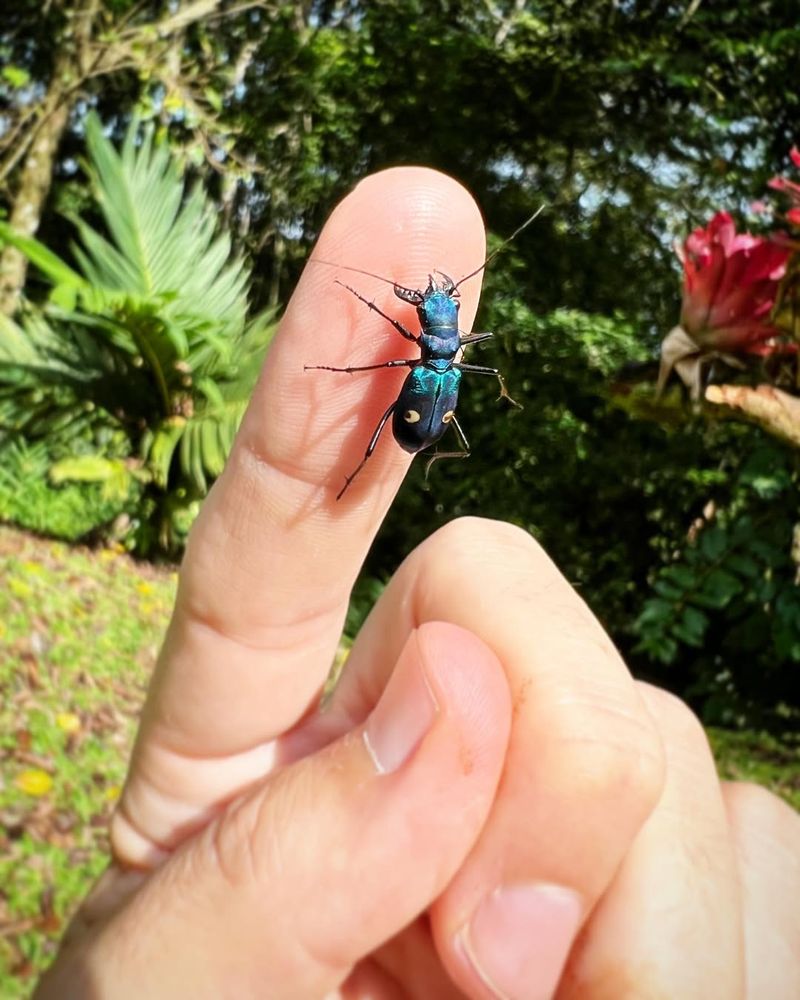
Some individuals display hints of blue or bronze mixed into their green coloring, making each beetle unique in its appearance.
Long legs help the insect move quickly across sandy soil and grass, while large eyes positioned on the head provide excellent vision.
Measuring about half an inch long, these beetles appear relatively small compared to other backyard insects you might encounter throughout the state.
White markings often appear along the wing covers, creating distinctive patterns that help separate this species from similar-looking beetles in Georgia.
Powerful jaws extend forward from the head, giving the beetle a fierce appearance despite its small size and beneficial nature.
Children often become fascinated when they spot these colorful insects darting across sunny patches in yards and gardens.
The shiny appearance serves as natural camouflage among vegetation, though the metallic sheen makes them stand out on bare ground.
Their quick, darting movements combined with vivid coloration make sightings feel sudden and exciting rather than subtle or easy to miss.
Once you recognize these visual traits, identifying a Carolina metallic tiger beetle in Georgia yards becomes almost effortless during warm, sunny days.
2. Prefers Sandy Soil and Open Sunny Areas
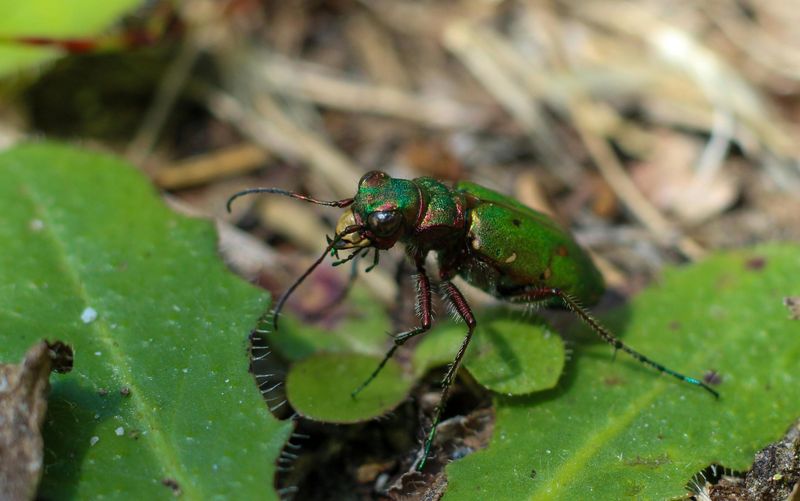
Georgia homeowners with sandy yards often notice these beetles more frequently than those with heavy clay soil in their properties.
Open areas with good sun exposure attract tiger beetles because they hunt most actively in warm conditions with plenty of natural light.
Paths between garden beds, driveways with sandy edges, and sparse lawn sections become favorite hunting grounds for these speedy predators.
Bare patches in your yard might actually serve as perfect habitat for these beneficial insects rather than being problem areas.
Compacted clay soil makes movement difficult for tiger beetles, so they avoid those sections and stick to looser ground textures.
Coastal regions of Georgia provide ideal conditions, though beetles adapt well to similar habitats found throughout the state’s varied landscapes.
Morning sunshine warms sandy surfaces quickly, triggering beetle activity as they emerge from underground burrows to begin hunting for prey.
Homeowners sometimes mistake their presence for a pest problem, not realizing these beetles actually help control other insects naturally.
Creating small sandy patches in your Georgia yard might encourage more tiger beetles to establish territories and provide ongoing pest control.
These habitats allow the beetles to spot prey easily and sprint without obstruction during active hunting periods.
Maintaining some open, sunlit ground in Georgia landscapes supports these beetles while improving natural insect balance.
3. Incredibly Fast Runners Among Insect Species
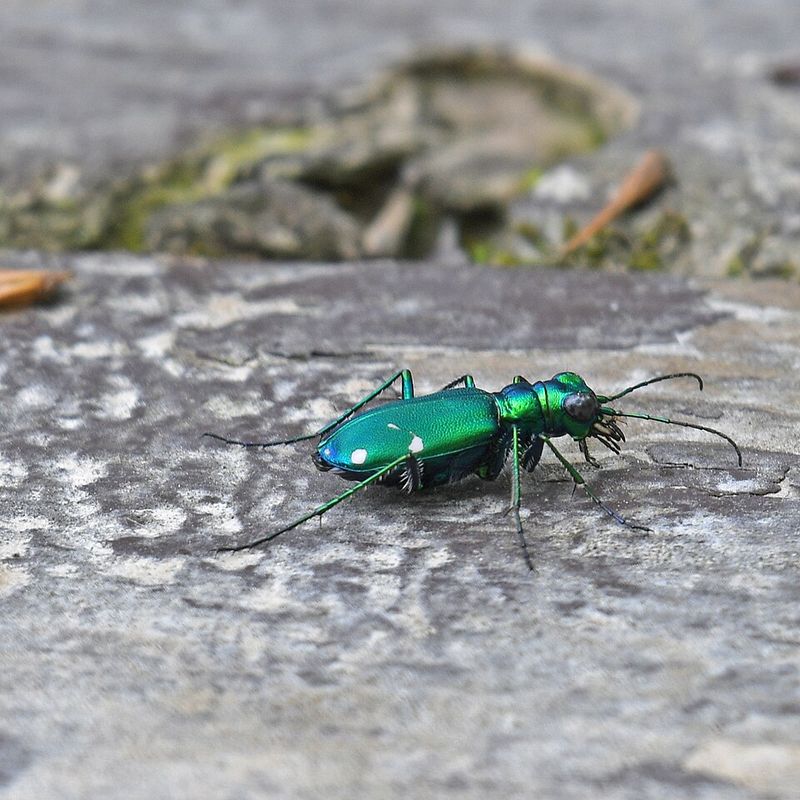
Few insects in Georgia can match the impressive speed displayed by Carolina metallic tiger beetles when they sprint across open ground.
Scientists have measured their running speed relative to body size, finding them among the fastest land insects documented anywhere in the world.
Quick bursts of speed help them catch prey that might otherwise escape, making them extremely effective hunters in residential yards.
Long legs propel them forward in rapid movements that often appear as green flashes to homeowners watching from their windows.
Their speed creates an interesting challenge for the beetles themselves because they actually run faster than their eyes can process visual information.
Brief pauses occur during chases as beetles stop momentarily to relocate prey before launching into another sprint across the ground.
Children trying to catch these beetles in Georgia yards quickly discover how difficult it becomes to grab one before it darts away.
This remarkable speed serves both offensive and defensive purposes, helping beetles catch food while escaping potential predators like birds.
Watching them hunt provides entertainment and education, showing kids how specialized adaptations help insects survive in competitive natural environments throughout the state.
This speed also explains why these beetles prefer open ground where nothing blocks their sudden bursts of movement.
Observing their hunting behavior in Georgia yards gives a rare glimpse into how precision and speed work together in the insect world.
4. Beneficial Predators That Control Pest Populations
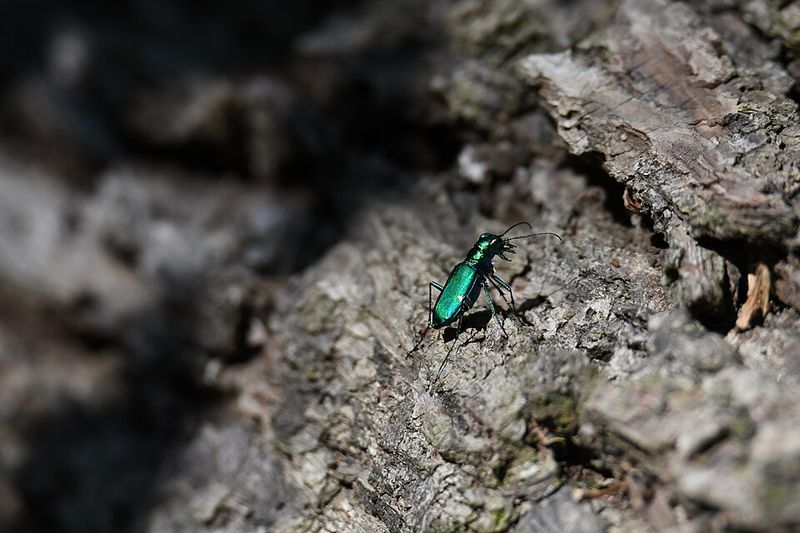
Having these beetles in your Georgia yard means you have natural pest control working for free without any chemicals or sprays.
Adult beetles hunt actively during daylight hours, capturing ants, flies, caterpillars, and various other small insects that might damage garden plants.
Their larvae live underground in vertical burrows, waiting to ambush passing insects that venture too close to the hidden entrance.
Both life stages contribute to reducing pest numbers, making them doubly valuable for homeowners wanting healthier yards without synthetic pesticides.
Gardens with established beetle populations often show fewer problems with aphids and other plant-damaging insects throughout the growing season in Georgia.
Unlike pesticides that harm beneficial insects along with pests, tiger beetles target only the insects they can catch and consume.
Their presence indicates a healthy ecosystem with adequate prey populations and suitable habitat conditions for native wildlife to thrive.
Homeowners sometimes worry when they see beetles with powerful jaws, not understanding that humans are far too large to interest them.
Encouraging tiger beetle populations through habitat preservation helps create sustainable pest management that continues year after year without ongoing intervention or expense.
This natural balance benefits Georgia gardens by reducing pest outbreaks before they become noticeable problems.
Over time, yards that support tiger beetles often rely less on intervention because nature handles pest control efficiently on its own.
5. Complete Life Cycle Takes One to Two Years
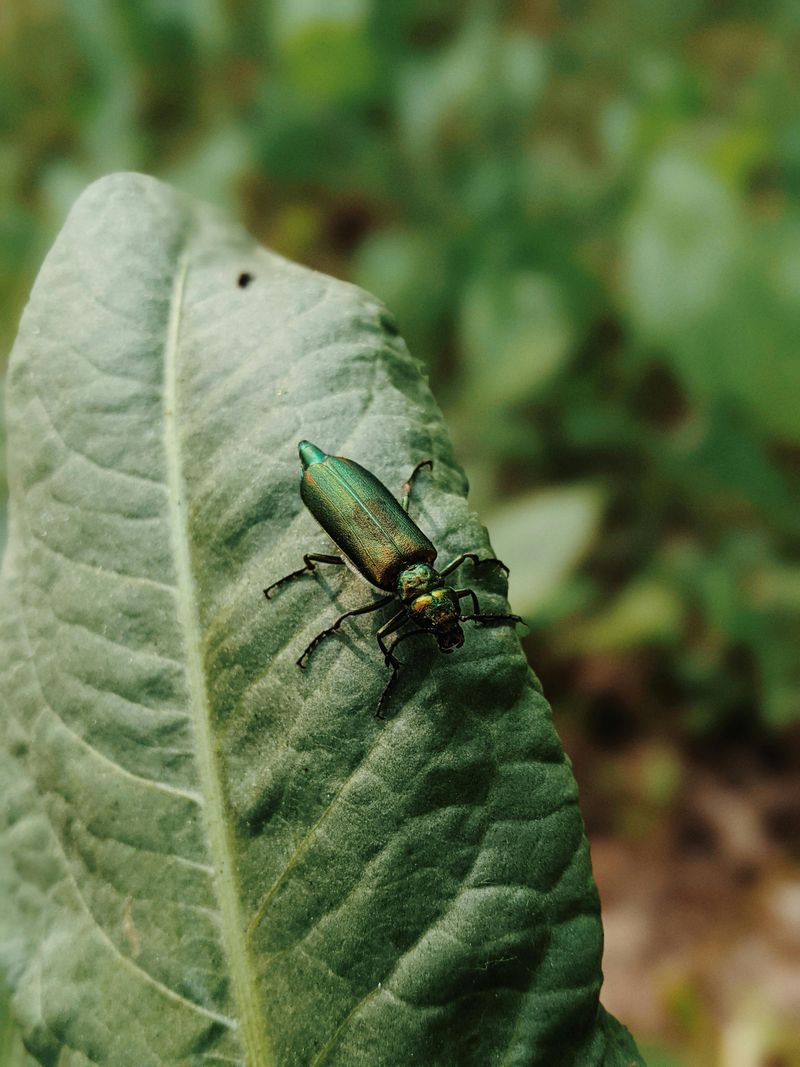
Understanding the beetle’s life cycle helps Georgia homeowners appreciate why populations fluctuate and when adults become most visible in residential areas.
Female beetles lay eggs individually in sandy soil during late spring and summer, choosing locations with good drainage and sun exposure.
Tiny larvae hatch and immediately begin digging vertical burrows where they spend most of their development period hidden from view.
These larvae position themselves at burrow entrances with only their heads visible, waiting patiently for prey to pass within striking distance.
Larval development continues through multiple growth stages over many months, with individuals remaining in burrows through winter in Georgia’s climate.
Pupation occurs underground during spring, transforming the grub-like larva into the recognizable adult beetle form over several weeks.
Newly emerged adults appear in late spring or early summer, beginning the cycle again as they hunt, mate, and lay eggs.
Some populations require two full years to complete development, meaning not every year produces equal numbers of adults across the state.
Protecting bare sandy patches in your yard during all seasons helps ensure larvae can complete development successfully without disturbance from landscaping activities.
Leaving soil undisturbed supports this slow process and helps maintain stable beetle populations in Georgia yards.
Simple landscaping choices can make a meaningful difference in whether these beetles return year after year.
6. Native Species Important to Georgia Ecosystems
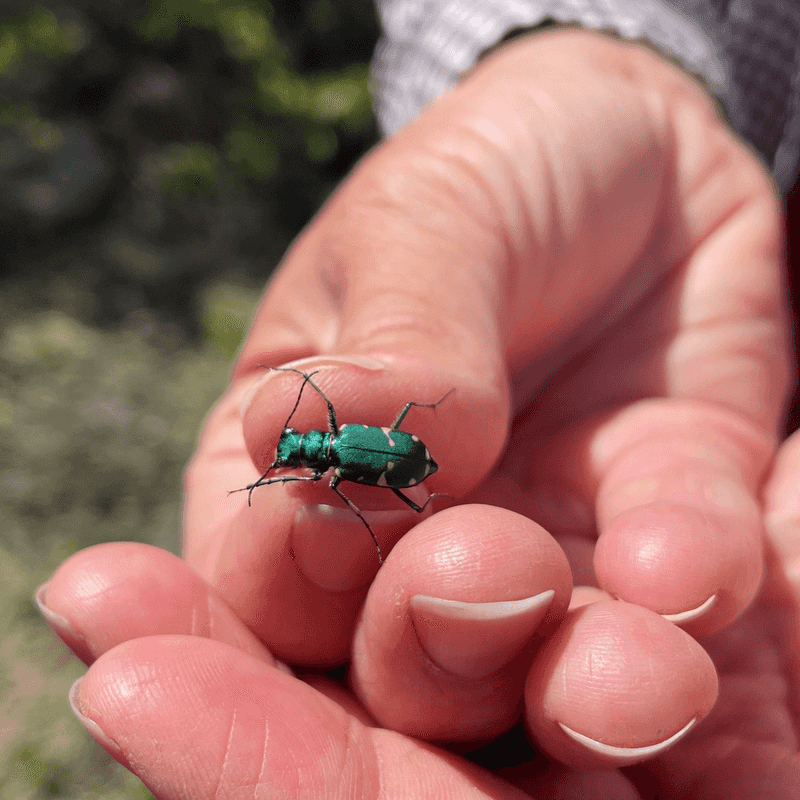
Georgia’s native wildlife includes these beetles as important members of healthy ecological communities that have existed for thousands of years.
Endemic to the southeastern United States, Carolina metallic tiger beetles evolved alongside other native species in balanced relationships throughout the region.
Their populations serve as indicators of habitat quality, with healthy numbers suggesting good environmental conditions in residential and natural areas.
Conservation biologists monitor tiger beetle populations as part of broader efforts to track ecosystem health across the state.
Development and habitat loss have reduced suitable areas for many native insects, making existing populations more valuable for maintaining biodiversity.
Homeowners who preserve natural features in their Georgia yards contribute directly to protecting these native species and their ecological roles.
Chemical pesticides harm tiger beetles along with target pests, potentially eliminating beneficial insects that provide free pest control services.
Native plants that attract diverse insect prey help support tiger beetle populations by ensuring adequate food supplies throughout their active season.
Recognizing the value of native species encourages homeowners to adopt more wildlife-friendly landscaping practices that benefit numerous creatures beyond just beetles.
Healthy tiger beetle populations also support birds, reptiles, and other insect-eating wildlife that rely on stable food sources in Georgia ecosystems.
Small conservation-friendly choices made by homeowners can collectively protect native beetles and strengthen biodiversity across the state for years to come.
7. Harmless to Humans Despite Fierce Appearance
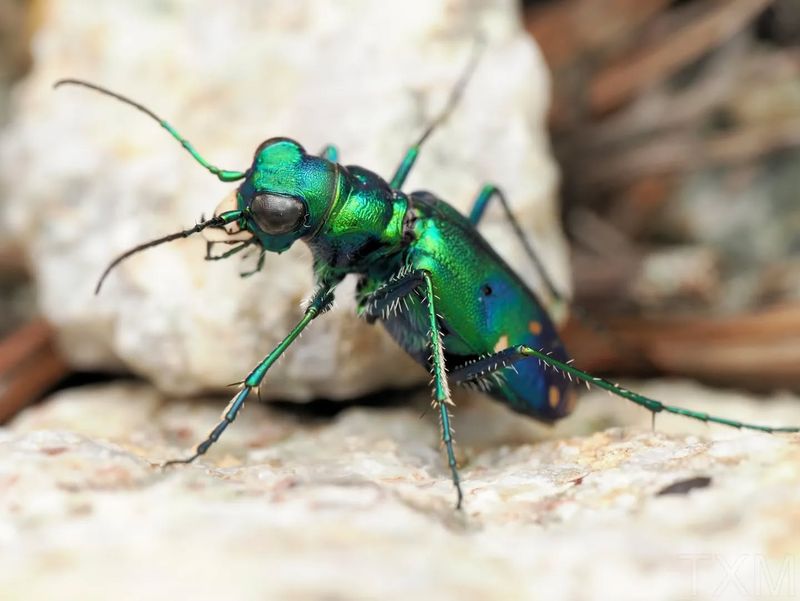
Many Georgia homeowners initially worry when they notice beetles with large jaws hunting actively in areas where children and pets play outdoors.
These insects pose absolutely no threat to people, lacking both the size and inclination to bite humans under normal circumstances.
Their jaws evolved specifically for capturing and consuming tiny insect prey, not for defensive purposes against large animals or people.
Attempts to handle beetles roughly might result in a defensive pinch, though even this rarely breaks skin or causes significant discomfort.
Children can safely observe these beetles from close range, learning about insect behavior and natural predator-prey relationships in Georgia’s backyards.
Unlike stinging insects such as wasps or bees, tiger beetles cannot inject venom and present no allergic reaction risks.
Their natural instinct when encountering humans involves running away quickly rather than standing ground or attempting any aggressive behavior.
Parents can use beetle sightings as educational opportunities, teaching kids about beneficial insects and the importance of biodiversity.
Encouraging gentle observation rather than capture helps children develop respect for wildlife while allowing beetles to continue their valuable pest control work.
Calm exposure to harmless insects like these helps reduce fear and builds confidence in children spending time outdoors in Georgia yards.
Over time, familiarity replaces anxiety, turning surprising beetle encounters into moments of curiosity rather than concern.
8. Population Numbers Fluctuate Throughout the Year
Homeowners across Georgia notice varying numbers of tiger beetles depending on the season, weather conditions, and local habitat quality in their areas.
Peak adult activity occurs during warm months from late spring through early fall when temperatures support active hunting and reproduction.
Cool weather sends beetles into dormancy or reduces activity dramatically, making them virtually invisible during winter months throughout the state.
Rainy periods may temporarily decrease sightings as beetles seek shelter, returning once sunny conditions resume and ground surfaces dry.
Years with ideal weather patterns and abundant prey populations produce noticeably higher beetle numbers in residential yards across Georgia communities.
Natural population cycles mean some years show fewer beetles than others, even in yards with consistent habitat quality and management practices.
Predation by birds, lizards, and other insectivores helps keep beetle populations balanced within ecosystem carrying capacities throughout the region.
Homeowners sometimes worry about sudden increases in beetle numbers, not realizing these fluctuations represent normal ecological patterns rather than problems.
Maintaining suitable habitat allows populations to stabilize naturally over time, providing consistent pest control benefits without requiring human intervention.
Weather extremes like prolonged droughts or unusually wet seasons can temporarily disrupt these patterns, causing short-term spikes or drops in visible beetle activity.
Over the long run, Georgia yards that remain pesticide-free and structurally diverse tend to see beetle numbers even out naturally without intervention.
9. Simple Steps to Encourage Beetles in Your Yard
Creating welcoming habitat for Carolina metallic tiger beetles requires simple adjustments that benefit many native species throughout Georgia residential landscapes.
Leaving small patches of bare sandy soil in sunny locations provides essential hunting grounds and potential nesting sites for female beetles.
Reducing or eliminating pesticide use allows prey populations to thrive while protecting beetles from harmful chemical exposure that affects their survival.
Native plants attract diverse insects that serve as food sources, supporting beetle populations through abundant prey availability during active seasons.
Avoiding excessive mulch in all areas preserves some bare ground where beetles can hunt effectively and larvae can establish burrows.
Minimizing soil disturbance during landscaping activities protects underground larvae that might otherwise be destroyed by digging or tilling in Georgia gardens.
Providing water sources like shallow dishes or birdbaths creates drinking opportunities during hot, dry periods common throughout the state’s summer months.
Educating family members and neighbors about beetle benefits helps build community support for conservation-friendly landscaping practices across residential areas.
These simple steps cost little while providing lasting benefits for tiger beetles and countless other native species that contribute to healthy yard ecosystems.