How A Simple Paint Job Can Help Your Fruit Trees Thrive In New Mexico
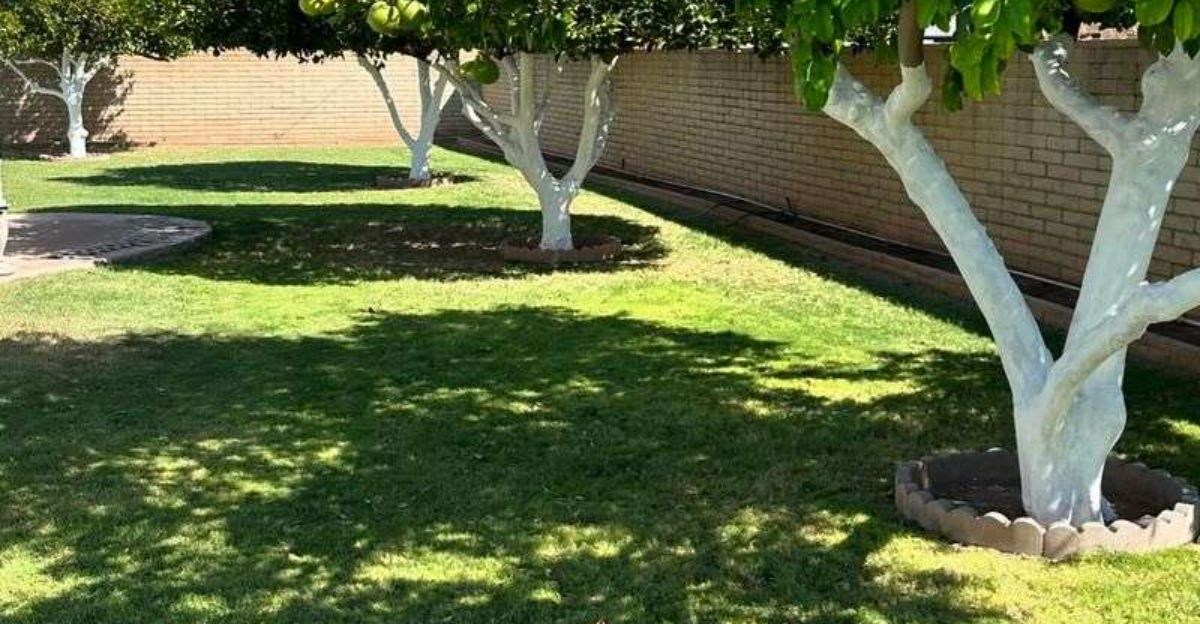
In New Mexico, sun and heat are both blessings and challenges for fruit trees. While the bright desert sun fuels growth, it can also scorch trunks, crack bark, and stress young or sensitive trees.
Surprisingly, one of the simplest ways to protect your trees—and boost their health—is literally a coat of paint. It sounds strange, but this simple trick can make a huge difference for your fruit trees!
Painting the trunks with a light-colored, water-based tree paint reflects sunlight, regulates temperature, and shields delicate bark from sunburn.
It also helps prevent frost cracks during chilly winter nights and can even deter certain pests. For young trees just establishing roots, this protective measure can mean the difference between survival and stress.
A little paint goes a long way in keeping your trees healthy and productive. New Mexico gardeners who adopt this low-cost, low-effort strategy find their fruit trees grow stronger, produce more fruit, and require less intervention from pests or disease.
It’s a small step with big rewards for sun-soaked orchards. Sometimes thriving trees aren’t about fancy treatments—they’re about smart, simple protection.
Prevents Sunscald On Trunks And Lower Branches
New Mexico’s intense sunshine doesn’t just feel hot on your skin—it can actually cook the bark right on your fruit trees.
When dark bark absorbs all that solar radiation, temperatures can soar well above 120 degrees Fahrenheit, causing the living tissue underneath to overheat and suffer serious damage.
This condition, known as sunscald, creates ugly cracks and wounds that weaken your tree’s structure and open doorways for pests and disease.
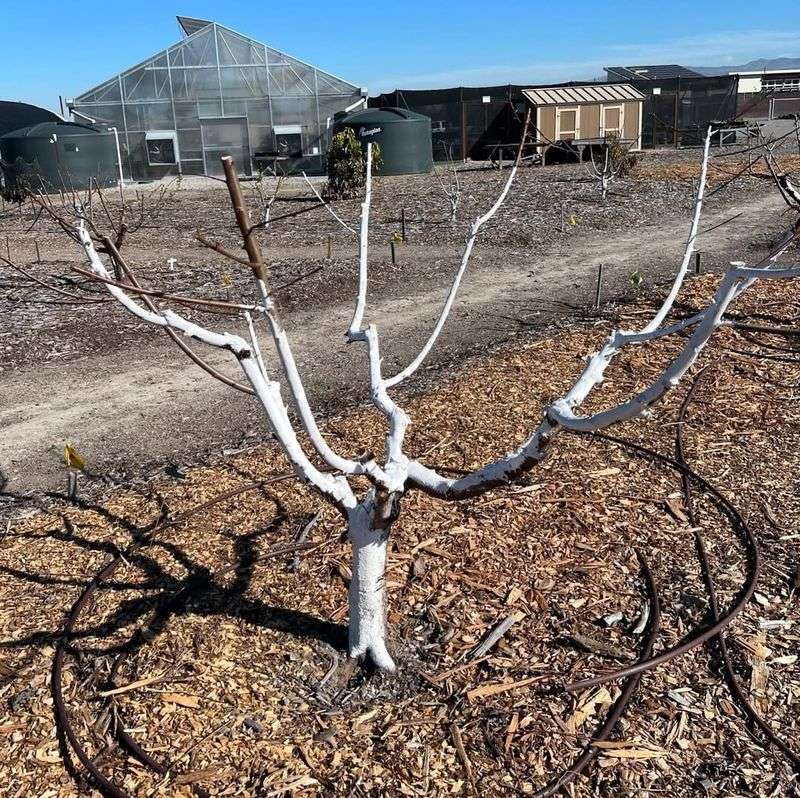
White tree paint works like sunscreen for your trees by reflecting a huge portion of that intense sunlight away from the bark surface.
The bright white coating bounces back the sun’s rays instead of letting them penetrate and superheat the trunk. Studies show that painted trunks can stay as much as 20 to 30 degrees cooler than unpainted ones during peak summer heat.
Applying a thin layer of white latex paint or specialized tree paint to the south and west sides of your trunk provides maximum protection where the afternoon sun hits hardest.
You’ll want to paint from ground level up to the lowest branches, creating a protective shield that keeps bark temperatures in a safe range.
This simple step prevents the cracking, peeling, and tissue damage that can set your fruit trees back for years.
Protects Young Trees With Thin Bark
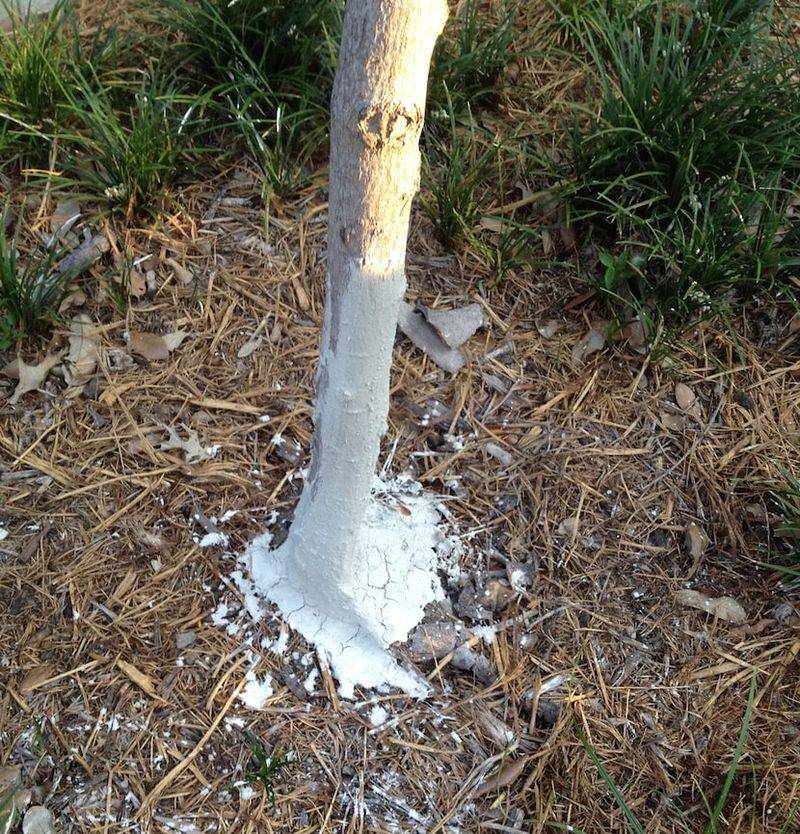
Freshly planted fruit trees arrive in your yard with tender, thin bark that hasn’t yet developed the thick protective layers mature trees possess.
Think of it like a teenager’s skin compared to an adult’s—young tree bark is simply more vulnerable to environmental stress and damage.
Without adequate protection, that delicate bark can suffer irreversible harm during its critical first few growing seasons.
Painting young fruit trees right after planting gives them a fighting chance to establish strong root systems without the added stress of bark injury.
The white coating acts as a temporary shield while the tree focuses its energy on growing roots and adjusting to its new home. Many orchardists in New Mexico consider trunk painting an essential part of the planting process, not an optional extra.
Research from southwestern agricultural extension offices shows that painted young trees establish faster and show better growth rates compared to unpainted ones. The protection allows saplings to channel more resources into root development and branch formation rather than repairing damaged bark tissue.
For just a few dollars and minutes of work, you can dramatically improve your new tree’s chances of becoming a productive, long-lived member of your home orchard.
Reduces Temperature Swings Between Day And Night

Anyone who’s spent time in New Mexico knows how dramatically temperatures can plunge after the sun goes down.
A scorching 95-degree afternoon can easily drop to 55 degrees by midnight, creating wild temperature swings that put tremendous stress on your fruit trees.
These rapid fluctuations cause tree bark to expand and contract repeatedly, weakening its structure and creating microscopic cracks that accumulate over time.
White paint on tree trunks acts as an insulating buffer that moderates these extreme temperature changes. The reflective coating keeps bark cooler during the day so there’s less distance to fall when nighttime temperatures drop.
This stabilization reduces the constant expansion and contraction cycle that wears down bark integrity season after season.
Painted trunks maintain more consistent temperatures throughout the 24-hour cycle, which helps trees conserve energy and reduces physiological stress. Your fruit trees can focus on healthy growth rather than constantly adjusting to temperature extremes.
Growers throughout the Southwest have observed that painted trees show fewer stress symptoms like leaf drop, stunted growth, and poor fruit set compared to unpainted neighbors experiencing the same wild temperature swings that define New Mexico’s climate.
Prevents Bark Splitting During Winter Cold Snaps
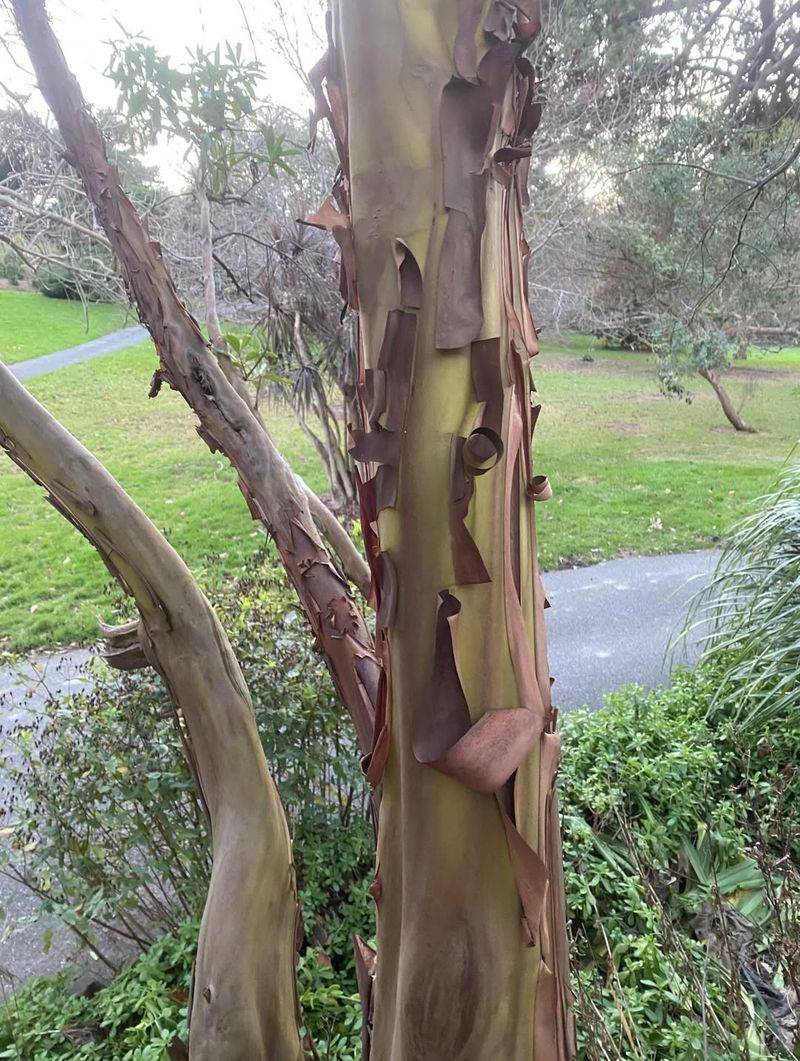
Winter in New Mexico brings a particularly nasty combination that fruit trees absolutely hate: bright sunny days followed by freezing nights.
When winter sun warms the south side of a tree trunk during the day, the bark and cambium layer beneath it become active and start to break dormancy.
Then overnight temperatures plummet below freezing, causing that activated tissue to freeze solid and suffer severe injury. This freeze-thaw cycle creates a specific type of damage called southwest injury, named for the region where it’s most problematic.
The result is vertical cracks and splits in the bark that can extend deep into the trunk, compromising the tree’s structural integrity and creating entry points for insects and disease organisms.
Once this damage occurs, it can take years for trees to recover, if they recover at all. White paint prevents this problem by keeping bark cooler during sunny winter days so it stays properly dormant instead of waking up prematurely.
The reflective surface ensures that even when the air temperature is warm, the bark underneath remains cool enough to stay in its protective winter sleep.
This simple protection can be the difference between a fruit tree that sails through winter unscathed and one that emerges in spring with serious structural damage requiring years of careful recovery.
Discourages Boring Insects From Attacking The Trunk
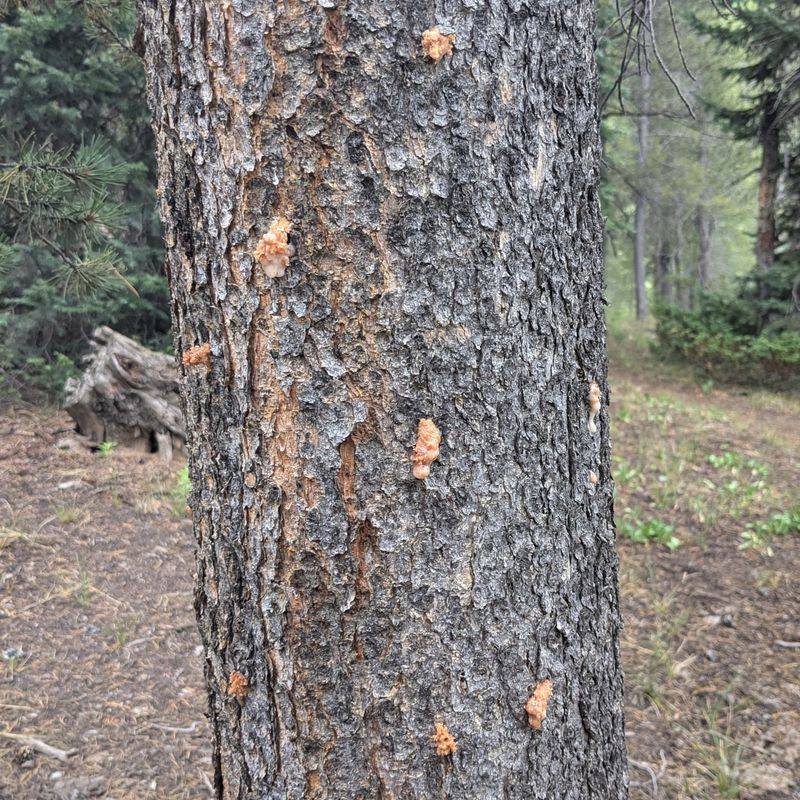
Boring insects like flatheaded borers and bark beetles have a radar for stressed fruit trees, and they can smell weakness from remarkable distances.
These destructive pests tunnel into bark and create galleries beneath the surface where they lay eggs and feed on the tree’s vital transport tissues.
Once they establish themselves, borers can rapidly compromise a tree’s health and are notoriously difficult to eliminate. Stressed trees with sun-damaged, cracked bark send out chemical signals that attract these opportunistic insects like a dinner bell.
White paint disrupts this process in multiple ways—it keeps bark healthier so trees don’t send out distress signals, and the bright white surface itself seems to make trunks less appealing to insects searching for vulnerable hosts.
Research suggests that the cooler bark temperatures maintained by white paint may also make treated trees less suitable for borer development.
Orchardists across New Mexico report significantly fewer borer problems in painted trees compared to unpainted ones, especially during hot, dry years when insect pressure is highest.
While paint isn’t a guarantee against all insect attacks, it’s a valuable component of an integrated pest management strategy that keeps your fruit trees healthier and less attractive to destructive boring insects looking for their next victim.
Extends The Life Of Older Fruit Trees
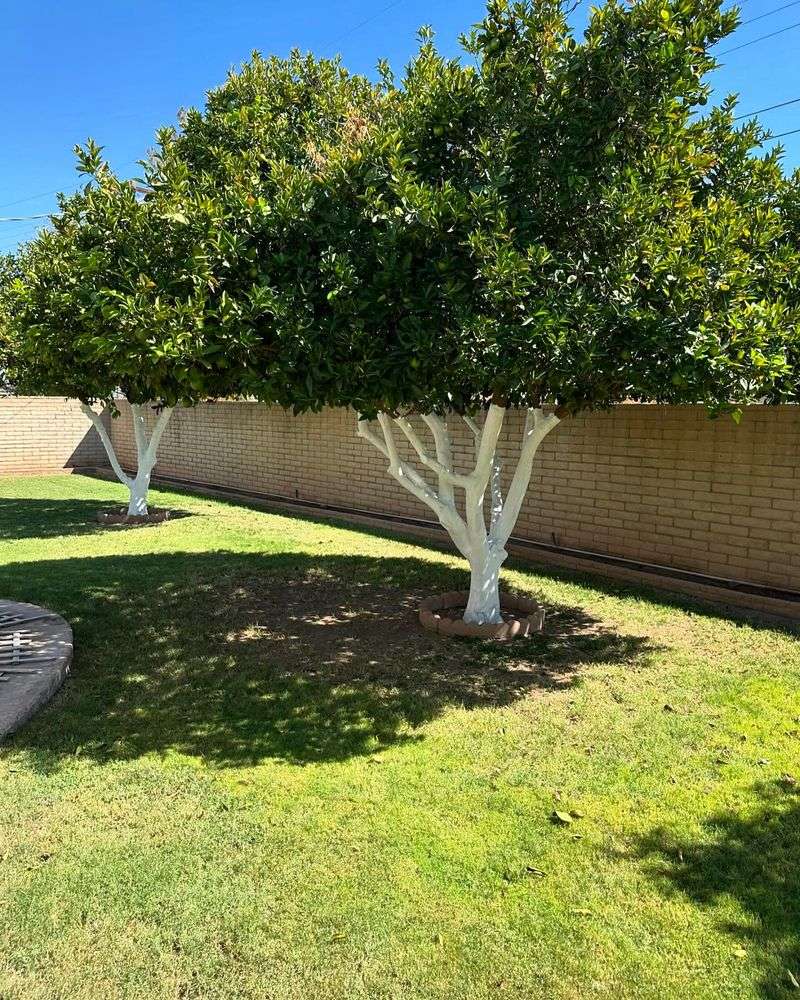
Mature fruit trees that have been producing for years deserve special care to keep them healthy and productive into their golden years.
As trees age, their bark naturally becomes more susceptible to environmental damage, and accumulated stress from years of harsh New Mexico conditions starts to take its toll.
Without intervention, aging bark develops cracks, peeling sections, and areas of tissue breakdown that accelerate the tree’s decline.
Painting older fruit trees provides a protective barrier that helps aging bark withstand continued environmental challenges.
The white coating reduces ongoing stress from sun exposure and temperature fluctuations, allowing mature trees to maintain their structural integrity and continue channeling energy into fruit production.
Many heritage orchards in New Mexico rely on trunk painting to keep their oldest, most valuable trees thriving well beyond their typical productive lifespan.
A well-maintained mature tree with protected bark can continue producing abundant fruit for decades longer than an unprotected one facing the same harsh conditions.
The investment of time and a few dollars in paint can preserve irreplaceable trees that represent years of growth and genetic selection.
For orchardists who’ve nurtured their fruit trees from saplings, painting becomes an act of care that honors the relationship and extends the productive partnership between grower and tree for many additional seasons.
Improves Overall Tree Health And Vigor
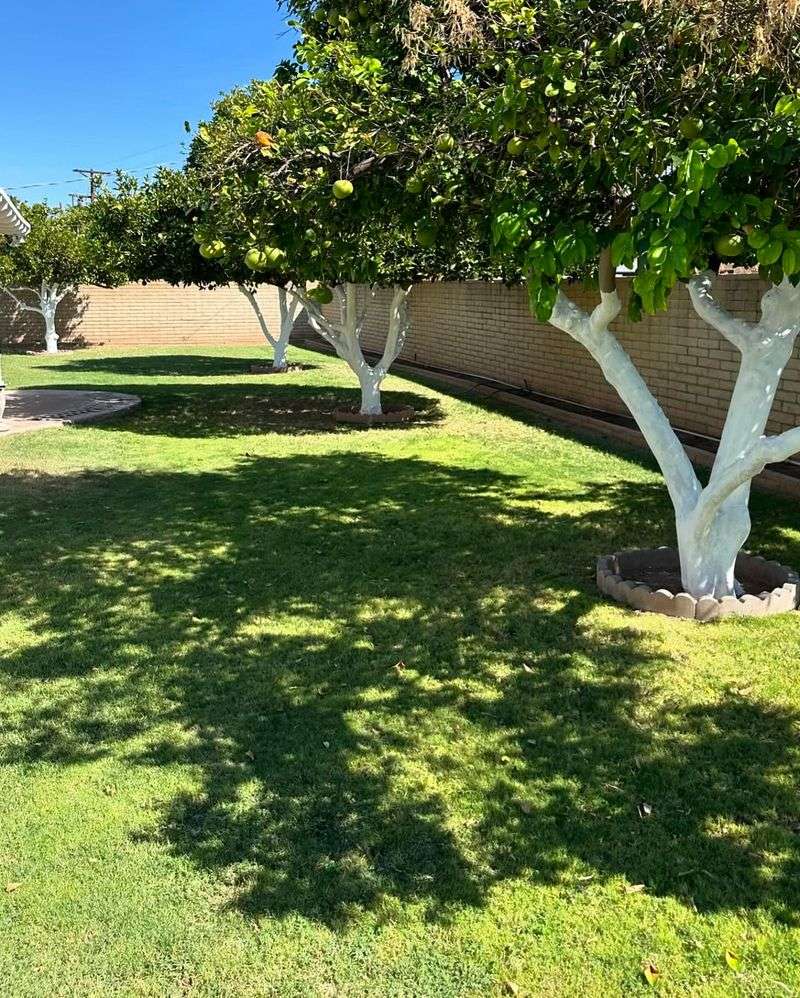
Every bit of energy a fruit tree spends repairing damaged bark is energy that can’t go toward growing strong branches, producing beautiful blossoms, or developing delicious fruit.
When you reduce trunk stress through painting, you’re essentially removing a major drain on your tree’s resources and allowing it to redirect that energy toward the things you actually want—vigorous growth and abundant harvests.
Healthy, unstressed bark functions like a highway system that efficiently transports water, nutrients, and sugars throughout the tree.
When bark suffers damage from sun, temperature extremes, or insects, these transport systems become disrupted and the entire tree suffers reduced vigor.
Protected bark maintains its full functionality, ensuring that everything the roots absorb can flow smoothly to branches, leaves, and developing fruit.
Growers consistently observe that painted fruit trees show improved leaf color, stronger branch growth, and better fruit set compared to unpainted trees in the same orchard.
The trees simply have more energy available for productive purposes when they’re not constantly fighting environmental stress and repairing damage.
This improved vigor also enhances the tree’s natural disease resistance and helps it bounce back more quickly from other challenges like late frosts, hail damage, or drought conditions that are common in New Mexico’s unpredictable climate.
Helps Trees Recover After Pruning Or Transplanting
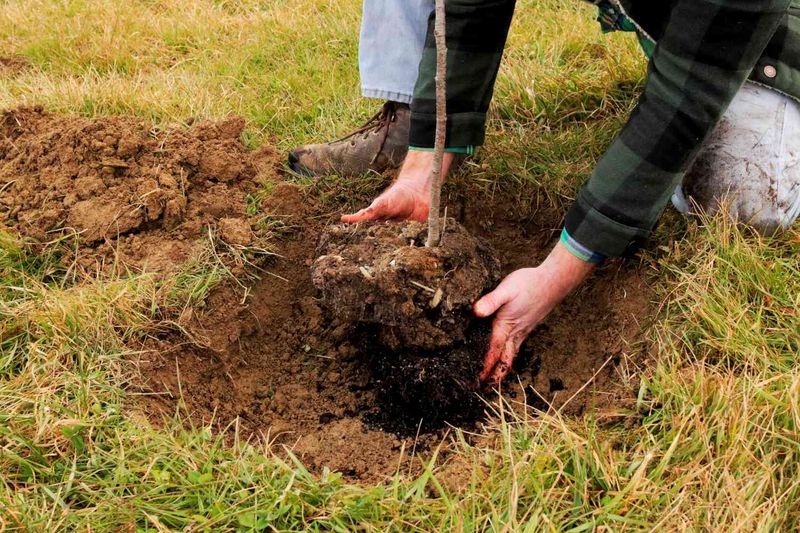
Major pruning and transplanting operations put fruit trees through significant stress and temporarily compromise their ability to defend themselves from environmental challenges.
When you remove large branches, you expose bark that’s been shaded for years to sudden, intense sun exposure it’s not prepared to handle.
Transplanting disrupts root systems and reduces the tree’s capacity to respond to stress while it works to re-establish itself in a new location.
Painting trunks immediately after these stressful events provides crucial protection during the vulnerable recovery period.
The white coating shields newly exposed bark from sun damage and moderates temperature stress while the tree focuses its limited energy on healing wounds and growing new roots.
This protection can dramatically speed recovery and reduce the risk of complications during the critical weeks and months following major tree work.
New Mexico’s intense sun and extreme temperature swings make post-pruning and post-transplant protection especially important in this region.
Experienced orchardists consider painting an essential follow-up step to any major tree operation, not an optional nicety.
The few minutes it takes to apply a protective coat of paint can mean the difference between a tree that recovers quickly and resumes productive growth versus one that struggles for seasons trying to overcome avoidable environmental damage sustained during its vulnerable recovery period.
It’s One Of The Cheapest Preventive Tree Care Practices
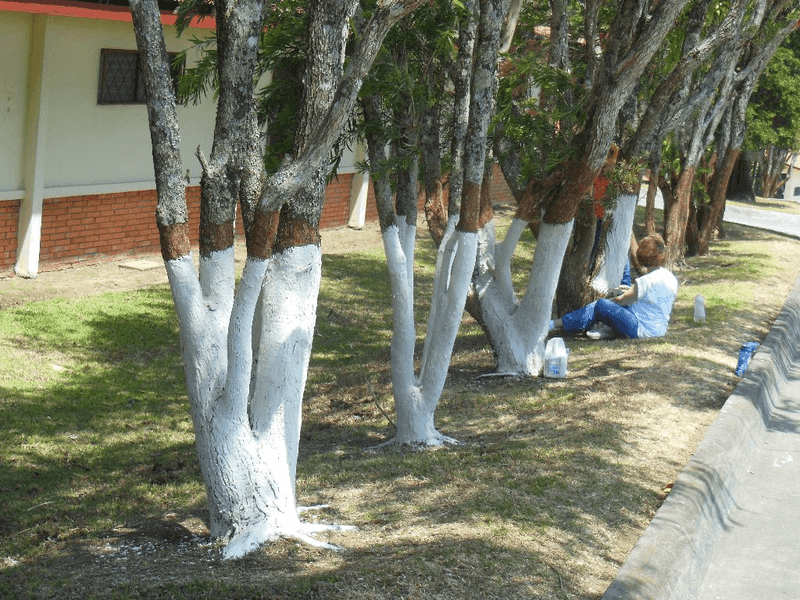
Gardening can get expensive quickly when you start adding up all the products, tools, and treatments available for fruit tree care.
The beauty of trunk painting is that it delivers outstanding protection for just pennies per tree using materials you might already have in your garage.
A single gallon of white latex paint diluted with water can treat dozens of trees, making this one of the most cost-effective interventions in your entire orchard management toolkit.
Compare the minimal investment in paint to the potential costs of replacing trees that succumb to sun damage, treating borer infestations, or losing years of fruit production while damaged trees recover.
The return on investment is extraordinary—you’re protecting a valuable asset that took years to reach productive maturity for less than the cost of a fancy coffee.
New Mexico growers have relied on this time-tested, budget-friendly practice for generations precisely because it works so well for so little money.
You don’t need expensive specialized products or professional application services to get excellent results. A simple mixture of white latex paint and water applied with an inexpensive brush provides professional-grade protection that lasts for years.
This accessibility makes trunk painting an ideal practice for home orchardists, community gardens, and small-scale growers who want to give their fruit trees the best possible care without breaking the bank or investing in complicated equipment and procedures.