How Arizona Gardeners Grow Bougainvillea Successfully In Containers
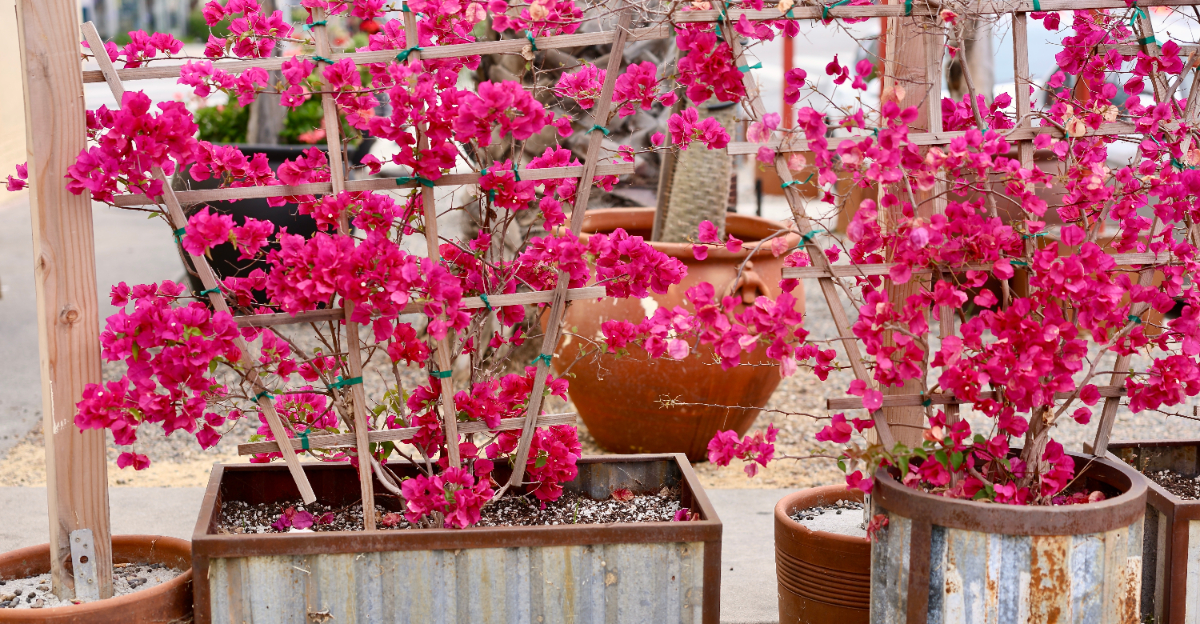
Bougainvillea and Arizona almost feel like a perfect match, but growing it in a container is a different game than planting it in the ground. In a pot, roots have limits, water moves faster, and heat builds up around the sides of the container.
That extra intensity can either fuel massive color or quietly weaken the plant if the setup is wrong.
Bougainvillea rewards bold light and warmth, yet it also demands sharp drainage and controlled watering to keep blooms coming.
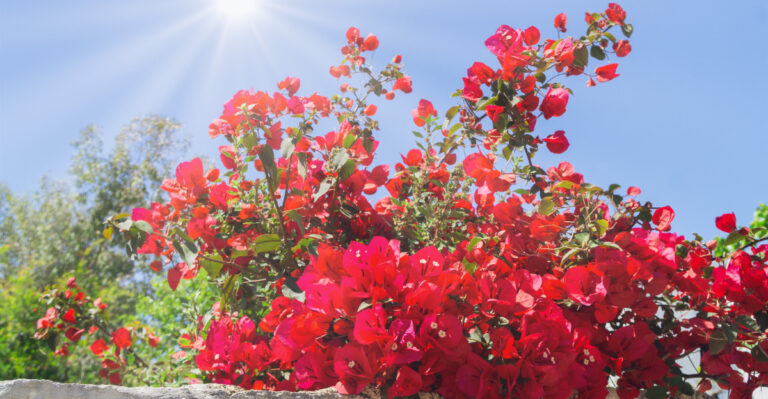
In Arizona’s dry air, stress shows quickly through leaf drop or stalled growth. Get the balance right, and the plant responds with cascading bracts that spill over patios and courtyards with dramatic color that refuses to fade.
1. Provide Full Sun For Strong Growth And Heavy Blooms
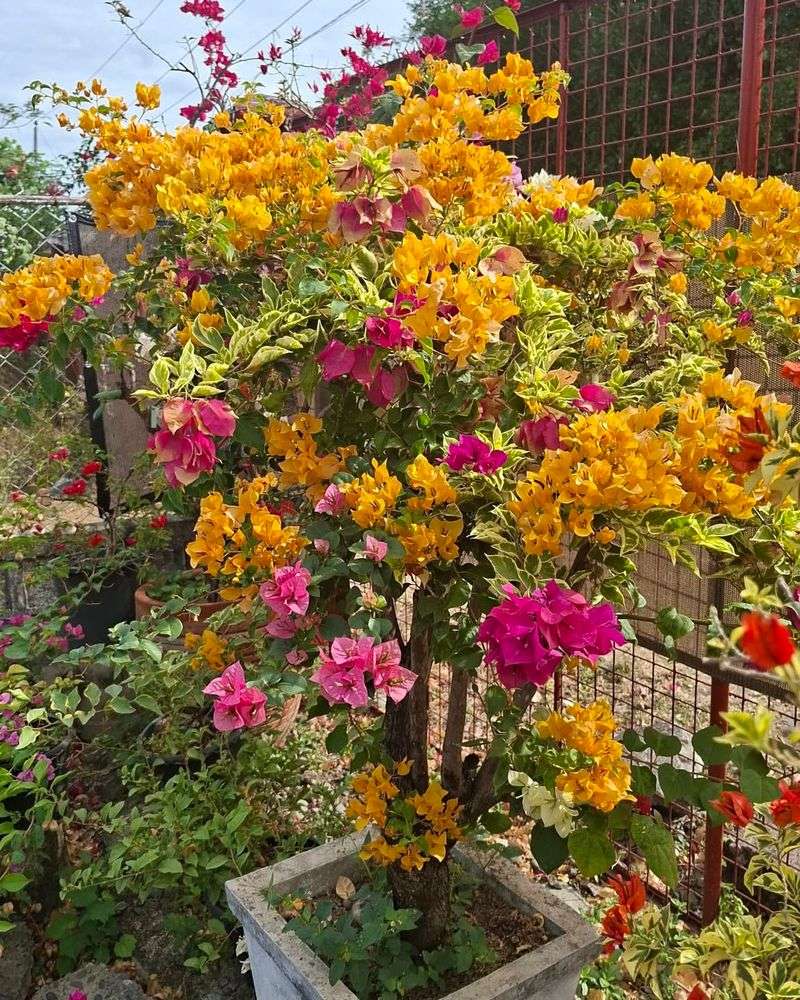
Bougainvillea needs at least six hours of direct sunlight daily, but eight to ten hours produces the most spectacular color displays. Arizona’s intense sunshine actually benefits these sun-loving plants more than it harms them.
Place containers where they’ll catch morning through afternoon rays without any shade interruption.
South-facing patios and west-facing walls provide ideal light conditions throughout the year. The plant’s colorful bracts only develop with adequate sun exposure.
Insufficient light causes green growth without much flowering, which defeats the whole purpose of growing bougainvillea.
During Arizona summers, even bougainvillea can show slight stress when temperatures exceed 110 degrees. You don’t need to move containers into shade, but positioning them where they get some relief from reflected heat off walls helps.
A location that receives direct sun but isn’t trapped between reflective surfaces works best.
Winter sun becomes especially important in Arizona since this is when many varieties bloom most heavily. Container placement near walls that radiate stored heat overnight can extend flowering periods.
The more consistent the sun exposure, the more consistent the blooming cycles throughout the growing season.
Rotating containers every few weeks ensures even growth on all sides. Bougainvillea naturally leans toward the strongest light source.
Regular rotation prevents lopsided development and encourages fuller, more attractive plants that bloom uniformly around the entire structure.
2. Use A Fast Draining Potting Mix To Prevent Root Rot In Desert Conditions
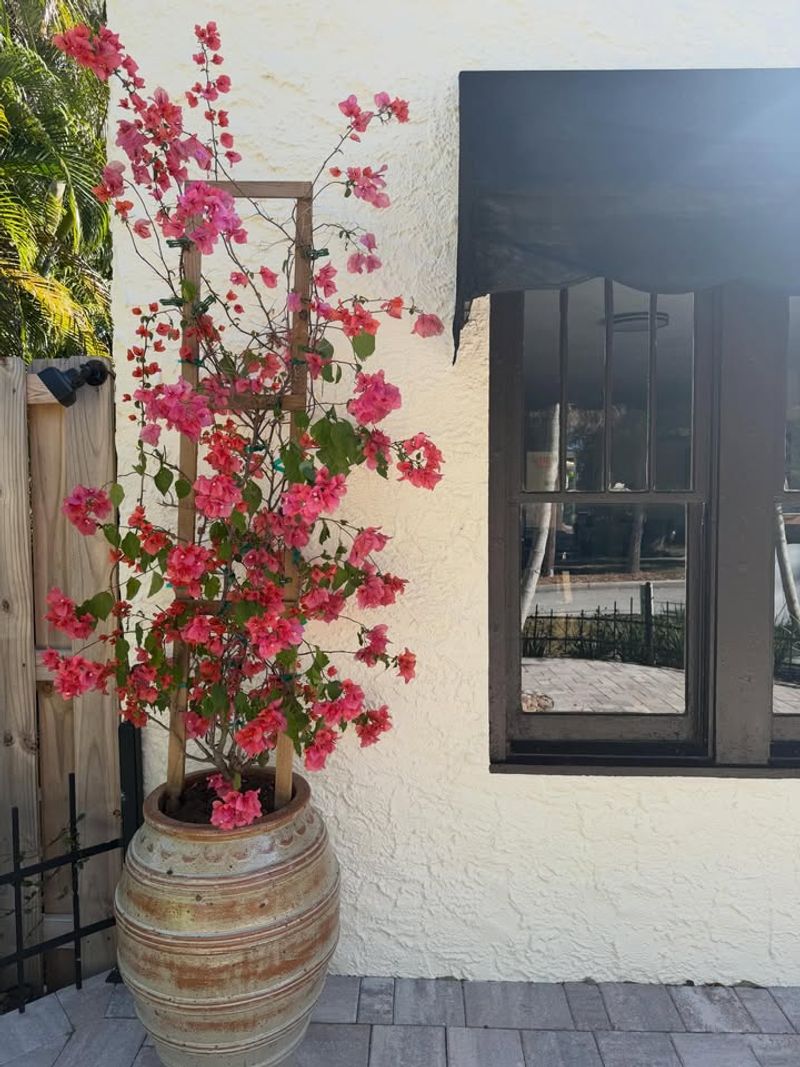
Root health determines everything with container bougainvillea in Arizona. Standard potting soil holds too much moisture for these plants, even in our dry climate.
Mix your own blend using half cactus potting mix and half regular potting soil, then add extra perlite or pumice for improved drainage.
The soil should feel gritty rather than fluffy or dense. Water needs to move through quickly without pooling on the surface.
Bougainvillea roots evolved in rocky, well-drained environments where water never sits around the root zone.
Arizona’s monsoon season tests drainage more than any other time. Afternoon storms can dump water faster than poor soil drains it away.
Containers with inadequate drainage turn into swamps during monsoons, causing root problems within days.
Adding coarse sand improves drainage but avoid fine sandbox sand that compacts over time. Builder’s sand or decomposed granite works better for maintaining air pockets around roots.
Some Arizona gardeners add small lava rock pieces to their mix for extra drainage insurance.
Replace or refresh the top few inches of soil annually since repeated watering gradually breaks down organic matter. Compacted soil at the surface prevents water from reaching deeper roots evenly.
Scratching up the top layer and adding fresh mix keeps the entire root zone functioning properly throughout the container.
3. Choose A Container With Excellent Drainage And Slightly Tight Roots
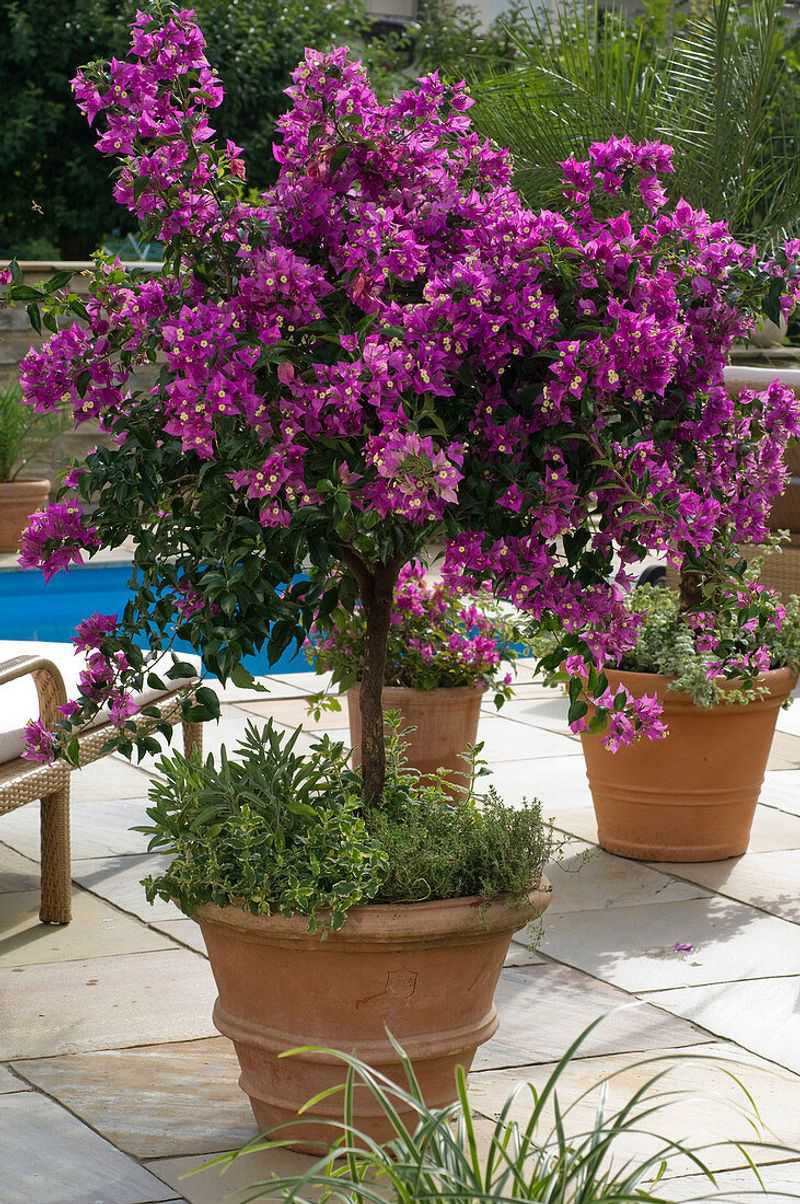
Container selection matters more than most Arizona gardeners realize when growing bougainvillea. Drainage holes are non-negotiable, and one small hole isn’t enough.
Look for pots with multiple holes or drill additional ones yourself before planting.
Terracotta pots work exceptionally well in Arizona because they breathe and allow excess moisture to evaporate through the sides. Plastic containers retain more heat and water, which can be problematic during summer.
If using plastic, choose lighter colors that reflect rather than absorb heat.
Bougainvillea actually blooms better when slightly rootbound. Oversized containers encourage excessive root and foliage growth at the expense of flowering.
Start with a pot only two inches wider than the current root ball, then upsize gradually over years rather than jumping to huge containers immediately.
Depth matters less than width for these plants. Bougainvillea roots spread horizontally more than they dive deep.
A wide, shallow container often outperforms a narrow, deep one for established plants.
Elevating containers on pot feet or bricks improves drainage and air circulation underneath. This simple step prevents water from pooling beneath the pot after irrigation or monsoon rains.
The gap also discourages insects from nesting under containers and allows you to spot drainage problems before they affect plant health.
4. Water Deeply But Allow The Soil To Dry Between Waterings
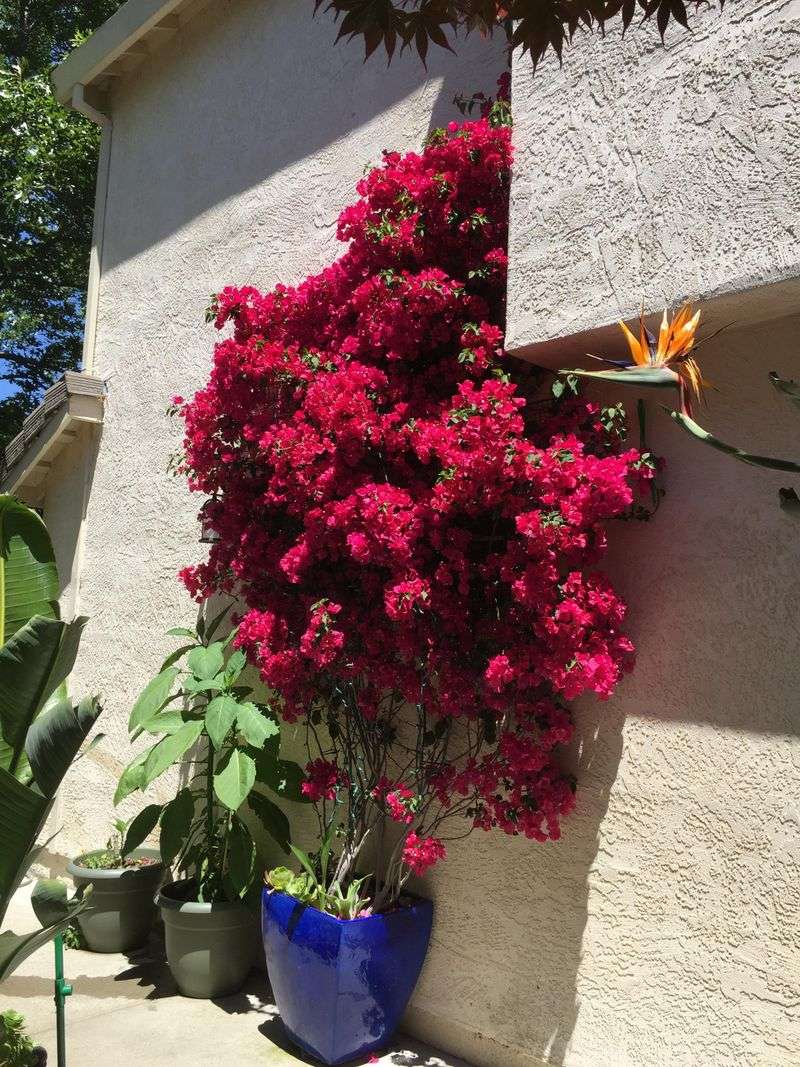
Watering technique separates successful Arizona bougainvillea growers from frustrated ones. These plants need deep watering that saturates the entire root ball, not frequent shallow sprinkling.
When you water, continue until liquid runs freely from drainage holes for several seconds.
Then comes the critical part: let the soil dry substantially before watering again. Stick your finger two inches into the soil.
If it feels moist, wait another day or two. Bougainvillea tolerates dryness far better than constant dampness.
Arizona’s low humidity means container soil dries faster than in humid climates. Summer may require watering every two to three days, while winter might need water only once weekly.
There’s no fixed schedule that works year-round.
Monsoon season complicates watering routines since natural rainfall can saturate containers unexpectedly. Check soil moisture after storms rather than watering on autopilot.
Overwatering during monsoons causes more problems than underwatering during dry spells.
Morning watering works best in Arizona since it gives foliage time to dry before nightfall and allows roots to absorb moisture before afternoon heat peaks. Evening watering can leave soil too wet overnight, especially during cooler months.
Container size affects frequency too, with smaller pots drying faster than larger ones and requiring more attention during Phoenix summers.
5. Fertilize Lightly With A Low Nitrogen Formula To Encourage More Blooms
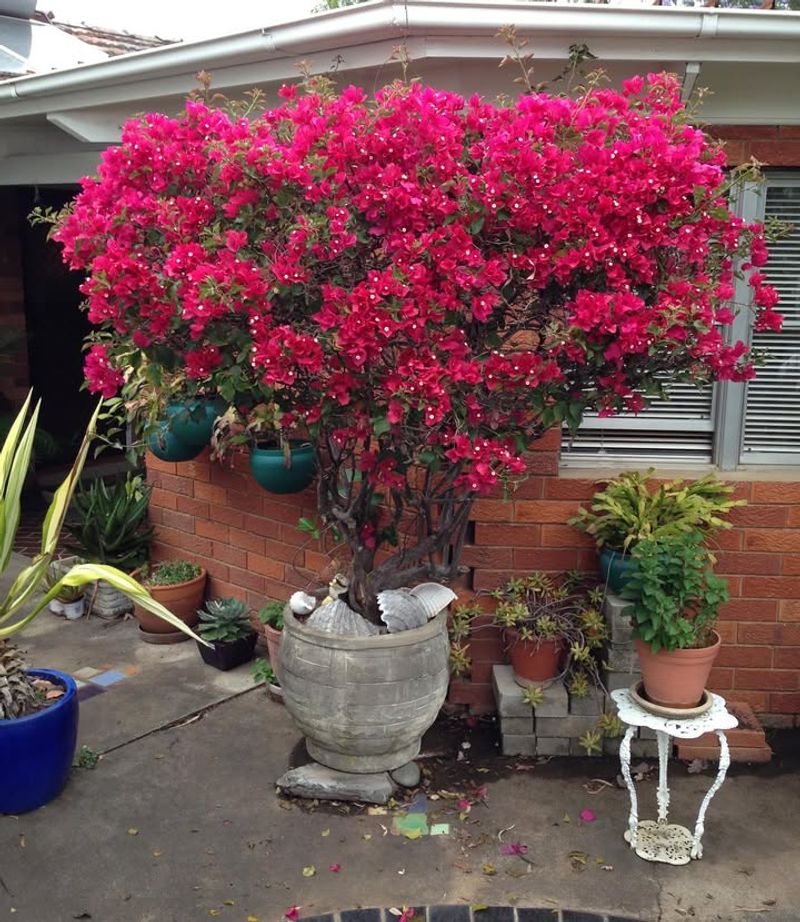
Fertilizer strategy for Arizona bougainvillea flips conventional wisdom on its head. High nitrogen fertilizers produce lush green growth but few colorful bracts.
You want the opposite: controlled growth with maximum flowering.
Look for bloom-boosting formulas with higher phosphorus and potassium numbers compared to nitrogen. A ratio like 5-10-10 or similar works well.
Some Arizona gardeners use formulas designed for flowering desert plants or even tomato fertilizers with good results.
Application frequency matters as much as formula choice. Container plants need more frequent feeding than ground-planted specimens since nutrients wash through with each watering.
Apply diluted fertilizer every three to four weeks during the growing season from March through October.
Skip fertilizing during winter months when growth naturally slows. Pushing growth during cooler weather weakens plants and reduces spring flowering.
Bougainvillea benefits from this rest period common to many Arizona landscape plants.
Overfertilizing causes excessive vegetative growth that shades out potential bloom sites. If your container bougainvillea grows vigorously but barely flowers, reduce fertilizer amounts or frequency rather than increasing them.
Sometimes less intervention produces better results. Yellowing leaves might indicate nutrient deficiency, but check watering practices first since overwatering causes similar symptoms and fertilizing a waterlogged plant makes problems worse.
6. Protect Containers From Rare Winter Frost In Lower Desert Areas
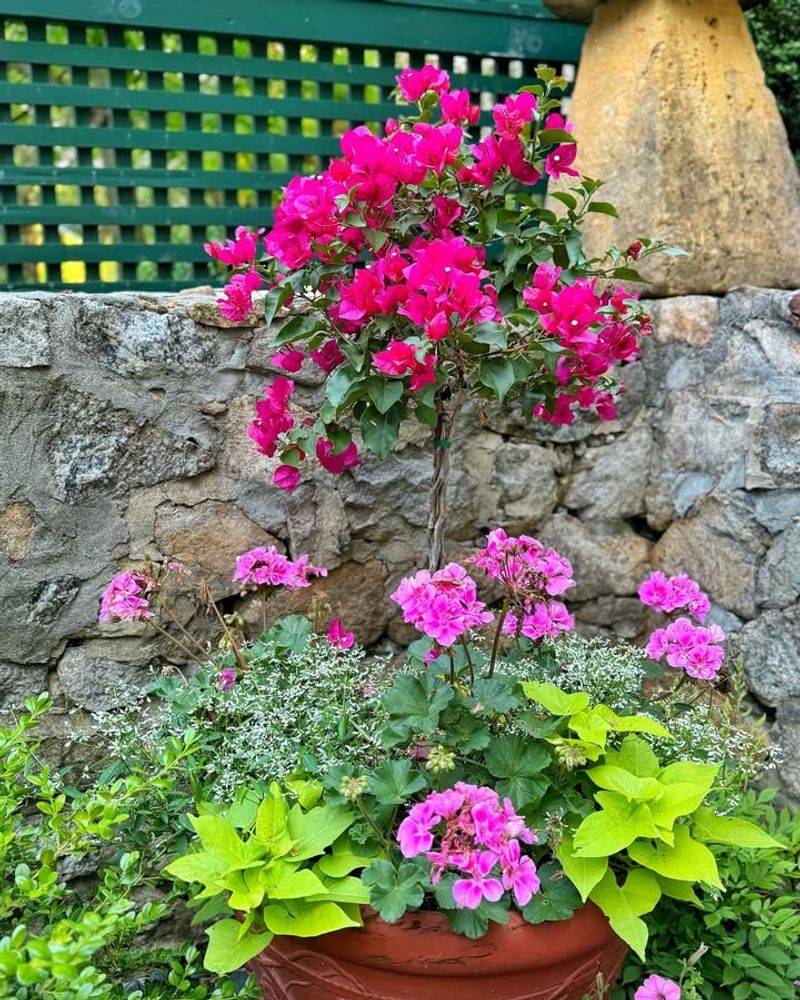
Arizona’s lower desert areas rarely freeze, but occasional winter nights dip below 32 degrees. Bougainvillea foliage suffers damage around 30 degrees, and prolonged freezes can harm woody stems.
Container plants face greater cold risk than ground-planted ones since roots lack soil insulation.
Watch weather forecasts from December through February for freeze warnings. When temperatures threaten to drop into the danger zone, move containers against south-facing walls or under covered patios.
The radiated heat from structures provides several degrees of protection.
Frost cloth works better than plastic sheeting for covering plants during cold snaps. Drape it loosely over the plant without letting it touch foliage directly.
Remove covers once morning temperatures rise above freezing so plants don’t overheat under Arizona’s sunny winter days.
Higher elevation areas around Tucson and Flagstaff experience more frequent freezes. Gardeners in these zones should plan container placement near doors or garages where plants can be quickly moved indoors during extended cold periods.
A few nights in a garage won’t harm bougainvillea but saves it from freeze damage.
Cold-damaged foliage looks brown and papery but doesn’t necessarily mean the plant is lost. Wait until spring growth begins before pruning damaged sections.
Many Arizona bougainvillea bounce back from frost damage once warm weather returns, especially if roots stayed protected during the cold event.
7. Prune After Bloom Cycles To Control Size And Promote Repeat Flowering
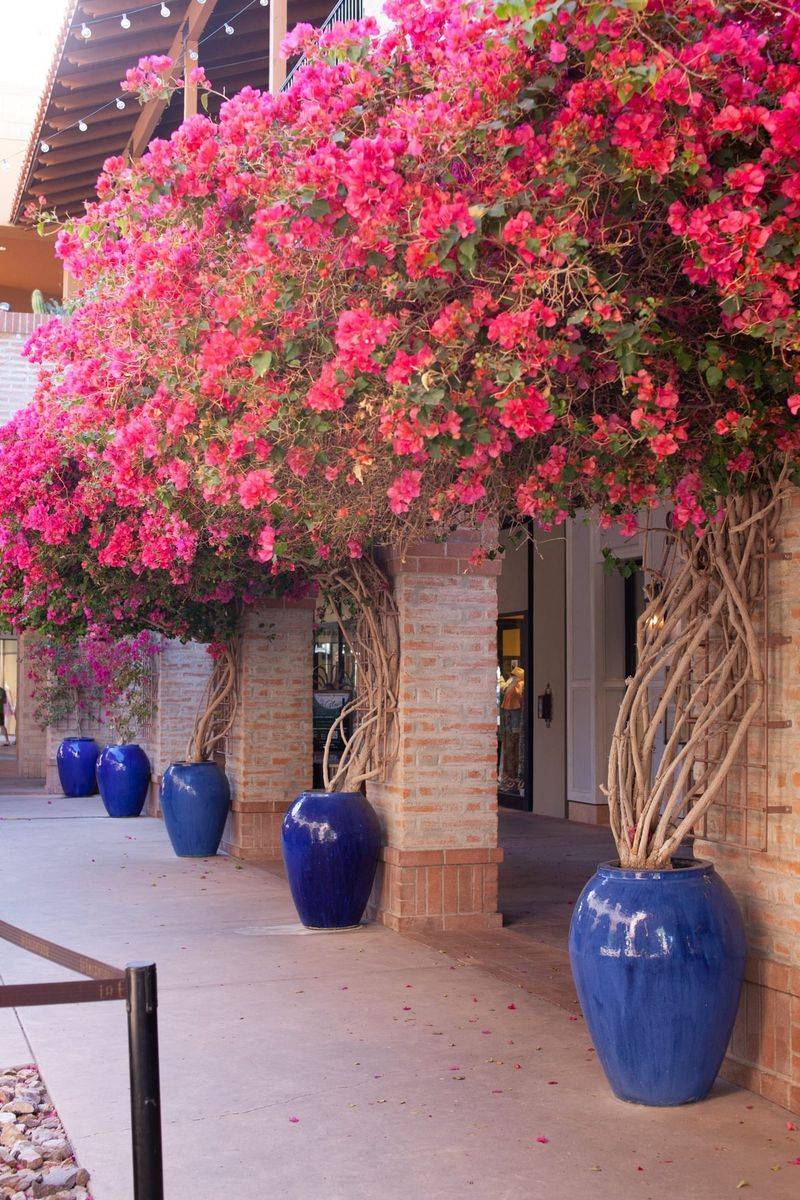
Pruning intimidates some Arizona gardeners, but bougainvillea actually thrives with regular trimming. These vigorous growers quickly outgrow containers without intervention.
Strategic pruning maintains manageable size while encouraging heavier blooming on compact plants.
Timing matters significantly with bougainvillea pruning. Cut back spent flower clusters and leggy growth immediately after each bloom cycle finishes.
This promotes branching and sets up the next flowering flush. Arizona’s climate allows multiple bloom cycles annually if you prune correctly between them.
Remove about one-third of the plant’s total growth during each pruning session. Cutting back to just above a leaf node encourages branching at that point.
More branches mean more potential flowering sites for the next cycle.
Wear gloves since bougainvillea thorns are sharp and numerous. Use clean, sharp bypass pruners rather than dull or dirty tools that crush stems.
Make cuts at a slight angle just above outward-facing buds to direct new growth away from the plant’s center.
Container bougainvillea benefits from occasional hard pruning every few years to rejuvenate the plant. Cut the entire plant back by half in early spring before new growth begins.
This seems drastic but produces fuller, more floriferous plants. Arizona’s long growing season gives pruned plants plenty of time to recover and bloom heavily by summer.