How Far Apart North Carolina Gardeners Should Plant Tomatoes For Better Yields
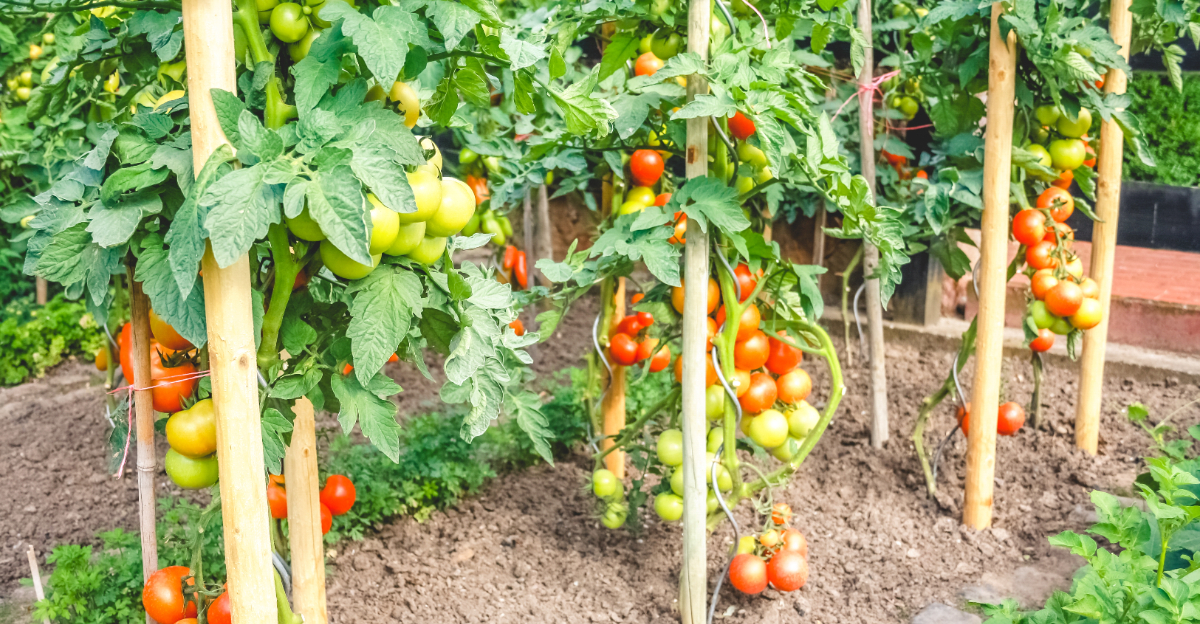
Tomatoes are a favorite in North Carolina gardens, but spacing them the right way can make a huge difference in how well they grow. It’s easy to think more plants will mean more tomatoes, yet crowding often leads to smaller harvests and more problems.
In North Carolina’s warm, humid climate, tomato plants need plenty of room for air to move between them. Good spacing helps reduce common issues like leaf spots and keeps plants healthier through the long growing season.
It also allows sunlight to reach every part of the plant, which supports stronger growth and better fruit production.
Whether you’re planting in raised beds or directly in the ground, getting the spacing right sets the stage for a more successful harvest. A few extra inches between plants can truly pay off when it’s time to pick.
1. Follow The Right Base Spacing For Your Tomato Type
Not all tomatoes need the same amount of room, and knowing the difference can completely change your harvest. Tomato plants belong to the species Solanum lycopersicum, and they come in two main growth types.
Determinate types, also called bush tomatoes, stay compact and stop growing once they flower. Indeterminate types keep climbing and spreading all season long.
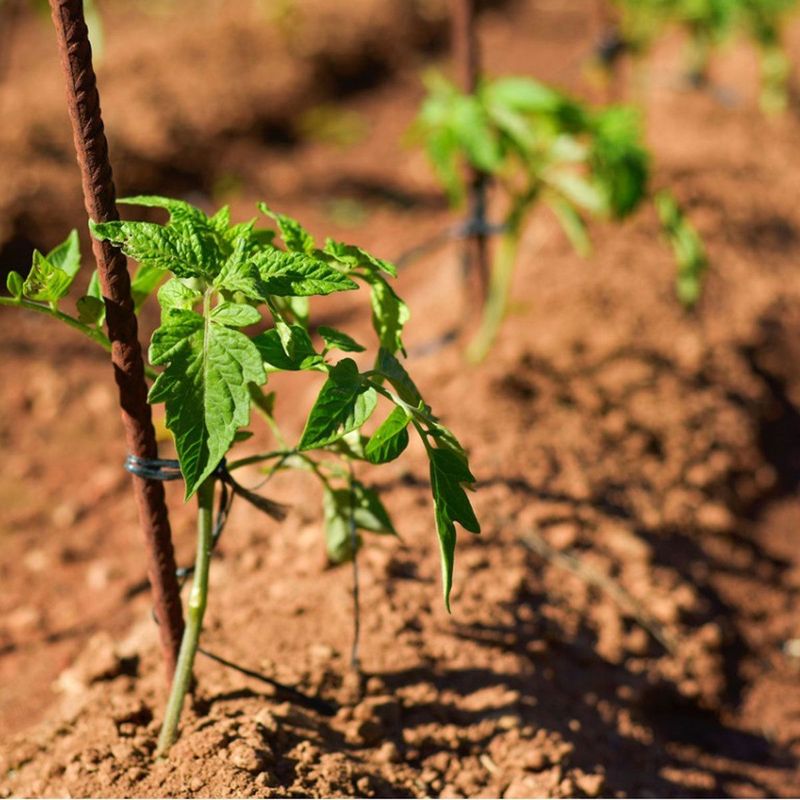
For determinate varieties, space your plants 18 to 24 inches apart in the row. Indeterminate varieties need more breathing room, so aim for 24 to 36 inches between each plant.
In North Carolina, where summer humidity can feel like a warm wet blanket, giving plants enough space is not just helpful but truly necessary.
When plants are too close, warm moist air gets trapped between the leaves. That trapped moisture creates the perfect environment for fungal diseases like early blight and Septoria leaf spot, both of which are very common across the state.
Proper spacing keeps airflow moving through your garden, which helps leaves dry out faster after rain or morning dew.
Starting with the right base spacing for your specific tomato variety is the single most important decision you will make before your first seedling ever goes into the ground in North Carolina.
2. Increase Spacing In Humid Areas Of North Carolina
North Carolina is not just one climate. The Piedmont region sits in the middle of the state with rolling hills and heavy summer humidity, while the Coastal Plain stretches east toward the ocean with warm, wet air rolling in regularly.
Both of these regions create conditions where fungal pressure on tomato plants can build fast if spacing is too tight.
Gardeners in these areas should always aim for the wider end of the recommended spacing ranges. If the guideline says 18 to 24 inches, go with 24 inches.
If it says 24 to 36 inches, push toward 36 inches without hesitation. That extra space between plants creates a pathway for moving air, which is your best natural tool against moisture-related disease.
Think about what happens after a typical North Carolina summer rainstorm. The air gets thick and heavy, and everything in the garden stays wet for hours.
Plants packed closely together hold that moisture even longer, which gives fungal spores exactly what they need to spread. Wider spacing means leaves and stems dry out faster, cutting down the window of time when disease can take hold.
Coastal Plain gardeners especially benefit from this approach since afternoon sea breezes only help so much when your plants are crowded. Generous spacing is a simple habit that pays off with healthier, more productive plants all season long.
3. Allow Extra Room Between Your Tomato Rows
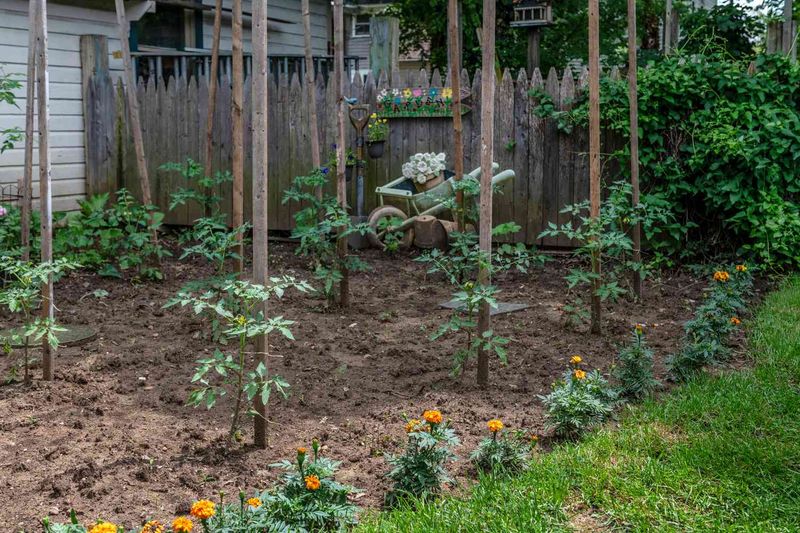
Most gardeners focus on the space between individual plants but forget just as important is the space between the rows themselves. Row spacing affects airflow across the entire garden, and in North Carolina summers, good airflow is everything.
Aim for rows that are at least 3 to 4 feet apart from center to center. Wide row spacing does more than just let air move through your garden. It also gives you room to walk between the plants comfortably without bumping into foliage.
Every time you brush against a tomato leaf, you can accidentally spread fungal spores from one plant to another.
Keeping rows wide reduces that accidental contact and makes everyday tasks like watering, pruning, and harvesting much easier on your back and your plants.
North Carolina summers bring frequent afternoon thunderstorms, especially from June through August. After those storms, gardens can feel like a sauna for hours.
Rows spaced too closely together create walls of dense foliage that trap that post-storm moisture right where you do not want it. Wider rows let warm air circulate and carry that moisture away naturally.
Experienced North Carolina gardeners often say that the space between rows is just as productive as the space between plants because it directly determines how quickly your garden recovers after wet weather.
Give your rows room to breathe and your tomatoes will reward you generously.
4. Stake Or Cage Your Plants To Maximize Space Efficiency
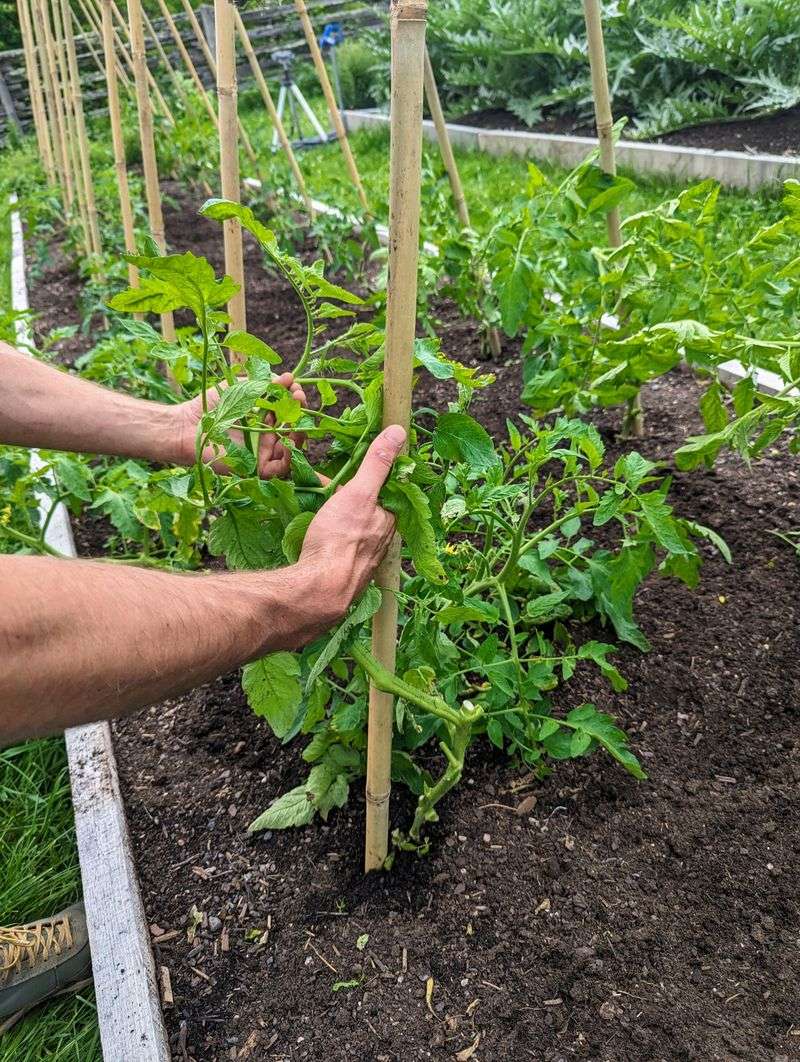
Here is a smart trick that experienced North Carolina gardeners use every season. Supporting your tomato plants with stakes or wire cages allows them to grow upright instead of sprawling across the ground.
That vertical growth habit means you can manage your spacing more efficiently without sacrificing airflow or plant health.
When tomato vines lie on the ground or lean heavily to one side, leaves pile up on each other and moisture gets trapped underneath. Soil splash from rain also hits the lower leaves directly, which is a major way that soil-borne diseases travel up into the plant.
Staking or caging lifts the whole plant off the ground, reducing that splash contact and keeping the foliage cleaner and drier.
In North Carolina, where heavy summer rains are a regular part of life, keeping plants off the ground is a practical disease-prevention strategy.
Cages work especially well for indeterminate varieties that keep growing through the season, while sturdy wooden or metal stakes are great for compact determinate types.
You can even place caged plants slightly closer together, around 20 to 24 inches apart, as long as the cages themselves are not overlapping. Vertical growth also makes it easier to spot problems early, since you can see the whole plant clearly.
Investing in good support structures at the start of the season is one of the smartest moves any North Carolina gardener can make.
5. Prune Lower Leaves To Improve Airflow Around Plants
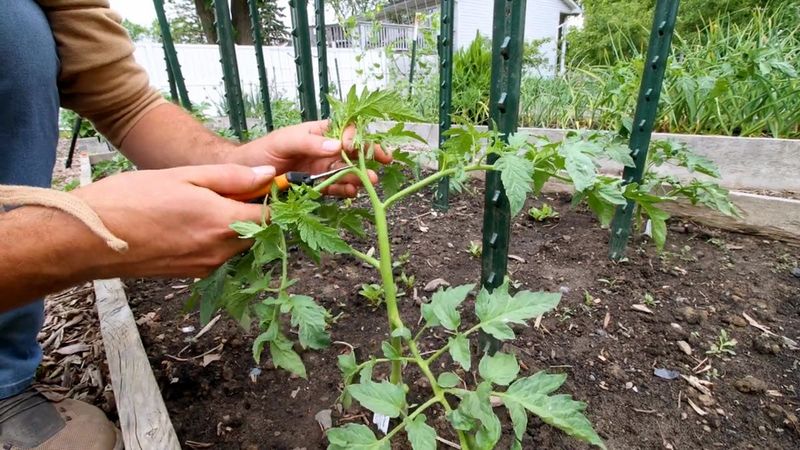
Pruning might sound intimidating, but removing the lower leaves from your tomato plants is one of the easiest and most effective things you can do to protect them.
Once your plants are well established and growing strong, remove leaves that sit 6 to 10 inches above the soil surface.
This simple step opens up the base of the plant and dramatically improves airflow right where it matters most.
Rain hitting bare soil splashes tiny soil particles upward onto nearby leaves. Those soil particles can carry fungal spores, bacteria, and other pathogens that cause common North Carolina tomato diseases like early blight.
When the lower leaves are removed, that splash-up has nowhere to land, which breaks the cycle of infection before it even starts.
Pruning also helps sunlight reach the center of the plant more easily, which speeds up drying after rain or heavy dew.
North Carolina gardeners who skip this step often notice yellowing leaves and dark spots appearing on their lower foliage first, which is a classic early warning sign of fungal trouble moving up the plant.
Removing those lower leaves proactively means the problem never gets started in the first place. Do this pruning on a dry sunny morning so any small cuts on the stem can dry quickly.
Clean your pruning shears between plants to avoid accidentally moving any pathogens from one plant to another across your garden.
6. Adjust Your Spacing Based On Soil Type
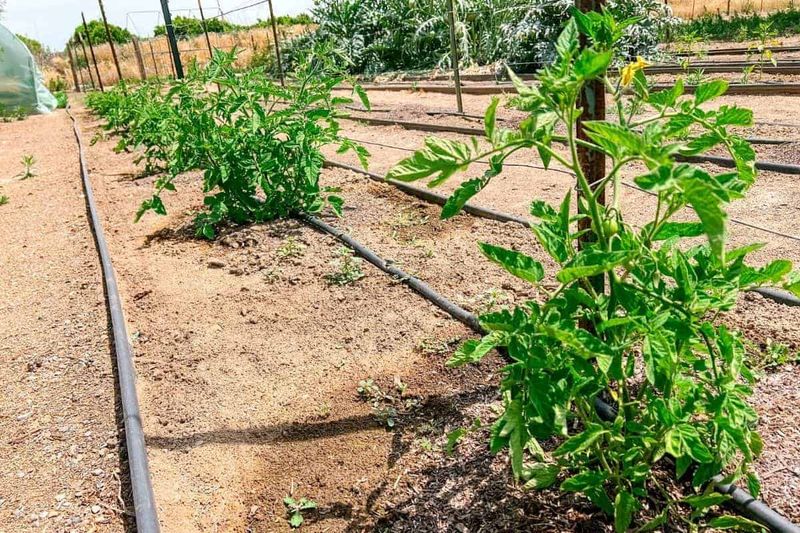
Soil type plays a bigger role in tomato spacing than most gardeners realize. North Carolina has a fascinating range of soil types depending on where you live.
The Piedmont region is famous for its heavy red clay soil, which holds moisture for a long time after rain. The Coastal Plain, on the other hand, has lighter sandy soil that drains quickly and dries out faster.
In clay-heavy soils, water does not drain away quickly. That means the area around your plant roots and lower stems stays moist for longer periods, which raises the humidity level right at the base of the plant.
Giving plants a little extra space in clay soils, even just a few extra inches beyond the standard recommendation, helps compensate for that lingering moisture by allowing more airflow around each plant.
Sandy soils in the eastern part of North Carolina behave very differently. Water moves through quickly, and the soil surface dries out fast.
Standard spacing recommendations work well in these conditions without much adjustment needed. Before you plant this season, do a simple squeeze test on a handful of your garden soil.
If it clumps together and holds its shape, you are likely dealing with clay and should add extra spacing. If it crumbles apart easily, your soil drains well and standard spacing will serve you just fine.
Matching your spacing to your soil type is a practical, low-cost way to grow stronger, more productive tomato plants throughout North Carolina.
7. Avoid Overcrowding Even When Garden Space Feels Limited
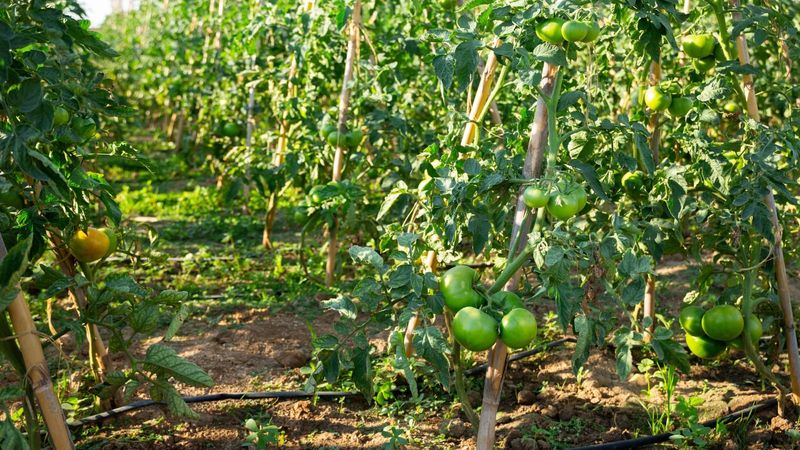
Squeezing extra plants into a small garden might seem like a clever way to get more tomatoes, but it almost always backfires. When plants are too close together, they compete fiercely for sunlight, water, and nutrients.
Every resource one plant grabs is a resource another plant cannot access, and that competition slows growth across the whole garden.
In North Carolina, overcrowding carries an extra penalty beyond simple competition. The warm, humid climate means that when plants are packed tightly, disease pressure builds fast.
Fungal spores spread easily from leaf to leaf when foliage is touching or overlapping. What starts as a small spot on one plant can race through a crowded garden in just a few days during a stretch of humid summer weather.
The good news is that fewer, well-spaced plants will almost always outperform a crowded row in total yield by the end of the season. Healthy plants with room to grow produce more blossoms, set more fruit, and stay productive longer than stressed, crowded ones.
If your garden space is genuinely limited, consider growing one or two high-quality determinate varieties in containers or raised beds instead of cramming too many plants into a small in-ground space.
North Carolina gardeners who respect proper spacing consistently report bigger harvests, fewer disease problems, and a much more enjoyable gardening season from spring all the way through the fall harvest.