How Long You Should Really Wait Before Cutting Back Cold Damaged Plants In North Carolina
A sudden cold snap can leave your North Carolina garden looking tired and battered overnight, making it hard to resist reaching for the pruners. Brown leaves, wilted stems, and drooping growth often create the impression that plants are beyond saving.
Yet appearances can be deceiving. Many plants that seem damaged are still very much alive beneath the surface, slowly beginning the recovery process.
Pruning too quickly after a freeze can remove protective growth and expose tender tissue to further stress, setting plants back even more. Patience becomes one of the most valuable tools a gardener can use during this time.
In North Carolina, timing varies by region, with coastal areas warming sooner and mountain gardens taking longer to stabilize. Waiting for clear signs of new growth ensures you remove only what is truly affected.
Understanding when to act helps your garden rebound stronger and keeps your North Carolina landscape on track for a healthy, vibrant season ahead.
Wait Until New Growth Clearly Appears Before Pruning
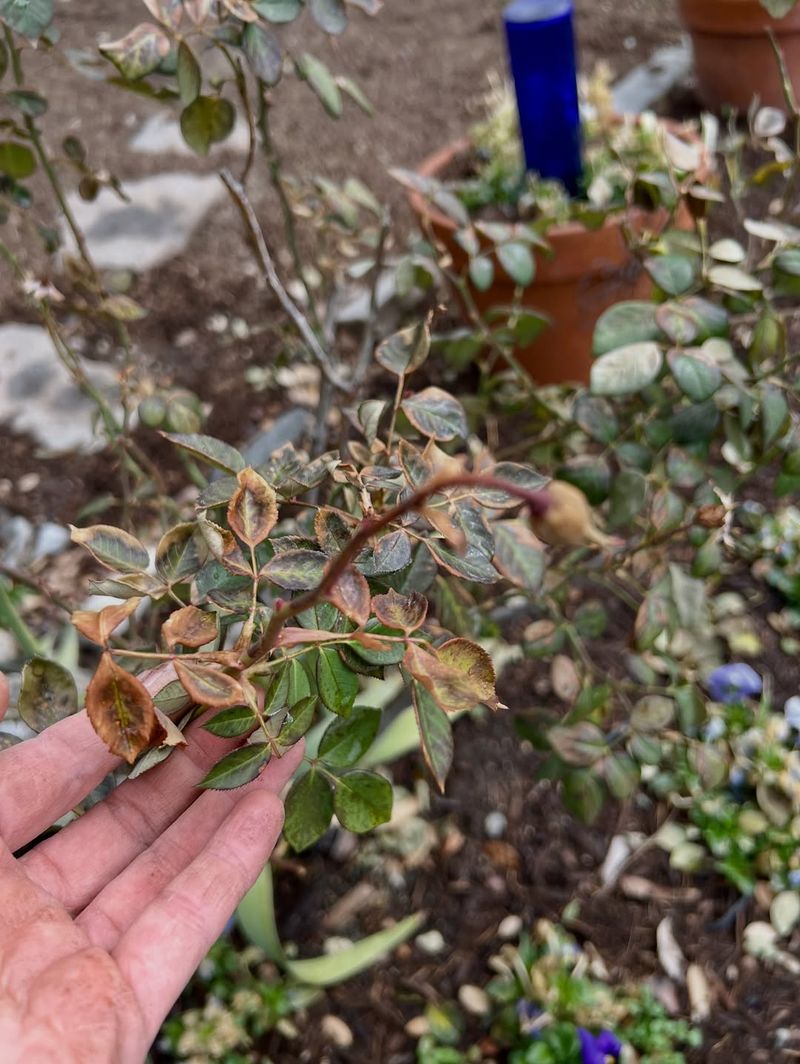
Spotting new green growth pushing through damaged stems is one of the most satisfying signals a gardener can receive after a tough winter. That tiny burst of fresh color is your plant telling you it survived, and it is the clearest sign that pruning time is getting close.
Many gardeners in North Carolina make the mistake of cutting too early, simply because damaged stems look unsightly after cold weather rolls through.
Waiting for visible new growth before reaching for your pruners is a fundamental rule in horticultural practice. The new buds and leaves show you exactly where the plant is healthy and where the damage actually stops.
Without that visual guide, you risk cutting into tissue that was quietly recovering beneath the surface.
Patience genuinely pays off here. Some plants push new growth slowly, especially after severe cold exposure, so checking every few days rather than every few hours keeps you from panicking.
Shrubs like gardenias, lantanas, and camellias in North Carolina commonly look terrible in late winter but bounce back beautifully once temperatures stabilize.
Give your plants the chance to show you their recovery before you make any cuts, and your garden will reward you generously come spring.
Most Plants Need Two To Four Weeks Of Warm Weather To Show Recovery

Plant recovery after cold damage is not an overnight process, and that surprises a lot of first-time gardeners.
Most plants need a consistent stretch of warm temperatures, typically somewhere between two and four weeks, before they clearly reveal which tissue survived and which did not.
A single warm afternoon is not enough to trigger visible recovery throughout the entire plant.
During those warming weeks, cellular processes inside the plant slowly restart. Roots begin absorbing water and nutrients again, and energy moves upward through the stems toward buds that may still be viable.
This internal activity often happens well before you see anything on the outside, which is why rushing the process leads to poor decisions in the garden.
In North Carolina, late winter weather can be unpredictable, with warm days followed by surprise cold nights. Waiting for a genuine two-to-four-week window of consistently mild temperatures gives your plants the best environment to signal their recovery clearly.
Keep a simple garden journal during this period and note when temperatures stay above freezing consistently. That record helps you track the warming trend accurately and decide with confidence when the right moment to assess your plants has finally arrived.
Pruning Too Early Can Remove Living Tissue

Brown, brittle stems after a freeze can fool even experienced gardeners into thinking a plant is completely gone. The tricky reality is that stems often look far worse on the outside than they actually are on the inside.
Cutting those stems off too soon means removing tissue that the plant was actively using to stage its comeback.
Living tissue inside a stem can remain viable long after the outer surface turns brown and dries out. The protective bark and outer layers of a stem take the brunt of cold exposure, but the inner cambium layer sometimes survives and continues functioning.
Once you prune that stem away, you eliminate the plant’s ability to use that section for recovery, and you may also expose fresh cut surfaces to additional cold snaps.
Horticulture experts consistently advise North Carolina gardeners to resist the urge to clean up immediately after a freeze event. The garden might look messy for a few weeks, but that mess is actually protecting surviving plant tissue underneath.
Damaged leaves and stems create a small buffer of insulation around the plant base. Keeping that buffer intact during the remaining cold weeks of winter gives roots and lower stems a better chance of pulling through and pushing new growth when spring truly settles in.
Late March To Early April Is Often The Earliest Safe Time In The Coastal Plain
The Coastal Plain of North Carolina enjoys a climate advantage that gardeners in other parts of the state genuinely envy.
Warmer air temperatures, milder winters, and earlier springs mean that plants in this eastern region typically begin showing recovery sooner than anywhere else in the state.
For most coastal gardeners, late March to early April represents the earliest reasonable window to begin assessing and pruning cold damaged plants.
Cities like Wilmington, Greenville, and New Bern sit in this warmer zone where the last frost dates arrive earlier in the calendar year. By late March, soil temperatures in the Coastal Plain are usually climbing steadily, encouraging root activity and upward growth.
That combination of warming soil and longer daylight hours gives plants the energy boost they need to push new buds and signal their survival clearly.
Even in this favorable region, waiting until you see actual new growth remains the smartest approach rather than simply going by the calendar date. Some years bring lingering cold fronts into early April that can catch gardeners off guard.
Using the late March to early April timeframe as a general guideline while watching your specific plants for growth signals gives you the most reliable results.
Coastal gardeners who combine regional knowledge with plant observation consistently make better pruning decisions than those who rely on dates alone.
Mid April Is A Safer Waiting Point In The Piedmont
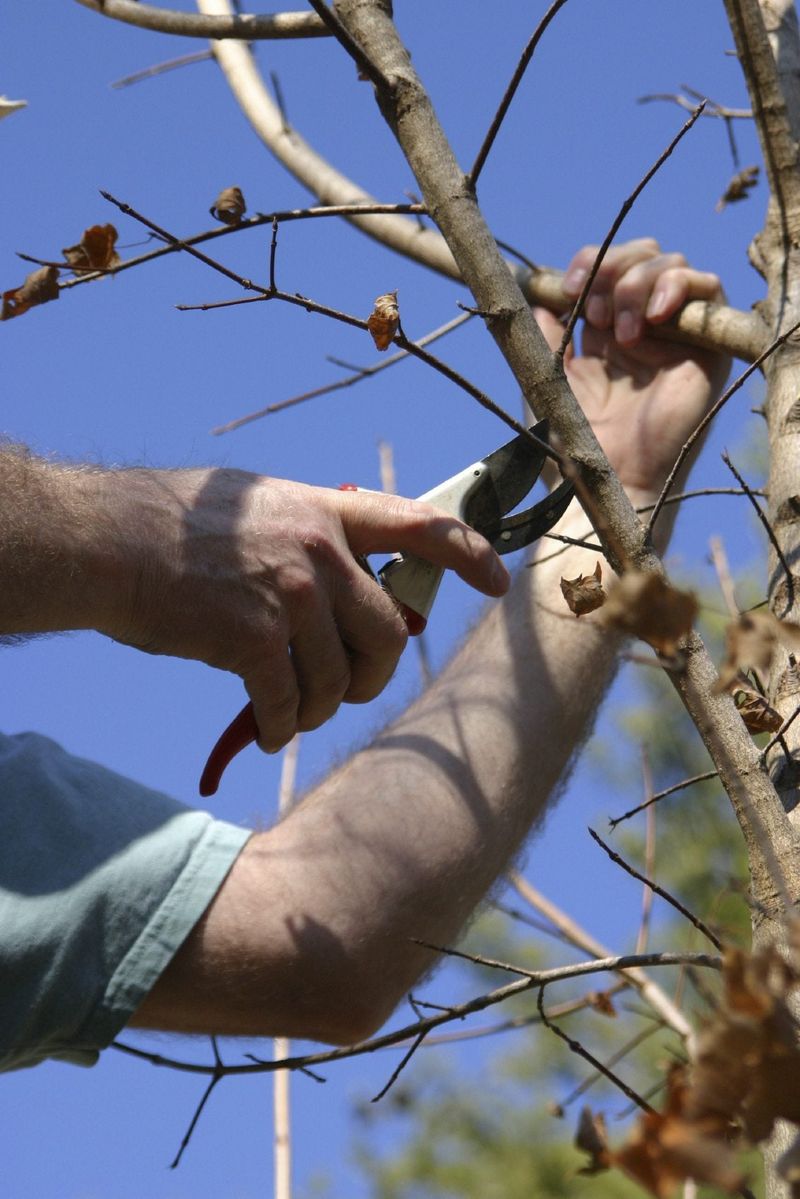
Gardeners living in the Piedmont region of North Carolina experience a noticeably different spring timeline compared to their coastal neighbors.
Cities like Raleigh, Charlotte, Durham, and Greensboro sit in this central zone where cooler nights linger longer into the calendar year.
That extended cold means plants in the Piedmont often need until mid-April before they show reliable signs of recovery from winter damage.
Nighttime temperatures in the Piedmont can dip below freezing well into March and occasionally into early April, making premature pruning a real risk.
A plant that looks like it is recovering on a warm March afternoon may face another damaging frost event just days later.
Waiting until mid-April gives the regional climate time to stabilize and reduces the chance that fresh pruning cuts will be exposed to additional cold stress.
Piedmont gardeners often find that popular landscape plants like loropetalum, crape myrtles, and banana shrubs reveal their recovery status more clearly by mid-April.
The longer days and consistently warmer soil temperatures at that point trigger more reliable growth signals.
Checking your plants weekly starting in late March keeps you informed without rushing the process.
By the time mid-April arrives and temperatures stay comfortably above freezing most nights, you can prune with much greater confidence and accuracy than any earlier attempt would allow.
Mountain Gardeners May Need To Wait Until Late April Or May
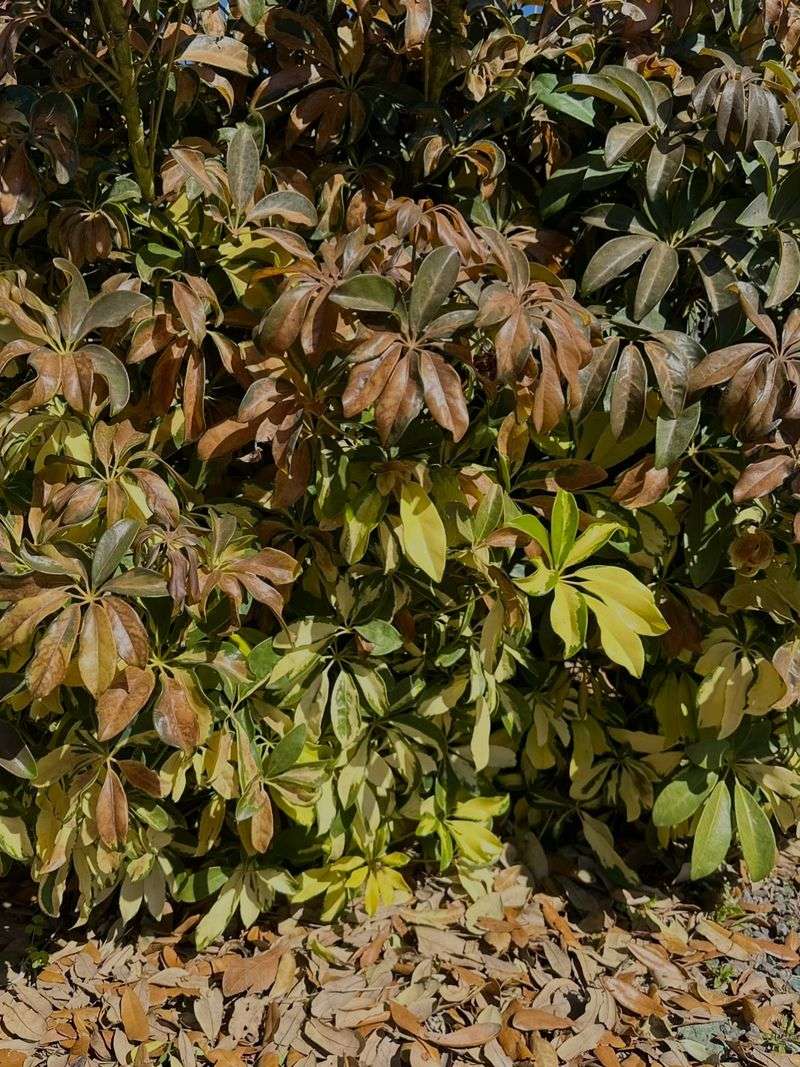
Gardening in the mountains of western North Carolina comes with breathtaking scenery and a unique set of challenges that lower-elevation gardeners rarely deal with.
Higher elevations mean colder winters, later last frost dates, and a spring that arrives on its own schedule regardless of what the calendar says.
For mountain gardeners, waiting until late April or even into May before pruning cold damaged plants is not just caution, it is genuinely necessary.
Areas like Asheville, Boone, and Brevard regularly see freezing temperatures well into April, and some higher mountain communities experience frost events in early May during unusual weather years.
Pruning cold damaged plants before the frost risk truly passes in these areas can stimulate tender new growth that gets immediately hit by another freeze. That cycle sets plants back further than simply waiting would have done.
Mountain native plants like rhododendrons, mountain laurels, and many native ferns are adapted to cold conditions, but even they benefit from patient timing after an especially harsh winter.
Watching for consistent nighttime temperatures above freezing for at least two consecutive weeks before pruning gives mountain gardeners a reliable signal.
Spring comes later at elevation, but it arrives with wonderful energy once it does. Trusting that natural timing and resisting the urge to rush the process leads to healthier plants and a more rewarding garden season overall.
Leaves May Suffer While Stems And Roots Survive
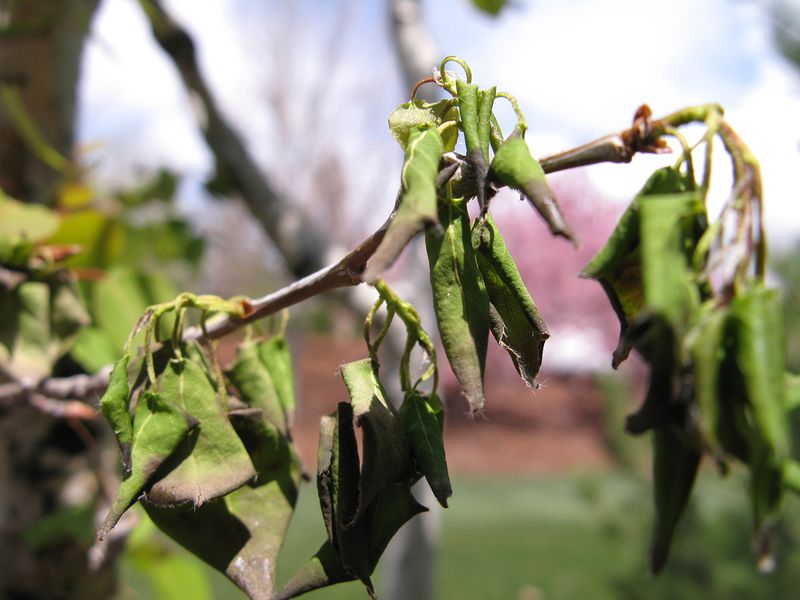
One of the most common misunderstandings after a cold event is assuming that a plant with completely brown leaves has no chance of recovery.
Leaves are actually the most frost-sensitive part of most plants, and they often take the damage first while the stems and roots below stay perfectly viable.
Seeing a shrub or perennial with completely browned foliage can be alarming, but that visual does not tell the whole story.
Roots sitting below the soil surface enjoy natural insulation from the ground itself, which holds heat far longer than the air above it. Stems close to the ground also benefit from that soil warmth and from any mulch layer protecting the root zone.
Even when every visible leaf has turned brown and papery, the root system and lower stem sections may be completely healthy and ready to push new growth once temperatures rise.
Plants like lantanas, salvias, and elephant ears commonly behave this way in North Carolina winters. The above-ground portion looks completely finished after a hard freeze, but the root system survives and sends up fresh new growth once spring warmth arrives.
Cutting those brown stems back immediately removes the natural protection they provide to the crown of the plant. Leaving them in place through the rest of winter and watching for new growth emerging from the base is the most effective strategy for these types of plants.
Scratch Test Helps Identify Living Tissue Before Cutting
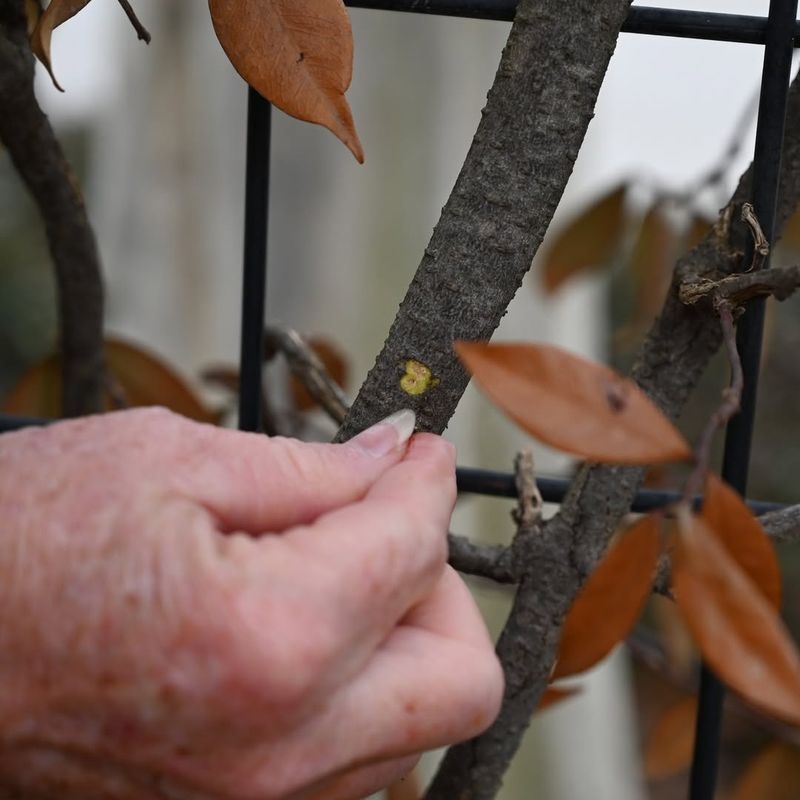
Here is a simple trick that experienced gardeners swear by, and it takes about five seconds to do. The scratch test involves using your fingernail or a small knife to lightly scrape away the outer layer of bark on a stem you are uncertain about.
What you find underneath tells you almost everything you need to know before you make a single pruning cut.
Green or white tissue beneath the bark indicates that the cambium layer is alive and the stem is still functioning. Brown or tan dry tissue beneath the bark suggests that section of the stem did not survive the cold event.
Working your way down from the tip of a stem toward the base while performing this test helps you locate exactly where the living tissue begins, giving you a precise point for pruning.
This technique is especially useful for woody ornamentals like gardenias, crape myrtles, and fig trees in North Carolina, where cold damage can be uneven across different parts of the same plant.
One branch may show living tissue just an inch below the tip while another branch is damaged much further down.
Performing the scratch test on multiple stems gives you a complete picture of how the plant actually fared through winter. Armed with that information, you can make targeted, accurate cuts rather than guessing and potentially removing healthy wood unnecessarily.
Waiting Prevents Stimulating Growth During Late Frost Risk
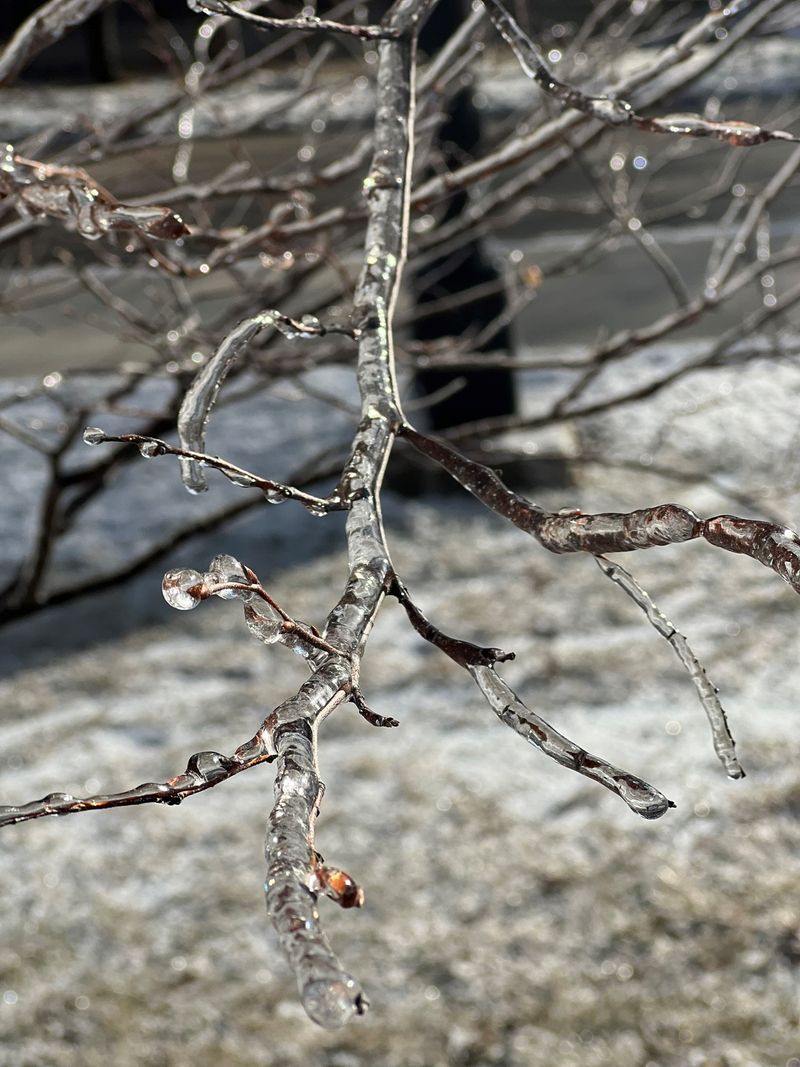
Pruning a plant sends a clear biological signal to push new growth, and that response is exactly what you want in spring.
The problem is that pruning too early in North Carolina triggers that same flush of tender new growth while late frost events are still a very real possibility.
Those soft, fresh shoots are among the most cold-sensitive parts of any plant, and a late frost can set your recovery efforts back significantly.
North Carolina sits in a climate zone where late cold snaps are not unusual, particularly in the Piedmont and mountain regions.
A warm spell in late February or early March can feel convincingly like spring has arrived, but experienced gardeners know that temperatures can swing back to freezing several more times before the season truly settles.
Pruning during that deceptively warm window encourages growth that has almost no tolerance for the cold nights still ahead.
Waiting until the frost risk in your specific region has genuinely passed before pruning protects both the plant and your own time investment.
New growth that emerges on its own schedule, without being triggered by premature pruning, tends to be stronger and better timed to the actual climate conditions.
Checking the average last frost dates for your county in North Carolina and waiting a week or two beyond that point before pruning gives you a comfortable safety margin that most plants genuinely appreciate.
Gradual Pruning Is Better Than Cutting Everything At Once
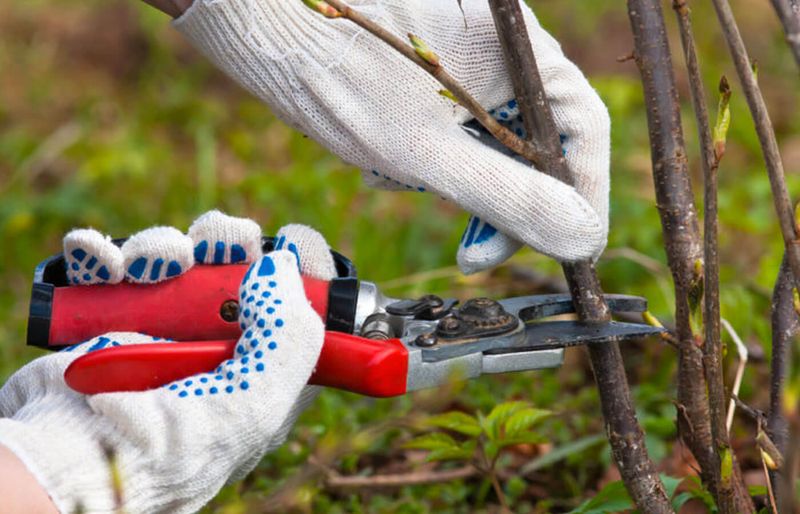
Tackling cold damaged plants in stages rather than all at once is an approach that consistently produces better outcomes for gardeners across North Carolina.
Removing obviously damaged outer growth first gives you a clearer view of what is happening deeper inside the plant.
That initial light cleanup also reduces the visual shock of seeing a heavily damaged garden without committing to cuts you might regret later.
Waiting a week or two after the first round of pruning before going deeper allows any remaining living tissue to reveal itself through new growth. You may find that stems you initially planned to remove start pushing small green buds after that first pruning session.
Those buds would have been lost if you had cut everything back aggressively in a single session without giving the plant time to respond.
Gradual pruning also reduces stress on the plant itself. Removing large amounts of plant material all at once demands an immediate and intense energy response from the root system.
Spreading that process out over several weeks gives roots time to support each stage of recovery without being overwhelmed.
For large shrubs, established perennials, and ornamental trees in North Carolina, this staged approach tends to result in fuller, healthier regrowth compared to one aggressive cut.
Think of it as a conversation with your plant rather than a single decision, and your garden will come back stronger for it.