How Michigan Gardeners Care For Begonia Maculata Indoors
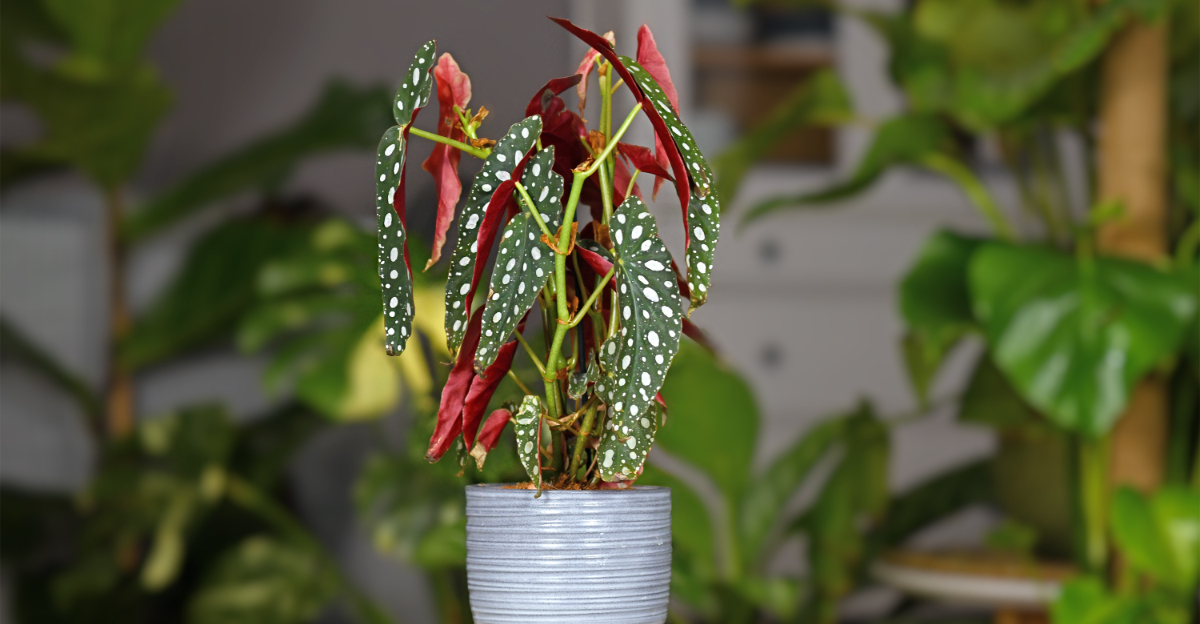
Begonia maculata quickly becomes the plant everyone notices in the room. With its spotted leaves, deep green tones, and rich red undersides, this plant stands out without trying too hard.
Many Michigan gardeners grow it indoors not just for its look, but for the calm, steady routine it brings through long winters and changing seasons.
Caring for begonia maculata indoors is mostly about balance. Bright, indirect light keeps the leaves vibrant, while moderate watering prevents the roots from sitting in cold, damp soil during colder months.
Because indoor air can turn dry in winter, many gardeners keep humidity steady to avoid leaf edges browning or curling. A stable environment helps the plant grow upright and maintain its signature pattern.
With the right care, begonia maculata becomes more than decor. It grows into a striking, long lasting houseplant that adds life and character to indoor spaces year round.
Provide Bright, Indirect Light
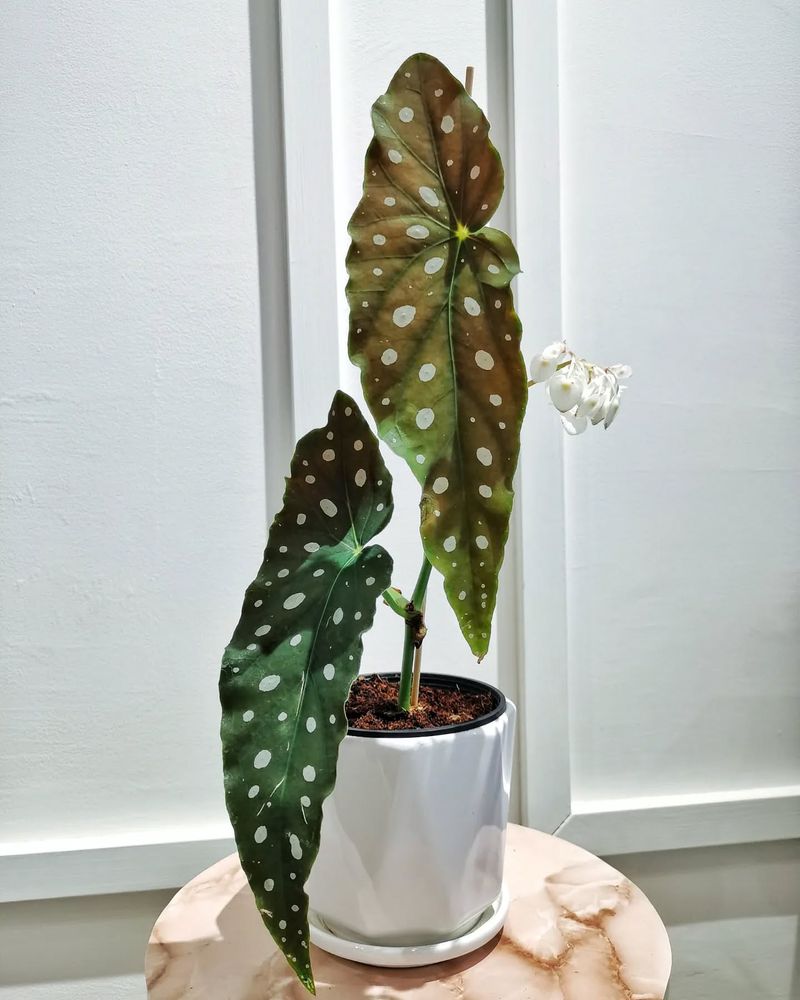
Begonia maculata loves light but not the harsh kind that scorches its delicate leaves. Finding the sweet spot in your Michigan home means placing it near windows that face east or south. These directions offer gentle morning sun or filtered afternoon rays.
During Michigan’s gray winter months, natural light becomes scarce and weak. Your begonia might stretch toward windows or lose its vibrant color. Grow lights solve this problem beautifully, providing consistent brightness for twelve to fourteen hours daily.
Position your plant about three to five feet from the window for best results. Too close and the leaves develop brown patches. Too far and growth slows to a crawl.
Sheer curtains work wonders for filtering intense summer sunlight through south-facing windows. They create that perfect dappled effect begonias crave in their natural habitat. Watch your plant’s response over a few weeks.
If leaves fade or stems get leggy, move it closer to light. Rotate the pot weekly so all sides receive equal exposure. This simple habit prevents lopsided growth and keeps your begonia looking full and balanced from every angle.
Maintain Stable Indoor Temperatures
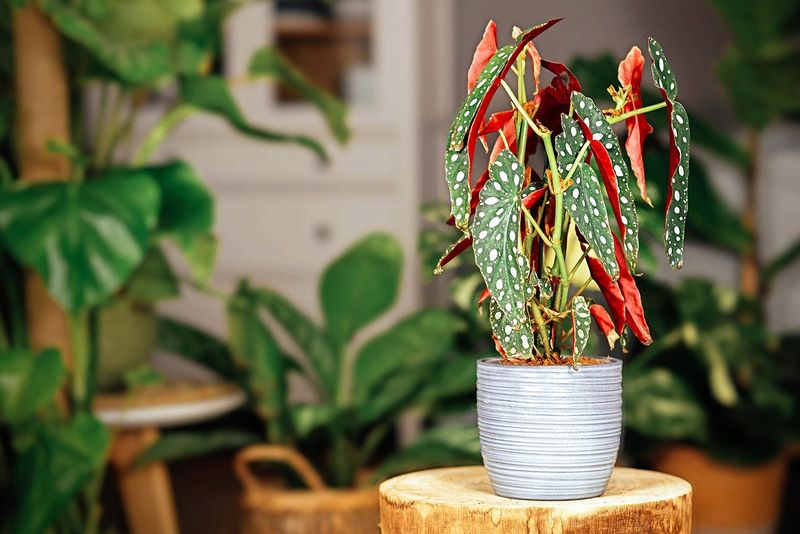
Temperature stability makes all the difference for Begonia maculata success indoors. These tropical beauties prefer consistent warmth between sixty-five and seventy-five degrees during daytime hours.
Michigan homes often fluctuate wildly, especially near windows and exterior walls.
Cold drafts from poorly sealed windows spell trouble during winter months. Your begonia will protest with drooping leaves and slowed growth. Check for air leaks and use weather stripping where needed.
Nighttime temperatures should never dip below fifty-five degrees for extended periods. Basements and unheated sunrooms become too chilly after sunset. Move plants to warmer rooms if necessary.
Heating vents blast hot, dry air that stresses begonias just as much as cold. Keep your plant at least three feet away from radiators and forced-air registers. Sudden temperature swings cause leaf drop and shock.
Room thermometers help you monitor conditions accurately throughout the day and night. Place one near your begonia to track actual temperatures in that specific spot. Michigan’s unpredictable weather means indoor conditions change quickly, so staying aware helps you adjust plant placement before problems develop.
Use Well-Draining Potting Mix
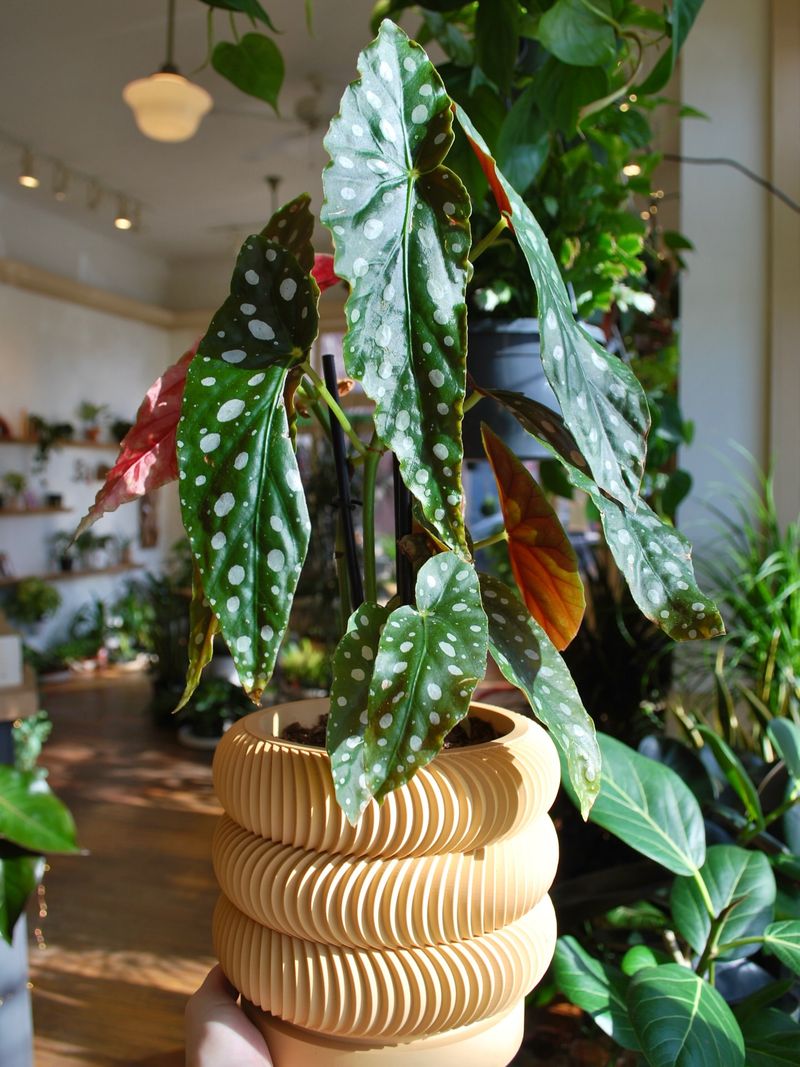
Soil quality determines whether your Begonia maculata thrives or struggles with root problems. Standard potting soil holds too much moisture for these plants. Their roots need air pockets and quick drainage to stay healthy.
A peat-based mix creates the perfect foundation for begonias indoors. Add perlite to improve drainage and prevent compaction over time. Orchid bark chips work beautifully too, mimicking the chunky forest floor these plants love.
Mix three parts peat-based potting soil with one part perlite and one part orchid bark. This combination drains quickly while retaining just enough moisture. Your begonia’s roots will thank you with vigorous growth.
Aroid mixes designed for philodendrons and monsteras also work wonderfully for Begonia maculata. These specialized blends contain coconut coir, bark, and other chunky ingredients. They’re available at most garden centers across Michigan.
Repot your begonia every twelve to eighteen months using fresh mix. Old soil breaks down and becomes dense, suffocating roots. Spring is the ideal time for this task when plants enter active growth mode and recover quickly from the disturbance.
Water Carefully
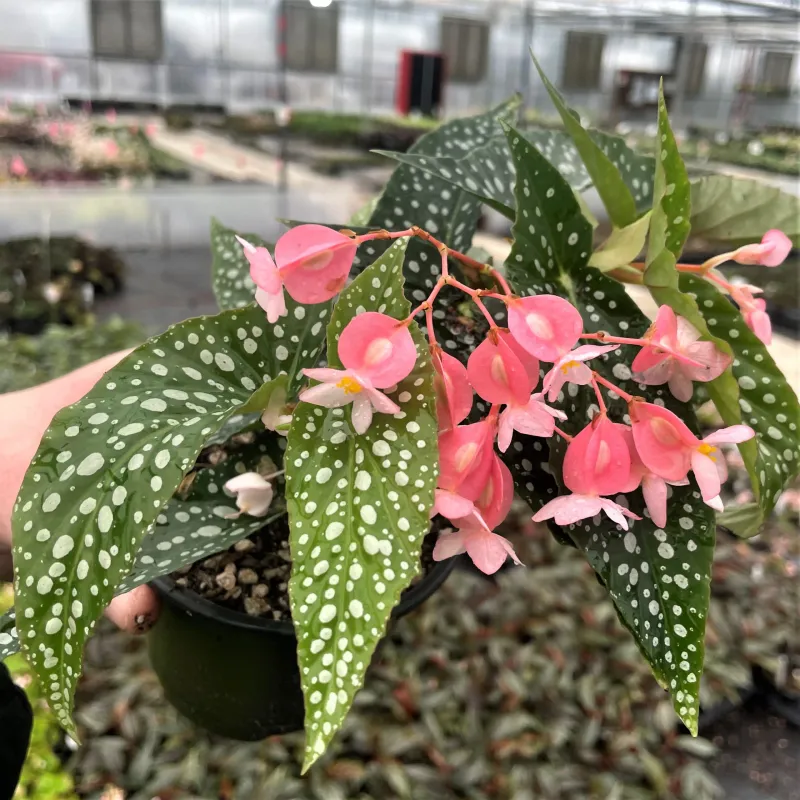
Watering Begonia maculata requires attention and a gentle touch. These plants dislike both soggy soil and complete dryness. Finding the middle ground keeps roots happy and leaves spotted beautifully.
Check the top inch of soil with your finger before reaching for the watering can. If it feels dry to the touch, it’s time to water. If still moist, wait another day or two.
Michigan’s dry winter air from indoor heating causes soil to dry faster than expected. You might water twice weekly during cold months. Summer humidity slows evaporation, reducing watering frequency to once weekly.
Use room-temperature water to avoid shocking sensitive roots with cold tap water. Let water sit overnight to allow chlorine to dissipate. Pour slowly until water drains from the bottom holes.
Empty saucers after fifteen minutes to prevent roots from sitting in standing water. Root rot develops quickly in waterlogged conditions. Brown, mushy stems signal overwatering, while crispy leaf edges indicate underwatering.
Morning watering gives leaves time to dry before cooler evening temperatures arrive. Wet foliage overnight invites fungal problems. Consistency matters more than perfection, so establish a regular checking routine.
Fertilize During Active Growth
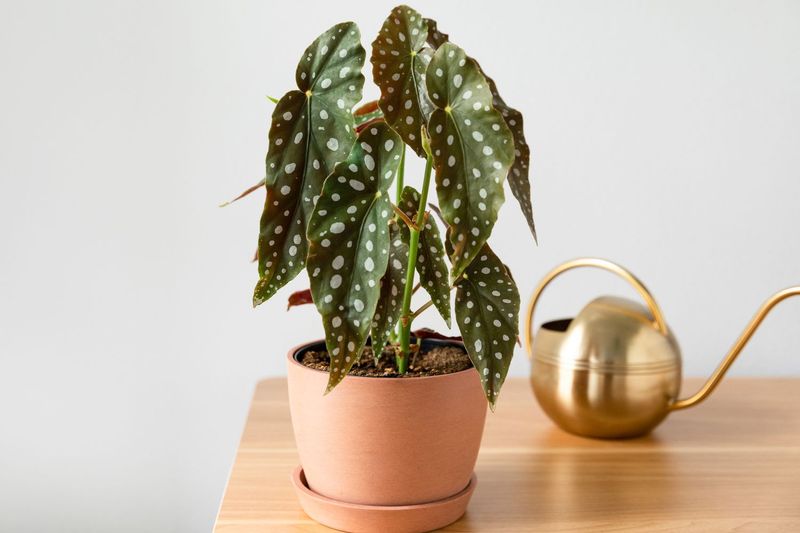
Begonia maculata puts on impressive growth from spring through summer when fed properly.
Balanced nutrition supports those gorgeous spotted leaves and delicate flowers. Michigan’s growing season indoors mirrors outdoor patterns with active growth in warmer months.
Choose a water-soluble fertilizer with equal nitrogen, phosphorus, and potassium ratios. A 10-10-10 or 20-20-20 formula works perfectly. Dilute to half the recommended strength to avoid burning tender roots.
Feed your begonia every two to four weeks during spring and summer. This regular schedule provides steady nutrients without overwhelming the plant. Skip fertilizing completely from late fall through winter.
Growth slows dramatically during Michigan’s short, dark winter days. Fertilizing dormant plants causes salt buildup in soil and damages roots. Resume feeding when you notice new growth emerging in early spring.
Flush the soil monthly during growing season by running water through until it drains freely. This practice removes excess fertilizer salts that accumulate over time. Yellow leaf edges often signal salt buildup.
Organic options like fish emulsion or compost tea provide gentle nutrition too. These natural fertilizers release nutrients slowly and improve soil health. Whatever you choose, consistency and moderation produce the best results.
Maintain High Humidity
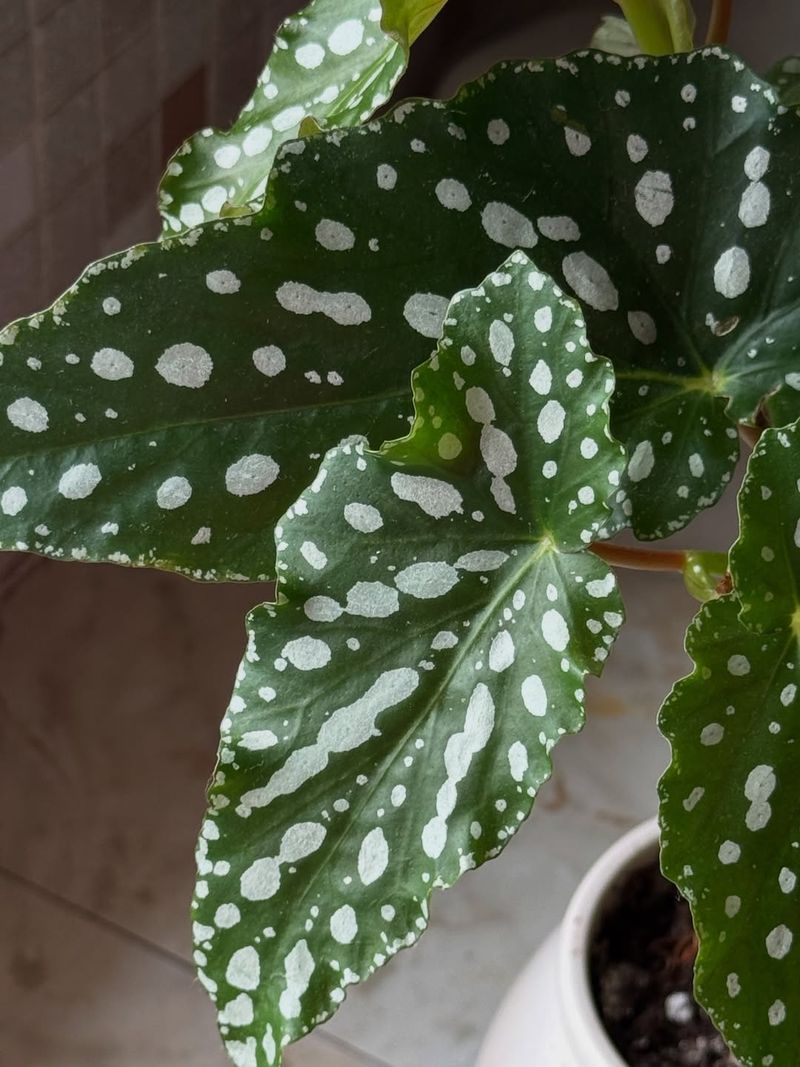
Humidity challenges plague Michigan gardeners keeping Begonia maculata indoors, especially during winter. Central heating sucks moisture from the air, dropping humidity below twenty percent. Your begonia needs fifty to seventy percent to truly flourish.
Pebble trays offer a simple, effective humidity boost without electricity. Fill a shallow tray with stones and add water just below the top of the pebbles. Set your begonia pot on top.
As water evaporates, it creates a humid microclimate around the plant. Refill the tray weekly to maintain moisture levels. Multiple plants grouped together also raise humidity through collective transpiration.
Humidifiers provide the most reliable humidity control for larger plant collections. Cool-mist models work best, avoiding temperature fluctuations near your begonia. Place the humidifier a few feet away from plants.
Bathrooms and kitchens naturally have higher humidity from showers and cooking. These rooms make excellent begonia homes if they receive adequate light. Avoid misting leaves directly as this promotes fungal spots.
Humidity meters help you track actual moisture levels in the air. These inexpensive tools take the guesswork out of humidity management. Crispy brown leaf edges signal too-dry conditions requiring immediate attention.
Prune For Shape And Health
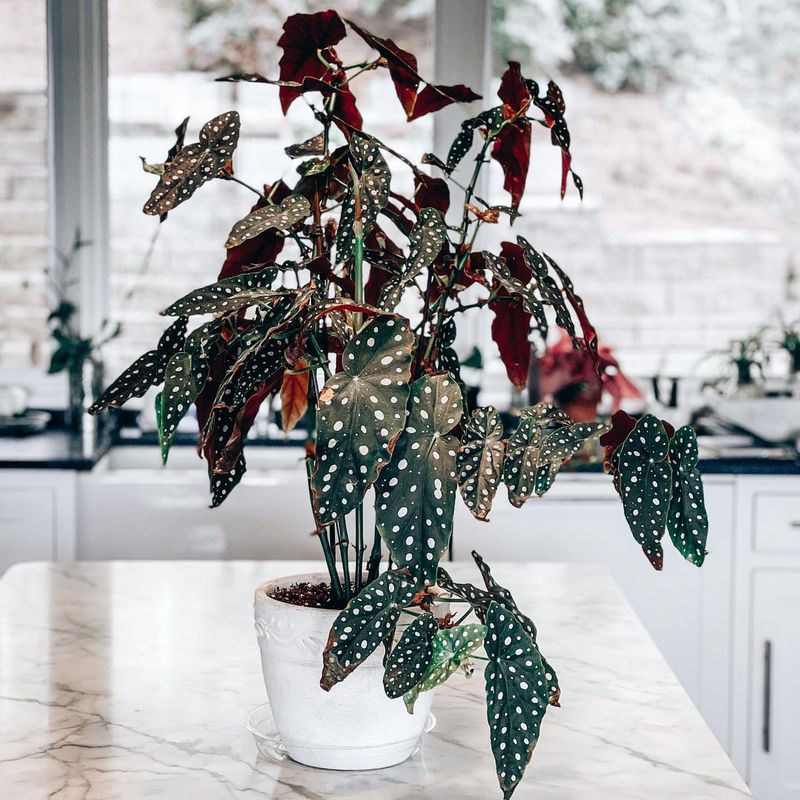
Pruning keeps Begonia maculata looking its best while encouraging bushier, fuller growth. Left untrimmed, these plants become leggy with sparse foliage concentrated at stem tips. Regular pruning redirects energy into side shoots.
Pinch back stem tips when they reach your desired height. Use your fingers or clean scissors to remove the top inch of growth. This simple action triggers branching below the cut.
Yellow or damaged leaves drain energy from healthy growth. Remove them promptly by cutting at the base of the leaf stem. Brown spots from fungal issues or physical damage should also be trimmed away.
Sterilize pruning tools between cuts using rubbing alcohol to prevent spreading disease. Sharp, clean cuts heal faster than ragged tears. Spring is the ideal pruning time when plants recover quickly.
Save healthy cuttings for propagation rather than tossing them in the compost. Begonia maculata roots easily in water or moist soil. You’ll have new plants to share with fellow Michigan gardeners.
Shape your begonia gradually over several sessions rather than cutting drastically all at once. Removing more than one-third of the plant causes stress. Step back frequently to assess your progress and maintain balanced proportions.
Rotate The Plant Regularly
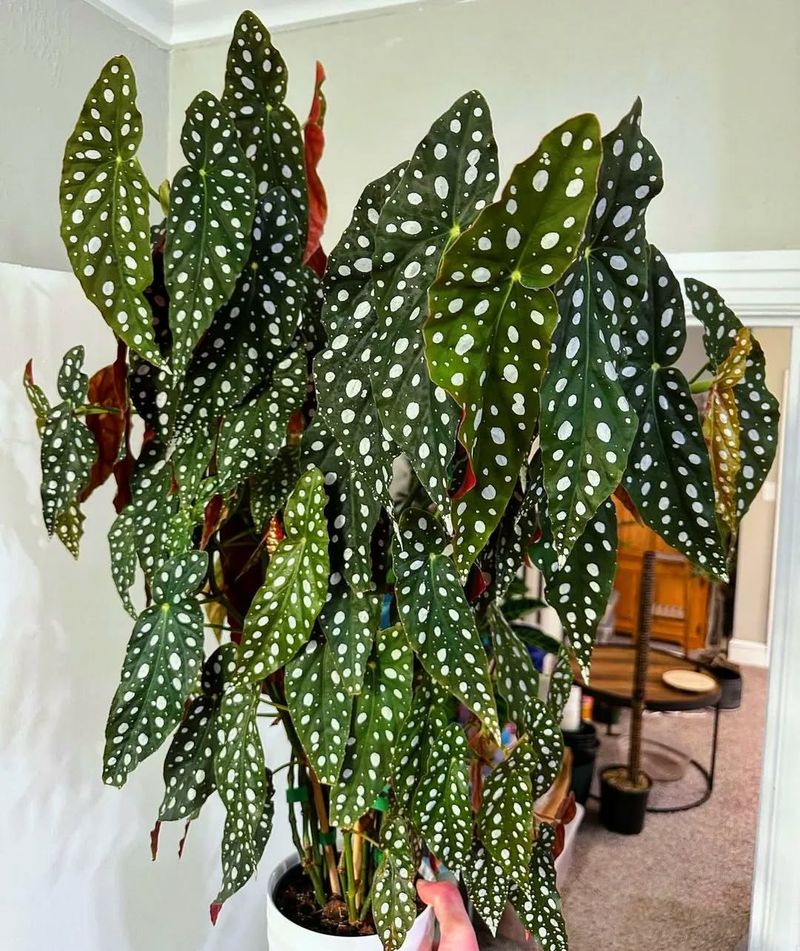
Light naturally draws plants toward its source, creating lopsided growth over time. Begonia maculata reaches toward windows, developing fuller foliage on the light-facing side. Regular rotation solves this problem elegantly.
Turn your begonia pot a quarter turn every week when you water. This consistent schedule ensures all sides receive equal light exposure. Mark the pot with tape or a sticker to track rotation.
Even growth produces a fuller, more attractive plant from every viewing angle. Stems grow straighter without the constant pull toward light. Leaves develop their characteristic silver spots more uniformly.
Michigan’s seasonal light changes make rotation even more important. South-facing windows provide intense light in summer but weak rays in winter. East and west exposures shift throughout the year too.
Rotating compensates for these variations by exposing all plant sides to changing conditions. Your begonia adapts more successfully to Michigan’s dramatic seasonal shifts. Skipping rotation for even a month creates noticeable imbalance.
Combine rotation with regular inspection for pests and problems. Looking at your plant from all angles weekly helps you catch issues early. This simple habit takes seconds but makes a tremendous difference in overall plant health and appearance.
Monitor For Pests
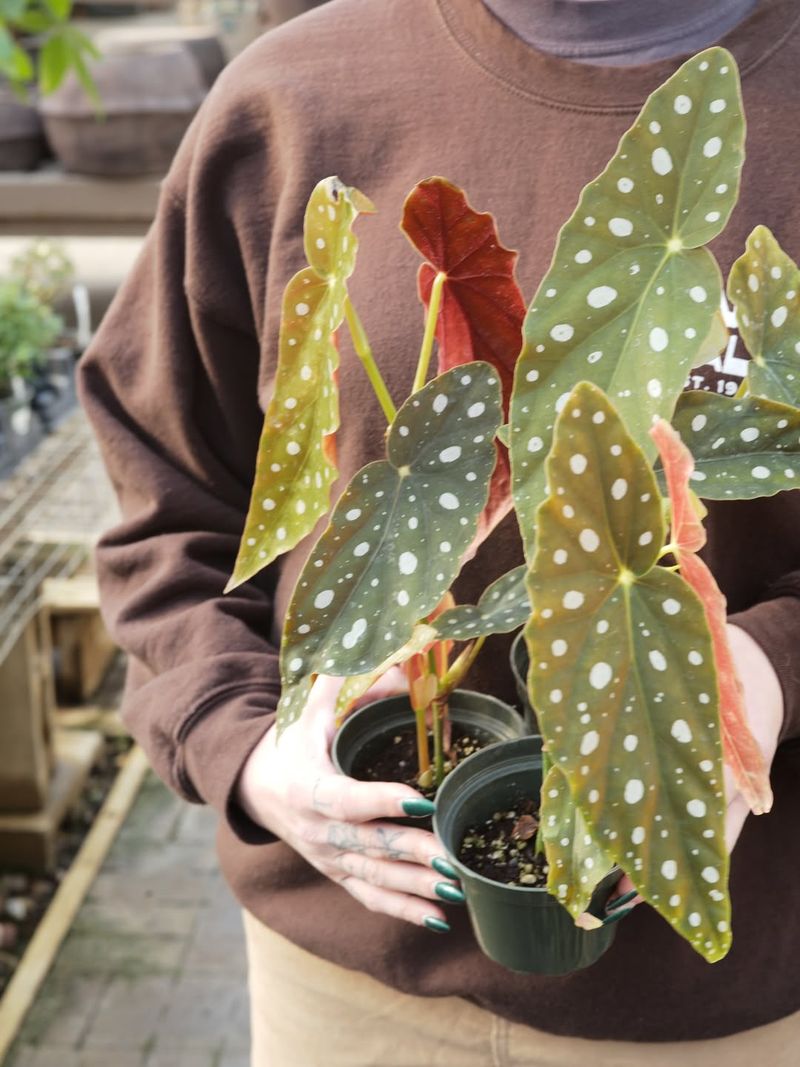
Indoor pests find Begonia maculata irresistible, especially during Michigan’s dry winter months. Spider mites, aphids, and mealybugs attack stressed plants with weakened defenses. Early detection prevents minor problems from becoming infestations.
Inspect your begonia weekly, checking both leaf surfaces and stem joints carefully. Spider mites leave fine webbing and tiny yellow speckles on leaves. Aphids cluster on new growth, sucking sap and leaving sticky residue.
Mealybugs appear as white cottony masses in leaf axils and along stems. These pests multiply rapidly in warm, dry indoor conditions. Catching them early makes treatment much easier.
Insecticidal soap works effectively against soft-bodied pests without harsh chemicals. Spray thoroughly, coating all leaf surfaces until dripping. Repeat weekly for three weeks to break pest life cycles.
Neem oil provides both pest control and fungal prevention. Mix according to package directions and apply in the evening. Strong light breaks down neem, reducing its effectiveness.
Isolate infested plants immediately to protect your other houseplants. Pests spread quickly in grouped collections. Increase humidity to discourage spider mites, which thrive in dry air.
Healthy, well-cared-for begonias resist pests better than stressed plants struggling with poor conditions.