How North Carolina Gardeners Can Revive Hydrangeas After Winter Damage
If you have ever looked at your North Carolina hydrangeas after a rough winter and wondered if they would ever bloom again, you aren’t alone.
From the misty Blue Ridge Mountains to the sandy Coastal Plain – winter often leaves these Southern favorites looking battered, with weak stems and sluggish buds.
The good news is that these shrubs are far tougher than they appear. With the right early-spring care, you can help your winter-weary hydrangeas bounce back stronger than ever.
By mastering a few essentials – like strategic pruning, feeding, and protection – you can set the stage for a summer of lush, vibrant color.
These nine practical tips are designed specifically for North Carolina gardeners ready to revive their landscapes and guarantee a spectacular floral show.
1. Check Your Hydrangeas Before Cutting
Patience is one of the most underrated tools in a gardener’s shed. Before you grab your pruners and start cutting back your hydrangeas, take a moment to actually look at what the plant is telling you.
Hydrangeas can appear completely lifeless in late winter and early spring, but that does not always mean something is seriously wrong.
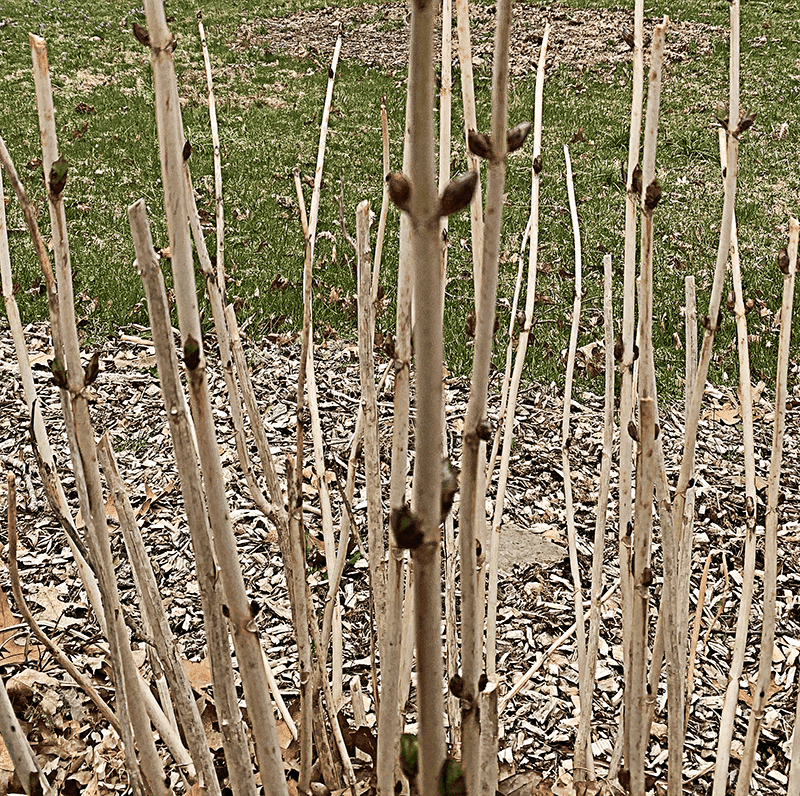
Scratch a small section of the outer bark with your fingernail or a clean knife. If you see green or white tissue underneath, that stem still has life in it.
Brown or hollow stems, on the other hand, are a sign that section did not make it through the cold. This simple scratch test takes less than a minute and can save you from cutting away perfectly healthy wood.
North Carolina’s climate varies quite a bit depending on where you live. Mountain gardeners near Asheville may see more serious cold damage than someone gardening in Wilmington near the coast.
Piedmont gardeners often fall somewhere in between. Because of these regional differences, it is smart to wait until nighttime temperatures are consistently staying above freezing before drawing any conclusions about your plant’s condition.
New buds may emerge slowly, so give your hydrangeas a few extra weeks before deciding what to remove. Rushing this step is one of the most common early-spring mistakes gardeners make.
2. Trim With Precision For New Growth
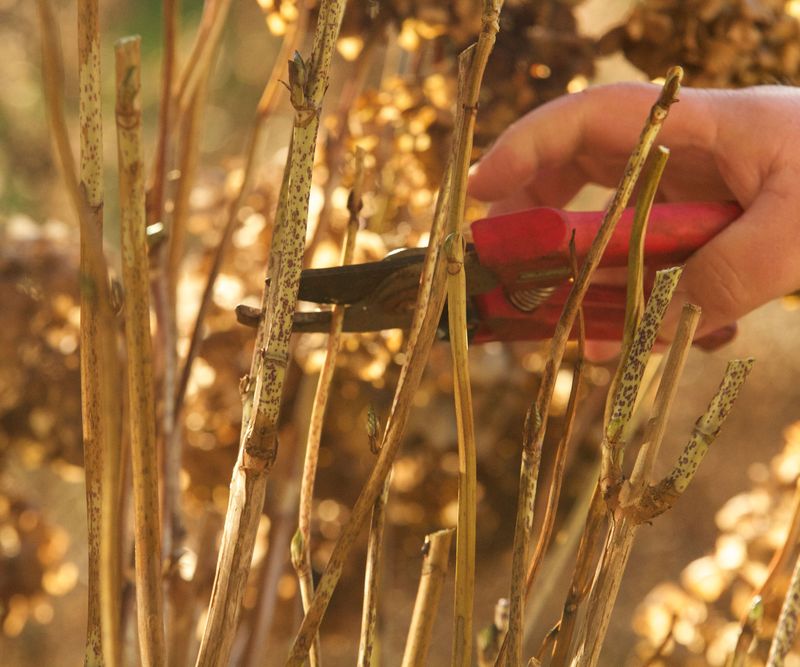
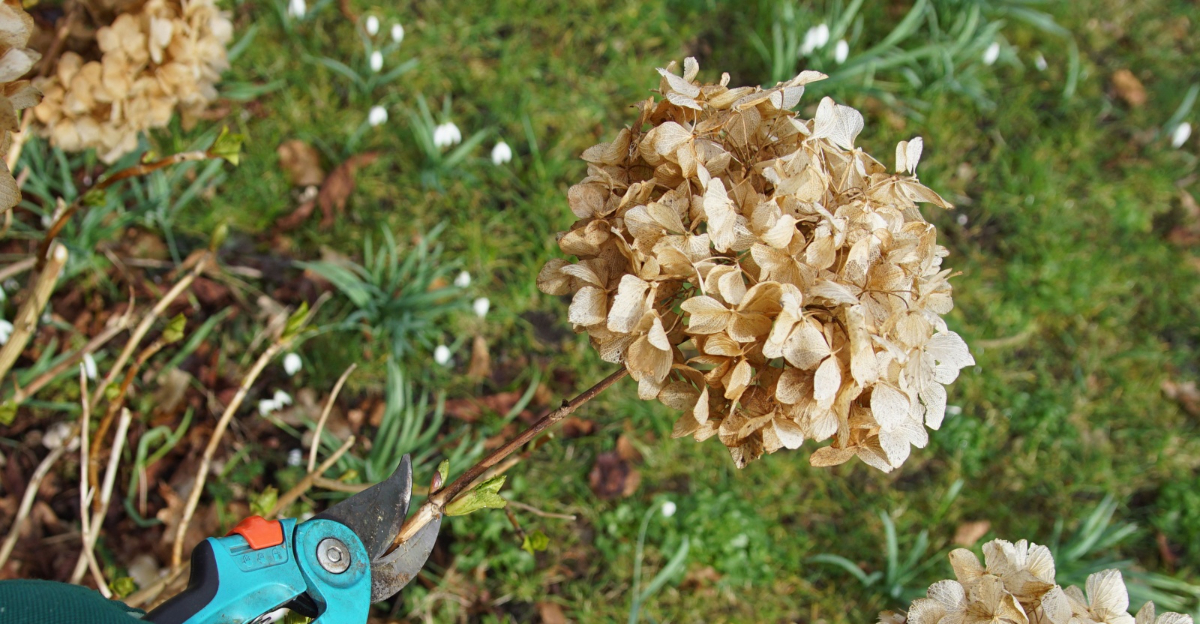
Once you have spotted where new growth is starting to emerge, it is time to reach for your pruners – but thoughtfully. Pruning hydrangeas after winter damage is less about chopping everything back and more about removing only what is clearly no longer viable.
The goal is to open the plant up so energy flows toward the healthy, living parts.
Cut stems back to just above the first set of healthy, swelling buds. Make your cuts at a slight angle so water does not pool on the cut surface, which can invite fungal problems.
Always use clean, sharp tools because ragged cuts from dull blades are harder for the plant to heal. A quick wipe with rubbing alcohol between cuts is especially helpful if you are moving from plant to plant.
Here is where hydrangea type really matters. Bigleaf hydrangeas, which are extremely popular across North Carolina, bloom on old wood – meaning the previous season’s stems carry next year’s flower buds.
If you cut those stems down too hard, you lose the blooms. Smooth and panicle hydrangeas are more forgiving and can handle harder cuts.
Oakleaf hydrangeas, a native southeastern species, generally need minimal pruning.
Knowing what type you have before you start trimming saves you from accidentally removing flower buds that survived the winter just fine and were ready to perform beautifully.
3. Clear The Ground For Healthier Roots
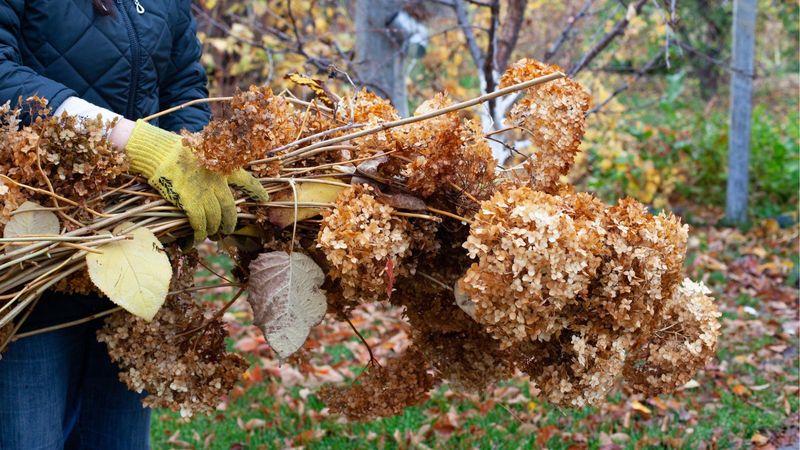
The soil around your hydrangeas went through a lot over winter – fallen leaves piled up, old mulch compacted, and decaying plant material settled around the base of the plant.
While a little organic matter is not a bad thing, too much debris packed tightly around the crown of the plant can trap moisture and create conditions where fungal issues thrive.
Gently rake away any matted leaves, dead stems, and old mulch from around the base of each plant. You do not need to dig deep or disturb the roots – just clear the surface layer so air can reach the soil and the crown of the plant can breathe.
While you are at it, take a look at the soil itself. Is it compacted and hard?
A light loosening with a hand cultivator can improve drainage and help water reach roots more effectively.
This is also a great time to do a quick visual check for any weeds that have gotten a head start in late winter. Weeds compete with hydrangeas for water and nutrients, so removing them early makes a real difference as the growing season gets underway.
North Carolina springs can warm up fast, and weeds love that warmth just as much as your hydrangeas do. Clearing the ground now sets a clean foundation for everything else you will do to help your plants recover and thrive through the season.
4. Mulch To Keep Soil Happy
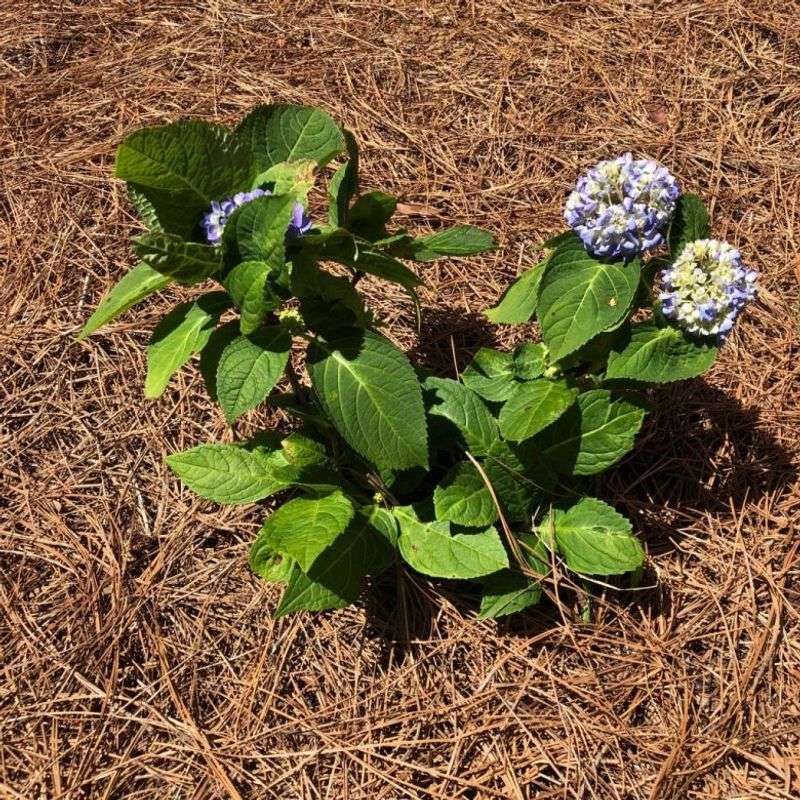
Few gardening habits offer as much return as a good layer of mulch, and spring is the perfect time to refresh what winter weather stripped away or compacted.
Mulch does quiet but powerful work – it holds soil moisture, keeps roots cooler during hot summer days, and slowly breaks down to improve soil structure over time.
For North Carolina hydrangeas, pine straw is a classic and widely available choice that works beautifully. It is lightweight, easy to spread, and allows water to pass through freely without becoming waterlogged.
Shredded hardwood bark or leaf compost are also excellent options. Aim for a layer about two to three inches thick, keeping the mulch a couple of inches away from the main stem of the plant.
Piling mulch right against the crown can hold too much moisture there and create problems over time.
One thing that surprises many newer gardeners is how much mulch affects soil temperature.
During late-season cold snaps – which are not unusual in North Carolina’s mountains or even the Piedmont in March and April – a proper layer of mulch can buffer roots from sudden temperature swings.
That protection helps a recovering plant stay stable while it puts energy into new growth.
Refreshing your mulch layer each spring is a low-effort habit that pays off all season long, keeping your hydrangeas better hydrated, better fed, and better protected from the unpredictable weather North Carolina is known for delivering.
5. Feed Your Plants Without Overdoing It
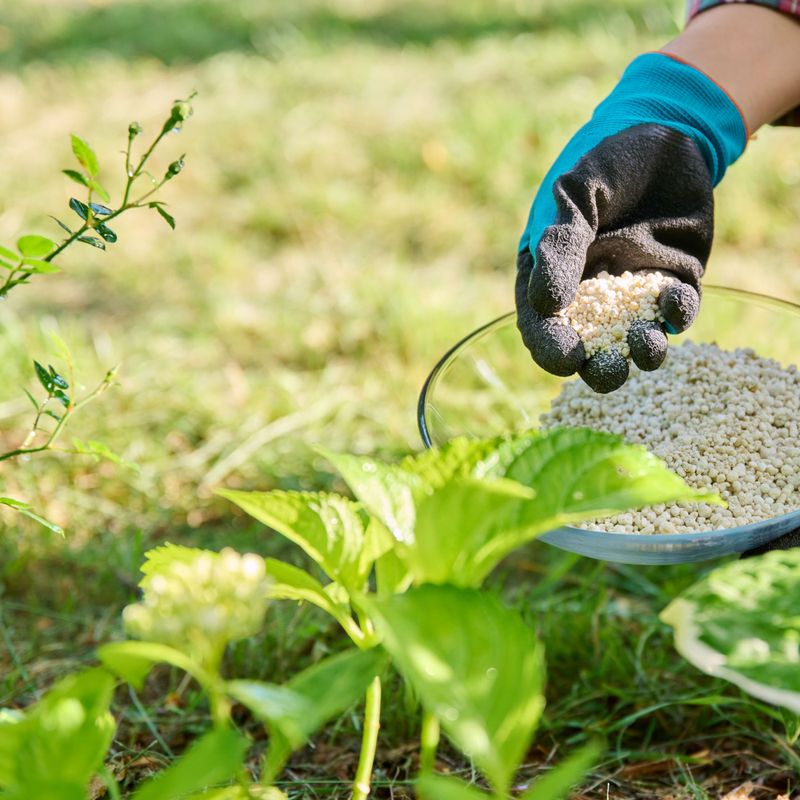
Spring fertilizing feels exciting – your plants are waking up, you want to help them along, and it is tempting to give them a big boost right away.
But when it comes to hydrangeas recovering from winter stress, a heavy hand with fertilizer can actually set them back rather than push them forward.
Too much nitrogen too early can drive leafy growth at the expense of roots and blooms.
A balanced, slow-release granular fertilizer applied in early spring is a solid starting point. Look for a product labeled for flowering shrubs or acid-loving plants, since hydrangeas prefer slightly acidic soil.
Slow-release formulas feed gradually over several weeks, which suits a recovering plant much better than a sudden nutrient surge.
Follow the package directions and resist the urge to double the recommended amount thinking more is better – it rarely is.
Timing matters here, too. Wait until you actually see signs of active new growth before fertilizing.
Feeding a plant that is still mostly dormant is not particularly effective, since the roots are not actively absorbing nutrients at full capacity yet. A second light feeding in early to mid-summer can support blooming if your plant is responding well.
North Carolina summers get warm fast, so avoid fertilizing once the real heat sets in, as late-season feeding can push tender new growth that struggles when temperatures soar. Steady, moderate feeding builds stronger plants over time.
6. Water Wisely For Strong Recovery
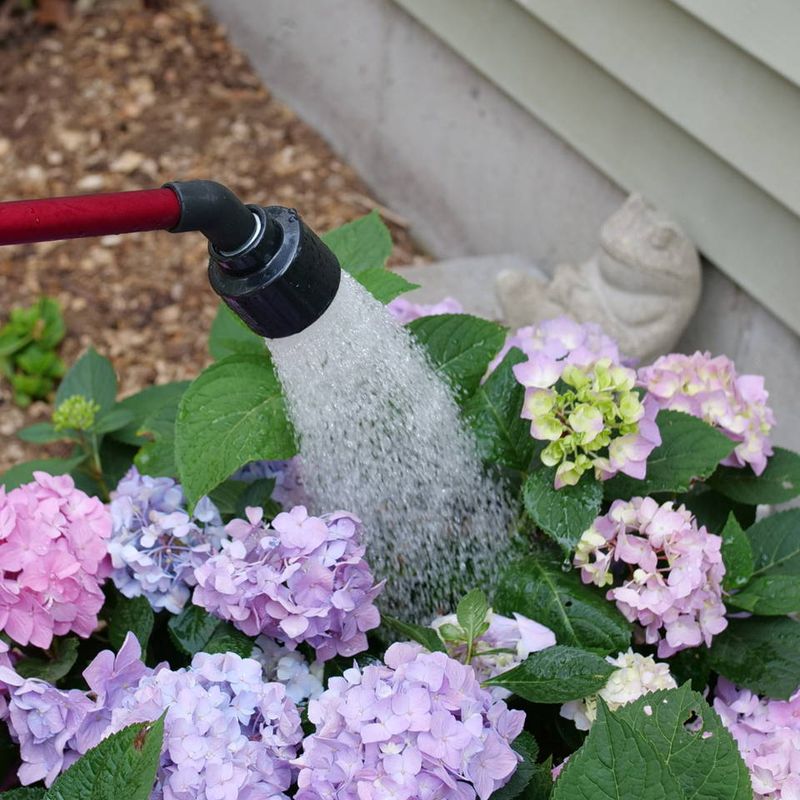
Hydrangeas have a bit of a dramatic reputation when it comes to water – those big leaves wilt fast on a hot afternoon, which can send gardeners rushing for the hose. But wilting in the afternoon heat does not always mean the plant is thirsty.
Sometimes it is just a normal response to high temperatures, and the plant perks back up on its own once evening cools things down.
After winter, the priority is helping roots reestablish and grow deeper into the soil. Deep, infrequent watering encourages roots to reach down rather than staying shallow near the surface.
Shallow roots make plants more vulnerable to heat and drought later in the season. A good slow watering at the base of the plant once or twice a week – depending on rainfall and temperature – is far more beneficial than a quick daily sprinkle.
Soaker hoses and drip irrigation are excellent tools for hydrangeas because they deliver water directly to the root zone without wetting the leaves.
Wet foliage, especially in humid North Carolina summers, can contribute to fungal issues like powdery mildew.
Watering in the morning is also a smart habit since any moisture that does get on leaves has time to dry before nightfall.
Pay attention to rainfall amounts and adjust accordingly – North Carolina springs can be rainy, and overwatering a recovering plant can be just as problematic as underwatering one.
7. Guard Buds Against Late Frosts
Spring in North Carolina can be wonderfully warm one week and surprisingly cold the next.
The mountains around Boone or Blowing Rock can see frost well into April, and even Piedmont areas like Raleigh or Charlotte are not immune to a late cold snap sneaking through in March.
For hydrangeas that are already showing new buds, a surprise frost can be genuinely damaging to that tender new growth.
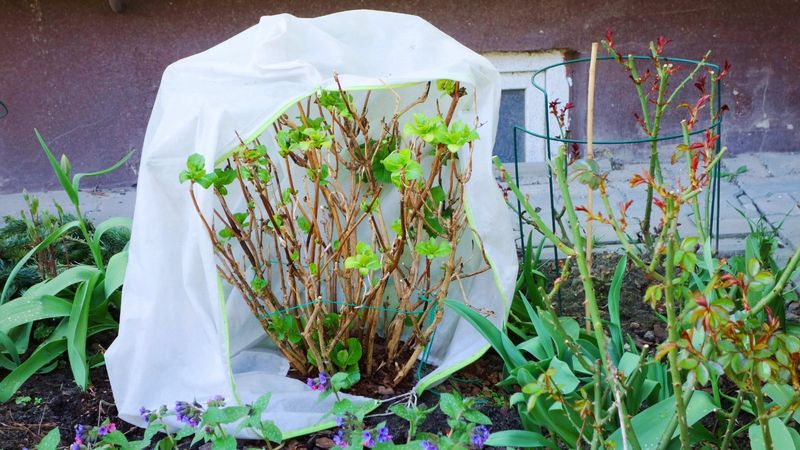
Keeping a light frost cloth or old bed sheet on hand during early spring is one of the smartest and simplest things a North Carolina gardener can do.
When temperatures are forecast to drop near or below freezing overnight, loosely drape the cover over your hydrangea before sunset.
The cover traps warmth from the soil and protects those vulnerable buds from freezing. Remove it in the morning once temperatures rise so the plant can get sunlight and air circulation.
Avoid using plastic sheeting as a frost cover because it does not breathe and can trap too much heat during the day, which creates its own problems.
Breathable fabric covers designed for garden use are widely available and reusable for many seasons.
If a frost catches you off guard, do not panic and immediately prune back the affected growth. Give the plant a few days to reveal which buds and stems are still viable before making any cuts.
Hydrangeas are more resilient than they look, and many buds can surprise you by bouncing back after a light frost.
8. Give Weak Stems A Helping Hand
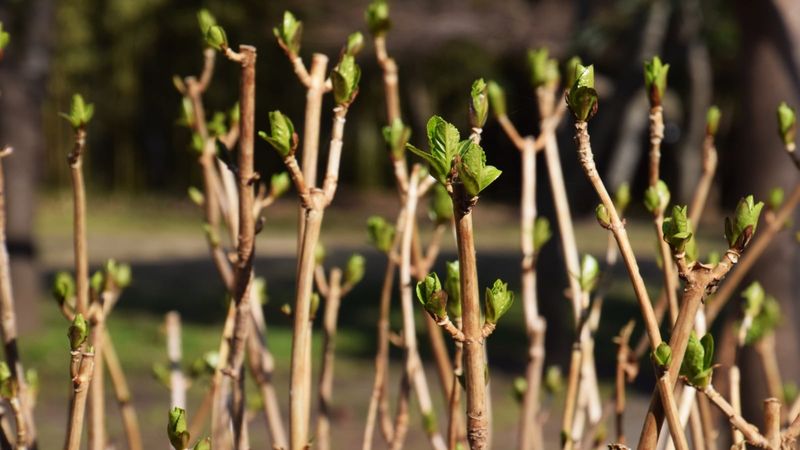
Some hydrangea stems come out of winter looking more tired than truly damaged – they may be leaning awkwardly, bending under their own weight, or struggling to hold themselves upright as new growth emerges.
This is especially common with bigleaf hydrangeas, which can develop heavy flower heads later in the season that put real stress on stems that are still rebuilding their strength.
Providing a little physical support during recovery can make a meaningful difference.
Bamboo stakes pushed gently into the soil near weak stems, with soft garden ties or strips of stretchy fabric to loosely hold the stem upright, give the plant a chance to strengthen without toppling over.
The key word here is loosely – ties that are too tight can cut into stems as they grow and cause more harm than help.
Some gardeners use wire tomato cages or decorative garden supports placed around the whole shrub to keep multiple stems organized and upright. This approach works especially well for larger hydrangea varieties that tend to sprawl outward.
As the season progresses and stems harden with new growth, many plants naturally become more self-supporting and the stakes can be removed. Think of staking as temporary scaffolding rather than a permanent fix.
Giving your plant this kind of structural support during its recovery phase helps it put energy into root and bud development rather than fighting to stay upright through spring wind and rain.
9. Keep An Eye On Pests And Diseases
A plant coming out of winter stress has a slightly lower resistance to the insects and fungal issues that show up as the weather warms.
North Carolina’s humid climate is beautiful for growing things, but that same humidity creates ideal conditions for powdery mildew, leaf spot, and a handful of common garden pests that love soft new growth.
Make it a habit to flip over leaves and check the undersides when you walk through your garden. Aphids, spider mites, and scale insects tend to cluster in protected spots where they are easy to miss at a glance.
Catching a small problem early is always easier than dealing with a large one later. A strong spray of water from the hose can knock aphid colonies off leaves without any chemicals at all, which is a satisfying and effective first step.
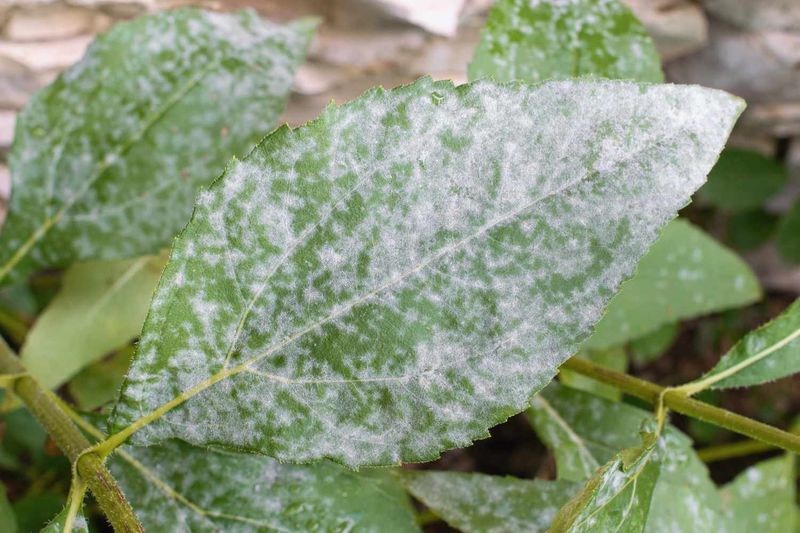
For fungal issues like powdery mildew – that chalky white coating that sometimes shows up on hydrangea leaves – improving air circulation around the plant helps significantly.
Avoid crowding plants together, and make sure your pruning has opened up the interior of the shrub a bit.
Neem oil or a simple baking soda solution can address mild fungal problems organically. If issues persist or spread, a targeted fungicide labeled for ornamental shrubs can be used carefully.
The real advantage here is consistency – checking your plants regularly through spring and early summer means you catch problems before they become serious setbacks for an already recovering plant.