How to Build a Bee Hotel Before California’s Pollinators Slow Down for Winter
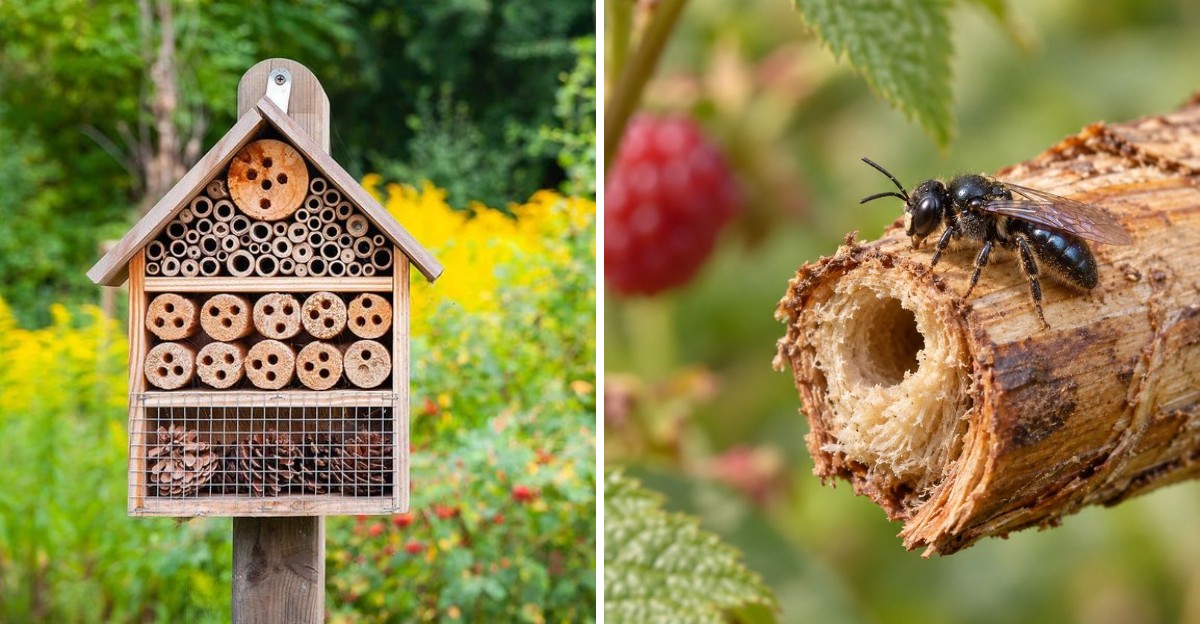
Some of the busiest workers in your garden spend winter sealed inside a tube no wider than a pencil.
They rest there as tiny larvae or young adults, tucked behind a wall of mud or chewed leaves. Each mother packed her little rooms with a lunch of pollen and nectar, then flew off without ever meeting her young.
What’s fascinating is how close these nurseries can be to us. They hide in hollow stems, old beetle holes, and cracks in fence posts, and most of us walk right past them for years.
California is home to around 1,600 native bee species, and roughly a third of them nest above ground in holes like these. Late fall may be quiet, but it’s also your best window to get ready.
What does a truly bee-friendly home look like, and where should it go?
1. Those Sealed Holes in Old Wood Are Bee Nurseries in Disguise
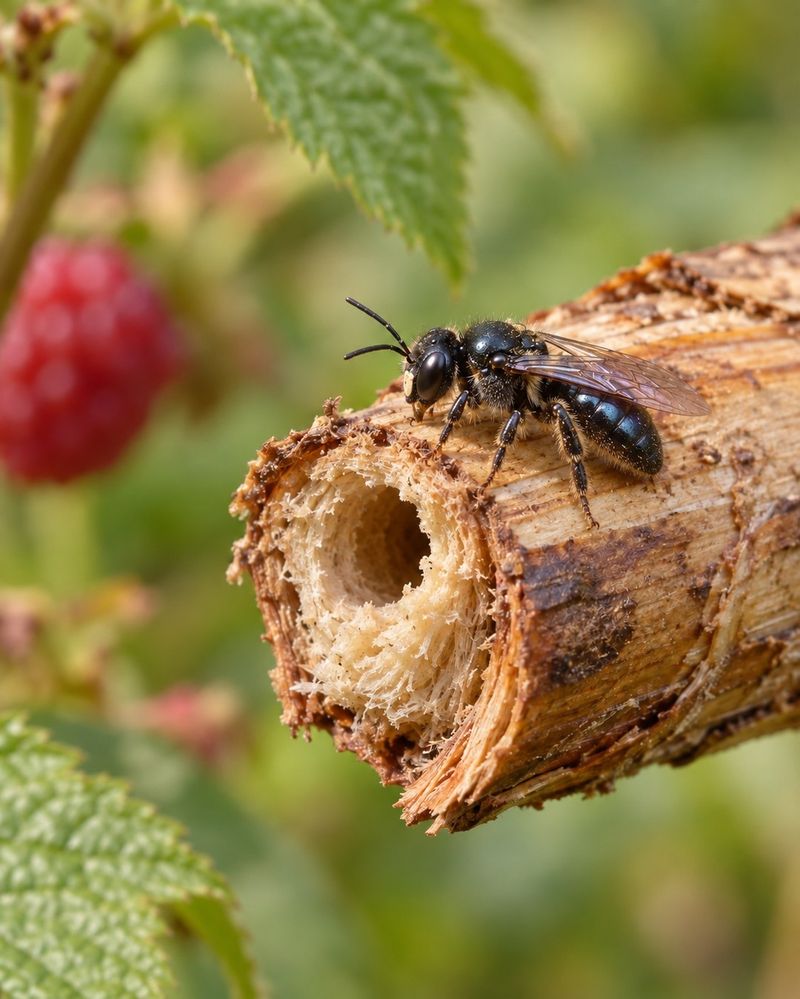
Take a close look at an old fence post or a cut plant stem this week. You might spot a tiny hole plugged with mud or a neat patch of leaf.
That plug is a front door, and a baby bee is resting behind it.
Most native bees in California do not live in hives. They are solitary, which means each female builds her own nest and raises her young alone.
She lines up a row of small rooms, adds a ball of pollen and nectar to each one, lays an egg, and seals it shut.
Blue orchard mason bees use mud for their walls. Leafcutter bees snip neat circles from leaves, a bit like paper punches.
Small carpenter bees, wool carder bees, and resin bees also use above-ground holes.
By late fall, the adult bees from this year have finished their life cycle. Their young stay inside the sealed tubes through the cool months.
Some rest as grown bees still inside their cocoons, while others wait as larvae.
I love that a quiet winter garden is secretly full of next year’s pollinators. When spring warms up, they chew their way out and get right to work on your fruit trees and flowers.
A bee hotel simply copies these natural nesting spots. Knowing who lives inside helps you build one that actually works, instead of a pretty box nobody uses.
2. Getting Your Bee Hotel Up This Fall Beats Rushing in Spring
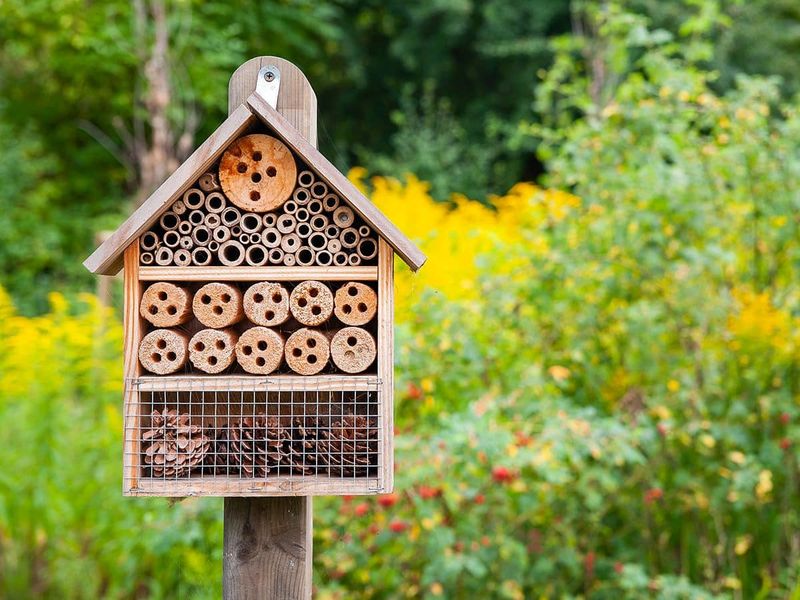
Timing is the sneaky secret here. Bees are not checking in right now, so why build in fall?
Because the first guests may show up sooner than you expect.
Blue orchard mason bees are early risers. In much of California, they start appearing in February or March, right as plum, cherry, and manzanita flowers open.
In warm coastal and southern areas, some can pop out even earlier on sunny days.
If your hotel is not ready by then, those first females will go house hunting somewhere else. They only fly for a few weeks, so there is little time to wait around for you.
Fall also gives your wood time to sit outside and lose that fresh-cut smell. A hotel that has weathered a bit tends to look more natural to a searching bee.
You also get a chance to test your mounting spot during winter storms.
Here is how I plan it out.
November: gather supplies and drill or cut your nesting tubes.
December or January: mount the hotel in its sunny spot.
Late winter: check that it is dry, solid, and facing the morning light.
One note on leafcutter bees. They come later, often in late spring and summer, so your hotel will serve more than one group of visitors.
Getting it in place early simply means nobody gets turned away.
3. Deep, Smooth Nesting Holes Make a Bee Block Actually Work
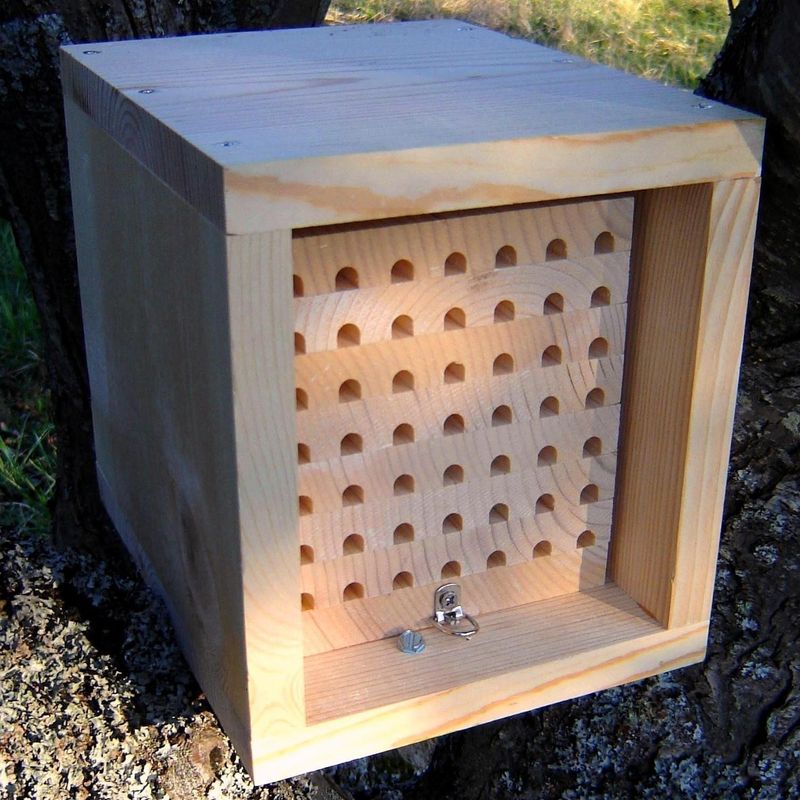
A lot of store-bought bee houses look adorable and work poorly. Shallow holes, rough edges, and pinecone stuffing do not help much.
A plain, well-made block wins every time.
Start with untreated hardwood, or a solid wooden frame packed with bamboo or natural reeds. Skip pressure-treated lumber, since the chemicals can harm bees.
Pick a block at least four inches thick so the holes can run deep.
Drill holes between 3/16 and 5/16 of an inch wide. That range fits mason and leafcutter bees, and a few smaller holes welcome tiny species.
Keep holes closed at the back end and spaced about three quarters of an inch apart.
Depth matters more than most people realize. For mason bees, aim for about six inches.
Mothers lay female eggs in the back rooms first, so short tunnels tend to produce mostly males.
Sand each entrance until it feels smooth. Bee wings are delicate, and splinters can tear them.
Drill into the side of the wood rather than the cut end, which soaks up water.
Fun fact: researchers at UC Davis and elsewhere suggest using paper straws or liners inside drilled holes. You can slide them out each year, which keeps mites and mold from building up.
That small upgrade makes the whole project much easier to maintain.
4. Morning Sun on a Sturdy Post Gets Solitary Bees Moving
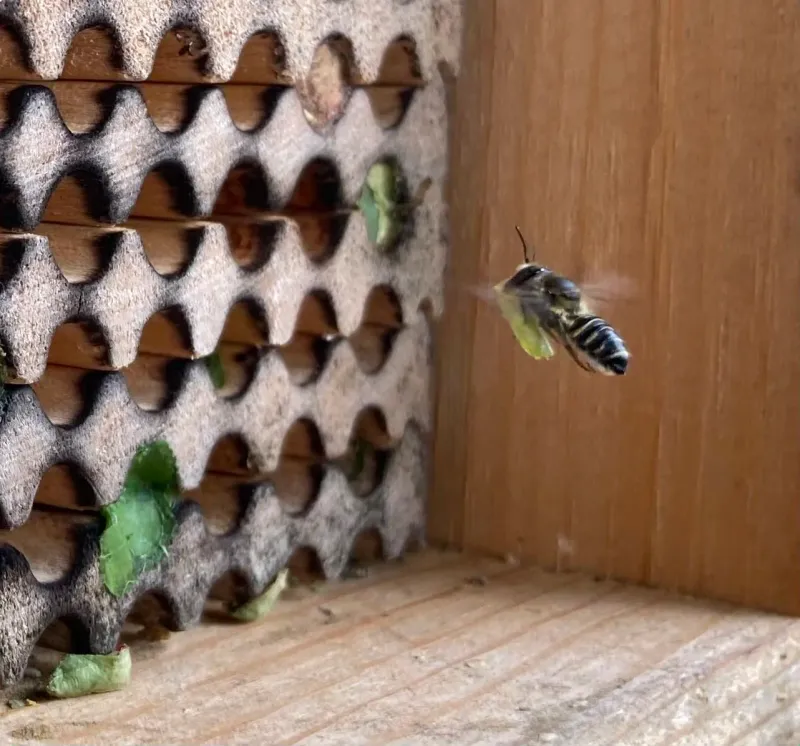
Bees are cold-blooded, so they need warmth before they can fly. A hotel that catches early sunlight gives them a head start every morning.
That is why direction matters so much.
Face the front of your hotel south or southeast. In hot inland valleys, a spot with some afternoon shade helps keep the nests from overheating in summer.
Coastal gardens can usually handle more sun.
Mount it firmly on a wall, fence, or post about three to five feet off the ground. Bees dislike a house that sways or spins in the wind.
A swinging hotel on a tree branch is a common mistake.
Add a roof that sticks out at least two or three inches over the front. California winter rains can blow sideways, and wet nests grow mold.
A slight downward tilt also helps water run off.
Keep the area in front clear. Tall shrubs or vines blocking the openings make it hard for bees to come and go.
They like a clean flight path, like a small runway.
I placed my first one under a shady eave, and it sat empty all spring. After moving it to a sunny fence the next year, mason bees filled half the holes.
Sometimes a few feet of difference changes everything.
5. California Poppies and Native Sage Keep Your Bee Guests Fed

Picture a lovely apartment with no grocery store for miles. That is a bee hotel without flowers nearby.
Food is half of the deal.
Many solitary bees do not travel far. Mason bees often forage within a few hundred feet of their nest.
So the closer your blooms, the better your chances of guests.
Aim for flowers from late winter through fall. Early on, manzanita, western redbud, ceanothus, and California poppies feed the first mason bees.
Fruit trees like apple and cherry help too.
Later in the season, Cleveland sage, California buckwheat, coyote mint, and phacelia keep the menu full for leafcutter bees and others. In fall, California fuchsia and goldenrod offer late meals.
Fall is a fine time to plant these natives, since winter rains help roots settle in.
Mason bees also need mud to build their walls. Keep a small patch of bare, damp soil within about 50 feet of the hotel.
Clay-rich soil works best, and a shallow dug spot you wet now and then does the trick.
Leafcutter bees like soft leaves such as rose or redbud for their nests. Do not be surprised if you find perfect half-moon cutouts on those leaves.
Those little holes are a sign your hotel is working, not a pest problem.
6. Woodpeckers, Wasps, and Winter Rain Can Raid Your Bee Hotel
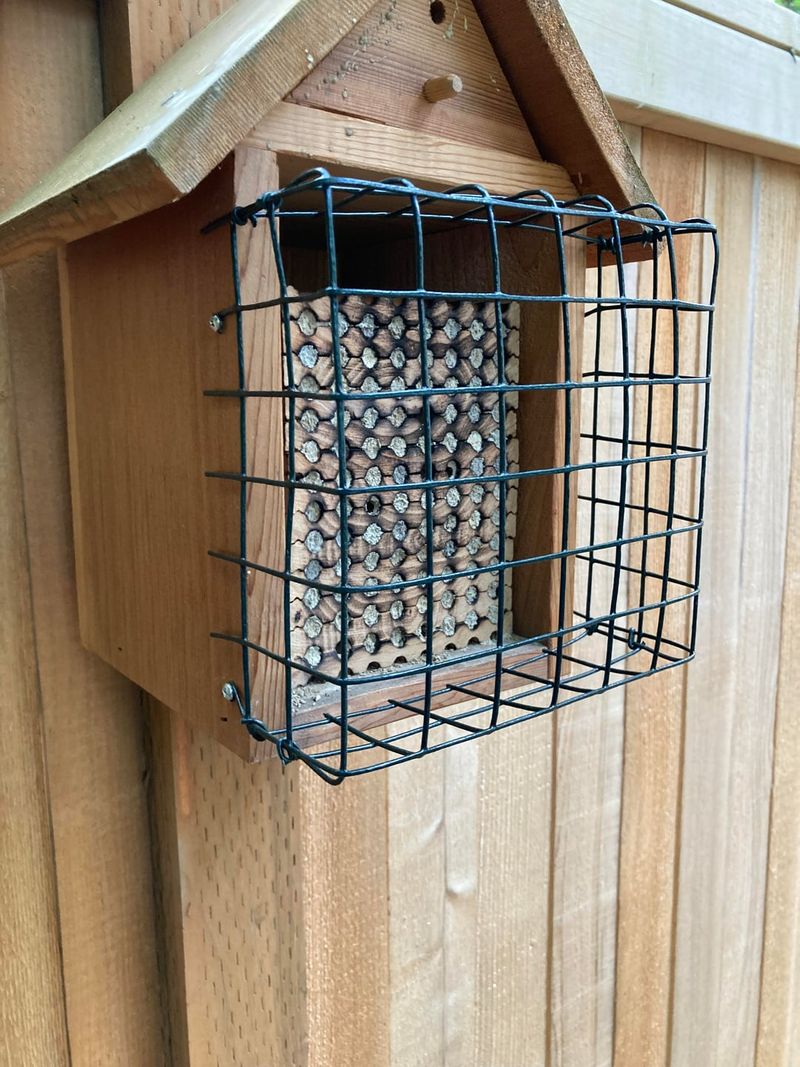
Bees are not the only ones who notice a hotel full of tasty larvae. Birds, parasitic wasps, and moisture can all cause trouble.
A little protection goes a long way.
Woodpeckers and other birds may peck at nest plugs to reach the young inside. Fasten a piece of chicken wire about an inch or two in front of the openings.
Bees fly right through it, but birds struggle to reach in.
Tiny parasitic wasps and flies sneak in to lay their own eggs. Mites also hitch rides on bees and spread from tube to tube.
Clean nesting materials, which we will cover soon, are your best defense here.
Moisture is a big concern during the rainy season. In wet northern counties or snowy mountain areas, some gardeners move filled tubes into an unheated shed or garage for the winter.
Keep them cool, not warm, so bees do not wake too early.
If you bring tubes inside, cover them with a breathable cloth or mesh bag. That keeps spiders and hungry insects out while air still moves.
Skip pesticides near the hotel and the flowers your bees visit. Even products labeled for garden use can harm solitary bees.
A few chewed leaves are a small price for a yard full of pollinators.
7. Fresh Reeds and Paper Tubes Each Year Keep Mites Away
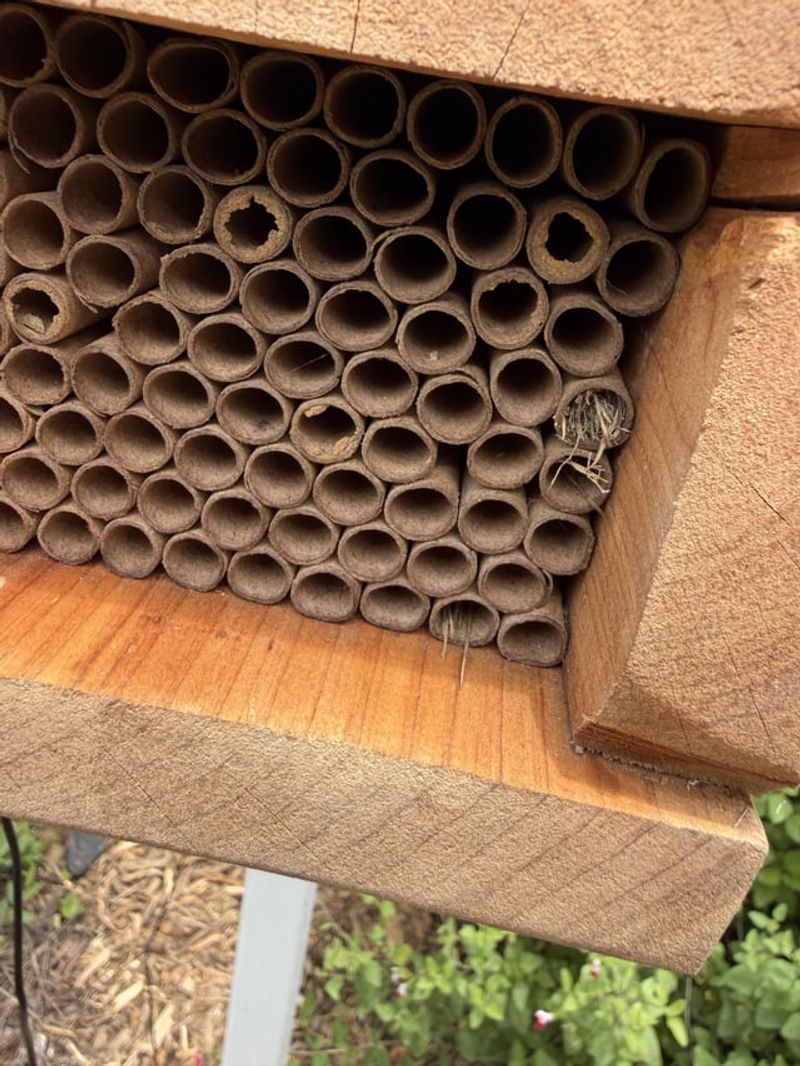
Nobody wants to check into a hotel with last year’s sheets. Bees feel much the same way.
Old nests can collect mites, mold, and parasites over time.
Experts at university extensions often warn that a neglected bee hotel can do more harm than good. Problems build up season after season.
A simple yearly refresh solves most of it.
Here is the basic routine.
After new bees come out in spring, the empty tubes can go. For paper liners, toss the used ones and add fresh liners.
Natural reeds and bamboo can be swapped out each year too.
Solid wood blocks without liners are harder to clean. Some gardeners scrub them with a mild bleach solution, rinse well, and let them dry fully.
Others simply rotate in a new block every couple of years.
What about tubes still full of sleeping bees? Many people place them in an emergence box, a closed container with one small exit hole.
Set it near the hotel before spring. Bees crawl out and fly off, while fresh tubes wait nearby for nesting.
Mason bee cocoons can also be opened and cleaned in fall or winter, then stored cool until spring. That takes more effort, but it is a neat way to see the bees up close.
8. Hollow Stems and Bare Soil Turn Your Whole Yard Into Bee Habitat
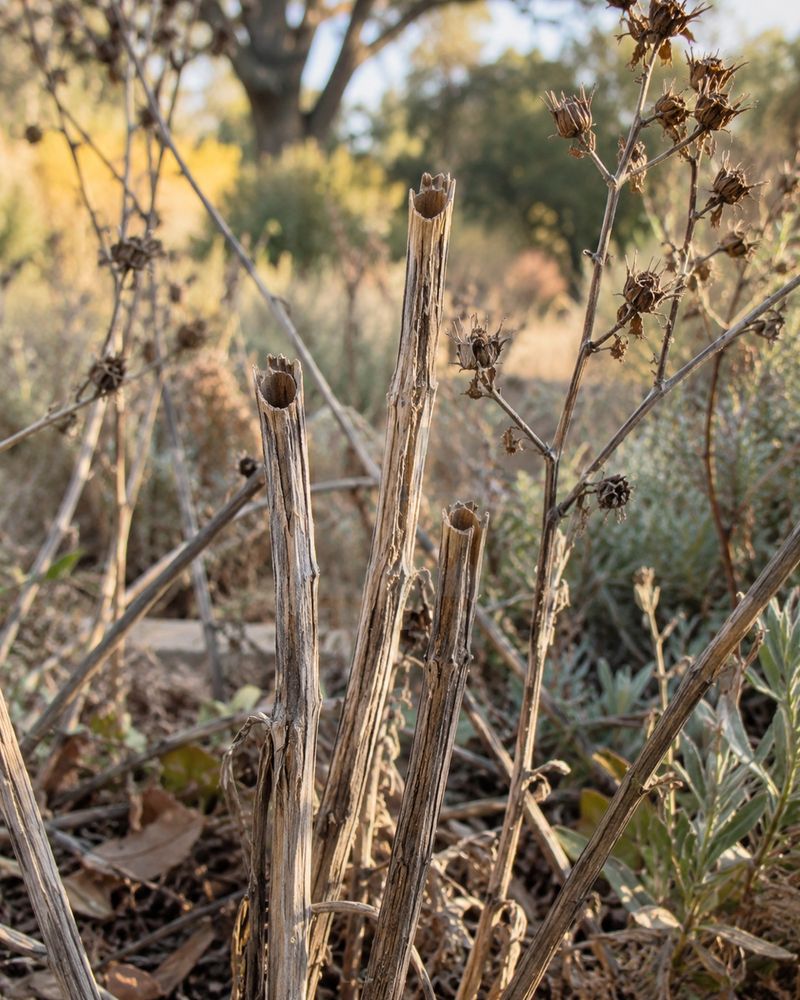
A bee hotel is a great start, but your garden can do even more. Most native bees in California actually nest in the ground, not in tubes.
Around 70 percent dig tunnels in bare soil.
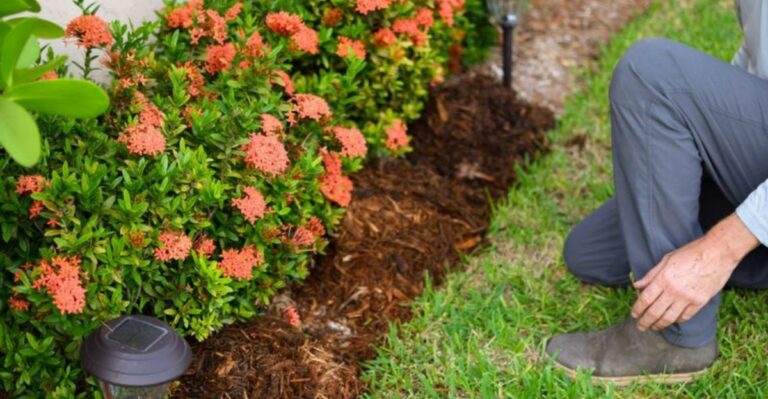
So leave a few sunny patches of soil unmulched. Ground-nesting bees like sweat bees and mining bees need open dirt to dig.
A thick layer of bark everywhere can lock them out.
Hollow and pithy stems matter too. When you trim back plants this fall, leave some stems standing about 12 to 18 inches tall.
Elderberry, blackberry canes, and sunflower stalks can become natural nest sites for small carpenter bees.
Try to stagger your tidying. Bees may be resting in last year’s stems, so wait until late spring before cutting old ones away.
A slightly messy corner is a gift to pollinators.
Think of your bee hotel as one room in a bigger house. Flowers, mud, soil, and stems all work together.
The more variety you offer, the more kinds of bees you will see.
Next spring, grab a cup of coffee and watch your hotel on a warm morning. Seeing a mother bee carry mud into a tube you made is pure joy.
Small steps this fall can mean a busier, more fruitful garden next year.