How To Build Eye-Catching Plant Combinations In Georgia Gardens
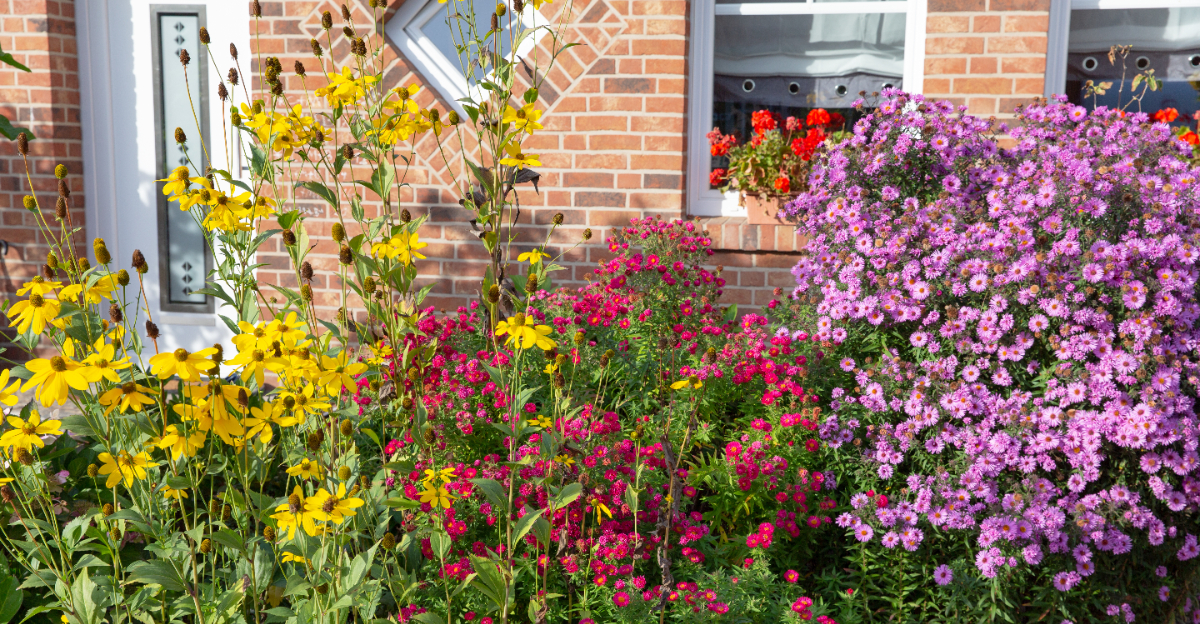
Most Georgia gardens do not look messy because of bad plants, they look messy because the plants were never meant to live together. One color dominates, one texture disappears, and the whole bed feels random instead of designed.
The problem is rarely effort, it is arrangement.
Eye catching combinations come from contrast that feels intentional and layers that make sense through Georgia’s long, humid season. Tall plants need something to anchor them, bold foliage needs space to breathe, and bloom timing should overlap instead of clash.
When those pieces line up, the entire space feels sharper without adding more plants.
If your beds look busy but not beautiful, structure is usually what is missing. Once combinations are built around balance and growth habits, everything settles into place and the garden starts working visually instead of fighting itself.
1. Start With A Strong Evergreen Backbone For Year-Round Structure
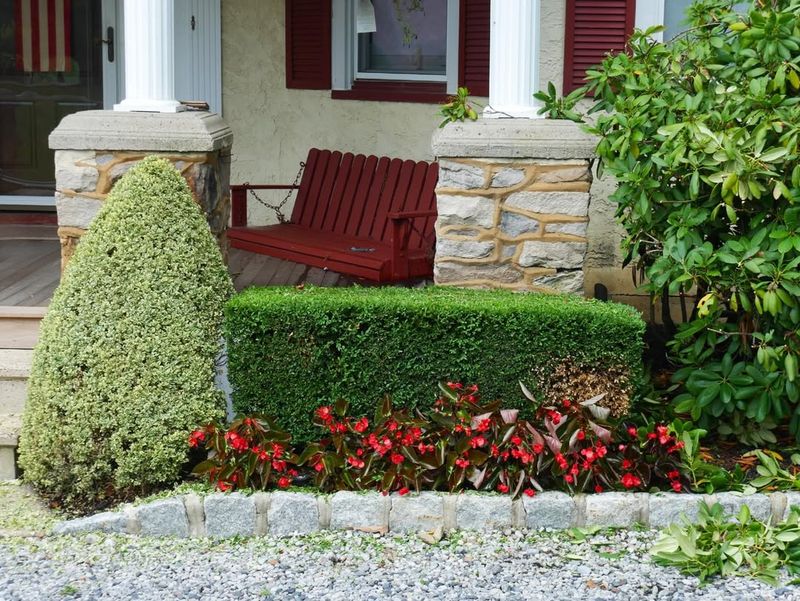
Evergreens form the skeleton that holds your garden together when everything else fades away. In Georgia, winter doesn’t completely shut down the landscape, but deciduous plants do lose their leaves, leaving gaps that can make beds look bare and unplanned.
Planting a solid framework of evergreen shrubs and small trees gives your combinations permanence and prevents that empty winter look.
Boxwoods work beautifully as low hedges or rounded accents that stay green year-round. Southern magnolias offer glossy leaves and creamy blooms for larger spaces.
Hollies provide both structure and seasonal berries that birds love. These plants don’t demand attention, but they anchor everything else you add around them.
Position your evergreens first, before adding any flowering perennials or seasonal color. Think of them as the walls and furniture in a room.
Once they’re in place, you can fill in with showier plants that come and go with the seasons. This approach keeps your Georgia garden looking intentional and complete, even in January.
Spacing matters more than you think. Give each evergreen enough room to reach its mature size without crowding.
Tight spacing might look full initially, but it creates maintenance headaches later. Proper placement from the start means your backbone plants will support the design for years without constant trimming or moving.
2. Layer Shrubs And Perennials For Depth And Fullness
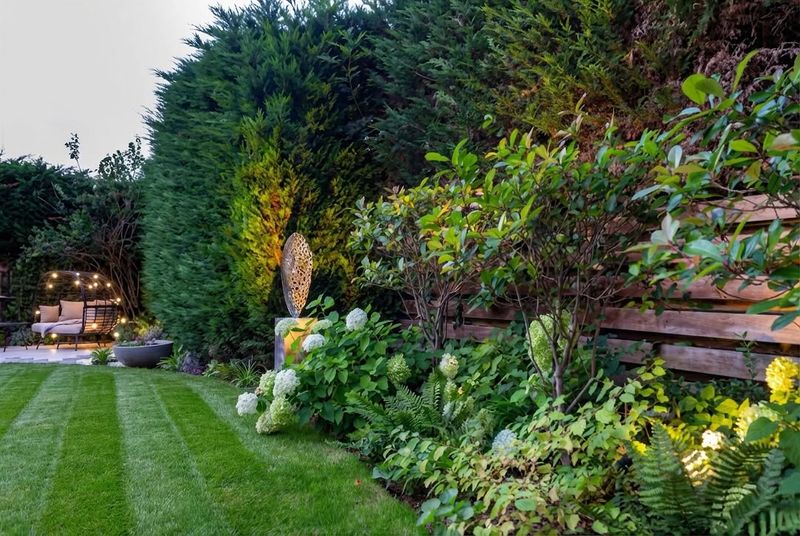
Flat gardens feel lifeless because everything sits at the same height, competing for attention without creating any visual flow. Layering plants by size builds depth that draws the eye through the space naturally.
Start with taller shrubs at the back or center, then step down through medium perennials, finishing with low edging plants at the front.
In Georgia gardens, this might mean placing a five-foot abelia behind three-foot salvias, with creeping thyme or ajuga spilling over the edge. Each layer shows off without blocking the others.
The height variation also helps every plant get the light it needs, since shorter specimens aren’t stuck in constant shade from taller neighbors.
Consider bloom times when you layer. If your tall shrub flowers in spring, pair it with summer-blooming perennials in the middle layer so something always looks good.
Foliage plants work great in the lowest layer since they don’t need to push up tall flower stalks to be seen.
Walk around your bed from different angles as you plan. Layering only works if people can actually see the progression.
In island beds viewed from all sides, put the tallest plants in the center and grade down in every direction. For beds against fences or walls, keep the tallest plants at the back where they create a backdrop rather than a barrier.
3. Mix Bold Leaf Shapes To Create Instant Contrast
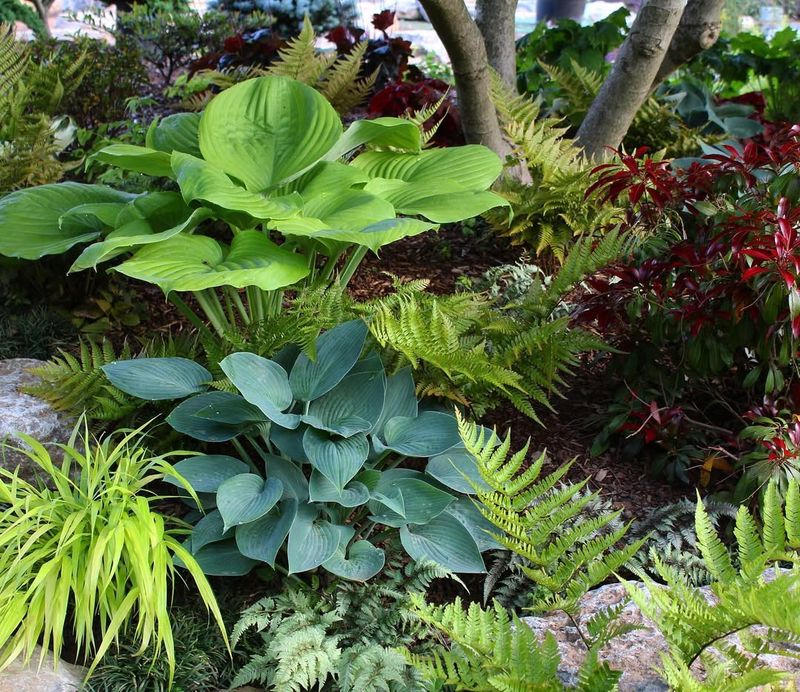
Foliage contrast creates drama that lasts far longer than any flower. Big, bold leaves like those on hostas or elephant ears immediately catch attention, especially when placed next to fine, delicate foliage from ferns or ornamental grasses.
This size difference makes both plants look more interesting than they would alone.
Georgia’s climate supports an amazing range of leaf shapes and sizes. Try pairing the dinner-plate leaves of ‘Sum and Substance’ hosta with the thin, arching blades of muhly grass.
Or set rounded ligularia foliage against the feathery fronds of southern shield fern. The contrast makes people stop and really look at the combination instead of just glancing past.
Don’t forget about leaf texture beyond just size. Smooth, glossy leaves reflect light differently than fuzzy or matte ones.
Placing a shiny camellia next to soft lamb’s ear creates touchable interest that adds another layer to your design. These textural differences matter most in shaded Georgia gardens where flowers might be scarce.
Color variation in foliage extends the contrast even further. Chartreuse leaves glow next to deep burgundy ones.
Silver-gray artemisia pops against dark green mondo grass. Using foliage color as your primary design tool means your combinations look intentional and complete even when nothing’s blooming, which is especially valuable during Georgia’s intense summer heat.
4. Combine Spring Bloomers With Summer Performers For Continuous Color
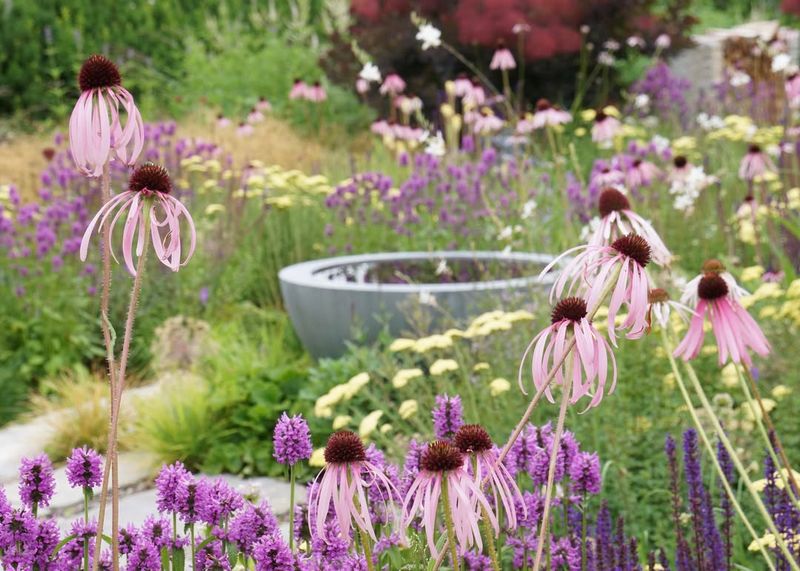
Timing your blooms keeps color moving through the garden instead of peaking once and going quiet for months. Spring bulbs like daffodils and tulips put on a great show in March and April, but they leave behind dying foliage that looks messy by June.
Planting summer bloomers in the same space solves this problem beautifully.
Coneflowers, black-eyed Susans, and daylilies all emerge slowly in spring, staying low and green while bulbs take center stage. As the bulb foliage yellows and fades, these summer perennials grow tall enough to hide the mess and start their own bloom cycle.
You get two completely different shows from the same square footage.
In Georgia, this succession strategy works particularly well because our growing season stretches long enough to support multiple bloom waves. Add fall-blooming asters or sedums to the mix, and you’ll have color from February through November.
Each plant takes its turn without overwhelming the others or leaving awkward gaps.
Plan for foliage coverage during transition periods. If you’re waiting for summer bloomers to fill in, make sure spring bulbs are planted among groundcovers or low perennials that stay attractive year-round.
Ajuga, creeping phlox, or evergreen ferns all work well as living mulch that keeps the bed looking full between major bloom times in Georgia gardens.
5. Use Native Georgia Plants To Anchor The Design Naturally
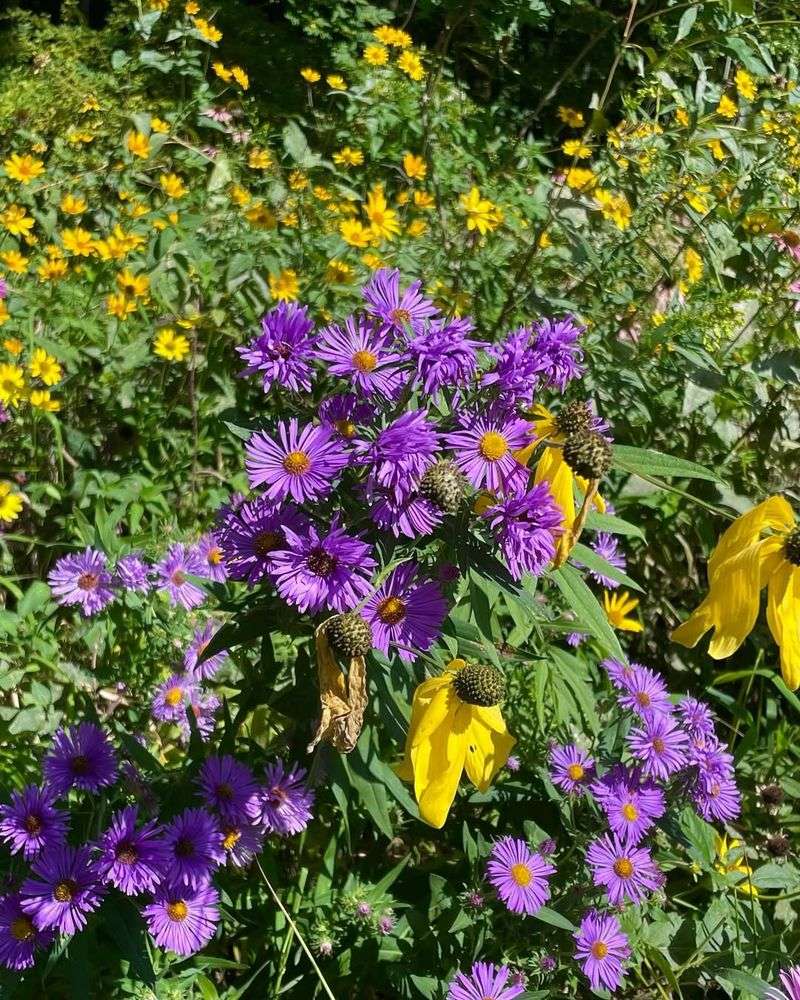
Native plants belong in Georgia gardens because they already know how to handle the heat, humidity, and clay soil that challenge so many other species. Coneflowers, coral honeysuckle, and beautyberry don’t need constant babying to look good.
They’ve evolved here, which means they’re naturally suited to local conditions and support native wildlife at the same time.
Building combinations around natives gives your design an authentic sense of place. Instead of fighting the environment with high-maintenance exotics, you’re working with it.
Native azaleas bloom reliably without the disease problems that plague Asian varieties. Georgia asters thrive in spots where imported perennials struggle.
These plants simply perform better with less effort.
Mixing natives with well-adapted non-natives creates the most successful combinations. You don’t have to go 100% native to benefit from their toughness.
Try pairing native switchgrass with non-native but reliable sedums. Or surround native oakleaf hydrangeas with hardy geraniums that handle Georgia summers.
The natives anchor the design while other plants add variety.
Local wildlife responds enthusiastically to native plant combinations. Butterflies visit native milkweed and asters far more often than imported ornamentals.
Birds eat the berries from native hollies and viburnums. Creating these connections between plants and wildlife makes your garden feel alive in ways that purely decorative plantings never achieve, especially important in suburban Georgia neighborhoods.
6. Pair Fine Textures With Broad Foliage For Visual Balance
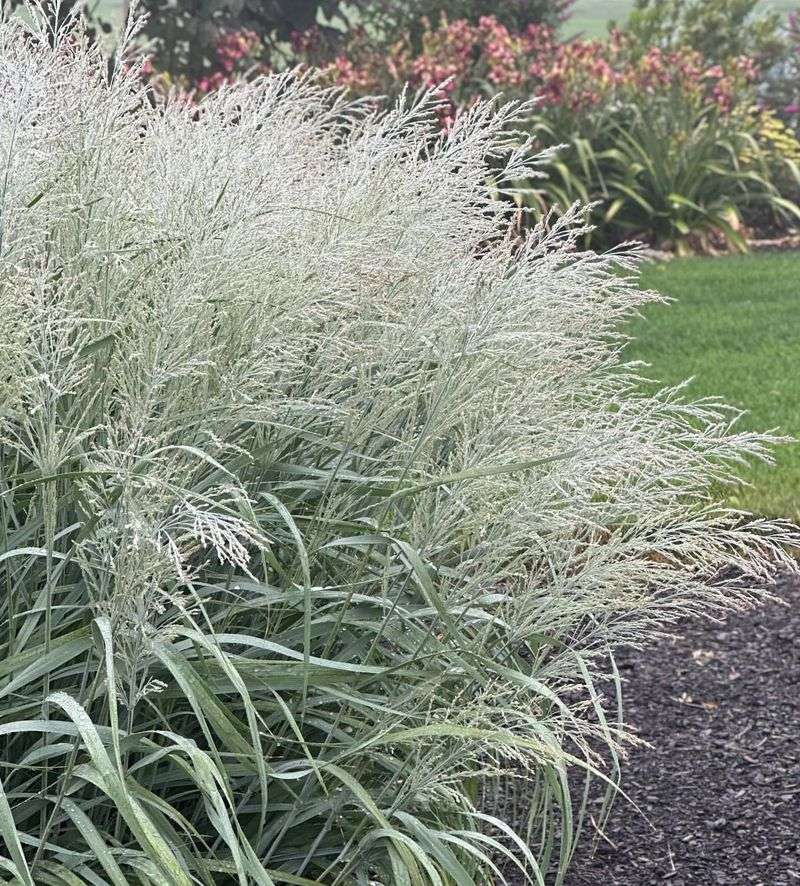
Balance keeps plant combinations from feeling chaotic or overwhelming. When every plant has the same texture, the eye has nowhere to rest.
Pairing delicate, fine-textured plants with bold, broad-leaved ones creates natural rhythm that makes combinations easier to read and more satisfying to look at.
Ornamental grasses bring incredible fine texture to Georgia gardens. Their thin blades move with every breeze, adding motion and lightness.
Plant them next to broad-leaved cannas or large hostas, and suddenly both plants look more dramatic. The contrast makes the grass seem more delicate and the bold leaves even bolder.
This principle works with flowers too. Airy Russian sage or gaura pairs beautifully with chunky daylily or iris foliage.
The wispy blooms soften the stiff leaves while the solid foliage keeps the delicate flowers from looking scattered or lost. Each plant supports the other visually, creating a combination that feels complete rather than random.
Don’t overdo it by mixing too many textures in one small area. Three different textures in a single combination usually works better than five or six.
Pick one bold focal point, one fine-textured accent, and one medium plant to bridge between them. This simple formula creates balance without overthinking it, especially important in smaller Georgia garden beds where space is limited.
7. Add One Statement Plant To Ground The Entire Combination
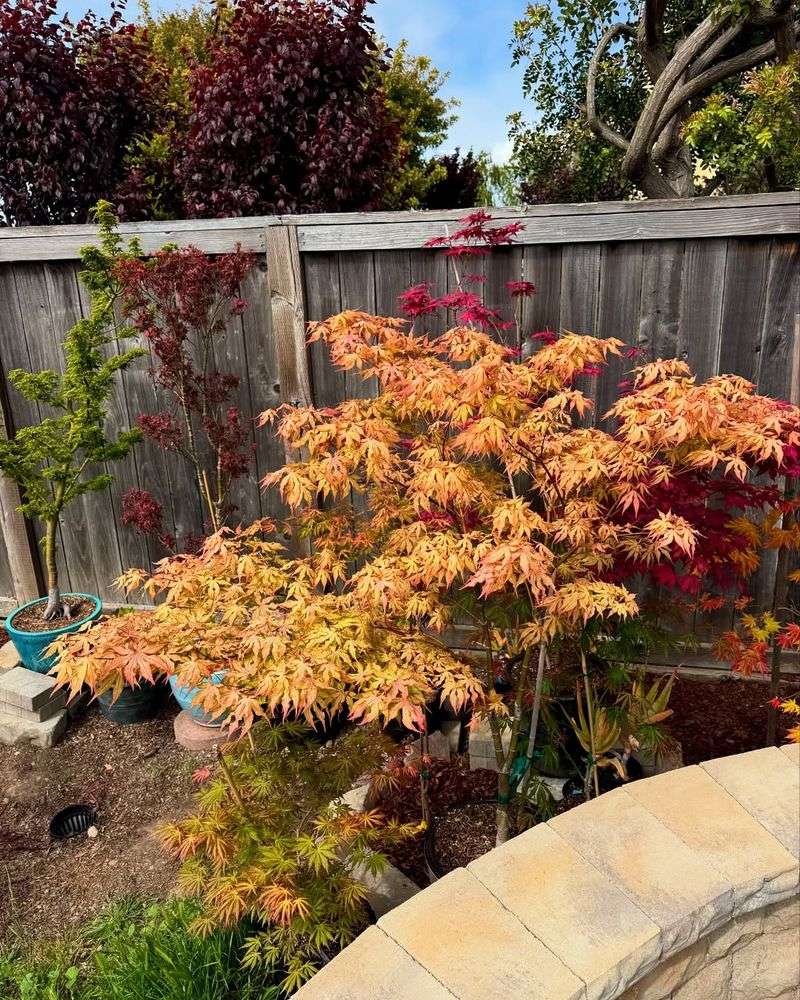
Every successful combination needs a star that everything else supports. Statement plants draw attention first and give the eye a place to land before taking in the supporting cast.
Without this focal point, combinations feel scattered, like everyone’s talking at once with nobody listening.
In Georgia gardens, statement plants might include a small Japanese maple with stunning fall color, a massive ornamental grass like pampas or maiden grass, or a bold tropical like banana or elephant ear.
These plants have enough presence to anchor the design but shouldn’t overwhelm everything around them.
Size, color, or form can all create statement impact.
Position your statement plant first, then build around it with complementary companions. If your focal point is a burgundy Japanese maple, surround it with chartreuse hostas and deep green ferns that make the red leaves glow.
If you’re using a tall ornamental grass, underplant with lower perennials that won’t compete for attention but fill in the base attractively.
One statement plant per combination is usually enough. More than that and you’re back to visual chaos.
In larger beds, you can repeat the same statement plant in a pattern to create rhythm, but each repetition should have its own supporting cast.
8. Repeat Key Plants Throughout The Bed To Create Cohesion
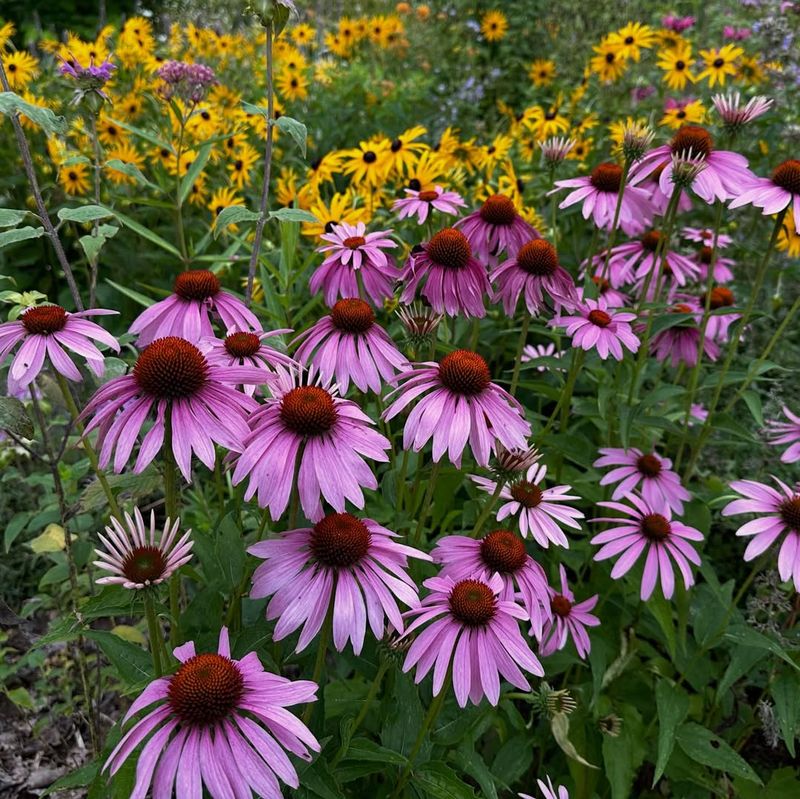
Repetition ties everything together and prevents combinations from looking like a random plant collection. When you use the same plant in multiple spots throughout a bed, you create visual threads that guide the eye and make the whole design feel intentional.
Without repetition, even well-chosen plants can look disconnected and chaotic.
Pick one or two reliable performers and use them as repeating elements throughout your Georgia garden. If you love purple coneflowers, plant them in groups of three or five in several locations rather than one massive clump.
The repeated color and form create rhythm that makes the bed feel cohesive even when other plants vary widely.
This technique works especially well with foliage plants that look good all season. Repeat the same ornamental grass, hosta variety, or groundcover throughout a bed to create continuity.
These repeating elements become the threads that hold everything together while showier plants come and go with the seasons.
Don’t confuse repetition with monotony. You’re not creating a monoculture or planting the same thing everywhere.
Instead, you’re strategically repeating key plants to create visual connections between different areas. The rest of the planting can vary widely as long as those repeated elements keep showing up to tie it all together throughout your Georgia landscape design.
9. Choose Heat-Tolerant Combinations That Thrive In Georgia Summers
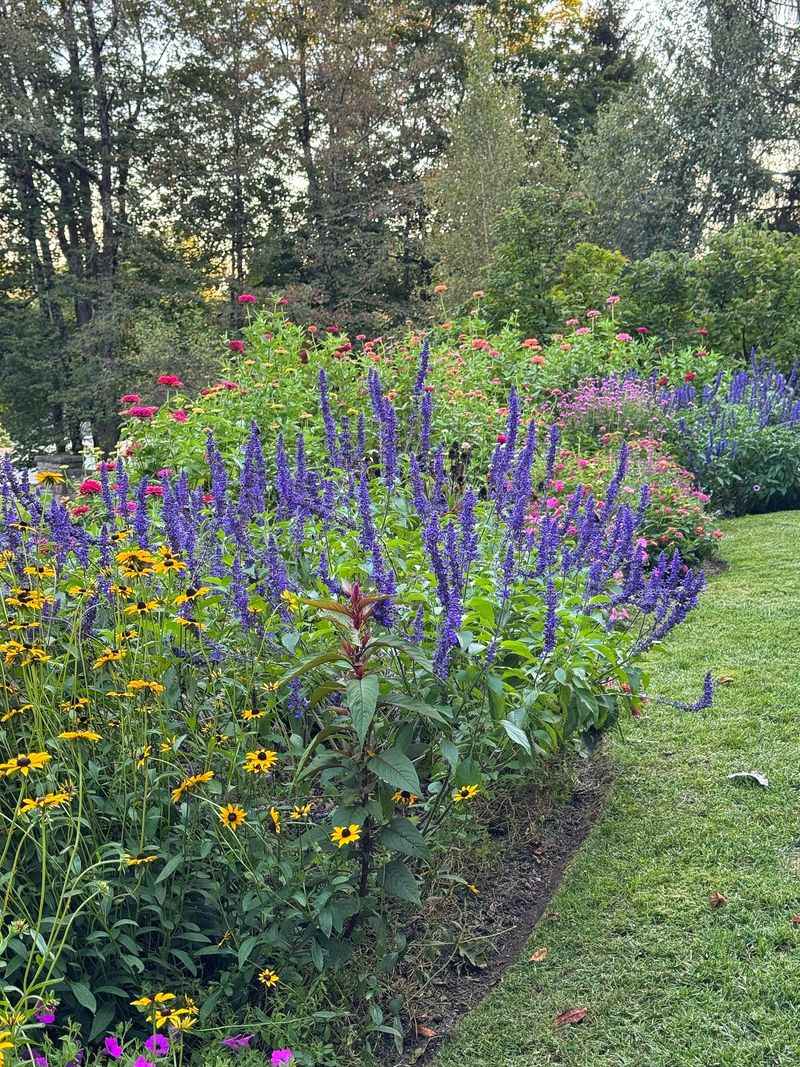
Georgia summers test every plant combination with relentless heat and humidity that would make many popular perennials wilt and struggle.
Building combinations from heat-lovers means your garden looks great in July and August instead of limping through the hottest months.
Lantana, salvia, zinnias, and pentas all laugh at 95-degree days and keep blooming when other plants quit.
Avoid the temptation to plant combinations that only look good in spring. Many classic perennials peak early then fade badly as temperatures climb.
Instead, focus on plants that actually prefer heat and save the cool-season lovers for fall planting. Tropical-looking cannas, heat-loving daylilies, and tough ornamental grasses all thrive when Georgia summers arrive.
Drought tolerance matters almost as much as heat tolerance in successful Georgia combinations. Plants that need constant watering to survive summer create maintenance headaches and often fail anyway during dry spells.
Sedum, Russian sage, coreopsis, and native grasses all handle heat and moderate drought without looking stressed or requiring daily attention.
Group plants with similar water needs together so you’re not trying to keep thirsty hostas happy next to drought-tolerant sedums.
Smart grouping means your Georgia garden looks lush all summer without constant intervention or worry about heat damage.